As an Amazon Associate, we earn from qualifying purchases.
⚠️ READER ADVISORY: This is a deep-dive summary designed for those who want the full story. Contains spoilers.
What is the book The Sleep Thief about?
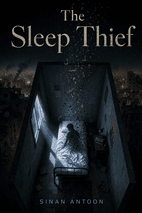
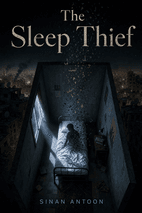
Ibtisam Azem's The Sleep Thief follows Gharib Haifawi through Haifa as checkpoints, an archive, a protest, and memories of Hamsa and his mother press on him, braided with Salma's family reckoning and Alya's grief. A fragmentary novel for readers of experimental Arabic fiction on Palestine and memory.
Feature
Insta.Page
Blinkist
Shortform
The Sleep Thief
✓
✕
✕
Summary Depth
Full Chapter-by-Chapter
15-min overview
Section-by-section guides
Audio Narration
✓
✓
✓
Full access to all 800+ summaries
✓
✓
✓
Visual Mindmaps
✓
✕
✕
AI Q&A
✓
✕
✕
Missing a book? Request it, usually live within 48h
✓
✕
✕
Quizzes
✓
✕
✕
PDF Downloads
✓
✕
✓
Send to Kindle
✓
✓
✓
Price
$89.99/yr
$146/yr (PRO)
$199/yr
*Competitor data last verified July 2026.
1 Page Summary
In Haifa, Gharib Haifawi moves through a life shaped by checkpoints large and small—an archive that reframes the word "Palestine," a Hebrew he haggles in while keeping Arabic locked behind his teeth, avocados that carry the shame of his childhood, a weekend trip to Cyprus chosen as a small act of escape. He loves Hamsa and has refused her; he is drawn to the protest and is seized from the crowd; he is haunted by the police, by death, by his mother's empty house. Each chapter turns an ordinary errand or memory into an encounter with what it costs to belong to a country that does not want you, and the narration stays close to his restless, self-scrutinizing mind.
Around him, others carry the same weight in different ways. Salma sits at an iftar table and refuses her father's lesser share, turning a family meal into a reckoning. Alya takes a phone call and learns of a grandmother's death, mourning a loss that reaches back to Haifa in 1948. The narrator drifts through a museum presented as a national gift and a lecture abandoned for falafel and a woman named Nina. An interrogator names the narrator "sleep thief," and the name follows into every dream, where the gods offer stolen sleep at a terrible price. The novel braids these perspectives into a shifting, polyphonic whole.
At stake throughout is whether a person can keep hold of a name, a memory, a love, and a language while the ground beneath them is contested. Told in restless fragments that move between dream, memory, and the streets of Haifa, this is a novel of political weight and intimate grief, written with a dry, watchful irony. Readers drawn to layered, fragmentary fiction about Palestine, memory, and the private acts that resist erasure—work in the vein of experimental Arabic and translated fiction—will find much here to inhabit.
The Sleep Thief
The interrogator brands the narrator a "sleep thief," and the name follows them into their dreams, costing them rest every night. Desperate, the narrator begs the gods to restore their yesterday. All but the kindest god refuse. The kind god grants the gift of stealing sleep, but sets a condition: the narrator must take another's life to dream further. The narrator rejects the gift outright and resolves to live with their own tears.
The Street
The narrator steps into the street and sees their family staring at them happily. The narrator steals their family's lives and discovers what they have become. They shut their eyes and reopen them in a dark room where no one can meet their gaze. Every night, the narrator stares into the dark, still a sleep thief, waiting for a different dream.
💡 Try clicking the AI chat button to ask questions about this book!
Gharib Haifawi
The Archive and the Sea
Gharib Haifawi wants to understand what "Palestine" means, so he searches the university archive and chooses a sea-linked narrative, which changes how he hears the word. The archive gives him a version of the name tied to the sea, and from that point the word carries a different sound for him.
The Private Word
Gharib wants to remember the banned country, so he repeats "PALESTINE" to himself, turning the name into a private act of resistance. The repetition becomes something he does for himself, a small defiance against erasure.
The Court and the Flag
Gharib wants to believe the Greeks love Palestinians, so he cheers against Maccabi Tel Aviv. What the cheering reveals is his fixation on the Israeli flag and on the open-mouthed players, a fixation that undercuts the comfort he was reaching for.
The Weight of 1967
Gharib wants to console himself about being born in the 1967 Naksa, so he adopts optimism. The optimism repeatedly collapses into dark pessimism, leaving him caught between the two.
The Middle Is Best
Gharib wants to grow taller, so he plays basketball. The effort ends with him accepting that "the middle is best," a resignation rather than a triumph.
The Sinister Wave
Gharib wants to enjoy Haifa's beach, so he saunters and toys with the sand. A sinister wave steals grains from him, and the small loss costs him something of the shore.
The Narrator Intervenes
The narrator wants to tell Gharib's story, so he collects Gharib's words. This requires him to interfere where Gharib could not or would not describe, filling the gaps himself.
Gharib Takes the Pen
Gharib wants to speak for himself, so he takes matters in hand. The narration changes into his own account, and the voice belongs to him.
Alya Names Her Son
Alya Haifawi wants to explain her son's strange name, so she names him Gharib after a strange, short war. The name ties him to the Six Day War, and the explanation becomes part of his origin.
Leaving Alaf
Alya wants to return to Haifa, so she leaves Alaf. Her departure ends the family's stay in the Galilee village.
Blood and Archive
Gharib wants to trace his origins, so he relies on archive evidence. The evidence proves his descent from Greek merchants and Canaanites, giving his lineage a documented shape.
The Surname and the Grandfather
Gharib wants to understand his surname, so he links it to Haifa and to his maternal grandfather. The link grounds his identity in place and in maternal lineage.
Memory as Defiance
Gharib wants to resist forgetting, so he insists the executed country was resurrected. The insistence turns memory itself into defiance.
The Winds of October
Gharib keeps his promise to Hamsa and goes to the protest, and the decision costs him his safety when police seize him straight out of the crowd. Hamsa is there because she wants Palestinian voices heard, and that same conviction puts her in danger and tears her away from Gharib in the chaos. The police drag Gharib by the hair and beat him, not simply to detain him but to punish and humiliate him, leaving him terrified and in pain.
Thrown Onto the Shore
The police want him gone from the crowd, so they throw him from the car onto Haifa's shore, stranding him alone and disoriented. Lying there, Gharib tries to understand why they dumped him at the beach and begins to suspect the police know about his tryst with Hamsa, a thought that deepens his paranoia. His mind turns to Hamsa's fate, and he imagines her dragged away, insulted, or groped, a torment made worse by his helplessness. He wants to move but finds only his eyes obey him as ants swarm his body, making him feel like a corpse or a piece of trash. Fearing blindness from staring into the darkness, he shuts his eyes and listens instead to the ticking he associates with being a demographic bomb.
Hamsa Returns
Then Hamsa appears, wanting to rescue him. She wipes the ants from his body without disgust, and her touch surprises him and restores his sense of being alive. Despite his fear, Gharib wants to walk with her, and they leave together, the scene shifting from abandonment to companionship.
The Question of the One
As they go, Gharib asks Hamsa directly where "the One" is, revealing his spiritual searching. Hamsa tells him to accept divine abandonment, saying God left long ago, and asks whether he is one of the seven sleepers, reframing his suffering as ancient and shared.
The Grocer's Disappointment
Yitsik the grocer wants Palestinians to behave as loyal "Israeli Arabs" and voices his disappointment at their protest, which astonishes Gharib and severs their conversation. Gharib wants Yitsik to join the protesters so they could fight together, but Yitsik rejects the idea by raising his eyebrows and ending the talk. Both men want to avoid conflict, so they retreat to weather talk and their shells, letting the rift between them harden. The second intifada wants to eclipse all other news, and it turns that rift into a black hole.
The Shin Bet Honours Gharib with a Visit
Gharib stands at the edge of the field and throws rocks at the border, not aiming at anything, just throwing. The rocks land where they land, and Gharib walks away lighter and harder at once.
As a teenager he flees the bathroom, convinced that the mirror and the tiles and the air itself are watching him. The feeling follows him out the door and into the street. He cannot undress without turning his back to the window. He cannot think a thought without wondering who has already heard it.
His cousin Zakiyya dies, and Gharib wants to understand what death actually is. He asks questions no one will answer straight. The grief does not pass through him and out; it settles and hardens into an obsession with the torment of the grave, the questioning in the dark, the pressure of the earth. He imagines Zakiyya under the ground and cannot stop imagining it. Death becomes a place with a door, and he spends years standing at that door, listening.
He asks his mother about heaven and hell, wanting reassurance, wanting her to tell him that the scales tip toward mercy. She answers him with the scales themselves, the deeds weighed one against the other, and Gharib carries those scales everywhere after that. Every action is a weight. Every idle word is a weight. He goes through his days with an invisible balance in his hands, terrified of which way it will tip.
Husam repeats his father's warning like a lesson he has memorized: the Shin Bet knows everything. Gharib absorbs it until the fear becomes unbearable, until knowing everything seems like a reasonable description of the state itself. If they know everything, then there is no private place left, no thought that is only his.
He calls a phone-sex line, wanting pleasure and relief, wanting for a few minutes to be a body and nothing more. The line crackles. The static hisses. Gharib freezes with the receiver against his ear and becomes convinced the Shin Bet is listening, that the crackling is a man breathing on the other end of a tap. He hangs up. The shame and the fear arrive together and will not separate.
He stops masturbating for a month, wanting to escape the horror of being spied on, wanting to prove to himself that he can close the last door the watchers might open. The phone sits useless on the desk. The fear only moves, finding new rooms in him to occupy.
Husam proposes forming a cell. They will throw Molotov cocktails, print leaflets, raise flags. Gharib agrees because it seems the only way to rid himself of the horror the state has planted in him, to answer the watchers with something they cannot file away. For a while the cell gives the fear a direction. Then comes the leaflet phase, and Gharib discovers he dislikes discipline, dislikes group commitment, dislikes being told when and where and how. Less than two months later he quits. The others quit soon after him, and the cell ends. Gharib tells himself he has conquered his first fear. He believes it, for a while.
At one in the morning a tough-looking man knocks at Gharib's dorm door. He wants Gharib to come immediately, to see Argos. Gharib gets out of bed and goes, and the corridor fills with officers, a large crowd of them, and he is in custody before he understands what custody means. He wants to know why he is a security threat. He learns that Argos is the many-eyed watcher, the one he cannot escape, the thing with a hundred eyes that has been waiting for him all along.
The interrogators show him Husam's written confession. They want him to admit the cell. Gharib denies everything, and as he denies it he understands that his only weapon is time, that he must bet on time, that the confession is paper and paper can be outlasted. They deprive him of sleep for two days. They put a fetid black hood over his head, and the stench fills his mouth and nose until sleep becomes the only thing in the world he values, the only thing he wants, the only thing they will not give him.
An interrogator threatens to castrate him. They hide him under a table and make him listen to Husam's confession, and Gharib complies, and he learns that Husam bragged in Poland to a man from Ramallah. The cell was never secret. It was a story told in a bar in another country, and now it is a file on a table in this room.
His father hires a top Tel Aviv attorney, who urges apology and contrition for a reduced sentence. The attorney's mouth moves like a saw, back and forth, and Gharib grows tired of the useless sounds, of the performance of regret, of the arithmetic of years. In court he stands and chooses not to make a grand statement. He wants to speak, but he finds only exhaustion where the speech should be. The judge sentences him to a year and a half in prison.
The gavel falls, and Gharib laughs. He wants freedom, and the moment the sentence lands he feels free. The cell and the hood and the watchers have not taken the one thing he thought they had taken. They put him behind bars, and he is laughing.
You've reached the end of the free chapters
Never lose the plot
Chapter-by-chapter summaries, characters and endings explained, and a book you can ask anything.
$0.00 due today · 7 days free, then $89.99/year ($7.49/mo) · Cancel anytime before day 7
Ibtisam Azem is a Palestinian novelist and journalist from Jerusalem who has worked as a senior editor at the Arabic-language newspaper Al-Arabi Al-Jadeed. She is best known for her novel The Book of Disappearance, which explores the sudden vanishing of Palestinians from Israel and has been translated into several languages, alongside works such as Sariq al-Nawm (The Sleep Thief). Her writing and journalistic work focus on Palestinian identity, memory, and life under occupation.
Frequently Asked Questions about The Sleep Thief
What is The Sleep Thief about?
At its center is Gharib Haifawi, a Palestinian man in Haifa trying to work out what the name of his homeland means to him while living in a city that watches him — haggling in Hebrew so his Arabic won't give him away, choosing one airline over another to dodge humiliating inspections, feeling eyes in mirrors and in the air itself. Around him orbit the people who hold his life together and pull it apart: Hamsa, whose conviction draws her into the streets, Salma, who refuses to accept half a share of her father's inheritance, and a family whose losses reach back to 1948. Framing these chapters is an unnamed narrator branded a "sleep thief" by an interrogator, left bargaining with gods over whether a dream is worth another person's life. The stakes are whether memory, love, and belonging can survive a life fenced in by surveillance, borders, and erasure.
Who is the author of The Sleep Thief?
Ibtisam Azem is the novelist behind this book, which braids a surreal, sleepless narrator with the grounded, darkly comic story of Gharib Haifawi in Haifa. Her writing here moves between fable, satire, and political realism — from a basketball court and a boyhood spent selling avocados door to door to an interrogation, a farewell party, and a museum tour — while keeping an intimate hold on grief. She has a sharp ear for the way language itself can become a risk, and for the small, ordinary gestures people make to protect themselves.
Is The Sleep Thief worth reading?
It rewards readers who like fiction that thinks: the novel refuses any clean separation between the political and the intimate, so a trip to a travel agency or a family iftar carries as much voltage as a beating in the street. Gharib is a memorable, infuriating, tenderly drawn character, and the dreamlike "sleep thief" passages give the whole book a haunting second register. If you're drawn to writing about exile, surveillance, and inheritance that is at once playful and furious, this is worth your time.
What are the main themes in The Sleep Thief?
Surveillance and the cost of being watched run through everything: Gharib feels eyes in mirrors and in the air, and in the market he haggles in Hebrew because he has learned his Arabic can make him a target. Memory and erasure are its twin — repeating the name of a banned country as a private act of resistance, an archive that changes how a word sounds, and a family still carrying the losses of 1948. Grief threads through the book, from a cousin's death that hardens into a lifelong obsession with what comes after to a grandmother mourned over the telephone. And inheritance — who gets what, who is owed what, and whether love can be portioned into half-shares — drives the novel's fiercest confrontations.
📚 Explore Our Book Summary Library
Discover more insightful book summaries from our collection