⚠️ READER ADVISORY: This is a deep-dive summary designed for those who want the full story. Contains spoilers.
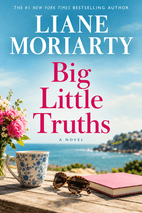
What is the book Big Little Truths about?
Liane Moriarty's Big Little Truths reunites the women of Pirriwee Peninsula as Madeline faces a health scare, Jane navigates her teenage son's secrets, and Celeste confronts her mother-in-law's decline—all while a severed finger arrives at their high school, unraveling the fabric of their seemingly perfect community. A sharp, suspenseful tale of friendship and buried secrets for fans of character-driven mysteries.
Feature
Insta.Page
Blinkist
Shortform
Big Little Truths
✓
✕
✕
Summary Depth
Full Chapter-by-Chapter
15-min overview
Section-by-section guides
Audio Narration
✓
✓
✓
Visual Mindmaps
✓
✕
✕
AI Q&A
✓
✕
✕
Quizzes
✓
✕
✕
PDF Downloads
✓
✕
✓
Price
$89.99/yr
$146/yr (PRO)
$199/yr
*Competitor data last verified July 2026.
1 Page Summary
Set on the idyllic Pirriwee Peninsula north of Sydney, this sequel reunites the women from Big Little Lies as they navigate middle age, motherhood, and the increasingly complicated terrain of their friendships. Madeline is turning fifty and confronting a health scare and her mother's decline, while Jane watches her teenage son Ziggy edge into a world of secrets, and Celeste, now a widow, grapples with her twin sons' troubling behavior and her increasingly erratic mother-in-law. The community is also buzzing with unease after a severed human finger arrives at the local high school in the mail, drawing a detective into their seemingly tranquil world.
The women's lives intersect at the high school, where their children are coming of age, and within their tight-knit circle, which now includes the charismatic and enigmatic history teacher, Melody Montclair. As they rally around each other through illness, family crises, and the ordinary chaos of raising teens, their bonds are tested by new alliances and old tensions. The central conflict revolves around the unsettling questions raised by the severed finger and the unsettling behavior of a trusted figure, all while the women grapple with the fear that they may not truly know the people—or their own children—as well as they believe.
With Moriarty’s signature blend of sharp wit, social observation, and propulsive suspense, the story builds toward a tense school event that promises to expose buried truths. It’s a novel about the precariousness of control and the power of female friendship in the face of uncertainty, driven by the question of what lies beneath the surface of a seemingly perfect community. Readers who enjoy character-driven stories with a slow-burning mystery and moments of both heartbreak and humor will be captivated.
Chapter 1
On a soft-breezed spring morning on the Pirriwee Peninsula north of Sydney, the world looks idyllic. Yellow wattle lines the winding coastal road, jacarandas bloom against a cloudless sky, and chicks warble in their nests. A protective magpie swoops at an innocent cyclist. At the beachside café Blue Blues, the morning rush is underway, but the beach itself is quiet. Surf conditions are clean and peaky, the main swell from the east. A handful of gray-haired surfers watch a pod of dolphins leap across the horizon, unaware that just past the point, a whale ferries her firstborn calf through the coastal waters of the Humpback Highway.
In the beachfront park, a circle of new mothers sit cross-legged on picnic blankets, cradling tiny babies and speaking plaintively of sleep schedules, while a tai chi class of senior citizens paints invisible rainbows in the air and smiles at the babies.
Then a sudden discordant flash of noise and movement. Footsteps pound like galloping racehorses. The new mothers clasp their babies close as a pack of teenagers runs through the park. There are only six of them: three girls and three boys. It just seems like more. Their legs are so long, their emotions so seemingly outsized. They bolt down the concrete steps and onto the beach, collapsing on the sand, shrieking as if they've reached safety or crossed an invisible finish line. They are empty-handed except for one boy, who hugs a laptop to his chest. One of them bursts into tears, or laughter. It is hard to tell. It seems possible they are drunk.
Pirriwee High School
The high school where these students should be at this time is a ten-minute walk uphill from the beach. Students pour noisily out of classrooms like concertgoers attempting to leave a venue, clogging the hallways and stairwells. It is "Tech-Free Tuesday," so everyone is being discreet about their device usage.
Mrs. Lottie Wang, Pirriwee High's administrator and executive assistant to the principal, sits at the reception desk sorting the mail. She opens a large yellow envelope addressed in black marker to the school principal, Dr. Ferdinand Seawright, whom she can hear in the adjoining office talking loudly to himself as he types on his desktop computer. This is Dr. Seawright's first year at the school, and Lottie has yet to adjust to his habit of speaking aloud as he types, as if dictating the words to himself. "Once again...my patience...wears thin," he says. Mine too, she thinks. "Parents should...be aware...this behavior is not condoned...is prohibited by the Pirriwee High School Code of Conduct," he continues. Lottie sighs.
Inside the yellow envelope is a white Styrofoam box, a little smaller than a mobile phone box. Lottie uses the point of a pair of scissors to break through the tape holding the two interlocking halves together and pulls them apart. "Ew!" She recoils. Nestled in a rectangular cutout cavity is a realistic-looking replica of a man's finger, complete with a few black hairs and a nicely filed fingernail. How unnecessary and unpleasant and bad for the environment, she thinks. The things companies do to get attention with their direct marketing promotions! She looks for an accompanying letter, expecting something clever like "Point your students in a different direction."
Anna Kennard, Head of Science, appears at Lottie's desk. "I'm sorry to keep bugging you, Lottie, but I really need to know about the roster for—" She stops. "What's that you've got?" Lottie smiles up at her. "Oh, it's just some promotional thing. It almost looks real, doesn't it?"
Anna asks to see it. Lottie hands her the bottom half of the box. Anna tips it upside down and the finger falls free, tightly cling-wrapped and sealed smooth like a school sandwich. Anna carefully loosens and unravels the cling wrap, gives it a little shake. The finger rolls slowly onto its side. Anna takes a pen from the container marked Clean Pens, holds it cap down like a scalpel, and tentatively prods the finger. It is soft, mottled, with splashes of dried blood below the knuckle.
"That's a human finger," declares Anna, pulling her blouse up to cover her nose. "Smells."
"No." Lottie pushes her chair back, away from the desk. "It can't be."
"No doubt at all," says Anna. "It's a real finger."
Lottie shrieks. She stands and sways on the spot. "I feel sick." She has low blood pressure.
"Sit down," says Anna reasonably.
"What's going on?" Dr. Seawright emerges from his office just in time to catch Lottie under the armpits. Anna rushes to the other side of the desk, and they carefully lay her on the floor. Dr. Seawright averts his eyes as Anna pulls Lottie's skirt over her knees.
A discreet deep cough draws their attention. A whiskery fifteen-year-old stands holding a red behavior-monitoring card. "Come back later, Ruben," says Dr. Seawright. "Mrs. Wang is not well." He assumes the gormless expression on Ruben's face relates to the sight of Mrs. Wang's knees.
Anna Kennard is unaware that Ruben has witnessed her prodding the human finger, and therefore does not request his discretion. Not that he would have given it. He is a gregarious child. His father is a distinguished public radio broadcaster, so Ruben knows how to deliver breaking news without sensationalism or embellishment. It needs none.
Within the hour, the entire school community knows that someone has sent the principal a severed finger. Any doubts about the veracity of Ruben's story disappear when a police car is seen driving into the visitors' parking area. Phones across the Pirriwee Peninsula vibrate ecstatically with the ping-ping-ping of parent WhatsApp group notifications. These are caring, involved, hands-on parents, many of whom could have sent their children to private high schools but chose not to for worthy ideological reasons and are therefore entitled to VIP treatment for not spending the money they could so easily have afforded to spend. All they ask is transparency. If a severed finger has been sent to the school, they should be informed without delay.
Their children, meanwhile, are euphoric about this ghoulish interruption to their day, although some experience nausea, and the theater kids, who feel things deeply, weep and faint, or do their best to faint. It is one of those days from their childhood every student will remember: that sunny spring day when somebody gave their school principal the finger.
Safe Space Student Counseling Session
Brenda Moors-Charles, from Safe Space Student Counseling, welcomes a group of students to a session. She introduces herself, offers a mouthful of a name, insists they call her Brenda, and assures them this is truly a "safe space." Everything discussed will be kept confidential.
She notes they have all spoken to the police about what happened last week.
Josh calls it "D-Day." Brenda is confused. Ziggy explains that they were calling it D-Day because of Winston Churchill. They chose him for their history documentary because he really fit the "misunderstood historical figure" theme. On the one hand, he defeated Hitler, but—
Amabella interjects: if they had stuck with Winston, they wouldn't be here today, would they? Ziggy agrees, obviously not.
Max says he never saw it. The finger. Ruben got to see it.
Brenda tries to steer them back. Before they discuss the body part, maybe they could back up and start way back at the beginning. She understands their parents were—
Chloe cuts her off. Please don't blame their parents for any of this. They knew nothing about anything. Skye adds, especially don't blame Chloe's parents.
Amabella explains that all their parents have been very distracted this year. They've had a lot on their minds. Their jobs, their tax bills, their appliances, their divorces, their eyelids.
Brenda is taken aback. Did you say eyelids? Amabella thinks maybe they droop, which is a problem. Also, there has been a lot of menopause going around. Skye notes this causes "brain fog," because estrogen levels drop, whereas their estrogen—
Amabella continues: and there have been some tragedies. RIP, Nana, for example. Brenda offers her condolences. Amabella assures her she isn't grieving. She was my least favorite grandparent.
Skye mentions there have been some milestone birthdays too, so all the parents have been thinking about their mortality: what is the point of my actual life, that kind of thing. Chloe says they take ages to recover from parties. Their hangovers are so dramatic. Skye explains it's because their bodies can't metabolize alcohol anymore. Poor things.
Brenda tries again to get them to start at the beginning. Ziggy says that would be Chloe's mum's fiftieth birthday party. Chloe says it feels like centuries ago. Skye clarifies it was, like, eight months ago, but it feels like years.
Amabella delivers the final word: "It's been a turbulent time, Brenda."
💡 Try clicking the AI chat button to ask questions about this book!
Chapter 2
On the morning of her fiftieth birthday, Madeline Martha Mackenzie wakes to raised, querulous voices and snaps to attention like an elite soldier, ready to launch herself into the familial fray. But her fifty-year-old left shoulder has other ideas. The pain is so astonishing she falls backward, her head slamming into her orthopedic pillow. It is her frozen shoulder, a diagnosis she never heard of until recently. The physiotherapist, muscular, young, and thoroughly unfrozen, told her it might take up to a year to thaw. He called it common among middle-aged women, then mentioned that his mother had it a couple of years ago. She is good now. Younger people keep bringing up their mothers like it is a way to connect with her, as if she is the same age as their mother. She had planned to mention the cruel throbbing pain in her left big toe, but now she does not bother. He might recommend comfortable ugly sensible shoes.
She remembers last Tuesday at Pilates. "That's a bunion," said Renata. Madeline insisted she did not have one, even as her whole body protested the plank and actual tears came to her eyes. Renata claimed her own mother's feet doubled in width. "I have slender fucking feet," said Madeline. Celeste begged them to stop, her pelvic floor unable to handle the laughter. Bonnie, the yoga teacher planking effortlessly in her regular spot by the window, offered turmeric tea for the inflammation. Bonnie is lovely and Madeline loves loving her. People who love their ex-husband's young second wives are emotionally intelligent. Obviously, she cannot spend too much time with her. There are limits. Their instructor announced that the record for the longest plank held by a woman is over four hours: "You can do hard things, ladies!" Renata mentioned Squeezy Time, her pelvic floor app, and offered to send Celeste the link. Jane, still in her free-and-easy thirties, held her plank a few impressive seconds longer.
Age sits differently on all of them. Celeste, older than Madeline, wears her age like a gorgeous gossamer wrap. Madeline wears hers like a chattering monkey with hairy little limbs wrapped around her neck. Renata rails against her age like poor customer service. The physiotherapist told Madeline she can continue Pilates and Beach Boot Camp, working within her pain limits, but she should not try anything new. Over-forty-year-olds trying a new sport have a one hundred percent chance of injury.
Now, watching sunlight wash across the bedroom ceiling, she whimpers. She has never believed in suffering in silence. She remembers the obstetrician who suggested she calm down while giving birth to Abigail. The pain starts to abate, like a labor pain, except no one will hand her a terrifying, exquisite baby at the end of it. The raised voices have stopped. Whatever it was, Ed has it sorted. There was no need for her to jump to attention. It is old muscle memory from when the children were little and she felt truly essential.
She suspects Ed and Chloe are arguing over the preparation of her birthday breakfast. Please, not pancakes. Her dress for tonight's party is formfitting and she wants to look great in the photos. Ed has got so skinny lately. She wonders if he is secretly taking weight-loss medication, or if Chloe has more power to hurt his feelings because she is his biological daughter rather than his stepdaughter. Chloe's moods swing from gorgeous giggly curly-haired sprite to glowering, hunch-shouldered figure in her brother's old black hoodie, complaining there is never any food in the house. The murderous expressions on her beautiful face are funny, but you must never, ever laugh. Never make direct eye contact with a premenstrual teenager. This is not Madeline's first rodeo. The ideal parent of a teenager has no feelings or personality. Chloe said last night at dinner, "Can you two please just look at something other than me?" Madeline and Ed exchanged rueful smiles. They have never had a relationship without a child in the mix. Abigail came on their honeymoon because Nathan, reliably unreliable, let them down. She wonders what happens when Chloe is gone and it is just her and Ed. Will it be quiet? Will they reignite their passion? Or will they have nothing to talk about? Will they get a divorce because she cannot stand the sound of his dry cough?
Her phone buzzes. It is her sweet middle child, Fred, living his best life studying supply chain management at an American college. Happy 50th Mum. More likely Ed messaged him to remind him. He sends a picture of something fleshy and pale, terrifyingly pornographic for a second, but it turns out to be cooked chicken breast captioned: This cooked enough? She texts back: Give it a minute more. The sky outside is blue and cloudless, like a childhood memory. It has been an unpleasantly sticky summer, weeks of oppressive gray skies and the sensation of being on the verge of some catastrophic event. Is that just a permanent feeling now, because of technology, the news cycle, perimenopause? Samantha Fisher asked cheerily in line at Blue Blues, "You peri?" and for some reason Madeline heard Perry, and her stomach lurched at the sound of his name. Celeste's husband has been dead for ten years and she has no right to be traumatized by his memory. Everyone agrees it is wonderful to simultaneously deal with hormonal changes, disdainful teenagers, and elderly parents. Why is being a woman so dreadful? Just because Eve gave Adam the apple? The man was probably hungry. The woman is always in charge of organizing the fucking snacks. Her mother promised menopause would fade away like a delicate sunset, but Madeline's periods are now natural disasters, so heavy she cannot leave the house on the second day. "Flooding," said Dr. Cushman sympathetically, then asked if she had been to Croatia. She has not booked the follow-up appointment. Just another thing to tick off the endless life maintenance list: fix the frozen shoulder, smooth out the fine lines, get on top of the operatic periods.
She refuses to waste her fiftieth birthday thinking about Perry White or peri-menopause. Tonight will be wonderful. Wasn't it? Does a secret part of her wish she was just staying home on the couch? No. She loves parties. She is a party girl. But lately she secretly feels like she is losing her nerve for life, for everything from tight parking spots to software updates. She still behaves as if she is famously feisty Madeline, but sometimes she wakes in the night replaying everything she said. She works three days a week as senior events manager at the Pirriwee Pacific Hotel, managing corporate events and the smaller, nicer weekday second weddings. Her "boss," a Gen Z woman a year younger than Abigail, secretly referred to as The Child, handles the glamorous affairs. Madeline does not mind reporting to someone so young. Not at all. It is fine. The Child double-checks her work and Madeline feels a warm flush of humiliation. She reminds herself this is what she wants: part-time, stimulating but not all-consuming. Her favorite job was at the local theater, but it closed down, of course. Everything good closed down in the end. When she sees television mothers earnestly discussing needing more, she thinks, Less. I need less.
She wriggles back to a seated position and props a pillow behind her, massaging under her left armpit as the physiotherapist recommended. His mother diligently does these massages. Good for her. Her phone buzzes with messages. Nathan. Her nostrils do not flare. She is so mature now she is fifty. Abigail's boyfriend, saved as Perfect Boyfriend, texts before his girlfriend does, and her nostrils flare ever so slightly. He is universally adored, so she cannot admit her dislike. Both twenty-five, double degrees, well-paid jobs, moved in together after three months. Madeline needs to stop watching true crime documentaries. Obviously, she will never stop. Messages arrive from Jane, Celeste, her gym, her dermatologist, Abigail. About time. The Child sends a request to rate her recent experience renewing health insurance. Nothing from her mother yet, which is odd. A twinge of worry. Bonnie, then Renata, with a strange, slightly mean GIF that reads as aggressive. It is not a bunion, Renata. Poor Renata tries too hard when it comes to their friendship, like she cannot believe she gets to be Madeline's friend. Exactly, Renata. Stay grateful. Melody. Who the hell is Melody? Oh, the woman who joined Beach Boot Camp last week, a new history teacher at the high school. She took note of the birthday date and looked Madeline up on the WhatsApp group. Thoughtful. She is trying to break in. / am up for friendship. Madeline will consider her application favorably.
She hears Ed and Chloe walking down the hallway. The clatter of cutlery on a plate. It smells like pancakes and she is suddenly ravenous. She will eat them all. Spanx was invented for a reason. They sing "Happy Birthday," out of synch. Chloe laughs and says, "Start again." She is in a good mood. Her younger daughter in a good mood can course-correct the worst day. Madeline grins. She is about to adjust the strap of her nightgown when her fingertips freeze.
What The Actual Fuck Is That?
Chapter 3
Chapter: "Chapter 3"
Jane types “Happy 50th Madeline!!” into her phone, stares at the number fifty, and deletes it. The age gap between her and Madeline is sixteen years, and Jane doesn’t want to remind her friend of it. Most of the time she feels they are the same age. Madeline likes to say Jane is taking so long to turn forty, and Jane always feels she should apologize for the delay. Saltwater drips onto the screen as she sits on her towel after a thirty-minute swim with Ziggy, their Saturday-morning ritual and the best part of Jane’s week. Ziggy is nearly sixteen now, taller and stronger than Jane, and she suspects he swims a little slower so she doesn’t fall too far behind. She remembers a car coming around the corner too fast one day, and Ziggy’s arm shooting out to shield her. Her own arm should have been faster.
Ziggy returns bare-chested, dripping wet, carrying their breakfast from Blue Blues. He looks at her intently, but Jane knows he’s really examining his reflection in her sunglasses. Celeste once said Max’s loving glances were for his own image. Ziggy describes himself as “mid at best,” and when Jane protests that he’s beautiful, he says she’s just saying that because she’s his mother. Jane has noticed how hard teenage boys work on their bodies now, obsessing over quads, pecs, protein, and zero sugar Coke, and she deliberately detaches herself from Ziggy’s diet because remnants of her own old eating disorder still smolder.
Jane sends Madeline a new message: HAVE A FAB DAY BEAUTIFUL BIRTHDAY GIRL, SEE YOU AT THE PARTY, LET ME KNOW IF YOU NEED ANYTHING. SORRY FOR SHOUTING. STARTED IN CAPS AND CAN’T STOP. Then she takes her long black, spinach and kale juice, and halloumi wrap. Ziggy has a smoothie and a bacon-and-egg roll with extra bacon. Tom, Jane’s husband and the owner of Blue Blues, times their order so it’s ready when they finish swimming. It looks like a free breakfast, but Jane does the books and knows exactly what that halloumi costs. Still, plenty of women covet a free tab at Blue Blues, and everyone is in love with Tom. He could have an affair at the snap of his fingers, Jane thinks, but he never would. A strange internal voice asks whether she actually wants him to have one. She dismisses it. She remembers a tipsy conversation where Renata revealed she had only one voice in her head and didn’t understand self-talk. Madeline called Renata a unique specimen, and Renata seemed pleased.
As they unwrap breakfast, Jane and Ziggy wave at Stu Fisher heading down to the water. Jane brings up Stu’s nephew, who is doing a gap year and sent photos of an amazing nightclub in Berlin called Berg-something. She suggests Ziggy could go there on his gap year. Ziggy pulls tiny curls of carrot out of his bacon-and-egg roll and says flatly that maybe he won’t do a gap year. Jane feels oddly panicky about all the choices ahead of him, about what he doesn’t know he doesn’t know. She starts to tell him about Fred’s scholarship to Georgia State, but Ziggy cuts her off, annoyed, saying she’s told him before and he doesn’t care about Georgia. His aggravation radiates from him. Jane remembers how irrelevant her own parents seemed when she was a teenager, and she wants to say, “But I’m still relevant, Ziggy!”
She tells herself a little teenage grumpiness is nothing. Ziggy is a good kid. Last year, a group of boys at the high school was caught rating girls on social media, with a category labeled “not-even-rapeable.” Celeste’s first fear had been for her twins, and she had rationalized the whole thing away, but Jane sometimes thinks Celeste is too soft on those boys. It never occurs to Jane to worry Ziggy was involved. It wouldn’t be his style. He is still such a child. He turns sixteen on the second day of the school term in February and doesn’t want a party, thank God, because parties are stressful. This reminds Jane of her first kiss at a sixteenth birthday party: the birthday boy, TJ, in the laundry, against the washing machine, while TJ’s mum’s enormous bra sits on the dryer and later hangs from a light fixture. Jane now replays her teen memories and flips to the perspective of the adults.
Madeline tells Jane that Chloe’s friends use the term “body count” for sexual partners, and Jane is shocked at the idea that some of them have already had multiple partners. Jane once tried to talk to Ziggy about sex; he covered his ears, closed his eyes, and chanted until she stopped. Tom has had a few brief conversations with Ziggy and will keep checking in. Jane is relieved, because her honest thoughts about sex are: beautiful, ugly, boring, terrifying, nothing, everything. She doesn’t want to think about her little boy having sex.
She changes the subject and asks if Ziggy is looking forward to tonight. He doesn’t know what’s tonight. It’s Madeline’s party, and Madeline wants the kids to hang out: Ziggy, Chloe, and the twins. Ziggy says the twins are not his friends. Jane carefully says they are his brothers, then his half brothers. Ziggy knows that. Mary-Louise keeps texting him, demanding to see him and his brothers. Jane confirms Mary-Louise won’t be at the party. Jane’s feelings about Ziggy’s biological grandmother are complicated. Mary-Louise has loved Ziggy since she discovered his existence when he was five, but she is polite to Jane in a chilly way, as if Jane wronged her. Madeline gets outraged on Jane’s behalf. Jane tells Ziggy she met Madeline ten years ago today, on Madeline’s fortieth birthday, when they were driving to Ziggy’s kindergarten orientation and Madeline tripped on the road. Ziggy doesn’t remember.
Jane has her own blank spots. She was trying to remember Harper, a mother who had based her identity on Renata. Madeline reminded her that Harper started a terrible petition when everyone thought Ziggy was the kindergarten bully. Jane remembers the petition but not Harper’s face. Harper moved her children to another school two years later and disappeared from Jane’s consciousness. Sometimes Jane thinks of Ziggy’s first year of school as if someone else was his mother, a messed-up girl with a bad hairstyle. She tells Ziggy he was so cute. He tells her, “I’m still right here.” Then, without meeting her eye, he asks if Amabella is going to Madeline’s party. Jane says yes. Ziggy says okay, he’ll go to the party, and then he runs back across the sand, tossing his rubbish in the bin as he goes.
Jane watches him and thinks of Amabella. Renata’s daughter is no longer the shy tiny girl from kindergarten but a long-legged, charismatic teenager who looks about ten years older than Ziggy. Jane silently pleads: please don’t have a crush on Amabella. If Amabella were looking for a boyfriend, she wouldn’t look Ziggy’s way. A shared childhood interest in Star Wars wouldn’t cut it. History never repeats, but it could. Jane hasn’t forgotten the day Amabella handed out pink envelopes in the playground, one for everyone except Ziggy. She has long since forgiven Renata. The five of them, Jane, Celeste, Madeline, Renata, and Bonnie, are bound together forever by the events of that year. Looking at old photos, Jane blushes at how seriously they took the social dynamics of kindergarten. Now the stakes are higher and there is too much to lose. She watches Stu Fisher get wiped out by a tiny wave, virtually a ripple.
A conversation with the teenagers
The narration shifts to what appears to be a recorded conversation. A questioner, Al, asks the teenagers to clarify the dynamics because they all seem connected outside school. Skye says they have all been close friends since childhood. Max interrupts with “Fake news,” claiming he didn’t see Skye at all last year. Josh protests that they all go to the same high school, and Skye thanks Josh before explaining that they are all in separate friend groups. She describes the twins as sporty and cool, Chloe as popular and well-known, Ziggy as flying under the radar, herself as nerdy but not in a bad way, and Amabella as defying definition. Max tells Skye she’s cooler than Ziggy, and mentions what happened to Ziggy when he tried to get out from under the radar. Ziggy tells Max to fuck off, then apologizes to Brenda for forgetting she was there. Brenda says he can speak freely. Chloe objects to being called popular and well-known. Amabella adds that Skye and Chloe share a half sister, and the twins and Ziggy are half brothers. She herself, she says thankfully, is not connected to any of them by blood or marriage. Ziggy says the point is that they reconnected at Chloe’s mum’s birthday party. Chloe says that was exactly what her
Chapter 4
Chapter: "Chapter 4"
Celeste lies on the couch reading an email from the school principal about her twin sons, Max and Josh, surfing in the school fountain. She asks if they've seen it. They chuckle and say it would be impossible. She doesn't want to know. They never got caught. She remembers their rough patch at thirteen, the bad behavior that stopped on its own, and the years of expensive therapy after Perry died. She's over it. Healed. She's enjoying this stage of parenting.
Her phone buzzes with a text from Jane: "Sunk your teeth into any chewy challenges lately?" It reminds her that when she and Perry marveled at the twins' heartbeats, Jane was already pregnant with Perry's baby, Ziggy. Celeste sends a laughing face.
The doorbell rings. She opens it to find her mother-in-law, Mary-Louise, dressed immaculately in white pants and a floral blouse. Celeste is startled. Mary-Louise never drops in unannounced. She pulls a bottle of wine from her tote, saying she's trying to be more spontaneous. She studies Celeste's messy hair and faded sundress with something like distress. Mary-Louise tolerates Celeste so she can see the boys. She sniffs at the house, unimpressed by the smell of salt water and wetsuits. Celeste likes it. It smells like freedom.
Another knock: Mary-Louise's driver. Her car is being serviced, she came by taxi, and her credit card had a problem. Celeste pays the fare. The driver warns her to make sure the older woman hasn't fallen for a scam. Celeste dismisses it. Mary-Louise is suspicious of everyone and keeps her finances in order.
Inside, the boys make tea with great ceremony. Mary-Louise calls Josh "Max," and Max corrects her. She shakes her head, and Celeste stares: it's Perry's exact gesture. It makes her feel fondly toward Mary-Louise, as if they're related by blood. The feeling will probably pass.
Josh asks about her allergies. She's thrilled he remembered. Josh discreetly gives Max the finger. Mary-Louise asks where Ziggy is. Max reminds her Ziggy doesn't live there, that he's their half brother, not their real brother. Mary-Louise grimaces. She insists they should have a relationship with him. Max says that would technically be incest. Josh says they say hi at school, that's enough. Max says Ziggy doesn't surf. Celeste explains they've drifted apart. Her boys say Ziggy is boring.
Mary-Louise asks if Ziggy has his license. Celeste explains he's not sixteen yet; the twins were born premature, so even though Jane was pregnant first, Ziggy is younger. The boys only have learner's permits. She took them driving, and with Max she had to yell "BRAKE, BRAKE, BRAKE!"
She tries to steer the conversation to Madeline's fiftieth birthday party. Mary-Louise remembers Madeline acidly, then offers to babysit. The boys protest. Max says if someone broke in, he'd take down the attacker. He's recently obsessed with such scenarios, lecturing Celeste that she shouldn't walk alone in the dark, while he's perfectly safe. Josh says, "Watch him run if anyone pulled a knife." Celeste wonders if the manosphere has got to him.
Mary-Louise tells the story of Perry running after a pickpocket in Rome, retrieving a girl's purse. Max asks if Perry punched the guy and demonstrates a Hollywood takedown. Then he makes a strange roaring sound, fists clenched, face red. Josh says "Shut up, loser." Josh has always been more self-contained. When they were babies, Max roared with fury, and Josh whimpered.
Mary-Louise says the boys look so much like their father. Max asks about Perry's bench press. Then Josh says coldly, "I don't remember anything about my father. Not a single thing." Mary-Louise gasps and offers to go through photo albums. Josh says he remembers the photos, just not him. It's something Josh has claimed for a while, but this is the first time he's said it in front of his grandmother.
Mary-Louise, like the boys, knows about Perry's abuse. Celeste told his family everything after he died, or nearly everything: that she was planning to leave him, and the fact of Ziggy's existence. Nobody denied it. Mary-Louise asked only one question: "But he never hurt the boys, did he?" And that was it. In her presence, they all behave as if Perry had been a wonderful father lost in a terrible accident. Not a lie. Just not the whole truth.
Josh says his brain doesn't have enough gigabytes to remember. Max says not to worry, he remembers lots about Dad. Celeste tells him not to swear. And then she silently wonders what Max remembers. Just the good times? Or the bad times too?
She tells Mary-Louise the boys are coming to Madeline's party, and Ziggy will be there too. Mary-Louise brightens: she hasn't seen Ziggy for so long, perhaps she could come as well. Celeste opens her mouth to talk about limited numbers, but her eye catches Mary-Louise's blouse. The pearl buttons are misbuttoned, so the bottom doesn't line up. It could happen to anyone. But not to Mary-Louise. And why did her credit cards not work? Celeste says she will call Madeline. "I'm sure you'll be very welcome."
Later, the boys remember it differently. Josh insists their grandmother came with them to the party, that she wasn't invited, that she simply said "I'll come too!" and Mum went along with it. Max says Mum asked Madeline if Grandma could come. It wasn't a big deal. Josh says it was weird.
You've reached the end of the free chapters
Next chapter: “Chapter 5” is locked
Keep reading Big Little Truths — and unlock all 600+ book summaries with audio, mindmaps and AI Q&A.
$0.00 due today · 7 days free, then $89.99/year ($7.49/mo) · Cancel anytime before day 7
Liane Moriarty is an Australian author known for her insightful and suspenseful domestic dramas, including the bestsellers "Big Little Lies," "Nine Perfect Strangers," and "The Husband's Secret." Her work, often adapted for high-profile television series, explores the complexities of modern relationships, secrets, and the ripple effects of past actions. Before becoming a full-time novelist, she worked in advertising and ran a marketing business, and she writes with a sharp eye for social dynamics and psychological depth.
Frequently Asked Questions about Big Little Truths
What is Big Little Truths about?
The novel unfolds in the idyllic beachside community of Pirriwee Peninsula, where three very different women—Madeline, Celeste, and Jane—navigate marriage, motherhood, and friendship against a backdrop of schoolyard drama. When a severed human finger arrives in the mail at the local high school, a detective investigation begins, while a student documentary threatens to expose a teacher's troubling private life. The story weaves together domestic secrets, community judgment, and the unravelling of carefully managed lives, with each woman facing personal crises that collide at a school event.
Who is the author of Big Little Truths?
Liane Moriarty is the Australian author behind this gripping domestic drama. She is known for her sharp insight into suburban life and her ability to blend heartfelt character studies with suspenseful, twisty plots. Her novels have become international bestsellers and been adapted for television.
Is Big Little Truths worth reading?
Absolutely—this is a masterclass in slow-burning suspense and emotional storytelling. The characters feel perfectly real, and the way Moriarty layers tiny revelations until the narrative reaches its astonishing peak is deeply satisfying. It will keep you guessing and leave you thinking long after the final page.
What are the main themes in Big Little Truths?
The novel explores the hidden complexities of modern motherhood, the performance of perfect lives, and the bonds between women that can both sustain and complicate. It also examines how secrets fester within friendships and marriages, and how a community's urge to judge can overshadow the truth. Underlying it all are themes of vulnerability—of bodies, relationships, and memories—and the courage it takes to confront uncomfortable realities.
📚 Explore Our Book Summary Library
Discover more insightful book summaries from our collection