⚠️ READER ADVISORY: This is a deep-dive summary designed for those who want the full story. Contains spoilers.
What is the book Fourth Wing about?
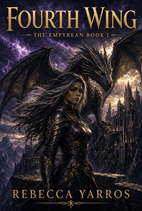
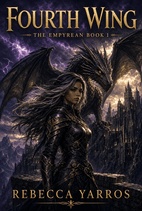
Rebecca Yarros's Fourth Wing follows Violet Sorrengail, whose fragile body makes her an unlikely dragon rider at Basgiath War College, as she fights to survive the deadly Riders Quadrant, bonds two dragons, and navigates dangerous loyalties and a magnetic wing leader. For readers who love relentless stakes and slow-burning tension.
Feature
Insta.Page
Blinkist
Shortform
Fourth Wing
✓
✕
✕
Summary Depth
Full Chapter-by-Chapter
15-min overview
Section-by-section guides
Audio Narration
✓
✓
✓
Visual Mindmaps
✓
✕
✕
AI Q&A
✓
✕
✕
Quizzes
✓
✕
✕
PDF Downloads
✓
✕
✓
Price
$89.99/yr
$146/yr (PRO)
$199/yr
*Competitor data last verified July 2026.
1 Page Summary
In the brutal world of Basgiath War College, Violet Sorrengail has spent her life being told what her body cannot do. Living with a condition that leaves her joints fragile and her muscles quick to tire, she is the last person anyone expects to survive the Riders Quadrant—a training ground engineered to kill the weak. Yet on Conscription Day, she enters anyway, determined to prove she is more than her frailty, even as every climb, every sparring match, and every test of endurance becomes a physical argument against the limitations others have placed on her.
The quadrant is a place where kindness does not save anyone, and Violet learns this early when the death roll claims a friend. The Gauntlet demands a reach her body simply does not have, forcing her to improvise and pay the price in penalties and pain. Her survival depends on navigating a web of loyalties—childhood friend Dain, who clings to her safety with a protective grip that only tightens; Rhiannon, whose quiet strength and secrets make her Violet's closest ally; and Xaden Riorson, a wing leader whose presence is as dangerous as it is magnetic. When Violet bonds with not one but two dragons, including the most powerful in the quadrant, the target on her back grows even larger, and the rules meant to keep riders alive begin to feel like chains.
As the threats against her multiply and the pull between Violet and Xaden becomes impossible to ignore, she must decide what she is willing to risk—and what she is willing to become. The flight to Montserrat, the warning of an ancient enemy closing in, and a rebellion that refuses to stay buried all converge, leaving Violet caught between duty, survival, and the terrifying truth of her own growing power. Readers who love relentless stakes, slow-burning tension, and a heroine whose greatest weapon is her refusal to break will find themselves unable to put this down.
Part 1 - Chapters 1 to 3
Violet Sorrengail wants to survive Conscription Day, but she fears her weak body will fail her. The fear is not abstract or imagined. It lives in her joints, in the way her muscles tire faster than they should, in the knowledge that the Riders Quadrant is built for people whose bodies obey them. She has spent her life being told what her body cannot do, and Conscription Day is the day that list of limitations will be tested against a quadrant designed to kill the weak. She trains in secret, pushing herself in ways she does not let anyone see, because she knows that if she is seen struggling, she will be dismissed before she ever has a chance to prove herself. She climbs to her mother's office, determined to prove she is more than her frailty. The climb is not a symbolic gesture. It is a physical argument, a rebuttal to every person who has ever looked at her and seen only what she lacks. She reaches the top, and the climb changes nothing yet, but it steels her for what is coming. The climb does not earn her a reprieve or a kind word. It does not change her mother's mind or alter the path ahead. What it does is prove something to Violet herself. She can endure. She can push through pain and exhaustion and fear. That knowledge will not save her on the parapet, but it will keep her moving when everything in her wants to stop.
Inside, Mira confronts General Sorrengail to stop Violet's Rider Quadrant conscription. Mira does not plead. She argues. She lays out the facts of Violet's body, the danger of the quadrant, the death rate that everyone knows and no one speaks aloud. She demands that their mother reconsider, that she use her influence to redirect Violet to the Scribe Quadrant where she belongs. The general refuses and orders Mira out. The refusal changes everything, because the order stands and Violet's fate is sealed. There is no appeal, no second conversation, no private moment where the general might soften. The refusal is final, and it closes the door on every future Violet had imagined for herself.
General Sorrengail decides Violet will enter the Riders Quadrant, forcing Violet to abandon her scribe future. The decision is not made with cruelty, or at least not with the kind of cruelty that can be argued against. It is made with the cold certainty of a woman who has already weighed the cost and found it acceptable. Violet has no vote and no appeal. She is not asked what she wants. She is not given the chance to make her case. The decree changes her life in a single sentence. One moment she is a scribe's daughter with a future in the archives, and the next she is a rider candidate with a future that might not extend past the week.
Violet accepts her mother's decree and leaves the office as Candidate Sorrengail, knowing she may die. She does not beg. She does not cry. She does not give her mother the satisfaction of seeing her break. She chooses to move forward rather than beg, because begging would not change anything and would only cost her the last shred of dignity she has left. The acceptance changes her from a scribe's daughter into a rider candidate. The transformation is not physical, not yet. It is a shift in identity, a recognition that the person she was is no longer the person she must be.
Mira finds Violet's room already packed and decides to prepare her for the parapet. There is no time left for argument. The hours between the decree and the crossing are too few to waste on anger or grief. Mira does not ask Violet if she wants help. She simply begins, because the alternative is watching her sister die unprepared. The decision changes the night from waiting into training. Every moment becomes purposeful. Every item in Violet's room becomes either a tool for survival or a liability to be discarded.
Mira discards Violet's books and sentimental items to lighten her pack, forcing Violet to choose survival over scribe life. The books are not just books. They are years of study, of preparation for a future that has been taken from her. They are the weight of a life she wanted, and Mira makes her set that weight down. Every discarded page strips away the future Violet wanted. The choice changes what she carries and what she is willing to lose. By the time Mira is finished, Violet's pack holds only what will help her survive the quadrant. The girl who loved books and archives and quiet study is not the girl who will cross the parapet.
Violet keeps one book for killing people, accepting Mira's brutal rider logic. The book is not a comfort. It is a weapon, or as close to a weapon as a book can be. She understands that sentiment will not save her on the parapet. The book changes her from scholar to survivor. She is still Violet, still the same person with the same mind and the same heart, but she has accepted a truth that scribes do not have to face. Knowledge is only useful if you live long enough to use it.
Mira dresses Violet in rider leathers and hidden sheaths, transforming her appearance into a rider. The clothes do not fit the body Violet knows. They are stiff and heavy and foreign, designed for someone taller and stronger. The clothes fit a body Violet does not trust, but they signal what she must become. The transformation changes how the world will see her. When she walks into the quadrant, no one will see a scribe. They will see a rider candidate, and they will treat her accordingly.
Mira braids Violet's hair and gives her dragon-scale armor, warning her to outsmart enemies. Mira knows Violet cannot win by strength. She has known it since Violet was a child, since the first time she watched her sister struggle to keep up with other children. The warning changes Violet's strategy from fighting to thinking. She cannot outmuscle the cadets who want her dead. She cannot outrun them or overpower them. What she can do is outthink them, and that is the only advantage she has.
Mira tells Violet to find Dain Aetos, hoping he will keep her safe in the quadrant. She cannot protect Violet herself, so she reaches for an ally. Dain is not a solution, but he is something. He is a familiar face in a place where Violet will have none. The instruction changes Violet's isolation into a fragile hope. It is not much, but it is enough to carry her through the gate.
Mira hugs Violet goodbye, fearing she will become another name on the death roll. The embrace holds both love and grief. Mira does not say goodbye as if she expects to see Violet again. She says goodbye as if this might be the last time, because it might be. The goodbye changes their sisterhood into a memory Violet may not survive to keep. Every moment they have shared, every argument and every reconciliation, is compressed into this single embrace.
Violet promises she will be all right and follows Mira into the courtyard. She says it for Mira, not for herself. She does not believe the words, not entirely, but she knows Mira needs to hear them. The promise changes nothing about the danger, but it moves her feet. It gets her out the door and into the courtyard, one step closer to the quadrant and the parapet and whatever waits on the other side.
Violet and Mira cross the gate toward the Riders Quadrant entrance, leaving the fortress. The gate closes behind them. The crossing changes Violet from protected daughter to exposed candidate. The fortress was never safe, not really, but it was familiar. It was home. The quadrant is neither. It is a place where she will be tested and judged and possibly killed, and there is no going back through that gate.
Violet sees candidates splitting toward infantry, healers, and scribes, feeling envy for the scribe path. She watches the life she was promised walk away without her. The scribes are calm. They know where they are going. They know what their future holds. Violet does not have that luxury. The envy changes into resolve. She cannot follow them, so she will not waste time wishing she could. She will face what is in front of her.
Violet steels herself to enter the Riders Quadrant despite knowing dragons kill the weak. She cannot change her body or her mother's order. The steel changes her fear into forward motion. She is still afraid. She will always be afraid. But fear is not the same as paralysis, and she refuses to let it stop her.
Violet prepares to face the parapet and possible death as Conscription Day begins. The moment arrives with no more preparation left. There is nothing else to pack, nothing else to plan, nothing else to say. The beginning changes everything she has known into everything she must survive. The life she had is over. The life she might have is uncertain. All that remains is the next step.
Violet Sorrengail wants to survive the Riders Quadrant, but Mira warns her to stay away from Xaden Riorson. The warning is not casual. It is specific and urgent, the kind of warning that comes from knowledge Mira does not fully share. The warning costs Violet any sense of safety she carried into the quadrant. She arrived knowing the quadrant was dangerous, but she did not know that one of the most powerful people in it might have a personal reason to want her dead.
Violet wants to sign the roll and enter the quadrant, but Captain Fitzgibbons reveals she was meant for the Scribe Quadrant. The revelation is a small cruelty, a reminder of the path that was taken from her. This changes her path entirely, forcing her to confront a future she never prepared for. She was supposed to be a scribe. She was supposed to spend her life among books and records, not among dragons and death. But the roll is in front of her, and her name is on it, and there is no crossing it out.
Mira wants to protect Violet, so she publicly identifies her as a Sorrengail. The identification is meant to warn others away, to make them think twice before targeting the general's daughter. This makes Violet a target, marking her as the general's daughter in a place where that name invites enemies. The name that was supposed to protect her becomes a liability. Every cadet who hates the general now has a reason to hate Violet. Every cadet who wants to prove themselves now has a target.
Violet wants to climb to the parapet, but she discovers the stairs have no railing. She learns candidates have died on them, and the knowledge strips away any remaining comfort. The stairs are not just stairs. They are the first test, the first obstacle, the first place where the quadrant makes clear that it does not care if she lives or dies. She climbs carefully, aware that a single misstep could end everything before it begins.
Rhiannon wants to survive the parapet, so Violet trades her left boot with her. The trade is practical, a small kindness between two people who might not survive the day. This costs Violet her own grip advantage, leaving her with mismatched footwear before the crossing even begins. The boot does not fit perfectly. It is not hers. But it is better than what Rhiannon had, and Violet makes the trade without hesitation.
Dylan wants to cross the parapet, but he slips on the rain-slick stone. He falls to his death, and the quadrant records another name among the lost. The fall is quick. There is no time for a scream, no time for anything but the sudden absence of a person who was there a moment before. The quadrant records his name, and the crossing continues.
Xaden Riorson wants to confront Violet, revealing he is Fen Riorson's son and she is General Sorrengail's daughter. The revelation is not a surprise to Violet, not entirely. She knew the history. She knew what her mother had done. But hearing it from Xaden, seeing the hatred in his eyes, makes it real in a way it never was before. This escalates their mutual hatred, generations of bloodshed standing between them. The rebellion, the executions, the years of war and loss, all of it is compressed into this single moment.
Xaden wants to intimidate Violet, but he decides not to kill her. He says the parapet will do it for him, and the dismissal cuts as deeply as any threat. He does not think she will survive. He does not think she is worth the effort of killing. The dismissal is worse than a threat, because it means he has already written her off.
Jack Barlowe wants to become a wingleader, so he mocks Violet and lunges to shove her off the turret. The attack is not personal, not really. Jack does not care about Violet. He cares about proving himself, about showing the others that he is strong enough to lead. This forces her to move before she is ready.
💡 Try clicking the AI chat button to ask questions about this book!
Part 2 - Chapters 4 to 7
The Death Roll
Violet stands in the rotunda as the death roll is read aloud, and Dylan's name cuts through her like a blade. He is dead. The boy she had begun to think of as a friend, the one who showed her kindness in a place built on cruelty, is gone. The illusion she has been clinging to, that she is somehow close to the end of the list, that survival might be within reach, shatters. The list is not shrinking toward safety. It is a living thing that will keep taking names, and hers could be next. The grief is not abstract. It is personal, and it is a warning. Dylan was kind, and kindness did not save him. The quadrant does not care about goodness. It cares about strength, about ruthlessness, about the willingness to do what must be done. Violet understands this now in a way she did not before, and the understanding settles into her bones like cold water.
Dain dismisses the formation and issues a command that lands like a stone in her chest: the first-years are to stick together and stay alive until they reach the sparring gym. The words are simple, but the weight behind them is not. This is not a drill. This is not a warning. This is Dain telling them that the walk itself is dangerous, that the halls of Basgiath are hunting grounds, and that her first sparring session is waiting at the end of it. The command is a recognition that the quadrant has become something worse than a training ground. It has become a place where cadets are killed not in matches but in corridors, where the threat comes not from the assessment but from the journey to it. Dain is not telling them to be careful. He is telling them to survive, and the distinction matters.
Then Dain tells her the truth she has been dreading. Xaden Riorson wants her dead. Not as a threat, not as a rumor, but as a fact. He moved her squad to Fourth Wing specifically to have a direct line to her, to keep her close enough to kill. Every interaction she has had with Xaden, every glance, every word, rearranges itself in her mind. He is not watching her out of curiosity. He is waiting. The revelation reframes everything. The way he looked at her in the parapet, the way he spoke to her in the courtyard, the way he seemed to be measuring her in every encounter. It was not interest. It was calculation. He was not deciding whether to kill her. He was deciding when. The knowledge is a weight she cannot put down, a fear that follows her through every hallway, every classroom, every moment of the day.
And then Dain reveals something that changes everything between them. His signet power is reading recent memories through touch. Every time he has taken her hand, every time he has pulled her close, he has been seeing her thoughts, her fears, her private moments. The boy she trusted, the friend she leaned on, has been inside her head without her knowing. He is not the same person she grew up with. He has changed, and so has the ground beneath her feet. The betrayal is not that he has the power. It is that he used it on her, that he kept it secret, that every moment of comfort she took from his touch was a moment of violation she did not consent to. The trust between them is broken, and Violet does not know if it can be repaired. She does not know if she wants it to be.
Violet spots Xaden watching her from the steps of the gathering hall, and her body goes cold. She prepares to fight or run, every muscle coiled, every instinct screaming. Then Xaden calls out to Dain and to her, his voice carrying across the rotunda, mocking the obvious connection between them in front of the remaining cadets. He exposes them, lays their bond bare for everyone to see, and the humiliation is a weapon. The cadets turn to look, and Violet feels their eyes on her like hands. Xaden is not just threatening her. He is isolating her, marking her as someone with something to lose, someone whose attachments can be used against her. The mockery is calculated, and it works. Violet is exposed, and there is nowhere to hide.
Dain orders her to run. She bolts from the rotunda, leaving him behind, her feet carrying her away from Xaden and toward the only place she can go. She does not look back. The flight is not just from Xaden. It is from the truth he has laid bare, from the exposure of her connection to Dain, from the knowledge that she is a target in a way she was not before. She runs because stopping means facing what she has learned, and she is not ready. She runs because the only alternative is to stand still and be seen, and being seen in the quadrant is the same as being hunted.
Battle Brief
Violet attends her first Battle Brief, and the room itself feels different from every other class. Professor Devera and Professor Markham stand at the front, and their words carry a gravity that settles over the cadets like a shroud. This class matters. This is not about surviving the quadrant. This is about surviving the war. Markham's disappointment in her is a quiet sting, a reminder that she is not measuring up in the eyes of the people who decide who lives and who dies. He looks at her and sees someone who should have been more, someone who should have been better, and the weight of his expectation is heavier than any threat. Violet feels it, and she feels the gap between what she is and what he wants her to be.
Then Professor Devera announces it: the Eastern Wing was attacked by Braevi gryphons and riders near Chakir. The war is not a distant theory anymore. It is here, in the room, in the names of the dead, in the maps that show how close the enemy has come. Violet takes notes, her hand moving across the page, and for the first time she understands that the war outside the walls is not separate from the war inside them. It is the same war. And she is already in it. The realization is not abstract. It is visceral, a knowledge that settles into her chest and changes the way she sees everything. The quadrant is not a preparation for war. It is a part of it, a front in a conflict that has already claimed lives and will claim more.
The Wards Falter
Professor Devera stands before the cadets with grim news: the wards protecting the kingdom faltered along the Esben Mountains, and gryphons poured through the gap. Thirty-seven civilians are dead. The revelation lands like a physical blow, and the room goes cold with the understanding that the protections they have always trusted are not absolute. The wards are supposed to be unbreakable. They are supposed to be the thing that keeps the kingdom safe, that makes the war something that happens elsewhere, to other people. But the wards faltered, and people died, and the safety that everyone believed in is revealed as something fragile, something that can fail.
A first-year voices what everyone is thinking, asking whether the wards have faltered before. Devera admits they have. The confirmation sends a ripple of alarm through the room, and Violet feels it acutely. The wards are not infallible. The safety they represent is conditional, and no one has been honest about how often that condition fails. The admission is a crack in the foundation of everything the cadets have been taught to believe. They are not protected. They are not safe. They are living in a kingdom that is more vulnerable than anyone has been willing to admit, and the knowledge changes the way they see the world.
Professor Markham cuts off the next question before it can fully form, refusing to tell the cadets how frequently the wards have faltered. The information is withheld, and the cadets are left to sit with their uncertainty. The refusal is not just about secrecy. It is about control, about keeping the cadets in a state of ignorance that makes them easier to manage. Markham does not want them to know how bad things are. He does not want them to understand the full scope of the danger. He wants them to trust, to obey, to believe that the people in charge know what they are doing. But the refusal to answer is itself an answer, and the cadets hear it.
Another first-year asks about casualties within the wing itself. Devera answers plainly: one injured dragon, one dead rider. The numbers are small compared to the civilian toll, but they land differently here, in this room, among people who know the rider's name. The stakes of their training are not theoretical. The dead rider was one of them, a cadet who sat in this room, who took these notes, who believed that survival was possible. And now he is dead, and the war has claimed someone from their own ranks, and the distance between the battlefield and the classroom has collapsed.
Luca seizes the moment to mock Pryor for hesitating to ask a question, and Aurelie immediately chastises her for disloyalty. The exchange exposes the fault lines running through the squad, the petty cruelties and the loyalties that hold against them. The squad is not united. It is a collection of individuals, each with their own fears and their own agendas, held together by nothing more than the accident of assignment. The mockery is a reminder that even here, in a room where they are supposed to be learning to fight a common enemy, they are still fighting each other.
Violet whispers a question to Rhiannon about the altitude of the village that was attacked. Rhiannon asks it aloud, and Devera and Markham exchange a look of surprise. The question is sharp, and it draws attention. Violet did not mean to be noticed. She meant to ask a question that would help her understand, that would give her information she could use. But the question is better than she realized, and the surprise on the professors' faces tells her that she has seen something they did not expect her to see.
Devera forces Violet to continue the line of reasoning herself, publicly. Violet's identity as the general's daughter is laid bare, and Jack Barlowe's mockery follows immediately. She is a target now, marked in a way she cannot undo. The attention is not welcome. It is dangerous. In the quadrant, being noticed is the same as being hunted, and Violet has just painted a target on her own back. Jack's mockery is a promise, a reminder that he has not forgotten his threat, that he is waiting for his chance.
Violet works through the logic aloud: the riders were already en route before the attack. Devera confirms it. A dragon sensed the faltering ward before the attack began. The validation is real, but so is the threat in Jack's eyes as he renews his promise to kill her. Violet has proven something, but the proof comes at a cost. She has shown that she is smart, that she can think, that she can see patterns others miss. And in the quadrant, intelligence is not a shield. It is a target.
Xaden asks about the condition of the village. Devera tells him it was burned and looted. Xaden draws the conclusion quickly: the attackers were searching for something specific. The room absorbs this new layer of danger. The attack was not random. It was not just about killing civilians or testing the wards. It was about finding something, and the fact that the attackers did not find it means they will come back. The war is not just about territory or power. It is about something else, something the cadets do not understand, and the not knowing is its own kind of fear.
Devera admits they do not know what the attackers wanted, nor why peace bids continue to fail. She warns the cadets that more attacks will come. Their survival depends on learning to ask the right questions. The warning is not comfort. It is a burden. The cadets are being told that they are responsible for their own survival, that the people in charge do not have all the answers, that the only way to live is to think, to question, to see what others miss. It is a lesson that will save some of them and doom others, and there is no way to know which is which.
The Sparring Assessment
The assessment turns deadly when Jack Barlowe breaks a first-year's neck during a sparring match. The cadet dies on the mat, and Jack dismisses it with cold indifference. Violet watches, and his earlier promise to kill her presses down on her chest with new weight. The death is not an accident. It is a demonstration, a message to everyone watching that Jack is willing to kill, that he enjoys it, that he will do it again. The cadet's name is not important.
Part 3 - Chapters 8 to 10
The Women's Hall
Violet leaves the women's hall, and Dain is waiting to escort her back. He wants the time with her badly enough to sacrifice his early rise the next morning, and the choice tightens his protective grip on her. Every step he takes at her side reinforces how much he needs to keep her safe. The walk back becomes another layer of the vigilance he has built around her since the parapet, another chance to measure the distance between her and the dangers he cannot control. He gives up sleep for this, for the simple fact of being near her, and the sacrifice feeds the instinct that has been growing in him since the first day. The more time he spends at her side, the more convinced he becomes that she needs him, and the more determined he is to keep her within reach. Every step he takes at her side reinforces how much he needs to keep her safe, and the need grows heavier with each passing day.
Back at the dormitory, Dain catches Rhiannon and Tara breaking curfew. He confronts them, demanding rule compliance, but the confrontation changes nothing. It only exposes how much first-year behavior frustrates him, and how little authority he actually holds over it. The two of them slip past his reprimand without consequence, and the moment lays bare the gap between the rank he wears and the power he actually commands. He wants order, he wants the rules followed, and he wants the first-years to understand the stakes, but none of that translates into obedience. The frustration stays with him, another weight added to the worry he already carries.
Dain turns his worry on Violet, asking whether she is ready for the challenges ahead. He wants reassurance. Instead, the question deepens his own anxiety and hardens her resolve to handle herself. When he offers to sneak her out to the Scribes, she refuses. She wants to stay and prove herself, and her refusal leaves him with no way to protect her. The offer was his last lever, the one move he had left to pull her out of danger, and she takes it away from him with a single word. He is left standing with nothing but the fear he started with, and she is left more certain than ever that she will not be carried out of the quadrant.
The Poisoning
Violet takes a darker path. She poisons Oren Seifert's eggs with fonilee powder, wanting to weaken her opponent before their challenge. The act compromises her honor, but it sets up the victory she needs to survive. She does it knowing what it costs her, knowing that the code she was raised to respect does not allow for this, and she does it anyway because the alternative is death. The powder goes into the eggs, the trap is set, and the advantage is hers before the fight even begins. Whatever she loses in honor, she gains in the chance to live another day.
Kaori's Lesson
Professor Kaori reveals that only a hundred dragons will bond this year. The number shocks Violet and underscores how thin the kingdom's defenses have become. A hundred riders against the threats pressing at every border, a hundred bonds to hold back whatever waits beyond the wards, and the arithmetic of it settles over the class like a cold weight. He explains Sgaeyl's power and Xaden's shadow signet, wanting the cadets to understand what dragons truly are. For Violet, the lesson lands like a blade: Xaden could have killed her at any moment. The shadows she has been dismissing as a rumor are real, and they have been watching her all along, and the realization reframes every encounter she has had with him.
Jack Barlowe declares he wants the black dragon. The ambition is naked and dangerous, and the whole class hears it. He says it without hesitation, without shame, as if the dragon is his by right, and the declaration marks him as a threat that will not be satisfied with anything less than the most powerful bond available. Kaori then recounts Naolin's death trying to resurrect Brennan, warning against the limits no one should cross. The story deepens Violet's grief and her questions about her brother. If Naolin died trying to bring Brennan back, then the story she has been told about her brother's death is not the whole truth, and the gaps in it ache. Before the challenge, Kaori tells Violet she is smarter and more compassionate than her siblings. The encouragement gives her a brief flicker of confidence. It is a small thing, a few words from a professor, but it is something to hold onto before she steps onto the mat.
The Challenge
Dain warns Violet that Oren plans to kill her. The warning heightens her fear and her determination in the same breath. Jack taunts her about her fragility, trying to intimidate her, and she answers by throwing daggers at him. She wants to prove she is not a liability. The throw enrages Jack and earns Xaden's subtle approval. Dain scolds her for provoking Jack, wanting her to lay low, but his scolding fails to change her strategy. She has decided that hiding is not survival, and the daggers she threw are the first proof of it.
Violet steps onto the mat against Oren. She wants to survive and win, and she forces herself to rely on the poisoned advantage she built. Oren charges her, but the fonilee powder falters him mid-attack. The fight shifts in her favor as she lands a punch and draws a dagger. The poison does its work, his body betrays him, and for the first time the smallest rider in the wing has the upper hand against an opponent who meant to kill her.
Violet stands her ground as Oren charges. She waits, lets him commit, then dodges and kicks his legs out from under him. The takedown earns her the first challenge dagger, and she immediately scoops up the blade he dropped. The heavier weapon gives her more reach and power, but it also paints a target on her back. Everyone in the quadrant now knows the smallest rider in the wing is armed and dangerous. The dagger is a prize and a warning at once, and the eyes that follow her off the mat are not friendly.
She does not get to rest on that victory. Her second challenge comes fast, and she wins it by poisoning a First Wing cadet with leighorrel mushrooms. The cadet goes down, but not before landing a kick to Violet's knee that leaves her limping. The win costs her, and the pattern is set: every dagger she claims comes with a price paid in blood and bruises. She collects the blade and the injury together, and the limp follows her into the next fight.
For her third challenge, she uses zihna root on a Third Wing cadet. The poison works, but the fight is brutal. She walks away with a split lip and a bruised cheek, her face swelling as she collects the dagger. The victories are stacking up, but so are the injuries. Each win leaves her a little more marked, a little more worn, and the daggers in her possession are beginning to look less like trophies and more like receipts.
Her fourth challenge pits her against a cadet she drugs with tarsilla leaves. The poison takes the cadet out of the fight, but Violet still absorbs rib contusions and a boot print stamped into her side. She is winning, but she is being worn down piece by piece. The boot print stays on her skin as a reminder that even her victories come with a body count of bruises.
The fifth dagger comes from poisoning a Third Wing cadet with carmine bark. This fight nearly breaks her. She dislocates her thumb and almost breaks her nose, the cartilage crunching under a blow she cannot fully block. She claims the dagger, but her body is accumulating damage faster than it can heal. The thumb has to be reset, the nose throbs with every breath, and the dagger joins the others as evidence of what each one cost.
Then comes the revelation that changes everything. Violet learns that Rayma Corrie was poisoned by walwyn fruit peels. The timing is wrong. The sabotage happened too early, before the challenges even began. Someone set this up, and Violet realizes her own poisoning scheme has been exposed, or at least part of it. The question is who knows and how much they understand. The ground shifts beneath her, because if someone else was poisoned before the challenges, then the poisonings are not her secret alone, and the exposure she has been dreading may already be underway.
Xaden steps onto the mat as her next opponent. There is no poison that will drop him, no trick that will work against a fighter of his caliber. He disarms her again and again, each time pinning her to the mat with humiliating ease. He knows about the poisonings. He tells her so while she is trapped beneath him, and the words land harder than any blow. He has known, perhaps from the beginning, and the fact that he has said nothing until now is its own kind of threat.
He warns her to stop avoiding fatal strikes. She has been pulling her kills, aiming for shoulders and legs instead of hearts and throats. He shames her into fighting harder, forces her to hold her own dagger to his ribs and kidneys, teaching her where a killing blow lands. The lesson is brutal and intimate, his body pressed against hers as he guides the blade to the places that end lives. He makes her feel the difference between a wound and a kill, and he does not let her look away from it.
Then he tells her the secret is safe. He will not expose her poisonings, and in return she keeps his secrets too. The binding is mutual, a pact forged in sweat and the threat of death. They are now tied together by what they know about each other. The arrangement gives her protection and takes away her freedom at the same time, because a secret shared is a leash as much as a shield.
Xaden ends the match and turns to Dain. His instructions are clear: give Violet less protection and more instruction. Dain has been coddling her, shielding her from the worst of the quadrant, and Xaden sees it as a weakness that will get her killed. The order is a public correction, a statement about what kind of help she actually needs, and it lands on Dain in front of everyone.
Dain's response cuts deeper than any blade. He reveals that he asked Colonel Markham to take Violet into the Scribe Quadrant. He wanted her safe, away from the riders, away from the death that waits around every corner. He made the request without telling her, deciding her future for her. The confession exposes the length he was willing to go to in order to keep her alive, and the fact that he did it behind her back.
Violet refuses. She will not leave the Riders Quadrant. She chooses to stay despite the danger, despite the injuries, despite the odds stacked against her. Dain's protection is not what she wants, and she walks away from him. The choice is hers, and she makes it with her injuries still fresh and her daggers still in hand.
His final warning follows her out. At Threshing, the first-years will hunt her. No one will be able to save her. She will be on her own, and the target on her back will only grow larger. The words are meant to frighten her into reconsidering, but they only confirm what she already knows: the quadrant will not protect her, and she will have to protect herself.
Dain finds Violet and begs her to accept Markham's offer to become his scribe. He wants her out of the Riders Quadrant, away from the death waiting at every turn, and he presses the point with the desperation of someone who has already lost too much. Violet does not give him a yes. She agrees only to think about it, and the decision stays unresolved between them, a door left cracked open that neither of them can close. The offer hangs there, an escape she could still take, and the fact that she has not refused it outright is its own kind of answer.
The Gauntlet
Violet and her squad stand before the Gauntlet, and the obstacle course reveals its true scale. This is not a test of endurance but a machine built to kill, and the squad feels it immediately. The spinning posts, the sheer drops, the timed ascents, all of it is designed to separate the capable from the dead, and the first-years look at it with the knowledge that some of them will not survive it. Aurelie speaks up with her brother's warning about the spinning posts, passing along what he learned so her squadmates might survive. The warning lands on Violet with terrible clarity: the course could kill her. The advice is generous, a gift from someone who has already lost a sibling to the quadrant, and it makes the danger concrete in a way the sight of the course alone could not.
Part 4 - Chapters 11 to 15
The Gauntlet
Violet faces the Gauntlet knowing her body is the problem. The chimney ascent demands a reach she simply does not have, and no amount of determination changes the math of her own height. She has trained for this moment, she has prepared as thoroughly as anyone in the quadrant, but preparation cannot add inches to her frame or length to her arms. The obstacle is not a test of will or courage or even skill. It is a test of physical capability, and her body is the one thing she cannot train past. So she improvises: she drags a rope across the cliff face and climbs using it, hauling herself up hand over hand. The tactic works, but it costs her a thirty-second penalty, and in a course where every second counts, that price hangs over her. She knows the penalty could be the difference between passing and failing, between staying in the Riders Quadrant and being sent to the Scribes, but she also knows that without the rope she would never reach the top at all. The penalty is the cost of survival, and she pays it without hesitation.
The final ramp nearly ends her. She is too short to reach the top, so she charges up the incline and drives her dagger into the wood, using the blade as an anchor to fling herself over the edge. The maneuver succeeds, but it shreds her palms, leaving her hands bleeding and raw. The pain is immediate and sharp, but she does not stop to tend to it. She cannot afford to stop. The course is not finished, and every moment she spends nursing her wounds is a moment she loses on the clock. She pushes forward with blood running down her fingers, and the sight of her ruined hands becomes a symbol of what she is willing to sacrifice to stay.
Amber Mavis seizes on the dagger. She wants Violet disqualified for using foreign materials, and she confronts Xaden directly with the accusation. Amber has been looking for a reason to remove Violet from the quadrant since the beginning, and the dagger gives her the opening she needs. She argues that the weapon is not part of the course, that Violet cheated by using it to overcome an obstacle she should have failed, and that allowing her to continue would undermine the integrity of the Gauntlet for every cadet who followed the rules. Violet counters by citing the Codex, arguing that her dagger counts as part of her person. The Codex is the law of the quadrant, and if the law says a rider's weapons are extensions of themselves, then Amber's argument collapses under its own weight. Xaden rules in her favor, and Amber's challenge collapses. The victory is narrow, but it is enough. Violet has survived the Gauntlet, and she has done it on her own terms.
The victory forces a deeper choice. Violet wants to prove she belongs, so she decides to stay in the Riders Quadrant rather than flee to the Scribes. She accepts the risk of death over the certainty of never knowing what she could become. The Scribes would be safe. The Scribes would be predictable. The Scribes would mean a life without the constant threat of death hanging over her head, but it would also mean a life without the chance to prove that she is more than her body, more than her weakness, more than the fragile thing everyone assumes she is. Dain wants the opposite. He begs her to change her mind, warning her that he does not want to bury her, but she refuses, and their hands part. The gesture is small, but it carries the weight of everything they have been to each other and everything they will never be. Dain wants to protect her. Violet wants to become someone worth protecting, and those two desires cannot coexist.
Presentation
Violet wants to pass Presentation, so she walks the path past the dragons with her squad, following the rules of spacing and keeping her eyes down. The rules are simple, but the stakes are not. One wrong step, one moment of eye contact, one flicker of movement in the wrong direction, and a dragon could end her life without a second thought. Garrick wants the squad prepared, so he warns them about the feathertail and the dangers of clustering, then hands them off to the senior wingleader. The feathertail is the smallest dragon on the field, the least threatening by appearance, but Garrick's warning makes it clear that even the weakest dragon is still a dragon, and dragons do not tolerate disrespect. The senior wingleader wants the dragons to assess the cadets, so she orders them to talk and walk single file, warning against eye contact and scorch marks. The instructions are precise, but precision does not guarantee survival. The dragons will decide who lives and who dies, and no amount of preparation can change that.
Marching through the tunnel, Violet wants to understand Xaden's power, so she speculates about the limits of his shadows. She has seen what he can do, the way darkness bends to his will, and she cannot help but wonder where the boundaries lie. She also wants to support Trina, so she advises her to portray confidence, a kindness that draws Dain's accusing gaze. Dain sees the interaction and reads it as Violet putting herself in danger, as if kindness to a squadmate is a risk she cannot afford. Dain wants to protect Violet, so he walks between her and Rhiannon and pleads with her one last time before the climb. He cannot let go of the idea that she is making a mistake, that she is choosing death when she could choose safety, and his persistence becomes a weight she has to carry alongside everything else.
Violet wants to reach the flight field, so she completes the staircase and chimney ascents without touching a rope. The accomplishment is small in the grand scheme of the Gauntlet, but it matters to her because it proves that she can do this, that her body is not the only thing that defines her. Rhiannon cheers her on; Jack mocks her. The contrast is sharp, and it reminds Violet that not everyone in the quadrant wants her to succeed. She wants to finish the course, so she bandages her bleeding hands with Rhiannon's help and cheers her last squadmates up the cliff. The pain in her palms is constant, but she does not let it stop her from supporting the people who have supported her. She wants to know her standing, so she learns the squad placed eleventh out of thirty-six, with Liam Mairi earning the Gauntlet patch. The ranking is not as high as she hoped, but it is not as low as she feared, and she takes what comfort she can from the middle ground.
Violet wants to survive Presentation, so she enters the box canyon and passes the red dragons, hyperaware of every step and the smell of sulfur. The sulfur is thick in the air, a reminder that these creatures breathe fire, that they could end her with a single exhalation. She wants to avoid provoking the dragons, so she follows the path rules as the line of cadets walks past the hundred and one dragons. Each step is measured, each breath is careful, and she does not allow herself to think about what will happen if she makes a mistake.
Violet wants to survive the walk past the dragons, so she studies each one along the line. She notices the golden feathertail at the very end, a dragon she knows is considered the weakest of the bunch. The sight of it stays with her as she moves forward. There is something about the golden dragon that draws her attention, something that feels important even though she cannot explain why. She files the image away and keeps walking.
Tynan wants to choose a powerful dragon, so he mocks the golden one openly. He sneers at its small size and dull color, trying to elevate himself by diminishing it. Luca seizes the moment to reject the golden dragon entirely, and her insult carries a cruelty that exposes how vicious the squad has become. Sawyer wants to defend Violet, so he grabs Tynan by the collar. The confrontation shifts the tension from the dragons to the cadets themselves. For a moment, the danger of the dragons fades into the background, replaced by the danger the cadets pose to each other.
Pryor wants to avoid danger, so he hesitates between the pressure to choose and his fear of the dragons. His indecision leaves him exposed. A red dragon wants to test the cadets, and it turns on him and kills him with fire. The death is sudden and absolute, and it reminds everyone present that hesitation is fatal. Rhiannon wants to keep moving, so she forces herself to walk past the ashes of what was once Pryor. She does not stop, she does not look back, and she does not allow herself to grieve. There will be time for grief later, if she survives.
When Violet reaches the greens, she wants to survive them, and she freezes as two of them inspect her. She needs them to spare her. In desperation, she reveals the dragon-scale armor Mira had sewn into her vest. The greens want to identify Teine's scent, and they catch it on the armor. Satisfied, they let Violet go. The armor saves her life, and she makes a mental note to thank Mira if she ever sees her again.
Luca wants to dismiss Violet as weak, and she insults the squad one time too many. A dragon kills her for it, proving that the line between confidence and death is razor thin. Violet wants to become a rider, and she enters Threshing with no dragon calling to her. Nothing answers. The silence is deafening, and for a moment she wonders if she has come this far only to fail at the final hurdle.
Rhiannon wants to find her own dragon, so she separates from Violet. Ridoc wants Violet to live, and he tells her not to die. It is a blunt plea from someone who means it. Violet takes the words with her as she moves deeper into the forest.
Violet wants to find a sign of connection, so she climbs a tree to survey the valley below. From her vantage point, she spots Jack, Oren, and Tynan closing in on her hiding place. They want to hunt her, and they are already near. The sight of them sends a chill through her, and she knows that Threshing has just become a different kind of trial.
Violet overhears Jack, Oren, and Tynan planning to kill the golden feathertail. She decides to race ahead and warn it. The decision is reckless, and she knows it, but she cannot let them kill a defenseless creature just because they want to prove their power.
Violet runs through the forest to beat the trio to the clearing, but she trips on a hidden branch and wrecks her ankle. She pushes herself up and keeps moving because the dragon has no one else to warn. The injury slows her enough that she loses the time she needed. Every step sends pain shooting up her leg, but she does not stop.
Violet limps into the clearing and tries to warn the golden dragon to flee, but it does not understand or leave. She shouts and waves her arms because she has no other way to make it listen. The dragon stays where it is, and the chance to escape closes.
Jack, Oren, and Tynan arrive with swords drawn, forcing Violet to decide whether to intervene. She could hide and survive, but she refuses to let them kill the dragon. She steps between the trio and the golden dragon, revealing herself and preparing to fight despite her injuries. Her choice turns a quiet hunt into a fight with a witness.
Jack dismisses Violet's warning and moves to attack both her and the dragon, while Oren hesitates. Jack wants the kill and does not care who stands in his way. Oren's pause shows he is not fully committed, but Jack's charge forces the fight forward.
Xaden appears with Sgaeyl and refuses to interfere directly, leaving Violet to face the attackers. He will not break the rules that bind him, even to save her. Violet must survive on her own skill and whatever weapons she still has.
Jack charges Violet, and she throws a dagger into his shoulder, disabling his sword arm. She aims for the joint because she cannot match his strength. Jack loses his sword arm and his control of the fight.
Violet throws a second dagger into Tynan's thigh and slices Oren's ribs, but Oren strikes her stomach and is stopped by Mira's armor. She keeps moving because stopping means death. The armor saves her life, and Oren's blow fails to end her.
Jack orders the others to kill Violet, then flees into the trees, abandoning the fight. He sacrifices his allies to save himself. His retreat leaves Tynan and Oren to finish what he started.
Violet fights Tynan and Oren, stabbing Tynan's side and knocking Oren unconscious, but Tynan wounds her arm.
You've reached the end of the free chapters
Chapter 5 is locked
Keep reading Fourth Wing — and unlock all 600+ book summaries with audio, mindmaps and AI Q&A.
$0.00 due today · 7 days free, then $89.99/year ($7.49/mo) · Cancel anytime before day 7
Rebecca Yarros is an American author best known for the Empyrean fantasy series, including the bestselling novels Fourth Wing and Iron Flame, as well as contemporary romance titles such as The Last Letter and Great and Precious Things. A graduate of Troy University, she served in the U.S. Army and draws on that military background in her writing. Her expertise spans romantic fiction and high fantasy, and her books have appeared on the New York Times bestseller list.
Frequently Asked Questions about Fourth Wing
What is Fourth Wing about?
Violet Sorrengail enters the brutal Riders Quadrant at Basgiath War College, where cadets train to become dragon riders and survival is never guaranteed. Because her body is fragile, she must rely on sharp wits, secret training, and unexpected allies to endure lethal tests like the death roll and the Gauntlet. The stakes are life and death, and the bonds she forms with dragons and fellow cadets will determine whether she can make it through.
Who is the author of Fourth Wing?
It is written by Rebecca Yarros. The novel is a fantasy work centered on Violet Sorrengail's time in the Riders Quadrant.
Is Fourth Wing worth reading?
It is worth reading for its relentless pace, high-stakes training, and a heroine who must outthink every physical disadvantage. The bonds of friendship, dragon loyalty, and romantic tension give the brutal world an emotional core.
What are the main themes in Fourth Wing?
Key themes include survival under impossible pressure, the conflict between bodily limitation and determination, and the moral cost of protecting those you love. Loyalty and found family run throughout, as Violet depends on allies like Rhiannon while navigating dangerous secrets. The story also explores duty versus conscience, forbidden attachment, and what people are willing to sacrifice for power or safety.
📚 Explore Our Book Summary Library
Discover more insightful book summaries from our collection