As an Amazon Associate, we earn from qualifying purchases.
⚠️ READER ADVISORY: This is a deep-dive summary designed for those who want the full story. Contains spoilers.
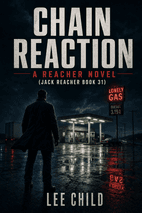
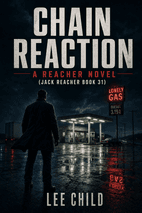
What is the book Chain Reaction about?
Lee Child's Chain Reaction follows Jack Reacher as Susan Turner lures him in through an expired ATM card, then draws him into a desert company town of solar fields and data centers where a ruthless operation cleans up after itself. A lean, tense thriller for readers who love tradecraft and quiet menace.
Feature
Insta.Page
Blinkist
Shortform
Chain Reaction
✓
✕
✕
Summary Depth
Full Chapter-by-Chapter
15-min overview
Section-by-section guides
Audio Narration
✓
✓
✓
Full access to all 800+ summaries
✓
✓
✓
Visual Mindmaps
✓
✕
✕
AI Q&A
✓
✕
✕
Missing a book? Request it, usually live within 48h
✓
✕
✕
Quizzes
✓
✕
✕
PDF Downloads
✓
✕
✓
Send to Kindle
✓
✓
✓
Price
$89.99/yr
$146/yr (PRO)
$199/yr
*Competitor data last verified July 2026.
1 Page Summary
Susan Turner has spent years trying to reach Jack Reacher, and she finally has the means to do it. Reacher has no address, no phone, and no fixed place in the world—just an expired ATM card that forces him to walk into a bank branch in Arlington in person. It's a clever way to flush out a man who doesn't exist on paper, and it works. But the invitation waiting for him outside the bank comes from a new agency with a general who won't say who she works for, and Reacher soon finds himself pulled into a landscape that's been engineered from the ground up: vast solar fields, humming data centers, and a company town in all but name. Alongside Turner and a man named Elwood, Reacher is drawn into a tightening net of surveillance, burned trucks, and people who clean up after themselves with chilling efficiency.
What drives the story is the chain itself—a trail that runs from a motel in the desert to a Denver hotel lobby to a lawyer's office named Lazarus Lorenzo's in Palo Alto. Reacher and Turner count security rotations, follow the next link, and try to seize the initiative before the enemy does. Behind the scenes, unseen men pass decisions up a chain of command, disagree about how far to go, and demonstrate that they will spend their own people to close a door. Turner faces her own hard choices about whom to warn and whom to withhold from, while Reacher works the only tools he has—patience, repetition, and a hard read of the ground beneath his feet. The stakes are the people caught in the middle, and the fear that whoever is behind the operation will keep cleaning up until there's no one left to answer questions.
This is Lee Child in classic form: lean, methodical, and tense, with a wandering hero who sizes up a room before he enters it and a partner who matches him calculation for calculation. Readers who love tradecraft, quiet menace, and the slow tightening of a trap—where every camera, every schedule, and every abandoned truck matters—will find exactly what they came for.
Part 1 - Chapters 1 to 4
Susan Turner wants to find Jack Reacher, and she has the means to do it. She calls his bank's executives and gets them to trace his ATM card, learning that the card has expired and that Reacher must come in person to pick up a replacement. It is a clever way to flush out a man who has no address, no phone, and no fixed place in the world, and it works because Reacher wants a new ATM card. The bank cannot mail the card to a man who does not exist on paper, so the branch becomes the one fixed point in his wandering life, and Turner knows it. She wants him found without a trace of official interest, so she works through the bank rather than through any agency, and the trap closes quietly.
The Bank in Arlington
Reacher rides and walks to his bank in Arlington, and outside the door two MP warrant officers confront him with an invitation to meet their general. Reacher wants to know why a new agency wants him, so he questions the warrant officers. They refuse to name the agency, but they hand him his new card and relay the general's offer to meet on his terms. Reacher wants to avoid the lion's den, so he sets his own terms for the meeting, breakfast at 0800 in plain clothes, and walks away. He wants to keep his distance from his old life, so he walks past the Rock Creek building without stopping and continues on to the diner. The warrant officers do not follow him and do not press him, which tells him the general wants this meeting badly enough to let him set the rules. Reacher keeps the card in his pocket and keeps walking, because a man who has been off the grid for years does not step back into it just because two soldiers ask him nicely.
Breakfast with Turner
Reacher wants to identify the general, so he scans the diner and finds Susan Turner alone in a back booth. He discovers that his old successor now holds three promotions. Turner wants to reconnect, so she and Reacher trade updates over breakfast. She credits him for her first promotion, and he admits he is still alone. Then Turner wants Reacher's help, so she reveals her problem: CID Special Agent Bisley was stabbed to death behind a bar in Colorado on his first night there. Turner wants Reacher to disbelieve the mugging story, so she argues that Bisley had no reason to be in that bar and asks Reacher to say the implication out loud. Reacher wants to test her theory, so he states that a targeted attack would mean a traitor inside her new section, which is exactly why she needs an outsider. Turner wants Reacher's commitment, so she asks him to investigate and put her mind at rest, and he agrees. She does not want an official inquiry, because an official inquiry would run through her own people and would warn the traitor, if there is one. She wants a man with no rank, no file, and no reason to be loyal to anyone inside the unit, and Reacher is the only man she can think of who fits that description. Reacher agrees because he trusts her, and because the story does not sit right with him either.
The Motel and the File
Turner wants Reacher briefed, so she drives him to a motel and gives him the classified Bisley file, warning that it must be returned that evening. Reacher wants a cheap room, so he talks the clerk down from fifty dollars to thirty by looming until the clerk gives in. Reacher wants to understand the case, so he reads the file and learns that Bisley was a thirty-two-year-old cybercrime warrant officer with a wife and a baby daughter. Reacher wants the crime details, so he reads the police report and discovers that Bisley was stabbed eight times, that his wallet, watch, and phone were taken, and that the bar's transient biker customers made the witnesses impossible to trace. Reacher wants to weigh Turner's hunch, so he sets aside the technical pages and confronts the possibility that the too-convenient mugging points to a planned killing. The file is thin in the way that files are thin when the local police have already decided what happened, and Reacher reads the gaps as carefully as he reads the facts. A man with a wife and a baby daughter does not spend his first night in a new posting drinking in a biker bar, and the file offers no explanation for why he would.
Reacher spreads Bisley’s crime-scene photographs and inventories across the table and works through them the way he once worked through a homicide file, wanting to understand exactly how the man died. The vertical stab wounds tell him the knife came down in a controlled, practiced motion, and the missing valuables tell him the robbery was theater. A mugging is chaos, a snatched wallet and a panicked run. This was a man held and killed with purpose, then dressed up as a street crime. He concludes the killers were professionals, or at least men hired to make a killing look like something smaller than it was. The wounds are too neat and too many, eight of them, placed with the patience of a man who was not afraid of being interrupted. A robber in a hurry stabs once and runs. This killer stayed and worked, which means he knew he had time, which means the killing was arranged.
Turner comes to the motel wanting his assessment, and Reacher gives it to her plainly. He should go to Colorado, he says, because the men who did this were second-rate locals, subcontracted on short notice and working close to home. The trail starts where the killers live, not where the victim died. A professional crew flown in from elsewhere would have been cleaner and would have left nothing behind, and these men left a staged robbery that any careful reader could see through. That kind of work comes from locals who were hired in a hurry by someone who did not want to use his own people. Reacher wants to start at the bottom of the chain and work upward, because the bottom of the chain is where men talk.
Then he studies the first close-up and stops. The Toyota’s driver’s seat is pushed too far back for Bisley, who was five-eight. Someone taller drove that car. The evidence rearranges itself in his head, and he reconstructs the abduction: three locals staking out the motel, forcing Bisley into his own vehicle, driving him to the bar yard, and killing him there. It explains the seat, the wounds, the staged robbery, all of it. Three men is the right number, one to drive and two to hold the victim, and the motel is the right place to take him because a man leaving his room at night is easy to surprise. The reconstruction fits every fact in the file, and Reacher wants it to be wrong, because if it is right then someone inside Turner's unit sold a man to his death.
Turner pushes back, wanting certainty he cannot give her. She offers the alternative that Bisley drove himself and simply napped in the lot. The theory stays unproven, and she knows it, and he knows it. She wants him to be wrong about the traitor, because a traitor inside her unit is a wound she would have to open herself, and she is not ready to do that on the strength of a seat position and a set of photographs. Reacher does not argue with her. He lets the theory stand where the evidence puts it and waits for more.
She gives him five thousand dollars in cash and a burner phone, wanting communication that cannot be traced. The cash and the phone commit him to working off the books, without bank cards, without a paper trail, without any official standing at all. He is now a man with a dead man’s file in his head and no badge to back him. If he is caught asking questions in Colorado, he is just a large stranger with a lot of cash and no explanation, and that is a dangerous thing to be. Turner knows it and he knows it, and she gives him the money anyway, because the alternative is an official inquiry that would warn the traitor before it ever reached him.
Reacher buys a one-way first-class ticket with cash, wanting to reach Denver, and the cash purchase flags him for secondary screening. He passes because he carries nothing incriminating, no weapon, no contraband, nothing but the clothes on his back and the money in his pocket. The screening costs him time and nothing else, and he walks to the gate with the file memorized and the cash folded in his pocket. A man who pays cash for a first-class ticket is a man worth a second look, and Reacher lets them look, because there is nothing to find.
At the airport he hires a young limo driver for two hundred dollars plus a fifty-dollar tip, wanting the seventy-mile ride to Summertown, and the driver takes him out through the solar fields to the motel. The panels stretch away in rows under the sun, and Reacher rides toward the place where Bisley was taken. The driver talks because he is young and because the money was good, and Reacher lets him talk, because a local driver knows the local roads and the local habits. The solar fields tell Reacher that this is a place with money moving through it and not much else, which is the kind of place where men can be hired quietly.
From the car he calls Turner and discovers something she had not told him: Bisley’s sunglasses were left in his room. A man does not drive west into a setting sun without his sunglasses. Bisley never drove that car. The seat and the sunglasses now agree with each other, and the reconstruction hardens. Turner had not thought to mention the sunglasses because they seemed like nothing, and Reacher tells her that the nothing details are the ones that convict people. Two independent facts now point the same way, and the theory is no longer a theory. It is the shape of what happened.
Turner admits she cannot identify a bad apple among her thousand-person unit, wanting Reacher to find the leak for her. She has a thousand people and no way to know which one sold Bisley out. Reacher accepts the job on his own terms, planning to work from the local contractors upward, following the hired men back to whoever hired them. He does not want to start with her people, because her people are a thousand names with a thousand alibis, and the men in Colorado are few and local and careless. Find the hired men, and the hired men will name the man who paid them, and the man who paid them will name the man inside the unit. That is the only chain that can be pulled without warning the traitor.
He checks in at the Summertown motel for the minimum stay, wanting a base and information. The night clerk works seven to seven and saw nothing of the afternoon, which is exactly the window Reacher cares about. Reacher takes room ten and settles in, wanting rest. The room is cheap and quiet and the door locks, and Reacher lies on the bed with the file still open in his head, going over the seat and the sunglasses and the eight neat wounds until the pieces stop moving.
The clerk, meanwhile, reports the stranger’s arrival by phone, as required. The voice on the other end orders him to keep reporting, wanting control of the motel, and the clerk complies, though he wants the arrangement to end. The clerk has been passing names to that voice for longer than he likes to think about, and every name he passes makes him a little more afraid of the voice and a little more certain that he cannot stop. Reacher lies in room ten, believing he has found a quiet base, while the man watching the motel already knows he is there. The watcher does not act and does not warn anyone yet. He only wants to know who has come to Summertown and why, and the clerk's report tells him that a large stranger with no car and no luggage has taken room ten for the minimum stay. The trap that began at the bank in Arlington has closed on Reacher without his knowledge, and the first night in Colorado passes quietly, with the file in his head and the phone on the nightstand and the clerk's voice on the line.
💡 Try clicking the AI chat button to ask questions about this book!
Part 2 - Chapters 5 to 7
The Motel and the Morning
Reacher wakes early and walks the motel's exterior, wanting to understand the ground he's standing on before anything else happens. What he finds is a landscape built for machines: vast solar fields stretching in every direction, a diner, and data centers humming in the desert quiet. It's a company town in everything but name, and Reacher takes it in with the patience of a man who knows the terrain matters before anything else does. The solar fields tell him the scale of the operation. The data centers tell him the money behind it. The diner tells him where the people eat. The motel tells him where they sleep. He walks the perimeter and files it all away, because a man who doesn't know his ground is a man who gets surprised on it.
He turns his attention to the motel's security cameras, wanting to assess how much of his stay has been recorded. The system is comprehensive, covering the lot and the entrances with a thoroughness that surprises him. This isn't casual small-business security. Someone invested in seeing everything. The cameras are positioned to catch faces, plates, and approaches, and the coverage has no obvious gaps. Reacher notes the placement and the angles, because a system this good means someone wanted a record, and a record means someone wanted leverage. He wants to know who paid for it and why.
Inside, Reacher questions the young day clerk, wanting to confirm who else passes through this place. The answer is narrow: the motel serves only engineers and software workers, and there's nothing else for miles. The isolation sharpens the picture. Anyone who doesn't fit the profile stands out immediately, and Reacher, a man who fits nothing, has already been noticed. The clerk's answers are careful in a way that suggests he has been trained to be careful, and Reacher files that away too. A motel this remote with a clerk this guarded is a motel with something to hide.
He claims to be corporate security, wanting access to the camera system, and leans on the clerk until the young man caves and shows him the footage. The lie is simple and the pressure is steady, and the clerk folds because he is young and scared and not paid enough to resist. Reacher views the night-vision replay of his own arrival, wanting to test the image quality, and confirms it's court-admissible. The cameras see clearly in the dark. Whatever happened here, the machines were watching. The image is sharp enough to identify a face and a plate, and Reacher knows that means the people who erased the footage knew exactly what they were destroying.
Then he asks to see footage from the day of the bar stabbing, wanting evidence. The clerk claims a glitch erased everything from 2 p.m. to midnight. The answer comes too fast and too smooth. Reacher accuses the clerk of being coerced, wanting the truth, and reads the story off the young man's face before he tells it: two men forced him to erase the footage, and one of them punched him, leaving a black eye that's now two weeks old. The erasure wasn't a glitch. It was a cover-up, and the clerk has been carrying the bruise of it ever since. The black eye is the proof, and the fear in the young man's voice is the rest of it. Reacher wants the truth and gets it, and the truth is that someone with muscle and a plan came through this motel and made sure the machines forgot.
Reacher reviews the check-in footage, wanting to spot suspicious behavior, and catches something the clerk missed: the old clerk making a phone call right after Reacher left the desk. The watchers were notified the moment he arrived. The call is quick and quiet, and it sits in the footage like a fingerprint. Reacher confronts the clerk about the white pickup watching the motel, wanting to identify the surveillance, and the clerk admits he was told to report any non-technical guests. Reacher presses for a description, wanting to identify the culprits, and learns there are two men, one tall and one huge, who threatened to burn the motel down with the staff inside if the clerk didn't cooperate. The threat explains everything: the erased footage, the phone call, the fear in the young man's eyes. The clerk isn't a conspirator. He's a hostage who comes to work every day and does what he's told so the building doesn't burn down around him.
Reacher tells the clerk to call the watchers and report his interest, wanting to bait them, then heads to the diner for breakfast. He isn't hiding anymore. He's setting a hook. The instruction is deliberate and calm, and the clerk understands it as an order from a man who has decided to stop being a ghost and start being a target. Reacher walks to the diner knowing the phone call will travel, and knowing the men on the other end will come, and wanting exactly that.
The Pickup
Outside the diner, Reacher approaches the white pickup and grabs the driver by the throat, wanting to neutralize the surveillance in one move. The move is sudden and total, and the driver has no chance to reach for anything before Reacher has him by the neck. He forces the man to surrender his gun, his phones, his wallet, and his keys. The watcher becomes the watched. The gun goes into Reacher's waistband, the phones and wallet and keys go into Reacher's pockets, and the man who was paid to watch is now a man with nothing in his hands.
Reacher marches the driver into the diner at gunpoint, wanting to interrogate him, and takes a corner table with clear sightlines. The room goes quiet around them, but Reacher has what he needs: a seat against the wall, a view of every door, and a man across the table with nowhere to run. The other customers stare and then look away, and the waitress freezes with a coffee pot in her hand, and Reacher ignores all of it because the geometry of the room is the only thing that matters. He has the wall at his back and the exits in front of him and a frightened man across the table who knows things.
He threatens to break the driver's hand, wanting information, and the driver breaks. He admits he only drove the truck for two weeks and that he's working off a debt. He's not one of them. He's a man caught in the machinery, same as the clerk. The debt is the leash, and the brothers hold it, and the driver is a man who took a bad job because he owed money to bad people and now he is sitting in a diner with a stranger's hand around his future. Reacher hears the story and recognizes it, because he has seen a thousand men in the same trap, and the trap is always the same shape.
Reacher learns the kidnappers are brothers who stopped the video before grabbing the soldier, wanting names, but the driver refuses out of fear for his family. The refusal is real. The man isn't protecting the brothers out of loyalty. He's protecting his wife and kids from what those brothers would do to them. The fear is specific and it has names and faces, and the driver would rather take a broken hand than put his family on the brothers' list. Reacher presses and the man holds, and the holding tells Reacher more than a name would, because it tells him the brothers are the kind of men who go after families.
Reacher lets the driver choose between breakfast and fleeing, wanting to keep him cooperative, and the driver heads to the restroom. The choice is a small mercy and a calculated one, because a man who is allowed to walk away is a man who might still talk. Reacher spreads the seized items across the table and calls Turner. The pieces are on the board now: the erased footage, the threatened clerk, the brothers who stopped the video before they took the soldier, and a driver who knows more than he'll say. The table in front of him is a map of the conspiracy, and he lays it out item by item while the driver hides in the restroom and the diner slowly returns to normal.
Reacher calls Turner from the motel to report that he let the getaway driver walk away. He explains his reasoning: he wanted to keep the operation clean, and letting the man go was the price of that. The trade-off is real, because releasing the driver costs him the chance to identify the brothers right away. Turner takes the news without argument, and Reacher moves on to what he learned before the man left. The driver told him two brothers are behind the threats, and that the motel owner called them in. The owner wants them to come to him. That turns the motel into a trap, and Reacher now knows the ground he is standing on is not neutral. The owner is not a bystander. The owner is a player, and the motel is the board, and Reacher has been standing on it since he arrived.
Turner agrees to run a search on Aurora Stone and Gravel, but only from the parking lot, not from inside any system. She wants to avoid leaving a database record, and that caution limits her to shallow research. The constraint matters, because whatever she finds will be thin, and Reacher will have to work with fragments. A search from the parking lot is a search that leaves no trail, and a search that leaves no trail is a search that cannot go deep. Turner knows the trade and accepts it, and Reacher knows the trade and accepts it, and both of them understand that the truth about Aurora Stone and Gravel will arrive in pieces or not at all.
Reacher takes the driver's burner phone and sees a single number in the call log. He wants to identify the brothers, and the lone number is the thread to pull. It sets up the call that comes next. The phone is cheap and the log is nearly empty, and the single number sits there like a door with one handle. Reacher looks at it and waits, because the men on the other end will call before he has to decide whether to call them.
The brothers ring the driver's phone and announce they are eighty minutes out. They want Reacher kept in sight, and the instruction reveals their assumption: they believe they are talking to their own man. Reacher turns that assumption against them by impersonating the driver. He tells them he is in the big solar field, baiting them into coming to him. The lie commits him to a confrontation there, on ground he has chosen but not yet seen. The brothers believe they are giving orders to a man on their payroll, and Reacher gives them a location and a reason to come, and the trap closes one step before it opens.
Turner comes back with what she found. Aurora Stone and Gravel is a women-owned collective with two sisters and no brothers. She wants to find the connection, but the answer leaves the truck's link to the brothers unexplained. The name on the registration does not match the people hunting them, and the gap sits there unresolved. The registration is a dead end or a false flag or a piece of the puzzle that doesn't fit yet, and Turner and Reacher both see the gap and neither can close it. The women who own the company are not the men in the truck, and the truck is registered to a name that leads somewhere else entirely.
Reacher dumps the driver's wallet, phone, and truck registration, then destroys the burner. He wants to leave no trace, and the destruction cuts off the driver's ties to the brothers. Whatever the man was to them, he is now severed from it, and there is nothing left in Reacher's hands that points back. The wallet and phone and registration go into the trash, and the burner comes apart under his heel, and the driver is a man without a past and Reacher is a man without a trail.
The Solar Field
Reacher drives to the solar field and scouts the panels and the gravel. He wants a good ambush position, and what he finds forces a hard conclusion: the terrain will not give him distance. He has to accept a close-quarters fight, and his only weapon is a three-inch-barrel Colt. The short barrel and the tight ground mean the encounter will be decided at close range, where mistakes are fatal. The panels are too close together and the gravel is too open and there is no long sightline anywhere, and Reacher walks the ground and understands that the fight will happen at arm's length whether he wants it or not.
He U-turns the truck to face east and leaves the driver's door part-open. He wants the brothers to see an unexplained truck, a small wrongness that will pull them in and hold their attention. The arrangement sets his firing line, and he waits.
Part 3 - Chapters 8 to 12
Reacher empties the two Colts into rest-area trash barrels before the flight, unwilling to carry them through airport security but equally unwilling to leave working firearms where anyone might find them. The gesture costs him his only weapons, and he boards the plane unarmed. In downtown Denver he leaves the crew cab unlocked on a street, keys in it, trusting the city to swallow a stolen truck whole. The truck is a loose end he cannot afford to keep, and abandoning it in a busy city is the fastest way to make it disappear from his life without leaving a trail that points back to him.
Turner delivers the news that the Summertown truck burned, with two fatalities inside. The brothers are dead, and with them the trail that might have led somewhere. It confirms what the wreckage already suggested: whoever is behind this cleans up thoroughly, and the people who do the cleaning sometimes become part of the cleanup themselves. The two men who might have answered questions are now ash, and the organization behind them has demonstrated that it will spend its own people to close a door. That lesson shapes everything that follows, because it means every witness Reacher and Turner might find is a witness someone else is willing to kill.
Turner also refuses to let Reacher fly to San Francisco alone. She overrides his plan not out of sentiment but because splitting up would be a poor command decision, and she says so plainly. Whatever is between them, she is still an officer thinking about the mission. Two investigators working the same problem from the same city can cover each other, share what they learn in real time, and present a harder target than two lone operators hundreds of miles apart. Her refusal is tactical, and it keeps the pair together for the next stage of the hunt.
Reacher flies first class to SFO and plants himself in the baggage claim, watching the arrivals stream past. He does not use his phones. He is not waiting for a bag. He is waiting to see whether anyone follows Turner, and whether Turner herself arrives clean. The surveillance is patient, methodical, and entirely without backup. If someone is tailing her, Reacher will see them before they see him, and if she has been compromised, he will know it before she reaches the curb. The baggage claim gives him a chokepoint, a single stream of travelers he can read, and he works it the way he works everything, quietly and without hurry.
While he waits, he buys a plaid flannel shirt from an airport tourist shop and changes, shedding his old clothes to alter his silhouette. It is a small, practical disguise, the kind that works because nobody looks twice at a man in flannel in an airport. The change is cheap and unglamorous, and that is exactly why it works. A man in a suit draws attention in baggage claim. A man in flannel is furniture.
Turner arrives, and the two of them fall into the immediate question: which Lorenzo office to hit first. Reacher argues for the smaller Palo Alto office, convinced that is where the rogue contract-kill operation actually runs, the quiet back room rather than the flagship. Turner agrees, and they take a taxi to Palo Alto. The flagship office is the public face, the place with the letterhead and the conference rooms. The smaller office is where the work that cannot be acknowledged gets done, and Reacher's instinct is to go where the secrets live rather than where the sign is.
They check into a chalet-style motel, paying cash for two rooms. Over dinner they pick at the same problem from different angles. Reacher and Turner debate why Lorenzo would use a second-rate local crew for a job this sensitive, and Turner keeps circling back to Colorado, unwilling to accept that the connection there is finished. The meal is strategy, not respite, and the tension never fully leaves the table. The question of the second-rate crew bothers them both, because a firm capable of the Summertown cleanup should have better people on retainer, and the use of locals suggests either desperation or a deliberate layer of deniability. Turner's refusal to let Colorado go is the instinct of an investigator who knows that the first thread pulled is rarely the last one attached to the knot.
Back at the motel, Reacher spots a dark sedan with two silhouettes sitting in it, watching. He does not sleep. He sits in his dark room and keeps watch, waiting for the watchers to move. The sedan is a confirmation of everything the tracked phone will later prove, but in the moment it is simply two shapes in a parked car and a long night of waiting. Reacher has done this before. The waiting is the work.
They do. He hears his door unlock and kills the first intruder with a rabbit punch as the man steps through, seizing the suppressed Glock from the falling body. When he checks on Turner, she has already dealt with the second man, and the weapon in her hand is a hardcover book. Two intruders, two dead, a two-zip victory delivered in near silence. The book is the detail that matters, because it tells Reacher that Turner fought with what was at hand and won, and that she is not the kind of officer who freezes when the door opens.
Turner calls the situation a mess. Reacher argues the opposite: the cameras were erased, the entry was by key card, and the men came in quiet with suppressed weapons. As far as any record is concerned, they were never there. The logic is cold and it holds. There are no witnesses, no footage, no forced entry, and no noise. Two men walked into a motel and did not walk out, and the world has no way of knowing they ever arrived.
They decide to dispose of the bodies in the intruders' own car, using the nearby bay and the forests around it. Turner presses Reacher on the why, on what mechanism would send two men to a motel room in the middle of the night. Reacher admits he cannot see it. He can read the ambush, but not the hand that set it, and that gap is the most dangerous thing they carry into the dark. Knowing that someone wants you dead is useful. Not knowing how they found you is fatal, because it means they can do it again.
Turner switches her work phone back on and the truth lands hard: someone has been tracking it. The phone was off, and the moment it comes to life, it betrays her. She works through the logic and lands on her deputy commander, Dexter Elwood. He is the one who would know her movements, who could set an alert on her device and tip off the killers the instant she surfaced. The realization carries a colder fear with it, one she voices to Reacher: she does not believe the section will survive this. The unit she has given her life to is compromised from the inside, and the man second in command to her is the most likely traitor. The phone was the mechanism Reacher could not see, and now that he sees it, the ambush makes sense. Someone inside Turner's own command structure has been reading her location off a screen and selling it to the people who sent the two men with the suppressed Glocks.
Reacher turns to the dead man in Turner's room and goes through his belongings. Among the man's things he finds a blank plastic card, unmarked and unremarkable. Reacher being Reacher, he does not leave it at that. He carries the card to room after room and tests it in the locks. It opens every single one. The card is a master key, and the killers had one. The deduction follows quickly. The killers used cloned master keys to get into the rooms, and they hacked the motel's security system remotely to kill the cameras before they moved. Reacher then searches the second dead man, the one in his own room, and finds the same haul, including another master key. Two men, two cloned keys, a motel blinded in advance. The precision of it is what stands out. This was not an opportunistic attack. It was planned with inside knowledge of the motel's systems and the kind of technical skill that costs money.
Reacher sharpens the point: a real master key at a motel like this would be branded and shiny, the kind of thing a front desk keeps on a labeled ring. These cards are scruffy and blank, which means they are clones, cut copies made by someone who knew exactly what he was doing. To confirm it, Reacher takes one of the cards down to the lobby clerk and shows it to him. The clerk says it is not one of theirs. Then the clerk volunteers something worse: the security cameras are down and he cannot fix them. The system was hacked, exactly as Reacher suspected. The clerk's testimony closes the loop. The cards are foreign, the cameras are blind, and the motel has been turned into a room with no memory.
Back in room ten, Reacher and Turner examine the dead man's burner phone. There is an incoming call from Lazarus Lorenzo, and the timing is damning: it came minutes after Reacher and Turner left the room. The killers' employers were checking in, and the men on the other end were already dead. The call is a timestamp on the whole operation. Someone knew when the room would be empty and when the men would be inside it, and that someone called to confirm the work.
That call forces the question of the mole. Turner and Reacher debate it: is Elwood the leak, or did the law firm hack her office system to find her? Neither answer is comfortable. Reacher proposes an experiment rather than an argument, a way to send Elwood away and see what happens when the bait is moved. Turner does not settle the question, but she makes the call that the motel is finished as a base. They load the two bodies into the car and drive north to Woodside. The experiment is the beginning of the trap that will define the next stage of the hunt, and the decision to abandon the motel is an admission that the watchers know where they sleep.
Out past Woodside, Reacher throws both bodies down a ravine off a fire road. The bodies are gone, the evidence with them, and the two of them back the car out and return to the pavement. It is grim, practical work, and it closes the motel chapter of the hunt for good. The ravine is deep and the fire road is empty, and the two men who came to kill Reacher and Turner will not be found by anyone who is not looking for them with a map and a reason.
They drive to SFO and abandon the car, then take a taxi to the Four Seasons hotel in San Francisco. The shift is total: from a scruffy motel and a ravine to marble and a doorman. Turner books a single king room instead of two. The choice is deliberate, and she and Reacher become intimate. Whatever is closing in on them, they have stopped pretending otherwise. The single room is also a tactical decision, because two people in one room are harder to separate and easier to defend, and neither of them says so out loud.
Afterward, Turner lays out the plan. She will send Elwood to Colorado on a wild goose chase, getting him out of the way and testing whether the leak follows him or stays with her. She will switch her phone on at the hotel to see whether killers show up, using herself as the bait. Reacher, for his part, heads across the street to buy a shirt. The trap is set, the bait is live, and the next move belongs to whoever has been tracking her phone. If Elwood is the leak, the killers will follow him to Colorado and the hotel will stay quiet. If the leak is somewhere else, the killers will come to the Four Seasons, and Reacher will be across the street buying a shirt with a clear view of the door.
Part 4 - Chapters 13 to 17
The Twenty-Minute Window
Reacher and Turner watch the Four Seasons from their position, timing the security rotation. They are not watching for the sake of curiosity. They are watching because they need to know the pattern before they move, and the pattern is the only thing standing between them and the net that is closing around them in the city. When a black SUV pulls up and two men in tan outfits step out and head inside, the pattern confirms itself: twenty minutes, regular as clockwork. The rotation is not random. It is a schedule, and a schedule can be read. The two of them have seen enough. They decide to leave for Palo Alto, putting distance between themselves and the net closing around them in the city. The decision is not a retreat. It is a calculation. Staying in the city means staying inside the search area, and the search area is shrinking. Palo Alto is the next link in the chain, and the chain is what they are following.
They take a taxi to California Avenue and walk the rest of the way to Lazarus Lorenzo's law office. Rather than approach directly, they hang back and observe from a distance, staying cautious. The office is the next link in the chain, and they are not about to walk blindly into it. Walking blindly into a lawyer's office that may already be compromised would hand the enemy everything they need. So they watch, and they wait, and they learn what the building looks like from the outside before they decide what to do about it.
Turner needs to verify that Elwood is airborne for the experiment, but she refuses to use either her work phone or her personal phone to check. Both are compromised, both can be traced, and a single call from either device would tell the enemy exactly where she is. So she borrows a cell from a real estate receptionist, spinning whatever cover story gets her the loan of the device, and makes the call. The confirmation comes back: Elwood took off twenty minutes ago. The experiment is in motion. The verification matters because it tells them Elwood is out of reach, beyond the immediate danger, and it tells them the clock on the experiment is running. What they do next has to account for both facts.
The Sequoia Suites
With that confirmed, Reacher and Turner check into the Sequoia Suites, paying a week's rate out of their cash reserves. The room gives them a base, a place to work from, and the week's payment makes them look like ordinary guests with ordinary plans. A week's rate is a statement of intent. It says the people in the room are staying, and people who are staying are not people who are running. The disguise is thin but it is enough. Turner switches on her work phone, and the device immediately delivers bad news: she has to return to D.C. for a meeting with the Chief of Staff. The phone is a leash, and someone on the other end is pulling it. The meeting is not a request. It is an order, and the order comes from the same chain of command that has been trying to kill her. Returning to D.C. would put her back inside the reach of the people who sent the crew, and refusing to return would expose her. The leash is tight on both ends.
Reacher hides Turner's phone in the welcome basket, arranging it so that anyone tracking the signal will read their presence as a full day's work rather than a quick stop. It is a small piece of theater, and it buys them time. The phone in the basket is a decoy, and the decoy only works if it looks like the phone is where it is supposed to be, doing what it is supposed to do. A phone that sits in a basket in a hotel room reads as a phone that belongs to someone who is in the room, working, living, staying. Then they leave through the fire exit, slipping out the back way and settling in at a deli across the street to watch the hotel. The fire exit keeps them off the lobby cameras, and the deli gives them eyes on the front door. They are outside the trap and watching it at the same time.
Brill Makes His Move
Saxby Cameron detects Turner's signal at the Sequoia Suites and reports it to Axel Brill. Brill does not pounce immediately. He decides to wait until she transmits past fifteen minutes before acting, wanting certainty rather than another false alarm. The wait is a discipline. Brill has been burned by false alarms before, and he is not going to spend another crew on a signal that might be nothing. Cameron confirms the signal persists and narrows it down, identifying the suite and the fire door. That is enough for Brill. He orders the cameras disabled and the master key codes sent, then calls his contact at Lazarus Lorenzo and tells him to send men to kill Turner. The order is explicit. It is not a retrieval. It is a killing, and the men who receive it are being sent to a hotel room to end a life.
Three armed men in a tan SUV arrive at the Sequoia Suites and enter. They search the suite and find it empty. Across the street, Reacher and Turner watch the whole thing from the deli, and the sight of the ambush closing on an empty room tells them what they need to know: Elwood is cleared. The men were sent for Turner, not for him. The empty room is the proof. If the crew had been sent for Elwood, they would have gone somewhere else. They came to Turner's room, which means Turner is the target, which means Elwood is not. The ambush that was meant to trap them has instead told them exactly who the enemy is hunting.
Brill's contact reports back that the suite is empty. Brill is frustrated, another miss in a series of misses, and he orders the men to stay put and wait in ambush for up to twenty-four hours. He is not giving up the ground he has gained. The men stay, and the room that was supposed to be a killing floor becomes a waiting room. The wait is a gamble. It assumes Turner will come back, and it assumes the men can stay sharp for a full day. Both assumptions are about to be tested.
The Phone in the Basket
Turner insists she has to retrieve her work phone before her D.C. meeting. The meeting with the Chief of Staff is not something she can simply skip, and the phone is sitting in a welcome basket in a room now occupied by three armed men waiting for her. The phone is the leash, and the leash is the meeting, and the meeting is the thing that keeps her inside the system long enough to be destroyed by it. Reacher proposes going in through the fire door, using a crowbar technique to get past whatever they have done to secure it, ambush or no ambush. It is a blunt plan for a blunt problem, and it is the only way in that does not walk them straight through the front lobby. The front lobby is watched. The fire door is not, or at least not as closely, and the difference between the two is the difference between a plan and a suicide.
They decide to wait twenty minutes first, letting the ambush team settle and lose focus before they move. The men inside are waiting for a target who is not coming through the door they expect, and time is the one advantage Reacher and Turner have left. Twenty minutes is enough for the men to stop expecting anything, to relax into the boredom of a stakeout, to let their attention drift. A crew that is sharp is dangerous. A crew that is bored is vulnerable.
Brill wants to know why Turner's signal is still active. The phone should have gone dark the moment the crew found it, and the fact that it hasn't means something is wrong. Cameron's discovery that her phone remains in the room forces Brill to admit the truth: the phone the crew is chasing is a decoy. The admission costs him authority in the moment, and it changes the shape of the operation. What was supposed to be a quick retrieval has become a search for a device that was never there. Brill has been outmaneuvered by a phone in a basket, and the men in the room are now looking for something that does not exist.
Brill wants Lorenzo to recover Turner's phone, and Lorenzo orders his crew to search the room. The order costs them time and exposes their presence. Men who should have been in and out are now tearing a hotel suite apart, and every minute they spend looking for a phone that isn't there is a minute Turner and Reacher gain. The search itself becomes a liability, broadcasting to anyone paying attention that something is happening in that room. A quiet ambush is one thing. A crew turning a suite upside down is another, and the noise of it carries.
Reacher wants to leave immediately. His warning that the enemy will soon realize the phone is a decoy forces Turner to abandon the twenty-minute wait she had planned. She had wanted to let the clock run, to keep the crew occupied while she and Reacher moved into position, but Reacher's logic is unanswerable: the moment the crew understands they've been chasing a decoy, they will know Turner is close, and the window closes. The wait is over. They move now. The twenty minutes they had planned to spend waiting become twenty minutes of movement instead, and the advantage shifts from patience to speed.
Turner wants to reach the hotel without alerting the parked driver. Her plan sends Reacher across the avenue separately, splitting them temporarily. It is a calculated risk: two people moving together draw attention, two people moving apart do not. Reacher crosses alone, and for a stretch Turner is on her own, the driver watching the entrance while she works her way toward the building. The separation is temporary but the danger is real, because if either of them is spotted the other has no way to know. Two people apart are two people who cannot warn each other, and the silence between them is the price of not being seen together.
Reacher wants to enter through the fire exit. The locked door forces them to abandon stealth and approach through the lobby instead. The plan was to slip in through the back, to appear inside the building without ever crossing the threshold anyone was watching. The lock defeats that. Now they have to walk in the front, past the driver, past anyone else keeping watch, and the only thing standing between them and discovery is speed and the driver's inattention. The fire exit was supposed to be the quiet way in. The lobby is the loud way in, and the loud way in only works if it is fast.
Reacher wants to neutralize the driver without gunfire. His plan depends on the SUV being unlocked, risking everything on that gamble. A gunshot would bring the whole crew running, so the driver has to go down quietly. Reacher's approach hinges on a single unknown: whether the vehicle door will open. If it is locked, the whole plan collapses and they are standing in the open with a witness. The gamble pays off. The door opens. The driver is reachable, and the quiet way in stays quiet.
Reacher wants to silence the driver before he can warn the crew. He kills him by crushing his throat, removing the lookout but leaving the phone active. The killing is quick and quiet, exactly what the situation demands, but it leaves a loose end: the driver's phone is still on, still connected to the crew, and anyone listening will eventually notice the silence. The lookout is gone. The clock is still running. The phone is a thread that connects the dead man to the living crew, and the thread has not been cut.
Turner wants to preserve the illusion that the search is ongoing. She leaves her phone switched on, buying them time while keeping the enemy waiting. It is a deliberate choice to let the decoy keep working, to let Brill and Lorenzo believe the crew is still hunting, still closing in. Every minute the phone stays live is a minute the enemy spends waiting instead of acting, and Turner spends that minute moving. The decoy is not just a phone anymore. It is a clock, and the clock is ticking in their favor.
Reacher answers the stolen phone and wants to imitate the dead driver. Lorenzo's call reveals a new hit on Colonel Elwood, exposing the conspiracy's reach. The voice on the other end is giving orders, and the orders name a target: Elwood is next. The conspiracy is not confined to Turner and her test. It reaches into the colonel's life, and the phone in Reacher's hand has just told them so. The call is a window into the enemy's plans, and the window has just shown them a name.
Turner wants to warn Elwood. Reacher argues that dead people cannot hurt him and that bringing Elwood back would expose her test, forcing her to let him continue. It is a cold calculation and Turner knows it.
You've reached the end of the free chapters
Never lose the plot
Chapter-by-chapter summaries, characters and endings explained, and a book you can ask anything.
$0.00 due today · 7 days free, then $89.99/year ($7.49/mo) · Cancel anytime before day 7
Lee Child is the pen name of Jim Grant, a British author born in 1954 in Coventry, England, who worked in television production before turning to writing. He is best known for the Jack Reacher thriller series, beginning with Killing Floor in 1997, which has sold hundreds of millions of copies worldwide and been adapted into films and a television series. Child's expertise lies in crafting tightly plotted, action-driven suspense novels, and he served as the series' sole author until passing the torch in 2020.
Frequently Asked Questions about Chain Reaction
What is Chain Reaction about?
Jack Reacher has no address, no phone, and no fixed place in the world — which is exactly why Susan Turner has to get creative when she needs to find him. By working through his bank and a stalled ATM card, she flushes him out to a branch in Arlington, and from there he's pulled into a company town of vast solar fields and humming data centers where the security cameras see far more than any small business should. Reacher and Turner end up following a chain of leads toward a well-funded operation that is working just as hard to close the trail behind them. The stakes keep climbing as it becomes clear that whoever is behind it all cleans up thoroughly — including its own people.
Who is the author of Chain Reaction?
Lee Child is the writer behind the long-running Jack Reacher thrillers, a series built around a former military policeman who travels light and solves problems the hard way. His books are known for lean prose, brisk pacing, and a strong forward momentum that keeps pages turning. Readers who like uncomplicated heroes and tightly wound plots tend to gravitate to his work.
Is Chain Reaction worth reading?
It's a fast, satisfying read for anyone who likes a thriller that moves — the plotting is methodical, the tradecraft is detailed, and Reacher's habit of studying his ground before he acts gives every confrontation a satisfying logic. The partnership with Turner gives the chase a human center, with quiet beats of trust and humor between the tense ones. Series fans will find the familiar pleasures intact, plus a conspiracy that keeps widening in satisfying ways.
What are the main themes in Chain Reaction?
Surveillance runs through the entire story — Reacher is tracked through a bank card, a company town watches every approach on camera, and the sense that no one moves unobserved gives the book its pressure. The novel also probes institutional power and accountability, pitting a small circle of investigators against a well-funded operation with reach into official channels and a habit of spending its own people to close a door. Alongside that runs a thread about loyalty and judgment, seen in Turner's careful decisions about who to trust and what to withhold until she has something real to offer. It's ultimately a story about the cost of secrets and the people willing to carry them.
📚 Explore Our Book Summary Library
Discover more insightful book summaries from our collection