Fourth Wing Themes
by Rebecca Yarros
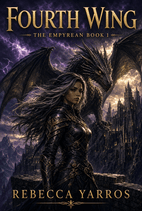
Under all the dragons and death, Fourth Wing is really about who gets to decide how you live. A meritocracy built on culling makes survival a daily test, while family legacies and executions turn children into suspects. Trust is risky, protection can become control, and Violet's supposed weaknesses force her to redefine strength. Dragon bonds add interdependence, not simple salvation.
On this page, you'll see those themes through the parapet, challenges, Threshing, and war games; the rebellion's aftermath for the Marked Ones; hidden signets, rebel meetings, and feathertail gifts; Dain, Xaden, and Tairn trying to keep Violet safe; and her scribe cunning, chronic injuries, and poisons. You'll also find recurring symbols like the Parapet, rebellion relics, dragon bonding marks, and the Death Roll, Burn Pit, and Malek.
Major Themes in Fourth Wing
Survival and Death in a Brutal Meritocracy
The Riders Quadrant is built on constant culling, where cadets die on the parapet, in challenges, at Threshing, and during war games, and where strength is revered as the highest virtue. Violet survives by refusing to run, repeating 'I will not die today,' and learning that the institution will not protect her.
- Mira warns that the parapet is eighteen inches wide, two hundred feet aboveground, and slick with rain, and says there is only survival and death.
- Commandant Panchek reports that 301 survived the parapet and 67 did not, then warns 'Don't die'; Xaden later tells the cadets roughly half will be dead by next summer.
- Jack Barlowe throws a scrawny candidate off the parapet and breaks another first-year's neck during sparring; Xaden tells a panicked first-year that war is 'snapped necks and two-hundred-foot falls.'
- Captain Fitzgibbons repeatedly reads the death roll and commends the dead to Malek, while Aurelie falls from the Gauntlet and Dylan slips from the parapet.
- Violet repeats 'I will not die today' on the parapet and Gauntlet, and later kills Jack with lightning during the battle, retching with guilt afterward.
Family Legacy, Inherited Guilt, and Revenge
Characters enter the quadrant carrying their parents' crimes, loyalties, and executions; the rebellion's aftermath makes children pay for the apostasy and fuels personal vendettas. Violet's Sorrengail name and Xaden's marked heritage make them enemies before they can choose otherwise.
- General Sorrengail refuses to let Violet enter the Scribe Quadrant, saying she will not watch one of her children enter it, and forces Violet into the Riders Quadrant.
- Xaden says Violet's mother captured and oversaw his father's execution, while Violet counters that his father killed her brother Brennan.
- Imogen attacks Violet and says 'Your mother murdered my family,' and Garrick argues that punishing children for the sins of their parents is the Navarrian way, not the Tyrrish.
- The treaty excerpt says the 107 children of executed officers carry the 'rebellion relic' and are conscripted into the Riders Quadrant; Xaden reveals his 107 scars are a reminder of his deal to take responsibility for those 107 rebellion children.
- Liam tells Violet he watched his father Isaac Mairi executed and was separated from his sister, and marked children are forced into the Riders Quadrant.
Trust, Secrecy, and Betrayal
Survival depends on knowing whom to trust, but nearly every character hides crucial information—signets, rebel meetings, feathertail gifts, gryphon alliances, and venin. The novel links intimacy to vulnerability: love and friendship are repeatedly threatened by secrets, memory-reading, and omission.
- Dain reveals his signet is reading recent memories and that it is not common knowledge; later Xaden suspects Dain touched Violet's face, read her memories, and told Colonel Aetos, leading them to Athebyne.
- Violet keeps the secret about seeing marked ones under the oak tree from Dain, though she had never kept a secret from him, and Xaden ambushes her to extract her promise not to reveal the gatherings.
- Tairn and Andarna admit they knew about Xaden's alliance with the gryphon riders, and Andarna says they did not lie, they just did not tell Violet everything.
- Violet tells Xaden she believes him but no longer trusts him after discovering his alliance, and later she refuses to trust him with her heart again.
- Xaden tells Violet, 'If we're going to do this, then we have to trust each other,' and he later confesses he fell for her and vows to earn back her trust.
Protection versus Self-Determination
Dain, Xaden, and even Tairn repeatedly try to control what Violet does in the name of keeping her safe, but Violet insists on making her own choices and training to stand on her own. The theme frames protection as both love and a cage.
- Dain tries to take Violet to the Scribe Quadrant to save her, but she refuses because her mother would haul her back and she wants to stay.
- Violet tells Dain that keeping her safe is keeping her from growing and insists he respect her choices; Xaden tells Dain that Violet needs less protection and more instruction.
- Tairn holds Violet in the seat during flight lessons, then releases her when she argues she must do it herself; Tairn and Xaden later give her a custom saddle because her body is built differently.
- Dain begs Violet not to wait to be inducted as a scribe, saying he can't lose her, while Violet chooses to go with Xaden to Athebyne and later tells Dain to let go.
Cunning, Disability, and Redefining Strength
Violet's fragile body, chronic injuries, and scribe training are treated as liabilities, but she survives by outthinking opponents, using poison, reciting knowledge, and bending rules. The book repeatedly contrasts brute force with intelligence, adaptability, and resolve.
- Mira tells Violet to outsmart the other cadets and not become another name on the death roll; Violet recites geographical and historical facts on the parapet to control her panic.
- In Battle Brief, Violet prompts Rhiannon to ask the village's altitude and deduces the riders were already on their way because a dragon sensed the faltering ward; Devera confirms she is right.
- Violet wins challenges by poisoning opponents with fonilee berries, leighorrel mushrooms, zihna root, tarsilla leaves, and carmine bark, and she says she will take being lucky over being good.
- On Presentation Day, Violet uses a rope to climb the chimney and stabs her dagger into the final ramp, then cites Codex Article Three, Section Six, Addendum B to avoid disqualification.
- Violet wraps her swollen knee, notes her ligaments do not work well, and resolves 'I will not die today'; Tairn argues that because her body is built differently, she still deserves to keep her seat.
Dragon Bonds and Interdependence
Dragons choose their riders on their own terms, and the bond creates mental, emotional, and magical interdependence that can protect or overwhelm humans. Mated dragons and channeled signets tie characters together, making survival and identity inseparable from the bond.
- Professor Kaori tells Violet that nothing about who dragons choose is up to humans; General Melgren later announces that both Tairn and Andarna's choice of Violet stands.
- Xaden explains that Tairn and Sgaeyl are a mated pair, so if Violet dies it could set off a chain ending with his death, making Violet tethered to him.
- Tairn answers Violet's unspoken thoughts and says 'You'll never be alone again'; Andarna also speaks into Violet's mind and gifts her the power to stop time.
- Tairn's anger floods Violet during sparring and makes her lose her footing; later Tairn's lust and emotions overwhelm her so strongly that she flees to avoid acting on them with Liam.
- Violet succeeds in closing and locking a mental door to block Tairn's channeled power, and later her lightning manifests from emotional and sexual intensity, shattering Xaden's window.
Symbols and Motifs
The Parapet
The narrow bridge into the Riders Quadrant represents the deadly threshold between civilian or scribe life and rider life, and the necessity of choosing to cross into danger rather than run from it. It also becomes a private site of Violet's agency when she crosses it again for Xaden.
- Violet crosses the parapet in a storm while reciting facts, repeating 'I will not die today,' after Dylan slips and falls and Jack Barlowe chases her.
- Jack throws a scrawny candidate off the parapet and then chases Violet across it; at the courtyard riders invoke the Codex when he threatens her.
- On Conscription Day, Violet walks the dark parapet barefoot in a dress uniform to reach Xaden, refuses to turn back unless he comes with her, and leads him back across.
Rebellion Relics and Marked Ones
The relics mark the children of executed separatists as politically suspect and physically branded, embodying inherited guilt, prejudice, and the hidden legacy of the rebellion. They also identify the network of marked riders who secretly train and protect one another.
- Mira explains rebellion relics on the marked children of separatists and warns Violet to stay away from Xaden Riorson, a third-year wingleader.
- Liam's rebellion relic draws stares from officers and cadets, and General Melgren questions Liam about being Colonel Mairi's son before narrowing his eyes at the relic.
- Violet realizes everyone in Xaden's headquarters squad except her carries rebellion relics and are children of separatists; Xaden constructed an all-marked squad.
- Xaden reveals his 107 scars are a reminder of a deal to take personal responsibility for the loyalty of 107 rebellion children so they could fight in the Riders Quadrant instead of being executed.
Dragon Relics and Bonding Marks
The visible marks left by dragons on their riders represent chosen identity, belonging, and the permanent bond between human and dragon. Violet's paired black-and-gold relic marks her unique bond with both Tairn and Andarna.
- At the Threshing ceremony, Violet is marked with a black dragon relic and a golden dragon silhouette on her back, and sees it through Andarna's eyes.
- Ridoc shows his brown dragon relic on his upper arm after bonding Aotrom; Jack records his bond with Baide.
- Violet says she is marked as Tairn and Andarna's rider, seeing a glistening black dragon relic and a shimmering golden silhouette on her back through Andarna's eyes.
The Death Roll, Burn Pit, and Malek
The ritual reading of the dead and the burn pit represent the institution's way of naming, honoring, and quickly moving past death. Malek, the god of death, frames loss as a repeated tribute rather than a singular tragedy.
- Captain Fitzgibbons reads the death roll in the courtyard, including Simone Casteneda, and commends the dead to Malek.
- Panchek reports that 301 survived the parapet and 67 did not; later Captain Fitzgibbons reads more names, including Calvin Atwater, Newland Jahvon, and Aurelie Donans.
- Violet carries Aurelie's pack to the burn pit and throws it into the flames, where it becomes just another tribute to Malek, the god of death.
- Fitzgibbons reads Oren Seifert's name in the death roll after Xaden kills him, and later reads Sharla Gunter and Mushin Vedie, who burned to death when his signet manifested.