As an Amazon Associate, we earn from qualifying purchases.
⚠️ READER ADVISORY: This is a deep-dive summary designed for those who want the full story. Contains spoilers.
What is the book Pen Pal about?
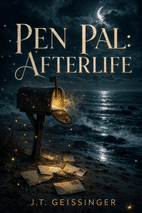
J.T. Geissinger's Pen Pal follows Kayla and Aidan, whose hard-won paradise unravels when a sealed envelope containing a hand-drawn Hangman game appears, and Aidan's father tracks them to their strange house. A gothic, slow-burn suspense novel for readers who love atmospheric dread and layered mysteries.
Feature
Insta.Page
Blinkist
Shortform
Pen Pal
✓
✕
✕
Summary Depth
Full Chapter-by-Chapter
15-min overview
Section-by-section guides
Audio Narration
✓
✓
✓
Full access to all 800+ summaries
✓
✓
✓
Visual Mindmaps
✓
✕
✕
AI Q&A
✓
✕
✕
Missing a book? Request it, usually live within 48h
✓
✕
✕
Quizzes
✓
✕
✕
PDF Downloads
✓
✕
✓
Send to Kindle
✓
✓
✓
Price
$89.99/yr
$146/yr (PRO)
$199/yr
*Competitor data last verified July 2026.
1 Page Summary
Kayla has built something rare with Aidan: a quiet, hard-won paradise for two, far from the life—and the imprisoned ex—she left behind. Their days are warm and ordinary, and she allows herself to believe the worst is over. But the peace begins to fray in small, unsettling ways. A sealed envelope appears where no envelope should be, and inside it is not a love note but a hand-drawn game of Hangman. Around the edges of their world, other signs gather: a crow's cry, a storm where the sky was once clear, and the growing sense that the strange house they share operates by rules neither of them fully understands.
The threat pressing in on them is not only external. Aidan's father—a man who should not be able to find them—has somehow tracked them to this place, and Kayla knows that if he can reach them, so might Michael. The defenses they cobble together are thin: locked doors, the odd laws of the house, and Aidan's fierce promise that no one will hurt her. Meanwhile, their wider circle simmers with its own tensions—old jealousies, public condemnations, and confrontations staged in dining rooms and drawing rooms alike. Aidan carries secrets of his own, the kind that have left inconsistencies in his history and moments when he looks at Kayla as though seeing someone else entirely, and the weight of that concealment is beginning to show.
Pen Pal: Afterlife is a gothic, slow-burn suspense novel steeped in dread and ambiguity, where dreams feel more real than waking life and every ordinary object might be a message. It is a story of love under siege—of a woman trying to hold onto safety and a man haunted by failures she cannot yet name—and it asks how far two people will go to protect a paradise that may already be slipping through their fingers. Readers who love atmospheric psychological tension, layered mysteries that refuse easy answers, and romances shadowed by the supernatural will find themselves turning pages late into the night, desperate to know what waits behind the next closed door.
Part 1 - Chapters 1 to 4
Kayla stands in a dream where she must choose between Heaven and Hell, and the choice is not hers to make. A voice tells her she belongs to neither place, and she wakes with the riddle unanswered and gnawing at her. The dream unsettles her enough that she decides not to seek out the raven for its answer, because a darker fear has taken hold: what if she is the dream and not the dreamer? The question sits with her, unresolved, and she chooses not to pull at the thread.
The Envelope Behind the Flour
Aidan calls her in from the porch, and the ordinary warmth of his voice pulls her back into the day. He embraces her, and she prays silently, grateful for the paradise they have made together. She teases him about his softness and lets him chase her, deciding there is time enough for everything. The ease between them feels complete, which makes what she finds next cut deeper.
She goes inside to fetch wine and discovers a sealed envelope addressed to her, hidden behind the flour canister. She opens it expecting a love note and instead finds a hand-drawn gallows puzzle: the game of Hangman. She guesses the letter I and hides the puzzle back behind the canister for Aidan to find, turning the strange discovery into a private game between them rather than a confrontation.
The Boat and the Snake
They take the boat out on the cove and drink wine as night falls. The water and the dark should be romantic, but Kayla voices what she has noticed: no other people inhabit the island. Aidan quietly admits he knows. The admission lands heavily, because it confirms something she has been circling, that the two of them are alone in a way that is not natural.
She asks whether Aidan met anyone while waiting for her, and he deflects with a joke about Eden. The joke does not hold. Kayla warns that Eden only stayed perfect until the snake came, and the remark changes the air between them. Aidan abruptly ends the outing, cutting the evening short rather than answer her. The paradise she prayed over on the porch now has a crack running through it, and he is the one who will not look at it.
The Puzzle on the Mirror
Kayla wakes alone to the smell of bacon, and the bed beside her is empty. The puzzle has moved: it now sits on her bedroom mirror, placed where she cannot miss it. The game has been answered, and the answer is that Aidan found her hidden letter and put it back in a place designed to be seen. She guesses the letter A and returns the puzzle to its hiding spot, keeping the exchange going, though the question of who is playing whom has begun to press on her.
She asks Aidan why they still have bodies, a question that reaches toward the nature of the island and of themselves. He deflects again, this time with a crude joke, and the pattern is now unmistakable. Every question she asks about what they are and where they are gets turned aside, and the man who chased her through the house that morning will not stand still for a real answer.
Kayla asks Aidan about the nature of their immaterial state, wanting to understand what they actually are now, and he admits he doesn't have the answers. Rather than pretend to knowledge he lacks, he turns the moment into a declaration of devotion, telling her she is his destiny and that their state together is perfection. The reassurance moves Kayla to tears and deepens the bond between them.
The tenderness carries into small, ordinary gestures. When Kayla asks for two pieces of bacon, Aidan serves her four, wanting to give her more than she requests. The simple abundance tightens her throat with emotion, and the domestic ease of the moment settles over them both.
That ease turns playful. Kayla beats Aidan at cards, wanting to win, and he accuses her of having let him win at Scrabble, sparking a mock argument between them. The teasing escalates when Kayla calls him old and tired, wanting to sass him, and Aidan responds by chasing her down and catching her. He throws her over his shoulder to carry her upstairs for a "lesson," wanting to punish her teasing, and the flirtation between them escalates with every step.
The Man at the Window
Then Kayla spots him: a strange man staring through the living room window. She wants to understand who he is, and the sight stops Aidan mid-step, both of them suddenly on alert. Aidan sets her down and demands details of the intruder, wanting to assess the threat. Kayla describes an older, heavyset, balding man in a white T-shirt with a red logo.
Aidan orders her to lock herself in the bedroom while he investigates outside, wanting to protect her. She obeys, but the waiting leaves her panicking alone, trapped with nothing to do but imagine what is happening beyond the door.
What Aidan Saw Before
Aidan returns and reports that no one was outside, wanting to reassure her. But his grim demeanor betrays him, and Kayla presses him to talk. He admits he has seen the man before, in the yard, wanting to come clean. The confession frightens her further rather than settling her fears.
Then he reveals the truth: the man is his father. The father he killed. And he is wearing the bloodstained clothes he died in. Aidan shares the horrifying truth because he can no longer hide it from her, and the revelation shatters Kayla's sense of their paradise. The man at the window is not a stranger at all but a dead man walking, and the safe, perfect world the two of them have built together cracks open around them.
💡 Try clicking the AI chat button to ask questions about this book!
Part 2 - Chapters 5 to 9
Aidan holds Kayla and tells her his father won't hurt them, but she doesn't believe him. He pulls her into an embrace, trying to make her feel safe even though his words ring hollow against everything they've seen. She asks how his father found them. Aidan vows to get rid of him, promising he will never let anyone hurt her. But the vow doesn't answer how a dead man tracked them to this house.
Kayla pushes further. If his father found them, she warns, then Michael might eventually find them too. Her imprisoned ex is still out there somewhere, and she's right. Aidan concedes the point. Now they face a threat worse than a ghost, and it keeps growing.
The Plan and the Storm
They settle on a plan. If Kayla sees his father again, she locks all the doors and stays inside. They're betting on the house's rules, the strange laws that seem to govern this place, to keep him from entering uninvited. It's a thin defense, but it's what they have.
Then they hear it. Distant booms, like thunder rolling across the sky. A storm is coming to their previously clear world, and the sound of it unsettles them both. The sky darkens, and the house creaks and groans with every gust.
Kayla makes a proposal that reveals how desperate she is to understand the rules of this place. She suggests stabbing herself to test whether they can be physically harmed. It's reckless, born of a need to know what they're dealing with. Aidan forbids it immediately and extracts her promise not to try. He won't let her hurt herself to satisfy curiosity, no matter how urgent the question.
The Figure on the Lawn
Kayla sees him. Aidan's father stands on the lawn, staring at her through the window. She watches him, frozen, and then he vanishes. The sight confirms what she's been fearing. The man isn't just a memory or a threat from the past. He's here, in whatever way this place allows, and he's watching her.
Kayla wakes from a dream of a raven's prophecy. The dream lingers, unsettling, but the reality outside the window is worse. The sun is hidden behind thick fog. Aidan has kept vigil all night, and he's locked them in the bedroom. The fog presses against the windows, and the house feels smaller, more confined.
Aidan blames himself. The weight of their situation, the haunting, the fog, the fear, all of it rests on his shoulders in his mind. Kayla coaxes him out of his dark mood. She reassures him they'll face it together, refusing to let him carry the burden alone. The moment is tender, a brief respite from the mounting dread.
A Careless Word
Then Aidan accidentally mentions that Kayla would make a great mom. The words slip out, and the pain of her past miscarriage flickers across her face. But she forgives him. She moves on, not letting the moment fester. It's a small grace in the middle of everything else, a reminder of what they've lost and what they're still fighting for.
A sharp gunshot rings out from outside. The sound cracks through the quiet, startling them both. For Kayla, it's a visceral reminder of the shot she heard before her death. The memory floods back, and the present danger collides with the past.
Aidan orders her to stay locked in the room. He goes downstairs to investigate, arming himself with a cleaver. The weapon is crude, but it's what he has. He steps outside, and the smell hits him immediately. Gunpowder and blood. He prepares to confront whatever made the noise, the blade in his hand, the fog swallowing the world around him.
Aidan moves through the house searching for any sign of trouble. He finds nothing until he reaches Kayla's studio. There, dragged earth and a crimson trail across the floor stop him cold. The blood is hers, and the marks of something hauled away tell him an intruder has taken her. Fear turns to fury.
The Empty Studio
Aidan shouts a challenge and kicks in the studio door, braced for a fight, ready to hurt whoever is on the other side. The room is empty. There is no intruder, no Kayla, nothing to strike at. He turns back to the doorway and discovers the blood and the churned earth have vanished entirely. The floor is clean. Now he doubts his own senses, and a worse thought takes hold: someone is manipulating him, playing with what he sees.
The Hailstorm
Before he can make sense of it, a sudden hailstorm shatters the studio windows. Ice drives into the room and Aidan shields himself, then flees before the storm destroys the space around him. He sprints toward the house but pulls up short at the sight of a tall man retreating into the forest, a bloody exit wound torn through his back. The wound is impossible, and Aidan confronts the figure with the memory of the father he killed.
The Father in the Trees
Aidan remembers shooting his abusive father to save his mother, and serving seven years for it. That memory hardens him. Whatever this monster is, it will not threaten Kayla again. He raises the cleaver and charges into the forest after the figure, wanting revenge and protection both. But the sky blackens and a burst of crows explodes around him, and he falters.
The Fog and the Grassland
Aidan pushes into a fog so thick it swallows the forest whole. When he turns back, the woods are gone. He is stranded in a strange grassland at midnight. He finds a dead tree and a watching crow that seems to beckon him toward a cliff. Aidan refuses the silent suggestion and demands information about the wounded man instead. The crow gives him nothing. He leaves it and walks back through the rain until a house comes into view. He recognizes it as his and Kayla's home, and he runs inside.
Three Days
Aidan tears through the house calling for Kayla, tosses the cleaver aside, and finds her waiting in the bedroom. Her fury and her tears show how badly his disappearance hurt her. She confronts him over being gone three days, and Aidan is shocked. He assumed an hour had passed. The time slip was far longer than he knew. He tries to defuse her anger with jokes about Jesus and himself, risking her wrath, and wins back just enough of her humor to calm her. Kayla kisses him and tells him that the whole time he was gone, the house was battered by nonstop howling winds. The words deepen his guilt and his frustration. Aidan admits he does not understand what is happening. Kayla, her hope returning, tells him she thinks she knows someone who can help.
Part 3 - Chapters 10 to 13
The Dining Room
Fiona sets her sights on Lorenzo at dinner and decides to amuse herself. She flirts with him openly, and the performance is calculated: part entertainment, part provocation aimed squarely at Penelope. The flirtation is not spontaneous and it is not subtle. It is a display staged for an audience of one, and Penelope is meant to feel every beat of it. Penelope does not find it funny. She condemns Fiona's behavior outright, and the moral judgment costs Fiona whatever goodwill existed between them. The condemnation is not a quiet disapproval that can be smoothed over later. It is a verdict delivered in front of others, and it draws a line between the two women that did not exist before. Fiona gets her amusement, but she pays for it in Penelope's contempt. The entertainment she purchased for herself is paid for with a relationship, and the exchange is final.
Penelope's response goes beyond disapproval. She offers Lorenzo practical help, suggesting he file a harassment claim against Fiona. The suggestion is concrete, procedural, and pointed. It treats Fiona's behavior not as a social offense to be absorbed but as a wrong with a remedy, and it puts Lorenzo in the position of deciding whether to pursue it. Lorenzo will not take the offer. He demurs, retreats from the conversation, and leaves Penelope frustrated. His refusal is not a defense of Fiona and it is not a rejection of Penelope. It is a withdrawal, a stepping back from a conflict he does not want to enter. She wants to act, to protect him or to punish Fiona, and Lorenzo's refusal to engage leaves her with nowhere to put that energy. The frustration is the frustration of someone holding a tool no one will let her use. She has the means to strike and no target she is permitted to strike at, and the energy curdles in place.
The French Doors
Then Fiona sees them. Two spirits stand by the French doors, and she recognizes Kayla. The recognition is immediate and it is not partial. Fiona knows the face, knows the person it belongs to, and the knowing arrives all at once. The shock is so severe that Fiona abandons the dining room entirely, leaving without explanation. She does not excuse herself and she does not manufacture a reason. She simply goes, and the abruptness of the exit is itself a signal to everyone left at the table that something has happened they are not being told about. The recognition cuts both ways: Fiona knows Kayla, and the sight of her is enough to break Fiona's composure in front of everyone. The woman who staged a flirtation for sport moments earlier is now the woman fleeing a room, and the reversal is total.
Fiona's Room
Fiona retreats to her room and waits. The waiting is deliberate. She has removed herself from the dinner and from the questions that followed her exit, and she sits with what she saw until the ones she saw come to her. Kayla and Aidan materialize and ask for her help. The request is direct, and it is the reason they have followed her. Fiona's first revelation lands like a blow: fifteen years have passed since Kayla's death. The number is not offered gently and it cannot be. It is a fact that reorganizes everything Kayla thought she knew about her own absence from the world. Kayla goes silent, stunned by the scale of what she has lost without knowing it. The silence is not confusion. It is the mind trying to hold a quantity too large to hold, and failing.
Aidan does not soften. He questions Fiona's abilities, challenges her, and strains the meeting until Kayla glares him into an apology. His suspicion is not unreasonable and it is not polite. He treats Fiona as a claim to be tested rather than an authority to be accepted, and the meeting nearly breaks on his resistance. Kayla is the one who holds it together, and the glare she turns on him is the glare of someone managing a temper she has managed before. The dynamic between the three is tense and unstable, with Aidan suspicious and combative and Kayla forced to police him. Nothing in the room is settled, and every answer Fiona gives is received by Aidan as something to be checked.
Fiona explains why the two of them are still trapped. They remain in limbo because they never ascended. That is the condition they are in, and it is the problem Fiona has been asked to solve. The explanation is plain and it offers no comfort. Limbo is not a punishment imposed from outside. It is a state they are in because of something they did not do, and the not doing is the whole of it.
What Haunts Aidan
Aidan admits the reason he is asking questions at all: his murdered father has begun appearing to them. The admission reframes everything that came before it. The combativeness, the challenges, the refusal to accept Fiona at her word, all of it was in service of a question he could not ask directly until now. He wants to know whether spirits can harm the living. The fear underneath his challenge is now visible. Whatever bravado he brought into the room, something is hunting him and Kayla, and he needs to know its limits. The question is not academic. It is the question of a man who has seen something and needs to know how much room he has to run.
Fiona answers with a demonstration. She throws a remote straight through Aidan's head. The living cannot touch spirits. The gesture is blunt, almost theatrical, but it settles the question of physical vulnerability in one stroke. There is no argument to make against a remote passing through a skull. The demonstration is crude and it is effective, and it answers the smaller fear before the larger one is addressed.
Then she gives them the harder truth. Spirits can be hurt by other spirits. And each person's hell is individual and permanent. The reassurance of the remote is immediately undercut: they are untouchable by the living, but not by the dead, and the dead have their own geography of suffering. The safety the demonstration seemed to offer is withdrawn as soon as it is granted. What cannot touch them is the least of what is out there. What can touch them is worse, and the place it can send them is not shared. Each hell is built for one, and it does not end.
Fiona offers Aidan another possibility about his father. The apparition may not be a real spirit at all. It could be a projection of Aidan's own mind, a manifestation of his unfinished business. The distinction matters enormously, because it changes the threat from an external enemy into something inside Aidan himself. An enemy outside can be fought, avoided, outlasted. An enemy inside is carried everywhere and cannot be put down. The offer is not a comfort. It is a second and more intimate fear, handed to him in place of the first.
She warns them both to guard their thoughts and emotions. Their minds, she says, can wreak havoc on their environment. The danger is not only what comes at them but what comes out of them. The warning connects backward to the projection theory and forward to everything that will follow. If the mind can shape the environment, then the environment is a record of the mind, and neither of them has been keeping a careful one.
The Reason They Are Stuck
Fiona then names the obstacle to their ascension directly. They have not ascended because Aidan must repent for killing his father. The accusation is laid bare in front of Kayla, and it reframes everything that came before: the haunting, the fear, the unfinished business all trace back to this act. The haunting is not a separate problem to be solved alongside the ascension. It is the ascension problem wearing a different face. Everything Aidan has been asking about is downstream of the thing Fiona has just said out loud in front of the person he has vowed to protect.
Aidan refuses. He will not seek forgiveness. The refusal is immediate and it is not hedged. Fiona clarifies the demand: he must seek it from heaven, not from his father. The distinction does not move him. His refusal stands, and with it the deadlock that keeps them both in limbo. The clarification was meant to make the demand possible, to remove the humiliation of asking the man he killed for pardon. It does not work. The refusal was never about who would be asked. It was about the asking itself.
What follows is a vow. Aidan promises to protect Kayla from any harm across a hundred lifetimes, and the two of them embrace. The declaration is sweeping and absolute, a commitment that answers the threat of his father and the terror of limbo with devotion rather than repentance. He cannot give heaven what it asks, so he gives Kayla what he has instead, and he gives it without limit. The embrace is the shape his refusal takes when it becomes something generous rather than something stubborn.
Fiona watches the embrace and understands something the two of them do not. Kayla's love for Aidan is what kept her from ascending. And that same love may turn her into something worse than a wandering spirit. The scene closes on Fiona's private realization: the bond that looks like salvation in Aidan's vow is, in fact, the mechanism of Kayla's peril. The thing they are clinging to is the thing that is holding them under. Fiona sees it and says nothing, and the silence is the whole of the scene's dread.
Fiona does not soften her terms. She tells Aidan and Kayla plainly that limbo is temporary, a way station rather than a destination, and that they can still ascend. But the door opens only at a cost, and the cost is Aidan's repentance. She asks him directly to repent his sin so that he can ascend with Kayla, framing it as the one act that would let them leave together. The framing is deliberate. She is not asking him to repent for heaven's sake. She is asking him to repent for Kayla's, to see the act as the price of the thing he has just sworn to protect.
Aidan refuses. He will not repent, because in his own mind the act was justified, a defense of his mother, and he will not call it a sin to buy his way out. The refusal is not passive; it is a stand, and it puts the whole escape in jeopardy. He will not lie about what he believes to obtain a reward, and the integrity of that position is exactly what makes it catastrophic. Fiona turns to Kayla and tells her she must ascend without Aidan if he will not repent. The offer is real, and it is cruel: heaven for one, alone. It is not a threat and it is not a bluff. It is the door, held open for one person.
Kayla defies her. She declares she will stay in limbo with Aidan rather than go to heaven without him. The choice is immediate and absolute, and it changes the shape of the confrontation. There is no deliberation and no weighing. The answer is the answer before the question is finished. Fiona does not argue her out of it. Instead she warns them what staying means: entropy will corrupt their realm, and some things cannot be undone. The warning lands as a fact rather than a threat, and the mood turns from negotiation to consequence. Fiona is no longer trying to persuade them. She is telling them what they have chosen, and the telling is the last thing she does.
The Fading Kitchen
Aidan pulls himself and Kayla out of Fiona's room and back to their kitchen. The return is not a relief. Kayla sees it first: the curtains have faded, and the window is filthy. The decay is no longer theoretical. It is in the room with them, and it has been working while they were gone. The kitchen they left is not the kitchen they come back to, and the difference is visible before either of them says a word. The warning Fiona gave has already begun to be true, and it began before the warning was finished.
Aidan explains what entropy means here. It is the decay of matter and mind alike, and staying will not be neutral. It will degrade them, slowly, into a hell of their own making. The stakes sharpen from losing heaven to losing themselves, and the kitchen becomes evidence of the clock running. The faded curtains are not a metaphor. They are the first entry in a ledger that will keep being written, and the hell Fiona described as individual and permanent is now something they are building in their own home, one day at a time.
Kayla does not accept it. She tears down the ruined curtains and throws them outside, a physical act of refusal, and decides to fight the decay rather than watch it spread. The act is small and it is total. She does not negotiate with the decay or measure it. She removes it from the room with her hands. Her argument is that since their minds create reality, they can choose not to decay.
Part 4 - Chapters 14 to 17
Kayla wakes determined to start the day well, but the morning refuses to cooperate. A crow's caw cuts through the quiet outside, and then she sees what Aidan has been drawing: a hangman, complete with a stick figure dangling from a noose. The two small omens work on her, and the peace of mind she wanted to claim slips away before the day has properly begun. The crow and the drawing are not threats in themselves, but they arrive as signs, and Kayla reads them that way. She wanted the morning to be ordinary, and instead it opens with reminders of death and punishment. The peace she was reaching for is gone before she has had a chance to hold it, and the day starts with her already on the defensive against her own mind.
She tries to keep the spiral hidden, but her body betrays her. Aidan catches her wringing her hands and calls it out, and the exposure humiliates her. What she wants is to conceal how badly her anxiety is climbing; what she gets is Aidan's full attention on the exact thing she hoped to hide. The wringing of her hands is a small tell, the kind of thing she might have gotten away with if he had not been watching, and his noticing turns a private struggle into something public between them. The humiliation is not because he is unkind but because she wanted to keep the fear contained, and his attention pulls it into the open where she cannot pretend it is not happening.
Aidan does not let it go, but his reason is not cruelty. He wants Kayla to say what she needs out loud instead of leaving him to guess at it, and his patience in waiting for her to speak undoes her. She cries, and then she embraces him, the honesty of the moment breaking through the fear she had been trying to manage alone. His patience is the thing that breaks her, because she was braced for an argument or a dismissal and instead he simply waits, and the waiting makes room for the truth to come out. The embrace is not a solution to the fear, but it is a release from the loneliness of carrying it, and for a moment the two of them are on the same side of the thing that frightens her.
Kayla's instinct is to retreat behind humor. She deflects with jokes about snot and gags, trading barbs with Aidan rather than sitting with her fear, and he meets her there. The teasing gives her somewhere to put the dread, a way to keep moving without naming what frightens her. The jokes are not avoidance for its own sake; they are a way of surviving the moment without being swallowed by it, and Aidan's willingness to trade barbs with her means she does not have to do it alone. The dread is still there, but the humor gives it a shape she can carry, and the two of them move forward instead of standing still in the fear.
Aidan's answer to the tension is to restore normalcy. He plans breakfast, baking, and weather practice, filling the day with ordinary tasks. The structure eases Kayla's dread of his father, giving her something to do with her hands and her mind instead of waiting for the next strange thing to happen. The ordinary tasks are a kind of shelter, because they give the day a shape that does not include the apparition or the fear of what might come next. Breakfast and baking and weather practice are not escapes from the danger, but they are ways of living in spite of it, and Kayla takes to them because they give her something to do other than wait.
Then comes the matter of the curtains. Aidan has chosen something hideous, and Kayla looks at them and decides the cost to her taste is worth the proud grin on his face. She accepts them, and the small surrender is its own kind of tenderness between them. The curtains are ugly, and Kayla knows they are ugly, but the grin on Aidan's face is worth more to her than her own taste, and so she lets them stay. The surrender is small, but it is a way of choosing him over her own preferences, and the tenderness is in the choosing rather than in the curtains themselves.
The conversation turns stranger when Kayla wants to understand why she cannot get drunk. The margaritas do nothing, and the question of what makes something real opens up between them. If her body will not respond the way a body should, what does that make her, and what does that make the life she is living? The margaritas are the occasion for the question, but the question is larger than the drinks, because if her body does not behave the way a living body should, then the reality of her existence is suddenly in doubt. Kayla wants to understand what she is, and the answer is not something she can find at the bottom of a glass.
Aidan answers by proving their reality through love and perception. What they feel for each other, and the way they see each other, is evidence enough for him, and his certainty strengthens Kayla's faith in their existence. The doubt does not vanish, but it loosens its grip. Aidan's argument is not a proof in the logical sense, but it is a proof he believes in, and his belief is strong enough to lend Kayla some of his certainty. The doubt is still there, but it no longer has the power to swallow her, and the two of them hold on to each other as the evidence that they are real.
That is when his father appears at the window. Aidan wants him gone, and he orders him away from the glass. The apparition lurches off into the forest, and the visitation leaves Kayla shaken to the core. The father's appearance is a violation of the ordinary day they had been building, and Aidan's order is a refusal to let the apparition have any claim on them. The lurching retreat into the forest is not a victory so much as a reprieve, and Kayla is left shaken because the thing that looked in at them was real enough to be ordered away and real enough to obey.
She calms her shock the only way she can, demanding another margarita and reframing the encounter as a win. If Aidan drove his father off, then they came out ahead, and she clings to that reading of it rather than the terror of what just looked in at them. The margarita is a way of steadying herself, and the reframing is a way of taking the terror and turning it into something she can survive. Aidan drove his father off, and that is the fact she holds on to, because the alternative is to sit with the fear of what might have happened if he had not.
But she needs to know what summoned him. Kayla asks what thought brought his father to the window, and Aidan reveals the truth: it was a loving memory of his mother. The thing that came was drawn by love, not hatred, and the revelation unsettles her in a different way than the apparition itself. The father came because of love, and that is the part that unsettles Kayla, because it means the thing that threatens them is not drawn by anger or malice but by the tenderest thing Aidan has. If love is what summons the father, then there is no safe place to stand, because the thing that calls him is the thing Aidan cannot stop feeling.
Aidan wants Kayla to know he shares her feelings and her thoughts. He declares that his soul belongs to her, and the declaration lands with the weight of everything they have just been through, binding them closer even as the uncanny presses in around them. The declaration is not a casual one, and it comes after the visitation and the revelation, which gives it a weight it might not otherwise have. His soul belongs to her, and the saying of it binds them together in a way that is stronger than the fear, even as the uncanny presses in around them.
Kayla turns her attention to bolstering him after the scare. She praises his courage and his kindness, and the praise softens him, steadying them both after the visitation. The praise is a way of taking care of him after the scare, and it works because it is true, and because he needs to hear it. The softening is mutual, because the praise steadies Kayla too, and the two of them come out of the visitation a little stronger than they went in.
Yet Kayla cannot quite believe their happiness has meaning. Fiona's warning of a doomsday clock haunts her through sleepless nights, ticking somewhere behind every good moment, and the fear follows her into the dark. The doomsday clock is always there, behind the good moments, and Kayla cannot quite believe in the happiness because she can hear the ticking. The sleepless nights are the price of the warning, and the fear follows her into the dark where she cannot escape it.
Aidan finally names the troubling pattern he has noticed. He tells Kayla she seems afraid of him, and the observation shocks her into denial. She rejects it outright, unwilling to see herself that way or to let him see her that way. The observation is shocking because Kayla does not think of herself as afraid of Aidan, and the denial is immediate because she does not want it to be true. She is unwilling to see herself that way, and she is unwilling to let him see her that way, and so she rejects the observation before she has even had time to consider it.
Then she checks herself. Kayla wants to hear Aidan out instead of denying him, and she admits that she dislikes the observation, even if she will not simply wave it away. The checking herself is a choice, and it is a choice that costs her something, because she has to set aside her denial and listen. She admits that she dislikes the observation, and the admission is a way of taking it seriously without accepting it, and it keeps the conversation open instead of closing it down.
Aidan wants to show her the fear in the moment itself. His urgent "right there" startles her into fresh anxiety, catching her in the very reaction he was describing, and the proof of his point lands harder than any argument could. The "right there" is a demonstration, and it works because it catches Kayla in the act, and the proof of his point is harder to dismiss than any argument because it is happening in the moment. The fresh anxiety is the evidence, and Kayla cannot deny it without denying what just happened.
Kayla confronts Aidan directly about her fear of him, wanting reassurance, and what she gets instead wounds her. He believes she is afraid he will hurt her the way he hurt his father, and the admission lands like a blow. The fear she carries is not simple fright at the house or the dead; it is the suspicion that the boy beside her is capable of the same violence that ended his father's life, and Aidan hears it in her question whether she means it or not. The wound is in the admission, because Aidan believes she is afraid he will hurt her, and the belief is not something he can unhear. The fear is not simple fright at the house or the dead, and that is what makes it so hard, because it is a fear of him, and the boy beside her is the one she loves.
Aidan decides the house itself is working on their minds, twisting them against each other, and the thought of what that pressure is doing to Kayla moves him to pull her into an embrace. He wants to shield her from the madness pressing in on them both, and for a moment the embrace is the only shelter either of them has. The house is the enemy, and the embrace is the shelter, and for a moment that is enough. The pressure is doing something to Kayla, and Aidan wants to shield her from it, and the embrace is the only way he knows how.
Kayla proposes a way out: leave the spirit world for the material world, escape the madness entirely. She wants out, and she wants it now. Aidan refuses. In the material world they would be powerless ghosts, helpless and hunted, and he will not trade this danger for a worse one. The proposal is a way out, and Kayla wants it now, but Aidan refuses because the material world would make them powerless ghosts. The danger they are in now is bad, but the danger of the material world is worse, and Aidan will not trade one for the other.
He argues that they cannot outrun who they are. His past is not a room they can walk out of, and he wants Kayla to accept it, to see him whole rather than in pieces. Her plan dies there, rejected not out of cruelty but out of his certainty that flight solves nothing. The past is not a room, and Aidan wants Kayla to see him whole rather than in pieces, and the plan dies because flight solves nothing.
You've reached the end of the free chapters
Never lose the plot
Chapter-by-chapter summaries, characters and endings explained, and a book you can ask anything.
$0.00 due today · 7 days free, then $89.99/year ($7.49/mo) · Cancel anytime before day 7
J.T. Geissinger is a bestselling American author known for writing steamy contemporary romance and romantic suspense novels. She has gained a dedicated following through popular series such as the Titan series and the Queens and Monsters series, and her work has appeared on bestseller lists including those of Amazon and the New York Times. Before becoming a full-time writer, she worked in a variety of fields including acting and screenwriting, and she is known for her emotionally charged storytelling and morally complex characters.
Frequently Asked Questions about Pen Pal
What is Pen Pal about?
Kayla and Aidan have built what feels like a paradise together, but their world begins to fracture when she finds a sealed envelope hidden behind a flour canister containing a hand-drawn Hangman puzzle. Around the same time, a crow, ominous sketches, and a distant storm signal that something is closing in, and Aidan's father — a man who should be dead — somehow tracks them to the house. With Kayla's imprisoned ex, Michael, still out there and the couple relying on strange, unspoken rules that seem to govern their home, they must decide how much of their shared past is safe to uncover.
Who is the author of Pen Pal?
J.T. Geissinger is the author of this story, which braids an intimate love story to a slow-building atmosphere of dread — cryptic games, sealed notes, and figures who seem to return from somewhere they shouldn't. The writing leans heavily on mood and psychological unease, letting ordinary domestic moments carry the weight of what's coming.
Is Pen Pal worth reading?
It's a compelling read for anyone who likes their romance threaded with creeping suspense and genuine mystery — a Hangman puzzle in an envelope is a small thing that turns out not to be small at all. The relationship between Kayla and Aidan is warm and believable, which makes the mounting dread land harder, and the story keeps reframing what you thought you knew about their past. Readers who enjoy atmosphere, secrets, and emotional stakes that feel personal will find plenty to pull them forward.
What are the main themes in Pen Pal?
At its core, the novel explores identity and memory — how much of who we are survives when the past insists on returning, and whether a person can outrun what they once did. Guilt and complicity run throughout, as characters are forced to ask whether they were wronged or were themselves the ones who caused harm. Concealment within a loving relationship is another central thread: secrets kept to protect someone often become their own kind of betrayal. Finally, the story uses games, rules, and thresholds as recurring imagery for fate and choice — the unsettling idea that some doors only open if someone else allows it.
📚 Explore Our Book Summary Library
Discover more insightful book summaries from our collection