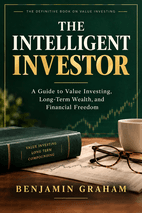
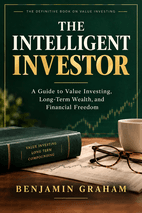
What is the book The Intelligent Investor, Rev. Ed about?
Benjamin Graham's The Intelligent Investor, Rev. Ed distinguishes investing from speculation and introduces the margin of safety, offering defensive and enterprising investors concrete selection standards, diversification rules, and cautionary case studies for navigating markets without gambling.
Feature
Insta.Page
Blinkist
Shortform
Summary Depth
Full Chapter-by-Chapter
15-min overview
Section-by-section guides
Audio Narration
✓
✓
✓
Visual Mindmaps
✓
✕
✕
AI Q&A
✓
✕
✕
Quizzes
✓
✕
✕
PDF Downloads
✓
✕
✓
Price
$89.99/yr
$146/yr (PRO)
$199/yr
*Competitor data last verified July 2026.
1 Page Summary
Benjamin Graham's The Intelligent Investor is built on a single foundational distinction: an investment operation, after thorough analysis, promises both the preservation of principal and an adequate return, while anything short of that is speculation. Graham shows how the word "investor" has drifted until Wall Street applies it to anyone who buys or sells a security, and he identifies the three ways speculation turns unintelligent—speculating while believing you are investing, speculating seriously without the required knowledge or skill, and risking more than you can afford to lose. This definitional rigor anchors the book's central concept, the margin of safety: for bonds, earnings above fixed charges; for common stocks, earning power above the bond rate. Graham argues that the biggest danger to investors appears where they least expect it—buying low-quality securities in good times and mistaking current earnings for earning power—and that the historical record offers illumination but cannot disclose what the next decade will bring.
What makes the book distinctive is Graham's insistence on discipline over prediction and his willingness to reject comfortable formulas on both sides of the aisle. He dismantles the claim that bonds are inherently bad and stocks inherently better, noting that fixed-dollar income suffers from inflation but that this does not make high-quality stocks a good purchase at any price or dividend yield. He distinguishes timing—guessing the market's direction—from pricing—buying below fair value and selling above it—and concludes that pricing works while timing turns the investor into a speculator. He warns that once a formula gets popular it stops working, using the Dow theory's record as evidence. Throughout, he favors a defensive base of high-grade bonds and high-grade common stocks bought at reasonable prices, with the 50-50 division (never less than 25% or more than 75% in stocks) as the standard allocation, and he counsels that return should depend on the intelligent effort the investor can apply—the passive investor earns the minimum, the alert enterprising investor the maximum.
The book addresses both the defensive investor who wants safety and freedom from concern and the enterprising investor willing to apply maximum intelligence and skill. For the defensive investor, Graham provides concrete selection standards: diversify across ten to thirty stocks; pick companies that are large, well known, and carry little debt; look for continuous dividends starting no later than 1950; and pay no more than 25 times average earnings over seven years and 20 times the last twelve months. For those seeking better than average results, he maps special bond opportunities and four common-stock activities, while cataloguing what to avoid—inferior bonds and preferreds, foreign-government bonds, and new issues with only recent earnings. He also examines mutual funds, security analysis, the traps in per-share earnings figures, convertible securities, and cautionary case studies of companies that reported profits while falling apart, such as Penn Central and Ling-Temco-Vought. Readers gain not a set of hot tips but a durable framework: the margin of safety, diversification of twenty or more stocks, and the discipline to test coverage over many years, including weak stretches like 1970–71—tools for navigating the stock market without slipping into the very speculation the book warns against.
Chapter 1
Overview
The word investor now covers anyone who buys or sells a security, while its older distinction from speculator has faded. What standard should an ordinary person use to tell the two apart, and what result can be reasonably expected once that standard is applied?
A 1934 formulation in Security Analysis draws the line: an investment operation, after thorough analysis, promises both that principal will be preserved and that the return will be adequate; anything short of that is speculative. The word "investor" has since drifted until Wall Street applies it to anyone who buys or sells a security, regardless of purpose, price, or whether the purchase is on margin. In 1948, over 90% of those surveyed opposed buying common stocks, roughly half calling them a gamble, at a moment when those shares were cheap; the advance that followed recast them as investments and their buyers as investors.
Three Ways Speculation Turns Unintelligent
Speculating while believing you are investing.
Speculating seriously rather than as a pastime, without the knowledge or skill it requires.
Risking more than you can afford to lose.
Anyone trading on margin is speculating, and a broker owes him that warning. Speculation has its place: set aside a portion of capital, the smaller the better, in a separate fund, never add to it because the market has risen, and never mingle speculative and investment operations in the same account or in the same thinking.
Being Right Is Not Enough
A correct judgment can still fail, because the price may already reflect what you anticipate. Near-term results are common property on Wall Street, and next year's are already being studied, so buying on this year's superior earnings, or on what you are told to expect next year, usually means others have done the same. Long-term forecasts are harder, and the experts often err; beating the professionals is only theoretically possible. The disconcerting conclusion: better-than-average results require policies that are
inherently sound and promising;
not popular on Wall Street.
Worn Down by Diminishing Returns
Special situations, among them intersecurity arbitrages, liquidation payouts and protected hedges, once returned 20% or better a year at minimal risk; the typical case was a merger that valued shares above their announcement-day price. More deals meant more obstacles and failures, and competition thinned the profits. Something akin to diminishing returns has worn down one approach after another:
A 1949 formula keyed to earnings and interest rates, which judged when the DJIA sat below its central value, stopped working.
The Dow Theory's splendid 1897-1933 record turned questionable after 1934.
Issues selling below their share of net current assets alone, nearly 200 listed in 1957 and almost all profitable, had all but vanished a decade later.
Graham's Law
Every mechanical formula for earning higher stock performance is self-destructive, a process Graham likened to diminishing returns. The Foolish Four is the cautionary case: in 2000 its four stocks, Caterpillar, Eastman Kodak, SBC and General Motors, lost 14% while the Dow fell 4.7%.
Returns fade for two reasons. A formula resting on random statistical flukes is exposed by the mere passage of time, while one that genuinely worked gets eroded, and usually eliminated, once market pundits publicize it, as happened to the January effect.
Mad Money
Graham's counsel is to treat speculation the way veteran gamblers treat a trip to the casino:
Never delude yourself that you are investing when you are speculating.
Speculating becomes mortally dangerous the moment you take it seriously.
Put strict limits on the amount you are willing to wager.
The intelligent investor sets aside a small mad money account, capped at 10% of total wealth. Keep it strictly separate from investment accounts, never let speculative thinking spill into investing, and never exceed that ceiling no matter what happens. The gambling instinct belongs to human nature and is futile for most people to suppress, but it can be confined and restrained, which is the surest way never to fool yourself into confusing speculation with investment.
Key Takeaways
Require that your analysis support both the safety of principal and an adequate return before you call any operation an investment; if it cannot, treat it as speculation and say so plainly rather than borrowing a respectable name.
Quarantine speculation in a separate account, never added to because the market has risen and never allowed to influence your investment thinking; Graham puts the ceiling at 10% of total wealth.
Do not expect correct foresight to be rewarded, since near-term expectations are already common property and the professionals usually err; superior results come only from policies that are both sound and unpopular.
Assume any mechanical formula will destroy itself, either because it rested on a coincidence that time exposes or because publicity erodes whatever edge it had.
Wager only sums you can afford to lose, and treat speculation as a pastime rather than a pursuit, since it turns dangerous precisely when it is taken seriously.
Key concepts: Chapter 1
Chapter 1
Defining Investment vs. Speculation
Investment requires thorough analysis, principal safety, and adequate return.
Anything less is speculation, regardless of what Wall Street calls it.
Speculation becomes unintelligent when you think you're investing.
Speculation is dangerous if taken seriously without skill.
The Limits of Being Right
Correct judgment may fail if already priced in.
Near-term expectations are common property on Wall Street.
Superior results require sound and unpopular policies.
Experts often err on long-term forecasts.
Diminishing Returns and Self-Destructive Formulas
Special situations once returned 20%+ but profits eroded.
Mechanical formulas like the 1949 earnings/interest rate formula stopped working.
Dow Theory's record turned questionable after 1934.
Any formula that works gets eroded once publicized.
Managing Speculation: Mad Money
Set aside a separate mad money account capped at 10% of wealth.
Never add to it because the market has risen.
Keep speculative and investment operations strictly separate.
Treat speculation as a pastime, not a serious pursuit.
Key Takeaways
Require analysis to support principal safety and adequate return.
Quarantine speculation; never let it influence investment thinking.
Don't expect correct foresight to be rewarded.
Assume any mechanical formula will destroy itself.
💡 Try clicking the AI chat button to ask questions about this book!
Chapter 2
Overview
Rising prices erode a fixed income, and the obvious remedy is to own whatever rises alongside them. That remedy gets urged no matter what such assets cost, and the historical record does not line up neatly behind it.
Inflation Fears and the All-Stock Case
Graham rejects the claim that bonds are inherently bad and common stocks inherently better. Fixed-dollar income suffers when prices rise, but that does not make high-quality stocks a good purchase at any price or dividend yield. Advising charitable institutions to hold 100% stocks was as absurd as the older claim that any bond beats any stock.
What History Says
Five-year intervals over 55 years show plenty of past inflation: living costs nearly doubled from 1915 to 1920, against 15% from 1965 to 1970. Graham suggests planning on about 3% a year.
Inflation and Stock Prices Are Not Linked
The DJIA rose from an average of 77 in 1915 to 753 in 1970, about 4% compounded annually, plus another 4% in dividends. That beat bonds over 55 years but not the high-grade yields available in 1971. From 1966 to 1970 living costs rose 22%, the largest five-year gain since 1946-1950, while stock earnings and prices both fell. The earnings rate on corporate capital declined over two decades despite inflation, and corporate debt grew nearly fivefold by 1969 while pretax profits only a little more than doubled.
Stocks are an unreliable inflation hedge, keeping pace with rising prices only about one-fifth of the time, according to the book. Two inflation-fighters have since become widely available.
Two Acronyms to the Rescue
REITs, Real Estate Investment Trusts, own commercial and residential property and collect rent. Packaged into real-estate mutual funds, they defend reasonably well against inflation, and Vanguard REIT Index Fund is the strongest choice. No REIT fund is foolproof, but over time it should limit purchasing-power erosion without hurting returns.
TIPS, or Treasury Inflation-Protected Securities, are U.S. government bonds issued since 1997 whose value rises with inflation. Treasury backing removes default risk, and the inflation adjustment removes lost purchasing power. The catch: the IRS taxes that gain as income even though it is a paper gain unless the bond is sold, so TIPS belong in a tax-deferred account like an IRA, Keogh or 401(k).
Buy them directly or through a low-cost fund such as Vanguard Inflation-Protected Securities. They are the ideal replacement for retirement cash and should be held permanently, not traded, since short-run prices can swing. At least 10% of retirement assets in TIPS keeps that money beyond inflation's reach.
Key Takeaways
Choose your stock allocation for long-run growth rather than as a shield against rising prices, since equities have matched inflation only a small share of the time and can lose ground while living costs climb.
Build your long-range assumptions on roughly 3% annual inflation, the working figure Graham recommended, rather than on the extremes of any single decade.
Add a real estate fund, ideally a low-cost REIT index offering, as a holding that should blunt inflation's effect on your purchasing power over time without dragging down returns.
Keep TIPS inside a tax-deferred account such as an IRA or 401(k), because the yearly inflation adjustment is taxed as income long before you receive it in cash.
Hold TIPS as a permanent retirement asset rather than a trading vehicle, with at least a tenth of those assets in them, since their short-term prices can swing sharply.
Key concepts: Chapter 2
Chapter 2
Inflation Fears and the All-Stock Case
Graham rejects bonds as inherently bad and stocks as inherently better.
Fixed income suffers from inflation, but stocks aren't good at any price.
Advising 100% stocks for institutions is as absurd as favoring any bond.
Historical Inflation and Stock Performance
Past inflation varied: living costs doubled 1915-1920, rose 15% 1965-1970.
Plan for about 3% annual inflation, as Graham suggested.
Stocks beat bonds over 55 years but not high-grade yields available in 1971.
From 1966-1970, living costs rose 22% while stock earnings and prices fell.
Stocks as an Unreliable Inflation Hedge
Stocks kept pace with inflation only about one-fifth of the time.
Corporate earnings rate declined over two decades despite inflation.
Corporate debt grew nearly fivefold by 1969; pretax profits only doubled.
REITs: Real Estate Investment Trusts
Own commercial and residential property, collect rent.
Defend reasonably well against inflation over time.
Vanguard REIT Index Fund is the strongest choice.
No REIT fund is foolproof, but limits purchasing-power erosion.
TIPS: Treasury Inflation-Protected Securities
U.S. government bonds since 1997; value rises with inflation.
IRS taxes yearly inflation adjustment as income; hold in tax-deferred accounts.
Ideal for retirement cash; hold permanently, at least 10% of retirement assets.
Chapter 3
Overview
An investor facing the market's current level must decide whether prices are attractive or dangerous, using a century of uneven history as the only guide. That history can illuminate the present, but it cannot disclose what the next decade will bring.
The Hundred-Year Record
Data on prices, earnings and dividends reach back a century, to 1871. Two objects follow: to show how stocks made their underlying advance through a century of cycles, and to set ten-year averages of prices, earnings and dividends side by side. The record rests on a Cowles Commission study from 1870 spliced onto Standard & Poor's 500-stock composite, and on the 30-stock Dow.
Three Eras in One Chart
Standard & Poor's 425 industrials from 1900 to 1970 divide into three distinct patterns of roughly equal length. Cycles from 1900 to 1924 lasted three to five years, advancing about 3% a year. The New Era market crested in 1929 and collapsed; average levels in 1949 were only 1¼% a year above 1924, leaving the public cold on common stocks. That set up the greatest bull market in history, peaking in December 1968 at 118 for the 425 industrials, with the 1956-57 and 1961-62 setbacks too quickly recovered to count as separate cycles.
The Advance and the Valuation Turnabout
From the Dow's 162 in mid-1949 to 995 in early 1966 the advance exceeded sixfold in seventeen years, a compounded 11% a year before dividends of about 3½%; a much-publicized 1963 study documented 14% returns, breeding a dangerous conviction that the same would continue. Valuation shifts sharply: the composite sold at 6.3 times earnings in June 1949 and 22.9 times in March 1961, dividend yield fell from over 7% to 3.0%, and high-grade bond interest rose from 2.60% to 4.50%.
Bull-Market Baloney
Never forecast the future solely by extrapolating the past. Graham foresaw the catastrophic 1973-1974 bear market, in which U.S. stocks lost 37%, and his logic dismantles the gurus who came decades later. Bullish books followed Jeremy Siegel's Stocks for the Long Run in 1994, cresting in 1999 with Dow 36,000 and Dow 100,000. The case: stocks returned 7% a year after inflation since 1802 and always beat bonds over 30 years, so they were safer than bonds. If time removes the risk, why mind the price? Graham's answer is that value is always a function of what you pay.
Survival of the Fattest
Pre-1871 figures are unreliable, and early indexes tracked as few as seven companies. Some 300 American firms existed by 1800; most failed, and the indexes omit them, a distortion known as survivorship bias. Elroy Dimson of London Business School estimates pre-1871 returns are overstated by at least two points a year; stocks did no better than cash or bonds.
What's Next
Future returns rest on three things:
real growth in earnings and dividends
inflationary growth
speculative growth or decline, the public's appetite for stocks
Real earnings growth has averaged 1.5% to 2%. With inflation near 2.4% and dividends at 1.9% in early 2003, about 6% a year, or 4% after inflation, is a reasonable expectation. Robert Shiller's ratio of price to a decade of inflation-adjusted earnings was 22.8, down from 44.2 in December 1999 but still in the danger zone, where readings above 20 usually precede poor returns. The future tends to surprise those most sure of it.
Key Takeaways
Judge every commitment by what you are paying for earnings and dividends at the moment of purchase, and disregard forecasts that simply extend the recent rate of gain forward.
Expect decades in which stocks barely advance at all; the last century contains such stretches, and the powerful bull market that follows one is a phase, not a permanent condition.
Elroy Dimson's estimate that pre-1871 returns are overstated by at least two points a year means the reliable record begins with the 1871 data, since the earlier indexes track only the firms that survived.
Assemble your expected return from the components you can observe separately: real growth in earnings and dividends, inflation, and whatever premium the public is currently willing to pay for stocks.
Dismiss the claim that a long enough holding period makes equities safe; no amount of time fixes the damage done by an excessive purchase price.
Key concepts: Chapter 3
Chapter 3
The Hundred-Year Record
Data from 1871 onward reveal century of cycles.
Three eras: 1900-1924, New Era to 1949, bull to 1968.
Valuation shifted from 6.3 to 22.9 times earnings.
Dividend yield fell from over 7% to 3.0%.
Bull-Market Baloney
Never forecast future solely by extrapolating past.
Graham foresaw 1973-1974 bear market, stocks lost 37%.
Bullish books like Dow 36,000 ignored valuation.
Value is always a function of what you pay.
Survivorship Bias
Pre-1871 data unreliable; indexes tracked few firms.
Most early firms failed and are omitted from indexes.
Dimson: pre-1871 returns overstated by at least 2% yearly.
Stocks did no better than cash or bonds before 1871.
Components of Future Returns
Real earnings growth has averaged 1.5% to 2%.
Inflation near 2.4% and dividends at 1.9% in 2003.
Speculative growth depends on public's appetite for stocks.
Shiller's ratio at 22.8 signals danger zone.
Key Takeaways
Judge commitments by what you pay for earnings and dividends.
Expect decades of little stock advance; bull markets are phases.
Reliable record begins with 1871 data due to survivorship bias.
Assemble expected return from observable components.
Chapter 4
Overview
Every investor who splits money between bonds and stocks faces a question no principle settles: how much belongs in each, and what would justify changing the mix. The rules that sound most sensible are the ones almost nobody can follow. Any workable answer must survive a falling market and the person holding it.
Return and Risk
Portfolio policy follows the owner's position. Savings banks, insurers, and legal trusts were once restricted to high-grade bonds and preferreds. Wealthy experienced businessmen could buy any attractive security. The old principle tied return to risk. Graham's view differs: return should depend on the intelligent effort the investor can apply. The passive investor seeking safety and freedom from concern earns the minimum. The alert, enterprising investor exercising maximum intelligence and skill earns the maximum. A 1965 addition held that a bargain security offering a large profit may carry less real risk than a conventional bond yielding about 4.72%. Rising interest rates later made that truer.
The 50-50 Allocation
The defensive investor divides funds between high-grade bonds and high-grade common stocks: never less than 25% or more than 75% in stocks, with the inverse in bonds. The standard division is 50-50. Since 1949 no reliable rules exist for moving toward the 25% minimum and back to 75%. Do not exceed half in equities unless strongly confident and able to view a 1969-70 decline with equanimity. At early 1972 levels such confidence is hard to justify. The 50-50 formula restores balance: if stocks rise to 55%, sell one-eleventh of the stock portfolio and move proceeds to bonds. If stocks fall to 45%, use one-eleventh of the bond fund to buy equities. Yale followed a similar plan after 1937 with a 35% normal stock holding, but abandoned it in the early 1950s and by 1969 held 61% in equities. At that time 71 endowment funds totaling $7.6 billion held 60.3% in common stocks. The Yale case shows how the great market advance nearly destroyed the formula approach.
Active or Defensive
How aggressive a portfolio should be turns less on what you own than on what kind of investor you are. The enterprising approach means continually researching, selecting and monitoring a dynamic mix; the defensive one means a permanent portfolio on autopilot. Charles Ellis observed that the first is intellectually and physically taxing, the second emotionally demanding. Both are equally intelligent if you know yourself.
Age Is the Wrong Dial
Age never enters the allocation decision. Graham rejects subtracting your age from 100 (72% in stocks at 28, 19% at 81) and the 1999 advice that under-30s hold 95%. An 89-year-old with $3 million, a pension and grandchildren has no need to retreat into bonds; a 25-year-old saving for a wedding and a house should not be all in stocks. The unexpected can strike at any age, so keep some cash, and because few investors can hold stocks through a falling market, a floor of bonds is what makes the rest bearable.
What Your Life Says
Whether you are single or married, and what a partner does
Children, and when tuition bills arrive
Career exposure, such as rates for a bank or oil prices for a chemical maker
How much you can afford to lose
If you can bear stock risk, stay near the floor; if not, edge toward 75%, and rebalance every six months, on New Year's and the Fourth of July.
The Income Menu
Unless you sit in the lowest tax bracket, municipal bonds go outside retirement accounts and taxable bonds inside them. Intermediate bonds of five to ten years split the difference between short and long maturities. Individual bonds trade in $10,000 lots, so funds make sense below $100,000. Preferred stock is less secure than bonds and less promising than common shares.
Key Takeaways
Split your portfolio between high-grade bonds and high-grade stocks, never letting either fall below a quarter or rise above three quarters, and pull the mix back toward even whenever drift pushes it past 55/45 or 45/55.
Decide whether you are an enterprising investor who will research and monitor holdings continuously or a defensive one who wants a permanent portfolio on autopilot, and accept that the choice rests on temperament and available time rather than on what the market is doing.
Abandon formulas that key stock exposure to your age, and size the bond floor instead against your income sources, upcoming obligations, career-linked risks and capacity to absorb losses.
Build rebalancing into the calendar twice a year, and keep cash on hand at every age, since a bond cushion is what makes holding stocks through a decline psychologically possible.
Put municipal bonds in taxable accounts and taxable bonds in retirement accounts unless you are in the lowest tax bracket, favor intermediate maturities of five to ten years, use funds when your bond money is under $100,000, and leave preferred stock alone.
Key concepts: Chapter 4
Chapter 4
Return and Risk
Return should depend on intelligent effort, not just risk.
Benjamin Graham was a British-born American economist and professional investor, widely known as the father of value investing. He authored the seminal works Security Analysis (1932) and The Intelligent Investor (1949), and taught at Columbia Business School, where he influenced generations of investors including Warren Buffett.
Frequently Asked Questions about The Intelligent Investor, Rev. Ed
What is The Intelligent Investor, Rev. Ed about?
This book draws a hard line between investing and speculating, arguing that a true investment operation promises both the preservation of principal and an adequate return after thorough analysis. It lays out practical portfolio policy — most famously a roughly 50-50 split between high-grade bonds and high-grade common stocks, with a 25% to 75% leeway — and contrasts the defensive investor, who seeks safety and freedom from concern, with the enterprising investor who applies maximum intelligence and skill. Along the way it covers stock selection standards, fund performance, the pitfalls of per-share earnings figures, the perils of convertibles and new issues, and the importance of understanding what a company's numbers actually mean. The unifying idea is the margin of safety — earning power above the bond rate — and the warning that the worst losses come from buying low-quality securities in good times.
Who is the author of The Intelligent Investor, Rev. Ed?
Benjamin Graham formulated the classic distinction between investment and speculation in his 1934 work Security Analysis, defining an investment operation as one that after thorough analysis promises both safety of principal and an adequate return. From 1926 to 1956 he ran Graham-Newman, which practiced arbitrages, liquidations, and related special situations rather than simply chasing growth. His approach emphasizes measured analysis, diversification, and testing a company's record over many years rather than trusting a single year's results.
Is The Intelligent Investor, Rev. Ed worth reading?
Yes — it gives everyday investors a durable framework rather than stock tips, teaching you to separate genuine investing from speculation and to demand a real margin of safety before committing money. Its lessons on portfolio allocation, diversification across ten to thirty stocks, and testing coverage over weak years like 1970-71 remain painfully relevant whenever markets get enthusiastic. The cautionary stories of companies that reported profits while falling apart show just how much the warning signs matter.
What are the key lessons from The Intelligent Investor, Rev. Ed?
The margin of safety is the central idea: for bonds it means earnings comfortably above fixed charges, and for common stocks it means earning power above the bond rate, with a diversified list of twenty or more issues making a favorable result likely. Investors should follow a disciplined allocation — typically 50-50 between high-grade bonds and high-grade stocks, moving only within a 25% to 75% range — and price securities on long-term averages, since timing the market turns an investor into a speculator while pricing below fair value and selling above it works. Because reported earnings per share can be manipulated or obscured by footnotes, you must never take a single year's figure seriously and should test coverage over many years, including weak stretches. The greatest danger comes from buying low-quality securities in good times, when investors mistake current earnings for genuine earning power.
📚 Explore Our Book Summary Library
Discover more insightful book summaries from our collection