⚠️ READER ADVISORY: This is a deep-dive summary designed for those who want the full story. Contains spoilers.
What is the book The Head Collector about?
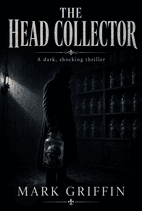
Mark Griffin's The Head Collector follows Oswald Bennet, a man with his own history of recovery, as Detective Anderson pulls him into a Maine death ruled suicide—a scene that refuses to sit right. As angel imagery links to old files, a predator hiding in plain sight stirs. A dark, chilling thriller for readers who love methodical procedurals with psychological menace.
Feature
Insta.Page
Blinkist
Shortform
The Head Collector
✓
✕
✕
Summary Depth
Full Chapter-by-Chapter
15-min overview
Section-by-section guides
Audio Narration
✓
✓
✓
Visual Mindmaps
✓
✕
✕
AI Q&A
✓
✕
✕
Quizzes
✓
✕
✕
PDF Downloads
✓
✕
✓
Price
$89.99/yr
$146/yr (PRO)
$199/yr
*Competitor data last verified July 2026.
1 Page Summary
In the small towns around Portland, Maine, a woman is found dead in what authorities are quick to rule a suicide—but something about the scene refuses to sit right. Oswald Bennet, a man with his own hard-won history of recovery, is pulled into the case by Detective Anderson, who wants him to confirm what has already been decided rather than question it. As Oswald reads the scene and the victim's private pages, he finds a grief that mirrors his own, and the professional distance he depends on begins to crack. Meanwhile, a man reads the newspaper coverage of the death with a mourner's face, and the performance stirs an appetite he thought he had buried.
What begins as a single suspicious death widens into something far more troubling. A search for the angel imagery left at the scene turns up echoes in old files and other jurisdictions, suggesting a predator who has gone unnoticed for years—and a killer bold enough to hide inside the victim's own home, scrubbing away traces of his presence. As the inquiry gathers momentum, Oswald's attempts to stay steady collide with a coroner who guards his answers like secrets and a system eager to close the file. The deeper he goes, the more he risks becoming part of the story rather than its observer.
Told in short, propulsive chapters that move between investigators and a predator hiding in plain sight, this is a dark, chilling thriller about obsession, disguise, and the quiet horrors that pass for ordinary life. Readers who love methodical procedurals with psychological menace—where the tension comes as much from what people conceal as from what they do—will find themselves pulled along to the last page.
Chapters 1-6
Mary Jane Rosette stands in her yard trying to coax her escaped parrot, Benji, down from his perch, but her arms freeze at her sides and refuse to obey her. The paralysis jolts her awake, screaming, from the dream.
She comes to on a cold basement floor, strapped down and unable to move. A calm male voice tells her she has fallen. She asks who he is and where she is, and instead of answering he lights a lavender candle and pulls her restraints tighter.
She says she loves Roger. The voice answers that he loves her too and tells her to open her eyes. She does, and sees a bright angel above her.
The Drive to the Jail
Oswald Bennet is trying to reach the Cumberland County Jail, but traffic crawls and a detour sends him past Becky's Diner, costing him time he does not have. On the way a news report catches his ear: a local woman has died in a strange suicide in West Scarborough. He notes it and keeps heading that way.
At the jail he wants to visit his mother, Nora, and submits to the searches and rules required to reach her in the visiting room. When he gets there, Nora dismisses his reading and his ambitions, and he leaves the visit feeling hated and loved at once.
He wants to see his father too, so he crosses to B-Wing and endures the same admission ritual all over again. Anthony admits he is ill and afraid, and Oswald regrets bringing him cigarettes as the visit ends. Anthony asks Oswald to return his love to Nora, and Oswald leaves carrying the memory of their mutual attempts to kill each other.
The Chair
Oswald wants a proper office chair, so he buys a teak Scandi chair and gives his old fold-up to Harper. Back at his desk he discovers the new chair sits too low, and he tests it with Harper posing as a client.
Oswald decides he wants a better office chair, so he gives Harper the Scandinavian chair and takes back the ten-dollar chair for himself. The swap changes his view of the office and costs Harper a fifty-cent bobble, a small, petty transaction that sets the tone for their working relationship.
Harper wants to know about Oswald's mother and father day, and he admits it went well while hiding his mood. He keeps whatever he is feeling beneath the surface, giving her the bare facts without the interior weather.
Harper wants Oswald to prepare for a call with Jeff and Amanda from Kruger's Finance, so she briefs him on screening interview tapes for narcissistic or psychopathic red flags. She lays out the task: watch the candidates, spot the warning signs, and be ready to weigh in.
Oswald wants to explain psychopathy in the workplace, so he tells Harper that companies sometimes want psychopaths because they are feared. The revelation changes her understanding of what the screening is really for, shifting the call from a simple personality test into something stranger and more cynical.
Oswald wants to get through the Kruger's Finance call, and he persuades Jeff and Amanda against their top choice of a high-functioning narcissist. Whatever charm or credentials the candidate carries, Oswald makes the case against him, and the hiring decision changes because of it.
Oswald wants to process his father's memory, so he looks at old photos, plays choral music, and touches the hair ties on his wrist, steadying himself. The ritual is private and quiet, a way of holding himself together after the day's demands.
Harper wants Oswald to see a visitor, so she puts the police detective on speaker and tells him it's important, forcing him to take the meeting. He does not get to decline; the call is already live.
Detective Anderson wants to challenge Oswald's "pool attendant" remark, so she confronts him about it. The jab flusters him, and he is forced into an apology, the detective establishing immediately that she will not let his flippancy slide.
Detective Anderson wants to test Oswald's expertise, so she questions him about his qualifications and teaching. He defends his focus on both male and female killers, holding his ground on the breadth of his study.
Detective Anderson wants Oswald's opinion on a suicide note, so she shows him the note in an evidence bag. He analyzes the handwriting and finds it unusually neat, a detail that does not sit right.
Detective Anderson wants to know if the note could be faked, so Oswald explains AI handwriting copying and suggests comparing samples. The explanation gives her a new lead, and the conversation turns from skepticism toward collaboration.
Detective Anderson wants to gauge what Oswald knows, so she asks about the West Scarborough suicide. He admits he only heard it was weird from a waitress, nothing more, and the limits of his knowledge are laid bare.
Detective Anderson wants to shock Oswald into engagement, so she reveals that Mary Jane Rosette was decapitated by a guillotine she built in her basement. Oswald calls it "fucking weird," and the reaction pulls him into the case, the detective's gamble paying off as his detachment finally cracks.
💡 Try clicking the AI chat button to ask questions about this book!
Chapters 7-11
Detective Anderson pulls Oswald into the Rosette case on the drive over, and the conversation in the car sets the terms of everything that follows. She wants his help at the scene, and she uses the ride to establish the statistical landscape of the case: suicides are common, the coroner has already justified the ruling, and the machinery of official conclusion is already in motion. For Oswald, this is the first cost of the trip. His certainty about what a scene means, his confidence that a death like this can be read cleanly, begins to erode before he has even seen the body. Anderson is not asking him to solve anything. She is asking him to confirm what has already been decided, and the pressure of that expectation hangs over the car. The drive itself becomes a kind of preparation, not for an investigation but for a ratification. Anderson lays out the numbers the way someone lays out a case file, and the numbers all point one direction. Oswald listens and feels the ground shift under him. He has built a career on the idea that a scene can be read, that objects tell the truth, that a careful observer can separate what happened from what people want to believe happened. But Anderson is not offering him a scene to read. She is offering him a conclusion to endorse, and the difference between those two things is the difference between his method and her machinery. By the time the car stops, he is already working against the current, and he has not yet seen a single thing.
Oswald wants to understand Mary Jane Rosette before he sees her body, and Anderson gives him the intimate tragedy behind the statistic. She describes the divorce, the DUI, the depression, the OxyContin, and the daughter who found her. The case stops being an entry in a ledger and becomes a specific woman's life collapsing in a specific way. Anderson's account is matter-of-fact, but the details accumulate into something painful: a mother struggling, a daughter arriving home to horror. Oswald absorbs this, and the weight of it changes how he approaches the scene. He is no longer evaluating a category. He is walking toward a person. The divorce is not a line item. It is a marriage ending. The DUI is not a statistic. It is a night that changed the shape of a family. The depression and the OxyContin are not checkboxes on a coroner's form. They are the texture of a life that had become hard to carry. And the daughter who found her is not a witness to be interviewed. She is a child who walked into a house and saw something she will never be able to unsee. Anderson delivers all of this without sentiment, but the facts do the work sentiment would otherwise have to do. Oswald feels the case become heavier, more specific, more human. He is not looking at a suicide anymore. He is looking at a woman, and the difference matters because a woman can be killed.
Oswald wants to test the suicide story, and one fact immediately becomes a red flag. Mary Jane knew Clementine was coming home. That knowledge sits wrong against the idea of a planned self-destruction. If she knew her daughter was arriving, the timing of her death becomes suspicious rather than tragic. The suspicion shifts toward murder, not because of anything at the scene yet, but because of what Mary Jane knew and when she knew it. A person who plans to kill herself does not usually do it in the window before her daughter walks through the door. She does not arrange the house, care for the rooms, and then destroy herself in the basement moments before that daughter arrives to find her. The knowledge of Clementine's arrival is a fact that does not fit the story, and the fact sits in Oswald's mind like a stone in a shoe. Anderson wants to control the scene, to move things along toward the basement and the official conclusion, but Oswald refuses to go straight down. He forces a tour of the living room instead, and the room tells its own story. Mary Jane's life is orderly. The photographs are happy. The space is cared for. This is not the chaos of a life in freefall, and the contrast between the room's warmth and the death below sharpens Oswald's doubt. The living room is not the room of a woman who has given up. It is the room of a woman who is still holding things together, still arranging her world, still keeping the photographs straight on the walls. The order is not proof of anything, but it is evidence of a state of mind, and that state of mind does not match the basement.
Oswald wants the source of the guillotine idea, and the absence of any French Revolution books or obvious purchase trail deepens his doubt. A homemade guillotine is not a common suicide method. It requires construction, planning, and a certain kind of fixation. If Mary Jane had built it, there should be evidence of the interest that drove her to it. There is none. The gap between the method and the life bothers him. Anderson has an explanation ready, but Oswald is not satisfied. The scene is not matching the story being told about it. A guillotine is not something a person wakes up one morning and decides to build. It is a machine with a history, a machine that carries meaning, a machine that requires a certain kind of imagination to construct in a basement. If Mary Jane had that imagination, there would be traces of it somewhere. Books, notes, searches, purchases, something. The absence of those traces is not proof of murder, but it is a hole in the suicide story, and Oswald is a man who notices holes. Anderson offers him a way to fill the hole, but her explanation is the kind of explanation that exists to close a conversation rather than open an investigation. Oswald does not accept it. He keeps the hole open and keeps looking at it.
The Basement
Oswald wants to inspect the basement, and what he finds there turns suspicion into a concrete crime-scene problem. The guillotine is homemade, built with care and specificity. There are straps. There is an apple box. There is a chloroform pillow. There is a pool of blood. Each element is a physical fact that has to be accounted for, and together they form a picture that does not fit a simple suicide. The straps especially bother him. A person ending her own life does not need to be restrained. The chloroform pillow suggests incapacitation. The apple box suggests positioning. The machine suggests construction over time. Oswald is no longer dealing with an abstraction. He is dealing with objects that were placed and used. The straps are the detail that will not leave him alone. They are not decorative. They are functional. They are there to hold a body in place, and a body that is holding itself in place does not need them. The chloroform pillow is another functional object, and its function is to make a person unconscious. The apple box is a third functional object, and its function is to position a body at the right height. The machine itself is the largest functional object, and its function is to do the thing the other objects were arranged to make possible. Together they form a system, and a system implies a designer. Oswald stands in the basement and reads the system, and what he reads is not a woman ending her own life. It is a scene that was built.
Oswald wants to reconstruct the supposed suicide, and the reconstruction fails. The machine's custom construction and the victim's clothing make the official scenario feel staged rather than self-inflicted. He tries to imagine Mary Jane building this, strapping herself in, arranging the chloroform, positioning the apple box, and the sequence does not hold together. The clothing is wrong for it. The mechanics are wrong for it. The whole thing feels arranged, as if someone built a scene rather than a life ending. Anderson watches him work, and the tension between them grows. She has a ruling to defend. He has a scene that will not cooperate. The reconstruction is the test, and the test fails. Oswald runs the sequence in his mind the way an engineer runs a design, and the design does not work. The clothing does not work. The mechanics do not work. The order of operations does not work. A person cannot do these things in this order and arrive at this result. The scene has been assembled, and assembly is an act of intention, and intention points to a hand other than Mary Jane's. Anderson watches him run the test and sees the failure on his face, and the tension between them becomes a thing with weight. She has a ruling to defend. He has a scene that will not cooperate. The two of them stand in the basement with the machine between them, and the machine is winning.
Oswald wants to explain why the scene feels wrong, and the unburned candle becomes the turning point. He argues that someone blew it out. The candle is the detail that breaks the official story open. If Mary Jane had staged this herself, the candle would have burned differently. The fact that it is unburned, that it was extinguished rather than left to consume itself, suggests a hand other than hers. Oswald builds the argument from the candle outward, and for the first time the scene has a shape that points away from suicide. Anderson is not convinced, but she is listening differently now. The candle is small, and the argument is large, and the disproportion is the point. A candle that should have burned did not burn, and the reason it did not burn is that someone put it out. A person who is staging her own death does not blow out the candle. She leaves it to burn, because the burning is part of the scene. The fact that the candle was extinguished means someone was there after the staging, someone who did not want the candle to burn, someone who was managing the scene rather than participating in it. Oswald builds the argument from the candle outward, and the argument has a shape now, a shape that points away from suicide and toward something else. Anderson is not convinced, but she is listening differently, and listening differently is the first step.
Anderson wants forensic support, and Oswald's suggestion about DNA from exhaled air gives her a possible lead despite her skepticism. It is an unusual idea, the kind of thing that sounds like a long shot, but it is something to pursue. Anderson does not embrace it, but she does not dismiss it either. The conversation shifts from whether the scene is wrong to what can be done about it. Oswald wants to state his conclusion, and he tells Anderson plainly that Mary Jane was murdered. The words change the investigation from a suicide inquiry to a homicide case. Anderson does not argue. The drive to Café Luna becomes a strategy session about how to convince the coroner and the DA, how to move an official ruling that has already been made. The words are out now, and they cannot be taken back. Mary Jane was murdered. The sentence is short, and the consequences are long. The investigation is no longer a suicide inquiry. It is a homicide case, and a homicide case requires a different kind of machinery, a different kind of attention, a different kind of official action. Anderson does not argue with the conclusion. She absorbs it and starts thinking about how to move the machinery. The drive to Café Luna becomes a strategy session, and the strategy is about how to convince the coroner and the DA, how to move an official ruling that has already been made, how to turn a conclusion into an investigation.
Café Luna
Oswald wants to manage expectations about profiling, and his Bundy example warns Anderson that the killer may be forensically aware and hard to catch. He is not offering a miracle. He is offering a way of thinking that has limits, and he wants her to understand those limits before she commits resources. The killer who built this scene knew what he was doing. He understood forensics, understood staging, understood how to make a death look like something it was not. That kind of offender is not caught quickly. Anderson absorbs this, and the stakes of the case settle into something heavier. This is not a simple murder. This is a murder designed to mislead. The Bundy example is not a digression. It is a warning. Bundy was forensically aware, and Bundy was hard to catch, and the killer who built the guillotine in Mary Jane's basement is forensically aware in the same way. He understood what the scene would look like. He understood what the coroner would rule. He understood how to make a murder look like a suicide, and he understood it well enough to fool the machinery of official conclusion. That kind of offender is not caught quickly. He is caught slowly, if he is caught at all, and Anderson needs to understand that before she commits resources. The stakes settle into something heavier. This is not a simple murder. This is a murder designed to mislead, and the design is the point.
Chapters 12-17
The man sits with the newspaper, Mary Jane Rosette’s photograph staring up from the front page, and when Karen comes near he lets his face fall into grief. He speaks of her gently, performs the sorrow of a man who knew her, and watches Karen absorb it. The performance is not for her alone. Playing the mourner stirs something loose in him, and by the time he sets the paper down the old appetite is awake again, his very special secret revived by the taste of the lie. The grief he shows Karen is a mask he puts on deliberately, and the mask does something to him as he wears it. What begins as a performance for her benefit becomes a private ritual, and the ritual feeds the part of him that has been waiting. By the time the newspaper rests on the table, the lie has done its work, and the appetite he thought he had buried is alive again, hungry and patient.
The Morning After the Fire
Oswald wakes to the wreckage of his desk, the candle burned down and the wood scarred black. He wants steadiness, wants the day to begin in its ordinary shape, and so he goes through his ritual of greeting his reflection. The face in the mirror answers him, but the reassurance only partly takes. Something in him is not quite convinced, and the ritual that usually settles him leaves a residue of doubt. The burned desk is a reminder of the night before, and the mirror is his attempt to put that night behind him, to step back into the routine that keeps him upright. He speaks to the reflection the way he always does, expecting the familiar answer, and the answer comes, but it does not land with its usual force. The doubt stays with him, a thin crack in the morning, and he cannot quite close it.
The phone rings and Dr. Alison is on the line about his father. She wants Oswald to come to B-Wing, and the request pulls him straight back into the crisis he has been circling. Whatever calm he tried to build at the mirror is gone. His father’s decline is a weight he cannot set down, and the call makes clear that the institution expects him to carry it. The morning he wanted, the ordinary shape he tried to give the day, is gone the moment he hears her voice. He is being summoned, and the summons returns him to the thing he has been trying not to face. The call ends and he is left with the knowledge that he will go, because the institution expects it and because his father is his father, and the steadiness he sought at the mirror is now out of reach.
B-Wing
Oswald visits his father and wants two things from him: that he begin treatment, and that he begin writing again. The visit costs him. He sits with the man and finds himself giving pity he did not want to give, and he leaves having made a promise he cannot guarantee. His father’s condition does not yield to wanting, and Oswald walks out carrying both the pity and the unkeepable word. He asks his father to take up the treatment, to submit to the care the institution offers, and he asks him to write again, to return to the work that once gave his life shape. The asking is its own kind of exposure, and Oswald feels it as he sits there. He gives pity he did not intend to give, and the giving changes him. He makes a promise about the treatment and the writing, a promise he knows he cannot guarantee, and he leaves with the pity and the promise both weighing on him. The visit does not produce the change he wanted. His father remains as he is, and Oswald walks out carrying what he brought in plus what the visit added.
The Lesson of Rhythm 0
In class, Oswald lectures on Marina Abramovic’s Rhythm 0, the performance in which the artist laid out objects and invited the audience to use them on her. He wants the students to see what the piece reveals: how an audience, given permission, turns violent. The objects become instruments, the spectators become participants, and the lesson is not about art but about what people do when the restraint is removed. He walks the students through the piece, showing them how the invitation to use the objects became an invitation to harm, how the audience crossed the line the artist had left open. The lesson is about permission and what people do with it, and Oswald wants the students to feel the weight of that. He pushes the point further, turning the lecture into a warning. Spotting psychopaths, he tells them, can cost lives. The classroom becomes a place where the stakes are not academic. The lecture is no longer a discussion of a performance piece. It is a warning about the people who move through the world without the restraint the rest of us take for granted, and Oswald delivers it with the urgency of a man who knows what the absence of that restraint looks like.
He poses the funeral riddle to Brian, the old problem of the man who meets a stranger at his mother’s funeral and kills his sister, and he wants to test whether Brian can reason his way to the psychopathic answer. Brian fails. The failure confirms the point Oswald is making: the reasoning that comes easily to some minds does not come at all to others, and the gap is not a matter of intelligence but of a different wiring. Oswald puts the riddle to Brian and waits, and Brian works at it and does not arrive at the answer. The failure is the lesson. Brian’s mind does not move the way the psychopathic mind moves, and the gap between them is not a gap in intelligence but a gap in wiring. Oswald wanted the test to show the students what the reasoning looks like from the inside, and Brian’s failure shows them what it looks like from the outside, which is the point.
The Call from Anderson
Detective Anderson calls. The district attorney has opened a murder enquiry, and Anderson wants Oswald’s help. Oswald agrees to meet at six. The call changes the shape of the day: what was a suicide is now a homicide investigation, and Oswald is being drawn into it. The call comes in and the day tilts. What had been a suicide is now a murder enquiry, and Anderson wants him in it. Oswald agrees to the meeting, and the agreement commits him. The day that began with the burned desk and the mirror and the call about his father now has a new shape, and the shape is the investigation.
Anderson arrives at Oswald’s office and wants him to help catch the killer. Oswald listens to the forensic gaps and accepts. The evidence Anderson lays out is meant to show the case is buildable, and it does. The cortisol levels, the rope, the bank details, each piece shifts the suspicion away from suicide. What looked like a woman taking her own life now looks like a woman who was killed, and the details Anderson brings make the murder case stand. Anderson sits with Oswald and lays out what the forensics show, and the showing is the argument. The cortisol levels do not fit a suicide. The rope does not fit. The bank details do not fit. Each piece moves the suspicion further from the story the scene first told, and by the end of the laying out the murder case stands where the suicide case used to be. Oswald listens and accepts, and the acceptance draws him deeper into the case.
Oswald asks about Mary Jane’s journal and her therapist. He wants more behavioral evidence, the kind of material that tells him how she lived and who moved through her life. Anderson agrees to take him back to the house. Oswald wants the journal and the therapist because the forensics tell him how she died but not how she lived, and the how she lived is where the killer will be found. Anderson agrees to the return to the house, and the agreement opens the next stage of the investigation.
The Basement
Oswald and Anderson search the basement. Oswald wants to reconstruct the killer’s method, to read the room the way the killer read it. He works through the scene and concludes that the ten-minute burn was deliberate, a period of observation rather than an accident of the fire. The killer stayed, watched, and the timing is a signature. Oswald moves through the basement reading the scene, and the reading produces the conclusion. The ten minutes were not an accident of the fire. They were a period of observation, a time the killer spent watching, and the watching is the signature. The killer stayed in the room with what he had done, and the staying tells Oswald something about the man he is looking for.
Oswald has Anderson lie where Mary Jane died. He wants to test the killer’s vantage point, to see what the killer saw. The reconstruction places the killer near the stairs, and the geometry of the room begins to speak. Anderson lies where Mary Jane died, and Oswald uses her position to test the vantage point. The reconstruction puts the killer near the stairs, and the geometry of the room starts to give up its information. Where the killer stood, what the killer saw from where he stood, the lines of sight and the distances, all of it begins to speak.
Oswald traces the killer’s movements around the body and the candle. He wants to understand the payoff, what the killer took from the act beyond the killing itself. The reenactment turns the basement into a profile. Every step the killer took, every pause, every position relative to the body and the flame, becomes a piece of the man they are looking for. Oswald walks the movements, tracing the path around the body and the candle, and the tracing becomes a profile. The payoff is what he is after, the thing the killer took from the act beyond the killing, and the movements around the body and the flame are where the payoff shows itself. Each step and pause and position becomes a piece of the man, and the basement becomes the place where the man is being assembled.
Oswald taps along the basement wall, testing his theory that the house might hide a passage or concealed space. He finds a hollow-sounding spot and smashes through the plasterboard, but the cavity holds only a shallow box of old pipes. The discovery costs him his hope of a hidden tunnel and sends him back to the evidence with nothing but the wall's secret to show for it. He taps the wall and hears the hollow sound and breaks through, and the cavity gives him old pipes and nothing else. The hope of a hidden passage or concealed space dies in the cavity, and Oswald goes back to the evidence with the wall’s secret and no tunnel.
Peter the CSI then tells Anderson and Oswald that traces of chloroform were found on Mary Jane's bed and carpet. He wants to establish how the killer subdued her, and the finding confirms she was attacked while asleep and later moved to the basement. It fixes the sequence of the crime in a way speculation never could. Peter brings the finding and the finding fixes the sequence. The chloroform on the bed and carpet establishes how she was subdued, and the how establishes that she was attacked while asleep and moved to the basement afterward. The sequence is no longer speculation. It is fixed, and the fixing changes what the investigation knows.
Oswald examines Mary Jane's bedroom and wardrobe, wanting to understand the killer's methods. He concludes the killer was careful, local but not too local, and known to the victim. He takes Mary Jane's diaries from her bedside drawer, wanting a record of her life and contacts, and Anderson approves the removal, opening a new line of inquiry into her past. Oswald goes through the bedroom and the wardrobe, reading the killer’s methods from what he finds, and the reading gives him a man who was careful, local but not too local, and known to the victim. He takes the diaries from the bedside drawer because the diaries are the record of her life and contacts, and Anderson approves the removal. The diaries open a new line of inquiry into her past, and the past is where the known-to-the-victim part of the profile will be tested.
Oswald argues that the killer must have practised with an identical machine beforehand, wanting to prove premeditation. The deduction establishes that the killing was meticulously planned rather than spontaneous. Anderson questions why leather straps were used when the chloroform had already immobilized the victim, wanting to understand the killer's motive. Oswald answers that it was about dominance, revealing the killer's psychological need for control. Oswald makes the argument about the practice machine and the argument establishes premeditation. The killing was planned, not spontaneous, and the planning is meticulous. Anderson asks about the leather straps, why straps when the chloroform had already done the immobilizing, and the question is about motive. Oswald answers that the straps were about dominance, and the answer reveals the need for control that runs underneath the killing.
Oswald asks Anderson about her first murder case, wanting to understand her background. She reveals she left Maryland after a gang killing shook her, and that her husband was killed in the line of duty in 2015.
Chapters 18-23
The Investigation Widens
Anderson returns to the incident room determined to push the Rosette case forward. The visit to the Rosette home and the growing unease around the angel imagery have left her convinced that the inquiry cannot afford to sit still, and she sets Knight to work searching databases for angel imagery connected to past suicides and murders, casting a wide net across old cases in the hope of finding a pattern. The search expands the investigation's scope beyond Mary Jane Rosette alone, opening the possibility that the angel left at the scene connects to something larger than a single death. If the same symbol has surfaced before, in other jurisdictions, in other files, then the team may be looking at a predator who has been operating unnoticed for years, and the Rosette case becomes a thread to pull rather than a closed file. Knight's search is slow and unglamorous, but it is the kind of groundwork that can turn a single murder into a pattern, and Anderson is willing to spend the time and the manpower on it because the alternative is to treat Mary Jane's death as an isolated event and risk missing what the angel is trying to tell them.
Wanting a second opinion on Bennet before committing further, Anderson takes a call from Trentham. She has worked with Bennet before, but the stakes of the case have risen, and she wants an outside judgment before she ties her inquiry to his methods. Trentham endorses Bennet without reservation, and his backing settles the question for her. She decides to keep Bennet on the case, reassured that her instinct to involve him is sound. The call is short, but it matters: it converts a tentative arrangement into a firm one, and it means the investigation will carry Bennet's reading of the offender into every decision that follows.
Breaking the News to the Rosettes
Anderson turns her attention to the victim's family, wanting to prepare them for the changed shape of the investigation. She calls Roger Rosette and arranges a morning visit. The family has already been told one story about Mary Jane's death, and Anderson knows that what she is about to say will replace it with something far worse. When she arrives, the conversation deepens the family's grief and formally shifts the case from suicide to murder. What the Rosettes had been told before now gives way to a far darker truth, and the family must absorb that Mary Jane was killed. The visit is not a formality; it is the moment the case changes hands from a private tragedy to a public hunt, and the Rosettes are left to carry a grief that has been redefined rather than eased.
Bennet Watches the News
Bennet, wanting to understand the contours of the new murder inquiry, watches the news with Harper. The broadcast reveals that the decapitation detail has been made public. The leak raises Bennet's fear of panic and media interference, threatening to contaminate the investigation before it has properly begun. A detail that only the killer and the police should know is now in every living room in the country, and Bennet knows what that does to an inquiry: it invites false confessions, it feeds the killer's sense of importance, and it gives the press a hook to hang speculation on. The leak is a setback, and Bennet treats it as one, because the control of information is part of how the police keep the upper hand over an offender who is clearly staging his scenes for an audience.
Reading the Killer's Mind
Bennet wants to assess how organized the killer is, and he explains the significance of the guillotine and the angel to Harper. Working through what the staging implies, he decides the offender is highly organized and likely not religiously motivated. The symbols point to calculation rather than devotion, a distinction that shapes how the police should pursue him. A religious killer is driven by compulsion and may be erratic; an organized killer who uses symbols as theatre is deliberate, patient, and aware of the effect he is creating. Bennet's reading tells the team what kind of man they are looking for and, just as importantly, what kind of man they are not looking for, and it steers the inquiry away from the obvious assumptions toward a colder and more calculating suspect.
Changing the Media Strategy
Anderson wants to protect the investigation, and she accepts Bennet's advice to keep the angel hidden from the press. The decision changes their media strategy: deny the killer publicity and deny him the forewarning that public disclosure would provide. The angel becomes a detail the police hold back, a piece of the crime kept deliberately out of view. If the killer is staging his scenes to be read, then withholding the angel denies him the satisfaction of seeing his work interpreted in the papers, and it also preserves a detail that can later be used to test the credibility of anyone who claims knowledge of the crime. The strategy is a gamble on silence, and Anderson takes it because the alternative is to hand the offender the audience he seems to want.
A New Suspect Emerges
Anderson and Bennet want more background on Mary Jane, so they interview Roger and Clementine. The family has already been through the shock of the murder announcement, and now the questions turn to the life Mary Jane led and the people in it. Roger reveals a name: Errol Jameson Green, a former charity contact who harassed Mary Jane. The disclosure hands them a new suspect and a direction for the inquiry. A man who pursued her, who frightened her, and who had access to her through charitable work is exactly the kind of lead the case has been missing, and the interview shifts from mourning to investigation.
Clementine, wanting validation that her mother did not kill herself, confronts Bennet directly about his role. The confrontation confirms his involvement and strengthens the family's trust in the inquiry. Clementine's need to know the truth about her mother meets Bennet's willingness to answer, and the family's confidence in the investigation grows from that exchange. For Clementine, the point is personal: she has been living with the official story of a suicide, and Bennet's presence confirms that someone in authority believes her mother was murdered. The exchange gives her something to hold onto, and it gives the inquiry a family that will cooperate rather than withdraw.
Confronting Errol
Anderson wants to test Errol's story, so she confronts him with passport and detox records. The documents expose his claimed affair as a fantasy, and the interview turns toward his stalking behavior instead. Errol's fabrication collapses under the records, and the questioning shifts to what he actually did. The records are the lever: once his story about an affair is gone, the interview can move to the pursuit he cannot deny, and Anderson uses the collapse to narrow the ground under him.
Errol wants to deflect suspicion, and he admits he visited Mary Jane's workplace and sent inappropriate messages. The admission establishes prior pursuit and a possible motive, giving the police a documented pattern of behavior toward the victim. It is not a confession, but it is a foundation, and it places Errol in the victim's orbit in a way that can be checked and corroborated.
Anderson wants to pin down Errol's whereabouts, and she learns he claims to have been with Lucy Wentworth. The claim creates an alibi that must be checked, shifting suspicion toward his partner's account and raising the question of whether Lucy will corroborate him. If Lucy backs him, the alibi holds and the inquiry must look elsewhere; if she does not, Errol's position becomes far more exposed, and the partner becomes a witness in her own right.
Errol wants to avoid being linked to the murder, and his reaction to Mary Jane's death is strange enough that Anderson and Bennet become convinced he is dangerous but probably not the killer. The interview leaves them with a man who pursued and frightened Mary Jane, yet does not fit the profile of the murderer they are hunting. He is a threat, but he is the wrong shape of threat, and the distinction matters because it keeps the inquiry from settling on a convenient suspect while the real offender remains at large.
Anderson wants to keep pressure on Errol, so she orders him held longer while planning to interview Lucy. The investigation turns toward verifying his alibi and toward the possibility of violence in his relationship with his partner. Holding him buys time, and the time is spent on Lucy, because if Errol is violent toward the women in his life then Lucy may be at risk as well as in possession of the truth about where he was.
Anderson's first priority is Lucy Wentworth. Convinced Green poses a direct threat to her, she decides to visit Lucy personally before Green resurfaces, a choice that costs her the solo trip she had planned into a dangerous area. The protection of a potential witness outweighs the risk she had been willing to take alone. The decision is a measure of how seriously she takes Green: she gives up her own plans and puts herself in the path of a witness visit because the alternative, leaving Lucy unprotected while Green is held and then released, is worse.
Her next stop is Sammy. Anderson wants information about Green, hoping Sammy can fill in the gaps, but Sammy claims not to remember him at all. The denial leaves Anderson with nothing, and the wall around Green holds. Whether Sammy is lying or simply telling the truth about a man who did not register, the result is the same: another door closes, and Anderson is left to work with what the records and Lucy can give her.
Apartment F
Anderson's search for Lucy leads her to apartment F. She has Knight fetch the landlord, and the door is opened, costing her time and exposing a squalid scene inside. The delay grates, but the door is open, and that is what matters. The wait is the price of doing it properly, and Anderson pays it because a forced entry or a missed visit could cost more than time.
Inside, Anderson hunts for evidence linking Green to Mary Jane. What she finds instead is hundreds of photographs of women, and no sign of Mary Jane anywhere among them. The absence deepens the mystery rather than solving it, and the sheer volume of images turns the apartment into something more disturbing than she expected. The photographs are a collection, and a collection implies a compulsion, but the missing face is the detail that stays with her: if Green was obsessed with Mary Jane, why is she not on the wall with the others? The question follows Anderson out of the apartment and back into the inquiry.
Oswald's Desk
Oswald wants Anderson's flash drive kept secure, so he stores it in his desk drawer alongside his loaded Glock. The placement links the investigation directly to his personal safety, the evidence sitting within reach of a weapon. The drawer becomes a small emblem of the case: the material that could break it open is kept close, and so is the means to defend it.
With Harper absent, Oswald wants to avoid loneliness, and his mind turns to his divorce and the house he lost. The reflection reveals how much he has already sacrificed, the cost of his choices laid out in what is no longer his. The empty hours are filled with the inventory of what is gone, and the inventory is longer than he expected.
He wants to understand Mary Jane's movements, so he picks up her 2026 diary. He puts it down almost immediately, as though the pages unsettle him, and the diary stays closed. The diary is a way into the victim's life, and Oswald cannot bring himself to take it, which leaves the inquiry without whatever the pages might have told him and leaves Oswald with the knowledge that he flinched.
Pentonville
Oswald wants to tell his mother about his father's illness, so he visits Pentonville prison. She reacts with sarcasm and hostility, giving him nothing to hold onto. The visit is an obligation, and she treats it as an opportunity, turning his news into material for her own performance.
He wants her to write his dying father a letter, but she turns the request into a cruel joke about a poisoned pen. The mockery costs him his temper. The request is simple and human, and she refuses to let it be either, and the refusal is the point: she will not give him the small decency he came for.
When she calls him "Little Albert," Oswald wants her to stop, and he raises his voice at her. The outburst draws the guard's attention and exposes the raw nerve she has found. The name is an old weapon, and she uses it because she knows where it lands, and the guard's attention is a reminder that the visit has rules she is happy to see him break.
His mother wants to provoke him further, so she tells a story about a client aroused by his mother and invokes Oedipus. The story unsettles him, and she knows it. The story is designed to do exactly what it does, and her satisfaction is visible in the telling.
Oswald wants to set a boundary. He refuses her touch and tells her he loves her but will not fantasize about her. The refusal leaves her hostile.
You've reached the end of the free chapters
Next chapter: “Chapters 24-28” is locked
Keep reading The Head Collector — and unlock all 700+ book summaries with audio, mindmaps and AI Q&A.
$0.00 due today · 7 days free, then $89.99/year ($7.49/mo) · Cancel anytime before day 7
Mark Griffin is an author and journalist best known for his biographies of Hollywood figures, including "All That Heaven Allows: A Biography of Rock Hudson" and "A Hundred or More Hidden Things: The Life and Films of Vincente Minnelli." His work focuses on classic Hollywood cinema and its stars, and he has contributed to publications covering film and entertainment history.
Frequently Asked Questions about The Head Collector
What is The Head Collector about?
When a local woman is found dead in what officials are quick to rule a suicide, Detective Anderson pulls Oswald Bennet into a scene that refuses to sit quietly. An angel image left behind points toward something larger, and a widening search of old case files raises the possibility of a predator who has gone unnoticed for years. Meanwhile, a calm and methodical man moves through ordinary life — purchasing knives without a second glance, wearing grief like a costume — while Oswald's own losses begin to blur the line between investigator and witness.
Who is the author of The Head Collector?
Mark Griffin is the author of this crime novel, which moves between the investigation and the killer's own perspective. The writing leans heavily on procedural texture — coroner's findings, evidence searches, and the politics of a department under pressure to close a case — paired with close attention to the psychology of the people doing the looking.
Is The Head Collector worth reading?
It's a tense, character-driven thriller where the procedure matters as much as the pursuit, and the antagonist's calm, everyday movements make him far more unsettling than any cartoon villain. Oswald Bennet is a genuinely complicated lead: a man in recovery whose personal grief keeps threatening to compromise his judgment. Readers who prefer their crime fiction psychologically layered and slow-burning will find a great deal to hold onto here.
What are the main themes in The Head Collector?
Grief runs through everything — the losses characters carry, the names they give those losses, and the way sorrow can be genuine or worn as a mask. The novel also examines compulsion, both the killer's appetite stirring awake and Oswald's own daily effort to stay steady in his recovery. Institutional pressure is another thread, as investigators are nudged to ratify conclusions rather than question them, while recurring symbols take on a life beyond a single case. Underneath it all sits the unsettling question of how invisible a predator can be when he moves through ordinary life like anyone else.
📚 Explore Our Book Summary Library
Discover more insightful book summaries from our collection