The Head Collector Characters
by Mark Griffin
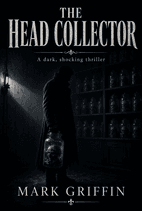
This is a crowded, case-driven cast anchored by Oswald Bennet, a precise and provocative criminal psychologist, and Martin Brown, the grieving widower whose secret life drives the danger. Around them sit Detective Anderson, Harper Kendall, the Rosette family, recovery-group figures, prison-bound parents, and a long tail of witnesses and officials.
On this page you will find each character's role in the investigation, short descriptions, key relationships, and the arcs that connect Mary Jane Rosette's death to the wider inquiry. Minor figures are included too, so you can track who matters and why.
Main Characters
Oswald Bennet
ProtagonistA criminal psychologist and lecturer consulted by Detective Anderson, Oswald lives and works from a small office and wears hair ties for three deceased friends. He is precise, provocative, and deeply shaped by his imprisoned parents and his own past suicidal attempt. His professional method is to profile the killer's psychology and small physical details rather than motive alone.
Arc: Oswald moves from reluctant expert to central investigator, is framed by the killer, survives being chloroformed and held captive, and shoots Martin Brown. He ends the story physically recovering, sharing an old handwritten note with Harper, and quietly breaking down before saying 'One day at a time.'
- Detective Anderson — police detective who recruits him as a consultant, later investigates him, and becomes his counseling client
- Harper Kendall — his receptionist, assistant, everyday manager, and close supportive companion
- Mary Jane Rosette — murder victim whose case he helps investigate and whose diaries he reads
- Martin Brown — trusted Hope Gateway acquaintance who becomes his captor and attempted killer
- Nora Bennet — his imprisoned mother
- Anthony Bennet — his imprisoned father
Martin Brown
AntagonistA Hope Gateway Church meeting chair and old acquaintance of Oswald, Martin appears as a grieving widower and helper while secretly being a psychopathic serial killer. The notes link him to the office alias Ian Brady, in which guise he fakes illness to Karen and HR, receives rope, and constructs a razor-blade rope. He confesses to killing Laura Brown, Mary Jane Rosette, Karl Lobanov, and Jason Warden.
Arc: Martin moves from trusted recovery-group figure to exposed predator: he chloroforms Oswald, confesses his killings in the church basement, uses a sand-filled fat suit and a monitor showing Harper to force Oswald's suicide, and is shot by Oswald. He survives surgery and is in an induced coma.
- Laura Brown — his wife and first victim
- Mary Jane Rosette — his Hope Gateway sponsee and victim
- Karl Lobanov — his lover, whom he manipulated and had killed
- Jason Warden — victim linked to him through shared therapist Brian Atkins
- Oswald Bennet — captive and intended victim whom he tries to force into suicide
- Harper Kendall — intended victim whom he watches on a monitor
- Karen — office colleague under his Ian Brady alias
- Cathy — fellow Hope Gateway member
- Brian Atkins — therapist he shared with Jason Warden
Supporting Characters
Detective Anderson
SupportingA police detective investigating Mary Jane Rosette's death, Anderson is a widow who keeps her late husband Barry's belongings and carries his photo. She is procedural but willing to challenge the coroner and District Attorney when the evidence points to murder. She recruits Oswald, defends him to her team, and later must investigate him when his fingerprint appears on the staged note.
Arc: Anderson moves from seeking Oswald's professional opinion to relying on him as an investigator, then formally questioning him while believing he is innocent. She later raids Martin's address, visits Oswald in hospital, and eventually comes to him for a counseling session.
- Oswald Bennet — consultant, investigative ally, and later counseling client
- Harper Kendall — contacts her about Oswald and bonds with her over his recovery
- Mary Jane Rosette — victim in her murder investigation
- Martin Brown — suspect she investigates and raids
- Barry Anderson — her deceased husband
- Officer Evelyn Knight — police colleague working under her direction
- Ted Hughes — coroner she has known for twenty years
- Charles Reese — District Attorney she answers to and argues with
Harper Kendall
SupportingOswald's receptionist, assistant, and everyday manager, Harper is efficient, curious, and attentive to Oswald's moods. She researches guillotine history and identifies the basement angel as St Dymphna, and she helps Oswald review doorbell footage. She also becomes a target when Martin shows Oswald a live monitor of her in her living room.
Arc: Harper moves from practical office support to caregiver and investigator-adjacent partner, nursing Oswald after he is kidnapped and asking to be his second opinion. She promises to reach out if needed and shares an emotional exchange with him over an old handwritten note.
- Oswald Bennet — his receptionist, assistant, everyday manager, and close companion
- Detective Anderson — cooperates with her during the investigation and bonds with her over Oswald
- Martin Brown — intended victim whom he watches on a monitor
Mary Jane Rosette
SupportingMary Jane is a divorced mother of Clementine and a worker at Tender Touch Veterinary Hospital, found decapitated by a homemade guillotine in her basement in a death staged as suicide. Her diaries reveal the loss of her baby Ben, depression, a planned suicide with sleeping pills, a DUI, recovery through therapy and community service, and attendance at Hope Gateway Church meetings. Friends and family insist she loved life and was not suicidal at the time of her death.
Arc: Mary Jane begins as the apparent suicide victim, becomes the center of a murder investigation after Oswald challenges the scene, and is later exposed as Martin Brown's former sponsee and victim. Her diary reconstruction reveals her grief and recovery even as her murder becomes the first in a linked series.
- Clementine — her daughter who finds her body
- Roger Rosette — her ex-husband
- Martin Brown — her Hope Gateway sponsor and killer
- Ben — her baby, lost to miscarriage
- Jocelyn Green — her therapist
- Susie Baker — friend since high school
- Marita Herons — friend and neighbor
- Karl Lobanov — knew him from recovery meetings
- Benji — the parrot she chases in her dream
Roger Rosette
SupportingRoger is Mary Jane's ex-husband and Clementine's father. He identifies Mary Jane's body at the morgue, insists he still thought of her as his wife, and helps the investigation by revealing Errol Jameson Green's harassment of her. He is grieving and initially unable to believe the news.
Arc: Roger moves from disbelief and identification of Mary Jane's body to cooperating with Anderson and Oswald, giving them information that helps widen the suspect inquiry.
- Mary Jane Rosette — his ex-wife whom he still cared for
- Clementine — his daughter
- Errol Jameson Green — reveals Errol's harassment of Mary Jane
Clementine
SupportingClementine is Mary Jane and Roger's sixteen-year-old daughter. She comes home from a sleepover, finds the basement door open, discovers her mother's body, screams, whispers 'Basement...' to Sally Linklater, and passes out from hyperventilation. She is later interviewed by Anderson and Oswald and mourns her mother while wanting the truth.
Arc: Clementine moves from the traumatized discoverer of the body to a grieving daughter helping investigators understand her mother's work and life.
- Mary Jane Rosette — her mother
- Roger Rosette — her father
- Sally Linklater — dogwalker who helps her after she discovers the body
- Oswald Bennet — interviewed by him and told they will find who did this
- Detective Anderson — interviewed by her about Mary Jane
Karl Lobanov
SupportingKarl is a recovery-group member known as 'Karl with a K,' remembered by Martin as having OD attempts, bringing ketamine to a Christmas party, and buying Mary Jane a Secret Santa gift. He is also Martin's lover and is used to locate a blind spot on the railroad tracks. He becomes a prime suspect, then is found naked and hanging from a mezzanine by a sheet and a razor-blade rope.
Arc: Karl moves from recovery-group contact and murder suspect to staged-suicide victim, with a note confessing to Mary Jane and Jason's killings that Oswald believes is a frame.
- Martin Brown — his lover and manipulator
- Mary Jane Rosette — knew her from recovery meetings and bought her a Secret Santa gift
- Detective Anderson — suspect in her investigation who becomes a victim
- Ted Hughes — coroner who examines his body
Jason Warden
SupportingJason is the train-track victim: a thirty-four-year-old gardener from TBS Landscaping in Portland, described as quiet, single, and having moved to the area a year earlier. He was painted with camouflage colors, decapitated, and marked under the eyelids with St Dymphna symbols. His mother comes to identify him, and he is linked to Martin through shared therapist Brian Atkins.
Arc: Jason moves from an unidentified headless body on the tracks to an identified victim whose therapy connection helps link the killings to Martin Brown.
- Mrs Warden — his mother who comes to identify him
- Brian Atkins — his online therapist
- Martin Brown — his killer, who shared Brian Atkins as a therapist
- Mary Jane Rosette — another victim in the linked killings
- Karl Lobanov — another victim named in the staged confession
Ted Hughes
SupportingTed Hughes is the coroner who initially justifies ruling Mary Jane's death a suicide. He is known to Anderson for twenty years and later examines the train-track body and Karl Lobanov's body. He is terse with Oswald, but his autopsy findings reveal the paint, markings, and escalation of violence.
Arc: Hughes moves from defending the suicide ruling to handling a linked series of increasingly theatrical murders, eventually asking Oswald how he knew about details of Jason's eyes.
- Detective Anderson — coroner colleague she has known for twenty years
- Oswald Bennet — adversarial examiner who questions his findings
- Mary Jane Rosette — coroner in her initially ruled suicide
- Jason Warden — coroner who examines his body
- Karl Lobanov — coroner who examines his body
Charles Reese
SupportingCharles Reese is the District Attorney, introduced as a charcoal-suited official who monitors the case and initially wants it wrapped up. He is angry that the case is no longer a suicide, announces a partial fingerprint on the staged note, and dismisses Oswald. He calls the case airtight despite Oswald's warning about secondary transfer.
Arc: Reese moves from an obstacle to the murder investigation to a prosecutor seizing on convenient evidence, then clashes with Oswald over the fingerprint and the pace of the case.
- Detective Anderson — District Attorney who orders her to fast-track the fingerprint
- Oswald Bennet — official who dismisses him and whom Oswald files a complaint against
- Ted Hughes — coroner whose report he reads
Nora Bennet
SupportingNora is Oswald's mother, imprisoned in A-Wing, where she reads Enid Blyton and says reading childhood novels helps stave off dementia. She receives birthday flowers from Oswald, teases him about his life, and says Anthony will always be her one true love even though she tried to kill him. She later tells Oswald she is proud he caught a narcissistic psychopath but warns him not to put them all in the same category.
Arc: Nora remains a sharp, unsettling presence in Oswald's life, moving from birthday visits and old family violence to a prison meeting where she responds to his capture of Martin with pride and caution.
- Oswald Bennet — her son
- Anthony Bennet — her husband whom she says she tried to kill and will always love
Anthony Bennet
SupportingAnthony is Oswald's father, imprisoned in B-Wing, where he receives American Spirits from Oswald and describes sleeplessness, urination, body aches, blood tests, and later cancer treatment. He says Nora is his one true love and that she tried to kill him first. He asks Oswald to tell Nora about his illness and is writing a book called 'My Own Metamorphoses.'
Arc: Anthony moves through illness and prison visits, showing vulnerability and pride in Oswald while remaining entangled in the violent history with Nora.
- Oswald Bennet — his son
- Nora Bennet — his wife whom he says tried to kill him first
- Dr Alison — calls Oswald about his father
- Bertha — his nurse
Errol Jameson Green
SupportingErrol is an early suspect who claims an affair with Mary Jane, admits texting her and visiting her workplace after rejection, and is disproved by passport and detox dates. His flat contains hundreds of photographs of women, and he has prior charges including stalking Lady Kitty Noir and an invented girlfriend, Lucy Wentworth. Oswald judges him dangerous but too unintelligent and alibi-covered for the murders.
Arc: Errol moves from harassment suspect to cleared nuisance, with his false alibi and stalking history helping investigators rule him out of the killings.
- Mary Jane Rosette — woman he harassed and claimed to have had an affair with
- Lucy Wentworth — claimed girlfriend and alibi who is determined not to exist
- Lady Kitty Noir — burlesque performer who obtained a protection order against him
- Detective Anderson — interrogator who disproves his claimed affair
- Detective Harriman — present during his police interview
Laura Brown
SupportingLaura is Martin Brown's wife and first victim. Martin says she suspected what he was and that he killed her on April 9, 2004, staging her death as suicide or an overdose. Her death date is later matched to Mary Jane Rosette's murder date.
Arc: Laura exists in the story as Martin's originating loss and first killing, the template he tries to recreate and the date he repeats.
- Martin Brown — her husband and killer
- Mary Jane Rosette — her death date matches Mary Jane's murder date
- Cathy — mentions her suicide anniversary
Brian Atkins
SupportingBrian Atkins is named as Jason Warden's online therapist and the therapist Martin Brown shared with Jason. Anderson says he refuses to disclose information about Jason, citing HIPAA. Martin waited outside Brian's Portland office to approach Jason for a drink.
Arc: Brian's role is as an unwitting link between Martin and Jason, helping police understand how the killer met one of his victims.
- Jason Warden — his online therapist
- Martin Brown — therapist shared with Jason
- Detective Anderson — refuses to disclose information to her, citing HIPAA
Cathy
SupportingCathy is a Hope Gateway meeting attendee who reconnects with Oswald after a meeting, says she is divorced from Christopher, and asks for his number. She chairs when Martin is absent and reveals that Martin had an affair with Karl Lobanov and left for Vermont before the anniversary of Laura's suicide. She challenges Oswald for asking inappropriate questions about Martin and warns that Martin needs compassion, not confrontation.
Arc: Cathy moves from possible romantic reconnection with Oswald to a source of crucial information about Martin, then becomes a cautionary voice about Oswald's confrontational approach.
- Oswald Bennet — acquaintance who goes for coffee with him and challenges his questioning
- Martin Brown — fellow Hope Gateway member whose affair with Karl she reveals
- Karl Lobanov — acquaintance she remembers from Hope Gateway
- Laura Brown — notes Laura passed twenty-two years ago
Karen
SupportingKaren is an office colleague who discusses the Mary Jane Rosette newspaper story with Ian and shares details about Mary Jane's divorce, Roger, and Clementine. She is also the colleague to whom the man using the Ian Brady alias fakes a violent illness and speaks to HR.
Arc: Karen remains a minor office witness, providing early media and gossip context while being deceived by the killer's alias.
- Martin Brown — office colleague under his Ian Brady alias
- Mary Jane Rosette — discusses newspaper coverage of her death
Mr Clark
SupportingMr Clark attends Maxwell Allen's Paint with Friends workshop, claims Liz recommended Maxwell and that his uncle Richard Wyans runs a Chicago gallery, and persuades Maxwell to give him a painting. He then takes the painting to his basement and destroys it with a knife and hammer while four figures watch from the shadows. His later destruction contradicts his stated wish to help a fellow artist.
Arc: Mr Clark appears as a manipulative workshop student whose private violence beneath ordinary life is shown in a single disturbing episode.
- Maxwell Allen — workshop instructor he deceives into giving him a painting
Maxwell Allen
SupportingMaxwell teaches the Paint with Friends workshop and guides Mr Clark's painting. He is enthusiastic about helping a fellow artist and agrees to give Mr Clark a painting to show his uncle in Chicago, unaware of the destructive use it will be put to.
Arc: Maxwell moves from enthusiastic instructor to deceived artist whose painting is destroyed by Mr Clark.
- Mr Clark — workshop student who deceives him
Officer Evelyn Knight
SupportingOfficer Knight is a police colleague who works under Detective Anderson. She searches earlier cases for an angel, accompanies Anderson to Bayside, reports on boat rentals and marsh trails, and rides with Anderson to the Tammy Lane raid. She also sits in on Oswald's recorded interview.
Arc: Knight moves from desk support and scene assistance to active raid participation, remaining a reliable junior officer in Anderson's investigation.
- Detective Anderson — police colleague assigned by her
- Oswald Bennet — escorts him through the police station and sits in on his interview
Detective Harriman
SupportingDetective Harriman sits mostly silent during Errol Jameson Green's interview and later notes that Orchard Street had a BSOOB transit stop on Route One. He is recognised by Oswald from the earlier suspect interview.
Arc: Harriman remains a background detective, contributing procedural presence and one transit detail to the investigation.
- Detective Anderson — detective assisting her during Errol's interview
- Errol Jameson Green — present during his police interview
- Oswald Bennet — recognised by him from the earlier interview
Sergeant Boscoe
SupportingSergeant Boscoe is an officer recognised by Oswald from Errol Green's interview and later stands guard outside Karl Lobanov's fifth-floor apartment. He finds the origami angel and suicide note/confession in a drawer and calls Anderson over.
Arc: Boscoe moves from background interview presence to the officer who discovers the staged confession that briefly redirects the case.
- Detective Anderson — reports the discovered note and origami angel to her
- Oswald Bennet — greets him outside Karl's apartment
Peter McIntosh
SupportingPeter McIntosh is the CSI who reports traces of chloroform in Mary Jane's bedroom and says she could not have applied it herself. He also explains at the train track that the victim was placed on the rail, struck by a train, and decapitated, with a leather strap found nearby.
Arc: Pete provides key forensic findings that support the murder theory and later the linked train-track killing.
- Detective Anderson — CSI reporting evidence to her
- Oswald Bennet — introduced to him during the investigation
Jocelyn Green
SupportingJocelyn Green is named as Mary Jane's therapist, who had remote sessions with her and would not divulge details to Detective Anderson. Her existence and refusal to disclose information add to the reconstruction of Mary Jane's therapeutic recovery.
Arc: Jocelyn remains an offstage therapeutic figure whose confidentiality limits the investigation's access to Mary Jane's private life.
- Mary Jane Rosette — her therapist
- Detective Anderson — would not divulge details to her
Susie Baker
SupportingSusie Baker is Mary Jane's friend since high school. She comes to Mary Jane's house with Marita Herons after Roger informs them and says Mary Jane had shown no signs of suicidal tendencies and had gotten through her past depression.
Arc: Susie moves from shocked friend to witness whose disbelief helps undermine the suicide ruling.
- Mary Jane Rosette — friend since high school
- Marita Herons — friend who comes with her
Marita Herons
SupportingMarita Herons is Mary Jane's friend and neighbor. She comes to Mary Jane's house with Susie Baker after Roger informs them and expresses shock and disbelief at Mary Jane's death.
Arc: Marita remains a grieving neighbor whose disbelief reinforces the sense that Mary Jane's death was not suicide.
- Mary Jane Rosette — friend and neighbor
- Susie Baker — friend who comes with her
Sally Linklater
SupportingSally Linklater is the dogwalker who is first onto the porch after Clementine discovers Mary Jane's body. She leans Clementine against the wall when Clementine passes out.
Arc: Sally appears briefly as a helping figure during the immediate aftermath of the murder discovery.
- Clementine — dogwalker who helps her after she finds the body
Sammy
SupportingSammy is a woman in Bayside who speaks with Anderson from the shadows of an open garage. She says she is trying to stay off ketamine and does not recall Errol Green, then disappears when Anderson leaves. Anderson knows her from when Sammy dated Anderson's eldest son in high school.
Arc: Sammy remains a wary street witness whose non-recognition of Errol adds little but confirms the limits of his Bayside connection.
- Detective Anderson — knows her from when Sammy dated Anderson's eldest son
Aaron
SupportingAaron is the Amtrak security contact who shows Oswald and Anderson camera footage. He identifies a lone figure repeatedly walking to the tracks and pulls historical footage, appearing unsettled by the case.
Arc: Aaron moves from technical support to a key source for reconstructing the killer's search for a CCTV blind spot.
- Oswald Bennet — shows him Amtrak camera footage
- Detective Anderson — security contact at Amtrak
Mrs Warden
SupportingMrs Warden is Jason Warden's mother. She arrives at Portland International Airport to identify her son and collapses at the mortuary. Anderson says she refuses to believe Jason could have committed suicide and plans to stay with a half-sister in Utah.
Arc: Mrs Warden moves from mother awaiting identification to grieving witness whose refusal of suicide supports the murder investigation.
- Jason Warden — her son
- Detective Anderson — meets her at the airport and mortuary
Michael Donaldson
SupportingMichael Donaldson is identified as Micky D from the recovery group. Anderson reports that he has alibis for both kills and does not match the CCTV figure from the Amtrak cameras.
Arc: Michael moves from recovery-group suspect to cleared person of interest.
- Mary Jane Rosette — knew her from recovery meetings
- Martin Brown — former recovery-group member under Martin's rooms
- Detective Anderson — suspect cleared by alibis and CCTV comparison
Lady Kitty Noir
SupportingLady Kitty Noir is a burlesque performer who reported Errol Jameson Green's stalking, provided iPhone footage, and obtained a protection order against him. Her case forms part of Errol's prior charges.
Arc: Lady Kitty remains an offstage prior victim whose protection order helps characterize Errol's stalking history.
- Errol Jameson Green — her stalker and subject of a protection order
Lucy Wentworth
SupportingLucy Wentworth is the name Errol Jameson Green gives as his girlfriend and alibi. Police find no woman answering at apartment F, and Anderson later concludes that Lucy does not exist and was invented.
Arc: Lucy moves from possible missing woman to an invented alibi figure, exposing Errol's dishonesty.
- Errol Jameson Green — claimed girlfriend whom he is believed to have made up
- Detective Anderson — officer searching for her
Louis Woodward
SupportingLouis Woodward appears as a quoted expert in a newspaper article speculating about the killer. Anderson tells Oswald that Woodward likely does not exist and is AI-generated clickbait.
Arc: Woodward remains a media artifact rather than a real expert, illustrating artificial expertise around the case.
- Detective Anderson — says he likely does not exist and is AI-generated
Teddy Swamp
SupportingTeddy Swamp serves as Oswald's public defender during the police interview. He objects to the questioning and reminds Oswald that the investigating officer need not share information about an ongoing case.
Arc: Teddy appears briefly to protect Oswald's rights during the interview under caution.
- Oswald Bennet — his client
- Detective Anderson — investigating officer he questions
Barry Anderson
SupportingBarry Anderson is Detective Anderson's deceased husband, killed in the line of duty in 2015. She keeps his belongings as they were, speaks to his photo, and carries it with her; their nineteenth wedding anniversary falls during the investigation.
Arc: Barry remains a memory and emotional anchor for Anderson as she works the case and later seeks counseling from Oswald.
- Detective Anderson — her deceased husband
Dr Alison
SupportingDr Alison calls Oswald from B-Wing, Cumberland County Jail, to tell him it is about his father. The call prompts Oswald's prison visit and the news of Anthony's stage-two colon cancer.
Arc: Dr Alison appears only as a bearer of bad news connecting Oswald to his father's illness.
- Oswald Bennet — calls him about his father
- Anthony Bennet — prison medical contact regarding his illness
Bertha
SupportingBertha cares for Oswald's father in prison and read him a letter from his wife. She is mentioned as part of Anthony's support during his illness.
Arc: Bertha remains a minor caregiver figure in Anthony's prison life.
- Anthony Bennet — his nurse
Maisie
SupportingMaisie listens as a speaker tells her that depression is like a mask and that helping others is one of the best tools to help yourself. She cries and asks whether it will all be okay.
Arc: Maisie appears in a brief recovery-meeting scene that mirrors the novel's themes of depression, reassurance, and helping others.
Michael Carr
SupportingMichael Carr is listed as one of three mental-institution possibles in the investigation. He calls himself Amadeus and will not talk to police, but Oswald says the real killer would enjoy talking to them, so it will not be him.
Arc: Michael moves from possible suspect to ruled-out figure through Oswald's psychological reasoning.
- Detective Anderson — possible suspect in her investigation
Douglas Trentham
SupportingDouglas Trentham is a psychologist contact who calls Anderson to say he finished his holiday early and asks if she still needs help. He laughs when she says Oswald is assisting and endorses Oswald.
Arc: Douglas appears briefly as professional support whose endorsement strengthens Anderson's use of Oswald.
- Detective Anderson — psychologist colleague and contact
- Oswald Bennet — endorses him to Anderson
Ben
SupportingBen is Mary Jane's baby, lost to miscarriage and recorded in her diary as 'We lost Ben today.' His death is central to Mary Jane's grief and later suicidal thoughts.
Arc: Ben exists in the story through Mary Jane's diary as the loss that reshapes her emotional life and recovery.
- Mary Jane Rosette — his mother
Benji
SupportingBenji is the parrot Mary Jane chases through the veterinary office in her dream at the opening of the story. The dream shifts into her restrained waking state in the basement.
Arc: Benji appears only in Mary Jane's disorienting dream, linking her ordinary work life to her coming captivity.
- Mary Jane Rosette — the parrot she chases in her dream
Suzie
SupportingSuzie is the waitress at Becky's Diner who serves Oswald and tells him that a local woman committed suicide and that police are not saying much about it.
Arc: Suzie appears briefly as the source of Oswald's first public hint about Mary Jane's death.
- Oswald Bennet — waitress at Becky's Diner who serves him
Jeff and Amanda
SupportingJeff and Amanda are clients from Kruger's Finance who ask Oswald to review interview tapes for narcissistic or psychopathic red flags. They later thank him after he persuades them against a high-functioning narcissist.
Arc: Jeff and Amanda remain minor professional clients whose request demonstrates Oswald's profiling work before the murder case takes over.
- Oswald Bennet — clients seeking his assessment of interview tapes