The Head Collector Quotes
by Mark Griffin
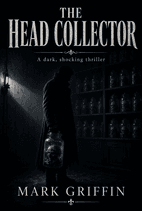
This page gathers lines from The Head Collector that stick with you after the page turns. You will find dialogue between investigators and people close to the case, narration that sets a scene with cold precision, and inner monologue that slips into fear, grief, obsession, and dark humor. Some lines are short and sharp; others are uncomfortable confessions that feel uncomfortably human.
What makes the novel so quotable is the way it shifts from procedural detail to raw emotion without warning. The voice can be clinical one moment and deeply personal the next, and that contrast gives even simple sentences a charge. These are the kind of lines readers highlight, argue about, and remember.
Top Quotes from The Head Collector
“Half the harm that is done in this world is due to people who want to feel important.”
— Nora Bennet
During a prison visit, Nora quotes T.S. Eliot while needling Oswald about his work.
It is a sharp, ironic warning from a morally compromised character about importance and harm.
“Most suicides don’t talk about how depressed they are. They sit in it by themselves until it becomes too much. They smile extra hard just to make it through the day and when anybody asks how they are, they say okay, or, not too bad thanks, but deep down they're thinking dark shit and making a plan.”
— Oswald
Oswald challenges the idea that suicidal people always show obvious signs while discussing Mary Jane's death.
It articulates the hidden, performative nature of depression and makes the possibility of suicide feel painfully human rather than obvious.
“Most people don’t want to end their life when they try and commit suicide. They want to end their pain.”
— Oswald
During Oswald’s AA share, he reflects on why people attempt suicide.
It reframes suicidal desire as a wish to escape pain, making the line both compassionate and memorable.
“One more breath could save someone's life. Kill the pattern, not the person and I'm going to say that again to some of the newcomers here because it's so important. Kill the pattern, not the person.”
— Oswald
Oswald urges the AA meeting to fight the underlying pattern rather than the person.
The repeated imperative is a memorable recovery mantra that turns survival into an ongoing act of resistance.
“I wanted to kill whatever it was I was suffering from by killing the version of myself that woke up sad every morning and dreaded going to sleep at night. The need to die isn’t about dying, it's about transforming.”
— Oswald
Oswald explains that his suicidal impulse was really a desire to transform.
It gives language to the paradox that wanting to die can be a broken wish to become someone else.
“I don't give a flying fuck into a rolling doughnut if he likes me. I'm not a people pleaser and he can go fuck himself in a broom cupboard. Him and his fucking spider fingers.”
— Oswald
After Anderson suggests the coroner might grow to like him, Oswald vents about Hughes and his unsettling hands.
It captures Oswald's irreverent voice and contempt for politeness while he fixates on the coroner's spider-like fingers. The absurd vulgarity makes it instantly memorable.
Themes Behind the Quotes
The central themes are mental pain, self-destruction, and the search for relief. Several lines look at how suffering can be hidden behind ordinary routines and polite answers, and at the difference between wanting to die and wanting the pain to stop. Identity and change also run through the book: people imagine becoming someone else, try to escape old versions of themselves, or discover that a private darkness has taken hold.
Another thread is violence as a controlled pattern rather than a random act, which links the killer's planning to the investigators' need for order. Family, memory, and loss keep intruding on the case, showing how grief and guilt shape what people admit and what they keep secret. The novel also returns to observation and performance, with characters watching one another and wondering who is really in control.
Quotes by Chapter
Chapters 1-6
“She tried to lift her arms to catch him, but suddenly they wouldn't move and no matter how much she tried, she couldn't lift them.”
While chasing Benji the parrot, Mary Jane finds her arms suddenly unable to move.
It captures the helpless paralysis of a nightmare with unsettling simplicity.
“She opened her eyes, blinked like a newborn and gasped. An angel floated above her. So bright and beautiful she almost cried.”
After the voice tells Mary Jane to open her eyes, she sees a radiant figure above her.
The line turns a moment of terror into eerie, ambiguous beauty.
“He watched her turning the pages, hating her and loving her at the same time.”
At the end of the visit, Oswald watches his mother read as he waits for the bell.
It distills the complicated pull of familial love and resentment.
Chapters 7-11
“You know why women prefer pills to blowing their face off with a gun? They want to look pretty when someone finds them. This isn't pretty. One inch out with the axe and the mortician would have had to have used a thousand stitches.”
— Oswald
At the crime scene, Oswald rejects the suicide theory by contrasting typical female methods with the homemade guillotine.
The blunt detail about wanting to look pretty cuts against the staged violence and exposes the killer's misdirection.
“It's one of the most beautiful paintings in the world. It'll make you fucking weep. Ophelia, no thanks to Hamlet, loses her sanity and drowns in a lake, dressed in her finest, looking radiant to the last. If this was suicide, Mary Jane wouldn't have worn a fucking hoody. No.”
— Oswald
Oswald invokes Millais's Ophelia to argue that Mary Jane would not have staged her death in an old hoody.
The contrast between a beautiful tragic heroine and a gardening hoody makes the scene's refusal to be a dignified suicide unforgettable.
“This is the motherfucker of weird. This wasn't some woman who was fed up with life. She didn’t build that fucking machine.”
— Oswald
After inspecting the guillotine and the unburned candle, Oswald insists Mary Jane was murdered.
The raw certainty crystallizes the chapter's turn from apparent suicide to murder.
Chapters 12-17
“And that was when he knew he had changed. He had his own very special secret again and it felt spectacular.”
After the man discusses the murder with Karen and turns over the newspaper, he silently recognizes a private thrill.
The line chillingly reveals a hidden predator behind ordinary office chatter, turning a mundane scene into something sinister.
“You used to say that to me, Dad. You used to tell me everything was going to be okay, remember? Somewhere along the way I think you forgot how brilliant you are.”
— Oswald
Oswald visits his father in jail and tries to comfort him while his father worries about cancer.
It captures the painful role reversal between son and father and the grace of reminding a broken parent of his worth.
“What I learned was that... if you leave it up to the audience, they can kill you.”
— Marina
In Oswald's lecture on Marina Abramovic's Rhythm 0, he quotes her conclusion about the audience.
It condenses the performance's dark lesson about how easily people can become complicit in violence.
“He chose manila rope, which has a slow burn rate compared to synthetic materials, so he gave himself ten minutes to observe.”
— Oswald
Oswald reconstructs the killer's method in Mary Jane's basement and notes the deliberate ten-minute burn.
The measured detail exposes a patient, ritualistic cruelty that is more disturbing than a sudden act of rage.
Chapters 18-23
“I know we were divorced on paper, but I still thought of her as my wife. We still cared deeply for each other and would meet up at least once a week for a meal. A family meal. I wanted to help and support her. She was a good woman.”
— Roger
Roger explains his continued bond with his ex-wife while speaking to Anderson and Oswald about her murder.
It humanizes the victim through grief and shows how divorce did not erase love or family.
“Because she would never have done that and nobody believed me.”
— Clementine
Clementine responds after Anderson credits Oswald with convincing the DA that Mary Jane’s death was not suicide.
It is a raw statement of grief and vindication from a daughter who was not believed.
“Don’t go there, she said in her head. Mr Rosette needs you.”
— Anderson
Anderson glances at a photo of her late husband while calling the grieving Mr Rosette.
It reveals her buried grief and her discipline to stay present for a victim’s family.
“So let us dispense with your fantasy relationship with her, shall we, which is what it was, and settle on what really happened, which comes from Mary Jane herself and her family.”
— Anderson
Anderson confronts Errol Green’s invented affair during the police interview.
It is a sharp interrogation line that exposes his self-serving fantasy and centers the victim’s reality.
Chapters 24-28
“Slept well, got six hours. Today is going to be a good day. Betty the short-haired terrier is coming back for her inoculation at two and I cannot wait to kiss her...!”
— Mary Jane
The final entry in Mary Jane's diary, read by Oswald, records her ordinary hopes for a good day.
The cheerful domestic detail makes her murder feel intimate and devastating.
“Sadness when it comes, it comes in waves. Darkness. We lost Ben today. I can’t cope. Nobody understands.”
— Mary Jane
Oswald reads Mary Jane's diary entry from June 12 after she lost Ben.
The fragmentary sentences convey grief's isolation and make the diary feel raw rather than literary.
“There's still time, he told himself, there's always time and you can get what you want.”
— Oswald
After recalling his marriage's collapse, Oswald tries to reassure himself while reading Mary Jane's diary.
It shows his fragile hope and need to believe his life can still change.
“Four hunched figures watched from the shadows of one corner of the room. They didn’t move, they didn’t breathe, and they couldn't take their eyes off him.”
After the man destroys Maxwell Allen's painting in his pristine basement, four figures watch from the shadows.
The eerie stillness of the watchers reveals unseen captives and deepens the horror.
Chapters 29-34
“It was unsettling that a house could feel that way after only a few days of having no one living inside.”
Oswald and Anderson enter the victim’s empty home and find it already cold and abandoned.
It captures how quickly violence and absence can change a home. The line is quietly eerie and memorable.
“He was watching everything. He was watching us when we stood there yesterday.”
— Anderson
Anderson checks the camera feed from the attic and realizes it was aimed at Mary Jane’s bed.
The line makes the killer’s surveillance feel immediate and invasive. It is a chilling realization that he was watching them too.
“This was his bolt hole. They would have been inches from him. This is beyond anything I have ever seen or heard about, Anderson. The setting up is so complex.”
— Oswald
Oswald discovers the hidden crawl space beside the chimney where the killer hid during the attic search.
It conveys the killer’s audacity and frightening precision. The detail makes the case feel almost impossible to contain.
“The detective I'm working with said you must always remember when you walk into a crime scene, that for the victim, it is the worst day of their life. And you must treat them with respect and dignity and then do everything you can to find who did it.”
— Oswald
Oswald speaks to his students about the gravity of entering a murder scene.
It states the moral center of the investigation with clarity and compassion. The line is both a lesson and a promise.
Chapters 35-40
“I made a plan and it was a good plan. I was going to make a red mess in my bedroom and it would be the one mess I would never have to clean up.”
— Oswald
Oswald describes his past suicide attempt during his AA share.
The image of a “red mess” he would never have to clean up is brutally vivid and captures the finality of his despair.
Chapters 41-45
“That's the day he found his kill spot and that's how he found out about the location of the security cameras. From February 19th he worked his way south down the track until he found the blind spot on February 25th, where no one could watch him.”
— Oswald
In the Amtrak control room, Oswald pieces together the killer's reconnaissance from the CCTV history.
It marks the moment scattered footage collapses into a methodical pattern, revealing a predator who learns the blind spots. The line has the cold momentum of a detective's breakthrough.