⚠️ READER ADVISORY: This is a deep-dive summary designed for those who want the full story. Contains spoilers.
What is the book The Seekers of Deer Creek about?
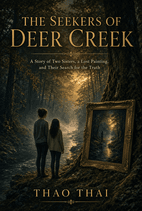
Thao Thai's The Seekers of Deer Creek follows art conservator Vivi and her restless sister Calla as they trace a hidden overpainting in a nineteenth-century masterpiece back to their family's suppressed Vietnamese history, a quest that risks Vivi's career and their fragile bond. A lyrical family saga for readers who love art mysteries and inherited secrets.
Feature
Insta.Page
Blinkist
Shortform
The Seekers of Deer Creek
✓
✕
✕
Summary Depth
Full Chapter-by-Chapter
15-min overview
Section-by-section guides
Audio Narration
✓
✓
✓
Visual Mindmaps
✓
✕
✕
AI Q&A
✓
✕
✕
Quizzes
✓
✕
✕
PDF Downloads
✓
✕
✓
Price
$89.99/yr
$146/yr (PRO)
$199/yr
*Competitor data last verified July 2026.
1 Page Summary
In Thao Thai’s lyrical novel The Seekers of Deer Creek, adult sisters Vivi and Calla return to their Wisconsin roots and ancestral past after a discovery ripples through their fragile bond. Vivi, an art conservator, has made a professional and personal crisis of a controversial restoration: while examining the 19th-century painting Blue Mirror, she believes she found hidden overpainting beneath the surface and stripped it, risking her career and the trust of the Forster museum. The work has haunted her with the image of two women, and a cryptic letter found in their late father’s shed suggests the painting may be tied to their family’s hidden Vietnamese history. Calla, always the dreamer and restless romantic, believes the painting’s true story lies with the artist and his muse—perhaps the sisters’ own ancestors. Together, they follow a trail of journals, old letters, and fragmented memories from their father’s farmhouse to Chicago, then toward a long-suppressed family truth in Vietnam.
The narrative weaves between the sisters’ present-day quest and the shared landscape of their childhood: a yellow farmhouse, the Wisconsin woods, and a mother, May, who left them years ago, teaching them the art of story-building but not how to stay. Their father, Tuan, carried the invisible injuries of a crushed hand, a dead brother, and a journey across the ocean—details the sisters only now begin to understand. As Vivi’s night terrors grow more vivid—dreams of drowning, of the painted woman calling her home—and as Calla insists on following the heart’s clues, the sisters must confront what they have never spoken aloud. The stakes are both intimate and existential: Vivi’s career and reputation, the possibility of a lost masterpiece and a hidden painting, and the fear that the truth will not bring reconciliation but a deeper fracture.
Thai’s prose is evocative and sensory, moving from the cold clarity of museum conservation to the humid, layered sensuality of Vietnamese courtyards, from sibling banter and shared grief to the mythology of a family that made stories to survive. It is a novel for readers who love art-history mysteries, family sagas spanning continents and generations, and the tension between what we inherit and what we choose to reveal. At its heart, this is a story about two sisters who must decide whether the search for a lost painting—and the secrets it holds about their lineage—will save them or unravel them entirely.
Prologue and Chapters 1-2
The Wisconsin woods swallow two running girls. Vivi, ten years old, grips her eight-year-old sister Calla’s hand so hard that Calla cries out, but Vivi does not let go. Behind them, the yellow farmhouse fades, leaving behind the sound of dogs, grill grease, pill bottles, and their father’s furious, beer-soaked roar. Vivi offers Calla a stick. “Draw me a dragon.” But Calla throws it away. “No. I won’t.”
Moments ago, inside the kitchen, their father Tuan slapped Calla across the face—hesitant, but the first time he has ever turned against his youngest. Vivi pulled her away before disaster grew. Now, at dusk, Tuan’s handprint on Calla’s skin is as pink as the horizon. Vivi, an artist even at ten, thinks she could mix that exact color.
The sisters rarely speak of their mother, May, who left them years ago to climb alone, after teaching her daughters the art of waking dreams and building stepping-stones made of stories. But Vivi knows their father’s hidden griefs: his crushed right hand from a lumber mill accident, his brother Ki’éu, dead now. When the sisters play hide-and-seek, they call it “Trón tim,” their father’s game from Long Xuyên, a game he used to play with his brother before the war.
They agree on rules: the seeker counts to fifty, the hider cannot move once chosen. Calla finds Vivi behind a stone shaped like a curled-up jungle cat in eleven minutes. Then it is Vivi’s turn to count. When she reaches fifty, Calla is nowhere. Vivi searches for fifteen minutes, dread hollowing her stomach. She remembers her mother’s last words: Keep close to your sister. She’s all you have. Vivi imagines Calla drowned in the creek and decides she will have to return to the farmhouse and confess her failure to her father. But then she hears a muffled giggle. Calla sits on a low branch overhead, having climbed without Vivi knowing. She has spent the game perfectly hidden, refusing to reveal herself because that is not how you play. Vivi blinks at this reality where they are safe after all. Later, Vivi will realize she is the one who taught Calla to run—how to hide from the world, and from each other.
Chapter 1
September 2022. Vivi and Samuel Noi sit in the dark of his Hyde Park brownstone, lit only by a birthday candle on the dining room table. Vivi has just turned thirty-four. The candle illuminates an antique French chatelaine—a silver belt clip inset with a square sapphire, hung with delicate chains carrying a tiny pair of scissors and a thimble. Samuel, an art historian and curator, fusses with his cuff button, nervous. He explains the piece’s romance: the setting is eighteenth century, the jewel perhaps plundered long before. Vivi, a conservator, studies its materiality instead of its mystery. On one chain hangs a standard house key, not an antique, inscribed with her initials: VN.
“I’d like you to move in with us,” Samuel says.
Vivi holds the key, turning it in the light. Panic rises in her. Her own Lakeview studio is cold and spare, haunted by a pathological frugality born from a childhood of financial fear and abandonment. Samuel’s life is warm and full: the plaid loveseat, Phoebe his five-year-old daughter, his parents upstairs, his ex-wife dropping by with food. To say yes is to join a family—the one word Vivi understands less than home.
Samuel asks if she remembers how they met. Vivi remembers the Song dynasty handscroll she was restoring. Samuel remembers her bent over the scroll in a white lab coat and orthopedic shoes, waving off introductions. They were colleagues for a year at the Forster Institute of Art and Antiquity. He saw art as possibility and connection; she used it as a shield. Their friendship turned inward, and they first consummated their relationship on the floor of her lab. During the pandemic they grew closer. Samuel is the first man Vivi has ever allowed herself to love.
Now he wants more, but she hesitates. She knows his question comes only three months after her father’s funeral, and the wound is still fresh. He sees the world as it should be; she knows it as it is. They make love in his bedroom. Afterward, he sleeps, and she slips away—her rule, to never wake in his condo and confuse Phoebe until Vivi can be sure she can stay. She waits on a bench under a full moon, the chatelaine heavy in her coat pocket, and thinks of the only person she wants to tell: her sister Calla.
But she and Calla have not spoken since their father’s funeral in June. At the crematorium, they avoided eye contact and spoke in one-word declarations. Calla mourned openly; Vivi could not mourn at all. When Tuan’s old coworker came to pay respects, both sisters turned hopefully, privately wondering whether May would show. She did not. Calla leaned over the casket, placed her hand on their father’s, and wept. As she turned to leave, she said to Vivi, “He loved us. I know you don’t believe me. But he did.”
Vivi protested, but Calla only said, “I don’t want to argue today. I just want you to hear me.” And then Calla was gone, leaving Vivi alone with a corpse, wondering when the girls who raced through the woods stopped standing on the same side.
Chapter 2
Vivi calls another car and asks the driver to take her to the Forster instead of home. The museum at night is ivy-covered and secretive. Vivi has always been drawn to it; her lab there is her refuge from overwhelming emotion, a place to fuss over objects that have outlasted everything. As she steps out of the car, she glimpses a shadow on the museum step—and for a moment she sees her mother, with her nervous gait and flopping bun. For twenty-seven years, Vivi has never stopped looking for May. But the shadow turns, and it is Calla.
Calla stands in a red cardigan, her sleek bob cupping her jawline, clutching a manila folder under her arm. She is gaunter than Vivi has ever seen her. Amid her surprise, Vivi feels a deep softening inside her. But her question comes out tight, accusatory: “Why are you here?”
Calla cries out, “Finally. I’ve been waiting for you.” She explains she has been there for hours—Vivi is always at the museum when she is not at her apartment. Calla holds out her fingers, whitened and puckered from waiting. She steps toward Vivi, not touching, but looking as if she wants to.
Vivi studies her sister under the museum lights. Calla wears an ivory slip dress under her cardigan, ankle-high boots without socks. Vivi sniffs past the citrus perfume, searching for telltale signs of old habits, the rotting decadence of pinot noir or the sulfuric burn of uppers. Loving an addict means their vices become your permanent bedfellows. Calla catches the scrutiny and bristles: “Can you not?”
Vivi shelves her concern. The sisters settle into the lab at a long wooden table, and Calla takes Vivi’s hand, sliding off the silver antler ring, May’s ring, the one that has migrated between sororal hands for decades. “It’s my turn to wear the ring,” Calla says. Vivi feels the bareness of her finger but admits her sister is right. “Don’t lose it,” she says.
Then Calla pulls out the manila folder, the real reason she came. Inside are two items in plastic pockets: a small eight-by-ten sketch on fine cotton paper, and a letter creased into eighths. The sketch shows a pair of women staring from the surface of a mirror, divided by a thin fissure of charcoal. Their faces are blank, as if the artist paused mid-work. Vivi recognizes the composition immediately: it is a replica of K. P. Ly’s Blue Mirror, the Vietnamese French Surrealist painting due to arrive at the Forster the very next day. The coincidence makes her quaver.
Vivi snatches up the sketch. “You did this?” Calla says no. She found it in their father’s shed. She recognized the reference from the local papers covering the Forster’s acquisition, Samuel’s upcoming exhibition Sea to Earth. But Vivi can’t understand how their father could have known about Blue Mirror. He’d been far away in Wisconsin, and he never mentioned art, never K. P. Ly. The linework is confident and sophisticated, not the work of an amateur.
Calla shuts her face at the mention of Samuel’s name. Vivi remembers their one disastrous meeting at a rooftop restaurant, Calla and Wayland arriving late, sloshed and belligerent, erupting in an explosive argument before leaving in a clatter of upturned tableware. Samuel quietly put everything back in order. Now Vivi doesn’t tell Calla about Samuel’s offer. She couldn’t bear for his
💡 Try clicking the AI chat button to ask questions about this book!
Chapters 3-5
Chapters 3-5
Vivi runs through the woods of her youth, chased by fear she can't place. She sees a paper boat in the dirt, like the one her father Tuan used to flee across the ocean. The boat grows into a real ship in a clearing. A shadow waits there, takes her father's shape, presses a cold finger to the freckle below Vivi's eye. Then it becomes Vivi herself, her pupils void-black, and she sinks into the earth.
Morning comes. Her neck hurts. Calla's manila folder sits shut though Vivi swears she left it open. Samuel arrives with coffee and dinosaur pancakes from Phoebe. It's delivery day: Blue Mirror arrives at the Forster in fifteen minutes.
Hours later, the painting sits on an easel. Staff examine it, log it, photograph it. When the crowd leaves, Vivi studies it alone. The blues are layered and thick. A red streak divides the two women in the portrait. She remembers the letter's line: "When my body is gone, the art is all that is left."
Something is off. The craquelure on the women's faces is less pronounced than the rest. The varnish is smoother, the paint thicker. She spends an hour with her loupe. She's convinced something hides beneath this painting.
She texts Samuel. He comes, but when she says she sees pentimento, he fights a smile. Pentimento is a running joke at the Forster. She explains: artists painted over canvases, and time can reveal the ghost beneath. Samuel circles the painting, looks from every angle, and says he sees a slight difference but can't call it compelling. Vivi argues Ly's beasts ripple with agency, so why wouldn't his humans? Samuel says not everyone does portraits well.
She shoves away. She doesn't want to bring Samuel into her family's mess. But she can't ignore what she sees. Finally she hands him the folder and explains everything Calla told her: the letter, the handwriting matching Ly's signature, the sketch. Samuel nods slowly. He wants to discuss it with Abel after the Sea to Earth exhibition, with proper permissions. Vivi knows what that means: meetings, paperwork, months of delay. She asks, "But do you believe me?" He answers, "I believe that you believe it." She tells him to fuck his psychotherapy talk.
Their old wound opens. Samuel believes in talking things through; Vivi learned to survive by not looking backward. He reminds her of her mistake two years ago: she insisted she saw a figure in a K. K. Hebbar painting, delayed Smith's exhibition opening, and found nothing but chemical mutilation. She never lived it down.
She snatches the envelope. He asks about coffee, her father, Phoebe's recital that night. She wants him gone before she screams. When he leans in for a kiss, she turns her head. He lingers, but she reaches for a steel spatula and bites her lip so hard it bleeds. Once he's gone, she locks the door, draws the blinds, and gets to work.
The restoration takes less time than expected. She dusts, swabs, removes yellowed varnish with a bespoke solvent mixture. Her expert body takes over. The painting glows brighter. She thinks about how much art has been lost to overeager retouchers.
Hours later, she lifts the dense paint over the women's faces. Doubt hits. What if she overstrips? What if she finds blankness? Sweat pools in her eyewear. Then she sees a shaving of black emerging from the blue. Something is there. There's no backtracking now.
By nightfall, the painting is restored. Two strangers hide beneath the surface. The woman on the right is white, with lapis curls and a playful expression. The woman on the left is Asian, Vietnamese, with cropped hair, winged brows, and a freckle under her eye like the brightest star. Vivi touches her own cheek. She feels like she's entered a glitch in reality.
The signature matches every other Ly. The materials suggest Blue Mirror is authentic. She photographs the painting, considers taking it, but sets it back. Shame floods her. She texts Samuel a photo with one word: sorry. Sorry for stripping the painting, sorry for missing Phoebe's recital, sorry she can't be a partner he can count on. But she's in it now. More than the mystery, she's afraid of what Calla will do alone. Vivi remembers dragging Calla out of bars, wrestling keys from her grasp, the time Calla almost hurtled into traffic. She is the protector, a role thrust on her before she could consent. God knows she owes her sister.
She places Samuel's chatelaine and key in a drawer. With one last glance, she leaves the lab. Each step carries finality. She runs toward the only place she wants to be.
At Calla's Pilsen apartment, Calla leans against the doorjamb, yawning, a sleep mask in her hair. The loft is a heap of textures and remnants, smelling of stale takeout and linseed oil. Calla offers wine. Vivi asks if she's drinking again. Calla says a glass here and there.
Vivi sees traces of Wayland: the photograph, the mug. She remembers their teenage dreams of escaping Deer Creek. She hasn't spoken to him since Calla's gallery opening.
The huge canvases from Calla's disastrous show Enmeshment lean against the walls. Each is a blown-up photograph of a woman's face. Where eyes and mouths should be, Calla painted violent scenes: tortured animals, burning buildings, men swinging axes. Gilded netting hangs over each piece. Only one canvas is missing: Clio, the portrait of Vivi, which Calla guesses is rotting in a dumpster.
Calla hands Vivi chamomile and calls herself a deluded artist on a crazed spiral. Vivi insists she's not crazy. Calla says she's become the worst investment. Vivi asks if she wants to talk about the show. Calla says she's good. Vivi asks about Wayland. Calla says he's in South America and she doesn't want to talk about him either.
Vivi shows her the photos of the stripped painting. Calla's excitement rises. For Calla, this is proof: Ly has to be connected to their family. The woman looks just like Vivi, freckle and all. Vivi tells her to slow down. They don't know anything yet.
They argue through the implications. Calla wonders if Blue Mirror is the offering from the letter. Vivi rejects that: Blue Mirror was never missing. Calla points out the women were. Vivi says the offering has to be something different. Their father left nothing else in the shed except printouts of Ly's paintings.
That brings them to Dr. Paul Quan, the Yale-educated Surrealist scholar at Rathmore. Vivi knows him from graduate school. He's harsh, brilliant, mercurial. He once threw a pencil at a master's candidate. Her final paper came back covered in red insults. But Quan is working on a collection of correspondence from Emil Blanc, Ly's agent. Quan might authenticate the handwriting or tell them more about Ly. He's giving a public lecture tomorrow, and Calla has already registered them.
Calla offers a cigarette. Vivi protests, but Calla cajoles her. On the fire escape, they light up under the smoggy sky. A Pink Line train rattles in the distance: last stop, end of the line.
The moment pulls Vivi into the past. After May left them, Vivi sometimes pretended she was Calla's mother. The worst threat was being separated. She recognizes that fear as her mother's legacy. May left a note for Tuan: Don't worry. I need to take care of myself for awhile. No body, only silence. Tuan would babble in Vietnamese, repeating May's name until it became synonymous with sadness.
Then came the crash. Vivi asks Calla if she thinks he meant to do it. Calla asks the same question. Tuan could have relapsed, could have pushed the truck to triple digits. After May left, Vivi never expected Tuan to stay. But he stayed. He drank, threw dishes, raged. And in the end, maybe Vivi wished he had not.
The sisters sit in silence, carrying loyalty tangled with resentment. They stub out their cigarettes.
The Question of Blue
Paul Quan's essay pieces together what's known about K. P. Ly. He was a Vietnamese French Surrealist who vanished in 1943. Critics dismissed his work. Breton never named him among his circle. Ly worked on the fringes, seldom showed, refused to speak publicly. His work was filled with horror-filled references to colonial Indochina. Some speculated Ly wasn't one artist but a studio of charlatans.
Almost everything known comes from correspondence between Ly and his agent Emil Blanc. Ly arrived in Paris in the mid-1920s, sold his first painting five years later for a pittance. Toward the end, his paintings became manic, so relentless buyers complained they caused migraines. His subjects stayed the same: fragmented landscapes of Vietnam overrun by monsters, elephants with metal tusks, churning oceans. And blue, always blue.
Quan weighs why blue mattered. Blanc once wrote that blue would be the death of Ly, that it tortured him as guilt
Chapters 6-8
Chapters 6-8
Vivi sits in Paul's office at Rathmore, a cluttered space that smells like pine and decay. Through the curtains she watches students pass and almost sees ghosts of herself and Calla from years ago. A calendar on the wall counts down nineteen days until Sea to Earth opens. The restored Blue Mirror is supposed to be the centerpiece, but the catalogues already show the overpainted version. Vivi has started a PR nightmare for the museum.
Her pursuit of the painting isn't just for Calla. Part of her believes that if she can figure out why the overpainting happened, she might be forgiven by Samuel and the Forster family. If her work looks like a careful discovery instead of a reckless mistake, she could make things right.
Paul makes them instant coffee. Vivi admits she loved Blue Mirror, was unsettled by the women but couldn't stop looking. Paul says he once saw the painting at Maxine Pham's home in Chicago and loved it too. But something about it bothered him—the faces haunted him, and the painting felt unsatisfying. Vivi says it's like a book that ends too abruptly.
She shows him her phone. He immediately sees this isn't the Blue Mirror he knows. She explains her suspicion of pentimento, the craquelure differences, the overpaint on the women's faces. Paul studies the images greedily. He notices the freckle and sees the resemblance to Vivi. "Uncanny," he says, looking from the screen to her face.
He asks if it could be a copy. She says everything except the frame is original, but the public doesn't know yet. She needs more information before they announce anything. She asks what her father wrote to Paul. Paul explains that Tuan Nguyén found Paul's old article on Ly's use of blue and wrote asking about correspondence between Ly and Emil Blanc. Paul ignored the messages, thinking Tuan was a crank.
Vivi pulls out the manila envelope. She asks if Ly ever mentioned a place where "time peels from light." Paul doesn't recognize the phrase. Blanc kept records, but much of his correspondence with Ly was burned after his death, per his will. Vivi asks to see Blanc's letters. Paul laughs and asks why he should share his life's work with her.
She hesitates. Calla wouldn't want her sharing these family heirlooms with a stranger. But Calla isn't there. Vivi hands over the envelope. Inside are the 1945 letter and the sketch. She believes both are by Ly—the handwriting matches, and the date lands two years after he disappeared. Paul dismisses the sketch as half-baked. Vivi insists both are authentic. She'd bet her career on it. He says she might have already done that. Her father had them. That's why he was contacting Paul. He died before sharing anything.
Paul studies the pieces, then pulls up a scan from his files. The letterforms match. It's a note Ly sent to Blanc that survived the fire. Vivi translates from French: Ly left something at the Chateau des Miroirs, buried under the endless sun. He mentions a promise never to return to that place. The note is dated spring 1943, the year Ly disappeared. A rectangular patch has been cut from the center of the page—there was once an address or town there. Paul says he never found the missing piece. Vivi asks what Chateau des Miroirs is. Paul says no such place exists, so it must have been a private joke. Maybe Blanc is the "most beloved" Ly wrote to in Vivi's letter. Paul says Blanc liked men, an open secret of the time, but nothing is known about Ly's romantic life.
Paul hands the letter back. Vivi sees the covetous way he looks at it and feels triumph—she's cleared the biggest hurdle. She suggests there might be another painting hidden somewhere, a missing Ly, a landmark discovery even greater than Blue Mirror. Paul mocks her hunch. She asks for access to his files. He wants more than her word. She's desperate, choking on it, wishing Calla were there. She bursts out that Paul can have the original Ly letter if she finds nothing. When he asks for the sketch too, she refuses. She might give up words, but never the art. Wrongness spikes through her—the letter had become a companion, a final gift from their father. But she shakes it off. They need to move before the public realizes what's under Blue Mirror, before scholars swarm, before Calla falls into another bender.
Paul nods. "You have until the end of the day." She sits before his files, skimming letters where Ly's name appears only in passing. When she lifts the last folder—Blanc's correspondence with his sister Justine Allard—her fingertips warm. She remembers Samuel's description of scholarly pursuit, knowing that somewhere in the obscurity lies a pearl bright enough to illuminate everything.
In the first letter, dated April 1936, Emil Blanc writes to Justine about one of his artists, L, who has sunk into depression. L won't eat, won't paint, has no family or friends besides Emil. Emil fears he may harm himself and asks if Justine can open the old servants' cottage at Maison de Notre Réve in Arles. Justine writes back that she'll help. Then she writes on May 17, saying Emil didn't mention how much sanity L had lost. "Oh, the poor thing. What a wraith he is in the homely little chateau." The servants try to tempt him with food. That morning L opened his crate of paints and was found sketching among the trees. Justine has taken a liking to her wandering ghost.
Later, after Vivi leaves Paul's office, Justine's words float back to her: "What a wraith he is in the homely little chateau." Paul thought it was nothing. Vivi knows it could be everything. What are the odds of two significant chateaus between Ly and Blanc? She wants to talk to Calla, but Calla has no patience for the slow work of art history. Calla wants the answer, vivid and true, without understanding that answers come from being wrong over and over again. That's what Vivi is for.
Vivi walks through Rathmore's campus as the sun sets. She hasn't been back in nearly a decade. She steps on a flyer for a student art show and picks it up, and suddenly knows where Calla would have gone.
Rathmore's gallery sleeps on the first floor of the fine arts building. Vivi spent many afternoons there as a student, imagining how she'd paint the works herself. She never picked up a brush in earnest—she'd done enough starving in childhood. Unlike Calla, who flew through boutiques with a burning credit card, Vivi lived on instant noodles and rice cakes. In ungenerous moments she regards Calla and Wayland as children playacting, protected by Wayland's money. But Calla has always been generous. "We deserve this," Calla said fiercely. "We deserve the world."
Inside the gallery, the walls hold large-scale installations. Each piece is a single strand of light running through wire across black canvas. One piece has two strands, silver and gold, always near but never touching. The title reads We Die Alone. It unsettles Vivi. She wants to braid the strands together.
Calla sweeps in, breathless, clutching a dusty tome. She ran into that TA, Ivan, now a tenure-track professor. Vivi describes her conversation with Paul and reads the letters from Justine, dwelling on the mention of Chateau des Miroirs.
Then she confesses: she gave away Ly's letter.
Calla stops nodding. "Wait a fucking second. You gave him the letter? Without talking to me about it?" Vivi explains she had to. But Calla insists the letter belonged to their father, and after that, it was hers—a birthday gift to Vivi. Vivi fires back that she's Tuan's daughter too. Calla bites back whatever she wanted to say.
A memory surfaces: the first and only time Tuan visited Rathmore, for Calla's art show. The sisters bet whether he'd even make the drive. But there he stood in the corner, looking small and sober. Calla's collages of the woods behind their farmhouse drew attention. Tuan stood before each piece for long moments, and when he reached out to touch a scrap of May's apron used as a moon, he ignored the professors' glares. Calla invited him to dinner, but when Tuan glanced at Vivi, she stayed cold. He said he had to get back to Deer Creek, then said it in Vietnamese: Ba tu hao. I am proud. Vivi often wondered why his pride hurt so much, and how she almost called him back.
In the present, Calla relents. "You're right, you're his daughter too." She tells Vivi that toward the end, Tuan talked about her constantly, remembered small things: that Vivi would only eat blueberries in pancakes, how scared she was of owls, sneaking into her parents' room. Calla adds that Tuan subscribed to the Forster's newsletter and looked for Vivi's name.
"Good for him," Vivi says, forcing the ice around her chest.
"Why are you so unforgiving?" Calla asks. "So hard?"
"Dammit, Calla," Vivi says
Chapters 9-11
Chapters 9-11
Vivi stands at the edge of a river, sensing she has lost something essential. The water looks calm, but when she steps in, the current pulls at her. The water clears, and she sees not her reflection but her ancestor, the woman from Blue Mirror, mouthing words: “Vivi. Vivi, come back home.” Vivi opens her arms to the water.
Then she slams onto the floor of the balconette. Calla lies beside her, explaining Vivi was sleepwalking, nearly over the edge. Calla helps her inside and climbs into bed with her, arms wrapped tight around Vivi's waist. Calla asks how long Vivi has had night terrors. Since she stripped Blue Mirror, Vivi admits. She is scared she will go too far. Calla promises she won't let that happen. But Vivi doesn't believe her—Calla always finds a way to leave.
Through the window, they see constellations. Vega reminds Vivi of a twilight picnic May once arranged, before she left, before Tuan's accident, before the pills and alcohol. May told them myths of Orion and Andromeda. Three-year-old Calla pronounced Monocerotid as Money-sorry. Vivi was completely happy then.
In the dark, Vivi echoes May's words: “Make a wish and mean it.” Calla wishes to go to Arles and find K. P. Ly's offering, and wishes Vivi will come along.
Vivi stores her good memories like provisions, probing them for falsehood. The memories are pure, and that is the terrible part—the good moments were still smashed to bits. The only constant has been Calla. Vivi pledges she will never leave her sister. If Vivi stays behind, Calla will face France alone. Vivi surrenders: “Yes, okay. We'll go to France.” Calla announces she already booked the tickets. “Happy birthday.”
Maison de Notre Réve
Three days later, the sisters drive up to Maison de Notre Réve in Arles. The estate emerges through mist, bearing little resemblance to Van Gogh's paintings. Ly never painted Arles, but Vivi can imagine what he saw. After Justine's last letter in 1936, no mention of Ly appears anywhere in Blanc's correspondence. That silence does not feel incidental.
The manor house sits behind a fence. Along the boundary, Vivi spots a small cottage camouflaged in a clearing. Calla asks if it's open to the public. Calla hasn't worked since her disastrous opening, Enmeshment. Vivi has her own amnesia—she would erase the night her mother disappeared and the night of Calla's opening.
Inside the inn, Jean, a large woman with reddish waves, sits behind the desk, more interested in her novel than the guests. They are placed in the Rosebud Suite. Vivi shows Jean a picture of the servants' cottage and asks to see it. Jean wrinkles her nose—the cottage belongs to a man next door, and he will not welcome visitors. Jean does not elaborate.
The suite exceeds anything Vivi has known. Calla pops champagne, toasting “ancestors and offerings.” Vivi answers, “And old ghosts.” Calla downs her glass and reaches for more. Vivi asks if she's sure. “Lighten up, Bee, we're in paradise!” Calla snaps. “You are an addict,” Vivi thinks. Calla slams the flute down and flounces to the bathroom.
Vivi has watched her sister for signs of distress all through the journey. Calla seems her usual self, but Vivi lives on constant alert, anticipating every way a loved one could fall. Even with her daughter Phoebe, Vivi never felt this responsibility. During Calla's marriage, Vivi breathed easier knowing Wayland was at her side, though there were signs of dissipation. Perhaps Vivi ignored the signs of rupture. She wishes she could talk to Way about it, but that is impossible now.
When Calla emerges, she wants to explore. Vivi begs her not to go to the cottage without her. Calla gives her word. Vivi falls into a fitful sleep, dreaming of vines dragging her into the earth.
Cocktail Hour
Hours later, Vivi wakes to Vivaldi. On the terrace, a man plays violin while a woman dances on the grass. Calla is dancing beside her. Vivi joins the group, underdressed and decades younger than nearly everyone present.
Jean nods when Vivi approaches. Vivi asks about the Allards, Marcel and Justine, owners in the 1930s. Jean recalls the name. Vivi identifies herself as an art scholar and tells a version of the truth: a painter named K. P. Ly may have stayed there in 1936. She believes Ly painted some of his last works there, perhaps a portrait of Justine Allard. Jean grudgingly concedes she can look in the archives. Vivi turns away smiling.
Calla stands beside a painter named Jerome, whose violent pointillism coalesces into visions of the scene. Jerome says he would never have guessed the sisters look alike. Vivi knows this—she has her father's height and hard jaw, while Calla is small and soft. Wayland was the only person who turned his gaze to Vivi first.
Jerome talks about genius and osmosis. Are the sisters artists? “Yes,” Calla says. “No,” Vivi says at the same moment. Jerome studied viruses, now he studies light. “Art is the antidote to death, they say,” he offers.
Calla asks Jerome to sketch them both. Vivi thinks of Wayland's photograph, The Seekers of Deer Creek, showing them as scabbed, neglected, defiant children. The sketch Jerome produces is tender and flattering. The painter refuses payment. “Take it. And take care of each other.”
As they walk back, Calla whispers she has scoped out the cottage. Vivi reminds her she promised to wait. Calla argues the owner seems away. Vivi knows she is in for an evening of resistance.
A Letter from Samuel
An email arrives from Samuel Noi. He writes about autumn in Hyde Park, his daughter Phoebe burying gemstones in the yard and digging them up days later. He has attached a portrait Phoebe drew of Vivi and Dr. Dirt.
The real reason he writes: he has been studying Blue Mirror. The woman on the left looks like Vivi—the freckle, the defiant tilt of the chin. He cannot agree with what Vivi has done, but he has come to understand it. This will be his last letter. “I hope you have found what you're digging for, Vivi.”
Night at the Cottage
In her sleep, Vivi hears the door open. She jolts awake to find Calla already gone.
Vivi pulls on boots and makes her way downstairs. She sets out with her phone's flashlight, scales a low fence, and hisses Calla's name. Calla's muffled voice comes from the cottage: “In here!”
When Vivi places her foot on the steps, a wave of vertigo overtakes her. She hallucinates a slight figure in black reaching for the door handle, lavender buds clinging to his trouser hem. “Ly,” Vivi says. He turns toward her voice and says, “It's you.” Then the vision is gone.
Calla is crouched beside a bed, sweeping a flashlight beneath it. The place has been abandoned for decades. They search cabinets and drawers, finding only mouse droppings and dry pens. Vivi presses her hands to the walls, but the stucco gives nothing back.
“I wish we knew what we were looking for,” Vivi says.
Calla grins: “Right. I knew I kept you around for a reason.”
The Bench and the Buried Box
The sisters slip out the back door toward a hunched shadow near the southwestern edge. It is an old bench, its carving worn almost illegible. Calla scrapes at the grooves and reads: “Après tout ce temps.” After all this time. “This is it.”
They search the bench thoroughly and find nothing. Eighty years have passed. Calla's hope curdles into panic. “Now what? You always know.”
Calla kicks at the dirt with her sandal, swirling her toe in the ground. Vivi is struck by a memory: Samuel writing about Phoebe burying her gemstones. Dirt. Hidden treasure.
Vivi retrieves a rusted spade from the cottage and begins to dig. Calla kneels beside her, shining the flashlight. Vivi digs until her shoulders ache. Then she sees a glint in the hole. Together they pry a rusted rectangular box from the dirt. Inside sits a thick, leather-bound book with scribbled pages. The first page is dated May of 1943, the year of K. P. Ly's disappearance. Vivi recognizes his handwriting.
“There are many places where I could begin.”
It is his journal. Before Vivi can translate, a gruff shout comes from beyond the trees. Boots tramp through the grass. A rifle shot pops through the night. The sisters run. Calla's ankle snags on a post and she falls, chin cracking against the wood. Vivi hauls her sister up and shoves her over the fence. They do not stop until they reach the terrace, lungs burning.
When Vivi looks back
You've reached the end of the free chapters
Next chapter: “Chapter 12” is locked
Keep reading The Seekers of Deer Creek — and unlock all 600+ book summaries with audio, mindmaps and AI Q&A.
$0.00 due today · 7 days free, then $89.99/year ($7.49/mo) · Cancel anytime before day 7
Thao Thai is a Vietnamese American writer and author of the debut novel *Banyan Moon*, a New York Times Editors' Choice and a Read with Jenna book club selection. Her writing often explores themes of family, migration, and the complexities of the Vietnamese diaspora, and she holds an MFA in fiction from Columbia University. Thai's work has appeared in publications like *The Rumpus* and *Los Angeles Review of Books*.
Frequently Asked Questions about The Seekers of Deer Creek
What is The Seekers of Deer Creek about?
This novel centers on sisters Vivi and Calla, whose shared history in Wisconsin and a mysterious painting called Blue Mirror pull them into an investigation of their family's secrets and Vietnamese heritage. Vivi, a museum professional who has inadvertently stirred a controversy, becomes convinced that the painting holds a deeper truth about her ancestors, while the sisters' bond is tested by memory, guilt, and the unresolved loss of their mother. Their search stretches from rural Wisconsin to Vietnam, where they hope to recover something precious before time runs out.
Who is the author of The Seekers of Deer Creek?
Thao Thai is the author of this novel, a layered work that blends literary fiction with a family mystery. Her story shifts between present-day turmoil and intimate portraits of the past, drawing readers into the characters' emotional worlds.
Is The Seekers of Deer Creek worth reading?
This novel rewards readers with a rich, atmospheric story that weaves together family bonds, artistic mystery, and a suspenseful search across cultures. The layered storytelling and evocative prose keep the pages turning, while the deep emotional stakes make the sisters' quest feel urgent and moving.
What are the main themes in The Seekers of Deer Creek?
The novel explores the ties between sisters, the weight of family secrets, and how stories shape identity across generations. It also examines the search for authenticity—both in art and in how we understand our loved ones—along with the quiet sorrows of displacement and homecoming. Throughout, themes of grief, hope, and the courage to confront a buried past run beneath the surface.
📚 Explore Our Book Summary Library
Discover more insightful book summaries from our collection