⚠️ READER ADVISORY: This is a deep-dive summary designed for those who want the full story. Contains spoilers.
What is the book The Detective's Wife about?
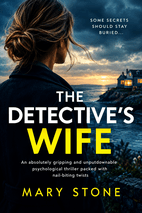
Mary Stone's The Detective's Wife follows Jo, who married Conor Slater knowing what she feared about him and now studies his polished affection for the tell that confirms her suspicions while kept at the edges of his Sweetwater life, her guarded vigilance colliding with Hannah, a woman waking bound with no grip on her identity. A psychological thriller for readers who love domestic suspense and slow-burning dread.
Feature
Insta.Page
Blinkist
Shortform
The Detective's Wife
✓
✕
✕
Summary Depth
Full Chapter-by-Chapter
15-min overview
Section-by-section guides
Audio Narration
✓
✓
✓
Visual Mindmaps
✓
✕
✕
AI Q&A
✓
✕
✕
Quizzes
✓
✕
✕
PDF Downloads
✓
✕
✓
Price
$89.99/yr
$146/yr (PRO)
$199/yr
*Competitor data last verified July 2026.
1 Page Summary
Jo has built her life on a bargain she made with her eyes open: she married Conor Slater knowing exactly what she feared about him, trading her own judgment for the safety and stability he seemed to offer. Now she lives inside that choice, smiling through his public accolades while privately studying him for the tell that will confirm her suspicions. As a detective's wife in the small town of Sweetwater, Jo is kept at the edges of Conor's world—loved in borrowed spaces, kept invisible to the community, waiting on a divorce that has yet to become final. Every gesture of his affection feels polished and deliberate, and she cannot stop testing whether the man she married is a performance or the truth.
Complicating everything is Hannah, a woman who wakes bound and sedated with no reliable grip on her own identity, her memories surfacing in fragments under the lights of a childhood spent being shaped for display. As Hannah claws toward the truth of who she is and who has taken twenty-one months of her life, her questions collide with Jo's guarded investigation, and the women's stories begin to knot together in ways neither can fully control. Meanwhile, the ordinary pleasures of a new marriage—a honeymoon, a home to inhabit, the chance to be seen as capable—become their own kind of danger, softening the vigilance that once kept Jo sharp. The pull to belong somewhere, to stop being a guest in her own life, may be the very thing that leaves her exposed.
Told in taut, twist-laden prose that moves between a marriage built on doubt and a woman fighting to reclaim her own name, this is a psychological thriller about the bargains we make for love, the stories we tell ourselves to survive them, and the cost of choosing to stay. Readers who love domestic suspense with unreliable intimacy, slow-burning dread, and secrets that refuse to stay buried will find themselves unable to look away.
Chapters 1-3
Jo marries Conor despite suspecting he is dangerous, trading her judgment for safety and stability. The choice sits at the foundation of everything that follows, a bargain she made with her eyes open, and the ceremony that opens the chapter puts that bargain on public display. Every event in the chapters that follow grows out of that single decision, the way a house grows out of its foundation, and the reader is meant to feel the weight of it from the first page: Jo chose this man knowing what she feared about him, and now she must live inside the choice while the world tests it.
The Award Ceremony
Conor accepts a police award while Jo watches him for signs of deception and hides her doubts. She studies him the way she studies a subject, reading his face for the tell that will confirm what she already suspects, and she keeps her suspicion folded away behind the face of a proud wife. She smiles when the room smiles. She claps when the room claps. But her attention never leaves his hands, his jaw, the small muscles around his eyes, because she is looking for the crack in the performance and she has been looking for it since before the marriage began. Romy accuses Jo of constantly watching Conor, showing Jo that the children notice her suspicion. The accusation lands because it is true, and because it means Jo's vigilance is no longer private. The children see it. That changes the stakes: her doubt is no longer only hers to carry. A child's plain observation has turned a private habit into a family fact, and Jo cannot unhear it or pretend the watching is invisible. What she thought she was hiding has been visible all along to the people closest to her, and that exposure makes her suspicion heavier, not lighter, because now it has witnesses inside her own house.
Conor nearly says Hannah's name in his speech, exposing his lingering attachment and rattling the family. The near-slip is small and enormous at once. In front of an audience, with an award in his hand, his dead wife's name rises to his lips, and the family registers it. The room may not have caught it, but the family did, and the family's reaction is the one that matters. Jo considers replacing Hannah's wedding photo with the plaque, then decides Conor would punish her subtly for it. The impulse is petty and revealing, a small domestic war over which woman hangs on the wall, and Jo checks herself not out of loyalty but out of fear of the quiet retaliation she knows he is capable of. She understands his punishments well enough to avoid provoking one. The moment shows the marriage in miniature: Jo wants to assert herself, imagines the small victory of rearranging the wall, and then calculates the cost and declines. The fear is not abstract. It is specific and practiced, the fear of a woman who has learned exactly how her husband retaliates and has decided the price of a photograph is too high.
Then a reporter shouts that Conor killed his wife, turning the ceremony into a public accusation. The words break the room open. What has been a private suspicion, a thing Jo turns over in silence and the children glimpse in her watching, is suddenly shouted in public. The accusation does not stay contained in Jo's mind or in the family's careful silence. It becomes noise, a voice in a crowded room, and once it is spoken it cannot be taken back. The private dread has become public property in a single sentence.
Conor freezes and calculates instead of reacting, confirming Jo's read on his controlled instincts. He does not lunge, does not shout, does not show grief or fury. He pauses and thinks, and Jo watches him do it. The calculation is the confirmation. A grieving husband accused of murder would react, would show something raw and unguarded, and Conor shows nothing but the working of a mind deciding what to do next. Waylen panics and Romy clutches Jo's sleeve as reporters swarm and officers move in. The children's fear is immediate and physical, and the ceremony collapses into noise and pushing bodies. The room that was built to honor Conor turns into a crowd pressing toward him, and the children are caught inside it, frightened and clinging, while the adults around them lose control of the moment.
Jo gathers the children and leads them out, choosing to shield them over confronting Conor. She does not turn on her husband in the chaos. She takes the children and goes, and the choice defines her: protection first, questions later, the confrontation deferred. She could have stayed and demanded answers in front of everyone. She could have used the public accusation as the opening to say what she has been thinking for months. Instead she puts her body between the children and the crowd and moves them toward the door, and in that choice the reader sees the shape of the whole marriage: Jo protecting the children from the consequences of the man she chose, and postponing the reckoning once again.
The Hallway
Romy asks Jo directly whether Conor killed her mother, forcing Jo to dodge the question. The child asks the plain question the whole room is circling, and Jo will not answer it. She deflects, and the deflection is its own kind of answer, or at least the children can feel the shape of it. A direct question from a child deserves a direct answer, and Jo cannot give one, and the inability is itself information the children absorb. Jo sends the children to the vending machines with Rose and Stanley to get them away from the press. She moves them out of the path of the reporters, handing them off to the adults who can keep them occupied, buying them a few minutes of ordinary life. The vending machines, the small ritual of coins and snacks, is a way to put the children somewhere normal while the adults sort out the wreckage, and Jo does it deliberately, because normalcy is the only protection she has left to give them in that hallway.
Conor reaches the hallway and embraces the children, showing the good father Jo can't dismiss. The embrace is real, or real enough, and it complicates everything. The man who froze and calculated under accusation is also the man who holds his children in a hallway after a mob shouted that he is a murderer. Jo cannot write him off, and that is the trap. If he were only the calculating man, the choice would be simple. But he is also the father who kneels down and holds them, and the children hold him back, and Jo watches the two versions of the man occupy the same body. Conor asks Jo to affirm she knows he didn't kill Hannah, demanding her alignment and trust. He wants her to say it, to stand with him, and the demand is not a request for comfort but for loyalty, a public alignment she is being asked to give. He is not asking her to believe him. He is asking her to say she believes him, which is a different thing, and the difference is the whole marriage in one exchange. Jo rests against Conor's chest and admits to herself the real question is why she married him anyway. She gives him the closeness, and inside it she turns the question over: not whether he did it, but why she chose him knowing what she suspected. The marriage itself is the mystery she cannot solve. She leans on him and asks herself the question she has been avoiding since the wedding, and the fact that she asks it while resting against him is the answer she cannot bring herself to say out loud.
Seven Months Earlier
The chapter steps back seven months. Jo takes over Martin Moore's competency evaluation after Dr. Oberc's death. The handoff is abrupt and grim, a predecessor gone and a file inherited, and Jo steps into the work without the luxury of distance. She does not get to ease into the case or take her time with the file. The work is handed to her because someone else is dead, and that fact sits underneath everything that follows. Jo has Martin's restraints partly removed and begins questioning him about his voices and the murder. She loosens the restraints to talk to him, to get him talking about the voices and about the killing, and the scene sets her method against the danger of the man in front of her. She is a woman who gets close to dangerous men to find out what they are, and the pattern reaches back before Conor. The loosened restraints are the method made visible: she removes the barriers between herself and a dangerous man because she believes she can get more truth that way, and the reader sees the same instinct that will later lead her to marry a man she suspects, the belief that closeness yields knowledge and that knowledge is worth the risk.
Dr. Adair begins by questioning Martin Moore not about the crime but about fear itself, asking him to describe what frightens him. She is testing him, probing for the seams in a performance she suspects is fabricated, and his answers come back generic and rehearsed, the kind of vague, universal terrors anyone could recite. The blandness deepens her suspicion rather than easing it. A man who has done what Martin is accused of doing should have specific fears, particular images that haunt him, and instead he offers the sort of answers anyone could give, and the emptiness of them tells her she is being handled. She then confronts him with Jessica's text message, the one in which Jessica described his behavior as new, and demands the truth. Martin does not crumble. He recalculates in real time, pivoting from whatever story he was building and calling Jessica's sister a liar instead. The pivot is smooth, and the smoothness is its own evidence, because an innocent man confronted with a text message would react to the message, and Martin reacts instead to the threat the message poses, redirecting blame outward before the question can settle on him.
Dr. Adair presses him on the timeline, asking when the voices began versus when Jessica first noticed something wrong, hunting for a consistent account. The question corners him, and he admits he hid the voices for two years. The admission is a concession, and she takes it, but she does not stop. She asks what the voices actually said, wanting the instruction at the center of his delusion, and Martin reveals they told him to kill what Jessica was carrying. The answer lands with the weight of a confession, but Dr. Adair does not accept it at face value. She challenges the plausibility of hearing one clear voice amid constant noise, testing whether the story holds together, and he insists he heard it, unmoved by her logic. The logic does not move him because the story is not built on logic, and she registers that the story holds for him even when it should not, which tells her something about the man even as it fails to tell her the truth.
She confronts him with his earlier statement to Detective Slater about the sequence of events, aiming to catch the contradiction between then and now. Martin refuses the trap, claiming Slater lies. Dr. Adair shifts to Jessica leaving and the suitcase, searching for motive, and Martin dismisses Jessica as attention-seeking and her sister as a liar, scattering blame outward rather than accounting for himself. Everyone else is the problem. Everyone else is lying, seeking attention, inventing. He walks him through August seventeenth step by step, wanting his own account of that day, and he claims he tried to pray before going to Jessica to stop what she carried. Then she asks the question that matters most: whether Jessica was alive when he went inside. Martin calls Jessica evil and says everything evil must die. The answer is not a denial, and the room's air changes. He does not say she was dead. He does not say he found her dead. He says evil must die, and the sentence hangs there, and Dr. Adair understands that she has gotten as close to the truth as the interview will allow.
Dr. Adair tells him plainly that she sees inconsistencies and offers him a chance to clarify, holding out the possibility of honesty. Martin accuses her of thinking he is faking. She refuses to back down from his insults, holding her ground, and he lunges across the table and seizes her wrist. She hits the panic button and fights to stay conscious as he throttles her, the interview collapsing into a struggle for breath until officers burst in and tear him off her. The man who spoke calmly about evil and death becomes the man with his hands on her throat, and the two versions are the same man, and the reader sees what Jo's method costs when it fails.
The Office Afterward
Dr. Adair returns to her office and hides her bruises with a scarf, wanting nothing more than to keep working. Mark Holloway urges her to go home and document the injuries, his concern practical and insistent. She insists on running group, choosing distraction over fear, and Mark reluctantly agrees to let her lead the session. The scarf is the tell.
💡 Try clicking the AI chat button to ask questions about this book!
Chapters 4-7
Jo drives past her Cleveland exit. The highway splits, and the easy choice is the one that takes her home, but she keeps her hands on the wheel and stays on the road to Sweetwater. She chooses the harder conversation over the comfort of her own bed, steering toward Conor rather than away from what happened between them.
The Sweetwater Station
She finds Conor at the station, and the two of them slide into a booth. Jo gets straight to business: Martin Moore is not psychotic. He is malingering, faking his symptoms, and she lays it out for Conor plainly. She came all this way to tell him in person, but the air between them is charged from the moment she sits down.
Conor's attention snags on her scarf. He notices it, and he does not let it go. He insists on seeing the bruising underneath, and something in his manner shifts. He moves around to her side of the booth, closing the distance she has been carefully maintaining, dropping the professional detachment he has worn like armor. Jo lets him. She lets him examine her neck, and neither of them says a word about what it means. In a few quiet minutes in a diner booth, the relationship slides from professional to intimate, and there is no going back.
Irreconcilable Differences
Conor does not pull back. Instead he tells her something he has been holding: he took off his wedding ring last week. The admission lands heavily. For all the time Jo has known him, he has been a man married to a woman who vanished, bound to a marriage that exists only in legal limbo and memory. Removing the ring is him finally moving on, and he says as much.
Then he goes further. He has consulted an attorney about filing for divorce. The words free him in a way the missing ring only hinted at, legally and emotionally both. He is not just taking off a symbol; he is severing the last formal tie to the life that has kept him stalled.
And then the confession that matters most to Jo: she is the first reason he has had to think about moving on. Not the only reason, maybe, but the first. The two of them raise their glasses to irreconcilable differences, toasting everything they have finally said out loud.
Back at the Hospital
The warmth of that booth does not last. Jo returns to her work and finds a problem waiting. Three patients, Amanda, Paula, and Cathy, were heavily sedated overnight. The timing is not random. It comes on the heels of Cathy's outburst, and Jo starts pulling at the thread.
She finds Amanda barely conscious, swimming up out of a chemical fog. Jo looks at what has been prescribed and does not like what she sees: a cocktail of Seroquel, Ativan, and Haldol, aggressive drugs stacked on top of each other, all of it ordered by Dr. Holloway. This is not routine care. This is chemical restraint, and Jo knows the difference.
She goes to Cathy next. Cathy insists she was poisoned, the claim she has made before, but now she says something that sharpens Jo's suspicion: she calls Holloway by his first name. Mark. The familiarity is wrong, too personal, and it tells Jo that whatever is happening between Cathy and the doctor runs deeper than a standard patient relationship. Jo presses gently and confirms that Cathy is disoriented about the day, her sense of time scrambled by whatever has been put into her. By the time Jo is ready to leave the room, Cathy has already slipped into sleep.
Jo does not stop there. She checks Mark Holloway's office, looking for the man himself, and finds him gone, away in court. The absence gives her room to think, and what she thinks is that a pattern is forming. The patients who claim other identities, the ones who insist they are someone else, are the same patients being overmedicated into silence. Holloway is not treating them. He is quieting them, and Jo begins to suspect that the sedation is not about their welfare at all.
The psychiatrist pulls the medication records for every member of the group and goes through them methodically. Nothing in the charts strikes her as alarming, nothing that would explain what she has been sensing in that room. Still, she does not let it go. She schedules individual sessions with all of them, a decision that looks like routine diligence and is in fact something else entirely: a way to get each of them alone, to listen for what the group setting hides.
The Phone Call
Conor calls her to ask her out again. She answers with a boundary, clean and professional: she does not date married men. It is the kind of line meant to end a conversation. Instead it opens one. Conor tells her he filed the divorce papers that morning. Everything between them changes in that moment. She agrees to a Saturday date in Athens, choosing neutral ground deliberately, a public town rather than the closed world of the trail and the farm.
Afterward she writes it all down in her hidden notebook: the divorce filing, the deepening attachment, the way he keeps circling back to her. She decides to slow the pace, to hold back and let the anticipation build rather than let it burn out too fast. The notebook is where the real record lives, the one no one else will ever read.
Saturday
Exactly one hour before the date, her phone lights up. Conor has texted her the countdown, and the precision of it tells her he has been marking the minutes. She arrives at the Athens lot to find him already waiting, and the first thing she notices is his hand: no wedding ring. She climbs into his truck and they drive.
He takes her along the quilt trail and talks about his grandmother, the old patterns and the land they were stitched across. For a while the mood is warm and unhurried. Then she asks about Hannah, and the temperature drops. Conor goes cold and quiet, and the easy closeness of the drive shuts down.
The Overlook
He stops at a secluded overlook. She looks around and sees no houses, no people, nothing but the two of them and the trees. Her unease spikes. She makes a joke about being murdered out here, the kind of joke that tests the water. Conor jokes back about the shovel in the truck, and the words land wrong. The vision hits her: his wife's body in a grave. For a moment she is sitting in a truck with a man she has just pictured as a killer.
Then he opens the truck bed and there is no shovel. There is a picnic, laid out and waiting, and string lights he has rigged for the occasion. The lights fail. The darkness and the dead bulbs break the tension, and the fear gives way to something softer.
What He Told the Children
Sitting with the failed lights around them, Conor tells her he told his children about the divorce. Romy screamed at him that he made Hannah leave. The accusation hangs there, a child's grief turned into a weapon aimed at her father. The psychiatrist presses him: does he blame himself? He admits it. He blames himself for not stopping Hannah from leaving, for failing to hold his family together.
She reframes it for him. What he did with his children, the staged disclosure, the honesty of it, was the right thing. He answers that he wishes the truth made sense.
The Hair
He reaches out and frees a strand of her hair caught in her lipstick. The gesture is small and intimate and perfectly timed, and she recognizes it for what it is: the whole date has been either deeply romantic or deeply strategic, and she cannot yet tell which. Then Conor announces the drive-in movie. The evening has been planned in deliberate stages, each one built to land exactly where it does. She leaves the question open.
Chapters 8-10
The Drive-In
Conor takes Jo to the drive-in, and he has clearly planned the evening down to the last detail. He positions his truck so the bed faces the screen, and he has strung lights across the back, laid out blankets and pillows, and stocked powdered donuts and two thermoses. He wants the night to be special, and he says as much. Jo takes it all in with pleasure, but a suspicion settles in alongside it: the chivalry feels too polished, too deliberate, and she begins to wonder whether the whole production is a calculated seduction, a routine he has run before.
She decides to test him. When he steps toward her, she mirrors the step, closing the distance and matching his game, wanting to see what he does with the invitation. He pulls back. The restraint disappoints her, and the disappointment itself unsettles her, because it means some part of her wanted him to fail the test.
A dog barks somewhere nearby, and Jo drops instantly into a jiu-jitsu guard stance, body reacting before her mind catches up. The movement exposes her training, and Conor visibly recalibrates, his easy confidence giving way to a flicker of surprise as he takes in this new version of her. The moment passes, and he recovers by offering her the powdered donuts and the two thermoses, wanting to please her, to restore the warmth of the evening. Jo takes a donut and deliberately lets the sugar fall, scattering white powder across her face so that he will have a reason to touch her. He does. He brushes the sugar from her cheek, and then he kisses her under the string lights, wanting her.
The kiss is broken almost immediately. The movie's trumpets blare from the screen, and the lab in the next car starts barking, and the spell snaps. Conor's phone lights up with texts from his mother about Romy. He tries to stay present with Jo, but the interruptions keep coming, each one steadily eroding the warmth of the evening. Then he learns the full extent of it: his father revealed the date to Romy, and Romy has locked herself in her room. Conor's anger rises, and Jo watches him contain it, watches him mask it in four seconds flat. The speed of the transformation deepens her uncertainty. She cannot tell which self is real, the man who strung lights and kissed her, or the man who can bury his fury that quickly.
Jo tells him to go to his daughter. She wants to appear understanding, and she means it, but the instruction also ends the evening. The double feature is abandoned. Conor answers his mother's call, and then, before he leaves, he shakes Jo's hand goodbye. The handshake lands as the most honest and absurd beat of the night, a formal gesture dropped into the middle of something far more intimate. Jo drives home weighing all of it, wanting to judge him accurately. She resolves that only staying close, watching what repeats, will tell her the truth about who he is.
Monday at River Valley
On Monday Jo arrives at River Valley to find both Cathy and Amanda absent, and she wants to understand what happened. She learns that Cathy screamed that Dr. Holloway stole her husband. Mark Holloway then confronts Jo about her individual sessions with the women, wanting to warn her off. His remarks about Cathy being manipulative leave Jo unsure of his motive, unable to tell whether he is protecting the women or protecting himself.
Jo visits Cathy, wanting to hear her account directly. Cathy reveals that Mark is her husband. She speaks of Cara, of her murdered children, and of a child who now calls another woman Mom. The revelation reframes everything Jo thought she understood about the Holloways and the women in their care.
Amanda's Room
Amanda Baker destroys her room and is about to be sedated. She wants to escape, and the staff is preparing to put her under. Jo intervenes, insisting on assessing Amanda first and overruling Denise to do it. She talks Amanda down by disclosing her own lost baby, wanting to reach her where the sedation cannot. The disclosure works. Amanda reveals her empty arms and the gaps in her memory, the missing pieces she cannot account for.
Then Amanda insists her name is not Amanda. She says she is not the woman they keep saying she is. She wants her real identity, and she leaves Jo with more questions than answers.
Amanda confronts Jo in the mirror, wanting to prove she is better, and the tension escalates when Jo asks about her babies' names. Amanda's reflection sharpens with fury as Jo speaks the names aloud, and the question lands like a challenge she cannot ignore. The mirror becomes a battleground, and Amanda's need to dominate pushes the session toward a breaking point.
Jo asks about "Fatty Annie," wanting to understand Amanda's resentment, and Amanda accuses Jo of taking something from her. The old nickname opens a wound Amanda has guarded for years, and she turns the accusation back on Jo with startling intensity. What Amanda believes was stolen remains unspoken, but the charge hangs between them and changes the air in the room.
Amanda hurls her hair at Jo and tears out more, demanding it back, until Denise arrives to end the session. Clumps of hair fly across the room as Amanda pulls without flinching, her demand rising into a shriek. Denise steps in and calls the session, but the damage is already done and the room is no longer safe.
Amanda lunges at Jo, wanting her hair back, and digs her fingers into Jo's scalp. The attack is sudden and desperate, Amanda's hands closing on Jo's head as she tries to reclaim what she threw. Jo is caught off guard, and the struggle shifts from words to bodies.
Jo uses a control hold to restrain Amanda, costing her a scratch on the cheek and an elbow to the ribs. Jo locks Amanda's arms to protect them both, but Amanda thrashes free enough to rake Jo's face and drive an elbow into her side. The hold works, yet Jo pays for it with blood and bruising.
Techs sedate Amanda as she pleads to know where her babies are, and she calls Jo "mean" before passing out. The needle goes in while Amanda begs for an answer Jo cannot give, and her last word is an accusation. She slumps into silence, and the question of her babies is left unanswered.
Jo stands against the wall, questioning whether she helped or used Amanda. The room empties and Jo leans there, breathing hard, replaying every question she chose to ask. She cannot tell whether she was treating a patient or extracting a confession, and the uncertainty settles in her chest.
Blake Graves arrives at Jo's office, wanting to check on her, and notices the scratch on her cheek. He comes through the door with concern plain on his face and spots the fresh wound immediately. His visit turns from courtesy to inquiry in a single glance.
Blake spots the bruises on Jo's throat, wanting to know who hurt her, and she reveals it was a prisoner patient. He presses for an answer and she gives him one, naming the unit and the patient without softening it. The truth does not ease his worry, and it changes how he looks at her.
Jo asks Blake about Conor Slater's missing wife, wanting his investigative knowledge, and he admits the case bothered him. She turns the conversation deliberately, needing his expertise more than his sympathy. Blake concedes that the disappearance never sat right with him, and his admission opens a door Jo did not expect.
Blake reveals a 911 domestic disturbance call and a withdrawn separation filing, shaking Jo's faith in Conor. The records tell a story Conor never shared, and each detail undermines the man Jo thought she knew. Her confidence in him falters, and she cannot unhear what Blake has said.
Blake warns Jo that a detective would know how to stage a convincing disappearance, planting suspicion. He lays out the logic without accusation, but the implication is unmistakable. Jo absorbs it, and the possibility takes root whether she wants it to or not.
Blake asks how close she is to Conor, wanting to gauge her involvement, and she admits they are close. The question is careful and the answer is honest, and both of them know what it costs her to say it. Blake's expression shifts, and the distance between them changes.
Blake leaves with a warning to be careful, and Jo records the contact in her hidden notebook. He pauses at the door to tell her to watch herself, then he is gone. Jo writes the visit down in the notebook she keeps out of sight, and the record becomes one more thing she is holding alone.
Chapters 11-15
The Divorce Papers
Conor Slater keeps Jo confined to the edges of his life. He wants her, but he wants her invisible to Sweetwater, so every meeting happens in other towns, in borrowed spaces far from his house and his name. Jo feels the cost of it: she is kept out of his home, out of the rooms where he actually lives, loved in the abstract and excluded in practice. Conor's marriage is the wall around all of it, unresolved and immovable, and he has promised to wait until the divorce is final before he lets himself have her completely.
Then he breaks that promise. He arrives unannounced at Jo's door, kisses her before she can assemble an argument, and tells her the judge has signed the divorce publication order. It is not the final decree, only the legal notice that starts the clock, but Conor has decided it is close enough. He has broken his own vow to wait, and he knows it. Jo hesitates, because he is still a married man on paper, and the hesitation is real. But she does not send him away. She pulls the belt of her robe loose instead, and lets him carry her to the bedroom. The choice is hers, made with her eyes open, and it changes the shape of everything between them.
Afterward, Conor needs reassurance, and what he says does not reassure her. He tells Jo that if Hannah ever came home, he would kill her. The words land in the quiet of the room and rearrange the emotional stakes of the affair. This is no longer just a married man and the woman waiting for his paperwork. There is a wife out there somewhere, missing, and Conor has just put a threat where her name should be.
The Publication Notice
Jo cannot leave the Slater case alone. She screenshots the first publication notice and sets Google alerts on both Hannah and Conor, telling herself it is professional diligence, the ordinary habit of a woman who tracks stories. The alerts are also a way of tracking him, and she knows that too.
Esme Kincaid wants the community to stop accepting the closed investigation as an answer. She publishes an article that implies Conor may be responsible for his wife's disappearance, and suspicion suddenly has a public byline. The piece does not accuse him outright, but it does not have to. It puts his name next to the question everyone in Sweetwater has been politely not asking.
Jo wants to test what Esme has claimed, so she calls her. What she learns is worse than the article. Esme describes a bruise on Hannah, explained away with the excuse that she walked into a cabinet, and a text sent at two in the morning in which Hannah said she would rather stay than lose her children. Esme also reports Romy's account of Conor pacing and acting secretive, and she warns Jo about the thin blue line, the instinct of law enforcement to close ranks around its own. Then she compares Jo to Hannah, and the comparison is not gentle. Jo is being told she is standing where the missing wife once stood.
Jo takes the evidence apart the way her training taught her to. She reads Hannah's two a.m. text not as a woman making plans but as a woman in cognitive paralysis, frozen between bad options, unable to imagine a way out. Her conclusion is that Hannah may have chosen silence over escape, which is not the same as choosing to disappear, and not the same as being taken.
The Question at the Door
Conor arrives at Jo's door angry, because the article is doing damage he cannot control. Esme, he argues, is poisoning the judge and the county against him, turning a closed investigation into a public trial with no defense. He wants Jo to believe in him, and he insists he loved his wife. Then he asks the question that stops her: "Do you believe me?" Jo cannot answer it. The silence between them is its own kind of verdict.
In his frustration he turns too fast, and his forearm catches Jo's shoulder. She goes down hard onto her hip. It is an accident, and Conor's reaction to it is immediate. He kneels beside her, offers to take her to the hospital, and explains that he turned too fast. He does not minimize it, does not tell her she is fine, does not deflect. He names what he did.
Jo watches him with a professional eye, because that is the only eye she trusts right now. She measures his horror and his carefulness against everything her training has taught her about how abusive men present themselves after the fact, and she cannot tell remorse from calculation. The two look identical from the outside, and she has no instrument that separates them.
Conor fetches frozen peas for her hip and asks permission before he touches her, a deliberate carefulness that is either the behavior of a man who is genuinely gentle or the behavior of a man who knows exactly how gentleness should look. Jo still cannot determine which. The peas are cold against her hip, Conor is close and contrite, and the question he asked at the door hangs unanswered between them.
Conor admits he lost his temper with Jo, and the apology lands wrong. He says the words plainly, without the buffer of excuses, and that plainness unsettles her more than any justification would have. An excuse would have given her something to push against, a shape to the conflict she could work with. Instead there is only the admission, bare and unmanaged, and she does not know what to do with a man who will not defend himself.
He insists he loved Hannah, and he says it in the past tense. Jo turns the grammar over and files it away in the place where she keeps the things she cannot yet name. It could be grief, the way the bereaved sometimes bury the love along with the person. It could be honesty, a door quietly closing. Or it could be something darker, and she does not let herself finish the thought. Then Conor accuses her of analyzing him, and the accusation is accurate enough to sting. Jo admits she is no longer sure where the analysis ends and the feeling begins. The confession costs her something, because it means the professional distance she has been counting on is gone, and she has nothing left to hide behind.
Conor tells her to leave. It is a clean instruction, and for a moment the room holds it. Jo decides not to obey. She asks him to stay instead, and the reversal changes the shape of everything between them, because she has stopped being the one who walks away.
The Christmas Cart
Jo works the Christmas cart on the subacute unit, pushing it from room to room with the forced cheer the season demands. She is still photographing her fading bruise, documenting it as evidence, though evidence of what she has not fully decided. The bruise is yellowing now, going out of her like a tide, and she keeps the record anyway.
Amanda asks Jo if she has children. Jo lies. The lie comes easily enough in the moment, but what she notices is Amanda's first denial of her own children, the way Amanda's answer slides past the question without touching it. Jo registers the evasion and files it beside everything else she is collecting about this family.
Cathy warns Jo that people make mistakes when they are tired. It is a gentle warning, almost kind, and it follows Jo out of the room and down the corridor. She cannot shake it. The words sit with her like a hand on her shoulder, and she knows Cathy is not only talking about the cart, or the season, or the long hours.
The Call from Breckenridge
Conor calls from Breckenridge. Jo takes the call with her grief over Asher and Luke pressed down and out of sight, hiding it the way she has learned to hide things, and she hangs up before it can surface. The conversation is ordinary on the surface. Underneath, she is holding a door shut with her whole body.
Hannah's House
Jo arrives at Conor's house and finds Hannah everywhere. Her taste is in the rooms, her photographs on the walls, her choices in every corner. Jo stands in the middle of it and cannot tell performance from grief, cannot decide whether Conor is preserving a shrine or staging one. Conor explains that he keeps Christmas up for the children, and the explanation is reasonable, and Jo still cannot separate the framework from the man. The decorations are a structure, and she does not know whether Conor is inside it or holding it up.
Then she sees Hannah's calendar, still turned to August. The month she disappeared. It has not been moved, not by a single page, and the stillness of it is worse than any photograph.
Conor notices Jo's scar. She confesses. She tells him she lost a baby and cannot have children, and the confession comes out of her without armor. Conor says his children need a mother, and the words find every hollow place in Jo. They are not cruel. They are worse than cruel, because they are true and practical and they land exactly where she is empty.
The Pens and the Earrings
They exchange gifts and discover they bought each other identical fountain pens. The coincidence is almost funny, almost unbearable, two people reaching for the same object without knowing it. Then Conor gives Jo diamond earrings and says he wants to buy her more, and she puts them on. The promise in the gift is a future, and she lets herself wear it.
Jo sleeps with Conor beneath Hannah's portrait. She holds Hannah's gaze the whole time, meeting the painted eyes above them, and she lets herself have the moment. It is not triumph and it is not guilt. It is a woman taking something she knows she may not be allowed to keep.
Afterward, Jo tries on Hannah's lipstick. The color is not hers, and she wears it anyway. Conor notices the shade. He does not ask where it came from.
You've reached the end of the free chapters
Next chapter: “Chapters 16-19” is locked
Keep reading The Detective's Wife — and unlock all 600+ book summaries with audio, mindmaps and AI Q&A.
$0.00 due today · 7 days free, then $89.99/year ($7.49/mo) · Cancel anytime before day 7
Mary Stone is the pseudonym for a bestselling American author known for writing psychological thrillers and mystery novels. She is best known for the Ellie Kline series, the Winter Black series, and the Autumn Trent series, which feature strong female protagonists in complex criminal investigations. With a background in healthcare and a deep interest in forensic psychology, Stone frequently incorporates medical and psychological details into her suspenseful storytelling.
Frequently Asked Questions about The Detective's Wife
What is The Detective's Wife about?
Jo marries Conor Slater, a police detective she loves but also suspects may be dangerous, trading her own judgment for the safety and stability she craves. That bargain sits at the foundation of everything that follows, and the novel traces how it plays out in public ceremonies where she smiles on cue while reading her husband's face for signs of deception. Alongside her story runs the struggle of a woman trying to hold onto a sense of self inside a marriage that keeps making her smaller, and a case that refuses to stay neatly closed. The stakes are deeply personal: what it costs to love someone you don't fully trust, and who you become when you decide to stay.
Who is the author of The Detective's Wife?
Mary Stone is the author behind this suspense novel about a woman who marries a police detective she isn't certain she can trust. The storytelling leans into psychological tension rather than pure action, following characters who must live inside the consequences of one high-stakes decision. Readers who prefer their suspense rooted in complicated relationships and quiet, accumulating pressure will recognize the sensibility here.
Is The Detective's Wife worth reading?
It's worth reading for the way it builds tension out of ordinary moments — a dinner booth, a drive-in, a marriage bed — rather than relying on chases and set pieces. Stone writes sharp, observant prose and gives her characters real moral weight, so the question of who to trust keeps you turning pages. If you like domestic suspense with layered female leads and a slow, deliberate tightening of the screws, this one earns its place on your shelf.
What are the main themes in The Detective's Wife?
The central theme is trust and its opposite: how suspicion can live alongside love inside a marriage, and how a person can study someone they share a bed with for the tell that confirms what they already fear. Closely tied to that is the bargain of safety — the idea that stability can be bought at the price of your own judgment, and that the cost isn't always visible until much later. Identity is another running thread, as characters wrestle with who they are allowed to be inside a marriage and what gets sanded away to make a household hold. Underneath it all is a study of control and accommodation: the small surrenders that add up, and the self-deception that makes them feel like choices.
📚 Explore Our Book Summary Library
Discover more insightful book summaries from our collection