The Detective's Wife Ending Explained
by Mary Stone
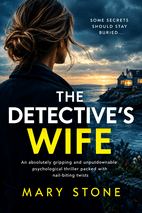
The ending of The Detective's Wife leaves plenty of readers with questions, and that's fair. This page walks through what literally happens in the final chapters, why things end the way they do, and where each character lands. We'll keep the spoilers behind a warning so you can decide when to read on.
The Ending, Explained
ListenWhat Happens at the End of The Detective's Wife
At the Engelman Park splash pad, Hannah watches Jo hold Emily Holloway's sleeping baby, Nash, and notices that Jo looks as if she might never let go. Hannah's inner voice observes that Jo is no longer “scary little Anna,” but she still watches her sister with new uncertainty; when Waylen calls from the food-truck line, Hannah makes herself smile, turn, and walk away. Jo stays on the blanket with Nash. Romy comes over with ice cream and asks whether Jo really married Conor to save Hannah. Jo answers, “I married your dad for a lot of reasons,” an answer she knows is true but incomplete; Romy studies her, then leaves without looking back.
Alone with Nash, Jo opens the confession she has kept closed. She admits she is the reason Hannah spent twenty-one months in River Valley as Amanda Baker and the reason Hannah's children cried for nearly two years. She describes planning the kidnapping: creating Suzanne Childress, renting the cabin, drugging Hannah, keeping her restrained with an IV, playing audio conditioning, flying to Paris on Hannah's passport, building a Warsaw conference alibi, and leaving Hannah near Memorial Hospital so she would be admitted under Mark Holloway. She confesses she married Conor because she wanted him, planted the storage-unit key in his desk to direct suspicion at him, used Blake's feelings, and returned Hannah only when the stolen life began to crack—especially after Waylen checked Romy's face before accepting Jo's affection.
Holding Nash, Jo briefly assembles a plan to take him and drive south. She sees Asher in Nash's face and lets herself look at the plan for three seconds. Then she sees Hannah stop and watch her with doubt. The plan folds away; Jo tells herself it is not because she is good but because she has caused enough harm and cannot make Hannah's uncertainty worse. She kisses Nash's hair and walks back toward Hannah, Romy, Emily, Esme, and the other children, choosing to stay with what she has.
The Ending, Explained
The ending works by reversing the book's surface story. The reader has been placed inside Jo's clinical watching and inside Hannah's fragmented memory; the final chapter reveals that Jo's surveillance was not only investigative but predatory. Jo's motive is built from grief and envy: after Asher's death, her hysterectomy, and her marriage's collapse, she sees Hannah as having received the life Jo believes she was denied. She studies Hannah's routines, invents Suzanne Childress, drugs and conditions Hannah, and then installs herself beside Conor. Her marriage to Conor is both an obsession and a cover; the “honey trap” story Blake offers gives her a survivable narrative after the fact.
The return of Hannah is therefore not a clean rescue. Jo admits she brought Hannah back when the stolen life began to fail—Conor frightened her, Blake was asking questions, and the children needed their mother. The decisive crack is Waylen checking Romy's face before he reaches for Jo; Jo recognizes the damage she is helping create and sees herself in Romy's watchfulness. The final scene with Nash replays the kidnapping in miniature: Jo has another baby, another car, another plan. She stops because Hannah is watching and because she cannot bear to make Hannah's first real uncertainty worse, not because she has become innocent.
The ending leaves Jo morally unresolved rather than redeemed. She confesses everything only to herself and to the reader; she does not turn herself in, and her final line—“I'm a very good planner. That hasn't changed”—keeps her capacity for harm alive. The book's themes of performed identity, being disbelieved, and domestic control pay off: Hannah was disbelieved as Amanda Baker, Emily was disbelieved as Cathy, and Jo has been the trusted clinician and wife who engineered both the disappearance and the rescue narrative. The “detective's wife” is finally exposed as the detective's deceiver, while Hannah and the children are left whole enough to laugh in the sun, but not told the whole truth.
The ending hits harder if you see how you got there.
The ending of The Detective's Wife makes more sense with the full plot.
Read the full plot, chapter by chapterWhere Every Character Ends Up
Questions the Book Leaves Open
- Whether Jo will ever be exposed or face legal consequences for kidnapping Hannah, impersonating Suzanne Childress, manufacturing evidence against Conor, and using Blake.
- Whether Hannah, Romy, Conor, or Blake will ever learn the full truth of Jo's confession, especially that Jo was Suzanne and engineered Hannah's twenty-one months at River Valley.
- What legal and personal consequences Conor will face from the investigation and from Jo's planted key, and what happens to his marriage to Jo.
- Whether Jo's final line—“I'm a very good planner. That hasn't changed”—means she may act on another plan in the future.
- How fully Hannah will recover her memories and identity, and whether she will ever be told how much Jo deliberately took from her.
These are answered in the chapter summary. See the full plot →