⚠️ READER ADVISORY: This is a deep-dive summary designed for those who want the full story. Contains spoilers.
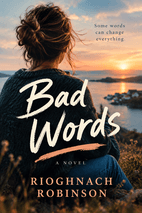
What is the book Bad Words about?
Rioghnach Robinson's Bad Words follows author Parker Navarro and critic Selina Chan, whose public feud over her scathing review spirals through parties, panels, and comment sections into something neither expects. A sharp, character-driven novel for readers who love complicated creative people and enemies who understand each other best.
Feature
Insta.Page
Blinkist
Shortform
Bad Words
✓
✕
✕
Summary Depth
Full Chapter-by-Chapter
15-min overview
Section-by-section guides
Audio Narration
✓
✓
✓
Visual Mindmaps
✓
✕
✕
AI Q&A
✓
✕
✕
Quizzes
✓
✕
✕
PDF Downloads
✓
✕
✓
Price
$89.99/yr
$146/yr (PRO)
$199/yr
*Competitor data last verified July 2026.
1 Page Summary
Parker Navarro returns to his Brooklyn apartment to find his partner, Arthur, in a state of quiet panic—and a warning not to go online. As an author, Parker is about to discover that his career, his reputation, and his sense of self are under public siege. Across town, magazine editor Selina Chan is facing her own reckoning at City, where a review she wrote—and the fallout it triggered—has put her job, her principles, and her standing on the line. What begins as a professional conflict between a writer and the critic who dismantled his book becomes something far messier as their lives collide at parties, panels, and in the comment sections of the internet.
The novel follows Parker and Selina as they navigate a feud that keeps pulling them into each other's orbit despite everything they have to lose. Parker wrestles with family obligations, a looming book launch, and the seductive pull of online validation, while Selina contends with an editorial team demanding contrition and a magazine drifting from the standards she built her career on. Their mutual hostility gives way to something neither expects, forcing each of them to confront what they actually want from their work, their relationships, and each other—while the public narrative they've both fed threatens to consume whatever private thing is growing between them.
Told in alternating perspectives with sharp wit and emotional precision, Bad Words is a story about ambition, authenticity, and the cost of being seen. It will appeal to readers who love character-driven literary fiction about complicated people doing creative work, enemies who understand each other better than anyone else, and the modern minefield of art, criticism, and the internet.
Chapter One. Parker Navarro
Parker Navarro comes home to Brooklyn carrying the ordinary hope of a quiet evening, but the moment he steps through the door he can tell something is wrong. Arthur is waiting for him in a state of visible panic, and the mood of the apartment shifts instantly from domestic calm to crisis. Whatever Parker expected from his return, it is not this. Arthur’s agitation is so pronounced that Parker’s own anxiety spikes before he even knows what has happened.
Arthur tries to hide the bad news, deflecting and stalling, but his evasiveness only makes things worse. Parker pushes him to explain, and the more Arthur dodges, the more certain Parker becomes that something catastrophic has occurred. The tension between them tightens with every non-answer until Parker finally forces the truth into the open. What he learns confirms his worst fear: Arthur warns him not to go online. The instruction is a kindness and a terror at once, because it tells Parker that whatever is waiting for him on the internet is bad enough that Arthur cannot bring himself to describe it.
Parker’s first instinct is to turn to his publisher for protection, to the machinery of a career that is supposed to stand behind him. But that hope collapses immediately. Selina Chan has already obtained an advance copy of his second novel. The news lands like a verdict. The person who has the power to shape how the book is received already has it in her hands, and Parker understands that the normal protections of a launch have been stripped away before the book even reaches readers.
The moment pulls Parker back to the beginning, to what he wanted when he set out to become a writer. He remembers wanting literary stardom, the dream of mattering on the page and being recognized for it. That memory is inseparable from the success of his debut, the book that made everything seem possible. The recollection sets up the fall that is coming, because the height he reached makes the drop that much more devastating.
Bill Owens wanted to launch Parker’s career, and he did it in dramatic fashion. The auction victory changes Parker’s life overnight. One moment Parker is an unknown writer with ambition, and the next he is a commodity, a name with a price tag and a future. Lauren Nilsen wants to publish These Extraordinary Times, and her backing is what makes Parker believe the dream is real. With a publisher of her stature behind him, the fantasy of a literary life stops being a fantasy and starts to feel like a plan.
Selina Chan wants to destroy the novel’s reputation, and she does it with a review that turns Parker’s first major notice into a public humiliation. The review is not a dismissal; it is an execution. It takes the thing Parker made and holds it up as an example of everything wrong, and in doing so it transforms Parker from a promising debut into a cautionary tale. The first real attention his work receives is not admiration but ridicule, and the whiplash is total.
Parker wants to defend himself, to answer the charges and reclaim his voice, but Bill forbids a response. The prohibition leaves Parker powerless, forced to watch the story about his own book be written by someone else while he stands silent. Bill’s reasoning may be professional, but the effect is emasculating. Parker is not allowed to fight back, and the silence becomes its own kind of punishment.
Parker wants the attacks to be false, wants to believe that the mockery is unfair or exaggerated, but the online response exposes his family, his finances, and his identity to strangers. The scandal is not contained to the book. It reaches into his life, pulling the people he loves into the blast radius and turning his private circumstances into public entertainment. The humiliation is no longer just about the novel; it is about who Parker is and what he has.
Parker wants to ride out the scandal, to wait for the noise to die down, but the critics follow Selina’s lead. One review becomes a chorus, and the book becomes a historic flop. The failure is not merely disappointing; it is record-setting, the kind of disaster that gets remembered. Parker’s name becomes attached to a failure so large that it eclipses the success that came before it.
Parker wants to recover, to find some way back to solid ground, but the failure costs his publisher millions. The financial damage is real and enormous, and it leaves Parker fearing for his career. He is not just a writer who wrote a bad book; he is a liability, a writer whose failure has a price tag that others have to pay. The fear is not only for his art but for his future, for whether anyone will ever trust him with a book again.
Parker wants to prove Selina wrong, to imagine a future in which she admits she misjudged him, but the fantasy of her praise only deepens his obsession. Instead of freeing himself from her judgment, he becomes fixated on it, measuring himself against the opinion of the person who wounded him most. The desire for vindication curdles into something he cannot put down.
Arthur wants to steady Parker, to be the calm presence that keeps him from spiraling, but his careful concern nearly pushes Parker into despair. Arthur’s gentleness is well-meant, but it makes the situation feel even more dire, because if Arthur is this worried, then there is no hiding from what has happened. Parker teeters on the edge of hopelessness under the weight of Arthur’s pity.
Parker wants to move past the depression that threatens to swallow him, but he redirects himself into anger at Selina. Rage is easier than grief, and it gives him something to hold onto. Instead of collapsing inward, he turns outward, focusing on the woman who struck the first blow and made everything else possible.
Parker wants to understand Selina’s motive, to make sense of why she would do this to him, but Arthur’s theory only makes the attack feel more personal. If there is a reason, it is not random, and that means Selina’s review was not just criticism but something aimed. The explanation does not soothe Parker; it sharpens the wound, because it suggests intention where he might have preferred indifference.
Parker wants to know if he can survive financially, to assess the damage and find a way forward, but reviewing his spending reveals that his million-dollar advance is nearly gone. The money that once seemed like security has evaporated, and the reality of his situation becomes concrete. He is not just a writer in trouble; he is a man running out of resources, with the clock ticking on whatever comes next.
Arthur wants Parker to rejoin the world, to step back into social life and prove that he is not finished, and Parker agrees to attend the Maynard-Roth party. The agreement is a small victory, a sign that Parker is willing to try, even if the effort is reluctant. It is a step back toward the living, a decision to be seen rather than to hide.
Parker wants to face the worst, to confront the thing he has been avoiding, and so he reads Selina’s new review. The reading confirms what he feared: she has panned him again. Whatever hope he carried into the act of reading is extinguished, and the pattern holds. Selina has not softened, and Parker’s second attempt has met the same fate as his first.
💡 Try clicking the AI chat button to ask questions about this book!
Chapter Two. Selina Chan
Kellie Cade finds Selina Chan in the office with a mission of reassurance. The review of High and Dry has run, and Kellie wants Selina to know it landed well. But before Selina can process that, Kellie mentions that Hayden Fairbanks has arrived for the meeting. The news lands like a stone in Selina's stomach. Hayden's presence changes everything about the day ahead, and Selina's unease sharpens into something closer to dread.
The Advance Copy
Selina stares at the advance copy of High and Dry sitting on her desk. The book she reviewed, the review she never wanted to write in the first place. Celebrating it feels wrong. She picks it up and tosses it aside. The review exists because she wrote it, but she will not pretend it was a triumph. It was a job, and now it is done, and she wants nothing more than to move past it.
But moving past it means reckoning with why she wrote it the way she did. Selina's critical principles are not negotiable. She recommits to honest criticism as a life's calling. The review was fair. It was necessary. She will not soften her standards to make anyone comfortable, not the author, not the publisher, not Hayden. This is who she is, and she will not flinch from it.
Hayden Takes the Room
The editorial meeting begins in the library, and Hayden Fairbanks wastes no time cornering Selina. Hayden is triumphant about the review's online engagement, the clicks and shares and comments that prove, in her mind, that the piece was a success. She claims credit for assigning it, positioning herself as the architect of Selina's work. Selina sits stiffly through the praise, her jaw tight. She is not Hayden's success story, and she is not a token Asian American voice to be paraded out when convenient. The staff has shrunk, she notices, fewer faces around the table than there used to be, and Hayden's presence feels like another contraction, another squeeze on the space they have left.
Scott Goodwin tries to run the meeting normally. He opens the features discussion, determined to proceed as if Hayden is not there. But Hayden does not sit quietly. Joyce Crafton pitches Teresa Cagle's Pathogenius, a literary novel she believes in, and Hayden interrupts before Joyce can finish. Traffic, Hayden says. Numbers. The book will not perform. Joyce's pitch dies in the air, undermined in front of the entire staff, and the room goes cold.
Hayden wants to redirect coverage toward popular, high-performing books. She dismisses Joyce's literary pitch with the casual cruelty of someone who has already decided what matters. Selina watches the review calendar she has fought to protect come under attack. She objects that the team lacks bandwidth, that they cannot simply absorb more work, more demands, more of Hayden's priorities. But Hayden is not interested in bandwidth. She is interested in output.
The AI Proposal
Then Hayden proposes AI. The room goes silent. The staff stares, shocked into stillness, as Hayden outlines a future where artificial intelligence increases output, where the work of writing and editing and reviewing can be scaled beyond human limits. The silence is not agreement. It is horror. Scott Goodwin rejects the proposal in a voice of barely contained fury, his words clipped and cold. He will not allow it. Not here. Not now. Hayden ends the meeting on her terms, treating Scott as a subordinate rather than a peer, and leaves the room. The staff sits in the aftermath, dread settling over them.
Drinks and Deflection
Later, Jacob Chau tries to reassure Selina. Scott resisted the AI proposal, he reminds her. That matters. He jokes about her review over drinks, trying to lighten the weight of the day. But Selina does not want to discuss the review. She steers the conversation to Jacob's family, to his exhaustion, to anything other than the piece she wrote and the attention it has brought. Jacob is tired, she can see it, and she would rather focus on his weariness than her own discomfort. The review is a door she keeps closing, and Jacob, kindly, lets her.
The Party
The publishing party is a gauntlet Selina wants to escape before she is trapped. But before she can slip out, Eileen and Courtney Mitchell approach her. Courtney is nervous, her debut novel Mean Streak clutched in her hands like a lifeline. She pitches it to Selina, her voice wavering, her hope naked. Selina agrees to consider it. It is a small kindness, but it is something. She endures hostile stares and requests from others at the party, feeling seen and wanted and resented all at once. She is preparing to leave when she spots Parker Navarro entering.
Parker looks up. Their eyes lock. Selina freezes in place, caught between the door and the man who has just walked through it. The party recedes, the noise dims, and everything narrows to that single point of contact. She cannot move. She cannot look away. Whatever comes next begins here, in this frozen moment, with Parker Navarro standing in the doorway and Selina Chan unable to run.
Chapter Three. Parker
Parker spots Selina Chan across the party, and everything else in the room goes flat and distant. She is the critic who has spent years dismantling his books, and for a moment all he can feel is the old, hot hatred rising up his throat. He wants to confront her, to finally say something, but then she looks at him. It is a small, dismissive glance, the kind you give a stranger who has wandered into the wrong room, and it lands harder than any review she has ever written. The hatred curdles into something colder and more deliberate. He decides to talk to her, and that decision immediately puts Arthur's carefully planned night at risk.
He tells himself he will not approach her. He wants to stay a good author, the kind who does not make scenes at parties, the kind who lets the work speak. But the second drink goes down easy, and the restraint he was counting on thins out. The room keeps tilting toward her, and he keeps tilting with it.
He finds Arthur and lies. He says he needs air. It is a small lie, the kind that costs nothing in the moment, but it isolates him from the one person at the party who might have talked him down. Arthur lets him go, and Parker walks away with the lie sitting between them.
Outside, he searches. He moves through the smokers and the stragglers, scanning faces, and she is gone. He goes back inside and works the rooms, the bar, the edges of the crowd, and she is still gone. The failed search does not cool him off. It sharpens the dread. He can already feel the future version of himself, the one who will spend years regretting that he let the chance slip, and he refuses to become that man.
He crosses the catwalk. The party noise fades behind him, and the library opens up, quiet and lamplit, and Selina is there. He wants an explanation. He wants her to account for what she has done to him, book after book, year after year. She looks at him without surprise and tells him to walk away. It is not a threat. It is closer to a warning, the kind you give someone standing too close to a ledge.
He refuses to leave. He wants her to justify her reviews, to explain how she could read his work so carefully and still write what she wrote. She insists she owes him nothing but honest evaluation. That is the whole of her position, and she will not dress it up.
He pushes harder. He demands to know why she treated his books differently from everyone else's, why his got the knife while others got the pass. She denies knowing what he means. The denial is flat and unbothered, and it makes him angrier than an admission would have.
He accuses her of taking joy in tearing down other people's work. He wants to wound her, to make her feel the size of what she does to people. Instead she tells him about City. She reveals the financial pressures bearing down on the magazine, the numbers, the squeeze, the fact that her reviews are not a hobby but a job in an institution that is itself struggling to survive.
He attacks her ivory-tower stance. He tells her that authors need money, that real people live on these advances and these sales, that her clean little judgments have consequences she never has to feel. She does not flinch. She exposes him instead. She knows about his illegal reading, the pirated copies, and she knows about his millionaire advance. She lays both facts side by side, and the contradiction speaks for itself.
He says he wants City to go under. He says it to hurt her, to make the fight about something bigger than his own bruised ego. She takes the words and turns them around. She uses them to prove he is spineless, a man who will not commit to anything, not even his own stated wishes. He says he wants the magazine dead, and she shows him that he does not mean it, that he has never meant anything hard enough to act on it.
Then she jabs a finger into his chest. It is a small physical gesture, almost nothing, but she uses it to define him. She names his flaw out loud, and the accusation gets under his skin in a way her reviews never did. It makes him doubt himself. It makes him wonder whether everything he has ever written was aimed at one thing only: approval. Whether the books were never really books but applications for love, submitted over and over to people like her.
She tells him it is not her job to like him. That is the end of it, as far as she is concerned. She does not owe him warmth, or mercy, or a softer review. She leaves him standing in the library, humiliated and shaken, the fight over and lost.
He pulls out his phone and texts Arthur that he is going home. He wants to hide the confrontation, to keep it contained, to not have to explain what he did or what she said. He conceals the whole thing. The lie from earlier now has a companion, and he carries both of them out of the building.
He wakes feeling clear. For a moment he wants to believe the night was not reckless, that he handled himself, that the confrontation was something he can file away and move past. Then he sees his phone. Eighty-six notifications. And a message from Bill, marked urgent.
He watches the video. It is everywhere. Someone recorded nearly the whole confrontation, from the library to the finger jab to the things he said about City going under. He watches himself say it, watches her dismantle him, and understands the damage in a way he could not while it was happening. The private moment is public now, and there is no version of the night left that he controls.
He calls Bill expecting ruin. He is ready to apologize, to grovel, to start the long process of cleaning up whatever is left of his reputation. Bill laughs. Bill laughs, and then he tells Parker that the Times wants to talk to him.
Chapter Four. Selina
Selina sits down with Scott and Hayden. They want to discipline her, not fire her. That distinction matters, because she keeps the job but loses the illusion that the job is safe. Selina walks into the meeting already knowing she is the one on trial.
She apologizes for the argument. It is a partial apology, carefully worded, and it does not land the way she hopes. She refuses to accept full blame. Hayden is not interested in nuance or shared fault. Hayden wants contrition, and Selina will not give it in the form demanded.
Then Hayden lays out the terms. Selina is to write a statement apologizing to Parker and to the subscribers. It is not a request. It is a condition of her continued standing at the magazine. The statement would not just be an apology for tone or timing. It would mean giving up her position as an editor, the position that her judgment about the work is her own to defend.
Hayden goes further. Selina must retract her review. If she refuses, Hayden threatens to resign. The threat is aimed at Scott as much as at Selina, because Hayden's departure would be a crisis of its own. If Selina complies, she admits the review was wrong, and she does not believe it was. She refuses to retract. Her argument is that a retraction would undermine the magazine's editorial process, that capitulating to pressure would set a precedent no editor could survive. She is no longer a protected voice. She is a problem to be managed.
Scott steps in and defends her. He warns that a retraction would damage City's credibility, and the warning shifts Hayden's stance. Hayden does not become an ally, but she stops pressing for the retraction in that moment. Selina is still standing.
Selina keeps arguing. Any apology, she says, would validate Parker's harassment. Hayden has heard enough about principle. What Hayden wants is a way out of the crisis that does not cost the magazine more than it has already lost.
Then Scott changes the conversation. He reveals that subscription numbers spiked after the video. What was damage control becomes opportunity. Scott shows Hayden supportive posts defending Selina. Hayden had been operating on the belief that the public turned against her editor. The posts say otherwise. The audience is not uniformly hostile. Some of them are on Selina's side.
Selina pushes the opening. They should build on the moment, she argues, by defending their work. Hayden does not want a campaign. Hayden wants a calculation. She demands to know whether defiance will grow the market or hurt it. Selina is forced to justify herself commercially, not just editorially. The question is no longer whether she was right. It is whether being right sells.
Selina proposes going on social media to defend City. For her, this is a real concession. She has long avoided public-facing engagement, and stepping into that arena means giving up the distance she has kept between herself and the audience. But she offers it, because the alternative is letting the story be told without her.
Then Scott drops the escalation. Parker gave an interview to the Times attacking Selina and City. The conflict is no longer contained to the video or the review. It is now in a major outlet, with Parker shaping the story on his terms. Selina reads the interview, and whatever restraint she had left goes with it. She declares they cannot let him define them. The line is drawn, and she is the one drawing it.
Hayden, seeing Parker as the bigger threat, authorizes Selina to go after him. It is a turning point. Hayden is not endorsing Selina's judgment for its own sake. She is choosing the enemy she would rather fight, and Selina becomes the instrument.
Selina arrives at Jacob and Cassie's apartment and learns that Parker's book has surged to #12 in Books. The news deepens her outrage. The man who attacked her is being rewarded by the market, and the surge gives his story momentum. Selina is not just angry. She is watching Parker pull ahead.
She joins Threads and gains thousands of followers. The platform gives her a voice, but it also exposes her to public scrutiny and harassment. Every new follower is a potential ally or a potential attacker, and Selina has stepped into a space where she cannot control which.
Lola Xu publicly defends Selina, and Selina replies. The exchange gains her an ally, but it also increases her visibility. The circle of people willing to stand with her is growing, and so is the number of people watching. The feud is becoming a public event with participants, not just a private grievance.
Selina sees Parker posting triumphantly about the attention. He is enjoying this. He is treating the conflict as a win, and his confidence is its own kind of provocation.
Then Parker posts a taunt about Selina's hypothetical novels. It is a jab at her ambition, at the work she has not published, at the identity she has not yet claimed in public. The taunt provokes her into a public exchange. She answers, and the two of them trade barbs openly. Selina lands a viral retort, and the exchange escalates the feud into open warfare. Both of them are committed to the fight now, and neither can step back without losing face.
You've reached the end of the free chapters
Next chapter: “Chapter Five. Parker” is locked
Keep reading Bad Words — and unlock all 600+ book summaries with audio, mindmaps and AI Q&A.
$0.00 due today · 7 days free, then $89.99/year ($7.49/mo) · Cancel anytime before day 7
Rioghnach Robinson is an Irish author known for her young adult and middle grade novels, including the critically acclaimed "The Falling in Love Montage" and its companion "The Last Summer of Us." Writing under the name Ciara Smyth for several of her works, she has gained recognition for her witty, heartfelt stories centered on LGBTQ+ characters and contemporary teen experiences. She holds a degree in English literature and has worked in various roles, including as a bookseller and librarian, before becoming a full-time writer.
📚 Explore Our Book Summary Library
Discover more insightful book summaries from our collection