Bad Words Book Club Questions
by Rioghnach Robinson
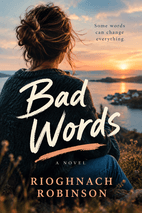
These questions assume everyone has finished the book and contain spoilers, including the ending.
Bad Words is built for book club arguments in the best way. It pits two sharp, wounded people against each other over criticism, reputation, and what gets said online, then asks you to decide who was right and when. Use these questions as conversation starters, not a quiz. Pick a few that spark debate, let people disagree, and let the novel's messier moments stay messy.
The novel raises questions about public identity, private loyalty, money, family, and the cost of being honest. You do not need to answer every prompt. Start with the ones that make the group lean in, then follow the heat. The best discussions will probably come from places where nobody agrees on who behaved worst.
Public Selves, Private Wounds
- 1.Parker’s confrontation with Selina in the Maynard-Roth library is filmed and posted anonymously, turning a private argument into a viral spectacle. How does that moment change the trajectory of both characters’ careers and public identities?
- 2.The Wiseman Foundation panel turns into a public airing of grievances, especially after Christian Gatehead insults Selina and Parker praises Aiden Linville’s Desperations while privately agreeing with Selina’s pan. What does that panel reveal about literary reputation, performance, and the difference between what characters say publicly and privately?
- 3.Selina posts a defense of Parker online even after Lola Xu’s followers turn on her, while Parker later publicly reveals his suicide plan at twenty-two in defense of Selina. What do these acts of public vulnerability cost each character, and did they change your view of either one?
Criticism, Reputation, and Online Harm
- 4.Selina refuses Hayden’s demand to apologize and retract her review of High and Dry, while Scott argues a retraction would damage City’s credibility. Did you agree with Selina’s decision to stand by the review, or should she have softened her position to protect the magazine?
- 5.Parker’s Chan Pan Support Group, created by Jenny House, becomes a place for authors to bond over being panned by Selina. How did the group chat shape Parker’s view of Selina, and did it help him or make him more isolated and vengeful?
- 6.Brian Falwell’s article ‘The Dragon Lady of Publishing’ uses Parker’s on-record comments, and Lola Xu’s viral thread attacks Parker’s book. Who bears the most responsibility for the harm caused by that moment — Parker, Falwell, Lola Xu, or the online audience — and why?
- 7.The novel repeatedly asks whether criticism is an art, an act of discernment, or a personal attack. After finishing Bad Words, do you agree more with Selina’s defense of honest criticism or Parker’s argument that negative reviews encourage dogpiles and feel like being separated from other people?
Family, Money, and Institutional Pressure
- 8.Selina’s estrangement from her parents — their refusal to support her English literature and journalism studies, and her father’s email after the feud — runs throughout the novel. How does her family history affect the way she writes criticism and the way she reacts to Parker’s story about her?
- 9.Parker’s finances are central to his anxiety: his $1.2 million advance is mostly gone after taxes, family debts, and his apartment, and he later worries he may have to sell the apartment and leave the city. How does financial precarity drive the choices Parker makes during the feud and after the backlash?
- 10.City Magazine’s move to remote work and the loss of its office are presented as both a business necessity and a loss of identity, with Scott saying the magazine is changing shape. How does the fate of City reflect the novel’s larger arguments about commercial pressure and editorial integrity?
Art, Taste, and Connection
- 11.Parker writes ‘Who Will Know Me When I’m Gone?’ in The Paris Review Daily, a story Selina reads as a pointed portrait of her. Was Parker’s story an act of revenge, an attempt to speak to Selina, or something else? How did you interpret the letter Selina writes in response?
- 12.Selina and Parker discover they both love Anna Kavan’s Asylum Piece, and Selina later says reading beautiful things makes her feel connected. How does Asylum Piece function as a bridge between them, and what does it suggest about criticism, loneliness, and finding someone who understands your taste?
Truce, Trust, and What Comes Next
- 13.After the holiday emails and the New Year’s Eve party, Selina invites Parker to Jacob and Cassie’s party and they sign their names on the Book Bar wall as a truce. Did you believe the truce could hold, given how much damage they had done to each other publicly? Why or why not?
- 14.Arthur is protective of Parker throughout, from taking his phone and laptop to warning Selina not to hurt Parker again. How did you read Arthur’s role in Parker’s life, and did his eventual acceptance of Selina feel earned?
- 15.At the end of the novel, Parker and Selina settle into a private life together while public judgment continues online. Do you think their relationship can survive the scrutiny and the history of their public feud, or has the novel earned its hopeful ending?