Bad Words Quotes
by Rioghnach Robinson
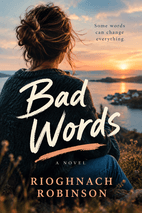
This page gathers some of the sharpest lines from Bad Words, a novel that spends a lot of time inside the head of people who care too much about books, status, and being right. You will find dialogue from arguments and social media spats, narration that sizes up a room, and inner monologue that veers between grandiosity and self-doubt.
What makes the book quotable is how quickly it moves from funny to brutal to weirdly tender. The best lines are not just insults. They are little confessions about ambition, envy, and the fear of being ordinary. If you like writing that says the messy part out loud, this list is for you.
Top Quotes from Bad Words
“These Extraordinary Times is a stupefying misfire, ten thousand fine sentences that heroically join forces to say nothing.”
— Selina Chan
Selina Chan's review of Parker's debut novel opens with this devastating assessment.
It is a brutal, quotable distillation of critical rejection that defines Parker's public humiliation.
“Then I reminded myself that I had better things to do than fixate on one smug, overpowered member of the literati, and I went back to loathing every atom of her being.”
— Parker Navarro
After imagining Selina Chan praising his second novel, Parker catches himself and returns to resentment.
The self-aware punchline reveals both his obsession and the petty, human sting of being reviewed.
“In a world without discernment, in the attempt to give everything a chance, you could die without tasting chocolate.”
— Selina Chan
Selina internally argues for the necessity of criticism and discernment.
It turns a defense of criticism into a vivid warning about the poverty of indiscriminate taste.
“Noncommittal. Just like your books. They have no guts, no loyalty to anything, there’s a void at the center. God, I can’t stand people who refuse to put anything on the line.”
— Selina Chan
During their library confrontation, Selina diagnoses Parker's books as gutless and uncommitted.
This is the chapter's thesis on Parker's work: polished but evasive, without a center to defend.
“If you want the critical equivalent of an upvote, Parker, go the fuck back to the internet and filter for five-star reactions. It's not my job to like you.”
— Selina Chan
Selina finishes her attack by telling Parker she has no obligation to like him.
It is a brutally clean summary of the critic's role and the distance between professional judgment and personal approval.
“@SelinaChan: @ParkerNavarroWrites Out of curiosity, are you physically capable of writing three sentences in a row without using an em dash?”
— @SelinaChan
During their escalating online exchange, Selina responds to Navarro's long-winded post with a mocking question.
It is a perfect internet-era comeback: petty, precise, and instantly quotable. It shows Selina refusing to be intimidated even as the feud becomes public spectacle.
“So easy for a handsome novelist to waltz onto magazine covers and keynote stages, covering up his mediocrity with his articulate hands, his sensitive eyes, the way his soft charcoal sweater stretched at the corners of his shoulders.”
— Selina
Parker Navarro stands beside Selina at the bar, and she silently resents his easy charisma and literary celebrity.
The line mixes contempt with unmistakable attraction. It is a wonderfully acid portrait of envy and irritation.
Themes Behind the Quotes
The novel circles around criticism as both a public sport and a private wound. Reviewers, writers, editors, and readers all judge each other, and the quotes show how quickly taste turns into status, rivalry, and resentment. Publishing here is not a pure temple of art. It is a business of money, attention, algorithms, and careful images, where people protect their careers while pretending they are above it all.
Another current is the struggle to stay honest when being liked feels easier. The characters worry about mediocrity, belonging, and whether they have the courage to risk vulnerability. Writing becomes a way to escape the self and also a trap that exposes the self. Loneliness, envy, and fragile pride run through the book, but so does a stubborn hope that making something true still matters.
Quotes by Chapter
Chapter One. Parker Navarro
“It doesn't matter. This is beneath you. There's always been an element of complete idiocy in the culture. Repeat after me: It doesn’t matter.”
— Bill
Bill tries to calm Parker after Selina Chan's review begins spreading online.
The line captures the publishing world's cynical attempt to brush off public backlash, making Parker's private panic feel inevitable.
“The response of the reading public seemed to matter a lot, actually. It mattered because I'd bought an apartment in North Brooklyn three weeks ago, when I was confident I’d have a steady income from writing, instead of, potentially, no writing paychecks for the rest of my life.”
— Parker Navarro
Parker privately counters Bill's insistence that public response does not matter.
It ties artistic rejection to concrete financial fear, showing how quickly early success can become precarious.
Chapter Two. Selina Chan
“Everybody, come on! Let's be realistic, right? You're up against sites that are packed with Al. Of course we want to preserve the spirit of the whole project, but at the end of the day, this is a business. Dollars in, dollars out.”
— Hayden
Hayden addresses the City Magazine editorial meeting about the business pressures facing the publication.
It voices the corporate logic that reduces literary work to traffic and revenue, making the threat to editorial independence feel concrete.
“He was Pavarotti singing on a nonsense word. Van Gogh run through a paper shredder.”
— Selina Chan
Selina reflects on Parker Navarro's writing after reading his novel High and Dry.
It captures the frustration of dazzling prose that refuses to mean anything, mixing admiration with contempt.
“I'd wonder if I belonged in any real way to that world, where people tumbled pleasantly along in love, or if something about me was just askew enough to put me on the outside.”
— Selina Chan
After parting from Jacob, Selina watches him return to his family life and feels apart from that world.
It expresses a quiet, aching loneliness and the fear of being fundamentally outside ordinary love and belonging.
Chapter Three. Parker
“For three years, I'd thought of Selina Chan as some force of nature, halfway between a celebrity and an omniscient literary god, but in reality, she was this: just some person, alone at a party in a well-cut jacket, who happened to have strong opinions.”
— Parker
At the party, Parker sees Selina Chan and realizes his mythic image of her has collapsed.
It captures the moment a feared critic shrinks to human scale and the bitterness that recognition unleashes.
“What gave her the right to ruin people's careers? Had she ever even tried to write a book? What the fuck did she know?”
— Parker
After Selina looks away from him with disdain, Parker silently rails against her power over writers.
The raw questions expose the wounded author's sense of injustice and powerlessness before criticism.
Chapter Four. Selina
“It wouldn't sound professional to plead temporary insanity, or to admit that even now, the memory of Parker Navarro’s martyred expression made me want to shatter something. Poor baby, rolling in his piles of hundred-dollar bills!”
— Selina
During a meeting with Scott and Hayden after the viral confrontation, Selina silently justifies why she won't apologize.
It captures her unapologetic fury and class resentment in a voice that is both petty and sharply self-aware. The contrast between professional restraint and violent fantasy makes the line memorable.
“He's just another entitled, mediocre writer with an ego the size of Siberia.”
— Selina
After reading Parker Navarro's comments in the Times, Selina argues that City cannot let him define the narrative.
It is a concise, cutting summary of Navarro that distills the conflict into a single insult. The hyperbole makes it quotable and satisfying.
“It was a place with no self-control, crammed full of every beautiful thing Jacob and Cassie could imagine. The same way they lived their lives.”
Selina arrives at Jacob and Cassie's apartment after work and describes its chaotic, vibrant interior.
The line turns an eccentric room into a portrait of a whole way of living, warm and unrestrained. It offers a tender contrast to the public combat of the rest of the chapter.
Chapter Five. Parker
“Teeth clenched, I paced from my kitchen to my front window and back, into and out of the cloud of steam rising from the stockpot on the stove, trying to think of some way to express how much I hated her, but in a way that would sound vengeful and righteous and not just vaguely pathetic.”
Pacing between his kitchen and window while a stockpot steams, Parker tries to find a response to Selina Chan.
It captures the consuming, petty, and self-aware rage of being publicly criticized, with a metaphor that is both comic and exact.
“Maybe I wouldn't need to sell my apartment, flee New York, or get another job, or two, or three. Maybe I just had to hold the line.”
— Parker
After Bill reports interview requests, Parker considers that the scandal might save his career rather than ruin it.
It condenses the financial and existential stakes of the scandal into a fragile hope.
“Stop right there. After she reviewed me, I started gaslighting myself into thinking I was a bad writer because—why? Because she didn’t like a book that clearly wasn't even for her? She doesn't know anything about you, Parker.”
— Carla
At Jenny House's Boerum Hill party, Carla pushes back on Parker's fear that Selina Chan's review is true.
It names the trap of internalizing a critic's authority and offers blunt, loyal reassurance.
“Why was I always so curious about these people, where they came from, where they were going? Curiosity seemed like the wrong emotion to have.”
— Parker
After a passerby tells him to speak English and he recalls other racist encounters, Parker reflects on his own curiosity about such people.
It turns a casual racist encounter into a searching question about power, observation, and selfhood.
Chapter Six. Selina
“A friendly reminder that City is still here, doing the same old thing it's done for a century, publishing articles it takes half an hour and a dictionary to read?”
— Hayden
During a staff meeting, Hayden dismisses Joyce's wish to return to business as usual and belittles City's traditional articles.
It neatly captures the clash between old-school editorial values and the attention economy, making Hayden's contempt both funny and cutting.
“Ever since I was a teenager, I'd loved the invisibility of the writing process, the feeling that, in this small way, I was allowed to step out of my skin and leave myself behind. I wanted to communicate with readers about art, about ideas, about something with real worth—not about myself.”
— Selina
After leaving the office dejected, Selina reflects on why she became a writer and what she wants her work to mean.
It articulates the private, self-effacing joy of writing and why the feud's focus on her persona feels so violating.
“Here, I thought, was somebody who had never been disliked, somebody who could walk into a crowded room and expect everyone to turn toward him with a smile. And all it had cost him was his backbone.”
— Selina
While listening to Parker Navarro's NPR interview, Selina contrasts his effortless likability with what she sees as his moral cowardice.
It crystallizes Selina's contempt for Parker's charm and her fear that being liked has replaced having conviction.
“I wished that what was between us could stay between us, sealed within the walls of my childhood home, but everyone could hear our silence as distinctly as sound.”
— Selina
After texting her cousins about the feud, Selina thinks about keeping the news from her parents and the family rift she cannot hide.
It captures the ache of estrangement, where absence becomes as loud and public as any argument.
Chapter Seven. Parker
“After my mental health had hit its nadir in college, this had been the deal I’d made with myself: that I would walk out into the world every single day for the rest of my life.”
— Parker
Parker reflects on the daily walking routine he adopted after a college mental-health crisis.
It frames a simple, stubborn ritual as a lifeline, making the chapter's anxiety feel grounded in survival.
“If this experience had taught me nothing else, it was that crossing the threshold of my front door could always make me feel more human.”
— Parker
Parker explains why his daily walks matter, recalling his recovery from isolation in college.
It turns leaving the house into a small, repeatable act of self-rescue.
“You didn't throw a punch in a boxing ring hoping your opponent would admire your form. Did you?”
— Parker
Parker wonders why he cares about Selina Chan's response to his deliberately insulting story.
It captures the absurd, self-defeating logic of a feud where even winning attention feels like losing.
“So much for gaining the upper hand. All I'd done by writing this story was learn three crucial facts. First, that apparently everyone from Arthur to The Paris Review preferred my writing when it was driven by hard- eyed loathing, slammed onto the page with a total disregard for things like beauty and civility.”
— Parker
After Arthur praises Parker's story, Parker retreats to his bedroom and reflects on what the experiment revealed.
It exposes the irony of a revenge piece succeeding for exactly the wrong reasons.
Chapter Eight. Selina
“Well, she'd gotten her sound bite. And I'd gotten Christian Gatehead telling New York how much the entire publishing industry despised me.”
— Selina
Selina thinks about Hayden’s request for a sound bite after the panel and the public insult from Christian Gatehead.
The bitter irony turns a media moment into a personal wound. It captures how the feud has made her a public target.