⚠️ READER ADVISORY: This is a deep-dive summary designed for those who want the full story. Contains spoilers.
What is the book The Museum of Second Chances about?
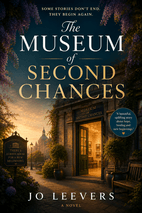
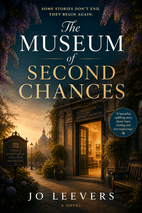
Jo Leevers's The Museum of Second Chances follows Evelyn Silver, a reclusive curator of a tiny Cornish museum of lost beach objects, who reluctantly joins a campaign to save her boat shed from council redevelopment, uncovering buried secrets and unexpected connections as the group's website draws attention to artifacts with deep personal histories. A warm, character-driven story about community, identity, and second chances for readers who love coastal literary fiction with a gentle mystery.
Feature
Insta.Page
Blinkist
Shortform
The Museum of Second Chances
✓
✕
✕
Summary Depth
Full Chapter-by-Chapter
15-min overview
Section-by-section guides
Audio Narration
✓
✓
✓
Visual Mindmaps
✓
✕
✕
AI Q&A
✓
✕
✕
Quizzes
✓
✕
✕
PDF Downloads
✓
✕
✓
Price
$89.99/yr
$146/yr (PRO)
$199/yr
*Competitor data last verified July 2026.
1 Page Summary
Set on the windswept Cornish coast, the novel follows Evelyn Silver, the reclusive curator of the Portheast Museum of Maritime Curiosities, a tiny shed filled with lost objects she has collected from the beach. Evelyn lives a quiet, guarded life, but her solitude is shattered when the council threatens to repossess the boat sheds that house both her museum and Della’s ice cream parlour. Thrown together with a small, unlikely group—including former Australian TV producer Della, hotel manager Sariah, and local newsagent Jacob—Evelyn reluctantly joins a campaign to save their livelihoods. To rally support, they launch a website showcasing the museum’s strange and poignant items, unintentionally drawing attention to objects with deep, personal histories that threaten to unravel carefully buried secrets.
As the campaign gains momentum, each character is pulled into the orbit of the museum’s collection, discovering connections between the artifacts and their own hidden pasts. Evelyn, a foundling raised by distant, scientific parents, is particularly shaken when her fragment of lace stirs an unexpected visitor, while Sariah confronts a painful family rift, Alison struggles with a controlling husband, and Jacob grapples with his grandfather’s legacy. Their intertwined stories explore themes of longing, identity, and the weight of unspoken truths, set against the backdrop of a town fighting to preserve its heritage. The stakes rise as the council’s deadline looms, and the characters must decide whether to let the past define them or risk opening up to the possibility of second chances.
With a gentle, character-driven tone, The Museum of Second Chances is a warm and quietly suspenseful read about community, belonging, and the stories we attach to the things we keep. It will appeal to readers who enjoy literary fiction with a coastal setting, intricate human relationships, and a slow-burning mystery at its heart—perfect for fans of uplifting, heartfelt novels about ordinary people finding courage in the face of change.
Chapter One
Anyone passing Portheast's town beach at dawn sees a tall woman in brown and grey taking dainty steps along the shoreline, eyes fixed on the sand. Evelyn Silver, curator of the Portheast Museum of Maritime Curiosities, picks up anything that glints, flutters or shines, quick as an oystercatcher. She carries two bags: a worn leather satchel for treasure, and a larger fabric tote for common beach rubbish. This morning's haul includes a piece of broken blue-and-white china depicting a bird on a branch, one pebble shaped like a wonky heart, and a dog's lead hardened and salt-stained. Evelyn looks beyond surface appearances to imagine the stories behind each lost item, stories of loss and longing and love, and she acts as guardian until their rightful owners come looking.
By the time she reaches the end of her beach clean, her tote bag of trash far outweighs her satchel of treasure: three plastic bottles, two large clumps of orange fishing line entangled in bladderwrack, small fragments of blue plastic, and several sweet wrappers. The disparity gives Evelyn a lopsided appearance as she climbs the slipway toward the quay and the museum where she has worked for as long as anyone in the Cornish fishing town can remember.
The Museum
Before unlocking the heavy wooden door, Evelyn rolls her shoulders, breathes the chill air and casts a last look at the sea’s horizon. Pale mist hovers over the silted harbour mud, but darker squally patches form further out: a storm is on its way. Evelyn has learned through bitter experience to hunker down and wait out storms, and she takes the same approach with the dark moods that sometimes wrap around her. Above the door, a hand-painted sign reads “WeLcoME To PorTHEast Museum oF Maritime Curiosities, Est. 1988.” Her father made the sign, and Evelyn has often wondered if he included “Wetcome” as a daily reminder, because even in youth she was not famed for her outgoing nature.
The museum, once a 19th-century boat shed, is full to the rafters with random objects. Some are worthy of museum status: a cache of gold coins washed up from an 18th-century shipwreck, a set of hand-tinted antiquarian maps. But most cabinets are crammed with the flotsam and jetsam of daily life, each piece meticulously labelled. Appreciative visitors are few; casual intruders are endured with a tight smile. Rainy days bring whole families shaking umbrellas and calling out in what Evelyn’s parents called “outdoor voices,” children leaving wet footprints and greasy fingermarks until they realise this is not a place where fun is encouraged. A hard stare goes a long way. Even adults fail to see the point. “The most boring museum ever,” reads one Google review. “Like a day out at the rubbish dump,” says another. Evelyn is undeterred. Her cabinets of Miscellanea are her most precious, because one day someone could walk in and spot that special something they lost: a stray earring, a forgotten photograph, a fishing float. In the meantime, Evelyn keeps watch. Her mother Elsbeth once told her with a worried look: “You cherish everything, except yourself.”
The entry price remains what it was when her father cut the red ribbon thirty-eight years ago: “Apmission 20p. CHILDREN FREE.”
Della’s Letter
Evelyn leaves her tote bag of rubbish by the recycling bins to sort later, places her satchel beside her desk, and, with 9 a.m. approaching, opens the museum. Back outside, she props the door with a heavy anchor, more rust than metal, and squints into the mizzle at the view that has remained unchanged for years. Harbour boats sit wedged in claggy mud, some listing sideways with a sad, abandoned look. Shops and cafés are starting to open. A blond man, Nils or something Nordic, drags a chalkboard menu outside his bakery, selling cinnamon buns and dense rye bread; the smells make Evelyn’s mouth water, but she keeps her head high and her eyes averted. She mistrusts anything new, no matter how delicious. In the distance, three elderly men sit on a bench, earning their nickname of the Three Wise Men. Nothing is out of the ordinary, but Evelyn cannot shake a sense of dread that began during her beachcomb and has bedded in deeper with each step of her routine.
A loud “Hiya!” jolts Evelyn from her reverie. Della, who runs the ice cream parlour next door, ambles toward her with a rolling gait, as if she has just dismounted a horse, wearing a patchwork jacket from Kathmandu so garish it pains Evelyn to look at it. Della is waving an official-looking brown envelope, and Evelyn’s dread rises up, swift as nausea. “Hiya,” Della repeats. She says she got her letter. “Letter?” Evelyn replies faintly. “From the council. I’m guessing you’ll have one too.” In that moment Evelyn realises why everything about the day has felt wrong: it is precisely a month since the men in suits came to inspect their two boat sheds, carrying clipboards and iPads and talking too fast about revenue, visitor numbers and the need to put Portheast on the map. Della opens her envelope and says the words Evelyn has been dreading: “They want us gone, Evelyn. The council. They’re kicking us out.”
💡 Try clicking the AI chat button to ask questions about this book!
Chapter Two
On a grey February morning, Della and Evelyn sit on Evelyn’s favourite bench, the one with a clear view of the boat sheds. Della is gloomy: she has already looked, and there are no other cafés to rent. The truth is that neither of their businesses is likely to see much custom on a morning like this. Della hands Evelyn a scoop of her latest ice cream experiment, mint and burdock, as a kindness to help with the shock, while Della tastes her own grey creation, liquorice and nettle, and admits it needs refining. Evelyn takes small polite licks, unable to decide which flavour is worse.
The real shock is the council letter. Della reads out the highlights: reassessing the needs of the community, the need to generate income, a promise that Cornish heritage will be preserved, and comments welcome by the 7th of April. Evelyn feels a coldness in her gut. Two months. The council wants their sheds back before summer. Della is certain it is a done deal, all worked out on the golf course before anyone bothers consulting people like them. When Evelyn asks if they can really be closed down, Della answers by saying they both know who will be moving in. As Della speaks, the melting ice cream runs over Evelyn’s hands, and Della finally nods at a bin and tells her it is all right to ditch them, which Evelyn does with relief.
Mr Palmer’s inspection
Evelyn remembers the men arriving in the first week of January. They tell her they are “reassessing the property,” and Evelyn welcomes them politely, hoping they might finally repair the hole in the roof. They ignore the leak and the bucket she has placed beneath it. The man in charge is Mr Palmer, with thinning hair and pale rabbit-like eyes. He asks for a tally of visitor numbers, a health and safety policy, and visitor feedback forms. When he sees the prices on the sign, he laughs and says that explains a lot. Evelyn does not waste her breath explaining her father’s opening-day words, “Enlightenment before profit.” Mr Palmer is too young to remember how things used to be. She watches as he and his mute sidekicks go to poke around Della’s ice cream parlour next door.
After the visit, Della heads straight to The Lugger pub for gossip. She brings back the news: the celebrity chef Rufus Rowan has been sniffing around for a new restaurant, and the two “authentically Cornish boat sheds” are exactly what he wants. He has promised to put Portheast on the map. Evelyn is vaguely aware of Rufus Rowan, a man with a bristling orange beard and an attitude to match, who already owns a string of seaside restaurants and serves fish and chips at four times the going rate. Now he wants Evelyn’s museum.
A second letter
Back at the museum, Evelyn steps inside and breathes in the briny calm, the saltiness woven into coils of rope, ragged nets, and the shells and driftwood under glass. Della follows her in and bends down to pick up a brown envelope from the floor, identical to her own. “You must have missed it.” Evelyn looks at the pile of post behind the door: pizza leaflets, a conservatories brochure, and what she suspects is a final demand electricity bill. She takes the envelope, walks to her desk in the corner, hesitates, and adds the council’s letter to the tallest pile of paperwork.
Della takes in the scene of disarray and mouths a silent “Wow.” Evelyn insists she just needs to catch up on her cataloguing. The desk is surrounded by reference books and academic papers, each pile topped with objects: a rusty ship’s lamp, a box of 1970s seaside postcards, a dry agapanthus seed head, three beach shoes, none matching, and a piece of driftwood that looks to Evelyn like a rearing snake. Under the desk are mildewed books and disintegrating bin bags, their plastic fragments floating around her ankles like mournful black confetti.
To make a show of curatorial efficiency, Evelyn retrieves the morning’s finds from her satchel and places them on the green blotter: a broken shard of china, a pebble, and an old dog’s lead. She picks up the pottery and begins to explain that its hand-painted design dates back to something, then stops, embarrassed. She recognises the pattern not from her book about the Cornish china clay industry, but from a mug she saw at Asda last weekend, priced at £2.99. She sets the piece aside and blusters about not everything being precious, but Della is no longer looking at the pottery. She is staring at the dog lead.
Della runs a finger over the lead’s ragged orange trim and asks to borrow it. Evelyn is itching to snatch it back; she is not used to people meddling with her treasures. She points out that the lead is not useable, the leather is tough, it has been in the sea too long, and above all, it is not catalogued yet. Della is already heading for the door, calling back in her cheery antipodean accent that she will bring it back, and that she has a hunch. She leaves behind only the faint scent of patchouli oil.
Determined to put Della and the council out of her mind, Evelyn works for the rest of the morning, cataloguing and labelling without stopping for her usual coffee. She does not let her eyes drift toward the stack of paperwork with the brown envelope on top. She likes how the piles around her desk form a wall that hides her from sight, though no one else ventures into the museum that blustery winter day. Outside, rain spatters on the paving stones and the sea slaps against the quay as the tide creeps in.
Evelyn still uses the manual typewriter her father gave her, though the letter E key has stopped working, which makes describing objects without that troublesome vowel a challenge. Without the dog lead, she is unsure where it would have belonged, perhaps in the Natural History case with seagull bones, a tern skull, and tiny pink tellin shells, or more realistically in the catch-all Miscellanea cabinets. In Evelyn’s view, the most interesting finds end up there.
Inside the third Miscellanea cabinet lies Evelyn’s most special object of all. For thirty-eight years, she has hoped someone will walk into her museum and recognise it, but no visitor has ever shown any interest in the item labelled: “One piece of fine Cornish lace, handmade. Found attached to a baby’s blanket with a safety pin (now rusted), 3 December 1964.”
The fragment of cream lace, with its ragged edges and intricate daisy motif, had been pinned to the blanket wrapped around the infant Evelyn when she was abandoned. She was a foundling, left with no note, only this piece of lace as an identifier. Within a week, she was adopted by Edwin and Elsbeth Silver of Portheast. The mystery of who made the lace, and why they never came back to claim her, has never been solved. Finding its maker is one of the reasons Edwin Silver turned the abandoned boat shed into a museum. It also gave Evelyn a job after her failed traineeship in London, which ended in tears and disgrace. Her father had said it was best for her to remain anchored in Portheast, where she could catalogue facts rather than indulge in fanciful stories.
Now that both her parents are gone, Evelyn sees the true reason behind the museum more clearly: her father had paved a way for the broken Evelyn to be made whole. The long-held hope is that, as long as that lace remains on display, someone will one day walk into the Portheast Museum of Maritime Curiosities, recognise it, and claim Evelyn as their own. Evelyn has recently marked her sixty-first birthday. She knows the likelihood of anyone turning up and identifying the lace is becoming smaller. But if the museum disappears, that slenderest hope will be gone for good.
Chapter Three
Della ambles into Evelyn's shed-turned-museum for the second time that day, and Evelyn feels a flicker of irritation. She has spent months perfecting the art of avoiding people, ducking down Portheast's cobbled alleys at the first sign of someone she doesn't want to speak to. But at her desk she is a sitting duck, hidden only behind a fortress of stacked books. Her annoyance quickly turns to alarm when she sees that Della is not alone. A figure lurks in the shadows, and for once Evelyn regrets her rule of rarely turning on the electric lights.
Della announces she has brought someone to see her. It is Leonard, the elderly bachelor who used to walk a stiff-legged spaniel named Jago along the quay every morning and evening, though Evelyn realizes she hasn't seen either of them around for a while. Leonard doesn't answer her greeting. Instead, he holds out his hands, and Evelyn's horror grows as she recognizes the dog lead with the orange trim that she found that morning. He is blinking back tears. Has she stumbled on the grim evidence that his beloved dog drowned? Does he think she's to blame? She casts a panicked look at Della.
But Leonard speaks. "Thank you," he manages. Jago died a few months back, and Leonard scattered his ashes on the beach before anyone was up, even Evelyn. The lead was part of his mistake, he explains. In a fit of emotion he can't fully name, he threw Jago's old collar and lead into the sea as well, telling himself it was a gesture of setting the dog free. The moment he got home, he saw how foolish that was. He'd already gotten rid of the bed and blanket, given away the tins of dog food. Without the collar and lead, he had nothing left to remember Jago by. Not that you ever forget, he says, shaking his head. He still thinks Jago is with him, trotting behind him.
Evelyn gives a quick nod. She knows that feeling of turning a corner and expecting to see the one you miss most, or spotting the back of a familiar head in a crowd, and the awful hollowness when you realize your mistake. Leonard tells her that when young Della brought him the lead, it felt like a second chance. Now, whenever he misses Jago, he can reach out and touch the leather, already growing softer in his hands. It will be a comfort. Evelyn says she can understand that.
Leonard shuffles off, pausing to note that in all his years in Portheast, this is the first time he's set foot inside. He stops at the cabinet labelled Seems Like Yesterday, a resting place for things that are neither Miscellanea nor very nautical: a wooden rolling pin, a battered tin miner's mug, a McDougalls flour bin from the 1970s. "All of human life, right here," he says, shaking his head. "Who would have thought?"
Della's Plan
Watching him go, Evelyn is surprised to see Della wearing a gormless smile. "You did a good thing, Evelyn Silver." Evelyn deflects, pointing out it was Della's doing. Della doesn't answer. She picks up a small brass snuffbox from the desk, one Evelyn found at a boot fair years ago and never got around to cataloguing, and turns it over in her hands as if weighing something up. Leonard's reunion has given her an idea, she says, an idea for how to save both the museum and her ice cream shed.
Evelyn, who has had more conversations today than in the past three months, sighs and forces patience. Della explains: all the bits in here, Evelyn found them locally, didn't she? Just as the dog lead meant something to Leonard, every lost object in the museum could be linked to people living right here in Portheast. If they can prove the museum is relevant to local history and the community, doesn't that give them a better chance of saving it?
Evelyn sees a glimmer of logic in it, but the men from the council only asked about visitor numbers, which are embarrassingly low. As if reading her thoughts, Della presses on: Evelyn needs to encourage people to come inside, because they can't appreciate the objects if they're too intimidated to step through the door. "Turning on a few lights would be a start," she says, reaching for a cord and making a fluorescent tube ping and flicker into life. She tells Evelyn she could make the place amazing, a proper maritime museum, not just "Evelyn's Shed of Weird and Unwanted Stuff."
Evelyn bristles, standing a little taller to put distance between herself and this enthusiastic antipodean. But then she remembers the men in suits and their barely concealed sneers as they toured the museum, and the high hopes she and her father once had for the place. "It will be a fine enterprise," he'd told her, a proud smile playing around his whiskery mouth.
By the time Della leaves, the day is almost over. Between the interruptions, Evelyn has managed to catalogue only two items: a small painting of a sailing ship, oil on wood, circa 1930s, possibly attributable to a Wallis; and a traditional fishing bib as worn for pilchard fishing, circa 1950. She congratulates herself on avoiding the errant E key on her typewriter for both labels, but the next item, a framed print of an egret, defeats her entirely.
Mr and Mrs Cornish Life
Her final task of the day is sweeping out the blown-in sand, a satisfying chore that takes her to the deepest recesses of the museum, where her second most precious exhibit resides: the diorama entitled Cornish Life in Bygone Days. In the summer of 1991, the display was briefly a popular draw. Two mannequins donated by Debenhams in Truro stand frozen in a somewhat idealized scene. The man rests one rigid elbow on the mantelpiece, holding a long-dead pipe; the woman is caught in the act of carrying a tray of Cornish pasties. Evelyn made the pasties herself from modelling clay, crimping the edges before adding several coats of varnish. Assembling the kitchen and dressing the mannequins kept her busy in the aftermath of losing her mother, when she was twenty-eight. She grieved, but in truth her mother Elsbeth had always been a vaporous presence in her life, drifting in and out of the house, only occasionally remembering to rustle up a meal or ask after her daughter. Her father was the solid one, the rock to Elsbeth's fluctuating tides of affection. He encouraged Evelyn's creativity, praised her work, and seemed flattered when she came looking for props and costumes.
But that was decades ago. The display's heyday is long gone, and in recent years Evelyn has heard sniggers of derision from visitors. Someone once stole a pasty from the woman's tray; another time she discovered the man's wig pulled sideways over his eye. As she righted the stiff hairpiece and adjusted his metal-framed spectacles, she whispered a quiet apology.
This February afternoon, sweeping past the diorama, Evelyn reaches out and brushes her fingers against the hem of the woman's dress, a Laura Ashley design she found in her mother's wardrobe. Leonard was right: sometimes it is nice to reach out and touch something familiar. What would happen to Mr and Mrs Cornish Life and the rest of her collections if the museum closes? It doesn't bear thinking about. At this moment, Della's idea to get people through the doors seems like a good one, perhaps Evelyn's only chance to save her museum, and it might even bring her the answer to her own story, the one she so craves.
She stops sweeping and stands for a while, listening to the wind stirring the net floats that hang from the rafters. She should be filled with hope, excitement even. So why does she feel the steady creep of fear? It is as if someone unseen is beginning to peel back the protective layers she has folded around herself. And Evelyn does not like this feeling, not one bit.
Chapter Four
Chapter: "Chapter Four"
Evelyn's parents, Edwin and Elsbeth Silver, are practical scientists who never hide that Evelyn is a foundling. Her father says her birth mother couldn't look after her; Elsbeth adds she was probably too young or unwed, but they'll never know. A local doctor knows the Silvers want a family, so a private adoption is arranged. Elsbeth says with a vague smile that one day it's just the two of them, and then they're three, but they soon adjust.
As a teenager, Evelyn sees other parents ferry kids to the cinema and sports, and she realizes how little impact she has on her parents' routines. They keep her warm, clothed, and fed, but they do parenting on their terms. Even her name feels half-hearted, as if they never got past the letter E. Once Evelyn can walk, weekends are spent on family field trips. Edwin studies coastal plants, and Elsbeth paints them. By six, Evelyn can identify milkwort and yarrow; at ten, she knows Latin names better than pop songs. While classmates swim, she walks clifftop paths with her parents in companionable silence.
The TV is only for news. She wears her mother's cast-offs, and her first bra is a hand-me-down she wears with shame. Each month, she stands against the wall to be measured, feeling like one of her parents' greenhouse plants.
Her parents often talk about being "dead and buried," but it's still a shock when her mother goes early. Elsbeth dies on a clifftop walk, sinking to her knees in sea-thrift before rolling onto her back. She's forty-eight, felled by an undiagnosed heart condition. Her father lives to seventy-six, then catches Covid. There's no time for last words, just his blurry image on her phone before an ICU nurse says goodbye and the screen goes black.
Now only Evelyn remains to uphold the museum, and she's kept its routines unchallenged. Until now.
Woman of slender means
Evelyn locks up the museum and walks home. Everyone assumes the Silvers are wealthy, but they're not. After her father's death, debts emerge, and Evelyn agrees to auction the house's contents. The second surprise is that the Victorian home is a rental from the Warburn estate, and with her parents dead, the tenancy is void. The solicitor tells Evelyn she must adapt to being "a woman of slender means." Portheast is full of holiday lets, so she ends up at Sunny Days, a holiday park. She chooses a shabby caravan called The Mirage, with "sea glimpses." It's the opposite of her childhood home, and she likes its impermanence. It fosters the illusion she might not always live this way.
The wind picks up, and Evelyn doesn't mind when the caravan rocks. But Toots, her cat, hates it. Toots, short for Tutankhamun, appears a few days after she moves in. He settles onto the sofa, shares her ready meal, and keeps coming back. He doesn't always come, but it's nice when he does.
Later, Toots sleeps at the foot of her bed, but Evelyn can't settle. The day's events keep her awake: the council letter, Della's manic face, Leonard's sad eyes. Most of all, she's plagued by losing her collections. She gets up, opens her mother's paintbox, and sets to work. She has photos of museum objects on her phone, but she barely needs them.
By morning, she's made a poster. At the top, red letters announce: "Calling all treasure hunters!" Below, she's written about long-lost items and a meeting at the Maritime Museum. The museum is threatened with closure, but it's part of Cornish heritage. "Save Our Museum!" She's divided the page into four and drawn an object in each box: an embroidered map of the Cornish coastline, a painting she hopes is an Alfred Wallis, a bone china teacup with golden lilies, and her own piece of fine Cornish lace with a rusted safety pin.
The newsagents
Evelyn's morning beach scour is bleary-eyed, yielding a belt buckle, a sock, and two feathers. She heads to Potters Newsagents, which opens at 8:30. She remembers it from childhood, when Mrs P would give her extra pear drops. But Mrs P only does odd shifts now. Shelves of biscuits and beans have replaced the magazines. All Evelyn wants is the photocopier.
"I would like twenty copies of this poster please," she tells the young man slumped at the till. He blinks and looks at the poster. "Treasure, eh?" "Well, possibly. Because one person's rubbish is another's treasure." He asks if she did the drawings, and she nods. He offers to make the copies bigger, no extra charge. The machine churns out A3 paper, and the boy has deepened the colors so they stand out.
He asks where she plans to put them up. She pauses, realizing she hasn't decided. A shadow of doubt falls over her as she imagines walking into the artsy shops and explaining her idea. But the boy offers to help: he knows the shopkeepers and can drive to the library and sports centre. The pub has a noticeboard too. Evelyn is about to say no, but she doesn't want to walk into The Lugger. "Well, that would be a great help," she says.
"I don't suppose you remember me," the boy says. Evelyn studies his slim face, his wispy moustache, his mullet. She confesses she doesn't. He used to come into the museum in school holidays, visiting his granddad. He was obsessed with the gold coins, the pirate treasure. "Eighteenth century. Presumed pillaged from a Spanish ship," Evelyn replies. A faint memory takes shape: a boy with a posh, confident voice, accompanied by Sir Jasper Warburn. "I would have been about seven or eight," the boy says. "Anyway." He holds out his hand. "I'm Jacob. And glad to help out."
Outside, seagulls shriek and the sun breaks through. The past rushes back, and she pictures the schoolboy Jacob and his grandfather more clearly: a boy in shorts gazing into a cabinet, the silver-haired man standing upright, his hand resting gently on his grandson's shoulder. Did that happen, or has she imagined it? "You are far too suggestible, Evelyn," her father often told her. Evelyn shakes her head. She's tired, overthinking things. She flips up her hood and strides towards the museum.
You've reached the end of the free chapters
Chapter 5 is locked
Keep reading The Museum of Second Chances — and unlock all 600+ book summaries with audio, mindmaps and AI Q&A.
$0.00 due today · 7 days free, then $89.99/year ($7.49/mo) · Cancel anytime before day 7
Jo Leevers is a British author and editor known for her emotionally resonant contemporary fiction, including her debut novel *The Last List of Miss Judith Kratt*. With a background in publishing as a former editor and a deep interest in human connection and loss, her work often explores themes of memory, secrets, and redemption. She lives in the UK, where she writes full-time and draws inspiration from real-life stories and overlooked voices.
Frequently Asked Questions about The Museum of Second Chances
What is The Museum of Second Chances about?
Evelyn Silver is the eccentric curator of a tiny Cornish museum of beachcombed curiosities, who imagines the human stories behind lost objects. When the council threatens to close the boat sheds housing her museum and Della's ice cream parlour, a small group of locals forms a committee to save them. Their campaign—and a 'Second Chances' exhibition—draws out buried secrets, family estrangements, and hidden histories, placing both the museum's future and the characters' emotional survival at stake.
Who is the author of The Museum of Second Chances?
The novel is written by Jo Leevers. The story unfolds through the lives of several residents of the Cornish town of Portheast, centered on the museum curator Evelyn and the community that rallies around her.
Is The Museum of Second Chances worth reading?
Yes—this is a warm, emotionally layered novel that uses a threatened seaside museum to explore how people find connection and courage in difficult times. The interlocking personal stories and the mystery of the beachcombed objects keep the pages turning, while the Cornish setting and cast of flawed, likeable characters give it real heart. Readers who enjoy character-driven fiction about community, secrets, and renewal will find much to love.
What are the main themes in The Museum of Second Chances?
The novel explores second chances and the possibility of renewal, both for a beloved local institution and for the people connected to it. It also examines the stories we attach to objects, showing how keepsakes and lost items can hold grief, love, and hidden family histories. Other important themes include family secrets and estrangement, the search for identity, the weight of the past, and the value of community in facing upheaval.
📚 Explore Our Book Summary Library
Discover more insightful book summaries from our collection