As an Amazon Associate, we earn from qualifying purchases.
⚠️ READER ADVISORY: This is a deep-dive summary designed for those who want the full story. Contains spoilers.
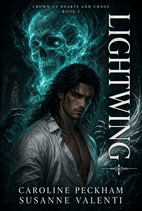
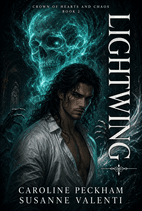
What is the book Lightwing about?
Caroline Peckham's Lightwing follows Ferris, a spirit-summoner bound to a destiny she dreads, as she navigates the Hag Azbeth's riddles, hunts a barnag alone, and clashes with Hendrix, a brooding master of death whose obsession with her tests his control. A dark fantasy for readers who love fierce heroines and old magic.
Feature
Insta.Page
Blinkist
Shortform
Lightwing
✓
✕
✕
Summary Depth
Full Chapter-by-Chapter
15-min overview
Section-by-section guides
Audio Narration
✓
✓
✓
Full access to all 700+ summaries
✓
✓
✓
Visual Mindmaps
✓
✕
✕
AI Q&A
✓
✕
✕
Missing a book? Request it, usually live within 48h
✓
✕
✕
Quizzes
✓
✕
✕
PDF Downloads
✓
✕
✓
Send to Kindle
✓
✓
✓
Price
$89.99/yr
$146/yr (PRO)
$199/yr
*Competitor data last verified July 2026.
1 Page Summary
In a realm where spirits answer the call of the living and old powers shape the fate of kingdoms, Ferris has spent her life in service to forces she cannot fully command. Now she stands at the threshold of a destiny she dreads, her pleas to the spirits for escape met with silence—even her desperate prayer to protect her sister, Rissa, goes unanswered. Her path collides with Hendrix, a man who commands the Hollows and wields power over death, and whose obsession with Ferris demands every ounce of his discipline to resist. As his mastery sharpens, so too does the pull between them, a tension that haunts every step he takes away from her door.
Ferris's journey is one of riddles and trials, hunger and resolve. She wrestles with the Hag Azbeth's slippery riddles, tries to win the trust of small spirits like the emberling, and finds herself entangled with the reckless Bane, who claws at the earth in a desperate search for a buried crown rather than accept help—even when Ferris can locate it in moments. Through it all, she refuses to bend: she insists on hunting the barnag alone, overrules Hendrix's pleas to abandon a treacherous mountain climb, and commits herself to seeing the Hag's ritual done properly, whatever the cost. Spirits such as the Boar, the Bear, and the Dragon answer her call, yet their power raises as many questions as it answers.
What drives the story forward is a chain of impossible demands and mounting dangers: a ritual that must be carried out correctly, a sister to be found and protected, a crown to be claimed, and an enemy whose reach extends through the very walls. Ferris and Hendrix are bound by a pull neither can easily master, and the choices they make—each stubborn refusal to turn back—carry stakes that grow heavier with every chapter. Readers drawn to fierce heroines who bargain with spirits, brooding men who wield death like a blade, and a world soaked in old magic and relentless tension will find themselves caught in the current of this tale.
Chapters 1-3
Ferris stands at the threshold of the castle, and everything in her wants to run. The door looms before her, vast and dark and final, and she hesitates on the edge of it, reaching out to the spirits she has always served, begging them to help her escape the destiny pressing down on her. They refuse. Whatever power she has called on before will not carry her away from this. The spirits offer her nothing, no whisper of comfort, no surge of strength, no sudden door out of the life that has closed around her, and she is left standing at the edge of the thing she most fears, with no rescue coming. The refusal is total, and it leaves her exactly where she began, small before a door she cannot bring herself to enter and cannot bring herself to flee.
Her mind turns to Rissa. If the spirits will not save Ferris herself, she begs them to find her sister and protect her, to keep Rissa safe wherever she is, to watch over the one person Ferris cannot reach. The plea goes unanswered. No voice, no sign, nothing but silence. Ferris is alone with her fear and her love for her sister, and neither the spirits nor anyone else will lift the burden from her. The silence after that second plea is worse than the first, because it leaves her love for Rissa hanging in the air with nowhere to go, and it teaches her that whatever is coming, she will face it without aid.
Then Bane appears at the stairs, climbing without looking back, clearly expecting her to follow. His arrogance grates on her immediately. He does not ask, does not explain, simply assumes she will trail behind him like something obedient. Ferris bristles at the command in his bearing, at the way he takes her compliance for granted, but she is still standing in the doorway of a castle that terrifies her, and his assumption of her obedience is one more weight pressing her toward a path she did not choose. She resents him for it, and she resents that his indifference gives her no opening to refuse.
The castle itself seems to answer her hesitation. The floorboards rise and surge toward her, a wave of wood and nails driving her away from the door, and Ferris has no choice but to flee up the stairs. The house will not let her stay, will not let her leave, and she runs because the alternative is being swallowed by the floor beneath her feet. The choice she could not make for herself is made for her by the castle, and she climbs because staying means being buried, and the stairs are the only direction left.
From above, Bane looks down at her and sneers, his contempt plain on his face, and then he leaves her there on the stairs. He has made his point, asserted his superiority, and now she is alone again, stranded between the hostile floor below and the dark landing above. His sneer is the last thing she sees of him, and it confirms everything his bearing already told her: he will not help her, he will not explain, and he will not wait. She is left to climb the rest of the way on her own, with the castle at her back and no one ahead.
On the landing, Ferris is drawn toward a mirror-like void, a surface that promises peace, a stillness that calls to her exhaustion and her grief. She wants it. The pull is not violent but gentle, a quiet invitation to stop struggling, and after the refusal of the spirits and the contempt of Bane and the hostility of the floor beneath her, the promise of stillness is almost more than she can resist. She moves toward it, ready to let it take her, until a copper-haired woman appears and pulls her aside. The woman warns her about the echoes, telling her that the void will capture her if she gives in, that the peace it offers is a trap. Then, before Ferris can ask more, the woman hurries away, leaving Ferris with a warning and no answers. The rescue is real, but it is incomplete, and Ferris is left standing before a trap she now knows is a trap, with no one to tell her what the echoes are or why the woman who saved her would not stay.
Ferris follows the open door Bane left behind, choosing the hostile dark of his path over whatever waits in the shadows around her. But something follows. A scuttling shadow creature stalks her through the passage, and she is not fast enough, not safe enough, and the thing is closing in. The choice of Bane's dark over the shadows around her turns out to be no safety at all, and the passage narrows around her as the creature gains, its scuttling the only sound besides her own breath.
Bane blocks her escape. He does not rescue her so much as test her, forcing a sword into her hands and demanding she face the creature. He wants to see what she is made of, and he gives her no choice but to fight or die. The sword is heavy and unfamiliar, and the demand behind it is plain: prove yourself or be finished. Ferris does not fight the way he expects. Instead of swinging at the beast, she shatters the burning sconce, and fire explodes between them, a wall of flame that buys her survival at the cost of chaos. The blaze is not the clean victory Bane wanted, but it is survival, and it is hers, won by a method he did not anticipate and cannot entirely approve.
Bane beats out the flames, his hand burned, and snarls at her not to wander alone. His anger is real, his injury is real, and beneath the contempt there is something like concern, though he would never call it that. The burn on his hand is the price of her fire, and his snarl carries both fury at the chaos she made and a warning that sounds, against his will, like someone who does not want her to die in a dark passage. Ferris flees into a bedroom, desperate to get away from him, and he follows her there to claim the room as hers. The flight is not an escape, only a change of cage, and he follows to make that plain.
He seizes her jaw, forcing her to look at him, and demands her obedience. He wants her help claiming the boon she denied him, and he will not let her slip away from what she owes. The grip on her jaw is the grip of the debt itself, and his demand makes the terms clear: she will help him, and she will not be permitted to forget it. Ferris agrees to help him, honoring the debt between them, but she begs him not to lock her in. She cannot bear the thought of being sealed inside this place, and the plea is not defiance but fear, offered plainly.
Bane refuses. He will not leave the door unlocked, not because he wants to punish her but because the castle itself is the danger, and he locks her inside to keep her from it. The refusal is not cruelty, or not only cruelty, and the lock is meant to keep the castle out as much as to keep her in, though from her side of the door the two are impossible to tell apart. Ferris is left alone in the room, and then she notices it: buds forming on the tiny tree at Bane's belt, small green signs of life that mark a countdown. The tree is growing, and when it blooms, her time will be up. The buds are small and green and terrible, and they turn the locked room into a clock.
Ferris refuses to pound on the door. She will not give Bane the satisfaction of watching her break down, so she holds herself still and lets the silence answer for her. Instead of raging at the locked wood, she turns her mind to the one thing that matters: finding Providence. That is her only path to freedom, and her only way back to Rissa. Everything else, the tower, the spirits, the bargain, is noise around that single purpose. The refusal to pound is a refusal to give him the scene he expects, and the turn toward Providence is the first thing she has chosen for herself since the door closed.
Bane in the Castle
Bane returns to his castle and broods over his failure, and the whole place seems to press in on him. He senses Death mocking him, her laughter threaded through the stone. He remembers building this castle with Death's power after his family was executed, raising walls out of grief and borrowed magic, and he admits the truth he avoids elsewhere: he is her prisoner. The castle is not a refuge. It is a cage he built with his own hands. The memory of the building is the memory of his grief, and the admission that the walls are a cage is the admission that his own hands made the prison he cannot leave.
He places the Great Elm's sapling on a table and glares at it. The thing sits there small and green and terrible, and he feels the full weight of the task pressing down on him. Every leaf on it is a countdown, and he has no idea how to stop it. The sapling is small enough to sit on a table and terrible enough to hold his whole future, and his glare is the glare of a man who has run out of ideas and cannot stop looking at the thing that will kill him.
Amelda's Confrontation
Amelda confronts him, accusing him of failing and of kidnapping a human. She does not soften the charge or dress it up. The accusation is plain and it lands plainly, and Bane has no easy answer to it. Bane snaps at her suggestion that he might toy with Ferris, insisting he is nothing like the Coterie. The comparison clearly cuts him, and he rejects it with more heat than the accusation seems to warrant. The heat is the tell, and Amelda reads it.
Amelda presses him about the human until he finally reveals the Great Elm's new curse and the task laid on him. Then he confesses the worst of it: when the sapling's last leaf falls, Ferris will die, and Death's curse will deepen forever. The stakes are not just his own freedom or his family's rest. A living girl's life is tied to a dying branch on his table. The confession lays the whole thing out: the countdown is not his alone, and the curse that binds him now binds her too, and the falling of a leaf is the falling of a life.
Amelda accuses him of lying about not caring for Ferris, reading his true feelings in the way he speaks of her. Bane erupts. He reveals that Ferris has power over twelve spirits, and that she and Bane are fated to find Providence together. He declares he will force her to help him find it, so that his family can win freedom and peace in death. The word force hangs there, and he does not take it back. The eruption is the eruption of a man caught out, and the word force is the word he chooses when he cannot deny the accusation and will not admit it.
Amelda asks whether death is truly what he wishes for them, and Bane admits he would die. The confession lands quietly after all his shouting. Then Amelda slips into her madness, whispering "tick, tock," and drifts from the room, leaving him alone with the sapling. Bane vows not to fail again as he looks at it. The vow is made to a small green thing on a table, and it is the only audience left in the room.
Ferris in Her Suite
Ferris searches her locked suite for secret doors and hidden compartments, running her hands along the walls and testing every seam. She finds nothing but a blank diary and a coin. The search yields no escape route, only the small strange objects, and the walls stay walls. The blank diary and the coin are the only answers the room gives her, and neither is a way out.
She bathes, and when she returns she finds new clothes left in the armoire, laid out for her as though someone expects her to stay. She tests the door again. It is still locked. The fresh clothes and the locked door together make the terms of her captivity plain: she is being kept, and kept comfortably, and neither fact is hers to choose. The comfort is the insult, because it assumes a stay she never agreed to.
She tests the locked door, then turns to the wardrobe, weighing a tempting silver gown against a practical black velvet dress. She chooses the black velvet, and the choice carries her decision: she will stay and pursue the task rather than flee. The silver gown is the dress of someone who wants to be seen, and the black velvet is the dress of someone who intends to work, and she chooses the work.
Alone, she breaks down sobbing on the floor, grieving her lost sister and the years stolen from them both. The grief empties her, leaving her raw and spent.
💡 Try clicking the AI chat button to ask questions about this book!
Chapters 4-6
Hendrix leaves Ferris’s quarters with his obsession pressing at his back, choosing distance over surrender. He denies the desire that pulls him toward her and flees rather than let it rule him, putting the width of the Citadel between them as a kind of discipline. Every step he takes away from her door is a deliberate act of will, a refusal to let the pull toward her dictate his actions. The choice costs him, but it keeps him moving. He does not allow himself to look back, and he does not allow himself to slow, because he knows that if he does, the obsession will close the distance he has just created. The discipline is harsh and immediate, and it leaves him raw, but it also leaves him free to keep walking, and that is the only victory he can claim in the moment.
Out on the wastes, Hendrix commands the Hollows and finds that his power over death has sharpened. What was once raw and unwieldy now answers him with greater control, his Art bending more precisely than before. The Hollows respond to his commands with a fluidity that was not there before, and the power moves through him with a precision that feels almost surgical. The change unsettles him even as it serves him, and he cannot tell whether it is growth or something worse. He turns the question over in his mind as he works, testing the edges of his control, and every success only deepens his unease. The power is more useful now, but it is also more alien, and he does not know what that says about what he is becoming.
He questions Death directly about the shift. She tells him he has unlocked what was locked, then leaves him to work out the answer on his own, offering no further explanation. The refusal frustrates him, but it also confirms that something in him has genuinely changed. He presses her for more, and she gives him nothing, and the nothing is itself an answer. He is left with the certainty that the change is real and the uncertainty of what it means, and he carries both back with him as he returns from the wastes.
His mother and father confront him on the balcony. She reveals that Amelda told them everything, and that she has marked a book on lost spirits for him. The gesture is practical and tender at once, a mother giving her son a tool rather than a lecture. She does not scold him for what he has done or for what he has brought to their family. She simply marks the book and tells him where to find it, and the simplicity of the act is more affecting than any reproach could have been. Standing there, Hendrix sees what his curse has cost. His father’s mind is fading, slipping in ways that cannot be undone, and his mother’s body is fragile and marked by death. He looks at them and sees the damage that follows in his wake, and he accepts the burden of what he has brought to his family, the weight of it settling on him as he looks at them. He does not look away from what he sees. He takes it in and lets it settle, and the settling is its own kind of sentence.
He takes his mother’s lead and resolves to find the marked book. He decides to forgo rest entirely until Providence is found and Ferris is freed, turning his guilt into a hard, sleepless purpose. The resolution is not a hope but a sentence he passes on himself, and he accepts it without flinching. He will not sleep until the work is done, and the work is now the only thing that matters.
Ferris wakes rested but hollow. The sleep has done its work on her body and none on her grief, and she forces herself to rise anyway, committing herself to the Great Elm’s task despite the emptiness that follows her through the motions. She moves through the rituals of waking without feeling them, and the hollowness is not a thing she can set aside. It is simply there, and she carries it with her as she begins the day. She asks the Boar to find Rissa and the Serpent, hoping to learn what her sister is planning. She also asks the Unicorn to find her parents and reassure them, but she decides to withhold all news of Rissa rather than feed them false hope. The choice is a small mercy and a heavy one, and she carries it alone. She knows what it will cost her to keep the secret, and she pays it without complaint, because the alternative is worse.
Ferris makes ink from charcoal and sap, then summons the Dragon to ask what it knows of Providence. The Dragon reveals that Providence was a meddlesome wanderer, and that Rissa is right that Death gains the most from his loss. The admission lands hard, confirming that her sister’s reasoning has a cold logic to it. Ferris does not want Rissa to be right, but the Dragon’s words leave no room for doubt. The Dragon tells her that Providence favoured prophecy, especially prophecy of the Last King, whispered to only two true acolytes. It refuses to name them, offering instead that stone remembers what sand forgets, and calls her “spirit singer” before departing. The epithet hangs in the air after the Dragon is gone, and Ferris turns it over in her mind, uncertain what it means and unwilling to dismiss it. Ferris writes down the Dragon’s revelations, deciding the prophecy and the two acolytes are her only leads. The diary fills with the only thread she has left to pull, and she writes carefully, as though the words themselves might slip away if she is not precise.
Bane enters and confronts her over the filled diary, then orders her to eat, calling her weak and diminished. Ferris refuses to apologize for her grief and defies his dismissal of her. She does not back down from his contempt, and she does not let him turn her sorrow into a failing. The standoff holds until Bane steps back and gestures her out of the room, the argument ending without a victor. Neither of them yields, and neither of them wins, and the stalemate is its own kind of statement. Bane orders Ferris out of her room to eat breakfast with him, framing it as a necessary step so they can complete the Great Elm's task and part ways. He forces her to walk ahead of him through the castle, a small assertion of control that puts her back to him the whole way. As she goes, Ferris notices the castle feels alive and awake around her, with watching eyes and groaning floorboards tracking her passage, but she keeps her questions to herself rather than give Bane the satisfaction of her unease. She will not let him see that the castle frightens her, and she will not give him the leverage of her fear.
At the table, Ferris deliberately takes the head seat, testing him. Bane silently accepts it rather than forcing her to move, a quiet concession that surprises her. Five pale Hollows rush in carrying food, and Ferris recognizes them for what they are, recoiling with her butter knife raised before she can stop herself. Then Bane's family enters: Amelda, his mother, Kashton, Baldrick, and his father. Ferris realizes with a jolt that these are his relatives, and among them she recognizes Amelda as the female who helped her escape the mirror. Bane notes dryly that Amelda has flouted his rules before, a remark that lands with clear weight in the room. Ferris notices the family is only pretending to eat, going through the motions of a meal. When she calls it out, Bane mocks them for the failed charade, and the tension at the table sharpens. Bane reveals he spent the night reading a book on lost spirits, and Ferris immediately asks to see it. When she gets her hands on it, she discovers the book was written over a hundred years before Providence disappeared, which renders it useless for their purpose. Amelda laughs at Bane, delighted by his wasted effort. Stung, Bane insults Ferris as a powerless peasant. She retorts that she is part spirit and not his equal, and the jab provokes him to strike the table. In that instant the Phoenix appears between them and blasts Bane back into his seat, but the castle's malignant force presses in and forces the spirit out after only moments. The reprieve is brief and the danger of this place is made plain.
Bane's father suddenly speaks, recognizing the spirit of old, and for a moment the family has hope before he falls silent again. Amelda then examines Ferris's silver hair and runes with bold curiosity, while Kashton watches Ferris with dark scrutiny. Kashton comments that Bane's control is slipping, and Ferris insists that Bane does not control her. Ferris reveals what the Dragon told her: two Fae oracles knew Providence's plan to crown the Last King. But she has no names and no locations. Bane dismisses her plan as a haystack without a needle, and Ferris sinks into her seat, deflated by his assessment. Bane wants to deflect questions about Baldrick, so Amelda steers the conversation to cover for him. She fills the silence with easy talk before anyone can press Bane on where Baldrick has gone. Her quick save keeps the group from turning on Bane, but it also binds her more tightly to his secrets. Bane proposes visiting a Hag to locate the missing spirit, alarming his parents who fear for his life. He names the plan as though it were ordinary, and his mother and father both recoil at the danger. Their fear does not move him, and the room turns against a plan no one else wants. Bane insists the Hag is the only way to complete the task, forcing the group to accept his plan. He refuses every alternative and leaves them no path but his. The others give way, and Bane takes the lead he wanted. Bane warns Ferris that the Hag will demand a trade, shifting the burden of payment onto her. He tells her plainly that nothing comes free and that she must be ready to pay. The warning puts the cost on her shoulders and makes her reckon with what she will give up. Bane uses his power over the castle to open the doors for Ferris, reasserting control over her. He calls on the castle to obey him and the doors open at his word. The display reminds Ferris that he commands this place and that she moves through it on his terms. Bane summons Death to transport himself and Ferris, dragging her through a terrifying plane against her will. He calls the power forth and seizes her before she can refuse. The passage terrifies her, and she arrives shaken and certain that Bane will spend her life without asking.
Bane and Ferris arrive at the Hag's dell, where Ferris confronts him over whether she is bait. She demands to know if he brought her here to be traded. He does not deny it outright, and the doubt settles between them. Bane explains the dangers of Hags and their bargains, pressing Ferris to decide what she will offer. He lays out how Hags twist every deal and warns her that a careless word can cost her everything. She must choose her price before she meets the Hag, and the choice weighs on her. Bane threatens to trade Ferris herself to the Hag, testing her trust in him. He says he could hand her over and watches to see whether she believes him. She holds his gaze, and the threat becomes a test of what lies between them. Bane knocks the secret tune to announce himself, revealing his prior dealings with Azbeth. The knock is a signal only an old visitor would know, and it proves he has been here before. Ferris realizes he has kept this history from her. Ferris trades her name to Azbeth for a cup of tea, impressing Bane with her bargaining. She gives up her name lightly and gains a small courtesy in return. Bane did not expect such nerve from her, and his respect for her sharpens. Bane warns Ferris that crossing the threshold will expose her to the Hag's power, but she enters anyway. He tells her the Hag's magic will press on her the moment she steps inside. She steps through without hesitating, refusing to let fear decide for her. Ferris discovers she is immune to the Hag's oppressive magic, surprising both Bane and Azbeth. The Hag's power washes over her and finds nothing to grip. Bane and Azbeth both stare, and Ferris gains an advantage neither of them expected. Azbeth senses Bane's feelings for Ferris and he threatens her to keep her from exploiting them. The Hag reads what Bane has not said aloud and turns it into a weapon. Bane warns her off with real menace, and Ferris sees how much he fears that weakness being used.
Chapters 7-9
Ferris spends the hours before dawn hunched over the Hag's riddles, turning each phrase over in her mind as though repetition alone might crack them open. She wants to be ready, to walk into whatever comes next with something sharper than fear, but the words refuse to settle into sense. The riddles stay slippery, and she stays on edge, no closer to safety than she was when she began. Each phrase she repeats seems to twist away from meaning just as she thinks she has it, and the hours bleed away without yielding anything solid. She is trying to arm herself with understanding, to find some angle or interpretation that will give her an advantage when the next trial comes, but the Hag's words remain closed to her. The frustration builds, and with it the awareness that she is no more prepared now than she was when she sat down. The fire burns low, and still the riddles give her nothing.
Her attention drifts to the fire, where an emberling flickers among the coals. She notices it watching her and offers it a bit of food, coaxing it closer, wanting the small creature's trust. For a moment it seems she might win it over. The creature edges toward her, curious despite itself, and something in the exchange feels almost like a truce. Then Bane enters, and the emberling startles and vanishes into the flames, leaving Ferris alone with him and the ashes of a small, quiet hope. The creature's flight is instant, a reminder that whatever fragile connection she might build here can be broken by Bane's mere presence. She is left with the fire and the man, and the moment of softness is gone.
Bane's first move is to demand to know what she is writing. He wants eyes on her secrets, wants the upper hand in whatever she is planning, but Ferris refuses to explain herself. She holds the page close and gives him nothing, and the standoff sets the tone for everything that follows between them. He presses, and she does not yield. The page stays against her, unread, and the silence between them becomes its own kind of contest. She will not hand him the advantage he is reaching for, and he will not let the question drop. Neither of them moves, and the air between them tightens with the refusal on both sides.
She turns the interrogation around and asks who Baldrick is. She wants information about his family, some piece of his past to weigh against his demands on hers. Bane tells her: Baldrick is his uncle, taken by the Coterie before the executions. The answer lands heavily, another name in the long ledger of what the Coterie has cost him. The admission is spare, but it carries the weight of everything behind it. Ferris asked to find a lever, and what she gets instead is a wound. The name joins the others, and the cost of the Coterie's cruelty becomes a little more concrete, a little more personal.
Then Bane warns her not to wander the castle alone. The warning is not idle. He reveals that he built the castle with necromancy, that spirits are trapped within its walls, and the confession reframes every corridor she has walked. His protectiveness and his power are the same thing, and Ferris is left to reckon with both. The castle she has been moving through is not simply stone and shadow; it is a prison he made, and the dead are in the walls. The warning is meant to keep her safe, but it also tells her what he is capable of, and the two facts cannot be separated. She has to hold both at once, the man who warns her and the man who built the trap.
When he moves to leave, Ferris refuses to chase after him. She will not run after a man who taunts and withholds, and she asserts plainly that their alliance is one of mutual use, nothing more. She is drawing a line and daring him to cross it. The declaration is deliberate, a boundary set in plain words. She is not his to command, and she is not going to follow him like a supplicant. The alliance is a transaction, and she names it as such, making clear that she expects to be treated as a partner rather than a subordinate. The line is drawn, and she waits to see what he will do with it.
Bane crosses it anyway. He taunts her about her sister, aiming for the wound he knows is there, and Ferris slaps him. She threatens to abandon his quest entirely, and the threat carries real weight, because without her he has no path forward. Bane backs down. He does not apologize, but he stops pushing and leads her outside, and the balance between them shifts, however slightly, in her favor. The slap is not a loss of control but a response, and the threat that follows is calculated. She knows what she is worth to him, and she uses it. He stops, and though there is no apology, the retreat is real. When he leads her outside, the terms have changed, and she has won something, even if it is only a small and temporary advantage.
Outside, Death appears and speaks two words to Ferris: "Sing for me." The demand is a hook, a claim on something she has not offered, and before it can be answered Bane seizes Death's cloak. The reckless grab pulls them both through a screaming mass of the dead, a passage of terror and noise that ends with the three of them dumped outside Rivenspire rather than at the forest. Death has toyed with them, and the detour means they must cross the Fae city on foot. The demand hangs unanswered, and Bane's grab turns it into something else entirely. The dead scream around them, and when it ends they are not where they meant to be. The detour is not an accident but a manipulation, and they are left to make their way through the city on foot, with Death's game still in play.
Bane hides Ferris under his arm and cloak, passing her off as Fae to slip past the guards. She protests the indignity of it, but the disguise is the only way through, and she submits to being smuggled like contraband. When the guards press close, Ferris summons the Unicorn, using flowers and pollen to lure the guards away. The distraction works, and Bane runs them through the gate. The humiliation of being hidden and carried is real, but she accepts it because there is no other way past the guards. The Unicorn's flowers and pollen do their work, drawing the guards' attention elsewhere, and in the opening that follows Bane gets them through the gate. The disguise and the distraction together buy them passage, and they are inside the city.
Inside the city, Bane realizes Death is herding them toward the crowded square. He chooses to follow her guidance rather than fight it, and they push through the press of bodies. What waits there is Queen Sorshana, addressing the city. Bane wants to leave, but Death forces them to stay and watch, and they have no choice but to stand among the Fae and bear witness. The square is full, and the queen is speaking, and they are trapped in the crowd with no way out that would not draw attention. Death's direction has brought them here, and Bane's choice to follow it has put them in the middle of whatever is about to happen. They stand and watch because there is nothing else they can do.
The queen announces that the curse on the forest is broken, that the Great Elm has recalled the taking trees. She claims the credit for herself, wrapping the news in her own glory to win her people's joy, and the crowd erupts around them. Bane watches the false ruler he hates, waiting to see what Death intends by bringing them here. Beside him, Ferris hides her branded face among the cheering Fae, keeping herself unseen while the city celebrates a victory that is not the queen's to claim. The announcement is a lie dressed in triumph, and the crowd's joy is built on it. Bane watches Sorshana with hatred, waiting for the purpose behind Death's manipulation to become clear. Ferris keeps her face hidden, her brand covered, and lets the celebration wash over her while she stays invisible within it. The victory belongs to no one on that dais, and they both know it.
Islasees steps forward and presents a branch to Sorshana, declaring that he broke the curse. He wants the crowd's acclaim, and he gets it, but Bane and Ferris, watching from the crowd, know it is a lie, and their fury builds as the people cheer a false hero. The branch is a prop, and the declaration is a theft, and the crowd's cheers are for a man who did nothing. Bane and Ferris stand among the cheering Fae, and the anger builds between them as the lie takes hold. Islasees is claiming something that is not his, and the people are giving him exactly what he wants.
Islasees presses his advantage, claiming that Jadina and Benson were murdered by Bane. He wants to frame Bane for the deaths, and the accusation lands, stirring fear and intrigue through the square as the crowd turns its suspicion on the man standing among them. The lie builds on the first, and the crowd's mood shifts from celebration to suspicion. Bane is named as a murderer, and the people around him begin to look for a culprit. The accusation does its work, and the square fills with fear and intrigue as the crowd's attention turns toward the man standing in their midst.
Sorshana vows to bring Bane to justice, wanting to appease the crowd and satisfy their hunger for a culprit, but as she speaks she notices resistant murmurs rippling among them, a hesitation that undercuts her authority. Wanting to test Islasees's loyalty, she presses him for the boon he has earned, and he reveals that he wished for her hand in marriage. The demand hangs in the air, and then Islasees cuts his thumb and mixes his blood with dirt, wanting to mark Sorshana as his bride. She accepts the betrothal, binding herself to him before the assembled crowd. The vow to bring Bane to justice is meant to calm the crowd, but the murmurs of resistance show that her authority is not as solid as she wants it to be. She turns to Islasees, testing him, and he answers with a demand that changes the shape of the moment. The blood and dirt are a claim, and she accepts it, binding herself to him in front of everyone. The betrothal is sealed, and the crowd watches.
Bane fights the urge to kill Islasees and Sorshana where they stand on the dais. He wants vengeance for the lie and the murders laid at his feet, but he restrains himself, knowing that any move would expose Ferris. He pushes through the crowd, wanting only to escape the square, but finds twelve Coterie members and guards blocking the path. The net is closing, and Bane and Ferris flee into a tavern, wanting to evade the Coterie. They hide in a broom closet as more Coterie gather inside the tavern, and the two of them are trapped with the enemy all around them. The urge to kill is strong, but the risk to Ferris keeps him in check. He pushes through the crowd, and the path is blocked. The Coterie and guards are there, and the net is closing. They run into the tavern, and the closet becomes their hiding place as more Coterie gather inside. The enemy is all around them, and there is nowhere left to go.
From the hiding place, Bane and Ferris listen as Islasees tells the Coterie a false tale of the forest, wanting their admiration and spinning the story to his own glory. Then Islasees reveals that a silver-haired human escaped the forest. He wants her found, and he orders Jacabee to hunt her family, to draw her out by threatening the people she loves. The order changes everything for Ferris. She resolves to stop the warriors hunting her family, wanting to protect her parents, and she summons the Rat to distract Bane. Using the Fox's fire as a distraction and the Rat's insects, Ferris escapes the closet, wanting to pursue the warriors alone. The false tale is for the Coterie's benefit, and Islasees spins it to make himself the hero. Then he names the silver-haired human and gives the order that turns Ferris's world. Jacabee is to hunt her family, to use them as bait. The order changes everything. Ferris resolves to stop the warriors, to protect her parents, and she summons the Rat to distract Bane.
Chapters 10-12
Bane tears at the earth with his bare hands, clawing through dirt and stone until his fingers are raw and bleeding. He is certain the crown lies buried somewhere in this ground, and he will not stop until he has it. Hours pass. The sun climbs and falls while he digs, his breath ragged, his hands a ruin. He does not ask for help. He does not think to ask. The crown is his to find, and he will find it himself. The digging is not merely labor but a kind of penance and a kind of assertion, a refusal to be dependent on anyone or anything, and every handful of torn earth is proof of his resolve. His certainty that the crown is here, somewhere beneath him, drives him past the point where pain should have stopped him, and he keeps going because stopping would mean admitting that he cannot do this alone, and that admission is one he will not make.
Ferris watches him work. She has the Boar spirit at her disposal, and she uses it. In minutes, the spirit roots out the crown's location, and Ferris knows exactly where it lies. She does not tell Bane. She lets him keep digging, lets him waste the hours, lets him tear his hands apart on the earth while she holds the answer in silence. The choice is deliberate, and the silence is a kind of judgment, a way of letting his pride exact its own price from him. When Bane finally learns how long she has known, how easily she could have spared him, the confrontation is ugly. He rages at her, his voice sharp with fury and humiliation, and Ferris meets him with mockery. The words cut both ways. Something between them strains, a bond pulled taut and threatening to snap. Bane cannot stomach being made a fool, and Ferris cannot resist the satisfaction of watching him suffer for his pride. The wound is not only his. The mockery she offers is a defense as much as an attack, and the ease with which she could have spared him and chose not to is a fact that sits between them now, one more thing neither of them will set down.
The fight is not over when the varkon appears. Ferris spots it first and screams, the warning ripping out of her before she can think. The creature is on them in an instant, and Bane has no choice but to fight. He kills it with his sword, but the struggle leaves him wounded, and before he can catch his breath, eight more varkon close in around him. He is cornered, bleeding, outnumbered. He looks at Ferris and makes his choice. He tells her to run. He plants his feet and prepares to buy her time with his life, accepting that he will likely die here so that she might escape. The decision is made without hesitation and without negotiation, and it is the first time he has offered her anything without a price attached to it. He does not ask her to stay. He does not ask her to save him. He simply tells her to run and turns to face what is coming, and in that moment the man who shut a door in her face and called her a burden is willing to spend his life on her escape.
Ferris does not run. She reaches for the Dragon, and the great beast answers. She arrives in a rush of wings and wind, snatching Bane from the ground and pulling him aboard before the varkon can close their jaws around him. They escape into the clouds, the earth falling away beneath them. Bane wraps his arms around Ferris during the flight, holding on to her as though she is the only solid thing in the sky. For a moment, something shifts between them, something unspoken and nearly tender. He almost kisses her. Then the Dragon drops, and the moment shatters. The nearness is not undone by the drop, only interrupted, and it hangs between them afterward as a thing that almost happened and might yet happen again, a possibility neither of them names.
They arrive at the Hag's dwelling to find it empty. Azbeth is gone, the place abandoned, and Ferris wants answers that are not there to be had. Bane does not wait. He breaks in and leaves a note, a demand that Azbeth meet him at his castle in The Blight. It is a command, not a request, and Ferris knows it will not go over well. She follows behind him and undoes his rudeness, removing the dagger and the note and repairing the Hag's door so that no trace of his disrespect remains. Then she turns to the Dragon and asks it to carry a message to Azbeth about the crown, hoping to reach the Hag first, to smooth the path before Bane's arrogance ruins everything. The repair of the door is a small act of diplomacy and a larger act of defiance, a refusal to let his methods stand as the only way of dealing with the world, and the message she sends is an attempt to open a door he has just tried to kick down.
She asks the path itself for kindness, and the plants respond. They clear a trail for her, bending and parting to make her way easier. Bane, watching, swallows his pride and walks in her shadow, using the path she has made. It is a small surrender, but it is a surrender. He does not comment on it. He does not thank her. He simply walks where she has made it possible to walk, and the silence in which he does it is its own kind of acknowledgment that she has something he does not and that he is willing, this once, to accept it.
As they walk, Ferris reveals something of herself. She speaks of her connection to the Great Elm's kin, of the power that runs through her, and she admits that she wants to understand it. She wants to know her true self, the self that exists beneath the surface of what she has been told she is. Bane listens, but he does not open himself in return. As they approach his castle, he conceals his Hollows, hiding them from view. Ferris knows they are there. She knows they surround her, even if she cannot see them. Bane keeps his secrets, and Ferris keeps her awareness of them, and the two of them walk on toward the castle with the distance between them measured in all the things neither will say. The confession she makes is a real offering, a piece of herself set down in front of him, and his silence in return is a refusal to match it, and the hidden Hollows are the shape that refusal takes.
Ferris resolves to reach Providence as her only hope of escaping the Great Elm's lands and finding Rissa again. She clings to that goal as the one path out of everything holding her here, and the decision hardens into something like a plan. Providence is not a wish but a destination, and Rissa is not a memory but a reason, and the two of them together give her something to move toward when everything around her is designed to keep her still.
Bane escorts Ferris to her chamber door and prepares to leave her locked in for the night. Before he can go, Ferris calls him by his given name, Hendrix, trying to bridge the rift between them and imply that what broke between them might still be fixed. The gesture costs her pride, and she offers it as a small opening. The name is the whole of the offering, and she gives it knowing what it costs and hoping it will be enough to keep the door from closing entirely.
Bane rejects the moment outright. He orders her to stay in her chambers and shuts the door, leaving Ferris hurt and alone on the other side of it. The refusal lands harder than the lock itself, and Ferris is left staring at the closed door. The name she offered is left unanswered in the air between them, and the lock is the answer he gives instead, and the hurt of it is sharper than any cruelty he has shown her because it comes on the heels of a hope she had allowed herself to feel.
Furious, Ferris tears off her cloak and kicks at a wall panel. The blow knocks something loose, and she discovers a hidden passage she had missed in all her earlier searches of the room. The discovery changes the room from a cell into something with a way out, though she has no time to use it. The passage is a possibility she did not have a moment before, and the fury that revealed it is now something closer to hope.
A growl sounds from inside the passage. Ferris slams the panel shut just as Amelda arrives with food, and the narrow escape leaves her shaken. Whatever is behind the wall is not something she can face unarmed. The way out is also a way in, and the growl turns the discovery from a promise into a threat, and she is left with a door she cannot open and a fear she cannot put down.
Amelda locks the door behind her and asks to talk. Ferris agrees to hear her out, choosing conversation over isolation. The choice is small but deliberate, and it keeps her from being alone with the passage and the growl and the closed door.
Amelda reveals the true toll of the curse: the Fae cannot eat, breathe, or sleep, and their emotions are dulling toward apathy. The stakes behind Ferris's imprisonment come into sharper focus, and Ferris swears to Amelda that they will find Providence. The promise turns Amelda from a captor's ally into something closer to a confidante. The curse is not a punishment laid on the Fae from outside but a slow emptying from within, and the promise Ferris makes is a rope thrown across the widening distance between them, and Amelda takes hold of it.
Amelda then asks Ferris to look past Bane's monstrous mask and see the grief-stricken male beneath it, revealing that he has feelings for Ferris. The revelation reframes Bane's cruelty as something more complicated, and Ferris is left to weigh it against the door he shut in her face. The mask and the male beneath it are not easily separated, and the feelings Amelda names do not erase the lock or the refusal, and Ferris is left holding both at once, the cruelty and the grief, the closed door and the almost kiss, and finding no way to make them fit together.
Ferris finishes her meal and wedges a stool against the hidden hatch, deciding not to open it while something lurks behind it. She goes to sleep clinging to the hope of escaping and reaching Rissa, and the stool stands as a small guard against the dark. The hope is the last thing she holds before sleep, and the stool is the only guard she has, and both are small and both are enough for now.
Bane walks the castle grounds at night, brooding over Ferris and the failed boon. The quiet does not settle him, and his thoughts keep circling back to the mortal woman he cannot seem to dismiss. The night offers no answers, only the same questions turning over and over, and the woman at the center of them will not leave him alone.
Amelda confronts Bane about his harshness toward Ferris and forces him to admit that she was briefly more than a burden to him. The admission is dragged out of him, and it leaves him exposed in a way he does not like. The word briefly is the part he cannot take back, and it sits in the air between them as proof that the wall he has built has a crack in it.
Bane insists that he and Ferris are not meant for each other, and that he would rather despise her than pine for her. The claim is a wall he builds in front of himself, and Amelda refuses to let it stand unchallenged. The wall is made of the oldest materials he has, pride and fear and the certainty that wanting something is the surest way to lose it, and he stacks them as high as he can.
Amelda argues that Ferris wants him too, and urges Bane to be selfish and give the connection a chance. Her words press against his resolve, and the night ends with Bane no closer to peace than before. The argument does not win, but it does not fail either, and it leaves him with a question he cannot put down and a want he cannot name without admitting it is there.
Amelda, wanting the family whole before death can take any of them, urges Hendrix to reconcile with Kashton. She forces a confrontation that leaves Hendrix feeling tricked. Amelda then traps both brothers together in a copse, wanting a civil conversation, and commands them to make amends despite Kashton calling it a bad idea. The trick is born of love and of fear, the fear that death will come before the rift is healed, and the copse becomes a room with no door and no way out except through each other.
You've reached the end of the free chapters
Next chapter: “Chapters 13-16” is locked
Keep reading Lightwing — and unlock all 700+ book summaries with audio, mindmaps and AI Q&A.
$0.00 due today · 7 days free, then $89.99/year ($7.49/mo) · Cancel anytime before day 7
Caroline Peckham is a British author best known for co-writing the Zodiac Academy series with her sister Susanne Valenti, a prolific paranormal and fantasy romance saga that has gained a large following in the indie and romantasy space. Writing primarily in the new adult and fantasy romance genres, she has also authored or co-authored series including Ruthless Boys of the Zodiac, Dark Fae, and Age of Vampires. Peckham began as a self-published author and has built her career on high-volume, serialized storytelling through her joint publishing partnership with Valenti.
Frequently Asked Questions about Lightwing
What is Lightwing about?
Ferris is bound to a castle and a destiny she cannot escape, while the spirits she has always served refuse to rescue her. Her sister Rissa is in danger, and Ferris must navigate the Hag's riddles and rituals while dealing with Bane's ruthless ambition and Hendrix's dangerous power over death and the Hollows. Their paths collide with spirit allies, deadly hunts, and a mountain climb amid an unnatural storm, raising the stakes for Ferris's sister and the fate of those around her. The opening chapters set up a dark fantasy of bargains, loyalty, and survival rather than resolving them.
Who is the author of Lightwing?
Caroline Peckham is the author of this novel. Her storytelling here centers on Ferris, Hendrix, and a dangerous world of spirits, rituals, and rival powers.
Is Lightwing worth reading?
It is worth reading for its dark, propulsive fantasy setup: spirit magic, dangerous trials, and characters whose loyalties and desires constantly collide. Ferris is a determined lead caught between fear and duty, while Hendrix's struggle with obsession and deathly power adds real tension. Readers who enjoy high-stakes fantasy with morally complicated relationships will find plenty to pull them forward.
What are the main themes in Lightwing?
The novel explores destiny versus agency, especially through Ferris's attempts to resist a path chosen for her and to protect Rissa on her own terms. It also examines obsession and self-discipline through Hendrix's struggle to control his pull toward Ferris and his power over death. Loyalty, sacrifice, and the cost of protection run through the spirit-backed hunts, bargains, and conflicts with Bane and the Hag. Power—who wields it, who answers to it, and what it demands—shapes the rituals, alliances, and confrontations across the chapters.
📚 Explore Our Book Summary Library
Discover more insightful book summaries from our collection