The Museum of Second Chances Themes
by Jo Leevers
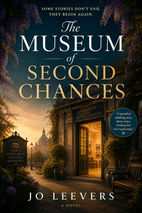
Underneath the plot, the novel is really wrestling with how we hold onto the past through objects, and how the stories we inherit are often built on omissions. It asks what it means to start over when the ground beneath you shifts, and whether truth, even painful truth, is the only path to forgiveness.
On this page you'll find each major theme unpacked with concrete moments: Della rebuilding herself in Portheast, Alison's slow escape from Roy, the fight over the boat-shed leases. You'll also see recurring symbols, like Evelyn's lace, the cracked teacup, the embroidered picture, and the museum itself.
Major Themes in The Museum of Second Chances
Objects as memory and the stories they carry
The museum's objects are not just artifacts; they anchor personal histories, grief, and love. The novel shows how a single item can carry a lifetime of meaning and connect strangers.
- Leonard runs his hands over Jago's leather lead and says, 'whenever I miss him, I can reach out for this.'
- Sariah recognises the cracked teacup by its crack and recalls her grandmother's last picnic.
- Carl Brown's donated watch, stopped at 11:21 after an RNLI rescue, gives Evelyn a rare swell of hope.
Family secrets and hidden identity
Characters discover that their family stories are built on concealment—adoption, affairs, and forbidden love. These revelations force them to redefine who they are.
- Evelyn learns Bob is her half-brother and that Cora-May was her birth mother, with Sir Jasper Warburn as her father.
- Sariah learns she was born to Auntie Rose, not Grace, and asks, 'It was me, wasn't it? I was Rose's baby.'
- Alison reads Steven West's text revealing that her grandfather Frederick loved Steven in secret.
Second chances and reinvention
The exhibition title 'Second Chances' becomes a lens for the characters' lives: Della rebuilt herself in Portheast, Alison escapes Roy, and Evelyn finally stops looking back. The museum itself also gets a second chance.
- Della tells the committee that Portheast gave her a second chance after her breakdown, inspiring the exhibition title.
- George tells Evelyn she has done good and deserves a second chance.
- Evelyn says, 'So much of my life has been about looking back. Now I need to look forward.'
Heritage versus development
The council's threat to revoke the boat-shed leases sets up a conflict between preserving local history and commercial interests. The campaign argues that the museum's community value is as important as economic development.
- Kayla argues a restaurant would create jobs, while Evelyn counters that the museum preserves history.
- Della tells the council the boat sheds could be linked with a gift shop and presents a promotional video.
- Mr Palmer announces a lease extension but with a market-rate rent increase and five years' rent upfront, which Evelyn outmanoeuvres.
Deception, truth, and forgiveness
The novel examines how lies and forgeries—George's fake Wallis, Edwin's stolen artifacts and affair, hidden letters—distort lives, and suggests that truth, however painful, allows people to move on.
- George confesses he painted the fake Wallis for Sir Jasper in 1987.
- Frances reveals Edwin used Evelyn's traineeship to steal uncatalogued artifacts.
- George tells Evelyn, 'Truths are what help us move on.'
Abuse, control, and liberation
Alison's storyline shows the slow, coercive control of an abusive partner and the courage it takes to leave. Her escape is framed as reclaiming agency and protecting her son.
- Roy slaps Alison and finds old bruises on her arms; later she hides her wrists from her father.
- Alison stays in the house for twelve days, scrubbing surfaces and hiding from Sariah to keep Roy's mood calm.
- Alison runs after the minibus in her socks and waves 'like her life depended on it,' then sends Roy a documented record of his abuse.
Symbols and Motifs
Evelyn's lace
Represents Evelyn's search for origins, family longing, and the fragile thread connecting her to her birth mother. It is both a museum object and a personal clue.
- Evelyn's most special object is the hand-made Cornish lace pinned to her baby blanket; she hopes someone will recognise it and claim her.
- A stranger at the opening stops at the lace and says she feels she knows its story—but she is actually a business liaison.
- Bob shows Evelyn a lace fragment with daisies whose ragged edges match her own, revealing Cora-May was her mother.
The cracked teacup
Symbolises family fractures, shame, and the possibility of repair. It moves from a painful memory to a token of reconciliation.
- Sariah recognises the cracked teacup from her grandmother's hamper, recalls the last picnic, and vows never to return to the museum.
- Sariah deliberately leaves it off the website because she wants to bury her family past.
- Sariah returns the cup to Grace, who reveals it was meant for Auntie Rose, and Rose later thanks Evelyn for finding it.
The embroidered picture
Represents hidden love and the cost of keeping secrets; once the truth is exposed, the object can be given to its true intended owner.
- Alison initially reads Grandpa Fred's embroidery as a sign her marriage can be repaired, then notices the altered initials SW instead of HB.
- Steven West's text reveals he and Frederick loved each other while both were married, and Freddie made the boat as a secret token.
- Alison returns the embroidered picture to Steven, its rightful owner.
The boat-shed museum
Represents community memory, belonging, and the collective work of preserving lives that might otherwise be forgotten. It is also the place where broken things and people can be mended.
- Leonard says of the museum's cabinet, 'All of human life, right here.'
- Evelyn turns the museum over to Jacob and Alison so it belongs to the community rather than just to herself.
- Evelyn says the museum 'has brought all of us together,' and toasts friendship on the beach.