⚠️ READER ADVISORY: This is a deep-dive summary designed for those who want the full story. Contains spoilers.
What is the book The Housewife about?
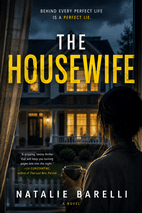
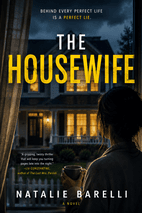
Natalie Barelli's The Housewife follows Jodie, a newlywed navigating her wealthy husband's suspicious secrets, while Joanne, an inmate nearing release, clings to a shattered dream—two women whose pasts collide in a slow-burning psychological thriller of obsession and deception, perfect for fans of claustrophobic tension and unreliable narrators.
Feature
Insta.Page
Blinkist
Shortform
The Housewife
✓
✕
✕
Summary Depth
Full Chapter-by-Chapter
15-min overview
Section-by-section guides
Audio Narration
✓
✓
✓
Visual Mindmaps
✓
✕
✕
AI Q&A
✓
✕
✕
Quizzes
✓
✕
✕
PDF Downloads
✓
✕
✓
Price
$89.99/yr
$146/yr (PRO)
$199/yr
*Competitor data last verified July 2026.
1 Page Summary
Twenty years younger than her husband and married barely a month, Jodie is navigating the uneasy social circle of the wealthy suburb she now calls home. As her new acquaintances gossip about her past over drinks, she masks her discomfort with a fixed smile, desperate to learn the truth about the man she married. When she discovers a cryptic diary entry and a slip of paper hinting at a secret lawyer’s appointment, her fragile new life begins to fracture, forcing her to confront disturbing questions about who Roy really is—and what he might have done.
Meanwhile, Joanne, a woman serving time for vehicular manslaughter, clings to the promise of a fresh start with her beloved sister Deb. Their shared dream of opening a catering business and a lifetime of stolen sweets fuel Jo’s hope through the long years of her sentence. But when Deb delivers shocking news that changes everything, Jo’s carefully constructed world collapses, and her desperate grief sets her on a path she never anticipated. As her release date nears, the lines between Jo’s past and Jodie’s present begin to blur, pulling both women toward a collision neither can escape.
Told through alternating perspectives, The Housewife is a slow-burning psychological thriller that intertwines domestic suspense with a story of obsession, deception, and fragile identities. As Jodie digs deeper into Roy’s secrets—and as Marie, the enigmatic housekeeper, moves through the house like a shadow—the truth becomes increasingly slippery. With a sharp, unsettling tone and a heroine whose own past is riddled with cracks, this book will grip readers who relish claustrophobic tension and unreliable narrators. The stakes climb relentlessly, but the full picture remains tantalizingly out of reach until the final pages.
Prologue and Chapters 1-3
The Interview Room
Jodie sits in a windowless room across from Detective Bates, who hunches over his paperwork. She is covered in blood, though she insists it isn't her own. She asks if she can go home; he tells her her house is a crime scene. When she dabs at her eyes, he slides her a box of tissues. When he asks her occupation, she replies, "Housewife." The fluorescent tube buzzes overhead.
Two Weeks Earlier
Jodie is about to bring out a tray of whipped goat cheese tartlets when she hears Meredith, Eileen, and Barb gossiping about her in the living room. They say she and Roy married very fast; that she's twenty years younger; that she was pregnant and then lost the baby, and "her type" conveniently miscarries once the ring is on the finger. Meredith adds that she's glad. Jodie's housekeeper, Marie, catches her listening and smirks. Jodie walks in with her head held high, determined to get to know these women so she can ask them about Roy—what he's really like, whether he has a temper she's never seen.
The party is indoors because it rained. Roy, tipsy, tells the story of how they met: Jodie was waitressing at a gala, spilled a tray of oysters over his tuxedo, and wrote her number on a coaster. The ladies have heard it before, but they laugh. Then Meredith asks how long after that meeting they married. Three months, Roy says. Meredith notes that Deborah had only been dead six months by then. Roy's eyes water as he says, "My wife committed suicide."
The women mourn Deborah openly—the golden couple, so charming and warm. Meredith asks Jodie if she minds them talking about Deborah. Jodie lies and says no. Eileen asks if she minds the portrait and the photos scattered around the house. Jodie recalls telling Roy she'd hate to be surrounded by ghosts of past wives, and he promised he'd keep lots of photographs of her. Now she tells Eileen she's used to it: "We're just one big, happy family."
Roy mentions he wrote to Deborah's parents to tell them he was remarrying, but they never replied. Jodie knows why—she threw the letter in the trash. Roy calls her jealous. Eileen leans in and says Jodie looks a little like Deborah. Jodie shrugs: her husband has a type. The women keep on and on about Deborah, and the anger bubbles up in Jodie's chest. She makes a joke about getting "the body" when she meant the cake, and it lands with a thud. Then she says she's been wondering about something: if Deborah was so beautiful and talented and loved, and she had this amazing life, why did she shoot herself in the face?
In the Kitchen
Roy barks her name. Meredith's champagne flute shatters on the stone floor. Jodie goes to get a broom, telling herself she just needs a moment. In the kitchen she bites her knuckle until it leaves white indentations, then calms herself by picturing her roses and the linen drapes she wants from Williams-Sonoma. She returns with the Black Forest cake, decorated with buttercream, chocolate ganache drips, and delicate toffee shards. She moves one piece of toffee to mark Meredith's slice. Then, from the trash, she retrieves the thinnest, sharpest shards of glass and pushes a long, jagged one straight into the cake at that mark.
She thinks it's not that she hates Meredith. It's that Meredith talked about her baby—the baby Jodie never really had, only faked with a test she ordered online. Meredith didn't know that. And Jodie doesn't think you should talk about other women's babies like that, even if they were never real.
Eileen stumbles in holding an empty champagne bottle, staring at the cake. Jodie spins around, heart racing, already scrambling for an excuse, but Eileen just gushes over how incredible it looks. She asks for another bottle of champagne. Then she tilts her head and says again that Jodie looks like Deborah, and before Jodie can stop her, Eileen fetches a photograph from the hall. She holds it up: Deborah on a boat deck, hair swept back, grinning. Eileen points out that they both have attached earlobes, a distinctive shape, and says it's quite unusual—maybe they're related, even cousins. Jodie takes the photo, places it face down, and slams the refrigerator door shut, making Eileen jump. She smiles to soften it: "We're not cousins." She asks Eileen not to say anything to Roy.
In the kitchen, Eileen's face twitches as she stumbles through an apology for bringing up Deborah. Jodie cuts her off kindly, opening the refrigerator and pressing a bottle of Veuve Clicquot into Eileen's hands. She tells Eileen to have Roy open it, since he loves opening champagne. Then she explains, almost gently, that talking about Deborah upsets Roy, and what Eileen heard isn't even true, so repeating it would only upset him for nothing. She needs Eileen's assurance. Eileen, her mouth shaking, swears she won't breathe a word and walks away unsteadily, hugging the bottle.
Jodie lights the candle on the birthday cake and stares at it, then retrieves the glass shard she'd inserted into Meredith's slice. She shakes her head, chuckling, and scolds herself: "Don't be silly, you're not going to make friends that way!"
The Bedroom
It's almost ten at night, and the last guest has gone. Roy walks into the bedroom where Jodie is getting ready for bed, glassy-eyed from Scotch. "Shall I get the body now?" Jodie asks. Roy stares at her, jaw slack, eyes blazing with anger. "Why did she shoot herself in the face?" he barks. "What the fuck is wrong with you, Jodie?"
Jodie shrugs, rubbing lotion into her arms. She tells him she was just curious. Roy accuses her of jealousy, says it consumes her, that whenever anyone brings up Deborah she turns into a weird, jealous bitch. Jodie points out there's a difference between bringing up and waxing lyrical. Then she presses: according to everyone, Deborah had everything to live for. Money, beauty, this amazing house, and Roy. So if someone could give her a straight answer about what broke her down...
Roy turns on her. "For fuck's sake! She's not a car, Jodie. She didn't break down. She was my wife!" Jodie raises a finger: "Ex-wife, Roy. I'm your wife." He corrects her: "My late wife." She looks up and asks if he doesn't ever wonder. Roy says every day, he asks himself what drove her to this. And then he slips: "Why would she do these things to herself?"
Jodie latches onto it. "What things?" Roy says he doesn't want to discuss it. She asks why not. He suggests she see a psychologist. She says she is. He says she knows what he means. Then she asks if he ever asked Deborah to see a psychologist. Roy steps in front of her, eyes black, jaw set, pointing a finger in her face. He shouts "That's enough!" so tightly through his mouth that it's like watching a ventriloquist without a puppet. Jodie stares at him, unblinking. He slaps both hands on his skull and walks away.
Jodie says she's going to get ready for bed. In the bathroom, her heart is racing. She did this all wrong. She wanted today to be perfect and then ruined it. She lifts her hair and studies her earlobes in the mirror, turning this way and that. Eileen is right: they're tiny, barely big enough for earrings, attached to the side. She had no idea that was a thing, or that she and Deborah shared it. They look a bit alike, but not so alike you'd assume they were related.
She brushes her teeth and washes her hands with one of the tiny seashell-shaped soaps that smell of peppermint and lavender. She orders them online, and they're incredibly expensive, but exquisite. She loves those soaps so much she could eat them. She puts a handful in her palm, brings them to her nose, and inhales slowly. There. That's better.
A Memory
Jodie is eight years old. It's Labor Day Monday, and the family has driven to Prescott, Arizona, to visit her father's cousin, because her mother wants her father to ask the cousin for money. He was let go from his job as a mechanic on the lettuce farm. He can't hold down a job because he's a drunk. The cousin's house is a picture-book: white walls, pastel shutters, pretty flower borders, probably the same size as their horrible, filthy house in Yuma but utterly different. Inside, the bathroom smells fresh and clean, with a hint of lemon. Four fluffy, baby-blue towels are folded on the shelf, all exactly the same size. By the sink sits a white ceramic dish filled with little soaps shaped like flowers. Jodie picks one up. Lavender.
When she comes home from school the next day, her mother has destroyed her bedroom and found the soaps, which Jodie had wrapped in toilet paper, tucked in her hoodie pocket
💡 Try clicking the AI chat button to ask questions about this book!
Chapters 4-8
Joanne Adams is serving a five-year sentence for vehicular manslaughter in Perryville when her sister Deb calls with news. Deb has moved to Los Angeles to model, and the two have been planning a life together: after Jo's release, they will live together and start a catering business called “Deb & Jo's Petits Fours.” Jo will do the cooking; Deb can't cook to save her life, but she loves to eat, especially sweets. Jo remembers once stealing a packet of Oreos from Mrs. Donnelly's grocery store for Deb, and the look of radiant happiness on her sister's face was like she'd swallowed the sun. Since then, Jo has always volunteered for grocery shopping just to steal more sweets for Deb. For four years, they write twice a week and talk every day; Deb sends cookbooks, and Jo learns to make perfect crème brûlée. She has a year left before release.
One day, leaning against the wall in the corridor, chatting to Deb on the phone while another inmate, Maureen, demands her turn, Jo hears Deb say softly, “I have news.” Deb is getting married. Jo stops eating, replays the words, asks how, when, how long. Maureen yells, Jo throws her apple core at her. Deb explains the man's name is Roy, he's a psychologist, he's written books, he's wonderful, and she's already moved into his beautiful home in Beverly Hills. Jo asks if he's rich, half-joking; Deb says he is. Jo swallows a hard lump when Deb says they're getting married in a month. She wanted to wait until Jo got out, but Jo insists she shouldn't. Jo asks why Deb never told her about him; Deb says she wanted to be sure it was real. Jo presses, asking what Deb has told Roy about her. Deb says she just told him she has a sister named Jo, who is funny, cute, a handful, and a terrible dancer. Jo demands, “Did you tell him—” but Deb reassures her: she told him Jo works overseas. Jo doesn't want her sister to be unhappy, but it never occurred to her that Deb could be happy with someone other than her.
They marry. Deb sends photos; Jo tears Roy out of every one but keeps her half, because the wedding dress is amazing, and plasters the walls of her cell with them. Deb's calls become less frequent—every second day, then every third. She gushes about Roy's charm, then her tone changes. Jo senses Deb's spark is missing, but Deb insists everything is fine.
Months later, a few months before Jo's release, Deb calls. She starts, “Things are...” and trails off. Jo waits. Finally Deb whispers, “He scares me.” Jo asks why; Deb makes a sound like a sob and says, “I'm so scared, Jo.” Before Jo can ask more, Deb hangs up. Jo calls back again and again, but no answer. That's the last time she ever speaks to her sister. Jo writes every day, begs for a response, but gets nothing. Eventually the recorded message changes: “The number you have called is no longer available.”
Jo calls her mother for the first time in over five years. Her mother says crisply, “Debbie died.” Three weeks ago. Jo's legs fold under her; she ends up on the floor. Her mother says Deb was depressed and killed herself. Roy is devastated. Jo cries, asking what he did to her; her mother dismisses it, saying Roy didn't do anything, and then cruelly adds that Deb should never have gone to LA, that Jo and Deb always thought they were too good for their family, and look where that got them: one in jail, one dead. Jo hangs up.
Obviously, Deb did not kill herself. Jo knows her sister was the strongest, fiercest person she knew. She can't forget Deb's last words: “He scares me. I'm really scared.” In her final weeks of incarceration, Jo obsessively reads everything online about Deb's death. She learns Roy had an alibi—he was with a client at his office—and that Marie, the housekeeper, found Deb dead at the bottom of the stairs. Deb had shot herself; she'd been dead for hours. Marie was excluded as a suspect because it was her day off and she was with her brother. Security cameras showed no activity until Marie came home. The case was ruled suicide. Jo is certain: Roy killed her sister.
After getting out, Jo legally changes her name from Joanne Adams to Jodie Smith. She likes the name Jodie; it's close enough to Joanne that people would assume it's a nickname. She dyes her hair blond and moves to LA. She knows what Roy looks like from the wedding photos and from his appearances on the Sophia Sanchez Morning Show, where he talks about relationships—incredibly, without irony, that's his specialty. She waits outside his office in shabby clothes and a beanie, learns where he gets his dry cleaning, and pretends to be his assistant to get his home address. She checks out the house from the outside and realizes she will never get inside without help.
She discovers Roy will attend a gala for orphaned children at the Hilton, where he will make a large donation in memory of Deborah. She finds out who is catering and applies for a waitressing job. She's been doing some waitressing to earn money and knows the job. She deliberately spills a tray of oysters Mornay on Roy's tuxedo—not accidentally. It's an excuse to give him her number; she plans to offer to pay for the dry cleaning, then tell him she's new in town, looking for work, and is an excellent cook, cleaner, lawn-mower, pool-cleaner, and dog-walker. When they both crouch on the floor picking up oysters, he looks at her in a way that makes her think he recognizes her, that Deb showed him her photo. She gives him the spiel about reimbursing him and hurries out.
For two weeks, nothing. She's trying to figure out her next move when he calls and asks her out for a drink that very evening. She suspects a trap, but then tells herself this is her chance. She says yes.
He takes her to a French restaurant in West Hollywood. They sip champagne in a fairy-tale courtyard with tiny lights and bougainvilleas. Jo later tells him that was the night she fell in love with him, and she remembers his face in the candlelight, the way his eyes twinkle, and the way she has to sit on her hands to resist stabbing them out with her fork. She doesn't tell him that part.
She stays at his house often, but she can't search it while he's there. He seems smitten, but she knows the reality: he's a rich, famous psychologist, a widower with no children; she's poor, homeless, and an ex-con. He has hordes of beautiful women at his door. She doesn't have high expectations. So, six weeks after their first date, she tells him she's pregnant. He's shocked but not unhappy. Six weeks later, she becomes Mrs. Roy Davies.
She has been searching that house ever since, trying to figure out how Roy killed Deb and why. There has to be proof the police missed. There has to be something to bring him to justice. Otherwise, she'll just have to kill him.
Her days always begin the same way. She wakes around six, carefully extricates herself from Roy's embrace, slides out of bed, and pushes her feet into slippers. In the en suite, she showers and applies full makeup—cleanser, toner, moisturizer, sunscreen, primer, color corrector, foundation, setting powder, bronzer, blush, highlighter, eye shadow, false lashes, lipstick, and setting spray. She must look perfect for Roy when he wakes up. She cannot give him any excuse to tire of her, not until she finds what she's looking for. Later she will make him a delicious breakfast, and he will say she looks like a porcelain doll.
This morning she cooks oatmeal pancakes, his favorite, trying to make up for their argument the night before. Marie walks in, frowning at the spread. Marie is not much older than Jo, with long dark hair in a bun, a black blouse, and a white lace-trimmed apron. She looks exactly like a housekeeper. Jo pours herself coffee and starts to ask Marie something, but Roy calls for Marie from his office. Marie makes a coffee, and Jo intercepts her at the door, snatching the saucer. A moment later, hot coffee spills down Marie's front. Marie screams, the cup shatters, Roy rushes in. Marie insists Jo threw the coffee at her. Jo insists it was an accident. Roy asks if Marie is hurt, then turns to Jo with blazing eyes. He pulls her aside in the coat cupboard and says he doesn't know what's the matter with her: first Deborah, now Marie. He mentions her jealousy, then leaves, refusing the breakfast she made. Marie smirks from the kitchen doorway.
Jo cleans everything up, loads the dishwasher, and notices the tall, thin cupboard where she keeps spices. There she also sees snacks: pretzels, packets of Oreos, trail mix. She always makes extra food for Marie, who lives upstairs in the maid's quarters. She put four homemade chocolate chip cookies in there as an olive branch, but Marie hasn't touched them. Jo makes herself coffee
Chapters 9-13
Jodie recoils from the diary. In Deborah’s handwriting, the words read: IT’S HIM DOING IT. She doesn’t know what “it” is, but she knows Roy did something to Deborah. She shoves the book under the mattress and pulls out the slip of paper she’s been carrying: Allen & Boyd, 3PM, Priv Conf Rm, Fri 6th flr. A quick search confirms it. Allen & Boyd are divorce lawyers, and Roy has an appointment with them on Friday.
She can’t believe he would divorce her, not after one month of marriage, not when he wrote a book called Fixing Us. He should try harder. She calms herself with the image of her linen cupboard and her rose garden. When she is steady, she calls Allen & Boyd. She introduces herself as Dr. Davies’s assistant and cancels the appointment. Dr. Davies will not be rescheduling. She spends the rest of the day planning an amazing dinner, because the way to her husband’s heart is through his stomach.
Then Meredith calls. She is hosting a small charity gathering on Friday for young, ambitious women, “us girls only, no men allowed.” She asks if Jodie can come. Jodie is astonished and delighted. Maybe Deborah confided in the harpies what she was afraid of, and this will be her chance to ask them. She accepts, then spends her afternoon preparing an elaborate dinner. She sets the table with care, lighting candles, scattering petals across the table and the bed. Her statement is clear: Love Is All You Need.
Marie walks in and stares at the crystal glasses. She asks if Jodie is using the Steuben. Mrs. Deborah never put the Steuben out when it was just her and Dr. Davies. “Well, Mrs. Deborah’s dead, so...” Jodie says. Marie makes a strangled sound, and Jodie presses on, telling her she is wrong about her and Roy. He adores her. She is not going anywhere.
Dinner with Roy
Roy calls the dinner beautiful. He reaches across to tuck a lock of hair behind her ear, and she curls it back into place herself, careful never to advertise her earlobes. She apologizes for yesterday, blaming her comment about Deborah on hormones. He accepts, saying it is water under the bridge. She guides the conversation: even couples who are madly in love argue. So did he and Deborah argue? A beat. “Sometimes.” She pushes for details, saying she could make sure not to trigger him. She offers a random example, something about a snorting laugh. He looks up sharply, and she insists it was only an example. Where he is concerned, she says, what did they argue about?
He sets down his napkin. He says, softly and deliberately, that he doesn’t want to talk about Deborah. She lets it go, for now.
When she tries to clear the plates, Roy stops her. Let Marie do her job. Jodie reluctantly delegates, mentally telegraphing threats. Marie is gone before Jodie can finish the thought.
Later, over dessert, Jodie tells Roy about Meredith’s invitation. Roy is always chiding her for having no friends, and she wants to show him that Deborah’s friends like her too. She has a story ready: she moved here a minute before meeting him, all her friends are back home. Amy and Nora and Abigail, sweet church-going girls with a dash of mischievousness. Sleepovers, braided hair, painted nails, whispered crushes. He loves those stories. Some days, she tells herself they are real and holds long conversations with them in her head. What do you think I should do? Kill him, of course, they answer in unison. She laughs. You girls are being silly, she tells them. It’s way too soon.
When Roy says Meredith and Jodie will get on like a house on fire, Jodie snorts. He asks what is funny. She tells him that is how her parents died. He is horrified, apologetic, and she waves it off. Water under the bridge. She is excited, she says, to finally be part of the gang.
Marie brings in the herbal tea, which Roy insists on every night. Roy tries to free his hand from Jodie’s to accept his cup, but she holds on. Marie pours for Roy, then pours for Jodie, splashing tea around the cup so it drips. Jodie thanks her. “It’s Marie,” the housekeeper says, and walks out.
The Address
Jodie sleeps like the dead, as she always does in this house. Roy was sweet and loving the night before, and she lets herself believe the note means nothing. It is Marie putting silly ideas in her head.
In the morning, she notices a strange swelling under her right eye. She covers it carefully with makeup. Roy wraps his arms around her waist, calls her beautiful. She tells him her plans: Pilates, the hairdresser, and a surprise recipe. He asks her to pick up his blue suit from the dry cleaners.
When she returns from the hairdresser, Marie is elbow deep in the refrigerator. Jodie hangs up the blue suit, slides Deborah’s appointment book out from under the mattress, and studies the entry from the day before Deborah died: IT’S HIM DOING IT. “Doing what?” she whispers. Then she notices something on the facing page, the day Deborah died: a faint pencil mark. She takes the book to the window. It is an address. 2210 Horizon Oak Circle 305, Thousand Oaks.
She tells Marie she has an errand, grabs her keys, and leaves. She has no idea what the place is, but Deborah wrote it down one day before Roy killed her. She does not realize until she is well on her way that Thousand Oaks is an hour from home. It is now two in the afternoon, so the surprise dish will not happen, but Roy won’t know the difference; the freezer is full of delicious meals.
The address turns out to be a business park. The sign above the main entrance reads: Laurel-Westlake Institute of Plastic Surgery. That can’t be right. Deborah didn’t need plastic surgery, and would she really have that on her mind a day before she died? But it is the right suite number.
The receptionist is on the phone, so Jodie waits. When she is free, Jodie introduces herself as Mrs. Davies, Dr. Roy Davies’s wife. No bells. She says she has been before and wants to see the same doctor, but can’t remember his name. The receptionist searches for Deborah Davies, then Deborah Adams, and finds nothing. She asks for ID. Jodie says she must have the wrong place and walks out. She checks the suite number by the door: Number 305. So Deborah wrote down this address, but she never had anything done here. Jodie sits in her car, staring at the building, then drives home.
Out of Gas
She thinks she knows the way back, but she is wrong. She ends up on the 118, backtracks, punches her address into the GPS, and finds her way. Halfway home, a red light blinks on the dashboard. She is running out of gas. She has only had this Mercedes SUV for a month; it was a wedding present from Roy. She hasn’t driven a car in almost six years, though she didn’t tell him that. Where she had been, you didn’t drive cars.
She spots a Shell sign in the distance. At the final intersection, fifty feet from the station, the car shudders forward and stops. The starter button does nothing. The car is dead. Three young men knock on her window and push the car into the gas station parking lot. She thanks them and reaches for her purse. It is not there. She left it on the chair by the dresser when she saw the address. No phone, no wallet, no cash. She locks herself in a bathroom cubicle, sits on the toilet lid, and presses the heels of her hands against her eyes.
At the sink, she checks her face. The swelling near her eye is still there. Behind her, a toilet flushes. It is the woman in the Yankees cap from outside. She asks if Jodie is all right.
The woman has had a terrible day: her fiancé is leaving her for someone else, after weeks of an affair. Jodie guesses, “He’s in love?” The woman’s face falls. She is pregnant. Jodie tells her she wins, her day is absolutely worse. She compliments the woman’s figure, her skin, her hands. She notices the engagement ring, asks to look at it. A square diamond, twenty-five thousand dollars, platinum. Jodie tells her to keep it, a gift is a gift, and pawn it for at least fifteen thousand. Then Jodie asks, “Were you a virgin?” The woman blinks. No, she wasn’t. Me neither, Jodie says.
The woman asks about the stalled car. Did Jodie call the AAA? Jodie admits she left her purse at home, has no phone, no wallet, no cash. She thinks she will have to hitchhike. The woman pulls a fifty-dollar bill from her purse and presses it into Jodie’s hand. Jodie shouldn’t have to hitchhike home, she says; it’s dangerous. She could get picked up by a serial killer. Jodie laughs. “Imagine
Chapters 14-17
Chapters 14-17
Jodie wakes up happy. For someone who is never happy, it's a welcome change. After almost five weeks of getting nowhere, she finally feels close. The proof that her sister Deborah was murdered is somewhere in Roy's office, and now she has the key.
Later, Erin texts her, and Jodie suggests meeting for coffee so she can pay her back for the day before. She offers to meet near Erin's house, or even at her house, and mentions she could bring cake. Erin replies that she lives miles away and offers her banking details instead. Jodie thinks of her mother, bent down, face inches from hers, saying, "Nobody likes you, Joanne. Do you know why?" Then: "Neither do I. But nobody does. Not even God." Jodie pushes the memory away and insists anyway: she will take Erin out for coffee, just say when and where. Erin replies. Jodie imagines Deb smiling at her.
She wanted to go back to Roy's office the night before, but Roy was unwell during the night, making two long trips to the bathroom. Jodie wondered if Marie had sabotaged her dinner. It didn't feel safe to creep into his office then, and it doesn't feel safe during the day either, when Marie could walk in at any second.
That morning, while moisturizing, Jodie notices another blemish: a wrinkle at the corner of her mouth that makes it droop slightly. She presses and pulls at the skin with a washcloth, trying to lift it back. The swelling below her right eye is still there. She tells herself it's nothing and applies more makeup than usual. By the time she is done, you can't see a thing.
While Roy is in the shower, she remembers the name of Deb's doctor from the appointment book: Dr. Kowalski. Maybe he knows something about the clinic, maybe even something about what happened to Deb. No stone unturned. She calls his office. The receptionist says, "Oh...you've been here before?" Jodie's heart squeezes. "That would be the first Mrs. Davies," she says. The receptionist apologizes profusely and gives her an appointment for the following Monday.
Roy is in an excellent mood too. He hums at breakfast. Jodie has forgotten her wrinkle. She's too excited about the key. She gazes at him as he stirs cream into his coffee and pictures him in the electric chair, mouth opening and closing like a dying fish, while she watches from behind the glass and laughs. Roy grins at her. "You're very cheerful this morning!" "I'm just happy." He caresses her cheek. Anyone walking in would think they were lovebirds.
She tells him her plans: shopping, then coffee with a friend. He looks up sharply. "A friend?" "Erin," she says lightly. He relaxes, asks if he knows Erin. She explains they met yesterday for the first time. Roy smiles. Marie comes in to clear dishes, and Jodie flashes her sunniest smile at Roy, calling him "darling," which she never does. He gives her that one-sided smile, and Jodie catches a strange shadow on Marie's face. Then she mentions the doctor's appointment on Monday. Roy frowns. She says she was thinking about what he said, and he's right, she should get help. She'll talk to her GP, Dr. Kowalski, who Meredith recommended. Roy offers to give her names himself. "Thank you, Roy. That would be very kind."
After he leaves, Jodie puts the breakfast things away. She opens the cupboard to return the chia seeds and glances at Deb's shelf. Her heart stops. The note she put in the cookie jar is gone. She grabs the jar: three cookies remain, but she knows she put four. She asks Marie if she had one. Marie rolls her eyes, says she's a diabetic and didn't touch them. Jodie puts the jar back but keeps her hand on it, feeling tears sting behind her eyes. She doesn't believe in ghosts, for good reasons, considering all the people she... but still. She swallows the lump and closes the cupboard.
She makes dinner: pulled pork and roasted vegetables, one of Roy's favorites. She turns on the slow cooker and goes to meet Erin.
Erin is already at the café. She stands and smiles, then hugs Jodie. Jodie isn't used to being touched by strangers, so she mentally asks Deb what to do. Just go with the flow. She hugs Erin back until Erin disengages. Erin thanks her again for yesterday, says she feels much better. Jodie slides a fifty across the table. Erin folds it into her purse. She has money, Jodie can tell: feathery light-brown bob with subtle highlights, impeccable French manicure. They exchange neighborhoods. Jodie lies and says she grew up in Oklahoma. Erin grew up nearby, across Mulholland Drive. Jodie likes Erin. She has never had coffee with a girlfriend before, and she finds she likes it very much. She peppers Erin with questions: where do you shop, white or dark chocolate, what kind of house, what do you do for money. Erin is a yoga instructor with her own studio. Jodie says she loves yoga. She doesn't, of course. She doesn't love anything except cooking and cleaning.
Erin asks what Jodie does. Jodie is dying to tell the truth: that she is on a quest to prove her husband killed her sister, and that she hates him so much some days all she wants is to stab him in the throat. Instead she says she does precisely nothing, keeps busy with the house and looking after her husband. Erin laughs, but there is a tiny edge to it. Jodie picks up on it. "If you spend all your time looking after him, he's hardly going to complain," Erin says. "You two must be very happy." Jodie says it's her life's work making her husband happy. Erin asks about the honeymoon phase. Jodie thinks about how Roy used to pull her onto his lap, touch her hair, kiss her face, call her his beautiful porcelain doll. Now he sometimes pulls away. She wonders if she is losing him, so she bakes more, cooks more, wears extra-thick eyelashes, sprays room mist, sits on his lap, plays with his tie, whispers I love you more than the moon and the stars. He smiles, but distractedly. She asks Amy, Nora, and Abigail inside her head if he's tiring of her. They say, Don't be silly, try harder. And if that doesn't work, all options are on the table.
She tells Erin they are very happy, can't keep their hands off each other. Then she leans in. What would you think if your husband rambled on about his ex-wife? Erin recoils. His ex-wife supposedly killed herself, or so he says. He kept her wedding dress. Jodie has noticed he takes it out when she isn't there, and never puts it back exactly the same way. Erin looks shocked. "So what does he do with it?" "Dance with it, maybe? Lie with it on the bed?" Jodie changes the subject, asks if Erin wants to get married someday. Erin says maybe, when she meets the right man. Then Erin asks about Jodie's family. "God no," Jodie laughs. "They're dead. Thank God." She tells Erin her whole family is dead. Her mother was the most horrible person ever to walk this earth.
She leans closer, almost touching foreheads, and tells Erin the story. When she was six, she found a woman's magazine in the kitchen trash can, cut out pictures of shutters and rosebushes and flower arrangements, hid them in a box under her bed. Her mother found the scraps, called her over, held up the ruined magazine, bent down with a scrunched face: "Did you do this?" Jodie said yes. Her mother took her hand and walked her to the cellar door. She had recently put a padlock on it, and told Jodie that spiders lived down there, hundreds of them, big and black and hairy. She pushed Jodie inside and closed the door. It was dark in a way Jodie had never known. She heard the padlock click and started screaming. Her mother opened the door just long enough to say, "If I hear one more peep out of you, as God is my witness, I'm leaving you in there all night." Then she shut it again. Jodie screamed anyway. She was six. She thought her family would die, or her mother would forget about her, and she would die in there, eaten alive by hairy spiders. After her parents went to sleep, her sister came and sat on the other side of the door. She told Jodie there were no spiders. She stayed all night, talking about the kind of house Jodie would live in one day, their favorite wall colors, light pink for Jodie, yellow for her, whether drapes were better than shutters.
Erin is pale, almost white. She says, "My God, Jodie. That's horrible!" Jodie crumples the empty sugar packet. Erin asks how her family died. "House fire while they were asleep. Terrible tragedy. Everyone said so." Where was Jodie? "Away." She smiles. "It's in the past now, Erin. I don't like to dwell in the past." Erin looks at her oddly, head tilted, trying to
You've reached the end of the free chapters
Next chapter: “Chapters 18-20” is locked
Keep reading The Housewife — and unlock all 600+ book summaries with audio, mindmaps and AI Q&A.
$0.00 due today · 7 days free, then $89.99/year ($7.49/mo) · Cancel anytime before day 7
Natalie Barelli is a bestselling author of psychological thrillers, known for her gripping, twist-filled novels such as *Her Sister's Lie* and *The House Guest*. Originally from Italy and now based in Australia, she previously worked in IT and as a documentary producer, experiences that lend a sharp, analytical edge to her intricate character studies and suspenseful plotting. Her work has garnered critical acclaim for its fast pacing and unsettling domestic scenarios, making her a prominent voice in contemporary crime fiction.
Frequently Asked Questions about The Housewife
What is The Housewife about?
A woman named Jodie has married a man named Roy while hiding her true identity and past. Her real goal is to uncover the truth about what happened to her sister Deborah, who she believes was murdered. Posing as a devoted housewife, she navigates a web of secrets, a hidden diary, and a mysterious video, but the more she uncovers, the more dangerous her situation becomes.
Who is the author of The Housewife?
The author is Natalie Barelli. The novel alternates between Jodie's present-day investigation and the backstory of her sister Joanne, whose past is slowly revealed. Barelli crafts a tense domestic thriller centered on hidden identities and a house full of secrets.
Is The Housewife worth reading?
Yes, it is a compelling psychological thriller that hooks you early with its mysterious setup. The tension builds steadily as Jodie's investigation and her fragile cover begin to unravel. Anyone who enjoys domestic suspense with dark twists and a protagonist carrying a carefully hidden past will find it hard to put down.
What are the main themes in The Housewife?
Deception and false identity are at the heart of the story, as Jodie's entire marriage is built on a lie. The novel also explores domestic control and emotional abuse, showing how a marriage can be a trap behind closed doors. Sibling loyalty and the desperate search for truth provide the emotional stakes, while trust becomes a dangerous commodity in a household where no one is quite what they seem.
📚 Explore Our Book Summary Library
Discover more insightful book summaries from our collection