⚠️ READER ADVISORY: This is a deep-dive summary designed for those who want the full story. Contains spoilers.
What is the book Ransom about?
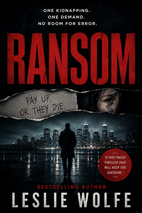
Leslie Wolfe's Ransom follows Olivia Taylor, a woman with a hidden past who reinvents herself in Las Vegas and targets wealthy Winston Donovan for a new life, until his suspicious death leaves her fighting a murder charge with her manufactured identity unraveling. A psychological thriller for fans of courtroom suspense.
Feature
Insta.Page
Blinkist
Shortform
Ransom
✓
✕
✕
Summary Depth
Full Chapter-by-Chapter
15-min overview
Section-by-section guides
Audio Narration
✓
✓
✓
Visual Mindmaps
✓
✕
✕
AI Q&A
✓
✕
✕
Quizzes
✓
✕
✕
PDF Downloads
✓
✕
✓
Price
$89.99/yr
$146/yr (PRO)
$199/yr
*Competitor data last verified July 2026.
1 Page Summary
In Ransom, Leslie Wolfe delivers a taut, emotionally charged thriller set against the glittering, dangerous backdrop of Las Vegas. The story opens with a woman in hiding, fleeing a painful past and a menacing stalker. Reinventing herself as the affluent and alluring Olivia Taylor, she methodically sets her sights on Winston Donovan, a wealthy, married businessman. Her carefully constructed plan is not a simple seduction but a high-stakes gamble for a new life, one she believes will finally grant her the security and status she has never had.
However, her meticulously built world begins to unravel with terrifying speed. The enigmatic Jack, a figure from her past, refuses to disappear, a constant reminder that her secrets are not as buried as she hoped. More critically, the affair with Winston ignites a dangerous game of obsession and jealousy, drawing the attention of his formidable wife, Claire. When Winston is found dead under suspicious circumstances, Olivia finds herself at the center of a murder investigation, with damning evidence piling up against her. Arrested and charged with a capital crime, she is thrust into a brutal legal battle, fighting not only for her freedom but for her very life.
As the trial unfolds, the line between victim and predator blurs. Olivia must rely on the enigmatic defense attorney Colton Blake, a man with his own shadows, and the unwavering support of her long-estranged brother. But with the prosecution painting her as a cold-blooded femme fatale and a ruthless adversary pulling strings from the shadows, she realizes the greatest threat may not be the evidence against her, but the ghosts of her own manufactured identity. This is a gripping story of survival, betrayal, and the high cost of reinvention, perfect for readers who crave psychological suspense with a legal thriller's pulse.
1: Down
A man lies on the cold marble floor of his hotel suite, crying out for help. His own voice sounds foreign and surreal, and each word sets off bursts of light and fire inside his brain. “My eyes . . .” He gasps for air and tries to push himself up, but his arms are too weak and shaky. Panic surges as he loses control. The burning in his eyes intensifies, and his tears cannot wash away the searing pain. His vision has blurred into complete darkness, broken only by flashes of light and bursts of color, each shade a different kind of singe.
He pleads for someone to call for help, extending a hand into the blurry darkness. No one answers. But someone was there. Or used to be. He wonders if he is alone. He remembers falling, hitting the ground hard, and losing consciousness for a while. When he woke, he was screaming in pain, his eyeballs feeling like they were on fire. He reaches up to rub the irritation away, but that only makes things worse. A wave of red-hot pain surges through him. He clutches his chest, pulling at his shirt as if fighting off a monster whose tentacles are snaking around him, tightening and squeezing the breath out of his lungs. Torn buttons click to the floor, yet he still grasps at his bare chest as if he wants to tear it open. His heart pounds wildly, each beat rippling violently through his body.
He tries to stand again, reaching into the darkness for something to hold onto, but finds nothing. He crawls toward the door, moving slowly, his breath agonizing and ragged, the horrible singe in his eyes unrelenting, and the claw clutching his chest in a deadly vise unyielding. “Hello?” he calls weakly. Only the whooshing of blood in his ears answers. “Someone . . . please... help me,” he says, as loudly as he can manage, his voice fraught with agony and barely rising above the sound of his own racing heart. He wills himself to crawl further, hoping to reach the suite door and open it, so someone will see him. He can no longer lift himself onto his hands and knees; he can only push himself forward on the smooth, glassy marble, little by little, grunting with every choked breath.
Something warm trickles down his face, and the thick, metallic smell of blood invades his nostrils. He rests his flaming face against the cold floor, unable to soothe the burning sensation spreading from his eyes into his chest, poisoning his blood with shards of fire. The room starts spinning, slowly at first, then faster and faster. Each chaotic heartbeat feels like a hammer against his ribs, rattling his weakened body. His stomach lurches and heaves, the pressure in his head building up, aching with the rhythm of his fast-thumping heart. One by one, the psychedelic bursts of color flashing inside his head fade into darkness. His face lands on the cold marble and lies still, his entire being following suit as the last trace of fight leaves his defeated body. His mind turns darkly inert and quiet, the sound of his heart becoming erratic and fading away in the distance, as if it were abandoning him where he lies on that floor.
A shudder rattles his body, leaving him completely motionless in its wake. At the vanishing edges of his consciousness, he hears the sound of slowly departing footsteps. A door opens. A second later, it closes. Then nothing but darkness and silence.
💡 Try clicking the AI chat button to ask questions about this book!
2: Trouble
At Sea-Tac, with less than half an hour before her departure, a twenty-seven-year-old woman walks through patches of golden sunshine, towing a spinner suitcase toward the security checkpoint. She is dressed to be forgettable: a ballcap pulled low, oversize shades, a low bun, jeans, and a light jacket over a gray T-shirt. Seattle has come to feel like a prison, and Las Vegas is her escape. She is almost giddy at the thought of leaving, but she cannot shake the sensation of being watched. Anonymity feels like a fragile mask.
A man’s voice calls out behind her. She does not turn. The voice sounds familiar, but no one knows she is leaving today. The second call, angrier and closer, brings a chill down her spine. Before she can react, he grabs her shoulder, twists her around, and slams her against the wall, knocking the breath out of her. He twists the fabric of her denim jacket sleeve until it rips, and he is shouting inches from her face.
She recognizes him: Avery Sinclair, the son of Sinclair Airlines. He is young, tall, and seething with rage. He demands to know if she understands what she has done, says he could kill her right now, and slams her into the wall again. She gasps, afraid, but what terrifies her even more is the sight of bystanders stepping closer. Witnesses mean questions, suspicion, phone cameras, and an internet scandal. She turns her face away.
A broad-shouldered bystander intervenes, touching Avery’s elbow and telling him to let go. Avery throws a punch; the man dodges easily and immobilizes him from behind. Cops are already rushing over.
The woman straightens her jacket and cap, then lies to the officers. She says she does not know this man, that he must have the wrong person. Avery screams that she is lying, calls her a liar, and wishes her lose everything she has. The first cop, Officer Jenkins, tells Avery to settle down. He asks for ID. When Jenkins reads the name Avery Sinclair, he whistles quietly and exchanges a loaded look with his partner, Officer Ramirez. The police demeanor shifts from impartial to guarded, suddenly mindful of the influence and career risk attached to that airline name.
Avery promises he will find her wherever she is going. Ramirez warns him that sounds like a threat. Avery calls it a statement of fact. Jenkins turns to the woman and offers her the chance to file a complaint. For a moment, she is tempted, just to teach the arrogant kid a lesson, and the back of her head is still throbbing where it hit the wall. But she cannot afford police attention. She declines, insists it is a misunderstanding, and says she is about to miss her flight.
Jenkins lets her go. She runs toward the checkpoint, glancing over her shoulder as Avery is walked out of the terminal. She is the last passenger to board the flight to Las Vegas. In her aisle seat, she catches her breath as the aircraft door locks and the jetway withdraws. A flight attendant offers her champagne and leaves a small blue fleece blanket on the empty seat beside her.
She raises a silent toast: may she never hear the name Sinclair again. She wonders what could have enraged Avery enough to chase her through the airport, and how he knew where she was. The Seattle business ended badly, she knows. It was messy. And messy meant dangerous.
As the plane takes off, she wraps the blanket around her shoulders and lets her thoughts drift between the past and the future. One more, she promises herself. Only one more, and then it will all be over.
3: Home
A familiar chime marks the arrival at the Las Vegas gate, and the cabin erupts into the usual scramble of seat belts, luggage, and phones flooding back to life. A flight attendant hands Olivia her suitcase with a warm smile and a quiet welcome to Las Vegas. She passes four slot machines beside the gate service desk and smiles to herself, amused by the city’s character.
She doesn’t linger. At a mobile phone store she buys a new phone, loaded with prepaid minutes and a Las Vegas area code. Then, locked in a restroom stall, she dismantles her old phone, flushes the SIM card, crushes the device under her boot, and drops it into the sanitary disposal bin, reasoning that no one goes through that kind of trash. She wishes she had done it all in Seattle, but the Avery incident left her no time.
Near baggage claim, two uniformed officers walk briskly toward her. One looks her way and speaks into a radio; both speed up. Olivia’s heart races, and she nearly trips on her spinner. She fears Avery Sinclair told the Seattle police too much and that they may have her picture on a BOLO. Instead of walking past them, she veers right, takes a seat, and pretends to configure her new phone, head lowered. As they pass, she overhears one officer describing a suspect: a white female, twenty-five to thirty, five-seven, about a hundred twenty pounds. It is dangerously close to her own description. But then the cop says "red hair, thick-rimmed glasses," and Olivia breathes. It isn’t her. They walk past.
The relief hits her like a crashing wave, but she hates the feeling of being afraid, vulnerable, hunted. She tells herself this has to stop, that Vegas has to be the last time she does this, repeating the decision like a mantra and willing it to burn into her mind.
She finishes setting up the new phone. When it asks for her name, she hesitates, then types: Olivia R. Taylor. She says the name aloud and promises herself a stay worth remembering, though she silently admits it probably isn’t something she’ll ever tell anyone. The R, she reflects, does not stand for Rose or Rachel or a grandmother’s name. It stands for Rogue, after a movie character who was a survivor, a fighter, someone who couldn’t get close enough to others to love but yearned for it anyway. The R anchors her to the past, to the night she ran away from her father’s wretched, barren eighty-acre farm on the southern outskirts of Abilene.
She skips baggage claim because there is no luggage to collect. Her spinner holds her laptop, her jewelry, and a few personal items, everything she owns worth carrying from place to place. She wants to look like she has lived in Las Vegas her whole life, dressing in clothes from local stores, shoes worn in local restaurants and casinos, jewelry from familiar retailers. Stepping into the desert heat, she fills her lungs with the dry air and smiles. She has never been to Las Vegas, but she has studied it for weeks: roaming its streets on Google Earth, looking at thousands of tourist and local photographs, reading about it, watching movies, hearing stories. Nothing prepared her for being there.
At high noon, she takes a cab to ARIA, where she has made a painfully expensive reservation. The short drive fascinates her. The lights, colors, and sounds of Sin City seem perfectly designed to lift spirits, to make tourists believe anything is possible, that they can touch the sky, eat too much, drink themselves stupid, gamble their last dime, and still feel great about it. It feels like home. Olivia R. Taylor says it again: Las Vegas is her home, and the words ring true.
But the hot midday air smells a little like Texas in the summer, and the familiar scent stirs unease in her gut, chilling her blood. A foreboding darkness briefly clouds her view of the city, and she wills it away, damning it into oblivion forever. For better or worse, she is home.
Courtroom Testimony
District Attorney Mitchell asks Camilla Reyes about the moment she discovered the body. Reyes testifies that she knocked twice, got no answer, announced "Housekeeping," and used her card to enter the suite. What she found still haunts her: a man lying there, blood smeared all over the floor, blood from his eyes. Yes, she says, he was dead. She still has nightmares. Defense Attorney Blake objects to speculation, and Judge Thomas Antunez sustains.
4: Harassed
The woman about to enter the hotel transforms herself in the space of twenty feet, discarding her Seahawks ballcap into a trash can, tucking her purse into a spinner suitcase, and letting her hair fall loose around her shoulders. She removes her denim jacket and weaves it through the handle. By the time she reaches the entrance, she is someone else: still anonymous, but now the woman with long, wavy blond hair and a tight V-necked T-shirt, wearing clothing designed to pull eyes away from her face.
The conditioned air of the ARIA lobby hits her like an icy tornado, and the soaring ceilings and expansive windows stop her in her tracks. She approaches the polished stone reception desk, and a smiling receptionist welcomes her. She raises her sunglasses to the top of her head and gives her name: Olivia Taylor, with a reservation for two weeks in a Sky Suite. The receptionist, whose name tag reads Jenny, asks for a driver's license and a credit card.
The woman explains her purse was stolen on the flight over. She promises to get a replacement license and debit card tomorrow morning, since nothing is open on a Sunday. Jenny hesitates, apologetic but firm, and is about to turn her away. The woman changes tactics, lowering her voice and reaching across the counter to squeeze Jenny's hand. She mentions she would rather not stay with family tonight, and whispers about how painful Russell Taylor can be, a reference to the owner of one of the largest casino resorts in Vegas and one of ARIA's direct competitors. The name lands. Jenny's eyes widen. The woman plays it off with a shrug and a promise not to order any incidentals or get Jenny in trouble.
Jenny's professional smile returns in full. She checks the woman in, adds a couple of spa vouchers to the account, and offers a bellhop, which the woman declines. Before leaving, she asks for a copy of the room receipt, and as Jenny finishes the check-in, the woman sends a quick text. A moment later, a reply chime sounds: a simple thumbs-up from Tony Vega, a man of very few words. A flicker of a smile crosses her lips.
Armed with the receipt, the room key with the suite number scrawled in Jenny's handwriting, and the Wi-Fi password, she crosses the dazzling lobby toward the casino floor. The polished marble reflects the chandeliers overhead, and the hum of conversation blends with the clink of glasses and the distant chime of slot machines. She walks slowly, taking it in, letting the energy seep into her veins.
Midway through the lobby, three or four men surround her, hollering and flashing cameras in her face. One tall man with dark, oily shoulder-length hair shouts at her from three feet away, calling her "Princess" and shoving his lens inches from her face. She shields herself with her hand, lowers her shades, and tells them to get out of her way. Another shouts, "Hey, Olivia! Did you miss Vegas?" while snapping photo after photo. Spectators stop and stare, whispering, pointing, asking who she is, drawn by the same morbid curiosity that slows drivers at accident scenes. When one of the paparazzi touches her, she shrieks and steps aside, begging to be left alone. Hotel security intervenes, dragging one man away forcefully while men in black suits invite the others to leave the area.
By the time she reaches the elevators, the casino has settled back into its usual rhythm, only a few people still staring. Inside her room, she waits for the heavy door to close, latches it, and switches on the curtains, which whirr open to reveal the entire city lying at her feet. It is all coming together perfectly, just as she planned.
After a long, satisfying shower, a message awaits on her new phone. She opens it and reviews attached photos, each one taken earlier by those paparazzi in the hotel lobby. She frowns as she moves back and forth through the stack, assessing each shot, until she decides on the best one. She sends it back with a note: "Excellent work, Tony. There's a bonus for you if you make it happen by tomorrow."
The chapter shifts to what reads like a deposition or court transcript. Defense Attorney Blake asks Rose Crosswhite what kind of person her former boss was. She describes him as ambitious and a visionary, truly charismatic, a man people followed out of conviction, whose relentless drive and high energy transformed their team. Blake asks if he was easily swindled. She rejects the word outright, insisting he was a rational, thoughtful man, not easily taken in. She confirms this without hesitation.
You've reached the end of the free chapters
Chapter 5 is locked
Keep reading Ransom — and unlock all 600+ book summaries with audio, mindmaps and AI Q&A.
$0.00 due today · 7 days free, then $89.99/year ($7.49/mo) · Cancel anytime before day 7
plus sales tax where applicable
If you like this summary, you probably also like these summaries...
Leslie Wolfe is a prolific author of psychological thrillers and crime fiction, known for her fast-paced, twist-driven narratives. She has written numerous bestselling series, including the Alex Hoffmann and Kay Sharp novels, which explore the intricacies of criminal psychology and investigative procedure. With a background in engineering and the tech industry, Wolfe brings a unique analytical precision to her storytelling, crafting intricate plots that keep readers guessing until the final page.
Frequently Asked Questions about Ransom
What is Ransom about?
A young woman flees Seattle under a false identity and lands in Las Vegas with a calculated plan to seduce a wealthy, married man named Winston Donovan. But when Winston dies suddenly, she becomes the prime suspect in his murder, and her carefully constructed life begins to crumble. As she faces a high-stakes trial and the possibility of capital punishment, the story weaves together her present-day fight for survival and dark, painful memories of her past.
Who is the author of Ransom?
Leslie Wolfe is the author of this tense psychological thriller. She is known for crafting fast-paced suspense and complex female protagonists. The novel follows one such protagonist as she navigates a dangerous game of identity, love, and murder in Las Vegas.
Is Ransom worth reading?
Absolutely — this is a gripping, twisty thriller that keeps you invested in the protagonist’s fate from the first page. The courtroom drama, layered secrets, and constant questions about who is really telling the truth make it a compelling read. Fans of suspense and legal thrillers will find themselves turning pages late into the night.
What are the main themes in Ransom?
Survival and reinvention drive the story, as the protagonist has spent years escaping a brutal childhood by creating new identities and playing dangerous games. Deception is another key theme, especially in her carefully manufactured romance with Winston and the lies she must maintain in court. The novel also explores justice, systemic power, and the way trauma shapes a person’s choices, along with the fierce, complicated bonds of family loyalty.
📚 Explore Our Book Summary Library
Discover more insightful book summaries from our collection