Ransom Themes
by Leslie Wolfe
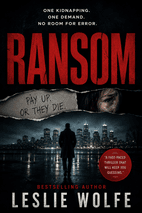
Underneath the thriller plot, Ransom wrestles with identity and the cost of running from your past. Olivia keeps rebuilding herself, but childhood trauma and guilt follow her. Everyone is deceiving someone, and love slips into obsession. The novel asks whether we can ever truly reinvent ourselves, and whether the truth matters when public judgment has already decided.
On this page you'll find each major theme tied to concrete moments, like Olivia choosing her name or Colton planting evidence. Plus recurring symbols: the Visine bottle that transfers guilt, the lavender scent that exposes a secret, the engagement ring that carries both love and loss, and white clothing that can be both innocence and disguise.
Major Themes in Ransom
Identity and reinvention
Olivia repeatedly rebuilds herself to escape her past, from destroying her phone and choosing the name Olivia R. Taylor to paying for a legally issued license under a new identity. Yet her old identity keeps breaking through in old passports, Texas memories, and recognition by people from previous lives, exposing how fragile her constructed self is.
- She flushes her old SIM, crushes her old phone, and types her new name, Olivia R. Taylor, telling herself Las Vegas is home.
- At the DMV she bribes her way to a legal new identity with a crypto flash drive, but at trial Detective Stanek finds her passport in the name Hattie Lou Walker.
- She imagines becoming Carolyn Turner in Miami, thinking 'Goodbye, Olivia Taylor. Hello, Carolyn Turner.'
Trauma and the haunting past
The story traces the lifelong aftermath of childhood abuse: Olivia's fear of her father, her guilt over leaving Billy Ray, and her inability to be physically intimate. The trial makes this trauma public when Dr. Leishman testifies about PTSD, and the prosecutor even twists it into a motive.
- On a shooting star Olivia silently wishes, 'Please don't let him hurt me again.'
- Dr. Leishman testifies that Olivia's flashbacks, nightmares, and intimacy struggles are symptoms of PTSD, not calculated manipulation.
- When Colton touches her thigh, the narrator is reminded of her father, feels sick, and asks to go home.
Deception, betrayal, and being framed
Everyone in the story is performing or deceiving: Olivia cons men by selling their secrets, Claire calls her a Judas, and Colton plants evidence against her. The central question becomes who is really spinning the story, and the betrayal cuts deepest from those closest to her.
- Claire calls Olivia a 'silly little Judas' during their deal, and Olivia feels the betrayal hurts in a way her past betrayals never did.
- Colton confesses he took the Visine bottle, went to Winston's room, punched him, and planted evidence to frame Olivia.
- Avery Sinclair testifies that Olivia, then 'Melanie Gates,' wrecked his family and caused his parents' divorce.
Love, obsession, and the cost of wanting
Olivia begins by treating Winston as a mark but falls genuinely in love, while Colton's love curdles into homicidal jealousy. The book shows how desire can be weaponized and how unrequited or impossible love leads to destruction.
- On the Colorado River Olivia thinks, 'This was my game, my design... something shifted inside me' as she looks at Winston.
- Colton says Winston's proposal 'ripped the heart out of my chest' and that he killed because he thought saving Olivia would make her love him.
- Winston tells Olivia she changed his life and makes him feel alive and free, then proposes with a diamond ring.
Public judgment versus truth
The narrative repeatedly contrasts what the media, police, and jury assume with what actually happened. Olivia is convicted in the press before she gets a trial, and even expert evidence is shown to be ambiguous, while the real killer is hidden in plain sight.
- The newspaper headline brands Olivia a 'heartless manipulator,' and Colton says she is already condemned in the court of public opinion.
- Detective Stanek treats Olivia as guilty from the start, saying 'girls like her are a dime a dozen in Vegas,' despite clean fingerprints.
- Judge Antunez admonishes the prosecutor for turning the courtroom into a circus, insisting the facts and evidence speak unaltered.
Symbols and Motifs
Visine bottle / eye drops
The eye-drop bottle is the story's murder weapon and the physical embodiment of being framed: whoever touches it can transfer guilt. It starts as Claire's instrument for getting Olivia's fingerprints and ends up as the planted evidence that almost convicts her.
- Claire asks Olivia to put Visine in her eyes, leaving Olivia's fingerprints on the bottle.
- Detective Stanek presents the Visine bottle found in Olivia's rental car with her fingerprints on it as the murder weapon.
- Colton confesses he took the Visine bottle from Claire's backyard and planted it with meth to frame Olivia.
Lavender scent
Lavender is a private detail that should have been known only to Winston and those close to him. When Colton mentions it in closing arguments, it exposes his lie and unravels his carefully built case.
- Olivia explains Winston used lavender as a scorpion-sting deterrent, and the hotel did not use lavender air fresheners.
- Olivia asks Colton how he knew the room smelled of lavender, implying he visited Winston before Claire did.
- Claire tells Olivia the lavender clue is truthful and shows her video of Colton taking the Visine bottle.
Engagement ring
The ring represents Olivia's love for Winston, her guilt over his death, and the future she lost. It keeps appearing at emotional turning points, from proposal photos to moments of grief, and even seems to resist being removed.
- Winston proposes with a heart-shaped diamond ring, and Olivia says yes.
- After Claire pays her to leave Winston, Olivia tries to pull off the engagement ring so he can have it back, but it is stuck on her swollen finger.
- At the end she touches the ring she has worn since her trial ended and whispers 'I'm so sorry, Winston.'
White clothing / white rose
White is used for romance and innocence, but it is also a costume that can be copied. Winston sends a white rose and Olivia dresses in white to match him, while Claire later wears the same white ensemble to impersonate Olivia on surveillance video.
- Winston sends Olivia a single white rose with a white silk ribbon, and she chooses a white summer dress and white sandals to match the tone he set.
- Olivia buys a white silk scarf and shades to disguise herself from the public during the trial.
- In surveillance stills Claire appears in a white dress, similar hairstyle, hat, and diamond ring, making the two women almost indistinguishable.