Ransom Quotes
by Leslie Wolfe
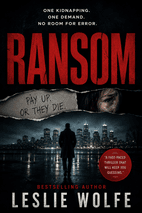
If you're looking for lines that stick with you long after the page turns, this collection delivers. These quotes mix tight, breathless narration with raw inner monologue and sharp dialogue, all pulled from moments of danger, desire, and hard-won survival. The voice moves between gritty action and quiet reflection, often in the same scene.
What makes Ransom so quotable is how personal the fear feels. The characters don't just face threats; they face memories, secrets, and their own worst impulses. The writing is vivid without getting fussy, and the best lines hit like a gut punch. Some are chilling, some are heartbreaking, and a few are surprisingly warm. Together they show a story where every choice matters and nothing comes easy.
Top Quotes from Ransom
“His vision had blurred into complete darkness, now and then streaked with flashes of light and bursts of color—each shade a different kind of singe, each worse than anything before it.”
An unnamed man is on the floor of his hotel suite, blinded and in searing pain after being attacked.
It turns visual impairment into a terrifying kaleidoscope of pain, making the reader feel the character's disorientation.
“The sound of slowly departing footsteps touched the vanishing edges of his consciousness. A door opened. A second later, it closed. Then nothing but darkness and silence.”
As he lies unconscious and dying on the floor, someone who was with him walks out and shuts the door.
This final chill reveals he was not alone, and whoever left abandoned him; the simple sentences land like the closing of a trap.
“I was just another traveler, but today, anonymity felt like a fragile mask.”
Walking through Sea-Tac, she tries to blend in while feeling watched.
It captures the delicate, uneasy act of hiding in plain sight and foreshadows the confrontation to come.
“All my prayers and my shooting stars were wasted on one single wish. On one person. My father. Please don’t let him hurt me again.”
She silently makes her wish while watching shooting stars with Colton.
It turns the romantic scene into something heartbreaking, exposing the secret trauma beneath her silence.
“Looking back on my life, I had nothing to be ashamed of. No matter what I’d done in those years, one thing was clear to me: I'd done what I had to. I'd survived. And, after a few years of bitter struggle, I'd learned the courage to thrive.”
The narrator wakes from a nightmare in the spa and reflects on the hard years after leaving a little brother behind.
It distills the narrator's hard-won self-forgiveness and resilience. The progression from surviving to thriving makes it an inspiring, memorable credo.
“Fear clouds people's minds, breeding more fear, sowing the seeds of bad decisions and missed opportunities and bitter failure.”
The narrator is being followed by a strange man through a mall and resolves not to let fear ruin her plans.
It articulates the self-coaching of someone living under threat, connecting fear directly to failure. Readers feel her desperate need to stay in control.
Themes Behind the Quotes
One of the strongest threads in these lines is the long shadow of the past. The narrator carries a harsh upbringing, a broken family, and a scar she can’t ignore. Memory shows up as smell, as fear, as a promise not kept. There’s a deep ache in wanting something safe and loving while knowing it may never happen. That tension between holding on and running away shapes a lot of the emotional weight.
Another major theme is survival. The characters are people who have learned to protect themselves, often by wearing masks, watching their backs, and staying one step ahead. But survival comes at a cost, and the quotes show loneliness, paranoia, and the hunger to be seen for who they really are. Fear can either freeze a person or sharpen their instincts. Throughout it all, the need to claim agency, to rise above circumstances, keeps surfacing.
Quotes by Chapter
1: Down
“As a wave of red-hot pain surged through his body, he clutched his chest, pulling at his shirt and fighting it off as if it were a monster, its tentacles snaking around him, tightening and squeezing the breath out of his lungs.”
He is overwhelmed by agony, trying to physically fight off the sensation crushing his chest.
The monster metaphor gives the pain a living, predatory form, dramatizing his helpless struggle.
“He rested his flaming face against the cold floor, unable to soothe the burning sensation spreading from his eyes into his chest, poisoning his blood with shards of fire.”
After crawling toward the door, he gives in and presses his face to the marble floor.
The stark contrast of cold floor and flaming face makes his suffering visceral, and the 'shards of fire' image is haunting.
2: Trouble
“Do you know what you did? Do you have any idea? I could kill you right now.”
— Avery
Avery Sinclair slams the narrator against the airport wall and shouts at her.
The raw rage in these lines makes the threat immediate and puts the narrator's quiet escape in jeopardy.
“The last thing I wanted were witnesses. Questions. Suspicion. Pictures of me posted all over the internet as the latest unwilling star of some sordid airport drama.”
After Avery attacks her, she is more afraid of witnesses and cameras than of the assault itself.
It reveals the narrator's fear of exposure and hints at secrets she is desperate to keep.
“The Seattle business had ended badly; I knew that. It was messy. And messy meant dangerous.”
As the aircraft pushes back from the gate, the narrator reflects on the trouble she left behind in Seattle.
The clipped, fatalistic rhythm makes the danger she is running from feel tangible.
3: Home
“I hated feeling so afraid. Vulnerable. Hunted, even if only by the monsters lurking in the corners of my overactive mind.”
— Olivia R. Taylor
She breathes with relief after two police officers walk past her in the Las Vegas airport.
It lays bare the psychological toll of her fugitive life, blending fear and self-awareness with haunting lyricism.
“That Rogue, the character in the movie, was a survivor. A fighter. Someone who couldn't get close enough to others to love but yearned for it nevertheless.”
— Olivia R. Taylor
She explains why the R in her name stands for Rogue, a character she identifies with.
It captures her fierce yet lonely self-image, making her chosen identity feel both defiant and heartbreaking.
“The R was always there so that I'd never forget the fateful night when I'd run away from my father's farm—a wretched, barren eighty acres of misery on the southern outskirts of Abilene.”
— Olivia R. Taylor
She reflects on the meaning of her middle initial and the past it keeps alive.
In one brutal sentence it reveals the origin of her trauma and the weight she carries into her new life.
“It smelled a little like Texas in the summer, and the familiar scent unfurled a sense of unease in my gut that chilled my blood.”
— Olivia R. Taylor
Stepping into the Las Vegas heat, she is suddenly reminded of her Texas childhood.
The visceral trigger shows how trauma can invade even a hopeful new beginning, darkening the moment with dread.
4: Harassed
“No one cared to look at my face anymore—not when they could plunge their eyes down my cleavage.”
The protagonist, after changing her appearance outside the hotel, notices how attention shifts from her face to her body.
It delivers a sharp, uncomfortable truth about being reduced to a physical object. The bluntness makes it linger long after reading.
“I walked slowly, taking it in, breathing in the zest for life emanating from everyone there, relishing the exhilarating energy that seemed to seep into my veins.”
She crosses the ARIA lobby and absorbs the vibrant, electric atmosphere of the casino.
The rhythm of the sentence mimics the sensory overload of Las Vegas. It captures a moment of exhilaration before everything unravels.
“They gawked at me, some rushing alongside to catch more of what was going to happen, spurred by the same morbid curiosity that makes drivers slow down at accident scenes and turn into complete rubbernecks: the perpetual quest for excitement.”
Paparazzi surround her in the hotel lobby while bystanders stop and stare.
It nails the ugly, voyeuristic pull of crowd spectacle. The comparison to rubbernecking is vivid and painfully recognizable.
“Outside the window, the entire city lay at my feet. It was all coming together perfectly. Just like I'd planned it.”
Alone in her suite, she looks over Las Vegas after escaping the chaos below.
The calm, controlled rhythm suggests a master plan clicking into place. It is both triumphant and quietly ominous.
5: Shadows
“I wasn’t going to crawl into his life as one of his many housemaids and try to get his attention by swaying my hips and fluttering my eyelashes whenever he walked by, right after scrubbing his toilets.”
The narrator is explaining why she won't approach Winston as a servant or employee.
The grotesque imagery and sarcasm make her ruthless determination visceral, while showing the contempt that drives her plan.
“No... I was going to offer him the ultimate experience, an irresistible package.”
After rejecting the humble routes into Winston's life, she reveals her chosen strategy.
It condenses her calculated self-commodification into a single chilling line.
“She could easily afford it. I couldn't. Not yet.”
She is maxing out credit cards to copy Claire Donovan's expensive style.
The staccato sentences reveal the painful gap between the glamorous image she buys and the life she actually has.
“And yet, thinking of him, even saying his name in my thoughts, brought a chill to my spine. The kind you get when you stare into the eyes of a predator in that split second right before it pounces. I couldn’t think of what that meant. I didn’t want to.”
After buying clothes meant to please Winston, she feels an unexplained dread.
The predator simile turns the hunt back on her, hinting that she may not be as in control as she believes.
6: Memories
“We were in the middle of a barren field, a couple of miles away from my father’s farm and from everything and everyone. Colton’s arm was wrapped around my shoulders, the summer night was sweltering, and yet I still shivered.”
She is stargazing with Colton in a remote field, close to him but still trembling.
The contrast between the sweltering night and her shiver reveals how deeply her fear of her father lives inside her.
“I froze, my chest swelling with happiness to hear him say those words, and my eyes stinging with tears, knowing it could never happen.”
Colton has just asked her to marry him.
It captures the painful collision of love and impossibility, joy and grief, in a single moment.
“But there was something I wasn’t telling him because I couldn't find the words. Something I took with me that night when I ran away, leaving Texas behind, and with it, my little brother, Billy Ray. Leaving Colton. Breaking his heart.”
She reflects on the secret she kept from Colton before she ran away.
The short, broken rhythm of the final sentences makes the magnitude of her loss and guilt devastating.
7: A Meal
“As it should be, bygones being bygones and all that. If only they'd stay bygones forever.”
The narrator tries to dismiss the painful past after ordering room service, then immediately wishes the past would stay buried.
The ironic twist in the second sentence acknowledges how hard it is to outrun memory, making it quietly haunting.
“Hello, Winston. It will be good to finally know you.”
While researching Winston in preparation for the charity gala, the narrator addresses him silently.
The deceptively friendly greeting carries a cool, determined edge and signals the start of a calculated plan.
“She was a very nice person. I'd never seen her drunk, or high, or doing . . . you know, inappropriate stuff. And believe me, as a Las Vegas hotel receptionist, I see a lot.”
— Jenny Ashbrook
Jenny Ashbrook gives testimony about the defendant's behavior while staying at the hotel.
The colloquial, defensive rhythm makes the witness feel instantly real, and her assurance deepens the mystery around the defendant.
8: Jack
“I stood there, only ten feet away, and stared at him just as he stared at me, our eyes locked in a silent battle of wills.”
The unknown man has followed her into the shopping center and she stops to confront him with a stare.
The standoff is charged and wordless, capturing the menace and power struggle between them. It is a moment of pure tension with no easy escape.