As an Amazon Associate, we earn from qualifying purchases.
⚠️ READER ADVISORY: This is a deep-dive summary designed for those who want the full story. Contains spoilers.
What is the book A Court of Splintered Harmony about?
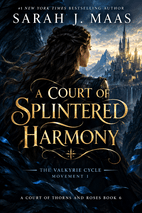
Sarah J. Maas's A Court of Splintered Harmony follows Azriel, Feyre, Nesta, and the Night Court as they navigate fragile alliances with the Continent's royalty, forbidden longing between Azriel and Elain, and a resurgent darkness, all while deciding whom to trust with waking power. A braided-perspective tale for fans of found family and slow-burning tension.
Feature
Insta.Page
Blinkist
Shortform
A Court of Splintered Harmony
✓
✕
✕
Summary Depth
Full Chapter-by-Chapter
15-min overview
Section-by-section guides
Audio Narration
✓
✓
✓
Full access to all 700+ summaries
✓
✓
✓
Visual Mindmaps
✓
✕
✕
AI Q&A
✓
✕
✕
Missing a book? Request it, usually live within 48h
✓
✕
✕
Quizzes
✓
✕
✕
PDF Downloads
✓
✕
✓
Send to Kindle
✓
✓
✓
Price
$89.99/yr
$146/yr (PRO)
$199/yr
*Competitor data last verified July 2026.
1 Page Summary
In the frozen northern wastes, Azriel pushes past the limits of his orders—and the limits of his own survival—drawn toward Rothorn Peak by whispers of a Made object stirring awake. Back in the Night Court, Feyre and Rhysand host the delegates of the Continent at Storr, where a queen demands submission and a prince's appetite betrays his realm's weakness, while Feyre's thoughts keep returning to Nyx, left behind for the sake of the game. Beneath the diplomacy, the Valkyrie and her circle fracture: Cassian and Nesta circle each other in silence and anger over the Mask, Azriel risks everything in stolen dawn hours with Elain, and Lucien's bond hangs unclaimed. The Night Court's alliances are threads pulled taut between courts that respect nothing and a deathless threat that grows bolder, and every character is quietly choosing what—and whom—they will not let go of, even as those choices cost them the trust of the people they love.
At the heart of the story is the question of who can be trusted with power that is waking from long sleep. Rhysand hands Nesta back the Trove and the Made blades, and she asks him to teach her how to kill with magic and how to ward what she loves, while Azriel sends his most trusted spies hunting for Koschei's black box and any Made objects surfacing in Montesere or Rask. The Night Court seeks to lock down the Summer Court's support, the Illyrian camps simmer, and the royalty of Vallahan maneuver against one another even as they sit at the same table. But the deepest conflict is closer to home, played out in kitchens before dawn, in a temple where an old darkness returns, and in bedrooms where mates and would-be lovers collide—and the consequences of those private choices may prove as costly as any treaty.
Told in Maas's signature braided perspectives—soldier, spy, sister, mate—A Court of Splintered Harmony is a story of uneasy alliances and sharper intimacies, where every kindness is a gamble and every secret is a weapon waiting to be drawn. Readers who love the Night Court's found family, slow-burning tension, and danger that arrives with a knock at the most sacred of doors will find this volume's first movement impossible to set down.
Chapter 1
Azriel pushes through the killing cold of the northern wastes, driven to complete his mission even as the frost leeches the warmth and safety he needs to survive. The cold bites deeper with every mile, but he does not turn back. He is under orders from Rhys and Feyre to observe only, not to engage, but the nearness of answers wears at his restraint. He makes the decision to press forward anyway, trading obedience for proximity to the truth.
The whisper of a spy has drawn him toward Rothorn Peak, where an object of power is said to be waking. The promise of it costs him any caution he might have kept, sending him recklessly fast through the storm. When he stops to survey the terrain for the soldiers and spies he expects, he finds windwolves instead, Montesere's worst, prowling the ground below.
He searches for the cave and catches a faint glimmer of fire within it, confirming that someone has already entered. He wants to get closer, but his shadows warn him that every path to the cave requires crossing the windwolves. To scout the peak, he sends a shadow upward, spending a deliberate push of power he is always careful never to fully reveal.
The shadow returns with word that the figures inside are speaking of their quarry: the object they sought is gone, and they will search elsewhere. It also reports their accents, varied and telling, Montesere, Vallahan, Rask, and Made, enemies who have united in a single purpose. Azriel presses for whether they already hold a Made object, and the shadow cannot say, which deepens his alarm.
He asks after Koschei, and the shadow reveals that the males seek an ancient gold-etched book and a six-sided box. When he presses for the box's purpose, the answer is worse than he feared: it contains Koschei's death, and the males plot to control him. He strains to hear the warning about betraying the Deathless One, but the shadow is silenced by invisible teeth. It has been found.
Azriel weighs a fight against the windwolves and knows he cannot win it, not with all his training and strength. The intelligence his family needs outweighs his pride, so he abandons the fight and weaves through the shadows back to Velaris. He arrives home dripping and shivering with more than cold, carrying what he learned.
💡 Try clicking the AI chat button to ask questions about this book!
Chapter 2
Feyre arrives at Storr with her court and immediately sets her resolve. She is High Lady of the Night Court, and she will not let this neutral meeting rattle her, even though every instinct pulls her back toward Velaris and Nyx, left behind for this. She steels herself to endure whatever the delegates from the Continent intend to throw at them.
Feyre and Rhys host the delegates, laying out rare fruit and wine. The gesture is deliberate: they mean to establish themselves as hosts, not supplicants, setting the terms of the encounter before a single demand is spoken. The table becomes a quiet assertion of standing before any negotiation begins.
The Queen of Vallahan will have none of it. She demands that the Night Court proceed with groveling, as though the meeting were a performance of submission owed to her. Feyre answers calmly, refusing the command without heat, denying the queen the spectacle she wants and keeping the court's dignity intact.
Then the Prince of Vallahan gives something away. His hunger for the rare fruit is plain, and in betraying it he exposes Vallahan's dependence on imports. The Night Court's table is not merely hospitality; it is a demonstration of what Vallahan lacks, and the delegates cannot unsee it.
The Grand Vizier of Montesere scorns the wine. Rhys counters with a veiled threat about Montesere's own wine, a quiet reminder that the Night Court knows exactly where Montesere's vulnerabilities are stored. The vizier's contempt curdles into caution, and the room takes his measure.
The Duke of Bernion warns that trade is not on the table. Rhys deflects, steering the conversation away from trade before the refusal can harden into the meeting's premise. The duke's warning loses its footing, and the agenda stays in Night Court hands.
The King of Vallahan overrules his queen and his son both, agreeing to hear Morrigan and the Night Court out. The shift is sudden and total: the faction that wanted groveling is silenced, and the meeting finally has room to proceed. Feyre feels the current turn and holds her ground.
The Mistress of the Unseen asks to bless the meeting. Rhys grants it, choosing to honor all gods rather than slight any of them. The Mistress performs her blessing, and Feyre watches with a cold, familiar recognition. The ritual is a hollow show, the same kind of fraud she once saw Ianthe practice, and she does not let herself be moved by it.
Then the Mistress turns her attention to Nyx. She demands to know whether the child has been dedicated to the Mother. Feyre and Rhys barely restrain their rage at the question, the mention of their son in this room a violation they can hardly swallow. The blessing curdles into a probe, and the cost of restraint climbs.
The Duke of Bernion intervenes, deflecting the Mistress's question about Nyx. Rhys answers that the Naming Day will bind him, a reply that gives nothing and promises nothing. The deflection holds, but the question has been asked, and the insult lingers.
The Queen of Vallahan needles them about invitations, hinting at a curse for excluding guests. The provocation lands, and Rhys's power stirs in response, the first crack in his control. Feyre feels the room tighten around them.
The Prince of Vallahan cuts off the squabbling and demands they get to business. The room settles, the petty skirmishing over, and the real negotiation begins. The prince's impatience does what diplomacy could not, clearing the air for the question that matters.
Rhys asks the delegates directly what their intentions are toward the human lands. The question is the point of the whole meeting, laid bare at last, and every delegate must answer it or reveal why they will not.
While Rhys handles the negotiation, Feyre works in secret. She extends her Made magic, probing the delegates for a Made object, searching for whatever the Continent's powers have brought into this room and hidden. The search is silent, and it changes the meeting from a contest of words into a hunt.
The Grand Vizier denies any interest in the human lands. Rhys presses him, demanding to know why Montesere refused the new treaty without explanation. The denial is too clean, the refusal too convenient, and Rhys does not let it stand unanswered. The vizier's position weakens under the pressure, and the delegates are left exposed.
Feyre reaches for her magic and lets it sweep, unseen, across the visiting rulers, searching for any trace of a Made object. She wants to know what weapon their enemies are hunting and whether one of these rulers already carries it. The magic passes over each of them and finds nothing, so she knows no one at the table bears a Made thing.
The Queen of Vallahan speaks first, and she is not interested in signing anything. She argues against Prythian dictating terms to the continent, wanting the treaty rejected outright, and she dismisses Prythian's authority on the grounds that it suffered no consequences in the war. The Duke of Bernion backs her, wanting the continent's lost Fae lands reclaimed, and he lets slip that their campaign would not stop at the old borders. It would also seize the lawless middle lands.
Rhys defends the new treaty, wanting to preserve human land rights, but the vizier counters that Fae must now buy back land that was once theirs. The grievance sits on the table between them, and the mood in the room hardens. Feyre challenges the rulers directly, wanting acknowledgment of human suffering, but the duke argues that humans leave land fallow and should yield it to those who will work it.
The Prince of Vallahan slaps the table, wanting humans declared recovered from their torment, and the force of his power rolls through the room. Feyre's fire magic stirs in answer, rising before she can check it. She forces it down and resumes her scan, still wanting to find the Made object. She sweeps the Mistress of the Unseen and finds only something that is not Made.
Mor confronts the Mistress, wanting to know how her disciples learned of human ignorance, and as Feyre's magic recoils from the contact, the Mistress's tattoos flicker. Rhys warns the Mistress that the old border forbidding Fae from human lands still stands, wanting to contain her, and he says nothing about the fact that the rule has already been broken. Mor presses the king and the duke directly, wanting a straight answer about whether they plan to invade human lands. She gets only the queen's sneer.
Feyre answers the queen's challenge, wanting to honor her promise to the Suriel, and declares that they seek to leave the world better than they found it. The queen demands to know what business Prythian has dictating continental affairs, wanting to undercut Feyre's standing at the table. Feyre reveals she was born human, and the admission lands in the silence.
She finishes her scan and tells Rhys privately that no one bears a Made object, wanting to confirm Azriel's matching report. Then she admits what the empty scan means: they should have brought Nesta.
The King of Vallahan reveals that they know the Night Court holds the Dread Trove, wanting to justify arming themselves, and the vizier admits they are bolstering their arsenals. Rhys offers to disarm the Trove, wanting to prevent an arms race, but the Mistress declares that Made things cannot be Unmade, and the queen refuses to trust their word. The Duke of Bernion asks whether Rhys would use the Trove to stop an invasion, wanting to expose the threat behind the offer. Rhys's silence confirms it.
Rhys asks what role Koschei plays in their plans, wanting to uncover the death-lord's influence. The duke admits that Montesere's spies watch him but denies any alliance.
The rulers stand and declare there will be no new treaty, wanting to end the meeting on their terms, and the prince boasts as they go that lost Made weapons are stirring in the world. The Duke of Bernion lingers behind, wanting to warn them. He confesses that he lied to get the others to come, and that he will pay for it at home. Rhys asks when the invasion begins, wanting to prepare, and the duke refuses to say before the meeting ends.
The duke reveals that the other territories have no Made object, a strategic advantage that confirms war is coming. Rhys closes his eyes, and Feyre reaches for his cold hand as the weight of conflict settles over them. The duke promises to make the conflict fair for humans and departs slowly, leaving them alone with the aftermath. Mor sinks into her seat, head in her hands, overwhelmed. Rhys calls for Azriel and gets no response. Mor discovers he is gone, a breach of trust that alarms them all. Rhys demands to know where he went, anger rising, and Mor points to the empty Vallahan chairs: Azriel has gone after the Vallahan royals without permission.
Chapter 3
The Crag Above Thrudheim
Azriel perches in a mountain crag above Thrudheim, keeping himself hidden while his shadows slip down to eavesdrop on the Vallahan royals. He wants to observe them unseen, to gather whatever intelligence their private talk might yield, though the risk is real: the wards of Thrudheim lie close, and detection would mean exposure. His shadows carry back the conversation, and what he hears reshapes his understanding of the alliance.
The Queen of Vallahan wants to dismiss the Storr meeting as useless, and her contempt reveals to Azriel that Vallahan attended only under obligation. Morrigan's influence, in the queen's view, is something resented rather than respected. The King of Vallahan pushes back, wanting to honor his promise to Morrigan, defending her respectability against his wife's scorn. The exchange deepens Azriel's picture of Vallahan's internal divisions, a royal marriage split over the same alliance Azriel's court depends on.
The Prince of Vallahan wants to belittle Morrigan and assert his own judgment. He spits on the stones as he speaks, and the gesture lays bare his hostility and his recklessness for Azriel to see. The Queen wants her son to depart the next day to seek their Made weapon, and this gives Azriel a concrete lead, a fixed point in time he can plan around. He begins turning over how to track the prince once he leaves.
The Prince wants to complain about the Rothorn dead end and about their enemies' awareness of the hunt, and his grumbling confirms to Azriel that Vallahan is hunting a Made weapon alongside Montesere and Rask. The Queen wants to justify the Storr gathering as the king's choice, and in doing so she reveals that their enemies confirmed possessing the Trove. That confirmation hardens Azriel's resolve; the threat is no longer speculation but a fact spoken aloud by those who know it.
Azriel wants to exploit the alliance's fragility. Listening to the royals snipe at one another, he decides he can turn Vallahan, Montesere, and Rask against one another by revealing the prince's rogue hunt, letting their own secrecy do the work of dividing them. He also wants to identify weaknesses in Vallahan's rule, and he notes the guards' contempt for the prince, marking it as a string to pull when the time comes. He wants to avoid overstaying his welcome in the crag, so he vanishes, leaving his surveillance post with new plans but no further direct intelligence.
The Study at the House of Wind
Back among his own, Cassian wants to lighten the tense study gathering, joking about the meeting's success while the others remain somber about the coming war. Mor wants the others to grasp the severity of the threat, warning that the next conflict will be worse than Hybern or the Sundering War. Amren wants to challenge Cassian's confidence, demanding to know what army they would use and at what cost.
Feyre wants to frame the enemies' fear as leverage, arguing that fear of the Trove will keep the invasion limited to their shores. Nesta wants to know her standing with the Trove, asking whether she is even allowed near it, and her question exposes the room's unresolved anger over Bryce Quinlan. Rhys wants to hold Nesta accountable, stating plainly that their enemies now have cause to seize the Trove by force because of her actions.
Cassian wants to redirect the argument to strategy, asking what their move will be if the continent's forces obtain their own power. Feyre wants to preempt their enemies, deciding they must find what is being sought and beat them to it, tacitly assigning Azriel to uncover it. Amren wants to caution against chasing every Made object, warning that some should stay forgotten and that Koschei's stirring may be the cause.
Azriel wants to correct the speculation. He reports what he learned in the crag: the Prince of Vallahan departs tomorrow to hunt again, and the threat is real. Rhys wants to forbid Azriel from following the prince, warning that the prince anticipates pursuit and that Montesere's spies and windwolves make it too dangerous. Azriel wants to defy the order and track the prince anyway, insisting they need to know what Vallahan seeks, and he offers to send Nuala and Cerridwen to the other territories in his stead. Rhys wants to keep Azriel from spreading himself too thin, warning that even with intelligence they may not withstand a united force of the three territories and the unaffiliated Fae.
Feyre turns Rhys's reasoning over in her mind and finds herself leaning toward agreeing with him. Whatever else is true, the logic of his position holds, and she cannot dismiss it. The admission settles something in her, moving her closer to his side of the argument.
Mor confirms that no Rask emissaries ever came. Azriel, hearing this, reflects that Feyre and Rhys insisted on pursuing peace despite his own objections. The absence of the emissaries sits alongside that memory, a quiet vindication of a course Azriel had argued against.
Then Mor reveals something more unsettling: she senses that Koschei is pulling the strings of the territories, though she admits she lacks proof. The claim hangs in the room without evidence to anchor it, but it reshapes how everyone present understands the threat. What had looked like separate ambitions now appears as a single hand at work.
Feyre draws the conclusion. Koschei wants them distracted by war so that he can break the spell containing him. The territories, the emissaries, the maneuvering all fit that design, and the stakes sharpen: every hour spent watching the borders is an hour Koschei spends working toward his freedom.
Amren reasons that Koschei delayed until he had what he required and has now moved his pieces into place. The delay was never hesitation; it was preparation, and the pieces are already positioned. Her words strip away any comfort that time remains on their side.
Feyre proposes a different approach. Rather than rallying an army, they should prove the three territories' alliance with Koschei to the other powers and build a coalition. The plan turns the truth itself into the weapon, using exposure instead of force. It is a gamble that words and evidence can do what swords cannot.
Amren warns that Koschei must not be allowed to free himself, describing the horrors of a mad death-lord. The warning lands with weight, making clear that failure is not measured in lost battles but in something far worse. No one in the room needs the details repeated.
Cassian synthesizes the plan into its parts: stop the territories from getting the Made item, expose their alliance, and build a coalition to deter invasion. The scattered ideas become a strategy with three clear objectives. Having shaped it, he seems steadier, as though the shape of the work makes it bearable.
Feyre decides to plant eyes and ears in the three territories and tasks Azriel with finding the Made item, its seekers, and proof of the alliance. The burden of the most dangerous work falls to the spymaster. Azriel takes the charge without flinching, though the weight of it is plain.
Mor proposes planting Nuala and Cerridwen in Rask and Montesere and identifies Vallahan as the most likely to slip up. The half-wraith twins go where shadows can work, and Vallahan becomes the weak point in the enemy's secrecy. Mor speaks with the confidence of someone who knows the ground.
Feyre suggests enticing the Duke of Bernion to reveal Montesere's plans, but Mor explains that his loyalty is secured by his sister's marriage to the king's son. The obvious lever is already held by the other side, and the easy path closes. Feyre accepts the correction without argument.
Nesta challenges whether the other territories would truly stand with them, demanding certainty about who is worth the risk. Her question cuts to the heart of the coalition plan: without knowing who will actually stand, the risk is borne on faith. The room quiets, because no one can answer her fully.
Amren warns that they have a short window before the enemies find the Made item, and Feyre notes that winter and the Helbronn passes buy them time. The season itself becomes a shield, narrowing the window in their favor. The reprieve is temporary, but it is real.
Amren forbids Azriel from entering Vallahan, and Mor declares she will return to Vallahan after Nyx's Naming Day to gather proof. The assignment shifts from the shadows to a direct presence, and Mor claims it for herself. The declaration lands like a challenge no one immediately answers.
Feyre and Rhys back Mor's mission over Azriel's and Cassian's objections, and Azriel accepts it, ashamed of his feelings. The decision is made, and Azriel's surrender carries a private sting he does not voice. He bows to the ruling even as something in him recoils.
Rhys decides the Trove stays hidden with him to avoid being caught moving it, and Feyre decides the Made blades stay hidden and unused in Rhys's possession. Both treasures remain untouched, protected by stillness rather than by guards. The choice trades readiness for safety, and both of them know it.
Amren urges Rhys and Feyre to court Fomoria, but Feyre refuses in favor of uniting Prythian first, and the argument ends with Amren deferring to her High Lady. The disagreement closes with rank settling what debate could not. Amren yields, though her displeasure lingers.
Amren orders Azriel to send his wraiths to Montesere and Rask and tells Mor to delay her departure, then the meeting breaks with plans to proceed after the Naming Day. The pieces are set, the orders given, and everyone disperses to wait for the celebration to pass before the work begins.
Chapter 5
Cassian follows Nesta into the entry hall of the House of Wind, driven by the need to bridge the rift that has opened between them. He wants to ask her to stay for lunch, to find some common ground, but the words die before he can speak them. What rises instead is his anger and distrust over the Mask, the Made object she has been using, and the accusation lodges in his throat, unspoken but poisoning the air between them. He cannot voice it, and so he says nothing at all.
Nesta rebuffs his concern with cold precision. She wants distance, not his hovering, not the weight of the Court's judgment pressing down on her every move. Her dismissal is sharp enough to cut, and it costs Cassian the chance to say what he truly feels. The moment for honesty passes, and what remains is the wreckage of a conversation that never quite began.
He tells her plainly that he does not know what to do with her. It is an admission of helplessness, a bid to reclaim the trust that has eroded between them, but the words land like a blade. Nesta hears only rejection, the confirmation that she is a problem to be solved rather than a person to be understood. The wound hardens her resolve to leave, to put as much distance between herself and this place as she can.
She corrects him with biting clarity: he is her mate, not her keeper. It is a demand for autonomy, a refusal to be managed or monitored, but her retort only escalates the fight. What might have been a plea for respect becomes another weapon in a battle neither of them knows how to end.
Cassian accuses her of treating herself as a victim of the bond, of refusing to own her part in what has happened between them. He wants her to see herself clearly, to stop hiding behind her anger, but the accusation strikes a nerve. Silver fire flares at her fingertips, a physical manifestation of the fury that has been building since she arrived in this city. The flames are a warning, and Cassian does not heed it.
Nesta fires back that the Court are idiots, that they cling to their grudge like a child to a toy. She wants them to move past blame, to stop measuring her against a standard she never agreed to meet, but her venom ends the conversation. She walks out, leaving Cassian standing in the entry hall with nothing but the echo of her anger.
He lets her go. He does not call after her, does not chase her down the corridor or winnow after her. He wants to sort out his thoughts first, to find the right words before he tries again, but the decision leaves the bond fraying between them. Nesta feels it too, the hollow ache of distance, the silence where connection used to be.
The Cliffs
Nesta winnows alone to the coastal cliffs, wanting to test the new skill she has been honing in secret. The effort costs her more than she expects. A nosebleed blooms, and deep fatigue settles into her bones, but she does not stop. She resolves to jump to the Prison, to search for other Made objects tied to Death, to find something that might give her purpose or power or both. She keeps the plan to herself, unwilling to face the Court's questions or their pity, unwilling to let them talk her out of it.
She winnows across the sea, aiming for the Prison's base, but she miscalculates. The magic falters, and she plunges into the freezing ocean. The cold is a shock, the waves thrashing around her, and she fights to stay calm, to surface, to survive. But the sea is relentless, and her depleted magic drags her back under. She glimpses something on the ocean floor, two joined shining objects that call to her, and the vision costs her the last of her breath. Her mouth opens, and she drowns.
The Rescue
Rhysand winnows her out of the sea. He pulls her from the water and lands on Mor's carpet, soaked and stunned, his power spent on the rescue. Nesta vomits seawater onto the carpet, her body expelling what she swallowed, and the humiliation of it deepens the debt she now owes him. She is alive, but the cost is another chain binding her to the Court she wants to escape.
The House
Azriel watches Mor pack for Vallahan, wanting to go in her place. He offers, but she refuses, and his offer dies in the space between them. He is left to bury his centuries-old hopes, to watch her leave without him, to accept that some distances cannot be crossed.
Azriel and Cassian leave for the Windhaven meeting with Devlon, wanting to escape the house and its tensions. Azriel's shadows note that Cassian is glad for any distraction from his mate, from the fight that ended with Nesta walking out and the bond fraying between them.
The Naming Day
Feyre surveys Nyx's Naming Day gifts, wanting the celebration to be about joy, about her son, about the family they have built. But the political tribute from the other courts leaves her wary, and her unresolved fight with Amren keeps her on edge. The gifts are not just gifts. They are messages, obligations, reminders that even a Naming Day cannot escape the weight of politics and the fractures within her own circle.
Feyre tells Elain plainly what they are up against: Rask, Montesere, and Vallahan are all hunting a Made item, and the race is to find it first. She admits the truth she has been carrying since the failed scrying, that Nesta's attempt left them with no lead at all. Elain, wanting to be useful, offers her Seer abilities to locate the object. Feyre declines. The refusal costs Elain the chance to contribute and leaves the search exactly where it was, unresolved and stalled.
Feyre catches a rare laugh from Elain and feels the pull to reconnect with her sister, to sit down and have the heart-to-heart they have been avoiding. But duty presses on her, and she sets the moment aside to attend to her responsibilities, carrying the guilt of neglected sisterly attention with her as she goes. She asks Elain about the party preparations instead, wanting reassurance that everything is in hand. Elain reports that the temple and the luncheon are arranged, and the answer eases the weight on Feyre's shoulders. Then Elain adds that she may be late to dinner because she wants to mulch the garden. The busyness soothes Feyre's worry even as it signals Elain's avoidance, her sister choosing soil and solitude over the family table.
Feyre winnows to the city for a meeting with the Minister of the Palace of Thread and Jewels, wanting the repairs approved and sacrificing her own time and rest to see it done. She returns late to find Rhys propping up Nyx, the baby stubbornly awake. She wants him asleep and teases Rhys for indulging him rather than enforcing bedtime. Taking Nyx to the nursery to nurse him, she wants him settled, and Rhys follows them, declaring his love for her and for their son. Feyre lays the sleeping Nyx in the bare cradle, wanting him safe, whispers her love over him, and she and Rhys slip quietly out.
Back in their room, Rhys growls at Feyre not to button her nightgown, wanting intimacy, but discovers she is reading his paperwork instead. She is reviewing spending proposals for the colonnade repairs, wanting them approved by morning, and she resists his advances. Rhys undresses and reveals he wore no underwear, wanting to shock and seduce her. Feyre is flustered but holds her ground. He pulls the blankets off her, wanting to escalate, and finds her bare legs and the scent of her arousal betraying her. Feyre unties her nightgown and lets it fall, deciding to give in, and Rhys kneels before her in surrender to his mate. He pleasures her and then carries her to the bed, wanting to savor her while she urges him to hurry. He pauses to make her say the words, that she is his and he is hers, wanting her vow. Then he warns her that he will not let anything jeopardize their life together before he thrusts in.
You've reached the end of the free chapters
Next chapter: “Chapter 6” is locked
Keep reading A Court of Splintered Harmony — and unlock all 700+ book summaries with audio, mindmaps and AI Q&A.
$0.00 due today · 7 days free, then $89.99/year ($7.49/mo) · Cancel anytime before day 7
plus sales tax where applicable
More ways to explore A Court of Splintered Harmony
Sarah J. Maas is an American fantasy author best known for the Throne of Glass series and the A Court of Thorns and Roses series, which have sold millions of copies worldwide and topped bestseller lists. Her work helped popularize the romantasy genre, blending epic fantasy with romance and featuring strong heroines and intricate world-building. A New York Times bestselling author, she has also written the Crescent City series and began her career posting early drafts of her fiction online before achieving mainstream publication.
Frequently Asked Questions about A Court of Splintered Harmony
What is A Court of Splintered Harmony about?
The story follows the Night Court as it tries to hold a fragile peace together, with Feyre and Rhysand hosting delegates from the Continent in the hope of turning years of failed diplomacy into real alliances. Beyond Velaris, Azriel hunts for Made objects and traces of Koschei's growing reach, while the Inner Circle fractures from within over forbidden longing, an unwanted mating bond, and the weight of the Made Trove. Nesta wrestles with powers she barely controls, Cassian tries to bridge a widening rift with her, and every character is forced to decide how much they will risk for the people they love. As old terrors return to the city, the family must face threats that are as much personal as they are magical.
Who is the author of A Court of Splintered Harmony?
Sarah J. Maas is the #1 New York Times bestselling author behind the Throne of Glass and A Court of Thorns and Roses series, known for blending high fantasy, romance, and political intrigue. Her work is celebrated for lush world-building and emotionally charged character arcs, and she has become one of the defining voices in modern romantasy.
Is A Court of Splintered Harmony worth reading?
It is an easy recommendation for anyone already invested in this world, since it widens the spotlight to fan-favorite characters and lets them carry real emotional weight rather than sitting on the sidelines. The political maneuvering keeps the plot tense while the quieter, more intimate conflicts give every scene a personal cost, and the pacing rarely lets up. Readers who love romance tangled with high stakes and morally complicated choices will find plenty to hold onto.
What are the main themes in A Court of Splintered Harmony?
Trust and forgiveness sit at the heart of the story, as characters who have wounded each other must decide whether reconciliation is possible and what it will cost. Love is constantly measured against duty, loyalty, and fate, especially where mating bonds and forbidden desire collide with honor. Power carries a price throughout, whether it is the Made Trove in Nesta's hands or the political leverage wielded at a negotiating table. Finally, fear and trauma are treated as forces to be confronted rather than avoided, with courage framed as the choice to stand firm when everything inside you wants to run.
📚 Explore Our Book Summary Library
Discover more insightful book summaries from our collection