A Court of Splintered Harmony Quotes
by Sarah J. Maas
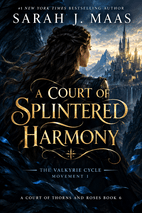
On this page you'll find lines from A Court of Splintered Harmony that run the gamut from sharp dialogue to quiet narration and raw inner monologue. Some are dramatic, some are funny, and a few land like a punch because they say the thing everyone else is thinking.
What makes these quotes stick is how they balance high fantasy stakes with very human feelings: loyalty, resentment, longing, and the mess of family and mate bonds. You don't need to have every plot detail in mind to appreciate a line that captures a character at their breaking point or their most honest.
Top Quotes from A Court of Splintered Harmony
“We have come to the ancient truce-lands of our kind to hear your groveling.”
— Queen of Vallahan
The Queen of Vallahan opens the meeting by insulting Feyre and Rhysand.
It is a sharp, contemptuous line that immediately establishes the queen as a hostile and arrogant adversary.
“This is the last time. You want to fuck each other, go do it somewhere other than my house.”
— Rhys
Rhys catches Azriel and Elain together in the river house kitchen and issues an icy command.
The line exposes the collision between Azriel’s desire and Rhys’s loyalty to Lucien, making the High Lord’s authority feel personal and absolute.
“Lucien isn't entitled to any explanation from Elain. She didn't choose him—doesn't want to be mated to him. It’s a fluke of nature.”
— Azriel
Azriel pushes back against Rhys’s demand that he consider Lucien, insisting Elain owes her mate nothing.
It captures Azriel’s defiance and self-justifying denial, while also voicing Elain’s lack of choice in the bond.
“I used to be proud to call you brother.”
— Rhys
As Rhys leaves the kitchen, he delivers a final cut that reframes their conflict from politics to brotherhood.
It lands as the most intimate wound in the scene, turning disappointment into a quiet severing of family.
“Was it possible for mates to . . . un-mate? For that bond to fracture deeply enough that there was no repairing it?”
— Nesta
Nesta reflects on the weeks of distance and silence between her and Cassian and wonders whether their mating bond can break.
It exposes the raw fear beneath her sharp exterior. The question makes the mating bond feel painfully fragile rather than fated.
“You cannot have too much of one and not enough of the other. Dark is needed to appreciate the light, and light is needed to appreciate the dark.”
— Eris
Eris invokes the Autumn Equinox to suggest that Koschei may be part of a necessary rebalancing of light and dark.
It frames the conflict in morally ambiguous terms and gives the equinox symbolism a haunting weight.
“When Nesta gets tired of you, mate or no, my offer still stands.”
— Eris
After Cassian asks if Eris is jealous, Eris says his offer for Nesta still stands.
It is a sharp, possessive threat that exposes the lingering tension over Nesta and Eris’s old offer.
Themes Behind the Quotes
The quotes keep circling around loyalty and betrayal, especially within families and friend groups where love and obligation are never simple. Power is another constant: who holds it, who wants it, and how far people will go to protect the ones they care about. Several lines also explore the weight of secrets and the fear of being seen too clearly.
Another major thread is the bond between mates, partners, and chosen family, with all its tenderness, tension, and uncertainty. The collection touches on recovery from pain, the possibility of change, and the question of whether affection can survive pride, politics, and old wounds. Hope and dread sit side by side throughout, which is part of why the emotional moments hit so hard.
Quotes by Chapter
Chapter 1
“If he lost his wings, fine. He had other ways of moving through the world.”
— Azriel
As Azriel flies through a violent storm, he considers the risk to his wings.
It reveals his startling indifference to losing a part of himself and his quiet resourcefulness. The line makes his self-sacrifice feel both casual and chilling.
“He'd made sure no one had ever seen the full, hideous scope of those shadows, and he wasn't about to start today.”
Azriel cautiously sends a shadow to scout the cave while hiding the true extent of his power.
It hints at deep shame and secrecy behind his shadows, making his restraint feel as important as his strength.
“He could not win this fight. Not even with all his training, his strength. He might have tried—had he not now possessed information his family badly needed.”
— Azriel
Azriel realizes the windwolves have found him and chooses retreat over a doomed fight.
It shows his discipline and love for his family overriding pride, even when he is cornered.
“But Az was already gone, weaving through shadows, dripping water and shivering with more than cold, all the way back to Velaris.”
Azriel escapes the windwolves and travels through shadows back to Velaris.
Chapter 2
“I hated Storr. I didn't know how it was possible to hate a place I'd only just seen for the first time, but from the moment I'd winnowed onto this wave-blasted shard of granite in the middle of the Northern Sea, its freezing emptiness had sunk into my very bones.”
— Feyre
Feyre arrives at the bleak island of Storr for a tense negotiation.
The visceral imagery instantly establishes the hostile setting and Feyre's dread, setting the tone for the meeting.
“And I hated—hated, deep down in my bones —that the assortment of merciless faces gathered here even knew that my glorious, lovely son existed. Hated that if they wanted me to yield to their desires, all they had to do was get their hands on him.”
— Feyre
Feyre sits among dangerous delegates and thinks of her infant son, Nyx.
It exposes the raw maternal fear beneath her regal composure and makes the political stakes achingly personal.
“Have you dedicated your child to the service of your Mother yet?”
— Mistress of the Unseen
During the blessing, the Mistress of the Unseen turns the talk to Feyre's child.
The question feels less like spiritual courtesy than a veiled threat, chilling the room and sharpening Feyre's protective rage.
Chapter 3
“I have known Morrigan longer than you have been alive. She had my respect well before she came here. Her behavior in these halls only deepened my sentiments.”
— King of Vallahan
On the bridge into Thrudheim, the King of Vallahan rebukes his son for disparaging Morrigan.
It reveals the king’s enduring respect for Morrigan and sets him apart from his contemptuous family. The line sharpens the generational conflict inside Vallahan’s royal house.
“She's as foolish and softhearted as her High Lady.”
— Queen of Vallahan
As the royal family walks toward Thrudheim’s gates, the Queen of Vallahan insults Morrigan and Feyre.
It shows the queen’s contempt for softness and her political hostility toward Morrigan and Feyre. The insult is sharp enough to echo beyond the bridge.
“Interesting. A prince who did not command the hearts of his soldiers. Another string to pull.”
— Azriel
After a guard mutters an insult about the prince, Azriel notes a weakness he can exploit.
It reveals Azriel’s instinct to turn every weakness into a weapon. The line makes the prince’s unpopularity feel like a crack in Vallahan’s armor.
“He hadn't drawn the blade since. Could barely stand to look at it whenever he tethered it to his side, this dagger that found him so lacking it fled his hand at the first chance.”
Azriel reflects on Truth-Teller flying to Bryce Quinlan and his inability to wield it since.
It turns a magical blade into a symbol of rejection and self-loathing. The passage captures how deeply Bryce’s theft wounded Azriel.
Chapter 5
“You don't do anything with me. You are my mate, not my keeper. Though Rhys seems to think otherwise.”
— Nesta
After Cassian follows Nesta out of the study and admits he doesn't know what to do with her, she refuses to be managed.
It asserts her autonomy and reframes the mate bond as equality rather than control. The line captures the central tension between them.
“She'd gained the upper hand, and yet it had killed something in her to walk away and not have him call after her again.”
After Nesta leaves Cassian in the hall, she feels hollow despite having won their exchange.
It reveals the emotional cost beneath her sharp words and armor. The quiet ache makes her hardness feel vulnerable rather than simply cold.
“He'd tended that secret fire for five hundred years. Now it was ash in his scarred hands.”
While Mor packs for Vallahan, Azriel silently accepts that his centuries-long hope for her has ended.
The metaphor distills the grief of unrequited love into a single devastating image. It is both intimate and final.
“I don’t like that my son's Naming Day celebration is being treated more for political gain than actual enjoyment of his existence.”
— Feyre
Feyre surveys the lavish gifts arriving for Nyx's Naming Day and complains to Elain about their political motives.
It shows her fierce maternal protectiveness and her discomfort with court politics intruding on family joy. The line humanizes the High Lady.
Chapter 6
“Do what you want, Azriel. The world’s already burning.”
— Rhys
After Azriel taunts him, Rhys relinquishes the argument with weary bitterness.
The line blends ruling exhaustion with personal disillusionment, making the world’s larger crises feel like an excuse for abandoning this one.
Chapter 7
“He doubted that true contentment would find him as easily. And wondered if he'd ever really care enough to wonder why.”
After a sleepless night and memories of drawing his seven Siphons, Azriel finally closes his eyes.
It captures his quiet loneliness and the sense that he has stopped expecting joy. The line lingers because it is both resigned and self-aware.
“You planned to just drop to the bottom of the ocean and wait for us to realize you'd drowned?”
— Rhys
After Nesta nearly drowns trying to winnow to the Prison, Rhys confronts her in his study.
The line is sharp, incredulous, and protective all at once. It distills the danger of Nesta's reckless attempt into one damning question.
“The Symphonia had never captured a single spoken word before. But it was as if it somehow knew that those words, in Cassian's voice, made the most beautiful music she'd ever heard.”
Nesta remembers how the Symphonia captured Cassian's whispered "I love you" and replays it in an empty alley.
It turns a magical artifact into a witness of love and loss. The line is memorable because it makes Cassian's voice more precious than any symphony.
Chapter 8
“Cassian hated to admit it: The Autumn Court was beautiful. Beyond beautiful. Like straying into a dream. Reds and golds and oranges all around, trees like temple pillars rising toward a crushingly blue sky, each step cushioned by velvet moss, every breath crisp and tasting of pine.”
Cassian arrives in the Autumn Court for a meeting with Eris and privately admires the scenery despite himself.
The lush, almost dreamlike imagery sharply contrasts with Cassian’s tense errand and his dislike of Eris.
“Alive and not. Dead and not, his shadows had whispered. Like this thing had existed between the two states, and now, its purpose fulfilled, it had entirely ceased to exist.”
Azriel watches the strange messenger dissolve into sea-foam after it delivers news of Hybern.
It gives eerie closure to the creature’s uncanny existence and leaves Azriel visibly shaken.
Chapter 9
“Like death loomed all around, waiting with frozen hands to snatch away any kernel of warmth and life.”
Feyre reflects on the bitter autumn in the human lands and the lethal winter she once feared.
The personification of death and cold captures the fragility and dread of the season.
“But your father was so desperate to help you and your sisters that he overcame his fear of the death-lord. He loved you that much.”
— Lucien
Lucien tells Feyre how her father overcame his fear of Koschei to help her and her sisters.
It honors her father's late courage while revealing the ache of Lucien's own fatherlessness.