A Court of Splintered Harmony Themes
by Sarah J. Maas
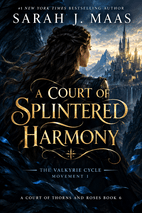
Underneath the plot, the novel is really wrestling with how power works when truth is hidden, how loyalty can tip into reckless self-sacrifice, and how trust survives betrayal and fear. It keeps asking whether love and mating bonds can coexist with choice, and how family can be both a shelter and a vulnerability.
On this page you’ll find theme breakdowns anchored in concrete moments: Azriel’s shadows and Feyre’s secret magic, Nesta’s Mask and Azriel’s involvement with Elain, Bryaxis turning fear into a weapon, and Nyx’s naming and the threats around him. You’ll also find the recurring symbols: Truth-Teller, Clotho’s silver ribbon, the Prison and its bone gates, and the wall.
Major Themes in A Court of Splintered Harmony
Secrecy, surveillance, and withheld truth
The book repeatedly shows power operating through hidden observation and information kept from allies, from Azriel's shadows to Feyre's secret magical probing. Withholding truth strains trust, as characters conceal missions, spy on one another, and delay revealing dangerous news.
- Azriel sends a shadow to eavesdrop on the cloaked males at Rothorn Peak and reminds himself he has never let anyone see the full, hideous scope of his shadows.
- Feyre secretly uses her Made powers to check each delegate at Storr for a Made object, and the Queen of Vallahan later reveals she knew the narrator was magically searching them.
- Nesta lies to Azriel that she is authorized to have Gwyn record everything that happened with Bryce Quinlan in the caves.
- Azriel decides not to tell Rhys or Feyre about Hybern's messenger and possible alliance until after Nyx's Naming Day.
Duty versus reckless self-sacrifice
Characters repeatedly defy orders or take dangerous solitary action to protect loved ones, blurring the line between duty and self-destruction. The pattern runs through Azriel's disobedience, Nesta's lone attempts to reach the Prison, and the Inner Circle's willingness to risk themselves for family.
- Despite Rhys and Feyre's order to observe but not engage, Azriel races to Rothorn Peak and shrugs off the risk of losing his wings or life.
- Nesta secretly winnows to the coast and attempts to reach the Prison alone rather than ask the Night Court for help; she nearly drowns and is rescued by Rhysand.
- Cassian flies to a meeting in the Autumn Court concealing how exhausted the brutal headwinds left him and holds his wings upright through pure pride.
- Feyre vows to kill Bryaxis after the attack on Nyx and resolves that the attack may have been a gift because she now knows what she must do.
Trust, betrayal, and the difficulty of forgiveness
The consequences of Nesta giving the Mask to Bryce and of Azriel's involvement with Elain test alliances, mate bonds, and family loyalty. Forgiveness in the book is partial, conditional, and often political rather than complete.
- Mor warns that if Vallahan and Montesere learn Nesta gave the Mask to Bryce Quinlan, they would march on the Night Court immediately.
- Cassian admits he cannot yet trust Nesta after she gave Bryce the Mask, and their hallway argument ends with her walking away.
- Rhys tells Azriel he used to be proud to call him brother, and Azriel is left feeling more alone than ever after the confrontation in the kitchens.
- Nesta tells Azriel she does not believe Rhys will ever truly forgive her for handing the Mask to Bryce Quinlan.
Fear, trauma, and confronting nightmares
Bryaxis turns fear into a weapon, forcing characters to face visions of their worst losses and guilt. The aftermath explores trauma through nightmares, panic, grief, and the slow work of restraint and recovery.
- Bryaxis's darkness swallows Azriel's Siphons' light and makes him see Rhys, Cassian, Feyre, and Nyx dead by his hand, with Mor brutalized and a note reading YOU DID THIS.
- Nesta breaks free of Bryaxis's illusions using the Mind-Stilling after seeing her father's death, her mother's wasting, Feyre bleeding out, Elain stolen, and Cassian's loathing.
- Gwyn descends past Bryaxis's pit, recalls Hybern and the Blood Rite, uses her Invoking Stone and Mind-Stilling, and believes she hears the darkness laughing.
- Amren shudders against a pew with her hands over her eyes, whispering that she survived it and calling 'Monster, monster, monster.'
Mating bonds, choice, and autonomy
The mating bond is treated as a powerful force that can create desire, obligation, and possessiveness, but characters insist that choice matters. Conflicts over Elain, Lucien, and Azriel dramatize the tension between bond and autonomy.
- Azriel insists Elain did not choose Lucien and can do as she pleases, while Rhys invokes the agony Lucien would feel and the political alliance with him.
- Elain says she was given to Lucien like some piece of property, without any will or desire of her own.
- Lucien orders Azriel out of Elain's room and calls her his mate, while Azriel argues she is not Lucien's property and can choose who she shares her body with.
- Rhys warns Azriel that Lucien has the right to invoke a Blood Duel if Azriel pursues Elain.
Parenthood, family, and vulnerability amid politics
Nyx's naming and the threats surrounding him make family love both a motivation and a vulnerability. Sibling bonds and parenthood are strained by politics and trauma, but they also provide moments of comfort and resolve.
- Feyre refuses to bring Nyx near the enemies and hates that they know he exists, while Rhys's power ripples at any hint of a threat to him.
- Feyre and Rhys wrap Clotho's silver ribbon around their joined hands with Nyx and speak wishes for his joy, courage, wisdom, strength, and happiness before Bryaxis interrupts the ceremony.
- Nesta and Feyre stay with Elain overnight after the confrontation with Azriel and Lucien, and Feyre later tells Nesta she is proud of who she is becoming.
- Cassian says, 'The more you have in life, the more people you love, the worse your fears become.'
Symbols and Motifs
Truth-Teller
Azriel's blade represents his identity, burden, and sense of worth, especially as his loyalties and self-control fracture. Its damaged sheath and abandonment suggest estrangement from his own role and from those he loves.
- Azriel keeps Truth-Teller at his hip but avoids touching it after Bryce Quinlan stole it and the blade abandoned him for her.
- Emerie notices the fraying strap on Truth-Teller's sheath, and Azriel refuses a replacement.
- After Mor confronts him, Azriel breaks Truth-Teller's remaining strap and throws the blade into the wall so hard it dents the plaster.
- Erebos says he hears a dirge, a lament, a scream, and a Song of Songs around Truth-Teller.
Clotho's silver ribbon
The ribbon is a symbol of blessing, protection, and restraint. It binds the family together in ritual and magically tethers Rhys and Feyre to Nyx during Bryaxis's attack.
- Clotho gives Nesta a braided, silvery thread as a gift for Nyx's Naming Day.
- The High Priestess wraps the silver ribbon around Feyre, Rhys, and Nyx's joined hands during the naming ceremony.
- Clotho's ribbon keeps Rhys and Feyre tethered to Nyx while Bryaxis's nightmares blind them.
- Nesta clutches Clotho's ribbon after choosing restraint with Merrill and senses a pulse of approval from it.
The Prison and its bone gates
The Prison represents buried history, dangerous memory, and a legacy that calls to characters. Its catacombs hold a carved record of the past, and its gates take Gwydion from Nesta's hand.
- Nesta's long winnow lands her in the stormy sea; she nearly drowns and glimpses a twin, razor-sharp object calling 'Find me.'
- Nesta recounts that Silene, Theia's youngest daughter, returned to this world and carved a record of history in the Prison's catacombs.
- Nesta admits she cannot stop thinking about the caves with Bryce and has a feeling there is more to learn about the Trove and the Prison.
- Nesta winnows to the Prison and steps through its bone gates, where Gwydion vanishes from her hand.
The wall
The wall symbolizes division and isolation between humans, Prythian, and the Night Court. Debates over rebuilding it show the tension between protection and a smaller, more fearful world.
- Rhys proposes rebuilding the wall using the Trove, the Cauldron, and his and Nesta's power.
- Feyre and Rhys debate the cost of the wall to humans and to Prythian, and Feyre insists on trying Winter and Dawn before any wall.
- Feyre ends by describing 'walls within walls' around the human lands, Prythian, and the Night Court.