⚠️ READER ADVISORY: This is a deep-dive summary designed for those who want the full story. Contains spoilers.
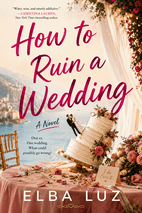
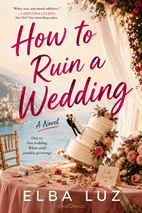
What is the book How to Ruin a Wedding about?
Elba Luz's How to Ruin a Wedding follows Lucy Montoya, a broke private investigator hired to sabotage a wedding from the inside—but when she bonds with the trusting bride and falls for her employer, her scheme unravels. A witty, warm romance for fans of messy heroines and second chances.
Feature
Insta.Page
Blinkist
Shortform
How to Ruin a Wedding
✓
✕
✕
Summary Depth
Full Chapter-by-Chapter
15-min overview
Section-by-section guides
Audio Narration
✓
✓
✓
Visual Mindmaps
✓
✕
✕
AI Q&A
✓
✕
✕
Quizzes
✓
✕
✕
PDF Downloads
✓
✕
✓
Price
$89.99/yr
$146/yr (PRO)
$199/yr
*Competitor data last verified July 2026.
1 Page Summary
Lucy Montoya is a private investigator hired for a seemingly straightforward—if morally complicated—job: she’s been brought to the Keos Resort by a desperate client named Jennie to gather proof that James, the groom-to-be, is about to marry the wrong woman. James is clearly in love with his “friend” Sammy, and the two are caught on Lucy’s recording making plans to meet in secret on the night before the wedding. But Lucy’s mission quickly spirals out of control. Reeling from a recent personal collapse that has left her broke, unemployed, and living with her younger sister Taina, Lucy drowns her sorrows at a resort bar, where a handsome stranger named Anders recognizes her. After a blackout night, she wakes up in his bed, hungover and nearly blind without her missing glasses—just thirty minutes before Eliza’s wedding, the very event she was supposed to disrupt.
Desperate for money and a fresh start, Lucy accepts an unusual offer from Anders: he’ll pay her double her normal fee to accompany him to his hometown and sabotage his own sister’s wedding. His sister, Valerie, is about to marry John, a man Anders is convinced is wrong for her. The catch is that Lucy must pose as a wedding planner while secretly working to ruin the event from the inside. What begins as a mercenary arrangement becomes increasingly complicated as Lucy is drawn into the lives of the people she’s supposed to be deceiving. She bonds with Valerie, who ironically welcomes her as a friend and even asks her to be a bridesmaid. She charms Valerie’s young niece, Olive, and finds a genuine sense of purpose caring for dogs at a local shelter alongside Anders. And despite her best efforts to keep their relationship professional, she and Anders grow dangerously close, sharing confidences, midnight confessions, and a painful, undeniable chemistry.
As the wedding approaches, Lucy is juggling too many secrets: her growing feelings for the man paying her, her loyalty to the bride who trusts her, and the guilt of the sabotaging plan she hasn’t yet revealed. She finds herself dodging Anders’s calls, hiding out at her sister’s rental, and scrambling to keep up the pretense while her heart pulls her in the opposite direction. How to Ruin a Wedding is a witty, warm, and emotionally messy romance about a woman who came to destroy a marriage and instead finds herself fighting to protect the love stories (and the people) around her—including her own. Fans of slow-burn tension, complicated family dynamics, and sharp-witted heroines who are a little bit lost will be swept up in this charming, heartfelt tale of second chances and the unexpected places where love finds you.
1
Face down in an overgrown corner of the Keos Resort, Lucy hides beneath a canopy of itchy bushes, phone angled up to capture the couple on a weather-worn bench ahead. It is not how she envisioned spending her Saturday morning, but it is more action than she has seen in months. The woman, Sammy, leans into James, the groom-to-be, their legs tangled. Jennie, Lucy's newest client, calls them "the Birds" because of their pet names for each other: Sparrow and Finch, lifted from James's favorite French war film, the one his fiancée Eliza never finished because she found it boring. Sammy knows every line by heart. Jennie wrote to Lucy a week ago, desperate: Eliza is about to marry the wrong person. James is in love with Sammy. No one believes it. Lucy is the Hail Mary.
She army crawls closer, the blue satin of her dress a poor disguise against the greenery, and starts recording. Sammy insists they are just friends, but James pleads for one more time, and their mouths drift toward each other. They make a plan: tonight, while everyone is in bed, Sammy will come to James's room. He needs this. He needs her.
A voice cuts through the clearing, and the Birds jerk apart. Two men have wandered in, one with a deep, amused voice. Lucy's throat tickles, and she muffles a sneeze. The deeper-voiced man blames squirrels, drawing the cheating couple's attention away from her hiding spot. James and Sammy retreat, and the two men follow. As soon as they are gone, Lucy erupts into a fit of sneezes, and something crawls along her thigh, leaving a sharp pinch. Hives are already spreading across her side. The video, she thinks, is enough. But will it be enough for Eliza, and for everyone who sides with James? Jennie's hunch was ignored, chalked up to the inexplicable bond of two close friends.
Lucy stands, straightens her dress, and a voice stops her cold. The man from earlier asks if he should call security, pointing out that she just crawled out from under a bush. He is striking in a way that feels out of place at this polished resort: rough five o'clock shadow, dark windswept hair, hazel eyes that shift between blue, green, and brown. He points out her wig is falling off. She deflects, gives him nothing, and the flirtation crackles dangerously. He is amused, she is flustered, and she knows she has stayed too long. Anonymity is her protection, so she shouts "Coming!" to the empty sky and runs as fast as her heels can take her.
Back in her room, after a shower and some Claritin, Lucy checks the three missed notifications from her sister, Taina, and pulls up her camera roll. The video shows the Birds perfectly framed, but when she cranks the volume, there is only silence. Her finger must have been covering the speaker. A silent film. Useless evidence. She flops onto the bed, staring at the ceiling, the stress pounding behind her eyes.
The job is harder than usual. Jennie's request came only a week ago, with an extra charge for the impossible timeline. No cover, no invitation, just a plus-one at someone else's wedding, poking around from the outside. Lucy already knocked on both their hotel doors, checked brunch, worked the concierge and the bartender, and scanned the pool cabanas. Nothing. Now the Birds have a planned meetup tonight, but the risk is high, and she needs to force more interactions before the day is done.
She reflects on how she got here. Wedding wrecking began five months ago, right after she lost her marketing job at a New York tech firm run by misogynistic man-children who crushed her will to live. It was supposed to be temporary, a pit stop, but one job became another, and she stopped lying to herself about why she stays. People don't get married for love, not often. They marry for money, timing, guilt, social pressure, fear of being alone. She tells herself she is performing a service: stopping people who don't really feel love from walking down the aisle anyway, making space for something truer. Or maybe she is just trying to feel better about blowing up other people's fairy tales because her own didn't work out. Two failed marriages. Twenty-eight years old. No real career, no real relationships, and this weekend is her birthday. Every job gets her closer to buying into Save a Paw, the shelter where she has volunteered since she was sixteen. The owner is retiring soon, and the window is narrow. She cannot let this one slip.
Needing a distraction, she dials Taina. Her sister's greeting lacks its usual crude bite, and Lucy's heart drops. Taina delivers the news: Lucy has been evicted. The landlord took her half-payment, then taped an eviction notice to the door the moment both sisters were gone. Taina is saving what she can, cursing at the landlord in the background, but Lucy barely hears it. Every meaningful possession in that apartment came from their parents, who are dead. The Wall of Memories. The family dog's ashes. Dad's favorite baseball glove. Mom's go-to pot for rice. All of it was glue, a direct connection to them, so she wouldn't feel alone. Taina tries to spin the eviction as a blessing in disguise, a chance to live together, but Lucy cannot hear silver linings. She turns off her phone, closes her eyes, and tries to breathe. The sob breaks loose anyway. She pitches her phone at the wall, and the first thing she thinks is how much the damage will cost. Evicted and jobless, she presses her knuckles against her chest, trying to steady her erratic heart, and lets herself spiral into everything she might have lost.
💡 Try clicking the AI chat button to ask questions about this book!
2
Chapter 2
Lucy plants herself in the farthest corner of a dimly lit resort bar, sliding her card across the counter even though she expects it to be declined. She drinks shot after shot of whiskey, trying to dull an emotional pain nothing can touch. Every time a memory surfaces of her now-empty apartment, she takes another shot. She's so far gone the whiskey tastes like water. The scent drags her back to her father sitting by the old coffee table, watching a game on a staticky TV while she adjusted the antenna. That memory costs her the rest of the glass. She's lost count of how much she's drunk.
A Familiar Stranger
Someone slides a glass of water across the counter while heavily ringed fingers remove her empty glass. There's amusement in those familiar hazel eyes. The man takes the stool beside her. "Stranger!" she says, patting his arm, except her hand betrays her and squeezes his biceps. "Good to see you didn't sprain an ankle sprinting away in those heels," he says. Her eyes widen. Clearly he recognized her. He tells her he was concerned. She tells him she's honored to be worried about by a beautiful stranger who doesn't even know her name. His dimple appears.
He says he's honored to have witnessed someone down a beer and three glasses of whiskey and still remain upright, then pushes the water toward her. She downs it in one go and asks if he wants a drink. He gestures two toward the bartender.
"So," Stranger says, "what has you drinking the night away on your own?" She lists it all: her eviction, her inability to get a new job, her dreams coming undone, and her failure to maintain any romantic relationship. "So, in other words, completely hitting rock bottom." She picks up his glass and downs half his drink. His eyes widen comically. She points at him. "You asked a simple question, and I just dumped all my life problems on you. Has your curiosity dwindled?" He drinks, and her gaze catches on how his lips meet her lipstick print on the rim. "I still want to know your name."
"Lucinda," she says, because people only ever refer to her as Lucy. He repeats it, and the name coming from him sounds sultry. "Is that your real name?" "Maybe, maybe not. Yours?" "Anders." He suggests less liver-endangering ways to deal with hard times, like going for a walk or reading a book. She slams her hand on the counter. "Did you just suggest exercise to make me feel better? Torture? The thing that killed John F. Kennedy?" "I think you're mixing up your world leaders." "Get out of my sight." His low chuckle doesn't help her already tipsy balance. He says he just thought she might regret this many drinks tomorrow morning. "You always show this much concern over strangers?" "Only the pretty ones who like to drink whiskey."
A zing of awareness shoots between her thighs. He isn't conventionally handsome. He has the tall, dark, and handsome thing, but the lines on his face are more complex, like every tiny scar or smile line comes with a story. She studies his crooked nose and sharp angles too long to be polite.
The bartender places a dish of truffle fries and steak tips before them. "Fuel," Anders says. "I thought you might need something to settle all the whiskey." She shoves a fry in her mouth. "So, you must have been watching me a while to have ordered food for me." He clears his throat. "I was paying for dinner when I saw you stumble to the bar." "It feels suspicious how nice you're being to me," she says. "Twice now you've caught me in poor form, but you sit by me, drink with me, order me food. Are you trying to sleep with me?" He blinks. She shakes her head. "If you are, I can't anyway. Not right now. I'm too sensitive. I'll either fall in love with you on the spot or instantly burst into tears. Maybe another time." He gives her a small, not quite happy smile. "You're going through a hard time. I'm not busy, so I thought I'd keep you company." "Not to be a pessimist, but people usually do things for reasons other than just being a good person." "That is absolutely being a pessimist. Maybe I have an ulterior motive." "So you want to sleep with me?" He gives her a smile. "Your honesty is attractive enough for that to be a future endeavor." Her body warms. "But that's not it," she says. He nods. "I'm here for a wedding." "Is attending such a miserable experience that you'd rather keep the company of a woman you found beneath a bush?" "It's my first love's wedding." She chokes on her fry. "First and only, actually." He downs her refill in one gulp. "Have I earned the reason you were hiding beneath a bush?" "What's your first love's name?" "Anna." Not Eliza, so she doesn't have to lie too much about why she's here. Then a thought clicks. "Wait, you went to check out that plot of land with your first love's fiancé?" He nods. "Lucas is my best friend." "Your best friend is marrying your first love?" she shouts. She grips his face in her hands. "Why are you here? Why would you subject yourself to this kind of agony? Are you a masochist?" He places a hand over hers and presses her palm closer to his cheek. "It's complicated." "Life really sucks sometimes, huh?" "Yeah," he whispers. She just learned his name minutes ago, but she feels such a magnetic pull toward him. Maybe the universe decided to place two miserable souls together to give them some respite from all the damage done to them.
"Okay, Anders, let's be sad together." His smile returns. "Do you think a pity party will help?" "Yeah. Party is right there in the phrase. Let's suck out the sadness like venom from a snake bite. Once it's gone, we'll feel better. And then, we'll drink some more, play some darts, and make bad decisions." He shows a set of perfect white teeth, his canines a little sharper and longer than the rest. "Okay. Let's." When she pulls away to think, his hand reaches around her stool and pulls the chair closer to him, so her thighs are between his. She shakes off the attraction. She has to remind herself: she's going to comfort him, not sleep with him. "Okay," she begins, "I have a really sad life, so mine might be long." He slides a finger over her cheek and pulls a stray hair behind her ear. "I'm here however long you need." Lucy, do not fall in love with a man who shows you a simple act of kindness.
The Pity Party
"Okay, so from the beginning. I have never had anything that has been only mine," she tells him. Her parents died when she was a teenager, and she spent most of her life trying to take care of her little sister. Growing up, she spent recesses in a corner alone, studying for perfect grades to make her parents proud. Her parents died in a car crash on the way to the hospital because her mom was sick, cancer. After that, raising Taina on her own was a whole other kind of hard, balancing grief and responsibility when she didn't even know how taxes worked. At work, aside from one other woman, she was surrounded by men, never invited to weekly team dinners. She studied her lovers like exams and picked up their hobbies and passions like her own so they'd have more to discuss. She'd cook their favorite meals, remember their coffee orders, listen to their burdens, and they still left. "It feels like I had this deposit of gold within me once, treasured and sought after, but someone has been in there carving out every remnant of it. Only flecks of it remain. Not so valuable anymore." At that, he reaches over and squeezes her hand, and it somehow feels like a hug around her heart.
"Want to know the most humiliating thing I'm doing now to get by?" she asks. "Wedding wrecking." He frowns. "Sorry, I think I misheard." "I'm sure you didn't." She taps his arm. "I'm not here to wreck Anna's wedding!" She explains that the entire job is made up. The idea was the cumulation of an alcohol-induced night, the luck of a loud, even drunker groom-to-be begging his groomsmen to stop his impending wedding, and a projection of her own misery wishing someone had saved her from a doomed marriage, twice. And the cherry on top: it was the night she was fired from her job.
"All right," he interrupts, "you have to give more details than that." She shoves a couple of fries in her mouth before continuing. The groom-to-be was begging for sympathy. His friends knew he liked men, knew the marriage was set up by his parents in denial, yet his buddies were encouraging him to go through with it. They said it was better to play into the facade than risk his parents disowning him. "Assholes." "I know, right? They kept saying he could date anyone he wanted, secretly. The groom-to-be, and me
3
She wakes in a stranger's bed, and her first thought is that she's dying. The hangover hits like a freight train, sending her sprinting to the bathroom to vomit until she's certain she's lost something vital. She lies on the cold tile floor because it's the only thing that stops the room from spinning, and that's when the nagging starts: she's forgetting something important. She looks down at herself, wearing a giant white button-up that is absolutely not hers, her legs bruised, and the night before is a dark, terrifying blur.
Her phone rings somewhere in the distance. She crawls to the bed, makes a snow angel in the expensive sheets, and finds it. A missed call from Taina, no big deal. But there's another number, unsaved, logged with over a dozen missed calls. The time reads 2:00 p.m. Half an hour until Eliza's wedding. Panic detonates in her chest.
She hits the shower, scrubs off every trace of alcohol, gets dressed in fifteen minutes flat. But her contacts and backup glasses are gone. Without them, faces blur and lights smear into stripes, and her eyesight is bad enough that she can't find them because she can't see well enough to look. She gives up, shoves a blond wig over her head with no pins to secure it, and digs out a pair of oversized round glasses that aren't prescription but make her look cartoonish. She yanks on a tiny blue dress she stole from Taina and races out the door, furious at herself. How could she have drunk so much? This is her only source of income. She let her misery over the eviction drive her to a pity party, and now the plan has failed.
She's resourceful, though. She has to be. Her Hail Mary: crash the wedding, scream that she's the mistress, create mass chaos and confusion. It's a desperate, last-resort move that can be disproved, but it's disruptive enough to buy time to find real proof of infidelity. She's done it once before, ending up thrown over the priest's shoulder, but it worked. On the elevator, she puts on her heels and recalls the hotel layout from memory, the venue attached to the back, the gardens beyond. She makes a promise to never drink again, knowing full well she's made this promise before.
She sprints through the massive lobby, out of breath by the time she reaches the hallway with the reception rooms. The ceiling stretches above her, painted like a sky scattered with clouds. She shakes off the tilting vision and sprints to the double doors. This is it. She almost collides with them, forces them open with her foot, and squeezes through, her curves getting squashed in the gap. The wedding is in progress. The bride stands under an arch of roses, the groom looking down at her, the pastor reading from his book. They haven't been pronounced yet.
Not yet.
She picks herself up and screams, "I object!"
Everyone turns. Gasps, clutching jewelry, the collective shuffle of bodies. She jogs forward, objecting again, grabs the groom by his tie, and yanks his face to hers. "You told me you'd marry me!" The audience gasps. "How could you do this to me?"
The groom, James, slaps her hand away. "Who the hell are you?"
"I'm the mother of your unborn child!"
The gasps turn into shouting. James denies everything, calls her crazy, but no one's listening. Not when tears spill down her cheeks and she holds her stomach dramatically, which isn't entirely acting at this point. A few more minutes of excitement and she might throw up again.
James's eyes narrow. He grabs her shoulders, nails piercing her skin, and when she struggles, he shoves her. She falls back into the arch, metal and her back colliding with a sickening clang. The arch tips slowly. She reaches up, grabs the back of the bride's dress, and yanks her out of the way as the arch falls over. Right onto the pastor.
She's going to hell. Injuring a pastor has got to be a major sin.
She rights herself, lifts the arch off him, but the pastor tips backward into a wall of candles. Glass shatters, flames flicker out, except some catch and join until a gathering of light grows at the center. Fire. She rushes forward without thinking, blows on it, stomps on it with her shoe. A shard of glass pierces through and carves a home into her foot. She shouts, jumps back, loses balance, and falls toward all the broken glass.
Arms grip her hips, pull her back from the damage. Her savior smothers the flame with his blazer, then turns on his heel. This close, nose to nose, she can finally make out a face.
It's the man from the garden.
Flashes of memory blink through her skull in rapid clicks. Giggling as Anders pulled her away from making water angels in a fountain. Tossing french fries into each other's mouths from impossible distances. A piggyback ride through the halls. Fingers cupping her chin as Anders held a bottle of water to her dry lips.
"Anders!" she says, at the same time he says, "Lucinda!"
Even with the haphazard disguise, he recognized her.
The chaos continues around them. People lift the arch, pull the pastor up. James is screaming at the bride, pointing at her, insisting he has no idea who she is. The bride stomps over, yanks off her veil, and snaps, "Who are you?"
Up close, her features become clear. Her nose isn't supposed to be straight and pointed. It's supposed to be rounded, lower. Her skin should be riddled with freckles no foundation could cover, not tan and clear. Her lips should be thinner, her jaw rounder.
This isn't Eliza.
She slaps her hand to her mouth. This bride isn't the woman she ran a background check on. She crashed the wrong wedding. She triple-checked the times and dates, but she is in the wrong room in the wrong place at the wrong time.
A shadow pours over her. "Lucinda, what's going on?" Anders asks, and somehow he seems less accusatory and more concerned with her well-being.
"You said this wasn't the wedding."
She stutters, incoherent, wondering if she can gaslight over fifty people into believing she only speaks Spanish. The bride steps toward her. She moves back into Anders's body. Is it too late to pass out?
"Oh my God," she whispers to the bride. "I'm so sorry. I don't know your fiancé, this is—I'm just—" There are no words. She apologizes and sprints down the aisle, ignoring all the stares, her bad foot half dragging behind her.
She pushes through the double doors, and across the hall, another doorway stands wide open. People file out, smiling, chatting, forming two lines. Eliza and her husband walk through them, hand in hand. Jennie drags behind, a tight smile on her face. She went to the wrong hall. She didn't stop her best friend's doomed-to-fail marriage.
Eliza presses kisses on cheeks, coldly, like royalty greeting peasants. James high-fives and fist-bumps like a football player after a touchdown. Then Jennie spots her. Her green gown glides behind her as she approaches, her blond hair pinned in a delicate bun, pearls clipped around it. She looks stunning in the way they described Lucifer as the most beautiful angel. She wraps her arms around her and presses her mouth to her ear, kissing it as she speaks.
"I hate you."
Well, shit.
Jennie doesn't give her a single break, even in her hotel room while the rest of the wedding celebrates at the reception. The screaming pops her eardrum within the first minute. She doesn't say a word. Just sits there and listens to Jennie's disappointment, the reminder that her best friend will have to suffer through this doomed marriage. There's no defense. Jennie came to her for help, and she failed her. Failed Eliza.
She remembers the hope and joy of getting married, despite nerves and hidden reservations. That feeling of something being wrong, and the heavy obligation that if you got that far, you had to stick it out. And the other feeling, too: loving someone who loves someone else. Like her second marriage. She bets Eliza has had the same conversations with herself. He's just friendly with her. They've been friends for years. You'll look crazy if you bring it up. You'll be humiliated if it turns out to be true, and it can't be true if you avoid it. Even now, years later, there's a missing fragment in her chest, permanently shattered from heartbreak. The pain only eases; the scars remain. That haunted feeling of being irreparably flawed. And now Eliza will have to feel that way too. She couldn't help her, like nobody could help her.
There's no time to pack, and in the rush of leaving, she's sure she's forgotten something. She catches the gist of the rest of the meeting. She's not getting paid. She ruined Jennie's best friend's life. Jennie gets her the worst seat in economy, though she's lucky she paid for a seat at all, and sets her up with a thirteen-hour, two-stop flight from the tiny Caribbean island back to Taina, threatening to call security if she stays on the premises any longer.
On the flight, she tries to sleep, but the seat won't recline and a kid won't stop kicking the back of it. All this misery, and she doesn't even get the comfort of nearing home. Because there is no home to go to. There's only the safety of Taina's support, tainted by questions she doesn't want to answer, faces she doesn't want to see, and dreams falling further out of reach.
4
She’s slumped on the couch in Taina’s guest suite, weighed down by jet lag, a four-hour subway ride, bruises, and the misery of her failures. Cramping tells her her period is coming. But the worst blow is the bright smile on her younger sister’s face as Taina lets herself in, dropping a tray of desserts on the marble coffee table. Taina, five years younger, curls highlighted, face sculpted by the best aesthetician in Connecticut, announces her sister needs a face mask. She notices the narrator hasn’t unpacked, that she’s melted into the couch. Taina points out the narrator never let her rot in bed more than two days in a row, and the narrator says she regrets that now. Taina says she’s sure that’s not true. Perceptive little brat. When Taina insists sadness doesn’t look good on her, the narrator musters enough pride to say everything looks good on her.
Taina, in a blue baby-doll dress, tosses the narrator’s legs off the couch and sits beside her. Mathew is away for work; she was bored, so she came to check on her pretty, sad sister. The narrator tells her she applied for more jobs and was rejected within hours, a new record. Taina asks for a company name with a murderous smile, and the narrator knows she means it. Taina has a criminal record, and the narrator bailed her out of jail twice, both times for clawing men at nightclubs who tried to cop a feel. The narrator once ran the household and tried to be a good influence, but Taina has always had a fiery temperament.
Then Taina reveals her real motive. She wants the narrator to move in with her and Mathew. This private floor is the narrator’s own space, a private entrance, kitchen, and bath, like her own apartment. Since the narrator started Wreck a Wedding five months ago, Taina has been hounding her to move in. The narrator chose her old apartment because it was the lowest rent she could find in New York near her old job, and she wanted to save everything she could. Her dad always preached about living below your means, keeping money stashed for emergencies like hospital bills. They saw that firsthand with Mom’s illness. Saving wasn’t just about being responsible, it was about survival.
The narrator says she’s looking for another place. Taina scoffs, reminding her she lived in what amounted to a dumpster with a collection of holes vaguely connected by paint, and she couldn’t even afford that. The narrator insists she just needs to get through the slow season, or get a callback for an interview. Taina says what she needs is help, and the narrator finishes the sentence for her: after she was fired, she destroyed her supervisor’s desk and had to be escorted out. The memory is fresh. Her condescending supervisor called her by the name of the only other woman in the department and told her to wear looser clothes because she was distracting her peers, that she was basically asking for it. Taina was ready to sue, but buried in the new-hire paperwork the narrator signed was a clause waiving her right to sue the company. She didn’t catch it. She was too grateful for the health insurance and the 401(k).
She tells Taina her resume is too impressive not to get a callback, and yet she’d take her old marketing job back in a second. Taina points out it’s clearly not impressive enough. They banter and almost come to blows until Taina grabs the narrator’s phone from the coffee table and flips it over to the Polaroid tucked beneath the clear case: her pit bull, Storm, gleefully demolishing a couch. The narrator’s heart lurches. Storm has been gone a year, and the loss is still fresh. Photos carry an impossible responsibility, she thinks, keeping moments alive even when the people in them are gone.
Taina offers to help pay for the narrator’s share of Save a Paw. The narrator’s anxiety bites. Save a Paw is her real dream, not wedding wrecking. A haven for dogs that provides vet care, surgeries, nurturing, and adoption. The owner, Joshua, promised her since she was sixteen that he’d sell her the business when he retired. She has $10,000 saved toward the $30,000 price. But Joshua’s wife wants him to retire early, and he gave the narrator a year, now down to three months, to buy it. His partner already has someone interested. Taina knows exactly how to wound and motivate at once. She plays videos of Storm and asks what would have happened to her if the narrator hadn’t found her, how much pain she was in.
Storm
The first time the narrator was ever needed was her sixteenth birthday. Her parents forgot, understandably, because Taina was in the hospital with a horrible flu. The narrator dragged herself on a ten-mile walk, hoping each step would feel less miserable than the last, and saw a dog limping across a road in the drizzle turning to rain. The dog’s leg buckled, and it dropped as headlights approached. Without thinking, the narrator ran out, screaming for the car to stop. It swerved, barely missing them. The silver pit bull was whining, its hind leg bent at a grotesque angle, its blue eyes wide with pain and a familiar kind of heartache. The narrator wrapped the fifty-pound dog in her arms and dragged her to Save a Paw. The staff told her the leg had been purposely broken. The narrator spent the night, cried when they carried the dog into a cage, and refused to leave until the employees let her lie with the animal. Each time the dog woke, it checked to make sure the narrator was still there, and only then drifted back to sleep. She needed her. The narrator convinced her parents to let her adopt the dog, buried her name tag, and called her Storm, for the night she found her. Finally, she was a first choice. Storm needed her, but the narrator needed her more. Their walks brought them back to the shelter, where the narrator volunteered, showering dogs, distracting them during shots, cleaning kennels, and vetting potential adoptions. Save a Paw is hers.
Taina pulls her back to the present. Wedding wrecking isn’t sustainable, she says. She’s been tracking the click-through on the ads she runs and the hits on the site, and it’s tanking. The narrator insists it’s temporary. Once she saves up for her share, she can make the shelter financially sustainable. Taina asks how. The narrator lays out her plan: keep the shelter’s mission side nonprofit, add for-profit arms. A high-end dog grooming service. Branded dog merch, collars, leashes, raincoats, safe nail polish, profits back into the shelter. And dog parties, birthdays and engagement shoots for couples and their pets. She already knows how to market events that stir strong feelings, same psychology as weddings and breakups, and she’s been building an email list from the weddings she’s wrecked. Brides, grooms, jilted exes with rich friends owe her their silence, and a few are already interested in sponsoring fundraisers. Taina whistles. She’s lost at dog birthdays, but she can get behind the rest. The narrator tells her not to worry. She can do this. She’s good at getting people to care and getting them to pay attention.
Taina offers to invest in her. The narrator refuses. It’s for Taina’s own good, her own marriage. Taina doesn’t know the narrator knows about the dozen couples’ therapy sessions she and Mathew went through because Taina forced them to move from Vermont to Connecticut to be closer to her. She doesn’t know the narrator knows about the money Taina took from their joint account to pay off the narrator’s student debt, or the major trip Taina skipped, the first real vacation Mathew had planned for them in years, because it conflicted with the narrator’s birthday. Mathew told her. In a plea and a threat. He never yelled, never demanded. He just thanked her when she missed Taina’s invitations, like she’d done something good, like she’d stepped back on purpose. Mathew watches every time Taina chooses the narrator, quietly resenting her for it. He’s on his very last straw, and Taina thinks there are dozens left. The narrator can’t take her money. She can’t cross that line again, or she’ll ruin the one marriage she would never want to wreck.
The Door Is Glued Shut
She kisses Taina’s cheek, says no, and grabs her laptop. She tells her sister she’s going to convince her landlord to give the apartment back, maybe use the building code violations as a blackmailing point. She can’t afford back rent. Her savings are locked in a CD account, signed into a three-year agreement. Drawing early means losing six months of interest, nearly everything she’s gained. Not an option. Taina says, “You’re too good for my money?” The narrator tells her she can’t take it. She can figure things out on her own, she always has, and each time Taina tries to convince her to accept help, it feels like she doesn’t believe in her. Taina’s face turns pink. That’s not her
You've reached the end of the free chapters
Chapter 5 is locked
Keep reading How to Ruin a Wedding — and unlock all 600+ book summaries with audio, mindmaps and AI Q&A.
$0.00 due today · 7 days free, then $89.99/year ($7.49/mo) · Cancel anytime before day 7
Elba Luz is a speculative fiction author and cultural historian known for blending Caribbean folklore with near-future technologies in her acclaimed novels, including *The Salt of Drowned Stars* and its sequel, *Echoes of the Sunken Choir*. Her work, praised for its intricate world-building and nuanced explorations of diaspora identity, draws on her academic background in Caribbean studies and her experience as a former documentary filmmaker. Born in San Juan and currently based in Miami, she also writes essays on climate fiction and serves as a mentor for emerging Latine writers.
Frequently Asked Questions about How to Ruin a Wedding
What is How to Ruin a Wedding about?
After a disastrous first assignment, down-on-her-luck Lucy is hired by Anders to sabotage his sister Valerie's wedding. Working undercover, she gets drawn into the family: Valerie genuinely warms to her, Olive and Bethany treat her like one of their own, and Lucy finds herself falling for Anders. The job becomes an emotional minefield as Lucy must decide how far she's willing to go, with her own future, new friendships, and a possible romance all on the line.
Who is the author of How to Ruin a Wedding?
Elba Luz is the author of How to Ruin a Wedding. The provided chapter content focuses on the story rather than the author's biography, so no personal background details are included here.
Is How to Ruin a Wedding worth reading?
Absolutely. It pairs the chaotic, entertaining premise of wedding sabotage with sharp dialogue, warm family dynamics, and genuinely emotional stakes. Readers who enjoy romantic comedies with messy, relatable characters and slow-burn tension will find plenty to love.
What are the main themes in How to Ruin a Wedding?
Trust, honesty, and the fear of ruining the good things in your life are central to the story. It also explores sisterhood and found family, especially through Lucy's bond with Taina and her growing connection to Valerie, Bethany, and Olive. The wedding-planning setup creates tension between love and obligation, while Lucy's inner conflict raises questions about whether sabotage can ever be forgiven.
📚 Explore Our Book Summary Library
Discover more insightful book summaries from our collection