How to Ruin a Wedding Themes
by Elba Luz
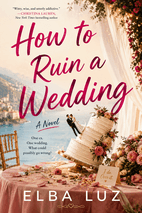
Underneath Lucy's wedding wrecking, the novel wrestles with whether love can survive being seen fully, flaws included. It pits her cynical assumptions against Valerie and John's messy real love, and asks if honesty and vulnerability are worth the risk.
On this page you'll find each major theme tied to concrete moments: Lucy's costumes and fake identities, her guilt as she lies to people she cares about, Taina and chosen family loyalty, and healing through being seen. Symbols like wigs, the lily necklace, rescued dogs, and sancocho with Vicks VapoRub show how identity, trust, care, and heritage run through the story.
Major Themes in How to Ruin a Wedding
Skepticism about love versus genuine, messy love
The book sets Lucy's cynical wedding-wrecking assumptions against the imperfect but real love she witnesses in Valerie and John. Early on she doubts why people marry and Anders claims love is not built to last, but by the end Valerie's speech reframes love as something authentic even when it is messy.
- In Chapter 1, Lucy muses that people get married for money, timing, guilt, social pressure, or fear of being alone, not always for love.
- In Chapter 8, Anders says, 'love exists, but it's not built to last.'
- In Chapter 29, Valerie tells Lucy, 'I don’t need a perfect partner. I just need genuine love.'
Performance, disguise, and authenticity
Lucy's work as a wedding wrecker depends on costumes, fake identities, and staged performances, but the story repeatedly pushes her toward being herself. Wigs, fake psychics, and a fake dating profile all show how identity can be performed, while Anders's instruction to 'just be Lucinda' points to the cost of hiding.
- In Chapter 1, Lucy wears a ginger wig as part of her disguise and the stranger says, 'Your wig is falling off.'
- In Chapter 7, Anders tells Lucy to 'just be Lucinda' when she says she always needs a disguise.
- In Chapter 12, Lucy shows Anders her fake dating profile 'Ashley Palmer,' created as bait to test John.
Sisterhood and family loyalty
The bond between Lucy and Taina anchors the novel, and Lucy extends that protective instinct to chosen family like Olive. Taina repeatedly chooses Lucy—even when angry—and her unconditional love is contrasted with Mathew's resentment and cruelty.
- In Chapter 27, Taina grabs Lucy and drives away with her after learning Mathew threatened her.
- In Chapter 28, Taina tells Lucy, 'I am who I am because of you,' listing Lucy's sacrifices.
- In Chapter 20, Lucy feels fury when Olive is bullied and compares it to the fury she would feel if someone hurt Taina.
Guilt and the consequences of deception
Lucy's plan requires lying to people she grows to genuinely care about, and the guilt becomes unbearable as the scheme unravels. The story shows that deception has real costs—exposure, broken trust, and the need for repair—and Lucy's redemption comes only through apology and honest action.
- In Chapter 10, Lucy says 'the ever-present guilt of this job sinks its claws into my stomach' while making pinkie promises with Valerie.
- In Chapter 27, Olive reveals Lucy's phone, exposing her manipulation in front of Valerie and the family.
- In Chapter 29, Lucy apologizes to Valerie and agrees to help plan her wedding as proof of friendship.
Vulnerability, being seen, and healing
The characters heal when they stop hiding their worst fears and allow themselves to be seen and loved anyway. Lucy's fear of ruining everything is answered by Anders's full acceptance, and Taina insists that breaking open is part of healing.
- In Chapter 19, Anders tells Lucy she hasn't lost everything, she has survived everything, which makes her walls crumble.
- In Chapter 28, Taina says, 'Let people break, Lucy. Let yourself break,' and Lucy cries until her shoulders lighten.
- In Chapter 31, Anders says, 'Even if you haven't figured out how to love yourself fully, I have fallen in love with you easily and fully.'
Symbols and Motifs
Wigs and disguises
They represent hidden identity and the performance Lucy uses to do her job, while also signaling how fragile that concealment is—wigs fall off and disguises fail.
- In Chapter 1, Lucy wears a ginger wig and the stranger points out, 'Your wig is falling off.'
- In Chapter 3, Lucy grabs a blond wig and non-prescription glasses to crash a wedding.
- In Chapter 7, Lucy says she always needs a disguise, and Anders tells her to just be herself.
The lily necklace
It symbolizes undeserved trust and love that Lucy has not earned, making her feel the weight of her deception and her own self-doubt.
- In Chapter 16, Bethany and Olive give Lucy the lily necklace she admired at the market.
- After receiving it, Lucy internally asks what she has to show for herself and what about her is worthy of being loved.
Dogs and animal rescue
Dogs, especially rescued ones like Storm and Sora, represent unconditional love, being chosen, and the purpose Lucy finds in caring for others. Save a Paw and K9 Friends are tied to her dream of belonging.
- In Chapter 4, Lucy remembers how Storm checked that she was still there before falling asleep and thinks, 'Finally, I was a first choice.'
- In Chapter 18, Lucy reflects that working with dogs gave her a feeling of purpose no job or relationship ever did.
- In Chapter 18, Sora curls up on Anders's shoes, convincing Anders to adopt him.
Sancocho and Vicks VapoRub
They symbolize cultural heritage, maternal care, and the comfort of being taken care of, especially as Lucy cares for Anders the way her mother cared for her family.
- In Chapter 17, Lucy makes sancocho from memory of her mom's cooking.
- In Chapter 17, she calls Vicks VapoRub 'every Puerto Rican's medicine' and rubs it on Anders's feet the way her mom did.