How to Ruin a Wedding Quotes
by Elba Luz
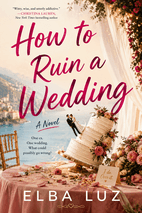
Inside this collection you will find the sharp, messy, and surprisingly tender lines from How to Ruin a Wedding. They come from different places: characters bantering in dialogue, the narrator’s wry observations, and the quiet inner monologues where doubt and hope get equal airtime. That mix makes the book feel alive on the page.
What makes these quotes stick is how honest they are. They tackle love, heartbreak, family, and self-worth without pretending to have easy answers. Some lines sting. Some make you laugh. Most make you want to text someone immediately. Whether you are here to remember your favorite moment or find a new one, these are the words that stay with you.
Top Quotes from How to Ruin a Wedding
“Love steals your logic, but lust steals your self-preservation.”
— Lucy
Lucy is trying to escape an unsettlingly attractive stranger after he catches her hiding under a bush.
It distills the moment attraction overrides common sense in one sharp, relatable line.
“When it comes to the ones we love, we often can't see what's right in front of our faces. A curse of feeling too much and loving too much is that your sense of logic halves itself.”
— Lucy
After recording James and Sammy’s intimate moment, Lucy reflects on why Jennie’s warning was dismissed.
It explains the blindness that comes with love, making Lucy’s cynical job feel compassionate rather than cruel.
“It's not that I don’t believe in love. I do. I have so much love in me—it’s kind of the problem.”
— Lucy
Lucy lies in her hotel room and wrestles with why she has become a wedding wrecker.
The confession cuts through her sarcasm and reveals the wounded, hopeful heart underneath.
“People get married for so many reasons that have nothing to do with love. Money. Timing. Guilt. Social pressure. Because they're scared to be alone. Because their mom likes him. Because it looks good on paper. Because they're thirty-two and tired of dating apps. Because it's easier than breaking up and starting from scratch.”
— Lucy
Lucy stares at the ceiling after realizing her recording is unusable and thinks about why people marry.
The staccato list gives voice to a whole culture of bad reasons to wed, capturing the story’s cynical yet longing view of romance.
“It doesn’t matter how hard I work at being a good friend, an amazing girlfriend, or an incredible employee; it's like I was specially created to be an extra in every main character's life. It doesn’t matter how much I bend and twist and break to become a priority for the people around me, I'm always just an afterthought.”
Reflecting on how she has always felt unprioritized in relationships, even though her dog Storm needed her.
It captures the ache of loving hard while feeling like an afterthought; the repetition makes the pain visceral.
“I’m in a delicate phase in my life where the smallest acts of kindness feel like declarations of love. And my bar is so low you'd have to scrape it off the floor. I’m pretty sure I’m already halfway in love with you, and I barely know you.”
— Lucinda
After Anders proposes she pose as his girlfriend, Lucinda sets ground rules and explains why she needs distance.
It is disarmingly honest and captures her self-aware vulnerability as she falls for him despite trying to protect herself.
“What a gift it is to be loved so deeply you can feel each panicked beat of someone else’s heart pounding for you.”
Lucinda reflects on Taina’s anxious, overprotective love after Taina demands she share her location and take precautions.
It turns love into something almost physical, capturing how deeply caring for someone can feel like carrying their worry.
Themes Behind the Quotes
One big theme is the collision between love and logic. The characters keep realizing that caring deeply can make smart people blind, impulsive, and willing to ignore red flags. At the same time, the book explores how heartbreak leaves permanent marks, even as people try to move forward.
Another theme is the ache of feeling invisible. Many moments touch on wanting to be chosen, valued, and remembered, especially by the people who should love you best. There is also a thread about hope: people who have been hurt still reach for connection and still believe something better might exist. Weddings act as a pressure cooker for all of it, forcing questions about family, commitment, and what kind of life a person really wants.
Quotes by Chapter
2
“Unlike a sprain that needs a cast or a cut that can use some Neosporin, emotional pain can’t be cured with any over-the-counter remedy. But it can be dulled, if only temporarily, by regarding the bottom of a whiskey-filled glass. Repeatedly.”
Lucy sits alone in a dimly lit resort bar, drinking to numb the pain of losing her apartment.
It opens the chapter with a raw, poetic metaphor for self-medicating emotional pain.
“My eviction, my inability to get a new real job, my dreams coming undone, and it wasn’t a major concern until recently, but for some reason, speaking to you reminds me of my failure to maintain any semblance of a romantic relationship. So, in other words, completely hitting rock bottom.”
— Lucy
Drunk at the bar, Lucy answers Anders's question about why she is drinking the night away.
It is a brutally honest inventory of failure, delivered with enough self-awareness to land as dark comedy.
“And yet here you are, undefeated by it all. Able to smile, make jokes, and comfort a perfect stranger. Someone who dedicates her life to animals and her family. Life is bleak but you seem bright.”
— Anders
After Lucy pours out her sad life story, Anders cups her cheek and tells her what he sees in her.
It validates her pain while celebrating her resilience, and the final line turns bleakness into a gorgeous compliment.
“Maybe the universe decided to place two miserable souls together, however briefly, to give them some respite from all the damage done to them.”
The narrator reflects on the unexpected kinship forming between her and Anders at the bar.
It names the quiet grace of shared misery and makes their meeting feel fated rather than random.
3
“God, if everything works out, I promise never to drink again. I know I said that after Taina’s wedding, and after my first divorce, and that time I bought a $20,000-winning scratch ticket and lost it while buying myself a celebratory layer cake at the grocery store, but I really mean it this time.”
— Lucinda
In the elevator racing to the ceremony, she vows to stop drinking if she can still stop the wedding.
It is darkly funny and painfully self-aware, showing how her best intentions keep collapsing into the same chaos.
“I never understood the phrase time stood still. Not for my two weddings, not when Taina got married and I walked her down the aisle, and not when I got my first client. Not until right now, when I realize this isn’t the best friend of the woman I ran the background check on. This bride isn’t Eliza.”
— Lucinda
She realizes the bride in front of her is not Eliza and that she has crashed the wrong wedding.
It distills the moment of devastating recognition with rhythmic repetition and a punchy final sentence.
“Even now, years later, there is this missing fragment in my chest, permanently shattered from heartbreak. It doesn’t matter how much time passes, it only eases the pain, but the scars remain.”
— Lucinda
After failing to help Eliza, she reflects on her own marital heartbreak.
The imagery is raw and vulnerable, letting the reader see the wounded person behind the comic disaster.
“How the hell do you explain something like this? There are no words. I want to find the nearest body of water and fling myself into it.”
— Lucinda
She apologizes to the wrong bride after her public objection backfires.
It captures total mortification with humor and desperation, making her chaotic regret instantly relatable.
4
“My experience with wedding wrecking should have made me immune to romance by now, yet here I am, still trying to unravel what love looks like, trying to decipher how something could look so vastly different depending on who wears it.”
Thinking about Mathew’s quiet resentment and her sister’s marriage, she questions what love truly is.
It balances bitter experience with lingering curiosity, making disillusionment feel tender rather than cynical.
“I've always thought photos held an impossible responsibility, carrying the weight of memory even if the people in them are gone. It keeps the moment alive, anyway.”
She looks at a Polaroid of her dog Storm tucked beneath her phone case.
It articulates how photographs hold grief and preserve love after loss.
“I'm just saying, Storm helped you realize your passion in life. Animals. You can’t let the shelter go to some Wall Street, high-water, cufflink-wearing asshole.”
— Taina
Taina pushes her sister to fight to keep Save a Paw instead of losing it to an outsider.
It is a fierce, profane rallying cry that fuses Taina's loyalty with the narrator's dream.
5
“When I signed my marriage certificate, it only had Taina’s name attached. I didn’t sign up to become a caretaker too.”
— Mathew
Mathew confronts Lucinda about the burden her situation puts on his marriage.
It reveals his resentment in a single cold line, making clear that his help is conditional.
“I've always considered myself a brave person. Not that I'm not easily frightened of things, but because no matter how fearful I am, it never deters me from doing what I need to do. But now a knot of fear in my chest tangles itself into a bond so tight it feels like it’s a permanent addition to the organs that keep my body functioning.”
— Lucinda
After Mathew gives her a three-month deadline, Lucinda reflects on her courage and her growing fear.
It shows the exact moment her usual resilience cracks under real pressure, making her vulnerability tangible.
“It's one thing to feel not good enough for anyone else, but to know that my own sister might see me that way after ruining something she’s wanted for so long—fear burrows in my chest. That would kill me.”
— Lucinda
Lucinda imagines what would happen if she destroys her sister's marriage by staying.
It distills the terror of losing her sister's love, which matters more to her than any material loss.
“Why can’t I be lucky? Not pitiful lucky, actually lucky, with my own happily ever after?”
— Lucinda
Alone in Mathew's house, Lucinda wonders whether to spend her savings on rent or hold onto her dream of saving the shelter.
It voices a universal ache for real relief, not just another string of barely-surviving breaks.
6
“It's better to lay it all out like this, be honest, to avoid any mishaps and broken hearts—mine, of course.”
— Lucinda
Lucinda reflects on her blunt warning to Anders after admitting she might fall in love with him.
The trailing phrase '—mine, of course' turns a practical plan into a heartbreakingly vulnerable self-confession.
“You said you wanted it because I smelled nice, so I gave it to you before leaving.”
— Anders
Lucinda asks whether they slept together the night they met, and Anders explains how she ended up with his shirt.
It is a tender, faintly awkward detail that reveals how gently he took care of her before their relationship began.
“My stomach fizzes, like a bottle of champagne popped open within it.”
— Lucinda
Anders wipes a stray drop of wine from Lucinda's bottom lip and looks at her.
The fizzing champagne metaphor makes the romantic spark vivid and immediate, one of the most cinematic lines in the chapter.
7
“No, my dearest, prettiest, funniest, nosiest little sister, it is not. I love you, so look at me and listen when I say I am fine.”
— Lucinda
Lucinda responds to Taina’s joking speech about caring for her sister being a crime.
The affectionate string of adjectives and the earnest reassurance show how she soothes Taina without losing their playful bond.
“I'm anxious, but I’m only a woman. No better than aman, really.”
— Taina
Taina defends her approval of sleeping with Anders after suggesting it, despite her earlier worry.
It is a funny, self-aware concession that being protective does not make her immune to good looks.
“And now you are too. We'd appreciate it if you wouldn’t mind ending the scene you're trying to make.”
— Anders
Anders steps in after a stranger in the airport berates Lucinda for kicking his suitcase.
It shows his calm, protective authority, and his use of 'we' instantly aligns him with Lucinda.
8
“Each wedding, the ones that need wrecking, falls into one of three categories: Because of Family, Because of Opportunity, or Because of Delusion.”
— Lucy
Lucy explains her professional wedding-wrecking classification system to Anders while they drive.
It lays out the book's central premise with dry, brisk wit. The categorical structure makes Lucy sound both expert and darkly funny.
“I have the money. You need the money. Why would I say no?”
— Anders
Anders answers Lucy's question about why he agreed to pay her double.
It is disarmingly simple and generous, undercutting Lucy's expectation of an ulterior motive. The line reveals Anders's quiet integrity with no wasted words.