⚠️ READER ADVISORY: This is a deep-dive summary designed for those who want the full story. Contains spoilers.
What is the book Country People about?
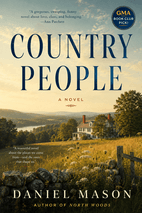
Daniel Mason's Country People follows Miles and Kate Krzelewski-Petrosian as they swap California for a year in rural Vermont, where Miles's stalled dissertation collides with ski leagues, a dog-shaped lump in the snow, and the town's radio oddities. A wry, tender literary portrait of family life off the expected path.
Feature
Insta.Page
Blinkist
Shortform
Country People
✓
✕
✕
Summary Depth
Full Chapter-by-Chapter
15-min overview
Section-by-section guides
Audio Narration
✓
✓
✓
Visual Mindmaps
✓
✕
✕
AI Q&A
✓
✕
✕
Quizzes
✓
✕
✕
PDF Downloads
✓
✕
✓
Price
$89.99/yr
$146/yr (PRO)
$199/yr
*Competitor data last verified July 2026.
1 Page Summary
The husband and wife are leaving California for a year in Vermont, where the wife has been offered a prestigious visiting professorship. The husband, Miles, is supposedly finishing a dissertation he has been working on for fourteen years, though he privately suspects he will end up as the primary caretaker of their two children, Wesley and Olive, and their dog, Giuseppe. They settle into a borrowed house on Farm Road, belonging to Professor Rumphius, and immediately find themselves navigating the rhythms of rural life: the long bus routes, the local school, a gas station offering a culinary landscape entirely foreign to their organic California sensibilities, and the arrival of the Rat Man of Vermont when mice invade the walls. The autumn brings a children's ski league, a communal clothing sale with its own ruthless social dynamics, and the slow unraveling of Miles's plans and sense of self.
The story is told through a series of vignettes that turn the familiar into the strange and the strange into the familiar. The local radio show, The Miscellaneous Minute, hosted by Don Martel, becomes a recurring chorus, offering a window into the town's preoccupations that range from a carpenter who finds a giant skull in a chimney flue to the gradual, unsettling departures of longtime residents. Miles finds unexpected solace on the cross-country ski trails, where he encounters the Gray Hares, a group of elderly Vermonters, and imagines a future for himself and Kate as agile winter athletes. Meanwhile, the children adapt in their own ways: Olive becomes a force to be reckoned with on the ski slopes, and Wesley's school year builds toward the annual production of A Midsummer Night's Dream, directed by the formidable Nausicaa, who must find a place for all forty-six students—including a solution involving an unprecedented number of Pucks.
As the year unfolds, the family's adventure becomes less about the dissertation and more about the messy, embodied business of living in a place where the seasons, the community, and even the dog's relentless digging impose their own agendas. The novel's tone is wry, tender, and deeply attentive to the absurdities and graces of everyday life. Readers who appreciate literary fiction that finds profundity in domestic detail, that treats rural America with both affection and irreverence, and that is willing to let a story wander where it will—toward a school play, a radio call-in show, or a dog-shaped lump in the snow—will find themselves at home here. The stakes are not epic, but they are real: the question of what a family becomes when it steps off its expected path, and what it means to watch a year pass in a place that is both utterly foreign and, by the end, unmistakably their own.
Chapter One
Chapter One
The husband and wife are leaving California for a year in Vermont, where the wife has been offered a prestigious visiting professorship. The husband is meant to finally finish his dissertation—a project he has been working on for fourteen years. But a week before they leave, they read an article about the "child-care deserts" of rural America, and the husband knows deep down that he will be the one watching the kids. He already knew this, really. Still, the college is an exciting opportunity, an adventure. And he loves deserts.
They drive across the country in a Subaru with their two children, their son and daughter, and their dog, Giuseppe. The dog is a Lagotto Romagnolo from Italy—a breed that sounds like a luxury sports car, though in truth it was just the first hypoallergenic dog available during the pandemic, after a humiliating application process involving pleading letters, interviews, and videos of their home. The dog begins the trip in the back between the children, but by Sacramento it has hopped into the husband's lap, where it remains, a warm, assertive deadweight with cadaveric breath. The wife keeps correcting the husband: the word is "paw," not "talon."
Before they leave, there are warning signs. The first is a photograph of the Visiting Faculty Residence on the college website, a light-filled modern building with basketball and tennis courts—except all the cars in the photo are twenty years old. The second warning comes from the grad-school friend who arranged the invitation: under no terms should they stay in that residence, built by a revolutionary avant-garde Colombian architect who apparently never considered winter. A Finnish scholar once suffered frostbite in her bedroom. The wife and husband think this is hyperbolic. Every university has architectural tragedies. And besides, their friend finds them a solution: a professor of economics who is looking for a house sitter, rent-free. His only request is that they watch for leaks and keep the animals away. The casual animal reference should have been a warning, but for simple city people, it is not.
A Story for the Road
The wife drives. The husband sits beneath the dog. The children occupy themselves with potholder looms until Nebraska, when the seven bags of colorful loops run out. There is no view to speak of—the highway is embedded in the heartland so they can see nothing but ten feet of grassy verge for hundreds of miles. They can't agree on a podcast. The books are in the trunk. So the husband tells them a story.
The story comes from his years in graduate school, where his dissertation topic has drifted relentlessly—from an obscure troubadour, to Rabelais, to monsters in Rabelais, to monsters in French folktales. Each topic was great fun, but none led anywhere concrete. His first adviser died; his second forgot he existed. He switched to Russian, fell in love with Chekhov, then discovered trains—because his three-year-old son discovered Thomas the Tank Engine. Trains led to Tolstoy, which led to peasants, which led to Russian folktales, and that is where he has remained for two years. The story he tells now is the Russian classic "Vasilisa the Fair," though he leaves out the parts about the stepmother sending Vasilisa into the dark woods to the witch Baba Yaga, who lives in a hut on chicken legs behind a fence of human bones. The story is considerably shorter, and not entirely coherent, but it gets them to Omaha, where the tornado warnings begin.
The wife, unlike the husband, has a flourishing career. Blake, Milton, tenure at thirty-two, a full professorship at thirty-nine. Her teaching evaluations are ecstatic. Her students call her classes "super fun, and interesting!" and praise her for assigning The Book of Urizen—which she never actually assigned, and which is impenetrable for nonspecialists. Her colleagues pander with titles like "Sex in Shakespeare" and "'Look What You Made Me Do': Fyodor (Dostoyevsky) and Taylor (Swift)," but the wife is no-frills, hard-core. She calls her classes simply "Milton," "Blake." Her lectures make students cry on a regular basis.
The husband's teaching reviews, by contrast, are for courses he works as a low-paid teaching assistant. They say he is "nice," "sometimes hard to follow," and prone to getting "caught up in arcane topics." One notes he is "disheveled, not in a gross way, in a nice way." Another mentions that a friend had a crush on him, "which we thought was funny."
The trip was originally meant to be a vacation, and so the husband maps out a scenic route through twenty-seven states, eighteen important wildlife areas, forests in states popularly conceived of as having no forests, and a mountaintop oasis in Nevada known only to bighorn sheep hunters. It is to take three weeks. After a day beneath the dog, the husband quietly suggests the interstate.
Fort Inn
They stop at a Comfort Inn outside Huron, Ohio, exhausted after two nights at bed-and-breakfasts that did a number on even the children's backs. The wife convinces them to indulge in a known establishment with corporate standards. The parking lot holds only two cars. The reception area seems empty until they see the woman at the desk—so tiny she might be a child, with frizzy white hair in pigtails, tiger-striped glasses, a bright-teal jumpsuit of parachute cloth, and each fingernail painted a different color. The husband lifts the daughter up to see her. The son, who has read enough books to know that flagrantly eccentric characters often serve as gatekeepers to danger, looks at his father. His father's expression says: We got this, little buddy.
The husband then notices that the "Com" in "Comfort" has been painted over. The woman's voice is low and rough, but not like a smoker's—the voice of a sexy singer. She explains that the family now understands they are staying at Fort Inn, which has nothing to do with Comfort Inn, after an acrimonious dispute over oppressive rules enforcing conformity across the hospitality industry and, by extension, national life. The family understands. They are ready to be off the road. They stay in a replica frontier fort with running water, cable TV, real rifles everywhere, stuffed bears the size of real bears, a vibrating coin-operated bed shaped like a stagecoach, and walls covered in real bark. And of course she allows pets; didn't the frontier allow pets?
Six hundred miles remain to the college. The husband and wife take turns driving. They resist the road signs to Niagara Falls, vaguely proud of themselves for resisting the tacky crowds, and stop instead at Akron Falls, which is far less crowded. There is a nature trail, barbecue pits, a closed interpretive center, and two women shouting at each other for local color. The dog loves it, finding something extraordinary in an overturned trash can and swallowing it on the run, with all four humans in pursuit.
Daydreams and the Road Ahead
Over the four months since they decided to spend a year in the country, each member of the family has been daydreaming about what life will be like. The daughter's fantasy draws from Laura Ingalls Wilder: a homestead racked by malaria and Indian war cries, but also cute lambs, cozy fires, homemade dolls, and a rescue cat served warm cow's milk. It will be her job to milk the cows, who will love her more than her brother. The son is the most skeptical of the group, having entered that developmental stage where healthy skepticism tips into paranoia, amplified by pandemic-era YouTube videos and a series of fantasy novels called Child Rebellion, in which the amnesia of early life is actually brainwashing by a conspiracy of sterile adults. The trip across the Midwest might give him a chance to gather evidence. He is also excited about archery and wood carving; his father has bought him a bow and a pocketknife, which is probably evidence against the conspiracy, unless his father is a secret ally deliberately arming him.
The mother's fantasies are pedagogical: a true liberal-arts institution where students read Blake and Milton out of pure intellectual joy, where no one has heard of investment banking, where papers are submitted because students want to write them. She lives in a world more fantastical than the son. The husband, in addition to finishing his dissertation, imagines himself a farmer, a grower of apples and peaches, working from knowledge based on a weekly farmers' market, a tomato plant on the balcony, and the beekeeping scenes in Anna Karenina. Giuseppe, when the winds blow from the east, can smell the farms and forests that await. He is the only one who truly knows the future.
The landscape changes as they travel: California sere and ready to burn; Nevada brown; Utah brown and white, red in places; Colorado brick red up to the aspen country, where the shivering leaves seem a pale premonition. Nebraska is yellow. Iowa, in the daughter's journal, is a single line of green above a line of brown beneath a blue that fills the edge of the paper. Illinois is mostly experienced at night. Indiana replaces most living things with billboards. Ohio is a surprise, rich with islands of forest. By the time they reach Niagara Falls and decide against the turnoff, the daughter has exhausted all her blues, her tan, her burnt sienna, her timberwolf, her orchid. She has sacrificed her yellows and oranges on the altar of
💡 Try clicking the AI chat button to ask questions about this book!
Chapter Two
Chapter Two
The sun rises on Professor Rumphius's house, and birds serenade the new arrivals. Wesley spots a deer in the high grass and calls to Olive, waking his parents, who gather with the children at the window. They watch the deer feed, its ears turning independently, then it lifts its white tail and bounds away over the fence. Nobody goes back to bed after that. They're hungry, and they didn't stop for groceries, so they head out into rural America at six in the morning on a Sunday to find something to eat.
Seventeen miles away, at a gas station, they find a land of culinary abundance. Raised on organic food, the children have never tasted a Slurpee, a Twinkie, or a Pepperoni Pizza Cracker. The shelves offer Flamin' Hot Limon Cheetos, Pink Weepers, Jelly Blossums, Real Pork Krunchers, and hot dogs spinning on greased rollers. In the refrigerator aisle, chicken and tuna salad sandwiches wait in plastic containers, alongside wine coolers in kid-friendly hues and energy drinks with fascist fonts. Kate pulls the children past all of it to bags of candied fruits and nuts. And to think they dreamed of gathering their own eggs, milking their own goats!
Miles sniffs at eight flavors of Coffee Drink, settling on hazelnut and cranberry for himself and almond for his wife, then doctors them with flavored creamers. He wonders why it's called Coffee Drink and not just coffee, and what this milk is that doesn't need refrigeration.
Back in the car, Miles takes out his phone and discovers a petting sheep farm ten miles up the road.
Interestingly, the city children have petted real sheep before. Every year, the campus-life organization sponsors a family fun fair, where a Basque man brings two beleaguered ewes. That he was Basque is something Miles discovered on his own, one of the things Kate loves about her husband and also thinks sheds light on why he hasn't finished his dissertation. The sheep was snapping at the children, and the man scolded it in what wasn't Spanish, which raised Miles's suspicions.
When Miles was a child, his parents had a Basque gardener named Leon, handsome as a movie star. In his sophomore year of high school, Miles's family signed up for a house exchange with a Spanish family, and Miles, in a classically Milesian fit of oppositionality, elected to study Basque. With a book called Let's Learn Basque! and help from Leon, he gained moderate command of functional Basque. That day at the Campus Fun Fair, he recognized the sheep handler's curses. They exchanged greetings, and Miles explained why he spoke Basque, mentioning Leon. "Leon? Leon Astigarraga?" asks the sheep handler. Because Leon Astigarraga seduced his sister back in San Sebastian, and got her pregnant, and...
"Yup, that's probably enough of that story," says Kate. The point being, a sheep farm would be a lovely way to spend their first morning in the country.
When the invitation first came from Greensbury, Miles and Kate talked about what the decision would mean for the family. Kate wanted to make sure her reasons were consistent with Miles's. She knew he was excited for an adventure. She could use her upcoming leave. But she also wondered if a year away might help his career. If he could just finish his dissertation and get his Ph.D.! That was all.
"Like your fancy professorship," says Miles.
Unless he wanted one, says Kate. Oh, she loves him! But to finish something he has begun, just think of it.
"I'm pretty happy to be your consequence," says Miles.
The funny thing, he says, is that she's trying to convince him when he needs no convincing. Vermont sounds like a blast. After all, it's difficult to write about peasantry in Russian folktales if he's lived in cities all his life. His first chapter is about peasants who transform into magical beings, his second about murderous peasants, his third about disloyal female peasants, the fourth about flying peasants, and the fifth and sixth about folktale theory, none of which he has read yet.
"I think," he says, "Vermont is a little different."
Okay, says Miles, finishing his Coffee Drink. Let's go find these sheep.
The road to Shear Adventure Sheep Farm lies five miles south of the service station. They pass it on the way there and on the way back, because the street sign is hidden by a vine. Google Maps is having trouble with the signal. But once they find the road, pavement gives way to dirt, dirt to washboard, and they jiggle and joggle along. A real dirt road! In poor repair! Miles guns it a little, Giuseppe bounces around, Olive giggles, Wesley shouts "Faster! Faster!" They pass habitations with signs expressing a complex relationship toward hospitality: CHILDREN AT PLay, Beware oF Doc, Private PRopertY, WELCOME To Our Home, SECURITY PROVIDED BY THE 2ND AMENDMENT, We Love Our Puss!, and Due To THE Price oF BULLETS, WARNING SHOTS Witt Nor BE Firep.
"I wonder if that guy babysits?" says Miles.
Kate smiles but can't laugh. She saw a forlorn woman with all the symptoms of American syndromal poverty struggling along the highway holding a barefoot child, its hand thrust into a bag of Doritos. She thinks of bringing it up with the children as a teaching opportunity. Not that there aren't poor people in Silicon Valley; they're just better hidden. Secretly, she's relieved to rescue Olive and Wesley from the achievement mills, the summer camps "inspiring disruptors and innovators!," the kids enrolled in evening Mandarin and weekend Russian Math. Olive has named two stuffies Hegemony and Freudenschade. Beautiful, complex words. But what about "Mouse"? What about "Bear"?
When Kate was growing up, her neighbors were a schoolteacher and a policeman and a woman who had a stationery shop. She looks forward to the same in Greensbury. She just hasn't considered that the child of the man with the "warning shots" sign would also be going to the same school. Well, they'll cross that bridge when they get to it, she thinks, felicitously accompanied by the physical world, for they are crossing an actual bridge, and stop.
A massive tree has fallen across the road so neatly it looks plucked by a fairy-tale giant. The root shield is taller than Miles, and a stone larger than Olive has been lifted nearly ten feet in the air. The family gets out and walks around it. "Well!" says Miles. He considers continuing on foot, but a sheep farm doesn't quite feel worth the trouble. They get back in the car and back up over the bridge, Kate yelling "Slow!" and Olive yelling "Aaaa!" and Wesley, "Go, Dad! Go, Dad!" Miles does it. He is brave. He is their father. At last they reach a pull-out, and they head back down, forward, without a plan.
Nothing can put a damper on their mood. The forest is lush, the morning cool, they still have trail mix, and whatever is in the Coffee Drink is really something. And they are luckier than they will ever know, for Shear Adventure has not been Shear Adventure for many years, and the person who awaits them four miles up the road beyond the fallen tree is such a terrifying individual that even the guy with the "warning shots" sign keeps his distance. Something powerful is on their side, and they don't even know it. Miles cranks up the volume on Watership Down.
They find classic amusements that first full day. A few miles north, an orchard sells ice cream and maple candies. Beyond that, a small town with a true, functional church with bells ringing. Beyond that, a baseball field with true grass. There's a lemonade stand selling lemonade at prices actual people can afford, and one of the girls asks for Wesley's name. He answers! Very softly, without eye contact. The girls seem satisfied.
From the little town they pass into the country, stopping at every honor-system vegetable stand, and soon find themselves rich with corn and green beans and zucchini. Zucchini is in such abundance there are tables of it being given away for free, so they take those too, and soon possess more zucchini than they've ever possessed in their lives.
At a farmers' market, Miles asks a honey vendor about swimming holes, securing five jars of honey on the comb and a hand-drawn map to a stream where boys Wesley's age jump down from a rock while girls take pictures on their phones. There are no parents around. The rock is very high. Miles explains to Wesley and Olive that they're observing a ritual by which young women weed out young men from the gene pool, a custom they can observe but not take part in. They change in the car beneath their towels and go back to the water. It's a good chance to wash Giuseppe.
It is all so lovely. They swim and lie out on a rock. Kate presses her wet leg against Miles's wet leg, and Miles takes her hand, aware of her bare shoulder, the smell of her: sunscreen and river water. Maybe, he whispers, they could slink off into the woods? What could go wrong at a swimming hole without a lifeguard?
Then Olive comes crying. The water was so clear, she put her head under and drank it. But Wesley said it was dirty and she
Chapter Three
First day
The Greensbury Valley School District has only two schools, and the bus routes make Wesley the last pickup and Olive the first, a full hour before school, so Miles and Kate decide to drive Olive themselves. Wesley forbids his parents from coming within sight of his school, but he allows them to walk him halfway down the driveway before frantically waving them away as the bus pulls up. Then they set off with Olive, who claims she is not nervous at all, though her armful of stuffed animals are so nervous they need four bathroom breaks and must ride along in the car.
The day starts with great fanfare. The parking lot is full, and hundreds of parents mill about, hugging, shaking hands, and greeting one another. It feels like the first day at their old school in California, but with more trucks, more beards, and more white people. Miles wonders whether some of the men and women might be farmers, foresters, ranchers, hunters, trappers, shepherds, or beekeepers, but they are camouflaged among the others, and he is not really in the mood to think about his dissertation. He and Kate recognize a few people from their week of residence: a man who cut in front of Miles at the farmers’ market, and an attractive woman in a sleeveless blouse toward whom Kate immediately feels a sense of competition. Older students play a march outside the entrance. Olive’s smiling teacher, who seems scarcely old enough to drive, holds a sign reading “3rd Grade,” with letters made of worms and flowers. Both Kate and Miles think, simultaneously, God bless people who make words out of worms and flowers. All is not wrong with the world. There is still goodness, still kindness.
Then Olive balks. She stops halfway to her teacher and stands perfectly still. Miles feels Kate’s hand go tense in his. Olive starts walking again, but more slowly, and lingers at the edge of the third-grade crowd. Kate thinks Olive is going to make a break for it, and she feels like a very cruel person to sacrifice her daughter to such a ritual. Olive leans oddly to the side, as if about to run. But the song finishes, the bell rings, and Miss Kayleigh Swan clamps her free hand on Olive’s shoulder and draws her close.
Miles’s hike
Back home, the house is empty and seems to beckon with newfound freedoms. Miles has an idea, and Kate loves it: she would be happy to try out Professor Rumphius’s couch, his shower, his bathtub. But she has just received an email from the English Department requiring her to enter her syllabus into the online course catalogue, transferring every assignment into text-entry boxes, one by one. “Tomorrow?” she asks.
Miles stuffs one pocket with a Snickers and the other with kibble, and sets off on a hike with Giuseppe. He has chosen the hike from the Greensbury Outdoor Club guidebook for its “roaring brook,” its “damp hemlock forests,” and its “ancient sugar maples that bear witness to the history of a now-vanished farm.” The trails are poorly marked. He thinks that in a Russian fairy tale he might follow a magic rolling ball, but he is on his own.
The brook is high, the water swift and clear. A grove of aspen shivers on the far bank, a single creature, hydra-headed, connected at the roots, a bit of trivia from Wesley, like much of Miles’s knowledge from the past five years. An otherworldly blue bird with light blue wing feathers and black bands sings a song of extraordinary variation. Miles is certain it is a rarity. The day seems too blessed for something common. He hopscotches nimbly across the stones, grabs a small trunk, swings onto the bank, drops down to another little beach, a second little brook, more stepping-stones. Then he enters the woods, whistling for the dog, who, sensing the cooperative, optimistic spirit of the day, stops digging and follows.
The woods feel different now that he is by himself. For a week he has been hiking and swimming and marveling, but no longer apportioning bribes or fielding arewethereyets and howmuchlongers, and it feels like a different forest altogether. The ground is soft, the air cool, the understory nearly empty. Mushrooms spanning the full range of the Crayola 64 rise from the duff. The quiet is overwhelming. He whoops a little, then louder. He has not had this kind of solitude since California.
He leaves the guidebook in the car and chooses trails by eenie-meenie, as he chooses many paths in life. For the hell of it, he takes off his shirt, dips it at a stream crossing, and ties it over his head. He is not winning any muscleman contests, but all things considered, things are going okay. He is down seven pounds from the earliest days of his dissertation, can still knock off a few push-ups, twelve to be precise, not bad for a bookish guy on the cusp of forty-five. Here he is, in a new place, a new start, his kids off at school, by himself, as topless as Adam, a little softer, but better read.
His phone buzzes with a text from Kate: can he get groceries after he picks up Olive. Of course, yes, he has the only car, and she is preparing for her class. He is happy to help, though it occurs to him that the “finishing your dissertation” part of their sojourn will be harder if he is the one hauling to and from the Co-op. On the other hand, here he is, hiking in the woods on a workday, while she gets carpal tunnel cutting and pasting page numbers from Milton. So, in the balance.
This brings him back to Kate. He remembers the first time he saw her in graduate school at Berkeley, in a seminar on biblical poetry, seated at the far end of the table, her cascade of hair gathered to one side of her neck, loop earrings, a white blouse opening ever so slightly as she turns toward the professor. He loved it when she spoke, because it gave him an excuse to look at her. She was three years his junior, straight out of college, a star from the start, holding forth with such confidence and perfect sentences that later, to tease her, he would whisper “New paragraph” when she took a breath. He has always wondered about the secret of her ambition, so foreign to him. Was it because she is the daughter of a machinist, who saw his hours and uncomplaining ethic? Or because of her mother, a receptionist at a midsized law firm for seven years, fired after childbirth for “no longer meeting the needs of the position”? Or darker reasons, a sense that time is fleeting?
Her freshman year of college, light vanished from her left eye, replaced by aching pain with every movement. It was the first attack of what became multiple sclerosis. Steroids restored her sight, but for the next five years she lurched between relapses. Yet she graduated with honors, dictating her senior thesis to her mom because she couldn’t type. When Miles met her, nothing suggested she had once been partially blind, once bed-bound. It took her weeks to disclose the history. After the first time they slept together, naked, legs enjambed, fingers interlaced, she showed him the divots on her shoulders, thighs, and belly caused by daily injections. He knew almost nothing about MS, its cycles, its whimsy, its symptoms settling and lifting across the body of the person he was madly in love with. He asked what malicious god had invented such a disease. And yet she felt so healthy then, against him, that it almost seemed like a test. Later that night she let him watch the ritual of her injections, and on days when she broke down, exhausted by repetition, she let him take over. It felt strangely illicit, like she was shooting up or fortifying with a banned elixir. He had been granted a privilege, a proximity forbidden to other people: this woman, who seemed so strong, let him handle her lifesaving drug.
For two years she was healthy. Scares, yes, and many shitty midnights in the ER, but no hospitalizations, and there were days he forgot the ranks of needles waiting in her refrigerator. Then, in her third year of graduate school, her father was hospitalized after a heart attack. Whether from stress, the end of the quarter, or a heat wave over California, she suffered a renewed assault that left her temporarily unable to walk. Just two weeks before, he had followed her as she swam across a high Sierran lake in her bra and underpants, arriving breathless at a giant boulder. She rose against the sun and held her hand to test the movement of her fingers. He watched her, his heart racing at the sight of water droplets running down her skin, and sensed the whole world wobble. She said she was sure it was just numbness from the water, but he heard it in her voice.
He became her driver. He didn’t mind; he preferred her presence to his studies. It was her last big relapse, yielding again to steroids, and then a new drug, infused monthly at the clinic. Weeks passed, seasons, and they waited for the disease to redouble its attack. But nothing. Then, almost two years into the treatment, she came to him laughing, then crying and laughing at once. She had
Chapter Five
Chapter Five
On the afternoon air, Don Martel hosts The Miscellaneous Minute from a studio in Vermont, and today's topic is "Home Repair." His guests are Jake Warren of Warren's Mountain Contracting and a lady carpenter: Beth Haynes of Green Valley Homes. Before they go live, the conversation touches on how women are increasingly entering the field. Don finds this remarkable, noting his own wife doesn't know the business end of a hammer, but Beth insists she sees a house the same way any carpenter would. Jake vouches for her without hesitation. Don admits he went online and looked at her website, astonished that she actually built those houses. Jake clarifies the real issue isn't a shortage of men but a broader labor crisis, exacerbated by the fact that with all the second-home buyers, construction workers can't afford homes themselves.
The calls start rolling in. Bev, in Corbury Junction, is replacing a chimney when the contractor finds a skull in the flue. A human-looking skull, enormous. Bev has her own theory involving Bigfoot. The radio goes quiet. Jake asks why she thinks it might be Bigfoot; could it be a bear? Bev counters that a bear head wouldn't get in her chimney. Don declares Bev has stumped the guests. Then Todd in Wilmington tries to ask about his pool, but Don cuts him off, accusing him of lying past the screener. Wayne in Manchester asks about a sweet, floral smell that appears every spring. Beth and Jake both suggest it might be a flower. Wayne agrees, and Don tells him to update them in the spring.
Outside the school, Miles stands with his dog Giuseppe as the doors open. From the chaos emerges Olive, green-faced, wreathed in leaves and branches, with a backpack heaving. She calls out "Daddy! Seppe!" Giuseppe growls before brightening in recognition. Olive tells her father that Miss Kayleigh did the camouflage, but she's upset because he wasn't supposed to recognize her; he was supposed to think she was a bush.
Kate is teaching two classes that fall semester: "English 134: Milton" with three students, and "English 146: Memoirs" with eighty-seven. After her first class, she returns home in a state of pedagogical bliss. She is astounded by her students, so curious and lively. She's grown so accustomed to thinking of young people as either coddled victims, vengeful Maoists, or drunken gropers that she forgot how wonderful they are. Miles reminds her she always feels this and always forgets it.
The three Milton students are named Natasha Powers, David Lee, and Franz Kafka. Miles says that's impossible, but Kate shows him the roster. Even better, Franz Kafka is South Asian. He comes up to her after class, and with a straight face, says it's a common name in Kerala. Then Franz smiles and says, "Gotcha, Professor!" His father teaches German literature at Brown, and Kafka is his middle name. When Kate tells him she'll see him tomorrow, unless he's turned into an ungeheueres Ungeziefer, Franz's face fills with love, because everyone has always cracked Gregor Samsa jokes, but no one has ever done so in German. Natasha throws herself into reading Paradise Lost with flair, David connects the imagery of darkness to Milton's blindness, and Franz keeps a tally of astronomical imagery. Meanwhile, enrollment in "Memoirs" begins a free fall once students realize it's actually a survey of late-seventeenth-century diaries.
At home, Miles opens RussianFolktalePeasant17.docx four times since arriving, beginning and abandoning four different chapters. In his family, getting distracted is known as "being visited by the Person from Porlock," a literary reference that softens the self-recrimination that usually accompanies procrastination. When Olive was five, Miles explained how Coleridge, having dreamed the whole of Kubla Khan, began writing it down until he was called from his cottage by a person on business from Porlock, and upon returning he had lost the poem forever. This anecdote was poorly timed, because Olive had just come into their shared bedroom-office while Miles was supposedly writing. The child goes crying to her mother that Daddy called her a Person from Porlock, and she isn't a Person from Porlock, she's just a little girl. Actually, Miles hasn't been reading The New Yorker; he's been reading Kidz Newz!, Wesley's subscription, which Miles loves, a work of journalism that finds good news from around the world to balance against the bad. He puts Kidz Newz! under his pillow and goes out to mend his father-daughter bond.
From the Visitors' Bureau, Miles has collected a pamphlet for the Greensbury Land Conservancy, a local nonprofit. He signs up immediately for their email list and receives a personalized welcome from the director, Serena Rubin, Ph.D. The note is long and, to be honest, a little coquettish. She can't wait to see him, so he writes that he can't wait to see her too, adding, to manage expectations, both he and his wife. The GLC runs an afterschool program and a cornucopia of walks, talks, birdwatching trips, firefly viewings, foraging tutorials, and local-history lectures. Among the highlights is their Autumn Ramble, led annually by a professional guide from Whisperbrook, a renowned thousand-bucks-a-night wellness resort. That year the walk is to be held at the GLC's Claymore Preserve, five hundred acres donated by a family who deforested much of the area in the nineteenth century to power the forges of a sleigh factory. Miles learns that this factory was the real deal. If you were an American child in the 1870s and liked sleighing, you likely rode on a Greensbury sleigh, famous for light frames, speed, maneuverability, and then, after a single catastrophic Christmas Day in 1902, the shoddiness of their rivets. The factory never recovered, but the mill still hangs precipitously at the edge of the Greensbury River. Since then it's been a sawmill, a button manufacturer, a hula-hoop-and-fly-swatter factory, and, more recently, a modern art museum. The Krzelewski-Petrosians have already spent an afternoon there. Miles is particularly eager to learn about Claymore, whose eastern corner abuts Farm Road directly across from Rumphius's house. The walk is open only to the first twenty responders, children included. Miles moves swiftly, gets the last three spots, and decides to risk sneaking Olive in.
A light mist falls as the motley group gathers behind the old Claymore Preserve that weekend. Serena Rubin, who gives no sign of recognizing Miles, introduces herself briefly and turns the walk over to the naturalist-leader, Hugh, a burly man with a long ponytail beneath his Indiana Jones hat and a knife strapped to his belt. Despite the brisk weather, Hugh wears short shorts, tighties clinging to his hairy thighs. He carries an alpenstock with a leather strap, and a beleaguered little collie sits untethered at his feet, though trail signs explicitly ban dogs. Hugh is the kind of man who begins most interactions by establishing his credentials. He confides that he isn't supposed to tell them, but just last week he led a private walk for a particularly famous couple, both really, really famous musicians, perhaps the most famous musicians out there, with three sweet little kids. Serena Rubin says, just to be clear, that tipping isn't necessary on the Autumn Ramble, but Hugh ignores her. A young woman with a child in a backpack carrier raises her hand and asks if it was Beyoncé and Jay-Z. Hugh pauses to let the tension build, then admits it was. The hikers exchange thrilled looks. Hugh truly isn't supposed to talk about his clients, but if the Autumn Ramblers can keep a secret, Beyoncé might just have been wearing a Patagonia Gore-Tex rain jacket over a red merino cardigan with mother-of-pearl buttons, blue jeans with embroidered highlights, a purple felt cowboy hat, and high-top Merrell hiking boots that gave her blisters. Fortunately, he always comes supplied with moleskin, and he reaches into his fanny pack to produce a sheet of Dr. Scholl's with two conspicuous ovals cut out. An elderly man asks if that's the very moleskin used for Beyoncé. Hugh allows that it is the very same one. Over the next five minutes, the hikers learn that Beyoncé applied the moleskin herself, that Hugh had offered but she hadn't seemed ready for him to touch her feet, that the moleskin didn't stay on, that they had snacks, Clif Bars, just normal ones, Oatmeal Raisin Walnut for her, Blueberry Almond Crisp for him. Hugh has kept the wrappers, and shows them, but doesn't let anyone touch those either. Finally, Dr. Rubin cheerfully suggests they continue the conversation on the trail.
Minds and hearts abuzz, the Ramblers set out. The collie runs ahead. The other hikers jostle to be closer to Hugh, leaving the Krzelewski-Petrosians in back with Dr. Rubin. Miles introduces himself and says he appreciated her email. Serena Rubin looks puzzled, then smiles, remembering. She's glad, though worries it was too chatty, but the organization is a little sleepy and they're trying to make it welcoming for young people. Kate asks about Serena's academic pedigree
You've reached the end of the free chapters
Chapter 5 is locked
Keep reading Country People — and unlock all 600+ book summaries with audio, mindmaps and AI Q&A.
$0.00 due today · 7 days free, then $89.99/year ($7.49/mo) · Cancel anytime before day 7
Daniel Mason is a physician and author whose novels explore themes of history, medicine, and the natural world. His works include the acclaimed *The Piano Tuner*, the Pulitzer Prize finalist *The Winter Soldier*, and the bestselling *North Woods*, which was also a finalist for the National Book Critics Circle Award. Mason's background as a psychiatrist and his time in international medicine frequently inform his richly researched storytelling.
Frequently Asked Questions about Country People
What is Country People about?
The novel follows a California family—husband Miles, wife Kate, and their two children—who move to rural Vermont for a year after Kate lands a visiting professorship. Miles, meant to finally finish his fourteen-year-long dissertation, soon realizes he will be the one taking care of the kids, leading to a year of school carpool, mouse exterminators, ski leagues, and local radio shows. The stakes are both domestic and personal as the family navigates the quirks of a small New England town and Miles confronts his own stalled ambitions.
Who is the author of Country People?
Daniel Mason is the author of this novel, which showcases his gift for observant, warm-hearted storytelling. Through the vivid chapters provided, Mason demonstrates a keen ear for dialogue and a deep appreciation for the texture of everyday rural life.
Is Country People worth reading?
This book is well worth reading for its witty and poignant portrayal of family dynamics and rural American life. The chapters are full of funny, tender moments—from the dog’s relentless digging to the school’s eccentric play—making it a delightful and immersive experience. Mason’s writing will appeal to anyone who enjoys character-driven fiction with a strong sense of place.
What are the main themes in Country People?
The novel’s main themes include the tension between personal ambition and family duty, as Miles wrestles with his unfinished dissertation while embracing his role as caregiver. It also explores the contrast between urban and rural lifestyles, finding richness in small-town rituals like clothing sales, ski leagues, and community theater. Another thread is the passage of time and the search for belonging, highlighted by the family’s evolving connection to Vermont’s landscape and people.
📚 Explore Our Book Summary Library
Discover more insightful book summaries from our collection