⚠️ READER ADVISORY: This is a deep-dive summary designed for those who want the full story. Contains spoilers.
What is the book A Voice in the Dark about?
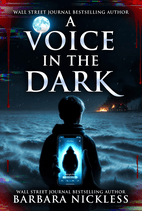
Barbara Nickless's A Voice in the Dark follows FBI criminal analyst Helen Belle as she investigates the murder of a cheerleader's family and the disappearance of her twin brother, plunging into a dark-web gaming underworld where a predator called the Midnight Man recruits vulnerable teens through video games and isolation. A taut psychological thriller for readers who love tech-horror and procedural grit.
Feature
Insta.Page
Blinkist
Shortform
A Voice in the Dark
✓
✕
✕
Summary Depth
Full Chapter-by-Chapter
15-min overview
Section-by-section guides
Audio Narration
✓
✓
✓
Visual Mindmaps
✓
✕
✕
AI Q&A
✓
✕
✕
Quizzes
✓
✕
✕
PDF Downloads
✓
✕
✓
Price
$89.99/yr
$146/yr (PRO)
$199/yr
*Competitor data last verified July 2026.
1 Page Summary
You’ll be drawn into this taut psychological thriller from the opening pages, where sixteen-year-old Katelynn Heath—a star cheerleader and golden girl—feels her twin brother Jason slipping into something dark and unknowable. When she returns from practice to find her family murdered and Jason missing, the case lands on the desk of FBI criminal analyst Helen Belle. Helen is sharp, haunted, and fiercely protective of her adopted daughter Livvie; she’s paired with Detective Clif Burgess, a man fighting his own mortality. Together, they trace a thread of digital manipulation back to a shadowy figure known only as the Midnight Man—an online predator who weaponizes video games and isolation to recruit vulnerable teens into committing unspeakable acts. The stakes are brutally high: Katelynn is still alive, and time is running out.
The investigation pulls Helen into a labyrinth of dark-web gaming communities, where an entity called Animus preys on adolescent despair. She is forced to collaborate with Dr. Benedict Hoffman, a brilliant but prickly former seminarian turned forensic psychologist whose own obsession with the Midnight Man borders on destructive. Once lovers, their reunion is charged with old wounds and new urgency. Benedict has spent years tracking a user named Breaker, a gamer who may be connected to Jason’s descent. As they dig deeper, they uncover a trail of shattered families, a rogue psychiatrist, and a sprawling digital underworld where the line between avatar and reality dissolves. At every turn, the Midnight Man seems to be a step ahead—leaving taunting messages, threatening Helen’s daughter, and tightening his grip on other teens poised to follow Jason’s path.
Perfect for readers who love cerebral, atmospheric crime fiction with a modern tech-horror edge, A Voice in the Dark blends procedural grit with psychological depth. Barbara Nickless crafts a world where the most dangerous monsters hide not in basements but in plain sight, whispering through screens into the ears of the lonely and lost. Helen and Benedict’s uneasy alliance crackles with intellectual fire, while the chilling echoes of real-world online exploitation ground the story in gut-wrenching authenticity. The novel asks a harrowing question: when a predator can reach inside your home, your head, and your heart, who can you trust—including yourself?
1
Katelynn hates and loves her twin brother Jason. He says he doesn't believe in anything anymore and wants to be left alone with his darkwave music and violent video games, the shades drawn in his room like a tomb. But Katelynn fears something sinister has taken hold of him, like a fungal infection from The Last of Us. This afternoon, Jason was supposed to drive her home from cheerleading practice, but he tells her he has to take care of something and to call Mom. What "something"? Dead air. Now her mind is on Jason, not her stunts. She's the flier, the top girl, but she keeps slamming into the mat. Three times. Coach calls a halt. "Your body wants to quit, not your mind. Who's the boss?" the team shouts back: "Our minds!" Katelynn is pretty sure it's her mind that wants to quit.
Twenty minutes later, she climbs into her mom's Defender SUV. Her mom, Andrea Heath—a famous ad executive—is already pulling away. Katelynn tries to tell her something before they get home, something she doesn't want Dad to know. But the hands-free Bluetooth chimes: a call from Luke, Mom's partner at the agency. Mom says it's important—big client panic—and asks Katelynn to hold that thought. Katelynn feels like she's scrabbling at the edge of a cliff as the ground gives way. She's tried to talk about Jace before, but her mom keeps ghosting her. Maybe money and prestige are fungal infections as ruthless as whatever is taking root in Jace's brain. "Whatev," she says. Mom takes the call. Luke is terrified about the CEO of Three Peaks Aviation threatening to take his business elsewhere. Mom soothes him, says the work is almost done, and disconnects just as they pull in to the house.
Mom peels around the corner. Katelynn scolds her for nearly hitting a kid. Mom apologizes and asks what Katelynn was saying. Katelynn pulls herself out of her sulk. "Something's wrong with Jace. He's all . . . gloomy. He says we're all NPCs." Mom sighs, dismisses it as sullen teenage boy behavior. "Try to be understanding. Jason's seventeen. And a boy. Whatever's eating him, he'll outgrow." Katelynn says it's more serious than being seventeen. "Ask him about the Midnight Man." Mom mishears "NPC" as "NCC," and Katelynn explains: non-player character. He doesn't think they're real. Total narcissist. But lately he's been gloomy and amped, and Jace doesn't get pumped about anything except his gaming. Mom looks alarmed. "Amped? Do you think he's taking drugs?" Katelynn says no, she snooped. Mom asks who the Midnight Man is. Katelynn says some gaming dude Jace is obsessed with. Mom suggests maybe he met a girl. Katelynn snorts. "Mom, that was two years ago. Before Jace got weird." Mom says she hears her, but it's not an emergency. Can it wait until tomorrow? She needs to focus. Maybe talk to Dad. Katelynn says Dad will just blow up. Mom reaches out a hand, but Katelynn flinches, yanks open the car door, and slams it behind her.
Inside the house, Katelynn drops her backpack and coat in the hallway, stomps into the kitchen. She looks for Daisy the shepherd but doesn't see her. She grabs a soda and chips, texts her bestie Elise about how her mom didn't listen. As she types, a man enters the kitchen—a mountain of a man with a thick beard. He introduces himself as Rick, the repairman her dad called for the Wi-Fi. He hands her a business card. "Rick's RePAiR—ALL TECH." He smiles, winks, and leaves. Katelynn texts Elise: "just met Hagrid some IT dude fr w beard + wizrd hair my dad rly knows how to pick'em" Elise replies with laughing emojis. Katelynn says Jace is the wizard; she's just a dumb muggle. She grabs her snacks and heads toward the stairs.
The house is dead quiet. No video game sounds from Jason's room. No violin from Eric's room. No Dad yelling. She glances back down the stairs. Mom is taking a long time at the mailbox. Katelynn climbs, pauses near the top. "Jace?" No answer. His door is closed, as always. Eric's door is also closed. The hall feels cold, like a window is open somewhere. She sniffs. Something smells bad—like oil and sewage. She decides to leave him alone, but something isn't right. She sets down the soda and chips, walks to Jason's door, and turns the knob.
The stench is strong inside. The room is dark except for a shaft of light from the closet door, which is ajar. Jason stands in the middle, back to her, holding something in his right hand. At first she thinks it's a game controller, but then she looks closer. "Jace? Is that Dad's gun? Oh, dude, you're in so much trouble." Jason spins around, pale and wide-eyed, shaking. Katelynn feels a strange click in her mind, pieces falling into place: Jason is considering suicide. She's been too stupid to see. She abandoned him. Now he's going to kill himself. "Oh my God, Jace. Put it down." She's crying. "What are you thinking? Please put it down." He hardly seems to see her. There's something dark spattered on his cheek. He's standing over a huddled lump on the floor. Clothes? She takes a step closer, then sees it's not a what—it's a who. Eric. "Oh my God!" Her voice rises from a hollow cavity in her chest. The closet door swings open wider. For a second, the old Jason is back. There's a spark in his eyes. "Run, Katelynn," he rasps. "Run!" She spins, trips, stumbles into the hall. Trying to scream but the words won't come. She's almost to the stairs when something hits her from behind. The floor slams into the bones of her face. Stars, she thinks as pain pulls her under. There are stars.
💡 Try clicking the AI chat button to ask questions about this book!
2
“Keep your gloves up,” I snap. The skinny teenager scowls but complies, her gloved hands rising until she’s blocked my jab toward her face. I circle, pivoting forward, then back, as I come at her with a series of cross feints. Wisps from my ponytail stick to the sweat on my face. “Weight on your back foot for the slip. Elbows tucked. Stay on the balls of your feet. Keep it light, Livvie. Light. You're a cloud. A moonbeam. Not a tree sloth.”
This earns me another scowl. I swipe sweat from my chin to hide a smile.
At five foot three, her arms inked with the kind of tats a friend gives you in her bedroom, sixteen-year-old Olivia Diaz weighs ninety-seven pounds soaking wet. She appeared at the Glove Pit a couple of months ago, wanting to know how to fight. The first time she walked in, she hesitated just inside the door. I'd been skipping rope, but I stopped and watched this scrap of a girl take in the cracked weight bags and scuffed rings, the exposed overhead pipes and the pendulous speed bags—all the grittiness of a small-time boxing gym. She inhaled the rank odors of sweat baked into canvas, fresher sweat on teen bodies, the sour tang of liniment. A trace of bleach lingered under it all, not enough to mask the funk but enough to say we tried. She could have turned on her heel, but instead she smiled like she’d found home. I decided then and there to take her under my wing.
The gym is for at-risk teens, and all of them have a story. So do most of us coaches. I wanted to hear this girl's. Livvie doesn't look like much, but I learned fast that she's got a mean left hook. That hook will take her a good distance once she gets some oomph behind it. Her focus now is trying to pack on the pounds and bring her footwork up to the level of her hook. That last part is my job.
“Move around, Livvie. Distribute your weight. All the power comes from your feet.” She shuffles. Bounces. “Yeah, boss.” She took to calling me “boss” after watching Million Dollar Baby and trying to turn me into a female version of Clint Eastwood. In her eyes, at my creaky age of thirty-two, I look the part. Next thing, no doubt, I'll be spouting nose hair and wearing reading glasses.
“Left foot on the silver,” I say, pointing to the line of duct tape. “Toes at one o'clock.”
I learned boxing from my uncle. Not because he thought girls belong in the ring, but because—as a private investigator—he'd seen what girls had to put up with. He wanted me to be able to take a punch from an assailant and bounce right back up, swinging. He taught my brother as well. Kevin was a rising champ until someone offered him fentanyl and all his troubles evaporated in a puff of blue powder. Addiction runs in the family. Our parents and grandparents loved the bottle—gin, rye, vodka. But a stronger demon has sunk its hooks into Kevin.
Livvie needs to learn her own skills. She's a looker, with waist-length brown waves and immense green eyes. With her petite size, she screams target. By the time she showed up at the Glove Pit, she’d been sexually assaulted twice. She refused to press charges.
Half an hour later, I call a halt. We're both sweating, gasping for breath like landed fish. I check the clock on the wall. I have an hour until I need to be in my office at the FBI’s resident agency in Boulder. I'm a member of the FBI's Colorado VCAC team—Violent Crimes Against Children—and our field office’s coordinator with the Behavioral Analysis Unit in Quantico, Virginia. Plus, Livvie is flagging.
“You been eating protein like I said?” I ask. She rips the tape off her gloves. “You mean that mystery mush at school they call lunch?” “I brought you some powder. What happened to that?” Her gaze slides away. “My stepdad says it's a stupid fad. He tossed it.” The bastard. “It’s okay. We'll get more and keep it in your locker here.” I glance at my watch. “Hit the showers, then we'll stop at First Watch for eggs and bacon.”
Pleasure lights her eyes before she retreats into the seeming indifference she's built out of life’s first lesson: If you don’t care, they can’t hurt you. She says, “That'd be okay, I guess. Can I get pancakes?” “Protein first. Then sugar. And not much of that.” She shows her small teeth. “Blueberry.”
My phone buzzes with a text. I glance down. Hey, Agent Belle. Helen. It’s Clif Burgess. You remember Derrick Tremblay? We were right. He had help.
A fuse ignites in my gut, sparking through my veins like electricity. Derrick Tremblay. Damn. I turn to hide my reaction from Livvie, but she dances around me as if we're still in the ring. Our eyes lock, and I know she sees shock in mine. She's aware of my job with the FBI, and her own eyes light up. “Serial killer,” she whispers. I push her toward the showers, and she grins and darts away.
Clif is Detective Clifton Burgess with the Denver Major Crimes Division. We haven't spoken more than a handful of times in the last five years. We met when I was an expert witness and he the homicide detective on the Derrick Tremblay case. Back when I was a rising star in the field of criminal humanities and hadn't considered the FBI as a career path. Back before the Tremblay trial shattered both my personal and professional plans.
We were right. He had help. The help Clif's talking about is the Midnight Man. Our mysterious ghoul who might or might not exist. The whisperer in the night. The ghost in the machine. The voice of my nightmares.
Clif's next text consists of two words: He's back.
3
You don’t get used to murder. Helen makes it through a shower and a quick McDonald’s breakfast with her daughter Livvie, then drives from Boulder to Denver in under forty minutes. The traffic gods are kind. Now she sits at a conference table on the fourth floor of Denver PD’s headquarters on Cherokee Street. Cold morning sun stripes the walls. Steam rises from the coffee Clif sets in front of her.
He looks thin, grayed, bruised around the eyes—still beating stage IV melanoma but ten pounds lighter. They catch up: his promotion, her stint with the feds, his fishing, her running and coaching and crime shows. He’s a widower, she’s a defiant single, both obsessed with the criminal mind. She should have called more often.
Clif clears his throat and dives in. Twenty-four hours ago, Tuesday morning at 0730, police got a welfare check request for the Heath residence in Platt Park. No response, no forced entry. Officers found a key under a flowerpot, entered, and discovered Andrea Heath at the bottom of the staircase, shot through the head. As they searched, they smelled propane. An explosion ignited an inferno. The officers escaped. Three victims, all shot. Denver PD’s Major Crimes took over.
He slides a photo across the table: ruins of a Spanish-style home, blackened stucco, a fountain, a wrought iron gate. Fire Investigations suspects arson—two propane canisters found in the kitchen. Security cameras at the Heath house and neighbors’ homes were disabled. The last uploads show thirteen-year-old Eric Heath arriving home at 3:30, seventeen-year-old Jason Heath at 4:00 in the family Volvo, then Andrea with Jason’s twin Katelynn at 6:00. The dad worked from home. Cameras went offline right after mother and daughter entered the garage.
“Local cameras were also disabled during the Tremblay murders,” Clif says. Helen remembers.
He places a crime scene photo in front of her: an adult female, burned, skin blackened and blistered, hair in tufts, nose gone, eyes charred holes. Helen pops two acetaminophen with cooling coffee. He adds photos of an adult male and a teenage boy, equally grisly—arms and legs bent, hands curled into fists from the heat, the pugilist pose. The familiar headache stabs; nausea rises. She swallows. Clif teases her about needing the trash can. She glares back.
Helen’s been a cop for two years, an FBI analyst for three. She can load a Glock in twelve seconds, run a mile in six, wrestle a 250-pound man to the ground. But five years in, she still gets sick viewing the wreckage. A therapist told her the headaches come from repressed trauma—something terrible she saw as a child, a war between remembering and repressing. Her parents died in a murder-suicide, but she and her brother were out of state that week. And this morning the queasiness also comes from recognition: she’s seen nearly identical photos before. On the Derrick Tremblay case.
Clif raps his knuckles on the table. Medical examiner confirmation is pending, but likely the victims are Andrea and Michael Heath and their thirteen-year-old son Eric. Neighbor saw Andrea at the mailbox after she and Katelynn arrived home—in a rush, not upset. Clif asks what jumps out.
Helen leans in. Despite fire damage, the victims were shot before the flames—execution style, single bullet between the eyes, probably nine-millimeter. The man was killed at a desk (perhaps the dad’s home office). The woman at the bottom of the stairs, trying to flee. The boy in a bedroom—metal side rail visible. The fire started away from the bodies, likely in the kitchen on the lower floor, then spread through walls and upward. The man’s body sustained the most damage, closest to the source. She asks if blood was smeared before the fire. Clif says they’ll get to that.
“Spot on, junior.” He gives a soft smile. Ballistics, DNA, autopsies are pending. The only evidence so far: a Springfield nine-millimeter registered to Michael Heath, stashed behind a washing machine near the kitchen. Jason’s prints were lifted from the grip—on file from the National Child Identification Program. No other prints. Jason and Katelynn vanished before police arrived. Amber Alert is out. The case has gone national.
“We can use that,” Helen says. CARD is working it—the FBI’s Child Abduction Rapid Deployment unit. She checks the time. More than twenty-four hours gone. Assuming the kids aren’t the perpetrators, it’s bad. The danger zone. Forty-eight hours, the chance for rescue drops nearly to zero.
Clif asks if she sees the same alarming resemblance to the Tremblay murders. She closes her eyes, thinks. Suggesting a link is like slamming a hornet’s nest. Six years ago, sixteen-year-old Derrick Tremblay shot his parents and brother, killed them instantly, wrote a suicide note, started a fire that destroyed the home. He stood outside, injured from an apparent suicide attempt, a gun splashed with his parents’ blood. Security cameras disabled—Derrick had deactivated them. He never confessed, never denied. He murmured about “transformation,” the “Midnight Man,” “none of this is real,” then went mute. At his trial (tried as an adult), he remained mute. He’s been mute ever since.
Five and a half years ago, Helen was a new faculty member at Colorado College, providing expert testimony. Derrick got under her skin. She expected to find him repellent, but seeing him mute, forlorn, broken stirred strange sympathy. The prosecution’s picture of a mentally sane but inexplicably evil teen didn’t sit right. She doesn’t believe in evil as a malevolent force. She believes in trauma, pathology, broken brains.
Now she returns to the destroyed bodies in the photos. Adrenaline drums in her blood. The victims, the cause and manner of death, the teenage suspect, the fire—all tragically familiar. Could be a copycat. Or—she touches her pulse—her former mentor Dr. Benedict Hoffman and she were right. Derrick didn’t plan alone. The Midnight Man is out there, hiding behind a digital mask, driving alienated teens into murder.
She takes a mental step back. Too early for suppositions. She needs to be neutral.
“There are some similarities,” she says.
Clif leans back, pleased. He pushes a blueprint of the house across the table. The room belonging to Jason Heath, over the garage, had limited fire damage. That’s where Eric’s body was. They found remnants of a poster: The Scream by Edvard Munch.
“Okay,” Helen says. But she taps the brakes. The Scream is world-famous, appears everywhere in pop culture. Both Jason and Derrick likely saw it multiple times.
Clif places a fifth photo on the table, spins it to face her. This is from a partially surviving wall in the parents’ bedroom. Crime scene detectives ran a Kastle-Meyer test. It appears Jason—his prints were lifted—drew the image in blood, likely his parents’ blood. The smears in the parents’ blood. He drew it before the fire, when the blood was fresh.
Helen tries to imagine a boy dipping his hand into his parents’ blood. The mental cog keeps slipping. She picks up the photo. On the soot-covered plaster above Andrea and Michael’s bed, a crude outline of a man, mouth agape, hands pressed to the sides of his head, rising shrieking out of a black void. A rush in her ears like a subway train.
A single crime scene contains thousands of data points. Forensic elements. The killer’s psychology. Sometimes deliberately arranged signs. Ramirez left satanic symbols. The Zodiac created ciphers. Jason Heath left the image of someone screaming.
Just like Derrick.
It’s Edvard Munch’s The Scream.
4
Clif watches the expert, whose mind races through possibilities. After being hired as an expert witness in Derrick Tremblay’s trial, the expert learned Derrick was obsessed with Munch’s The Scream—posters in his room, a tattoo on his biceps. The painting’s isolation and anguish haunts the expert’s dreams, recalling his own miserable teens and a visit to Oslo’s National Museum. He stood before the work and saw the horror of searching for meaning in a meaningless world, the same despair he imagines in teenagers swallowed by social media’s constant message: You aren’t enough. The jury ruled Derrick committed an incomprehensible crime, but Benedict, Clif, and the expert agreed: He didn’t do it alone.
The expert stacks the photos and slides them back to Clif, but Clif shakes his head. “Those are yours.” The expert thanks him, placing the photo of the house on top, and asks about computers, laptops, phones. Clif says the excavation of the house is ongoing; so far nothing. It was the same with the Tremblay deaths—all digital devices removed, never found, never used to connect to the internet again. Derrick either couldn’t or wouldn’t explain what happened to them.
Clif spent the night writing an affidavit for the Heaths’ entire digital records, invoking exigent circumstances, but not all companies will comply. Hence the warrant. No wonder he looks tired—the affidavit had to be highly specific to avoid Fourth Amendment violations, even with a murdered family. Clif requested phone records, emails, messages, chat logs, GPS data, online activity, cloud storage, and banking history going back four weeks. He asked for an accelerated response, but even with a judge’s warrant, it will take days, maybe weeks. Four weeks should be long enough to learn if Midnight Man influenced either Heath teen and to establish his patterns—unless the information is buried on the dark web, where things get complicated.
Clif shuffles through a second file folder, already thick in the twenty-four hours since he’s been on the case. He hands across a single sheet: a photocopy of Jason Heath’s alleged suicide note, the original survived because it was in the backyard, held down by rocks away from the house. The note is typed in Times New Roman, with a fold line and photocopied splotches on the bottom half. The expert reads it silently: My family understands now. Their blindfolds are gone, and they are real players. They are free and will move into the real world, all together. But I, I am in blood. I am steeped in it. For me, there is no hope.
“Steeped in it,” the expert echoes. Clif intones in his gruff baritone: “I am in blood—stepped in so far that, should I wade no more, returning were as tedious as go o’er.” Shakespeare’s Macbeth—the same reference Derrick Tremblay used in his suicide note. A chill slides along the expert’s neck, as if the ghosts of Derrick’s family have walked into the conference room. “Meaning Jason believes he has committed such terrible acts that it is equally impossible to move forward or back. So maybe he decides to disappear?” The expert presses his fingertips to the tender spot between his eyes. “What are these smears on the paper?” “Blood. Based on a Kastle-Meyer test. Waiting on the lab.” The expert notes Derrick studied Macbeth in high school; they’ll have to find out about Jason. The coincidence of two teens six years apart homing in on that particular line seems remote—another link between them. “It’s on our list of questions for when we meet with Jason’s teachers,” Clif says.
Clif passes over a copy of Derrick’s suicide note for a refresher. The expert doesn’t need it but picks it up anyway: They are free! They were shadows. Echoes. Scripted loops in a world of lies. But I’ve freed them. They are Players now. They’ve entered the real world. I’ve done this for them. But I am ruined. How did it come to this? I am in blood. I am steeped in it.
“Both boys talk about who is a true human and who isn’t,” the expert says. “The teens are human, but their families aren’t. Not until they die. Somehow death humanizes them, as if it’s a kind of rebirth. A revelation. Sort of like having Neo’s red pill from The Matrix shoved down your throat.” He crosses his legs and swivels gently. “You could have started our conversation with Jason’s note.” Clif gives that gleam. “I like laying the groundwork.” “You like messing with me.” “That, too.” He grins. The expert rolls his eyes.
Both boys misquote Macbeth—“steeped” instead of “stepped.” The expert suggests they’re using the same source, something other than the original play. Clif says they might just misquote; steeped makes more sense to the modern ear. Derrick’s note is in the trial transcripts, which weren’t sealed. But if Jason asked for copies, the court would refuse him—a seventeen-year-old doesn’t have a legit reason. Assuming he didn’t get a copy from someone else… Then how did he mimic it? The expert rereads both notes. Derrick’s note seemed to mean he thought he was saving his family by murdering them, making them real players with free will. In psychological parlance, perverted mercy killings. Cases of shared delusion or online manipulation are rare—1 to 2 percent—but horrific. The numbers are going up with online influence and AI. Derrick told police someone called the Midnight Man showed him the need for transformation, but detectives and cyber experts found no evidence. According to the prosecution, there was no Midnight Man, only Derrick shifting blame. The jury ruled Derrick acted alone. Case closed.
The expert raises his head to Clif’s patient eyes. “There’s a five-year age difference. But their homes were only a few miles apart. Did these kids cross paths?” “We’ve found no evidence they ever connected. Different schools. The Tremblays had been in Denver only three months before their deaths. They hadn’t had time for community building.” Clif drums his fingers on a folder. The expert spots a small sore under his shirt cuff. He hates cancer.
Clif’s phone chirps. He glances down, frowns, and excuses himself. In the few minutes he’s gone, the expert commits Jason’s suicide note to memory.
When Clif returns, the shadows under his eyes have become trenches. “A hunter found a body. Identified as Jason Heath. His driver’s permit was in his pocket. Sheriff’s department used fingerprints to confirm.” The expert’s heart slides sideways. “And Katelynn?” “No sign.” The small hope that the twins might be found alive vanishes like snow on a sunny Colorado day. Hope keeps them showing up at VCAC, but they also swim neck-deep in soul-crushing disappointment. The expert pushes to his feet, picking up the photocopies and sliding them into his bag. “Where’d they find him?” “Sandusky County. Middle of fucking nowhere, Ohio, thirteen hundred miles from where his family was killed. Allowing for breaks, roughly twenty-three hours by car. He and—presumably—Katelynn took off right after the murders Monday night and arrived last night. Mystery is why he didn’t take either family car, and they haven’t traced him to public transit or a ridesharing app. No car rental. Neighbors’ security cameras knocked out. They’re checking traffic cams and running door-to-door. A damn long process.” The expert is pulling on his coat. “We’ve got something the kids didn’t. Airplanes. The FBI’s travel office will get us seats on a government-contracted airline. United, probably, since we’re in Denver. Even if it means bumping a couple of passengers, we’ll get to Sandusky while there’s still daylight.”
You've reached the end of the free chapters
Next chapter: “5” is locked
Keep reading A Voice in the Dark — and unlock all 700+ book summaries with audio, mindmaps and AI Q&A.
$0.00 due today · 7 days free, then $89.99/year ($7.49/mo) · Cancel anytime before day 7
Barbara Nickless is the critically acclaimed author of the Sydney Rose Parnell crime series, including *Blood on the Tracks* and *Dead Stop*, which draw on her expertise in forensic science and her background as a former archaeologist and college instructor. Her work often explores themes of violence, redemption, and human resilience, informed by her extensive travel and study of conflict zones. Nickless is also the author of the Evan Wilding archaeological thrillers, such as *Crypt of Bone*, further showcasing her deep knowledge of history and mythology.
Frequently Asked Questions about A Voice in the Dark
What is A Voice in the Dark about?
The novel follows FBI agent Helen (Agent Belle) as she investigates the brutal murder of a family and the disappearance of teenage cheerleader Katelynn Heath. The case leads her into the dark world of online gaming and a manipulative predator known as the Midnight Man, who uses a virtual world called Eidolon to coerce vulnerable teens into committing violent acts. With the help of psychologist Benedict Hoffman, Helen races to find Katelynn alive while uncovering a network of manipulation that threatens other teens. The stakes are high: stop a shadowy killer before he strikes again and save a girl trapped in a nightmare.
Who is the author of A Voice in the Dark?
Barbara Nickless is the author of this novel. She is a New York Times bestselling author known for her crime thrillers, including the Sydney Parnell series. Her writing often draws on her background in criminal justice to create authentic, gripping stories.
Is A Voice in the Dark worth reading?
Yes, this novel is a compelling, fast-paced thriller that explores timely issues of online manipulation and the vulnerabilities of teenagers. The complex characters—from the determined FBI agent to the tormented psychologist—and the chilling, realistic depiction of a digital predator make it a page-turner. Fans of crime fiction and psychological suspense will find it both thought-provoking and deeply satisfying.
What are the main themes in A Voice in the Dark?
The central theme is online manipulation and the dangers of anonymity in gaming communities, where predators exploit teens' loneliness and desire for belonging. The novel also examines family trauma, the struggle between good and evil, and the psychological impact of violence on young minds. Additionally, it delves into the power of stories and art (like Munch's *The Scream*) to reflect and shape human darkness, and the importance of human connection in resisting isolation and despair.
📚 Explore Our Book Summary Library
Discover more insightful book summaries from our collection