A Voice in the Dark Themes
by Barbara Nickless
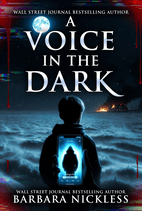
The novel is really wrestling with how easily families can fail their kids, how a neglected teenager can slip through the cracks into the hands of a predator online. It's asking whether evil comes from brain chemistry, a dark force, or simple human cruelty, and whether a simulated world can feel more real than the one where parents won't listen.
On this page you'll find each major theme tied to a concrete moment from the book: family neglect shown through parents ignoring children's pleas, online grooming via the Midnight Man's game manipulation, simulation versus reality as killers see murder as liberation, trauma haunting characters like Helen's vomiting, and the nature of evil debated by Benedict. Plus recurring symbols: The Scream painting as a horror calling card, the game Eidolon/Underland as sanctuary and hunting ground, and the Midnight Man persona as invisible digital evil.
Major Themes in A Voice in the Dark
Family neglect and communication breakdown
The story repeatedly shows how parents dismiss or ignore their children's cries for help, leaving them vulnerable to outside manipulation. Katelynn's attempts to warn her mother about Jason are brushed off, and Jason's father is described as hands-off and critical, allowing the online predator to fill the void.
- Katelynn tries multiple times to talk to her mom about Jason's worsening state, but her mom prioritizes work calls and dismisses her concerns as teenage moodiness. (Chapter 1)
- Hersch notes that Jason became friendless and his father was hands-off and critical; the counselor found no red flags despite obvious changes. (Chapter 18)
Online manipulation and grooming
The Midnight Man and his agents systematically target isolated, vulnerable teens through online games, flattery, and psychological pressure, gradually eroding their sense of self and steering them toward violence. The story draws explicit parallels to real-world cases like the Slender Man stabbings and the murder of Breck Bednar.
- Midnight Man tells Shelby she is 'the first in your family' and 'very important,' isolates her by saying people are scared of her growth, and promises to be there when she acts in Underland. (Chapter 15)
- Midnight Man uses psychological pressure, calling Shelby a 'blind rat in a maze' and demanding she prove she is not weak, to push her toward a final act of 'breaking free.' (Chapter 22)
Simulation vs. reality
Many of the killers and manipulated teens come to believe that the real world is a simulated code, and that murdering their families is an act of liberation that will allow them to ascend to a higher reality. This belief is actively promoted by the Midnight Man through the game Eidolon and the concept of 'NPCs.'
- Sara explains that the killers may have believed killing their families would free them to become 'real players' in a simulated world, similar to NPCs. (Chapter 16)
- Derrick argues that the universe is a simulation based on quantum mechanics and video game rendering; he clings to this belief to avoid guilt over the murders. (Chapter 28)
Trauma and its manifestations
Past trauma—sexual assault, addiction, the loss of loved ones—shapes the characters' motivations and haunts them physically and emotionally. Helen vomits at crime scenes due to repressed childhood trauma, Belle is driven by her brother's overdose, and Livvie learns to box after being assaulted.
- Livvie's past sexual assaults and her determination to learn boxing; Belle's brother Kevin's addiction and her own past with the Tremblay case. (Chapter 2)
- Helen's visceral reaction to the crime scene photos, which she attributes to repressed trauma from her childhood, causes her to vomit. (Chapter 8)
The nature of evil
The characters debate whether evil is a neurological defect, a malevolent external force, or a choice rooted in human nature. Benedict insists evil is real and can be personified, while Helen initially sees it as brain misfiring. Lucas Poole's actions force them both to reconsider.
- Benedict accepts that brain abnormalities account for psychopathy but also believes in evil; they used to argue about this. (Chapter 13)
- Belle thinks: 'I've always believed evil is nothing more than a brain misfiring... But maybe Benedict is right. Maybe evil is older than that, seeded in us like original sin.' (Chapter 45)
Symbols and Motifs
The Scream
The Munch painting is used by the killers as a signature or calling card, representing the horror of their crimes and their desire to signal their awakening from the simulation. It appears drawn in blood at crime scenes and as a glitch in the game Umbra.
- Jason's fingerprints were found on a blood drawing of The Scream on his parents' wall. (Chapter 3)
- Jim reports a ViCAP alert: a five-year-old case where teen Jennifer Moore drew The Scream in her mother's blood. (Chapter 16)
Eidolon / Underland
The online game serves as both a sanctuary for isolated teens and a hunting ground where the Midnight Man grooms and radicalizes them. Underland, the hidden layer, represents the final stage of manipulation where violence is enacted.
- Benedict logs into the game Eidolon posing as a troubled teen to find Midnight Man; he notes that his greatest skills are patience and persistence. (Chapter 7)
- Shelby enters Underland to convince NPCs to ascend; she feels sick but powerful and likes that feeling very much. (Chapter 32)
Midnight Man
The online pseudonym for Lucas Poole, he embodies the invisible, untouchable evil that uses digital platforms to exploit vulnerable teens. He is described as a 'ghostly demon' who whispers violence and offers transcendence through death.
- Midnight Man tells Shelby that the real world is code and she is waking up, and challenges her courage to prove she is not weak. (Chapter 22)
- Midnight Man leaves a taunting message on Helen's screensaver: 'Run, run, as fast as you can. You can’t catch me, I’m the Midnight Man.' (Chapter 23)
The A Voice in the Dark (Benedict Hoffman and Helen Belle Book 1) summary covers these themes in the plot.