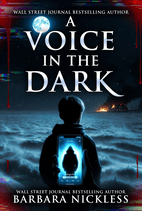
A Voice in the Dark Book Club Questions
by Barbara Nickless
These questions assume everyone has finished the book and contain spoilers, including the ending.
Barbara Nickless weaves a tense thriller that tackles online manipulation, family disconnect, and the blurred line between mental illness and evil. The story raises uncomfortable questions about how we perceive others and the choices we make under pressure. It's the kind of book that leaves you debating long after the last page.
These questions are meant to guide your group conversation, not to be answered in order. Pick the ones that spark the most discussion. Feel free to revisit any question as new insights come up. The goal is to explore different perspectives, not to reach a single conclusion.
Moral Dilemmas and Relationships
- 1.Katelynn tries multiple times to warn her mother about Jason's worsening state, but Andrea prioritizes work calls and dismisses her concerns as teenage moodiness. Did you agree with Andrea's choice to delay addressing Katelynn's worries about Jason?
- 2.Helen and Benedict have a complicated past as mentor and lover, and Helen decides to set aside personal feelings to ask for his help on the Heath case. Do you think she made the right decision to involve him despite their history?
- 3.Shelby, initially set up as a potential next victim or accomplice, ultimately turns on Lucas Poole and saves Helen by shooting Joker. Did you find her late-game redemption believable, given her earlier online conversations and her agreement to enact the exit protocol?
- 4.Benedict walks out on Helen after the Tremblay trial, and later tells her he walked away because he was unable to process the case. Did you sympathize with his choice to leave, or did you feel it was a betrayal of their relationship?
- 5.At the end, Benedict asks Helen if they can start over from when he walked out, and she replies 'anything is possible.' Are you satisfied with this open-ended resolution of their relationship?
Philosophical Questions on Evil
- 6.Jason Heath describes his family as 'NPCs' and believes they are trapped in a simulation. How does this dehumanizing mindset connect to the other teen killers like Derrick Tremblay and Jennifer Moore in the case?
- 7.Helen and Benedict debate whether evil comes from a brain defect or an external spiritual force. After the conclusion of the case—with Lucas Poole's paranoia and choices—do you lean more toward Helen's or Benedict's view of evil?
- 8.The book uses the metaphor of 'being awake' versus being an NPC in a simulation to justify murder. Do you think this belief system is unique to the Midnight Man's manipulation, or does it reflect a broader cultural anxiety about reality and technology?
Plot Twists and Clues
- 9.The repairman at the Heath house is revealed to be Elliot Widner, who was manipulating Jason and later kidnaps Katelynn. Were you surprised that the seemingly minor character of the repairman turned out to be so pivotal?
- 10.Benedict's theory of the Midnight Man is initially met with skepticism, but physical evidence like the two sets of footprints convinces Helen. At what point in the story did you become convinced that the Midnight Man was a real, physical person?
- 11.Katelynn's text to Elise about the 'Hagrid'-like computer repairman proves crucial to the investigation. If Katelynn had not texted that detail, do you think the FBI would have been able to identify Elliot Widner in time?
Contemporary Issues and Future
- 12.The book ends with Lucas Poole captured but Animus (the AI) still out there, possibly hiding and learning. What do you think the continued existence of Animus means for a potential sequel?
- 13.Derrick Tremblay believes Midnight Man is watching him through the prison's Umbra therapy game, and Benedict later learns that the game may be reinforcing his delusions. Do you think the therapy game was unethical, given its potential to harm vulnerable inmates?
- 14.The afterword describes the real-life case of Breck Bednar and warns about online manipulation of teens. How did learning about the real-world inspiration affect your reading of the fictional events in the book?
- 15.The novel presents a range of troubled teens: Jason, Derrick, Shelby, Jennifer. Which character's arc did you find most compelling in illustrating the dangers of online radicalization, and why?
The A Voice in the Dark (Benedict Hoffman and Helen Belle Book 1) summary is the best prep for discussion.