As an Amazon Associate, we earn from qualifying purchases.
⚠️ READER ADVISORY: This is a deep-dive summary designed for those who want the full story. Contains spoilers.
What is the book The Queen's Witch about?
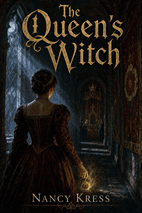
Nancy Kress's The Queen's Witch follows Alysoun, forced to become a cunning woman as her grandmother lies dying, Elyn, brought to Anne Boleyn's court as her taster amid poison fears, and Sarah, drawn toward dark magick. Tudor intrigue woven with witchcraft for readers who love dangerous bargains.
Feature
Insta.Page
Blinkist
Shortform
The Queen's Witch
✓
✕
✕
Summary Depth
Full Chapter-by-Chapter
15-min overview
Section-by-section guides
Audio Narration
✓
✓
✓
Full access to all 700+ summaries
✓
✓
✓
Visual Mindmaps
✓
✕
✕
AI Q&A
✓
✕
✕
Missing a book? Request it, usually live within 48h
✓
✕
✕
Quizzes
✓
✕
✕
PDF Downloads
✓
✕
✓
Send to Kindle
✓
✓
✓
Price
$89.99/yr
$146/yr (PRO)
$199/yr
*Competitor data last verified July 2026.
1 Page Summary
Nancy Kress's The Queen's Witch opens on Alysoun, a young woman whose plans are fixed on two things: marrying Mark and becoming a cunning woman like her grandmother. Then Grandmother collapses, robbed of speech and movement, and Alysoun's patient, carefully stitched future comes apart in an instant. Under pressure from Mother Redcap, she is forced to take up her grandmother's familiar and be made a cunning woman while the old woman is still dying—the title she wanted arriving in the worst possible way.
Elsewhere, Elyn wanders the roads with her companion Pipkin, wary of the places that should offer shelter, until Anne Boleyn brings her to court as her taster. The position turns Elyn into a public emblem of the poison scare clinging to Anne's household, and the court watches her as closely as it watches the queen. Anne, determined to hold her ground, stages her return as a performance of defiance—while King Henry seats Queen Katherine beside him and places Anne at a lesser table, making and unmaking favor in full view of everyone. At Greenwich, Anne's calculated campaign to inflame Henry's desire deepens Katherine's humiliation, and her mocking Christmas masque raises the stakes for all who surround her.
Meanwhile, Sarah's path darkens as Agnes presses her toward malefic magick, drawing her step by step across lines she once swore never to cross, even as word arrives that Anne's power over the king still holds. Anne herself demands magick of Elyn at Wolfe Hall, and Elyn, cornered into a ceremony that will bind her, refuses to turn that power against anyone royal—a refusal that invites Anne's fury and the hanging threat that comes with it. Readers who love Tudor intrigue woven with witchcraft, court politics, and women making dangerous bargains will be pulled through this first book of the Tudor Witches series.
Part 1 - Chapters 1 to 5
Alysoun's world narrows to a single ambition: marry Mark and become a cunning woman. Then Grandmother collapses. The old woman is left unable to speak or move, and everything Alysoun has been planning tilts toward crisis. The wedding preparations she has been tending, the future she has been stitching together day by day, all of it loses its shape in an instant. Grandmother, who was the center of Alysoun's practical world and the source of her training, becomes a silent, motionless presence, and Alysoun's ambition to become a cunning woman is suddenly no longer a matter of patient study and gradual advancement. It becomes a race against a death that has already begun.
Mother Redcap does not wait for grief to settle. She wants Alysoun to take Grandmother's familiar before Frances dies, and the timing is brutal. There is no space for mourning, no interval in which Alysoun might absorb what is happening. The wedding preparations Alysoun has been tending are abandoned, and her ceremony must begin at once, pulled forward by the dying. Alysoun wants Grandmother saved, but she obeys the dying wish and is made a cunning woman while Grandmother dies. The title she has wanted arrives in the worst possible way, earned at a deathbed rather than a celebration. What should have been an occasion of pride and arrival becomes an occasion of loss, and the cunning woman's craft she receives is bound up with the death of the woman who taught her.
The horror does not end with the death. Grandmother's corpse rises screaming, and Matilda wants the horror to stop. The body that should be at rest is not at rest, and the sound of it tears through whatever grief might otherwise have settled over the household. Mother Redcap restrains the body, and in doing so reveals a rule that reframes everything: only the dead can haunt the dead. Alysoun wants to know what happened, and Mother Redcap tells her that Grandmother's spirit is tormented by a dead woman named Joan. The revelation does not bring comfort. It brings a name, and with the name comes the beginning of a question that will not leave Alysoun alone.
Alysoun wants a way to save Grandmother, and Mother Redcap explains the single path available. Only a thrice-braided witch can enter the Otherworld on Samhain to do battle. The stakes sharpen into a deadline and a rank Alysoun does not hold. She wants Mother Redcap to make her thrice braided, but Mother Redcap refuses because Alysoun is not ready. Alysoun wants to force Mother Redcap's help, and she is warned never to lay violent hands on a thrice-braided witch. The warning lands as both protection and cage, closing off the one route her desperation reaches for. She cannot compel the one person who might be able to give her what she needs, and she cannot reach the Otherworld without it.
Alysoun wants Mother Redcap to relent, and she pleads that she cannot remain in the cottage haunted by Grandmother's memory. The cottage itself has become unbearable, every corner of it carrying the presence of the woman who is no longer there and yet cannot rest. Mother Redcap wants Alysoun to understand the danger, so she sends the other women and Matilda away. The room empties, and the truth comes out in private. What could not be said before witnesses is said when only Alysoun remains to hear it.
Alysoun wants to know who torments Grandmother, and Mother Redcap reveals that it is Joan, Alysoun's mother. The name that was only a dead woman's name becomes something far more intimate and far more terrible. Alysoun wants the full truth, and Mother Redcap admits that Grandmother lied about Joan dying in childbirth. The foundation of Alysoun's history cracks. The story she has lived with, the absence she has understood as a natural loss, becomes something else entirely. She wants to understand why Joan would torture her own mother, and Mother Redcap begins telling the story of Frances's past in Lincolnshire. Mother Redcap wants Alysoun to know Frances's history, and she reveals that Frances was orphaned by the Sweat and taken into a great manor house. Alysoun wants to know what happened to Frances's husband Ned, and Mother Redcap promises more about him. The story is not finished, held back for what is to come.
Alysoun wants to become powerful enough to free Grandmother, and she commits herself to finding her Third and tying the thrice-braided cord despite the danger. The refusal that blocked her has not softened, but her resolve has hardened around it. She cannot stay in the haunted cottage, she cannot force the witch who might help her, and she cannot reach the Otherworld as she is. What she can do is pursue the one thing Mother Redcap says stands between her and Samhain: the missing Third, and the cord that will make her thrice braided. The commitment is not a solution. It is a direction, and Alysoun takes it because there is no other.
Mother Redcap wants Alysoun to understand Joan's evil, and so she conjures the past and forces Alysoun to witness it. The spell costs Alysoun her peace of mind. What she sees cannot be unseen, and the knowledge settles into her as a permanent weight. Alysoun tries to protect herself from the visions by standing behind the settle as a shield, but the spell traps her as an immobile witness, unable to look away or flee. She is held in place and made to watch, and the watching is the point.
The vision shows Frances fleeing to Mother Redcap with baby Alysoun in her arms, seeking sanctuary from Joan. Frances refuses to explain what happened, but Mother Redcap wants the truth, and through her magick she discovers it: Joan caused the storm that killed Alysoun's father and twelve other men. The scale of it is not a private crime but a public one, a destruction that took many lives and left Frances with no choice but to run. Mother Redcap wants to save Frances and Alysoun, so before Joan can sense her, she turns Joan into a hare, forever. A hunter, wanting to follow a wounded hare, discovers instead a dying woman, and so Joan is exposed as a witch and buried in unconsecrated ground. The mother Alysoun never knew becomes a creature of the field, then a dying woman in the hands of a hunter, then a witch buried outside consecrated ground, and the horror of it is not only what Joan did but what was done to her.
Alysoun wants to free Grandmother, so she asks Mother Redcap to help her tie the thrice-braided cord, but Mother Redcap postpones it until after the funeral. The delay is a small mercy and a large frustration, and Alysoun must wait while the village prepares to bury the woman whose spirit cannot rest. The village wants to honor Grandmother, so they bury her in consecrated ground with both Christian and pagan rites. The two traditions sit side by side over the grave, and the community does what it can to mark a life that ended in silence and a death that did not bring peace. Mistress Prentiss avoids Alysoun's eyes throughout. The avoidance is its own kind of statement, a withdrawal that Alysoun cannot fail to notice and cannot yet interpret.
Mark wants adventure and money, so he signs onto a wool ship to Amsterdam for three months. The voyage is an opportunity for him, a chance to see something beyond the village and to return with money in his pocket. Alysoun agrees to his going because it clears her path to the ceremony. His absence is convenient for her, and she accepts it with that convenience in mind, though the acceptance also means she will face what is coming without him.
Mother Redcap wants to keep her promise, so she conducts Alysoun's thrice-braided ceremony. The ceremony is supposed to be the answer, the moment when the missing piece is supplied and the cord is tied. But the Dark One appears instead of the Goddess. Alysoun wants her Third revealed, so she cuts her breast and offers blood on bread, yet the gray mist of her Third fails to form. The ritual does not produce what it promised, and the failure is not a small one. Mother Redcap wants to save Alysoun from the Dark One, so she throws her toad onto the fire, sacrificing her Third and all her magick. The cost is total, and Mother Redcap pays it to pull Alysoun back from whatever the Dark One intended.
Alysoun wants to know her Third, so she presses Mother Redcap, who reveals the Dark One named "Hever" as the place to find her Third. The name is a location, a direction, and a mystery all at once. Alysoun wants the full truth, so she detects Mother Redcap's lie and demands more, but Mother Redcap insists on telling her own past first. The truth is not given plainly. It must be approached through a story, and Alysoun must wait for the story to arrive at the part she needs.
Alysoun wants to free Grandmother, so she refuses Mother Redcap's plea to remain a cunning woman, choosing to pursue the thrice-braided cord despite the cost. The choice is a refusal of safety and a refusal of the lesser path, and Alysoun makes it knowing what it may cost her. Alysoun wants to understand Grandmother's torment, so she interprets her nightmare of flames as a possible message from the Dark One, deepening her resolve. The nightmare is not only a horror to be endured but a sign to be read, and Alysoun reads it as a summons to continue.
Mother Redcap, knowing she is dying, tells Alysoun her history to reveal that Alysoun's Third is among those who left Blickling Hall for Hever Castle, costing Alysoun her certainty about her kin. The Third is not a stranger but someone connected to the great household, someone whose path crossed with the family's in a way that matters. Alysoun presses the dying woman for the family name and location, gaining "Hever" and "Sir Thomas Boleyn" at the cost of exhausting her. The names are what she needs, but the getting of them drains the last strength from the woman who gives them. Mother Redcap is then seized by fits and loses all speech and magick, forcing Alysoun to become her day-and-night caregiver. The woman who was teacher and guardian becomes a patient, and Alysoun becomes the one who tends her.
Mark visits and plays for Mother Redcap, but Alysoun discovers his revulsion at illness and death, changing how she sees their future. The visit reveals something in Mark that Alysoun had not seen before, a recoil from the realities of the body and its ending, and the discovery alters the shape of the future she had imagined with him. Mark and Alysoun say farewell as he sails for the summer, leaving Alysoun alone with her nursing burden and her quest. The farewell is not the farewell of a shared plan but the farewell of two people whose paths are diverging, and Alysoun is left with the work that remains.
On Beltane, the Dark One sends Alysoun a dream of Joan and Grandmother's torment, confirming the four sacred days of suffering and robbing Alysoun of sleep. The dream is a confirmation and a burden, and the knowledge that the suffering is tied to the sacred days gives Alysoun a calendar of dread. Mother Redcap dies after her familiar howls and falls dead, leaving Alysoun without her last teacher and guardian. The death is marked by the familiar's howl and fall, and the loss is total. Alysoun buries Mother Redcap's dog alone at the stone marker and waits in vain for a sign, deepening her isolation. The waiting is its own kind of grief, and the absence of a sign leaves Alysoun with nothing but her own resolve.
Alysoun packs necessities, hides Mother Redcap's money in her clothing, takes Pipkin, and locks the cottage, deciding to leave Tydd Saint Stephen. The packing is practical and secretive, the money hidden against the body, the animal taken along, the cottage closed behind her. She tells Jack Maudit to inform Mistress Prentiss she is going to Norwich to stay with kin, concealing her true destination. The lie is a shield, and Jack Maudit is the means by which it is delivered. Alysoun sets out to find her Third and complete her ceremony before Mark returns, deciding to use malefic magick once to free Grandmother.
💡 Try clicking the AI chat button to ask questions about this book!
Part 2 - Chapters 6 to 8
A Safe Night Lost
Elyn leaves Blickling Hall behind and comes to the church at Salle, hoping for shelter within its walls. She has been turned out before, and the road has taught her to look for holy ground when darkness falls, since a church porch or a chapel floor might offer a few hours of rest that an open field cannot. But Pipkin, her constant companion, is seized with terror the moment they enter, and Elyn herself feels a presentiment of wrongness settling over the place, a cold prickle at the back of her neck that she cannot name and cannot argue away. The unease is too strong to ignore. She cannot stay, and the decision costs her a safe night's rest, driving her back out into the open, where she must sleep rough under hedges and in ditches rather than trust the one roof that might have sheltered her. The night is lost, and with it a measure of the strength she will need for the road ahead.
The Gallows
On the road Elyn sees her first gallows, and the sight stops her cold. The structure stands at a crossroads where travelers cannot avoid it, and the thing that hangs from it is not clean bone but a rotting corpse, blackened and picked at by birds. Mistress Mott explains what she is looking at: the body belongs to a highway robber, left to swing as a warning to others, and the law intends every passerby to read the message in it. The revelation changes something in Elyn's understanding of the world's cruelty. Death is not abstract here. It is displayed, deliberately, for all who pass to see, and the lesson is not that justice is done but that suffering is staged. She walks on with the image fixed in her mind, and the road feels narrower and more dangerous than it did before.
The Cunning Man's Betrayal
Elyn stays with Master and Mistress Geddyng, wanting only a night's lodging, and the cunning man of the house seems at first to be exactly what his trade promises, a dealer in spells and charms who might offer a traveler a little protection for a little coin. But he works his craft on her while she sleeps, binding her with the intent to rob or molest her, and the spell settles over her before she understands what is happening. Elyn wakes to the trap and breaks the old man's binding spell using Grandmother's assault charm, the one piece of her grandmother's craft she carries with her, and the charm does its work. Mistress Geddyng, discovering what her husband has done, beats him with a bedwarmer, and the night ends in chaos, with the household turned against itself and Elyn standing in the middle of it. She is left with her trust in cunning folk shattered, since the man who should have been her ally in the craft was the one who tried to use it against her. She leaves the house and sleeps under a hedgerow, preferring the cold ground to a roof that hides such treachery, and the choice tells her something about how far she has already traveled from the girl who once believed that a roof meant safety.
A Boy on the Road
On the road, a motherly woman advises Elyn to dress as a boy for safety, and Elyn takes the advice. The woman's reasoning is plain enough: a girl traveling alone is a target, and a boy is less likely to be troubled. Elyn trades her spare kirtle for breeches and a cap, shedding the visible signs of a girl traveling alone. The disguise is a practical bargain, a small surrender of identity in exchange for a measure of protection, and she puts it on knowing that it will not change what she is, only what strangers see when they look at her.
News of the Sweat and the Queen
Elyn learns that the Sweat has returned to England, and that King Henry wishes to set aside Queen Katherine. The news reshapes her plans. The sickness is the more immediate danger, since it moves through towns and households faster than rumor, and she changes her route to avoid cities and crowds, choosing the quieter roads where the sickness is less likely to find her. The world beyond her own journey is shifting, with a king setting his will against his queen, and she must move carefully through it, since a traveler with no place in the great affairs of the realm can still be crushed by them.
Hever by Midsummer
Elyn crosses the Thames at Mucking for tuppence and reaches Hever by midsummer, wanting to find her Third. The crossing costs her nearly the last of her coin, and the road to Hever is long, but she arrives with the season at its height, expecting that the Sisterhood will be waiting or that some sign will point her toward the one she has crossed countries to find. But there is no sign of the Sisterhood. Whatever she hoped to find waiting for her, the road delivers nothing but absence, and her isolation deepens, since the one place she thought might hold an answer holds only silence.
Nursing Mistress Haddon
Elyn seizes the chance to nurse Mistress Haddon, wanting coin and shelter, and the offer is accepted because the household is desperate and she is the only one willing to enter the sickroom. She saves the woman from the Sweat, and in doing so gains Alice Haddon as her informant, since gratitude loosens a tongue that fear had kept still. The work gives her both a place to stay and a source of news, a foothold in a place where she arrived with nothing, and Alice's talk becomes the thread by which Elyn learns what is happening in the world beyond the sickroom.
Grief at the River Eden
Despairing that her Third may have died of the Sweat, Elyn bathes at the River Eden and is seized by grief over Grandmother's Otherworld torment. The water is cold and clean, and she goes into it hoping for some relief, but what comes instead is the full weight of what she has been carrying: the fear that her grandmother suffers still, and the fear that her purpose has already slipped beyond reach before she has done anything to fulfill it. The river becomes a place of mourning rather than rest, and she comes out of it no lighter than she went in.
First Sight of Anne Boleyn
Then Elyn sees Anne Boleyn on the road, and she knows on first sight that this is her Third. The recognition is immediate and certain, the way a name returns when it is spoken after long forgetting, and for a moment the whole journey narrows to the woman on the road ahead. But Anne gallops away to Hever Castle, leaving Elyn unable to reach her, and the moment of finding is also a moment of loss, the distance between them closing and opening at once. Elyn is left standing on the road with the certainty of the finding and no way to act on it.
The King's Favorite
Elyn learns from Alice that Anne is the king's favorite, and that Thomas Boleyn's household has fled the castle. The knowledge deepens her isolation, since it places her Third at the center of a world Elyn cannot enter, surrounded by power and distance and the attention of the most powerful man in England. Anne is not merely out of reach but guarded by everything the realm can put between a king's favorite and a traveling cunning woman.
Turned Away at the Gate
Elyn walks to Hever Castle, wanting contact with her Third, but a guard scowls her away. The refusal costs her hope of approaching Anne, and the castle stands closed against her, its walls and gates making plain that the one person she has crossed countries to find remains behind them. She has come too far to turn back, but the way forward is barred, and she must wait for some other opening.
The Sweat Strikes the Castle
Alice reports that the Sweat has struck the castle, and that Anne's women and nurse have fled. The news gives Elyn her opening, since the very sickness that has emptied the castle of Anne's attendants is the thing that makes a place for Elyn inside it. What was closed by rank and guard is opened by fear, and Elyn understands that the disease she has been avoiding is now the door she needs.
Summoned to Hever
A liveried servant summons Elyn to the castle to nurse Anne. She gathers her herbs and her bundle and goes. The summons is the answer to everything she has been working toward, and she does not hesitate, since hesitation would be a kind of refusal and she has not come this far to refuse.
The Bedchamber
Elyn enters Hever Castle and is led to Anne's bedchamber, where Anne lies ill and batters away a cup of ale. The first act of Elyn's service to her Third begins not with recognition or gratitude but with a sick woman's refusal, and Elyn takes her place at the bedside regardless, since the work is what matters and not the welcome.
Elyn Bryn wants to nurse Anne Boleyn through the Sweat, and stays at her bedside through the night, sponging her fevered body and refusing to leave when the other women flee the chamber. Anne, burning with fever, fixes her with a look and warns her plainly that if she dies, Elyn will be blamed for it. Elyn accepts the risk and keeps nursing her anyway, driven by something beyond simple service, since the woman on the bed is her Third and the oath she carries is older than any threat.
Anne Boleyn wants to survive the sweating sickness, and her fever breaks after hours of delirium in which she raves of Wolsey, Henry, and Katherine. Through the long night Elyn listens to every fevered word, trying to make sense of what the sickness pulls out of her, since the names that surface in delirium are the names that matter most when the mind is stripped of its guard.
Elyn Bryn wants Anne's alliance, and when Anne wakes lucid she reveals herself as a cunning woman, offering to help bring down Wolsey in exchange for a ceremony. Anne's reaction is cold suspicion, and she will not ally herself with someone she considers beneath her, but she does not refuse outright. She says she will consider it, leaving Elyn's offer hanging in the balance, neither accepted nor dismissed.
Anne Boleyn wants to know Elyn's true purpose, and rejects the idea of allying with an inferior while making clear she has not closed the door. Her guarded answer leaves Elyn with neither a promise nor a dismissal, only uncertainty, and Elyn must carry that uncertainty forward as if it were hope.
Dr. Butts wants to impose the king's own treatment on Anne, and arrives to assert royal authority over her sickbed. Anne dismisses him outright, refusing to be treated on the king's orders. The rebuff costs Butts his authority in the chamber and leaves Elyn's nursing unchallenged, a quiet victory that keeps her exactly where she wants to be.
Elyn Bryn wants to understand Anne's raving, and turns her attention to the names that spilled out during the fever. From the cook she learns the crucial fact that Wolsey is lord chancellor of England. The knowledge sharpens her purpose, giving shape to the enemy she has promised to help destroy, since a name without an office is only a sound and an office without a name is only a title.
Anne Boleyn wants a servant she can control, and summons Elyn to court as her taster. The position gives Elyn precisely the opening she needs, a place at Anne's side. Elyn accepts, though she knows the fear of poison is likely a pretext rather than a genuine threat, because staying close to Anne matters more than the truth behind it.
King Henry wants Anne, and at court his obsession becomes impossible to miss. He publicly lifts her from her horse and dines alone with her and Lady Rochford, his besottedness on display for everyone to see. The display shows the whole court how far the king will go for her, and the court reads it as a sign of what is coming.
Anne Boleyn wants to hold power over the king, and at supper she teases and refuses him, testing how far she can defy the most powerful man in England. Her probing reveals the limits of his patience and the strength of his desire, and she learns where the line is by pressing against it.
King Henry wants to assert his will over Anne, and is rebuffed when she removes his hand and claims the choice as hers. Instead of punishing her defiance, he laughs. The moment reveals the balance between them: his desire gives her power, and she is learning exactly how much of it she holds.
Elyn Bryn wants to remain unnoticed at court, and the court obliges by treating her as furniture.
Part 3 - Chapters 9 to 12
Greenwich Palace
Anne Boleyn returns to court determined to hold her ground, and she brings Elyn with her as her taster. The position makes Elyn a public spectacle of suspicion, a living reminder of the poison scare that still clings to Anne's household. Every dish Elyn tastes before the queen is a small performance of distrust, and the court watches her as closely as it watches Anne. Anne's motive is plain: she will not retreat, and she will not be seen to fear. She has come back to the place that has judged her and she means to make it watch her stand. Elyn, bound to her, stands at the queen's table as both servant and warning, her presence a daily reminder that someone in Anne's circle was suspected of poison and that the suspicion has never been cleared. The arrangement serves Anne twice over: it protects her body and it advertises that she knows she has enemies.
King Henry, meanwhile, stages a different performance. To honor a foreign emissary and display amity with Queen Katherine, he seats Katherine beside him at the high table and places Anne at a lesser table below. The arrangement is a public statement of the marriage he defends, and the court reads it exactly as intended. Every courtier in the hall can see where the queen sits and where the woman who would be queen sits, and the seating chart does the work of a proclamation. Anne is demoted in full view of everyone, and the humiliation is not a private slight but a lesson delivered to the whole room about who holds the king's favor and who does not.
Anne refuses to accept the humiliation passively. At her own table she flirts openly with Sir Thomas Wyatt and Sir Henry Norris, laughing and leaning close, and she never once returns Henry's glances. Her aim is to hold her table and the king's attention at the same time, to prove she is not diminished by where she sits. If Henry will not look at her, she will give him something worth looking at, and she will do it in front of the emissary and the court. The tension between the two tables runs through the hall, and the laughter at the lower table is as pointed as any speech. Anne's performance says that she can command a room from any seat in it, and the men around her play their parts in the display.
Queen Katherine makes her own assertion of dignity. After drawing a king in a game of cards, she tells Anne she will have all or none, a declaration of her claim as true wife, and then bids the king good night. The line lands like a verdict, and Katherine leaves the hall with her position stated before the whole court. The card game gives her the occasion, but the words are meant for everyone: she will not accept a share of her husband, and she will not concede the title that is hers. Her exit is calm and complete, and it leaves Anne with the lesser table and the king with the wife he has publicly honored.
London
When the court goes hunting, Anne grants Elyn leave to go into London, hinting at future reward. The permission is generous by Anne's standards, and the hint of reward suggests that Elyn's service has earned something more than threats. Elyn has her own purpose: she needs to find a thrice-braided Sister to complete her ceremony. The ceremony is the one thing that might reach her grandmother in the Otherworld, and the thrice-braided Sister is the missing piece she cannot supply herself. She leaves Greenwich for the city, but London overwhelms her. The crowds, the noise, the sheer scale of the place defeat her search, and she finds no cunning folk and no spells. Every street leads to another street, every face is a stranger, and the city offers no thread to pull. She returns without what she came for, her errand unfinished and her hope of the ceremony set back again.
Back at the palace, Elyn listens in the kitchen, hoping to learn something useful. The kitchen is where news arrives before it reaches the great chambers, and Elyn has learned to stand where the servants talk. There she discovers that Cardinal Campeggio is coming to England, and that Anne will be sent back to Hever while he is in the country. The news is a blow delivered secondhand, and Elyn carries it knowing what it will mean. Campeggio's arrival is the king's business, but Anne's removal from court is Anne's defeat, and Elyn holds the knowledge before Anne does, which makes it both useful and dangerous.
Hever
Anne, seeking to avoid awkwardness while the papal legate is at court, accepts being sent to Hever and orders Elyn to accompany her as taster. The acceptance is a retreat dressed as a choice, and Anne makes it clear that Elyn will retreat with her. Before they go, Anne moves to bind Elyn to silence and service. She threatens to expose her as a witch and hang her if she ever speaks of having served her. The threat is explicit and leaves Elyn with no room to maneuver. Anne names the gallows and the charge in the same breath, and Elyn understands that her service has become a trap with a rope at the end of it. Whatever favor she has earned, the threat now sits beneath it, and she carries it with her to Hever.
Anne then sets a test with a punishment folded inside it. She orders Elyn to curse Jane Boleyn with illness, forcing Elyn to choose between her oath and malefic magick. The order is not a request, and the punishment for refusal is left to the imagination. Elyn wants to keep Anne's favor and cannot bring herself to refuse, so under the card table she casts a small spell on Jane Boleyn. The setting makes the act small and secret, but the spell is real and the harm is real. Jane falls ill and is hurried from the hall. The choice is made, and Elyn has crossed a line she cannot uncross. She has used her craft to hurt someone at Anne's command, and the obedience that was supposed to protect her has made her complicit in exactly the kind of malice she once feared.
At Hever, Anne continues to test Elyn's abilities, sending her on small errands and magick tasks, including removing a curse from a hunting dog. The tasks are small, but they are tests, and each one measures how far Elyn will go and how well she can perform. The success makes Anne respect her more, and Elyn's value to her rises even as her position becomes more dangerous. Respect from Anne is not safety; it is a demand for more, and Elyn's usefulness binds her tighter to a mistress who now knows what she can do.
Anne wants to know the cardinal's news before anyone else does, so she summons Elyn to the keep roof and demands she divine Cardinal Campeggio's meeting with the king. The roof is exposed and the demand is absolute, and Elyn has no way to refuse. When the divination points to Campeggio's failure, Anne's rage erupts. She threatens Elyn on the parapet and accuses her of uselessness, and for a moment Elyn's position on the roof is genuinely perilous. The height and the anger together make the threat physical, and Elyn stands at the edge of what Anne might do. Then Elyn guesses at Katherine's refusal, and the guess calms Anne. The guess is the one answer Anne can use, and it turns her fury aside. She sends Elyn away, the crisis passed but the threat remembered. Elyn has learned that a true divination can endanger her and a lucky guess can save her, and that Anne's temper is as dangerous as any curse.
The River
Mark Smalacombe wants to reclaim Alysoun as his wife. He confronts her at the river and demands she marry him and leave for London. The river is the boundary between the life Alysoun has and the life Mark offers, and he asks her to cross it with him. Alysoun refuses him, and Mark strides away. The refusal is final, and it costs Elyn the life she might have had with him. Mark does not plead or linger; he takes the refusal as an answer and goes, and the door he offered closes with him.
Elyn wants to save her grandmother from the Otherworld. That want outweighs everything Mark has offered, so she chooses to stay with Anne despite losing him, binding herself further to Anne's service. The choice is not made lightly, but it is made, and it sets the price of her grandmother's rescue at the life she could have had. The decision closes the door on her old life and commits her to the one she has chosen, with all its threats and obligations. There is no going back to the river and no second chance at the marriage, and Elyn accepts that as the cost of the only goal that still matters to her.
Anne decides to bring Elyn to London, and the decision lands like a closing door. What Elyn had hoped would be a temporary service now stretches into something permanent, and Anne hints that she may need Elyn's full powers, not the watered-down version Elyn has been offering. The hint is a warning as much as a promise: Anne knows Elyn has been holding back, and she will not accept half measures forever. For Elyn, the cost is plain: her hope of leaving Anne's service is gone. She is bound tighter to a mistress whose favor is as dangerous as her displeasure, and London is the place where that binding will be tested.
The walls of the household carry their own poison. Elyn overhears kitchen rumors that Lady Mary may be dying of poison, and the talk turns her mind immediately to Henry. The rumor is the kind that spreads through servants' corridors and grows with each telling, and Elyn cannot hear it without thinking of the man who has already shown what he will do to those who stand in his way. She suspects him, then recoils from the thought and rejects it. The suspicion will not stay buried, though. It sits in her, unproven and unwanted, another thread tying her to a court where the wrong word can kill. She has no evidence and no way to test the rumor, and so she carries it in silence, a suspicion she cannot use and cannot forget.
Suffolk House
Elyn travels to Suffolk House, and the journey is a gauntlet. She endures jeers against Anne, the contempt of people who see her mistress as a usurper, and beneath it all the heartache over Mark. The road is lined with hostility, and every insult against Anne is an insult Elyn must absorb without reply. The mood shifts from the clatter of the road to the cold formality of a great house, and Elyn arrives carrying both her errand and her grief. Suffolk House is grand and unwelcoming, and Elyn enters it with the noise of the road still in her ears and the loss of Mark still in her chest.
Anne gives her a new order: use her arts to uncover a spy among her ladies by the next evening. The command raises the stakes sharply. Anne's household is no longer just a stage for Elyn's small deceptions; it is a nest of informers, and Anne wants a name. The deadline is short and the demand is absolute, and Elyn must produce a name or fail the mistress who holds her future. A spy among the ladies means that every conversation Elyn has had in Anne's service may have been reported, and it means that Anne's enemies have reached inside the household itself.
Elyn finds her answer in Mistress Sedlow. She pretends to accept Sedlow's bribe and takes her coin, agreeing to spy for her. The pretense is a gamble: Elyn is now playing the traitor in order to expose one, and the coin in her hand is both payment and evidence. If Sedlow suspects the double game, Elyn's position collapses. The coin is the proof Elyn needs, but holding it makes her look exactly like what she is pretending to be, and every moment she carries it is a moment she could be discovered.
The Curse and the Sickness
Anne's demands escalate. She orders Elyn to curse Elinor Sedlow with a crippling accident, and Elyn resists, warning Anne that such a curse would draw suspicion. The warning is practical, but it is also resistance, and Anne does not tolerate resistance for long. A crippling accident would be visible and would invite exactly the kind of inquiry Anne cannot afford, and Elyn says so. Instead of the accident, Anne orders Elyn to sicken Elinor and to lightly sicken her own mother. Elyn obeys. The order to touch her own mother is the cruelest turn yet, a test of obedience that leaves Elyn no clean way out. To refuse is to defy Anne; to obey is to harm the woman who gave her life.
Part 4 - Chapters 13 to 15
The Twelve Days of Christmas
Anne Boleyn enters the Christmas feast at Greenwich determined to make Henry want her beyond reason. She knows exactly what she is doing: every glance, every withheld favor is calculated to sharpen his desire, and the strategy works. Henry burns for her more fiercely than ever. But the same performance that inflames the king deepens Katherine's humiliation, and the court watches the queen's disgrace play out across the banquet tables.
Anne raises the stakes with a masque of her own staging, hiring dancers and a dragon for the entertainment. The spectacle is designed to dazzle, but its real purpose is provocation. When Anne reveals herself from among the performers, she does it to mock Katherine's age before the whole court, risking scandal for the pleasure of the insult. The Lord of Misrule carries the jest further, making the mockery public property, and Henry's laughter rings out as the seal on it. His amusement shields Anne from any punishment, while Katherine sits rigid and unsmiling, absorbing the humiliation in silence.
Henry's favor becomes the weather of the court. He wants Anne to remain at Greenwich through all twelve days of Christmas, and he makes no secret of it, placing her at the center of every festivity and openly preferring her company to the queen's. The message is unmistakable to everyone present: the king's attention has moved, and it has moved to Anne.
The Bean and the Broken Bond
At the New Year, Anne gives Elyn two pounds. It is a generous gift on its face, but Elyn receives it with unease, reading the money as a signal of ending rather than reward. Her instinct proves correct. When the Twelfth Night cake is cut and the bean found, Anne is crowned Queen of the Bean, the queen of the feast, and Katherine leaves the hall in protest rather than witness it. Anne has what she wants: the king's love, the court's attention, the queen routed from her own celebration.
Then Anne turns to Elyn and dismisses her from service. She refuses the binding ceremony outright, the ritual that would formally tie Elyn to her, because she believes she no longer needs it. In Anne's mind, Henry's love is security enough. Elyn begs her to reconsider, warning her that fate and the pope's decision may yet turn against her, that the ground she stands on is not as solid as she believes. Anne rejects the warning and the offer alike.
The parting turns ugly. Anne threatens to crush Elyn if she ever plots with her enemies, and then orders her out of the palace. The woman who once depended on Elyn's craft now casts her off with a threat, and Elyn has no choice but to go.
A Living Death
Elyn leaves Greenwich at dawn dressed as a boy, with Pipkin for company. She has no place to go. She heads south, and the road takes her through port towns where she picks up menial work, then to Southampton, hiding her identity and her sex, keeping her head down. The years that follow are despair made routine. Two years pass in this half-life, and Elyn comes to see her existence for what it is: a living death. The realization carries her to a decision. Before despair can drive her to self-murder, she will leave.
She travels northwest under the name Kit Lond, and along the road she finds some hope and kindness among the cunning folk, the wandering wise women and men who recognize something of their own kind in her. It is the first warmth she has felt in two years.
The Witch in the Trap
Then, in the forest near Bredham Abbey, Elyn hears a scream. She follows it and finds an old witch caught in an iron trap, her leg broken, her hair in the thrice-braided style that marks her craft. Elyn does not hesitate. She frees the witch from the trap, splints the broken leg, and drags her to a hidden cottage where she can be tended.
What follows is a bargain. Elyn offers her service until Samhain in exchange for teaching, and for the ceremony that will tie her own thrice-braided cord. The old witch agrees. Before the Goddess, Elyn seals the pact, pledging her service while withholding her consent to grave harm. It is a careful oath from a woman who has learned what it costs to bind herself to someone else's will, and it marks the beginning of a new life on her own terms.
Agnes Snayth summons the Dark One as witness to her pact. The words are spoken, the presence acknowledged, and the bargain sealed: Sarah will serve Agnes until Samhain in exchange for the thrice-braided cord. What Sarah wanted was the cord, a link to her mother and her own past, and what she pays is her freedom and her hope. The moment the pact closes, she understands the full weight of what she has done. She has spelled herself into servitude through hope itself, and there is no undoing it. She submits to serving Agnes through the summer.
Lessons in the Old Language
Agnes begins teaching Sarah rituals and the old language. The work reveals something Sarah did not expect: Agnes is not a powerful witch. Her knowledge is patchwork, her command of the craft thin. But Agnes recognizes Sarah's natural ability, and that recognition changes the shape of their days together. Sarah, bound and resentful, is also learning, and the lessons give the servitude a texture beyond drudgery.
Agnes sends Sarah weekly to Bredham for provisions and gossip. Sarah obliges, but not passively. She uses her spell-hearing to gather what the town is saying, and she invents scandal where the truth is thin, feeding Agnes a steady stream of talk designed to keep her mistress bound to her. It is Sarah's small counterweight to the pact: if Agnes needs the gossip, Sarah controls what she hears.
Mass at Bredham Abbey
Agnes demands that Sarah attend Mass at Bredham Abbey and ingratiate herself with Abbess Cecily, invoking the pact to compel her. Sarah goes. The abbey's poverty strikes her at once, the shabbiness of the place pressing in on every side, and the sermon against Tyndale lands hard in that setting. Abbess Cecily notices her and invites her to talk.
When they speak, Cecily tells Sarah plainly that Agnes's claim to Galey Manor is baseless and long settled. The revelation lands with force: Sarah realizes Cecily knows nothing of Agnes being a Sister. The abbess's ignorance of that fact is its own kind of information, and Sarah holds it carefully. Cecily then presses Sarah about reading Tyndale, and Sarah deflects, guarding herself. Then Cecily reveals that Roger is her son. The news startles Sarah, rearranging what she thought she understood about the abbess and the young man she knows.
Agnes's Account
Agnes explains the abbey's decline. Soldiers looted and raped during the earlier unrest, she says, and Cecily bore a bastard son. The story is Agnes's weapon, and she vows to send Sarah back to the abbey, keeping her pressure on both Sarah and the abbess through what Sarah carries between them.
The Novice Elizabeth
A nun summons Sarah to tend the novice Elizabeth, who is believed cursed. Sarah goes to the girl and discovers the truth: Elizabeth is not cursed or dying. She is beginning menstruation, and the fear surrounding her is ignorance dressed as bewitchment. Sarah reassures Elizabeth, and she reassures Cecily as well. Cecily blames herself for failing to recognize Elizabeth's condition, the guilt plain in her, and she dismisses Sister Beatrice's demand that a priest be brought to remove the bewitchment. The abbess's authority closes the matter, but the self-reproach stays with her.
The mention of cramp rings jolts the narrator, though she hides her alarm. The revelation feeds her fear that Katherine may have been sent from court, or may already be dead. Cecily remarks on her youth, and the narrator deflects with a guarded comparison to Elizabeth that shuts down further questioning. She asks after Bredham Abbey’s condition, and Cecily admits two nuns died in the last Sweat while many others left or abandoned religious life.
Agnes Shows Her Hand
Beneath Cecily’s gracious manners the narrator finds an iron will, one that reminds her of Queen Katherine. Agnes warns her not to be seduced by those manners and reminds her whom she serves. Agnes then reveals Cecily’s origins: a Northumberland lord’s daughter, cut off after choosing the religious life, who later bore a bastard son. That son is gone, a king’s soldier, leaving Cecily with nothing. Agnes declares they will ruin Bredham Abbey and its whoring mistress, turning the conflict into open conspiracy.
You've reached the end of the free chapters
Next chapter: “Part 5 - Chapters 16 to 18” is locked
Keep reading The Queen's Witch — and unlock all 700+ book summaries with audio, mindmaps and AI Q&A.
$0.00 due today · 7 days free, then $89.99/year ($7.49/mo) · Cancel anytime before day 7
Nancy Kress is an American science fiction writer known for her hard-SF explorations of genetics, neuroscience, and bioethics, most notably the Hugo and Nebula Award-winning novella Beggars in Spain and its novel-length expansion. She has won multiple Hugo and Nebula Awards and is also recognized for her work on the television series Babylon 5. A longtime instructor at venues such as the Clarion Writers' Workshop, she is respected for her teaching and craft essays on writing science fiction.
Frequently Asked Questions about The Queen's Witch
What is The Queen's Witch about?
Set in Tudor England as Anne Boleyn rises at court, the novel follows three women whose lives tangle with magic and power. Alysoun wants nothing more than to marry Mark and become a cunning woman, until her grandmother's sudden collapse forces her into a role she isn't ready for. Elyn, a girl surviving on the road with only her companion Pipkin, is drawn into the queen's household as a taster. Sarah, meanwhile, is pulled toward darker workings in service of a desperate goal. Their ambitions collide with the dangers of a court full of enemies, where the wrong word or the wrong spell can be fatal.
Who is the author of The Queen's Witch?
Nancy Kress wrote the novel, building it around three women whose stories interlock across the Tudor court and the countryside beyond it. She grounds the supernatural in the everyday practices of folk magic—charms, familiars, curses—rather than in spectacle. Readers who enjoy historical fantasy driven by character and court intrigue will recognize her careful hand in the period detail.
Is The Queen's Witch worth reading?
It's worth reading for the way it treats magic as real work with real costs, woven into the daily lives of women who have few other levers of power. The three storylines—Alysoun's forced coming-of-age, Elyn's precarious place beside the queen, and Sarah's moral descent—build momentum as they converge. The Tudor court feels lived-in and dangerous, and the characters' choices carry genuine weight.
What are the main themes in The Queen's Witch?
The novel is preoccupied with ambition and its price: what people will sacrifice to gain power, and what gaining it costs them. Magic serves as a metaphor for agency, a tool that is also a temptation and a corruption. Loyalty and sacrifice run throughout—characters repeatedly choose between protecting themselves and protecting the people they love. Faith and religious reform also shape the world, as Anne's factional battles show how belief and politics are impossible to separate.
📚 Explore Our Book Summary Library
Discover more insightful book summaries from our collection