⚠️ READER ADVISORY: This is a deep-dive summary designed for those who want the full story. Contains spoilers.
What is the book The Amateur about?
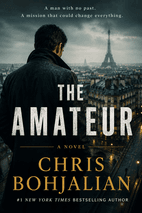
Chris Bohjalian's The Amateur follows seventeen-year-old golf prodigy Mira Winston after a stray ball kills a classmate, unraveling her life through affair, addiction, and trial as she insists fate, not fault, rules her story. A haunting psychological drama for readers who love morally complex narrators.
Feature
Insta.Page
Blinkist
Shortform
The Amateur
✓
✕
✕
Summary Depth
Full Chapter-by-Chapter
15-min overview
Section-by-section guides
Audio Narration
✓
✓
✓
Visual Mindmaps
✓
✕
✕
AI Q&A
✓
✕
✕
Quizzes
✓
✕
✕
PDF Downloads
✓
✕
✓
Price
$89.99/yr
$146/yr (PRO)
$199/yr
*Competitor data last verified July 2026.
1 Page Summary
Luck rules the world: not virtue, not might. That is the conviction of Mira Winston, the narrator of this novel, as she recounts the summer of 1978, when she was a seventeen-year-old golf prodigy in the tony New York suburb of Tallmadge. One afternoon at the country club, a ball she hits—a small ball, the kind that kills, not the big ones—strikes and kills Kenny Foster, a seventeen-year-old caddie and classmate. The novel is framed as Mira’s memoir, written decades later, as she insists that her story is not a coming-of-age tale, nor a recovery narrative, but simply the account of "another amateur who tried once too often to play above her game." The prologue establishes the central event and the narrator’s fatalistic worldview, laying the groundwork for a story that is less about the accident itself and more about its aftermath.
The narrative weaves together two timelines. In the present of 1979–1980, Mira, now a young woman, is navigating the fallout: a criminal charge of involuntary manslaughter, a civil suit, and the dissolution of her once-promising golf career. She drops out of Yale, works at a travel magazine in Manhattan, and descends into a haze of drugs, alcohol, and relationships with older men, including a three-year affair with the married Theo Catton that began when she was fifteen. This affair is revealed to have intersected with Kenny’s death in ways that blur the lines of culpability and motive. As the memoir unfolds, Mira is deposed, questioned by detectives, and ultimately put on trial, where the central question becomes not just what happened, but who is responsible for a net that was supposed to protect players from errant balls—and why the target on that net was missing.
The novel is driven by Mira’s unflinching, often self-lacerating voice as she examines the "imbalance of power" in her life, the "levels of outrage" surrounding her actions, and the "motives of a dead boy’s dad." It is a story about the long tail of a single terrible moment, the corrosive effects of secrets, and the ways people assign blame and seek meaning. Along the way, it introduces characters like the Vietnam-veteran Ethan Pomerleau, who becomes a lifeline during the trial, and engineers and lawyers who investigate the structural failure at the heart of the accident. For readers who appreciate psychological depth, morally complex protagonists, and a narrative that braids sports, class, and trauma into a tense legal drama, this novel offers a haunting exploration of guilt, memory, and the capriciousness of fate.
Prologue
Luck rules the world, the narrator insists: not virtue, not might. The stars are just gargantuan globes of hot gas, most of them already dead, their light nothing but shimmering ghosts. What matters are facts like these: a golf ball usually has 336 dimples, weighs about 1.6 ounces, and contains some combination of rubber, plastic, titanium, tungsten, and chemical resins. Balls rarely kill people. Marbles kill, and have killed enough children over the centuries to fill a cruise ship. It is the small balls that kill. Not the big ones.
Which brings the story to Kenneth Foster, called Kenny by everyone who knows him, a seventeen-year-old sitting in the grass near a practice net at a swank country club fifteen miles north of New York City, in the summer of 1978.
The First Thursday in August
Kenny is one of a dozen or so caddies waiting under a pergola for the caddy master to call their names for an afternoon loop. The other caddies intimidate him, though they do not mean to. They hardly think about him at all, but Kenny is too young to understand that most people are oblivious to most other people. He is embarrassed when he caddies for the parents of his classmates, having arrived at the local high school from South Florida only a year earlier. When a golfer asks if his family belongs to the club, he sometimes lies, or tells a half-truth about earning "book money" for college, when in reality the dollars are direly needed. The other caddies range from college kids to grizzled old pros, alcoholics, men whose lives have unraveled in unexpected ways. Kenny fears they view him as a dilettante, a poseur, a faux-working-class fraud. In truth, they barely notice him. He needs the money: most of the fifteen hundred dollars he hopes to earn that summer will go to his college fund, and a little will go to dime bags of weed.
The sun is high, the temperature flirting with ninety. Kenny sits apart from the others, facing the small driving range practice net, pretending to tan. He does not know, nor does anyone, that there is a tear in the netting, likely new, two thin nylon cords finally frayed apart that morning after years of golf balls slamming into them.
The caddy master, a paunchy man with silver hair and a nose striated with spidery red lines, tends to assign loops by seniority. He calls Kenny's name for the bad tippers, the beginners, and the parents of Kenny's classmates. Today it is the Bedfords: Brendan and Jill, perfectly nice people, sanguine about their future, but terrible golfers. Brendan's bag is a beast, an expensive, needlessly heavy Redwood that a know-nothing neophyte could be talked into by an enterprising salesman. The Bedfords joined the club that spring. Brendan took a half day from his job at a liquor company on Park Avenue, returned to Westchester on a lunchtime train, and met his wife for watercress sandwiches and an afternoon round.
The caddy master yells "Foster" across the airless, humid expanse. Kenny looks up from the grass, a reflex.
A split second earlier, a girl just thirteen months older than Kenny, a senior at his high school who is planning to start at Yale in less than a month, one of the only kids at the school who plays golf, finishes her follow-through at the practice net. She is using a driver. She is good. Very good. She has already met the coach of the women's golf team in New Haven.
Her 1.6-ounce ball with 336 dimples passes almost untouched through the hole in the netting, traveling between 140 and 150 miles per hour. It traverses fifteen yards and slams into the right side of Kenny Foster's head, shattering the temporal bone and causing a traumatic rupture of the middle meningeal artery: an epidural hematoma.
It is chance that pulls the strings. A hole in a net. A tee shot more line drive than moon shot. A name called into the air. A boy looking up.
Kenny brings his right hand to his head. Some witnesses think he is reaching for his ear, others his cheek. His upper body wobbles like a struck bowling pin. The pupil in his eye on the side where the ball smashed into his skull grows dilated. He topples over into the grass. Some of the caddies laugh, unaware of the severity of what they just witnessed, but then they all run to him, even the caddy master. Already Kenny is losing consciousness, his breathing slowing and then ceasing as a tsunami of blood floods his skull. He is dead before the ambulance arrives.
The narrator knows all of this because the narrator was there. Because the narrator was the girl who hit the golf ball.
PART ONE
There won't be a trial. There will never be a trial.
💡 Try clicking the AI chat button to ask questions about this book!
Chapter 1: Bad Luck’s Human Conduit
Mira Winston, the narrator, explains that she didn’t go to Yale because she no longer wanted anything to do with golf, and she associated her acceptance there with the sport. The coach had encouraged her to come, but after Kenny Foster’s death, she was in no condition to study anywhere. In 1978, in the tony New York suburb of Tallmadge, no one suggests therapy for a teenager who kills someone with a golf ball. The only sure ticket to a shrink would be a suicide attempt, and even that would be a dark family secret. Mira reflects that she had other demons waiting to emerge: at fifteen, three years before Kenny’s death, she took her father’s nine iron and smashed in the driver’s-side window of the Ford Maverick belonging to a senior who had tried to rape her. The boy didn’t succeed, but told his friends he had. She demolished the window in the country club parking lot, a response that seemed reasonable and measured to her. The police investigated, but no charges were pressed, and a photo of the vandalized car ran in the local newspaper with a caption joking that golf prodigy Mira Winston showed her competitive edge, with a rumor that the boy illegally moved his ball on the thirteenth green. Mira notes this would come back to haunt her years later.
Now, her father is asking how she knew Kenny Foster. He and her mother sit on her bed beside her, late in the afternoon. Her father, a contracts lawyer for Metropolitan Life, is intellectually fascinated by the legal ramifications of a golf ball speeding through a net and taking a human life. Mira’s mother rubs her back in gentle circles. Mira feels feverish with fear, self-loathing, and guilt. She tells her father Kenny was a year behind her in school, in her AP European history class, and they talked sometimes at the club. Her father remarks that Kenny took AP European history as a junior, and says, “Well, good for him. Spencer did that, too.” Mira is surprised her father commends the initiative of the dead boy. Her father adds, “He may have been a caddy, but I guess the kid had ambition.” Mira’s mother tells him he’ll only make Mira feel worse. Mira’s febrile imagination wonders what Kenny would have become had she not killed him.
Both parents have drinks, as always. Mira recalls that booze fueled their fights, and that she would sometimes dilute their liquor with water or soda, careful to note the fluid level on the label, a habit since age eight. Her father insists Mira didn’t do anything wrong, that it was an accident, and all culpability lies with the club or the net manufacturer. Her mother agrees that the club manager, caddy master, and club pro Harry were very kind. Mira remembers standing with Harry Fallows, the club pro who loathed her and her talent, but who was avuncular and kind that day. She recalls the moment the ball wasn’t caught by the net, the boy falling, her confusion, expecting him to sit back up, seeing the ball in the grass. She remembers kneeling with caddies around Kenny, his eyes glassy marbles the color of walnuts, his breathing labored. She was useless.
Her mother suggests she eat something, a grilled cheese. Mira says, “In a while.” She keeps her eyes shut, nestling into a sodden pillow, craving punishment. Her father muses on whether this will rise to criminal or civil liability. Mira flinches at the word criminal. Her mother says he doesn’t mean Mira, he means the club. Her father says he finds it fascinating from a legal point of view. Her mother asks if Mira will have to testify. Her father says no, if it’s only a civil case, the club or manufacturer will settle. Her mother says she hopes they never hear the sum; she has no interest in knowing the fiscal value of a human life. They bicker. Her father says he’ll call Spencer to tell him what happened, so the news doesn’t adversely affect his internship in Washington. Mira’s mother says if he loses focus, the sun will rise. Mira, into the pillow, says, “Stop talking. Please: just stop.”
Mira’s golf coach, Heidi Romming, calls. Heidi is in her mid-sixties, with nearly white hair but vibrant blue eyes, a former LPGA player from the upper midwest. They speak briefly; Mira ends the call by saying, “There’s nothing you can do or anyone can do. He’s dead. He’s dead and I’m done.” She talks to none of her friends that night, though many call, including the forty-seven-year-old man who sleeps with her when his schedule permits. His signal is two rings at nine p.m., after which he hangs up. That night, she can’t call back.
At eight o’clock, two detectives come to the house. Her parents don’t allow them into the living room, so the exchange happens in the front hall, with the family dog Harvey watching from the stairs. Detective Richie Marino remembers Mira from the car window incident three years earlier. He asks how she’s doing. She puts out her hands, palms up, unable to lie. He says they don’t think she did anything wrong, they just want to ask a few questions. Her father refuses to let her answer without a lawyer present, saying he’s already called a defense lawyer friend. The detective says she can come to the station. Her father says they’re not going to arrest his daughter for hitting a golf ball at the practice net. The detective asks if Mira knew there was a hole in the net. She says no. Her father questions whether the hole was even there before. The detective asks how often she practices at the net, if she ever saw a tear before. Mira says maybe three or four days a week in the summer, and she never noticed a tear. Her father cuts it off, saying this doesn’t involve his daughter. The detective asks what kind of lawyer her father is, and he replies “Contracts.” The detective hands over his card, thanks Mira, and bows his head slightly. They leave.
Later that night, Mira’s brother Spencer calls from Washington. He asks, “Man, what in holy fuck must it be like at the Fosters’?” Mira says she knows, and that Kenny has two younger sisters. Spencer, an intern at the U.S. Chamber of Commerce and a rising senior at Princeton, says their father seemed very focused on the legal ramifications. Mira says he was also worried about Spencer, not wanting the news to affect his internship. Spencer says he’s sure their father is worried about Mira more. They talk about how their father doesn’t get daughters, doesn’t get people. Spencer brings up “Mirror Land,” the world Mira created as a child with Barbies, stuffed animals, and naked plastic trolls, named after the Woolworth’s mirror she placed along her bedroom wall. Her father heard “Mira Land,” as if she named the world after herself, and ever afterward, anytime she did something nonsensical, anyone would say she was off in Mira Land.
Spencer says he’s never seen anyone die. Mira says she hadn’t either, until today. She admits that at first, she laughed. Spencer laughs at the notion and asks why. She says it was like a Looney Tunes cartoon or a Jerry Lewis movie. Spencer suggests Animal House, which just opened last week, and Mira hasn’t seen it. He describes a scene where a guy in ROTC gets hit by a golf ball while wearing a helmet, then is dragged around campus by a spooked horse, winding up with a neck koozie. Mira observes that nothing kills you in cartoons and comedies, but in real life, a golf ball can do the trick. Spencer reminds her it wasn’t her fault. She nods even though he can’t see her.
Mira reveals she would be thirty-four before she finally rents Animal House, and when she gets home, she can’t bring herself to press Play. It would be another decade, at forty-four, before she finally watches the movie in its entirety.
Chapter 2: Postcoital Epiphanies
"Lucky Man"
In the high school cafeteria, during mid-morning free periods, the seniors control the vinyl, and Emerson, Lake and Palmer spin constantly. Seven weeks before she kills Kenny Foster, on a morning in early June, Mira sits on one cafeteria table with two female friends; Kenny sits with two male friends at another table. They never sit that way during lunch. Mira likens the habit to the way a later generation would wear ball caps backward, an innocuous and nonsensical act of rebellion.
The needle reaches "Lucky Man," a tale of a fellow who has everything until a single bullet takes him down. One of Kenny's friends teases him by crooning the chorus. Mira has no idea what the joke is. As she falls asleep the night of Kenny's death, she recalls that morning and wonders if his friends will remember it too.
The Night Walk
A little more than twelve hours after she kills Kenny, Mira wakes. Harvey, her champion-sleeper dog, is still mostly under the sheet. She buries her head in his fur, gets dressed, and goes for a walk around the neighborhood at one thirty in the morning. There had been a summer kegger that night at Carolyn Eastburn's, but now every house is uniformly quiet and dark. Even Kenny Foster's house is dark. Even the house of Theo Catton, her forty-seven-year-old lover, is dark. She stares at both houses until her eyes well up and she shakes off the tears like a wet dog.
No patrol cars pass, no delivery trucks, no one walks an old dog. A ringing in her ears makes her pause, the electric thrum as calming as it is perplexing. She imagines walking to the train station and disappearing forever into Grand Central. But she has no wallet, no money for a ticket. Then melodramatic ideas of suicide cross her mind. The guilt runs through her like blood. She wants to wear her penance like a hair shirt. But she is wearing a Lilly Pulitzer blouse. She walks home, though the idea of self-destruction will grow more compelling over the coming years. Harvey has not moved. Her parents have not known she came and went. She climbs back into the gym shorts and T-shirt she slept in, wraps herself around her dog, and waits for whatever happens next.
Mira's Moppets
In 1978, Arnold Palmer is about to embark on his last professional act, and the grown men at Mira's country club speak of him fawningly. Mira has her own version: Mira's Moppets. Her summer job is running a two-week golf day camp for the young children of club members, really just babysitting and mini-golf courses she creates around the club. A dozen girls fall under her spell and trail her around the holes nearest the main building, and each summer the gallery grows. One Saturday in July, during the ladies' championship the week after camp ends, she faces a tough lie in the thick rough on eighteen. She takes her five iron and risks a stupid shot through a slim gap in a copse of evergreens, showing off. She nails it. In the eyes of those kids, she is a goddess.
The Morning After
The next morning, the phone begins ringing around seven. Mira's mother is the gatekeeper; her father goes to work as if nothing untoward had occurred. The calls are from friends, but none, as far as Mira can tell, are from the police. Around eight, she goes downstairs. Her mother says she is about to take Harvey for a walk. "Why don't you come with us?" she suggests.
Tallmadge is a village of one and a half square miles, population not quite seven thousand. Harvey leads them up Lakeland Road, the scent of bunnies and squirrels pulling him along. Her mother asks how Mira is doing. Mira says she is terrible. Her mother says, "You did nothing wrong, Mira. Please stop blaming yourself."
They pass the home of Sam and Deirdre Stetson. Mira knows that her mother is having an affair with Sam Stetson. Mira has no plans to confront her, because it is evident her mother has no plans to leave her father. He is not a horrible man, but he is boring, tiresome, and largely uninterested in his daughter, even though she took up golf as a girl to get his attention.
Mira is sleeping with a man roughly her father's age, another country club member. She offers a pro tip to her adolescent female readers: if you sleep with a man two and a half times your age, do not expect postcoital epiphanies that are kind or profound, and do not expect discretion, except when it comes to saving his own ass, preserving his marriage and reputation, and, since he first fucked her when she was fifteen, staying out of jail.
Mira discovered her mother's affair because of Harvey. Ten months earlier, in October of her senior year, she walked home mid-morning during a free period to retrieve a forgotten history paper and saw Harvey watching the world from a chaise inside the Stetsons' screened porch. Her first instinct was that her mother was visiting Deirdre, but Deirdre was looking at colleges in Massachusetts that day with her daughter. Mira investigates. She finds the first floor silent and clearly unoccupied, and goes to the front door, passing beneath an open upstairs window. From it she hears first a male voice, convivial and jocular, and then her mother's. She backs away as if touching a hot stove, walks quickly, nearly a jog, home, grabs her paper, and races the long way back to school.
According to Mira's own flame, her mother and Sam use both their houses for their periodic dalliances, and also the same hotel in Manhattan that Theo and Mira use. "Yes," Theo once observed, "like mother, like daughter." Men lose their filters when they play golf: Sam actually talks to Theo about fucking Mira's mother as the men walk the links. Mira's mother plays tennis with Deirdre at the club, and Mira wonders if she ever feels remorse.
"Oh, look," her mother says that morning, "the phlox are already past their prime." Mira is supposed to leave for college in a month, and no high school senior has ever wanted more to get out of Dodge. She tells her mother the next four weeks will last forever. Her mother says maybe, but once Mira is in New Haven, what happened yesterday will grow fuzzier and fuzzier. She scoops up a load Harvey has left in the Stetsons' grass and wipes his canine bottom with a baby wipe, a habit she has been obsessed with since spring.
"I doubt that," Mira mutters. "And as for golf—" "Nope." Her mother wants Mira to be no more focused on this than if she had seen a car accident on the other side of the median: just keep driving, first it's in the rearview mirror, then it's forgotten, poof. Coach Romming is worried this has really gotten inside Mira's head. "You two talked?" Mira asks. "We did. She said you were inconsolable when you spoke." "I'm done with golf." "Oh, sweetheart..." "I am."
Her mother tsk-tsks in a kindly, sympathetic fashion. She wants Mira living in a happy little nirvana of forgetfulness. "I'm not sure I'm going to go," Mira says. "To Yale? Of course you are. You've always had a tendency to overreact and do something rash," her mother reminds her. "No. I don't think I can. I want to get out of here, but I want to go someplace else." "This will pass."
Mira asks who was calling that morning. Her mother lists them: Carolyn, Marie, Sarah Jacobs, Denise Rooney, a few of her father's and her own friends. Even Theo Catton called. "Everyone is very concerned about you. You are quite beloved." "I'm not." "You are." Any reporters? No. The police? A big no. The Fosters? They did not call.
Mira says maybe she will go see them later today, and asks her mother to come. Her mother asks if she thinks she should. Why shouldn't she? There are legal implications to anything she might say. Her father says it wasn't her fault. "He's right. But let's not apologize until we know the lay of the land. An apology could be interpreted as an admission of guilt in a court of law." "You don't have to say 'of law.' What other kind of court is there?" "Public opinion, for starters." "I'll feel better once I've seen them. Once I've apologized." "That's nonsense. No one feels better after they confess." "I said apologize. Not confess." Nevertheless, she and Mira's father are adamant that Mira should not go to the Fosters'.
Father Whitlock's Visit
Which is probably why they are all caught off guard when the minister of the Episcopal church comes to the house that night. Father Whitlock has just been at the Fosters', and now he wants to see how Mira is doing.
Mostly, Mira likes the priest. In seventh grade she was confirmed at the church, not out of parental pressure or religious conviction but because a third of the hundred thirteen-year-olds at the Tallmadge school took the class. She also likes him because he clearly isn't wild about the church's eccentric tradition of having the senior class vote on which girl
Chapter 3: “You Took Advantage of My Disadvantage.”
Mira sleeps with a forty-nine-year-old bartender twice when she is nineteen, another older man in a long line of them. Just before they hook up, she gets a tattoo on the inside of her left forearm, in small, beautiful cursive: "You took advantage of my disadvantage." The quote is Nabokov, from Lolita. The bartender does not know it, and that does not matter to her, because she is never going to judge a guy whose specialty is concocting flavored martinis and funky Negronis in an East Village bar for not knowing the canon of novels about predators. Perhaps she should have given him brownie points for not knowing. Nor is the tattoo a badge of honor that she has come out on the other side and is now doing just fine, thank you very much. Because she is not fine at nineteen when she gets it. Far from it.
Fifteen at the Club
At fifteen, Mira cannot outdrive the very best men's players at the club, but she still beats all of them most of the time. Her short game is precise, and she is excellent on the greens. She rarely drops a ball into a bunker or hooks one into the rough. By the summer between her freshman and sophomore years of high school, she is often invited to join the better men. And she wants to play with them, especially with the club pro, Harry Fallows, who understands her potential but is never going to allow her in a foursome with him by the time she is fifteen, because of the possibility her game would humiliate him. She is drawn to those men because the high school does not have a golf team and the very few girls her age who play at the club take the game far less seriously than everything else in their lives. And the boys? They are absolute duffers and steer clear of her on the course. The lone exception is Frank Pendleton, who is also a nitwit with a club in his hands, and who still tries to play with her until she bashes in his car window. Golf is where she meets Theo Catton.
Theo loves to caress her feet, and she rather likes that, too. He is married. He has a daughter two years behind her in school and a son even younger than that. He has, for a time, played golf periodically with her own father. He is, in all fairness, the first man to go down on her, and, because he really knows what he is doing, he leaves her spoiled.
The First Round
The first time they play together strikes her in the moment as good luck, a chance to play with some of the club's most talented golfers. Clearly, she knows nothing of good luck. One can begin with Kenny Foster to see that, though his luck that summer afternoon as he waits for a second loop is far worse than hers. A member of Theo's foursome that Saturday morning has canceled, and he is looking for a replacement. She is at the practice green, planning to tee off alone after all the adult men who have scheduled tee times that day are on their way. He strolls over and sees her bag on the grass, her clubs encased in head covers that look like springer spaniels, and watches her sink three putts in a row from eight, six, and four feet. "So, Mira," he says, his arms folded across his baby-blue golf shirt. "Feel like playing with some old farts? Would you be willing to show us any mercy?"
She has seen him around the club often, and, as she will remind him a few weeks later, he teased her in the dining room a few years earlier when his family had been beside hers in a buffet line at some country club soiree. He points now at two men talking to the caddy master. "We've lost our fourth, and we all know you're pretty damn good. Want to join us?" "You don't mind?" she asks. He shakes his head ever so slightly, smiling. His grin is boyish and good-natured. His face is square, and his eyes, the color of her father's ever-shined leather wing tips, are playful. He is tanned, as is everyone in those days, and the hair on his dark arms is blond from the sun.
She says sure, and he lifts her bag from the grass, slings it over his shoulder, and takes her putter from her hands. He slides it into the bag and notices her head covers. "Your dog, right?" he asks. She nods. "His name is Harvey." "We have two Labs," he says. "Dumber than toast, and I love them madly. I always like people with dogs. Don't you?" "I guess." "Life lesson: if you have a choice of playing golf with someone who has a dog and someone who doesn't, always pick the dog owner. They're nicer, easier to deal with, and they don't cheat." He brings her bag to one of the two caddies they are retaining, both of the men among the club's old, wizened pros.
When Mira plays alone, she usually carries her own bag because she is still, in the eyes of club management, a kid. The only times she rides in a cart are the rare afternoons when she plays with her mother and one or two of her friends, and so she is pleased these men have not rented carts. The days when her father would deign to play with her mostly ended when she was thirteen. That year, as an eighth grader, she shot an eighty-three, and he was still hitting, on his very best days, in the low nineties. Once it is clear that she is always going to beat him, he is done with her when it comes to golf. He gives her a very wide berth at the club and, especially, at the course.
She is thrilled to join the group. Golf is supposed to be a social game, and yet for her it has become an often solitary, lonely pursuit. Not necessarily joyless, but certainly an intense, mechanical pursuit of perfection. And while playing a round of golf with three middle-aged men is not every fifteen-year-old girl's idea of a rager, those parts of her that are a competitor and a performer are excited. She knows she is a minor phenom, that sizable koi in an all-too-small pond. And she likes the idea of playing with men who are pretty good and will likely force her to up her own game.
Theo sure does. The course is sixty-four hundred yards and a par seventy-one. That day Theo shoots an eighty-five. She plays off the ladies' tees and shoots a very respectable seventy-six. It has been more than a companionable couple of hours: she has had a good time. Theo looks directly into her eyes whenever she says anything, as if her fairway small talk is deep, her insights revelatory and new. As they are walking from the eighteenth green to the clubhouse, Theo and Mira are probably a dozen yards behind his friends and the caddies, and he asks, "Would you take a look at my scorecard? I'm missing a number." She must appear confused, because he hands her the small piece of cardboard with its columns and the little pencil, and says, smiling rakishly and again meeting her eyes, "See? I'm missing your phone number. Would you write it down?"
The First Time
The first time Theo and Mira have sex, afterward, the two of them still in the sheets of the bed that Theo shares with his wife, he says, "I knew when you reached the green in two on fourteen that this was going to happen." He is referring to the first time she joined his foursome at the club. Even from the ladies' tee, few women ever make the green on fourteen in two. And though one day she will hit a golf ball hard enough to kill a boy, it is not the length or the power of her drives that makes her good: it is her short game, her putting, and the fact she rarely makes mistakes. But in that first round with Theo, she hits a few drives for the record book, her record book, anyway. "And you knew that how?" she asks. "I knew what I wanted."
When a girl is fifteen and a man tells her he wants her after he has just had her, she forgets where she is and what she is doing. She does what she does, and she does it for years.
Saturday at the Fosters'
Saturday afternoon, she goes back to the Fosters', as she had in the small, dark hours Friday morning, but this time it is daylight and she knocks on the front door. Kenny's mother answers. She stands before Mira.
You've reached the end of the free chapters
Next chapter: “Chapter 5: The Motives of a Dead Boy’s Dad: An Essay Question” is locked
Keep reading The Amateur — and unlock all 600+ book summaries with audio, mindmaps and AI Q&A.
$0.00 due today · 7 days free, then $89.99/year ($7.49/mo) · Cancel anytime before day 7
Chris Bohjalian is a New York Times bestselling author known for his novels that blend psychological suspense with historical and contemporary themes, including the critically acclaimed *Midwives* and *The Sandcastle Girls*. A former advertising executive turned full-time writer, he often explores moral dilemmas and family dynamics, and his work has been translated into over thirty languages. He is also a frequent contributor to major publications like the *Boston Globe* and *Reader’s Digest*.
Frequently Asked Questions about The Amateur
What is The Amateur about?
In 1978, seventeen-year-old golf prodigy Mira Winston accidentally kills a classmate, Kenny Foster, when a practice shot goes through a damaged net at a country club. The novel follows Mira in the months and years afterward as she wrestles with guilt, a secret affair with a married older man, and the public's perception of her. The stakes are both legal and personal: she faces a potential criminal case and civil suit while trying to find a reason to keep living. It is a psychological portrait of a young woman shattered by a freak accident and the secrets surrounding it.
Who is the author of The Amateur?
The novel is written by Chris Bohjalian. The story is narrated in the first person by Mira Winston, whose voice and memories shape the entire book. Bohjalian uses her perspective to explore the lasting impact of a single tragic moment.
Is The Amateur worth reading?
This is a compelling and emotionally intense read that traces the ripple effects of one tragic accident through a young woman's life. Mira's raw, self-lacerating reflections make the chapters feel urgent and personal, drawing the reader deep into her turmoil. Fans of character-driven literary fiction and morally complex stories will find much to admire here.
What are the main themes in The Amateur?
Central themes include luck versus control, the randomness of tragedy, and the long burden of guilt. The novel also examines the abuse of power in relationships, especially through Mira's affair with a married older man and her encounters with predatory adults. Memory and self-justification are key, as Mira continually reconsiders her own story and the story of Kenny Foster's death. The legal proceedings underscore how a life can be reduced to financial and criminal calculations, while the personal narrative searches for meaning.
📚 Explore Our Book Summary Library
Discover more insightful book summaries from our collection