The Amateur Ending Explained
by Chris Bohjalian
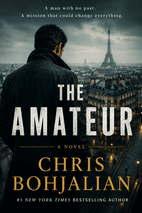
The ending of The Amateur leaves you with a lot to untangle. This page breaks down what actually happens in those final pages, why Bohjalian chose to close the story that way, and where each character ultimately ends up. No need to reread the last chapter again, we did it for you.
The Ending, Explained
ListenWhat Happens at the End of The Amateur
The book's closing text is a letter from Ken Foster to Mira, presented as an epilogue. Ken writes that he has really liked getting to know her that summer, tells her her golf game is amazing, and says he is a year behind her but has Yale in his sights, so she shouldn't be surprised if he follows her there the next year. He jokes that he can't follow her onto the LPGA tour, but he is working on his golf game. To make sure she doesn't forget him, he sends her a souvenir from the club—the target she hates—and quotes Machiavelli: 'Never was anything great achieved without danger.' He says he cut this souvenir off Monday night and signs the letter 'Ken (Not Kenny),' adding that he never liked being called Kenny. Placed in the context of the novel's closing sequence, this letter resolves the trial. At trial, Curt Bolger testifies that he saw Kenny entering the bag room; Olivia Foster then screams that Kenny did it himself. During the recess Olivia tells the police that Kenny cut the target off the net, planted it in Mira's golf bag, and forgot the note he meant to leave. The criminal case is dismissed, and the civil suit is settled by the country club and the manufacturer, sending both Foster sisters to college. In November 2010 Olivia appears at Mira's Miami Book Festival event and explains she stayed silent as a thirteen-year-old because she didn't want her brother to seem responsible for his own death. In 2018 Mira visits the elderly Theo Catton at his Marco Island home; when he asks about her tattoo, she answers 'Pedophilia.'
The Ending, Explained
The epilogue is the book's delayed payoff for the mystery of the target. For most of the novel Mira believes her affair with Theo made her cursed and that Kenny's death was her punishment. The trial and Olivia's outburst establish the literal truth: Kenny himself, motivated by a teenage crush, cut the target off the net, put it in Mira's bag, and planned to leave a note. The letter proves that the act was not malicious framing but a romantic, misguided souvenir. Its Machiavelli quotation is deeply ironic: Kenny thought he was being daring for Mira, but the 'danger' he invoked was the very hazard that killed him. The letter also reveals the central tragedy of Mira's guilt: she never really knew Kenny. He hated being called Kenny, wanted to go to Yale, and hoped to follow her there. The ending thus separates legal responsibility from emotional responsibility—Mira is exonerated, yet she remains the instrument of his death and writes this memoir to keep him alive. The final Theo scene underscores the novel's other thread: Theo, who exploited her at fifteen, lies about having other girls, and Mira's tattoo reveals the true name of what happened—'Pedophilia.' The ending means that truth can arrive too late, but it can still let someone stop punishing themselves for a crime they didn't commit.
The ending hits harder if you see how you got there.
The ending of The Amateur makes more sense with the full plot.
Read the full plot, chapter by chapterWhere Every Character Ends Up
Questions the Book Leaves Open
- Did Theo Catton have other underage girls after Mira? He answers 'There could only be one you,' but the narration strongly implies he is lying, and Mira doesn't believe him.
- What would have happened if Kenny's note had been found in Mira's bag? The note never surfaces, so the reader doesn't know what it said or whether it would have changed the investigation.
- Does Mira ever fully stop feeling like the girl who killed Kenny Foster, even after legal exoneration? The memoir suggests she remains haunted.
These are answered in the chapter summary. See the full plot →