The Amateur Themes
by Chris Bohjalian
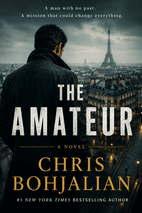
Beneath the surface, this novel is wrestling with how we make sense of the senseless. It's about guilt that eats a person alive, about the ways power imbalances get normalized, and about the quiet cruelty of families that care more about appearances than healing. It also keeps circling the idea that luck might be the real force in our lives, not choice or justice.
On this page you will find each of those ideas unpacked with specific moments from the book, from Mira's decades of self punishment to the eerie randomness of the golf ball. We also dig into the symbols: the driving range target, the tattoo, Kenny's untouched bedroom, and how they carry the novel's hidden meanings.
Major Themes in The Amateur
Guilt and self-punishment
Mira's guilt over accidentally killing Kenny Foster runs through her 'like blood' and consumes her for decades. The novel shows her interpreting every misfortune as punishment and turning her guilt into self-destructive behavior.
- After the accident, Mira lies on a sodden pillow, craves punishment, and thinks hunger is 'the right start.'
- Overwhelmed by Kenny's death, the affair with Theo, and her housemates' accusations, Mira cuts both wrists in the bathtub because she believes the world is better off without her.
Predation and power imbalance in age-gap relationships
The book repeatedly examines older men exploiting young women, from Theo Catton having sex with fifteen-year-old Mira to Dennis Kerrington's relationship with her as a teenager. Mira's tattoo and her final exchange with Theo make this predation explicit.
- Theo Catton, a married man in his forties, begins a sexual relationship with Mira when she is fifteen and a sophomore in high school.
- When the elderly Theo asks what her tattoo says, Mira answers, 'Pedophilia.'
Class and belonging
The story is structured around the social chasm between the Winstons' country-club privilege and the Fosters' more modest life. Kenny caddies because his family needs the money, while Mira plays golf, and the trial becomes a story about class resentment.
- Kenny sits apart from the other caddies because he fears they think he is a 'faux-working-class fraud,' and his family lives near the club but cannot afford membership.
- The New York Post captions a photo of Mira 'the spoiled bitch who'd wrecked a driving range net,' and both legal teams focus on jurors' socioeconomic backgrounds.
Chance, luck, and the freak accident
The prologue argues that chance pulls the strings, and the fatal accident is presented as a chain of contingencies. Later, Ethan reframes Kenny's death as a freak accident, and even the pathologist admits it was a one-in-a-million shot.
- The narrator describes the hole in the net, the line-drive tee shot, the called name, and the boy looking up as chance.
- Ethan tells Mira, 'You were part of a freak accident... one in, I don’t know, ten or twenty million chance.'
Trauma, secrecy, and writing as catharsis
Mira's trauma over Kenny's death, her rape attempt, and her affair with Theo are buried and never treated. Writing becomes her way of processing the unspoken damage, and the memoir itself is presented as an act of reckoning.
- No one suggests therapy after Mira kills Kenny, and her earlier rape attempt and affair remain 'demons waiting to emerge from the vault.'
- Dennis tells Mira, 'You should write all these feelings down,' and Mira later begins a fictionalized account of her affair with Theo.
Family dysfunction and neglect
Mira's parents are more concerned with legal liability and appearances than with her emotional state, and her father openly favors Spencer. The novel also draws parallels between Mira's affair and her mother's affair, showing a household of secrets and neglect.
- After Kenny's death, Mira's father questions her about legal liability while her mother rubs her back and offers food.
- Mira discovers her mother's affair with Sam Stetson while Mira herself is sleeping with the much older Theo Catton.
Symbols and Motifs
The golf ball
Represents random, indifferent chance and the instrument of death. Its physical properties and the freakish path it takes emphasize how arbitrary the tragedy is.
- The prologue discusses the physical facts of golf balls, including their dimples and weight.
- The ball passes through a tear in the practice net and kills Kenny Foster, shattering his temporal bone.
The driving-range target
Symbolizes blame, scapegoating, and hidden truth. It is cut from the net, planted in Mira's golf bag, and used as prosecution evidence, but the truth is that Kenny himself cut it off.
- Police find the leather target wadded in a pocket of Mira's rarely used golf bag, making her the sole criminal defendant.
- Olivia reveals that Kenny cut off the target, planted it in Mira's bag, and forgot the note he meant to leave.
The tattoo: 'You took advantage of my disadvantage'
A permanent marker of the damage Mira suffered from predatory older men and a coded confession of her own victimization. It becomes a weapon of naming the abuse in her final confrontation with Theo.
- Mira gets the Nabokov quote tattooed on her forearm after breaking up with Dennis, while still furious with him.
- When Theo asks what the tattoo says, Mira answers, 'Pedophilia.'
Kenny's bedroom
Symbolizes the lingering presence of the dead and the secret self Kenny hid from the world. The untouched room preserves his memory and reveals the person Mira and the other students never knew.
- Olivia shows Mira Kenny's room, which remains exactly as it was, with alphabetized, chronological shelves of books and stacks of novels.
- In the room, Olivia and Becca tell Mira about Kenny's secret disco dancing, his Miami girlfriend, and his desire to fit in at Tallmadge.