⚠️ READER ADVISORY: This is a deep-dive summary designed for those who want the full story. Contains spoilers.
What is the book Threshing Day about?
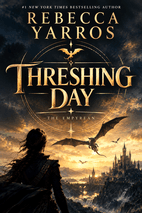
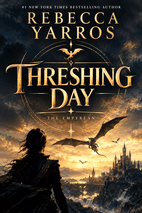
Rebecca Yarros's Threshing Day follows cadets including Brennan, Mira, Xaden, and Rhiannon into Basgiath's lethal forest on the morning they must bond a dragon or die, each carrying private bargains, griefs, and vendettas. A memorial-framed military fantasy for readers who love high-stakes bonds and morally weighted choices.
Feature
Insta.Page
Blinkist
Shortform
Threshing Day
✓
✕
✕
Summary Depth
Full Chapter-by-Chapter
15-min overview
Section-by-section guides
Audio Narration
✓
✓
✓
Visual Mindmaps
✓
✕
✕
AI Q&A
✓
✕
✕
Quizzes
✓
✕
✕
PDF Downloads
✓
✕
✓
Price
$89.99/yr
$146/yr (PRO)
$199/yr
*Competitor data last verified July 2026.
1 Page Summary
On the morning of Threshing at Basgiath War College, first-year cadets step past the tree line one by one to face the only equation the Riders Quadrant recognizes: bond a dragon or die. There is no third door. The forest offers cover, but no comfort—dragons descend through the canopy, some vengeful, some indifferent, and the cadets who enter alone must rely on whatever inheritance, training, or stubbornness has carried them this far. Among them are Brennan, walking in without a squad because his mother's name hangs over him like a banner he never asked to carry; Mira, climbing branch by branch in search of the Green Clubtail she has staked her future on; Rhiannon, following a pull behind her sternum toward a jade-green daggertail even as a scream cuts through the woods behind her; and Sawyer, who has already decided that death is preferable to another year of watching others succeed. Each has made a private bargain with the day, and each will have to live with what the forest gives back.
Around them, the machinery of the quadrant grinds on. Colonel Kaori studies cadet faces and carries the weight of having prepared them for a day that could kill them. Colonel Thadeus Palme orders his dragonkind professors out of their distant perches and into the role of dragon-watchers, reminding them that the rider-dragon bond is symbiotic and that their loyalty must balance Empyrean service with cadet survival. The Compendium of Dragonkind, an imperfect visual record, is a living task rather than a settled one. Xaden Riorson stands at the forest's edge with nine other marked ones, positioning himself deliberately to shield them and already accepting that if anyone dies today, the fault will be his—while swallowing insults from Amber Mavis rather than risk provoking leadership into punishing his entire group. Garrick wrestles with the choice to leave Xaden facing a Blue Daggertail alone. Imogen walks in with rage as her compass, only to have a dragon invade her mind without warning. Bodhi tries to lead three marked cadets and watches his plan fracture before it begins.
What drives the story is the collision between the bonds the cadets are desperate to forge and the loyalties, griefs, and vendettas they carry into the trees with them. Dain is warned that Xaden Riorson is rumored to want him dead, which means the forest offers cover to more than dragons. Aaric hunts for Molvic not for glory but because he needs to understand his brother Alic's death—an answer the dragons never gave and the quadrant never explained. Sloane has resolved not to bond at all, clinging to her refusal with a blade's edge. Liam carves a red dragon out of wood before he knows its name, a tribute made in advance. Around every cadet, the same brutal arithmetic holds: the Riders Quadrant does not soften the math, and the ones who never come back leave empty saddles behind. The book is a memorial as much as an adventure, framed as testimony and transcribed as a historical record, with the fallen's names preserved rather than left anonymous. Readers who love high-stakes military fantasy, morally weighted choices, and the charged intimacy between humans and dragons will find themselves inside the Threshing Valley—turning pages with the same question the cadets carry: who walks out of the trees, and at what cost.
Content Warning
A content warning opens the chapter, alerting sensitive readers to violence, death, and suicidal thoughts. The narrator admits the warning costs them immersion, breaking the story's frame before it begins. Colonel Valin Kaori and Lieutenant Ellery Mynna then transcribe the Navarrian text, preserving the tale as a historical record. Their transcription honors fallen riders by preserving their names, sacrificing anonymity but granting courage commemoration. Readers are invited to enter the Threshing Valley, shifting from warning into the brutal military college world. The passage establishes Basgiath War College as a competitive dragon-rider setting, raising the stakes for all who enter. It notes the story contains spoilers for Fourth Wing and Iron Flame, altering reader expectations before events unfold. It frames the events as true and faithful, turning the story into testimony rather than fiction. Finally, it commends the fallen's souls to Malek, closing the frame with a memorial decision that changes the tone from adventure to elegy.
💡 Try clicking the AI chat button to ask questions about this book!
Trial by Fire: Threshing Advice for Dragonkind Professors
Colonel Thadeus Palme addresses his dragonkind professors with a hard truth: they must prepare first-years for Threshing. He refuses to let them treat the duty as ordinary. The task is deadly, and he names it that way. Preparation becomes a grave responsibility, not routine instruction.
Palme assigns the professors to serve as dragon-watchers. They can no longer stand apart as distant instructors. They must watch over cadets who may not survive.
He reminds them that the rider-dragon relationship is symbiotic. Their loyalty must balance Empyrean service with cadet success. Riders and dragons depend on each other, so their duty cannot favor one side alone.
Palme orders them to stay out of other academic affairs. That restriction narrows their authority and keeps them focused on their own dangerous work.
He tells them to seek the combat master's counsel. The combat master's experience forces them to confront what their preparation truly means.
Palme requires accurate images of every bondable dragon. The work demands two months of preparation and apprenticeship-level knowledge. There is no room for guesswork or shallow study.
He points them to the Compendium of Dragonkind. The book is an imperfect visual record, and updating it becomes a living task rather than a settled authority. Palme also demands direct observation of dragons. Speaking to an unbonded dragon means death by fire, so the work places them within reach of lethal danger.
He forbids them from entering the Vale's hatching grounds. The boundary is not etiquette but a condition of staying alive.
For Threshing, Palme requires identification cards. Cadets must study breed temperament and survival methodology, learning how different dragons behave and how to endure the encounter.
In the valley, cadets must trust instinct. Possible bonding means following a tug or a dragon's call. Cadets enter the Threshing Valley alone, leaving squad loyalty behind. Courage becomes a solitary test.
Palme tells the professors to prepare for losing favorite students. He tells them to document what they learn about dragonkind, so their observations become the next generation's chance to fly or die. Surviving riders must record their Threshing tales. Palme turns his own regret into advice for improving future bonding chances.
Brennan
Brennan stands at the edge of the forest on the morning of Threshing, and the choice before him is simple and terrible. He can walk into the trees alone, or he can walk in with the others. He chooses alone. The decision is not arrogance. It is inheritance. His mother’s name hangs over him like a banner he never asked to carry, and the only way he can think to prove he deserves it is to do what she did: enter the bondings grounds without a squad at his back, without a friend to watch his blind spots, and come out either a rider or a corpse. The Riders Quadrant does not soften the math. Bond a dragon or die. There is no third door, no honorable discharge, no quiet walk back to the citadel. Brennan knows the odds. He has watched older cadets come back from Threshing with hollow eyes and empty saddles, and he has watched the ones who never come back at all. Still, he steps past the tree line by himself, because the alternative is spending the rest of his life wondering whether he only survived because someone else was standing between him and the teeth.
Flynn Ennis makes the opposite choice. Brennan hears him before he sees him, a voice cutting through the underbrush with the confidence of a man who has already decided how the day will go. Flynn has gathered a knot of squadmates around him, a dozen or so cadets moving in a tight cluster, and he is leading them deeper into the forest with the certainty of someone who believes numbers are armor. Safety in numbers. That is Flynn’s whole philosophy, and it costs Brennan something he did not expect to feel: the comfort of familiar company. For a moment Brennan watches them go, and the distance between him and that cluster of bodies feels wider than the physical space between them. Flynn’s group will move slower, make more noise, and draw more attention. Some of them, Brennan suspects, will not walk out of these woods. But Flynn wants what Flynn wants, and Brennan cannot blame him for it. He only turns his own feet in a different direction, toward the older growth, toward the trees that have stood here since before the Quadrant was built.
Brennan wants the best possible chance of bonding, and that means height. He climbs. The lower branches are crowded with cadets who have already staked their claims, and he passes them without stopping, hauling himself up through the canopy until the forest floor is a dark suggestion far below. The highest, most central tree in this section of the grounds offers him a vantage point that no one else has claimed, and he takes it. Professor Kaori’s warning echoes in his memory, something about the dangers of climbing too high, about the arrogance of cadets who think they can outsmart the bondings grounds. Brennan does not reject the warning out of pride. He rejects it because there is no one else to rely on. If he is going to bond, he has to be where the dragons can see him, and if he is going to die, he would rather die reaching for the best chance than settling for a safe one.
He does not expect his father. Asher appears below him, moving through the trees with a quiet that speaks of long practice, and Brennan’s breath catches. The Riders Quadrant does not allow family to interfere with Threshing. The rules are explicit, the penalties severe, and yet here is his father, risking everything to see him before he walks into the most dangerous hour of his life. Asher does not waste time on pleasantries. He tells Brennan what he came to say: that he is loved, regardless of what happens in these woods, regardless of whether he bonds or dies or walks out of here with nothing but his own skin intact. Then he takes the black bead bracelet from his own wrist and gives it to Brennan. The beads are warm from his father’s skin, and Brennan closes his fingers around them and feels something shift in his chest. Fear does not disappear. It changes shape. It becomes resolve.
Brennan wants to honor both of his parents without being defined by either of them, and standing there with his father’s bracelet in his hand, he admits the thing he has never said out loud. He is afraid of disappointing his mother. Not of dying, not of failing, but of walking out of these woods and seeing that look on her face, the one that says she expected more, that she always expected more. Asher does not argue with him. He does not tell him he is wrong to feel that way. He simply stands there with the certainty of a man who has known Brennan since before he could walk, and that certainty steadies him. Brennan does not need his father to promise him a dragon. He needs his father to promise him that he is still his son no matter what happens in the next hour. Asher gives him that, and Brennan takes it, and then the moment breaks.
A scream tears through the trees from the south, high and sharp and cut off too quickly. Smoke rises with it, dark and greasy, the kind of smoke that comes from something burning that should not be burning. Brennan does not know whose scream it is. He does not know if it is Flynn’s group or someone else’s, if it is a cadet he trained beside or a stranger he passed on the stairs. What he knows is that death is real and close and already happening. He looks at his father one last time, and then he leaves him standing there in the trees and walks into the bondings grounds. There is no ceremony to it. No final words. Just the sound of his own footsteps on the forest floor and the knowledge that whatever happens next, he will not be able to take it back.
Brennan wants to find the dragon meant for him, and his plan is simple: climb higher, get a vantage point, and wait for the pull. The bondings are supposed to feel like something. An instinct, a sign, a sudden certainty that this dragon and no other is the one. He climbs until his arms ache and his lungs burn, and he waits. Nothing comes. No pull. No instinct. No sign. The dragons below him are shapes in the shadows, and none of them look up at him with recognition. He is just another cadet in a tree, and the forest does not care about his mother’s legacy or his father’s bracelet or the fact that he chose to come here alone.
A Red Scorpiontail forces him to hide. The dragon moves through the trees below him, its tail lashing, its eyes scanning the canopy with a patience that feels personal. Brennan presses himself against the trunk and holds his breath, and for a long stretch of minutes he does nothing but wait. The Scorpiontail does not see him. It moves on, and Brennan lets out a breath he did not know he was holding. The encounter costs him time, and it proves something he did not want to learn: not every dragon is his. Some of them are just obstacles. Some of them are just danger. He cannot afford to treat every shadow as a sign.
Brennan wants to avoid cowardice, and that means suppressing the fear that rises in his throat as he climbs again. Dragons can smell fear. Everyone knows that. They will not bond cowards, and they will not bond anyone who hesitates. Brennan forces his breathing to slow, forces his hands to stay steady on the branches, and tells himself that fear is not the same thing as cowardice. Fear is just a feeling. Cowardice is a choice. He keeps climbing.
An orange dragon discovers him in the treetops. Marbh. Brennan does not know his name yet, but he knows the color is wrong. Orange is not green. Orange is not brown. Orange is not what he planned for. The dragon confronts him for looking him in the eye, and before Brennan can explain or apologize or do anything at all, Marbh knocks him from his branch. The world spins. Branches whip past him. He catches himself on a lower limb, his hands burning, his heart slamming against his ribs, and when he looks up, Marbh is watching him with something that might be amusement.
Marbh wants to know whether Brennan is a sharp-minded hawk or a boring robin. The question is not rhetorical. The dragon challenges him to find his seat without touching the ground, and the ultimatum is clear: prove you are worth my time, or fall. Brennan wants to prove he is not boring, not bound to his mother’s shadow, not the kind of cadet who planned for a green or a brown and cannot adapt when an orange looks him in the eye. He accepts. He chooses the unpredictable orange over his planned green or brown, and the choice feels like stepping off a cliff.
Brennan wants to survive, and survival means leaping from the branch onto Marbh’s snout. He does it. He jumps, and for a moment he is falling, and then his hands find purchase on the dragon’s face and he is climbing, up the snout, over the brow, onto the neck, and Marbh is moving, diving and climbing and twisting through the air to throw him off. Brennan holds on. He locks himself into position, his legs wrapped around Marbh’s neck, his hands buried in the ridges of scales, and he does not let go. The wind tears at him. The ground spins below. Marbh spirals, trying to shake him, and Brennan holds his seat through every turn.
Marbh wants to test Brennan’s stomach after accepting his worth, and Brennan holds his seat. The bond snaps into place, and something changes. The “I” becomes “us.” Brennan is no longer a cadet clinging to a dragon’s back. He is a rider. Marbh accepts him, and Brennan earns his black leathers, and when they land, he is not only a Sorrengail anymore. He is Marbh’s rider.
Mira
Mira moves through the Threshing grounds with one goal fixed in her mind: find the Green Clubtail Teine and bond him before anyone else can. But the dragon is nowhere to be seen. The canopy is thick, the shadows deep, and no flash of green answers her searching. So she does what she has always done when the ground offers no answers. She climbs. Branch by branch, she hauls herself up into the trees, scanning the forest for any sign of the dragon she has staked her future on. The higher she goes, the more the ground disappears beneath her, and still she searches, because stopping means losing him.
From her perch, her thoughts turn to Brennan. Her brother is at the front, and she cannot be there to shield him. She cannot fight his battles or stand between him and whatever the war sends his way. So she does the only thing left to her. She prays to Dunne. She asks for her brother's protection, and she accepts the fear that comes with loving someone she cannot save. The fear does not paralyze her. She lets it settle, lets it become part of her, and keeps moving. It changes nothing about where she is, but it changes how she carries it.
When she finds Cowan, she stays with him. She knows the risk. Dragons are near, and dragon anger is a real and lethal thing, but she will not leave him alone in these woods. Whatever comes, she will face it beside him rather than abandon him to it. Staying costs her nothing yet, but it binds her to him, and that choice will matter before the day is done.
Then the north erupts. A scream cuts through the trees, and fire follows it, blooming orange and violent against the sky. Mira understands in that instant what the Threshing grounds truly are. This is not a game or a ceremony. People are dying out here. The grounds are deadly, and the danger is not theoretical. The scream strips away whatever illusion she carried, and she knows now that the Threshing will kill without hesitation.
Something pulls at her, a tug toward the west. A dragon is approaching. She feels it before she sees it, and she wants to meet it. She climbs down fast, branch to branch, and lands near Cowan. The pull is not fear. It is something closer to recognition, and she follows it because standing still feels more dangerous than moving toward the unknown.
The two of them are on the ground together when a red Scorpiontail passes nearby. They drop low, pressing themselves into the cover of the forest floor, barely breathing. The red could kill them without a thought. They lie still and wait for it to move on. In that moment, survival is the only thing that matters, and they both understand it without speaking.
But Cowan does not want to wait. He wants that red. He wants to bond it, and the wanting overrides everything else. Mira warns him. She tells him not to go, but he leaves her anyway, breaking from cover and running after the Scorpiontail. Mira is left behind, watching him chase a dragon that could end him in a heartbeat. His choice separates them, and she cannot follow him into that.
She does not follow him. Instead, she turns to face what is coming for her. She steps out into a patch of sunlight, deliberately exposing her back. It is an act of surrender and an act of invitation. She makes herself visible. She makes herself vulnerable. She waits. The sunlight is warm on her shoulders, and she does not move, because this is the only choice left that belongs to her.
Teine appears.
The Green Clubtail stalks forward, and there is nothing gentle in his approach. He is testing her. He roars, a sound that rattles the air and demands a response. Mira holds her ground. She does not retreat. She does not run. She stands exactly where she is and refuses to give him the fear he is looking for. The roar passes through her, and she remains.
Teine presses harder. He wants to see if she will break. He fells a tree, sending it crashing down, and scrapes her boot with a talon. The message is clear. He can reach her. He can hurt her. He can kill her. Mira does not move. The tree falls, the talon scrapes, and still she stands, because moving now would mean losing everything.
Then he slices her thigh. Blood runs down her leg, and the pain is sharp and real. Teine demands to know who she belongs to. It is the question at the heart of the Threshing. Will she claim a rider's bond, or will she break and give herself away? Mira does not break. She declares that she belongs to herself. Then she tells Teine to remove his talon. She does not beg. She does not flinch. She gives him an order. The words leave her mouth steady, and the pain does not take them from her.
And Teine accepts her.
He names her his first rider. But his acceptance comes with a warning. He tells her plainly that if she falls, he will not mourn her. There will be no grief, no ceremony, no softening of the bond. Mira hears him and does not turn away. The warning is a condition, not a rejection, and she takes it as it is.
She wants this bond, so she climbs onto his back. Her leg is bleeding. The pain is there, hot and insistent, but she mounts him anyway. Teine launches through the canopy, and the world drops away beneath them. Mira holds on. The pain fades, replaced by something else entirely, a rush of exhilaration that comes from flight and from the impossible fact of what she has just done. The sky opens, and she is still alive.
When they land, Mira dismounts. She hides her limp, refusing to show weakness now that the test is over. She reports Teine's name, and in that moment, she officially becomes his chosen. The bond is sealed. The Threshing has given her a dragon, and she has given herself to the sky.
You've reached the end of the free chapters
Chapter 5 is locked
Keep reading Threshing Day — and unlock all 600+ book summaries with audio, mindmaps and AI Q&A.
$0.00 due today · 7 days free, then $89.99/year ($7.49/mo) · Cancel anytime before day 7
Rebecca Yarros is an American author best known for the Empyrean fantasy series, including the bestselling novels Fourth Wing and Iron Flame, as well as contemporary romance titles such as The Last Letter and Great and Precious Things. A graduate of Troy University, she served in the U.S. Army and draws on that military background in her writing. Her expertise spans romantic fiction and high fantasy, and her books have appeared on the New York Times bestseller list.
Frequently Asked Questions about Threshing Day
What is Threshing Day about?
Set inside Basgiath War College on the morning of Threshing, the story follows a handful of cadets as they step alone into the forest to bond a dragon or die trying. Among them are Brennan, carrying his mother's name like a banner he never asked for; Mira, climbing into the canopy in search of the Green Clubtail she has staked her future on; Xaden, standing watch over nine marked ones and shouldering blame before anything has even gone wrong; and others who must choose between a squad at their back and the solitary tradition that could kill them. Bond a dragon or die — there is no third door, no honorable discharge, and no quiet walk back to the citadel. The stakes are survival, legacy, and the question of what each cadet is willing to become in order to earn a dragon's choice.
Who is the author of Threshing Day?
Rebecca Yarros is the author behind this companion tale set in the world of her Empyrean series, which includes the novels Fourth Wing and Iron Flame. She is known for blending high-stakes fantasy with deeply emotional character work, and this story leans hard into both, framing its events as a faithful historical transcription rather than pure fiction.
Is Threshing Day worth reading?
It is a gripping, tightly wound piece of storytelling that puts you inside the terror and resolve of Threshing itself, scene by scene, from cadets who each carry a different reason to walk into those trees. Fans of the Empyrean world will appreciate the sharp characterization, the roiling tension between Navarrians and marked ones, and the sense that every choice here carries real, permanent weight. It reads like testimony rather than adventure, which makes the courage on display feel earned and the cost feel real.
What are the main themes in Threshing Day?
The central themes revolve around sacrifice and legacy — the names cadets inherit and the lengths they go to in order to prove they deserve them. Loyalty and its limits run throughout, as characters weigh the pull of friendship against code, tradition, and the rules of the Riders Quadrant. There is also a strong thread about rage and grief, and what those forces do to a person who has already lost too much. Underneath it all sits the symbiotic bond between riders and dragons, a relationship built on mutual dependence, mutual testing, and no guarantee of survival.
📚 Explore Our Book Summary Library
Discover more insightful book summaries from our collection