⚠️ READER ADVISORY: This is a deep-dive summary designed for those who want the full story. Contains spoilers.
What is the book The Oxford Detective Society about?
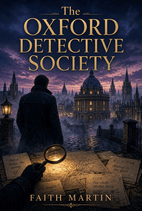
Faith Martin's The Oxford Detective Society follows biographer Lyssa Moore as she investigates the hidden legacy of a 1960s rock star's lover, uncovering threats that put her and her friends in danger. An atmospheric mystery blending historical intrigue with contemporary suspense for readers who enjoy cerebral whodunits.
Feature
Insta.Page
Blinkist
Shortform
The Oxford Detective Society
✓
✕
✕
Summary Depth
Full Chapter-by-Chapter
15-min overview
Section-by-section guides
Audio Narration
✓
✓
✓
Visual Mindmaps
✓
✕
✕
AI Q&A
✓
✕
✕
Quizzes
✓
✕
✕
PDF Downloads
✓
✕
✓
Price
$89.99/yr
$146/yr (PRO)
$199/yr
*Competitor data last verified July 2026.
1 Page Summary
Lyssa Moore, a freelance biographer living in a modern Oxford apartment block, is commissioned by the ambitious Elizabeth Grainger to write a biography of the infamous late Amelia “Monty” Montrose, a 1960s wild child who died young. Monty was the lover of Glen Bannister, a rock star from the band the Lucky Cuckoos, and her death was ruled accidental. Elizabeth, who wants to rebrand Monty as sympathetic, provides Lyssa with notes that reveal Monty founded a charity, the Young Mothers’ Trust, and may have written all the band’s lyrics. As Lyssa digs deeper, she interviews surviving friends and family, including a band member’s wife who hints that Monty’s death may not have been an accident, and uncovers uncomfortable truths about Monty’s life and relationships.
The deeper Lyssa digs, the more resistance she meets. A shadowy figure named Ian Gorman, security chief for the Bannister family business, begins surveilling her, and her apartment is searched while she is away. When a key source, Justin Tillman, is seriously injured in a fall, and Lyssa herself is involved in a car accident, she begins to suspect her investigation is putting people in danger. Her close-knit group of friends—Carter, an American academic; Jason, a theatrical friend; and Freida, her best friend—rally around her, jokingly dubbing themselves “The Oxford Detective Society” as they try to help her navigate the mounting threats.
As Lyssa pieces together Monty’s hidden legacy, she realizes the truth lies in the interplay between Monty’s wealth, her relationship with Glen Bannister, and the family who inherited his fortune. The Bannisters, particularly Jonas Bannister, appear desperate to suppress something linked to Monty’s past, and a figure from that past, Jack Flynn, resurfaces to confront them. With the stakes rising and the danger closing in, Lyssa must decide how far she is willing to go to uncover the truth about a woman everyone else has written off. This atmospheric mystery, with its blend of historical intrigue and contemporary suspense, will appeal to readers who enjoy cerebral whodunits with a strong sense of place and richly drawn characters.
Prologue: Oxfordshire, England, June 1966
Chapter: "Prologue: Oxfordshire, England, June 1966"
In the moonlit grounds of Evergreen, Amelia Montrose lifts her glass of champagne to the moon and wonders what it makes of humanity. All those years it has orbited the Earth, watching dinosaurs come and go, ice ages passing, maybe even aliens visiting and leaving. She laughs harshly at the thought, drains her glass, pours out the last of the Bollinger, and places the empty bottle on the edge of a hideous sculpture Glen loved. Evergreen was supposed to be their "forever" home, a compromise between his squalid north London council estate childhood and her own stately-home upbringing in Gloucestershire, though it never quite suited either of them. A tear slides down her cheek and she wipes it away impatiently. What is the point of tears now? Glen is dead at just twenty-five, and all he left her is the recorded sound of his voice and his awful taste in art.
Behind her, the house blazes with colour and light, raucous with pop music and human voices. Built just before the Victorians, Evergreen has a simple country-house elegance that even her snobbish family cannot jeer at, though none of them accepted her invitation to tonight's party. Only Glen's parents came, staying overnight with little Emily, who was wide-eyed and overawed by the house. Yesterday was her twenty-third birthday, and she spent it stubbornly alone, arranging this party a day later when it no longer mattered, just to please everybody else. They think her behaviour is typical of her nowadays, but what do they really know or care, so long as they enjoy the free wine, food, and music?
As the Swinging Blue Jeans blare out over the moon-kissed peonies and roses, she bends double in a fit of delighted, drunken laughter at the thought of her father's face if he were forced to listen to the heavy guitar beat and simple lyrics. Daddy dearest, who only listens to classical music and opera, would go purple, resembling a bulldog as painted by Picasso. She can even see the painting forming before her eyes, with the help of the teensiest bit of acid she took earlier. She stumbles a little as she wades through the psychedelic colours, and looking down, realizes she has reached the stone bench in front of the ornamental pond. Her vision clears, leaving her bereft.
She stares out over the dark oval of water. She never wanted a fountain in the middle, but Glen insisted, with his working-class ideas of what was right. "Can't have a lily pond and not have a fountain, Monty," he'd teased her, grinning and kissing her, even getting out of bed before noon to watch the workmen install the stone monstrosity with its peeing cupids and dolphins vomiting water. And suddenly she is crying again. When did their dream turn to stone? Not just her dream, but the dream of her generation?
She remembers escaping her parents' choice of private girls' school at eighteen and heading straight to London in 1962, when everything was beginning to happen. Hearing the Beatles' first single "Love Me Do" astonished and delighted her. John Glenn became the first American to orbit the Earth, and anything seemed possible. In the cinema, Dr No was playing, and she watched avidly as Sean Connery brought the impossibly cool and dangerous James Bond into sexy being, followed by rowdy, salacious talk about the actor. It wasn't all wonderful. The Cuban Missile Crisis gave them thirteen days of pure terrifying horror in October, everyone wondering if it would end in a flash of light. But their youthful optimism couldn't be repressed for long. London led the world in women's fashion, new ideas, and most of all pop music. Then she met Glen and his band, the Lucky Cuckoos, playing in a dead-end pub in Soho, and everything changed forever.
Now, swaying dreamily to the music spilling from the party behind her, she half-hums along with the Merseybeats, a song not as good as any of the Lucky Cuckoos' songs. She stops swaying as she faces the fact that along with Glen, the music might be dead now too. The band enjoyed six hits over four years, one making it to number one, but with Glen gone and the in-fighting and ill feeling besetting the group, the band seems to be falling apart. If they can't get their act together and the fans get fed up waiting, who knows if they will ever perform again. She pushes the thought aside. She will never let it happen. She can't let Glen down like that.
She walks forward and sits on the edge of the brick path that circles the pond, pale, slender, blonde-haired and ethereal, like a fairy from a Shakespeare play. Without bothering to take off her shoes, she thrusts her feet into the cooling water, laughing at the thought of how shocked her nanny would have been, ruining a pair of shoes and earning a slapped wrist and no pudding at teatime. "Well, I can buy a hundred pairs of new shoes anytime I want, Nanny," she jeers defiantly at the hideous fountain, "and not with Daddy's money either, but with my own, so there!"
Money. She snorts with disgust, puts her glass down, and leans back on her hands to stare once more at the moon, her good friend. She kicks her feet lazily in the water, making the water lilies undulate like belly dancers. "At least you don't want any of my money, do you?" she murmurs sadly. Even Deborah wants more of it, but she can't complain. It was her own idea to set up the charity, and any charity needs constant funding. Deborah is only doing the job Monty set her.
The music changes to a Hollies song, the boys from Manchester. Glen really liked them, but Monty admires the Stones more. She smiles, remembering how Glen was secretly jealous of Mick Jagger's voice, and how she had to keep reassuring him his own voice was just as good, that the Lucky Cuckoos would stay up with the best of them for at least a decade. Not that anyone planned that far ahead. They were too busy having fun, enjoying the fame and the music and the screaming fans, the all-night parties, the drugs and wine. Life was all about fun, right? Until suddenly it wasn't. People started dying of so much fun, so many in the music industry. She just never thought Glen would be one of them.
She leans forward, picks up her glass, and toasts the fountain ironically, remembering how her family so hated and distrusted the gorgeous, talented, rough-and-ready lad from the housing estate. "They thought you would sully me, sweetheart," she says. "Taint me and lead me astray. And so you did, you lovely, lovely man, you. Did I ever thank you properly for that?" Another tear runs down her face, and she angrily wipes it away. How he would jeer at her if he could see her now, sitting outside in the dark, all alone and weeping at her own party like a silly girl in one of those awful syrupy ballads the Americans are so fond of producing. At least the Lucky Cuckoos had nothing to do with that. No, good solid rock songs with heart, a strong beat with a catchy tune, and Glen's gravelly voice leading the way. But now his voice is gone, and they face having to come up with a new direction and a new sound. Perhaps it is a good thing the pop world always renews itself, since fans always want the next thing. But this time she senses the changes coming will be more drastic, perhaps moving away from solid heavy beats to something more spiritual. She can feel a restless feeling beginning to sweep across the scene, blowing in on the wind. She will have to...
She hears movement behind her and peers blearily over her shoulder. No one is there. Just a shadow moving across the lawn, or maybe a fox prowling around. If reincarnation is an option, Glen would come back to her as a dog fox. It would be just the sort of thing he'd do, since he often quarrelled with her father over fox hunting. She'd build him a comfortable stable and feed him only the best steak, and maybe she could come back as a fox too.
Trying to imagine herself as a vixen, she leans over and peers down at her reflection in the water. It is deep at this end because Glen wanted to swim in it, though he only swam once and never bothered again. Her face morphs and remorphs with the gentle movements of the surface tension. It looks dark and deep down there. Perhaps if she stares hard enough, she'll be able to see him looking back up at her.
Monty, like most young people, never thought much about death. Not until death took the love of her life. Now she wonders about it a lot. Glen died from a drug overdose, presumably just falling asleep and never waking up. Perhaps that is what makes her so angry. It isn't how he'd have wanted it. He'd have preferred to go out in a blaze of glory, crashing his motorbike or something equally spectacular, not slipping away without even noticing it. During his funeral and all the bleak, colourless days that followed, she had plenty of time to contemplate death but never reached any real conclusion. Sometimes she longs to follow Glen, and other times she feels she still has so
💡 Try clicking the AI chat button to ask questions about this book!
1: Oxford, England, Present Day
Chapter: "1: Oxford, England, Present Day"
Lyssa Moore sits on the sofa in her third-floor flat in Riverside House, on the outskirts of Oxford's Osney area, and stares at an unfamiliar name in her email. Through the open French windows, the River Thames shimmers in the June sunshine. She watches a river-cruise boat full of tourists heading towards Port Meadow and makes a mental note that she has never taken one of those scenic cruises herself. Freida would tease her about it, but her best friend would probably join her, bringing along an illicit bottle of something.
She forces her mind back to business. As a self-employed person, she can't ignore a potential lead, even from an unknown sender. She just finished the first draft of a ghostwritten story for a television soap star and sent it off last night. Now she faces a nervous wait for his reaction. From past experience, she expects the usual complaints and demands for rewrites, so any distraction is welcome. She clicks on the email, relieved it's legitimate and hasn't melted down her computer. One of her friends in London recently fell victim to a hacking scheme, so she feels justified in her paranoia.
She tucks her long legs beneath her, balances the laptop on one bent knee, and begins to read. The cushion beside her indents as her cat, Bibliophile, known as Bibbie or Bibs, jumps up beside him. He's a handsome tom, all black except for his two white forepaws and a white champagne glass on his chest. She strokes his back, and he arches appreciatively, purring like a lawnmower, before kneading a comfortable spot and curling up to sleep.
The email introduces Elizabeth-intd, who got Lyssa's name from one of her previous happy clients. She's hoping Lyssa will be available for a project: a biography of a now-deceased famous relative. She read and enjoyed the job Lyssa did for Helena Vernier a couple of years ago, which she thought honest, powerful and moving. She'll be in Oxford tomorrow and has booked a table for 12.30 at The Ivy in High Street, her treat, naturally. If Lyssa can't make it, that's fine, but she's hoping she can.
Lyssa stares at the screen thoughtfully. She remembers the biography she wrote for Helena Vernier, the flamboyant opera singer who wanted her memoirs written after retiring from the stage. It hadn't been the easiest project, with the singer's mood swings and temperamental nature, but Lyssa had stuck to her guns, and she thinks the singer came to admire her for it. The result was well received by both fans and critics alike. It's flattering to hear the mysterious Elizabeth supposedly read and enjoyed it, if indeed she did. More likely she's just buttering her up.
Several things make Lyssa uneasy. Why doesn't Elizabeth sign off with her full name, so Lyssa can't look her up and check her out? Why doesn't she mention which previous client gave her the name, so Lyssa can't double-check? And why doesn't she mention the name of her deceased but famous relative? It all sounds rather secretive. Of course, the famous relative might not be that famous at all, at least not to a wider audience. Perhaps Elizabeth knows his or her fame is confined to a small and select number and doesn't want to put Lyssa off before pitching the project. Lyssa smiles, remembering a potential client who was so enthused about a dead uncle's lifelong collection of biscuit tins that he was positive the public was panting for a full-length coffee-table book about the novelty items. A little tactful chat about the cost of self-publishing dampened his enthusiasm.
She glances longingly out the window again and allows herself to be lured onto the patio. She leans her bare arms on the sun-warmed railing and looks out across the river. Green willows move in a gentle breeze. A family of swans is being fed by students lazing at the river's edge. Behind her, one of Oxford's many clocks chimes the hour. Lyssa, at the ripe old age of thirty-four, considers herself a veteran of the city and takes for granted that the clock will be either early or late. She pulls herself away with a smile and returns to the sofa.
She rereads the message, still not sure. The Ivy is certainly not some shady down-at-heel eatery in a backwater, so she has no serious worries about attending on her own. But the famous adage about no such thing as a free lunch niggles at her. What if it's a hoax? She could turn up and find no reservation. Well, so what? She could head to Blackwell's and browse for a few hours, surrounded by books, then head to Waterstones for lunch in the café. Annoyed with herself for vacillating, she clicks reply and sends a brief message saying tomorrow at 12.30 is fine and she's looking forward to meeting Elizabeth there. She hits send and closes the laptop decisively. If she tries hard, she can convince herself she has just taken the first step to securing her next project, and thus can treat herself to a little time off. A stroll down to her local café for a cappuccino and a salad sandwich doesn't seem excessive. She might even save the crusts for the swans.
Some hours later, Freida Jones sits across the small dining table from Lyssa, scooping up the last of the salsa. She thinks it all sounds a bit iffy. She offers to come as back-up. Lyssa grins and asks who she thinks she is, Morse or Lewis. Freida says neither, she sees herself as one of those fabulous women in American television shows who can shoot a grape off the vine at thirty feet while wearing high heels and putting a good-looking man in his place all at the same time. Lyssa approves of the multi-tasking.
At thirty-three, looking at least six years younger, Freida is black and beautiful, with a sing-song Welsh accent that captivates you the moment you hear it. She's not an actress but the owner of a small but flourishing estate agency business in St Aldate's. She came to Oxford following her first serious boyfriend, who is now long gone and blissfully forgotten, but her love affair with the city is still going strong. The two women met at a student party that Freida and the boyfriend attended at Somerville College, where Lyssa studied English Language and Literature. They bonded instantly. Lyssa often thinks they are living proof that opposites attract. Where Freida is loud and bold and gregarious, Lyssa is quiet, introspective, and never happier than with her nose in a book. Freida is small and curvy; Lyssa is five feet eleven and slender. Freida prefers a very short haircut; Lyssa hasn't cut her hair in years, keeping it up in a ponytail on top of her head that swings down to the middle of her back. Freida's eyes are rich chocolate brown and full of warmth and humour; Lyssa's are dark blue and she has often been told they give nothing away. Her husband Kyle once told her he could spend hours looking into them.
Freida noisily crunches the last crispbread used to scoop dip and licks her fingers unselfconsciously, reminding Lyssa of a sumptuous feline. She asks if Lyssa is going to the posh lunch. Yes, Lyssa says firmly. Apart from the fact that she can't afford to turn down potential work, she's really curious now. Freida warns against curiosity, then extracts a promise: call just before going inside and call the minute she comes out. She bets this Elizabeth whoever-she-is is a seventy-year-old millionairess with masses of white hair and a facelift, who wants Lyssa to write about her psychic parrot that can tell the future by picking up certain tarot cards in its beak.
Lyssa laughs. It was Kyle who invented The Most Out There Game, whereby everyone has to come up with the most ridiculous scenarios for things. She taught it to Freida and then to Carter and Jason, her next-door neighbours of the last six or so years. She mocks Freida's tame guess. She bets Elizabeth is a tall, blonde bombshell and a Russian gangster's moll who wants a book with secret messages encoded in it, giving away bank details of some offshore account to her confederates, because naturally she's really a spy for the Russian government and a turncoat. Oh, naturally, Freida nods solemnly, adding that no doubt there is some nefarious plan to abduct Lyssa and make her write to dictation. Even more reason to let her know she's escaped her clutches unscathed.
Freida's silly words come back to Lyssa the next morning as she walks along the High Street, making her smile. With the chimes of Carfax echoing behind her as she reaches the doors of the restaurant, nowhere less dangerous is hard to imagine. Tourists wander about taking photographs. The famous swifts of Oxford screech overhead as they dart like tiny black arrows around the city's dreaming spires. It's another hot day, and she has worn her second-best summer dress, a long, floaty, mainly white creation with tiny embroidered forget-me-not blue flowers that contrast with her raven hair and complement her eyes. She wears flat white sandals and the minimum of make-up. She wants to look presentable and professional but also feel comfortable, and it's not as if she
2
Back at Riverside House, Lyssa lets herself into the small but elegant foyer, glad to escape the oppressive heat. The white-painted building has an art deco feel, with black iron balconies and flower-filled tubs lending it an air of distinction, and the dim light falling on the black-and-white tiled floor is a relief after the strong sunlight. Too hot to bother with the curving wooden stairs for her usual exercise, she takes the lift. As she steps out, a familiar head appears from the nearby stairwell.
“Carter! You're back early,” she says, and the American turns to her with a smile that instantly lights up his face. Carter Lansing III is five feet nine, shorter than Lyssa, with a square face, a firm jaw, a smattering of freckles he claims are the bane of his life, and a mop of unruly sandy hair. He explains he decided it was too nice a day to stay cooped up in the Bodleian, and invites her in for Chardonnay, joking that Jason will drink the lot if they don't get their dibs in first.
Carter and Jason's Flat
Inside Carter's spacious, impeccably interior-designed flat, Jason Howerd-Pitt lounges full-length on a cream corner sofa, scowling at a crossword puzzle and twiddling a pencil between his fingers. He greets Lyssa with mock accusation about stealing his Chardonnay, which Carter tartly corrects as “my Chardonnay.” Jason, slim and dark with a brooding, tragic-poet air he shamelessly exploits, complains constantly about the poverty of the land-rich upper classes, a complaint nobody takes seriously. He fetches the wine from the American-style fridge, and Carter threatens him with tiny glasses if he repeats his last stunt; Jason rolls his eyes and pours three equal measures.
Settling onto the cloud-soft sofa, Lyssa mentions she was at The Ivy. Jason immediately teases her about who the man was, whether he has a better-looking younger brother, and the two men engage in their usual loving banter. Lyssa cuts across them: it wasn't a “him,” it was a “her,” and it was work. It is beginning to look as if she has her next project. Jason tries to guess, and Carter asks who the subject is. When Lyssa says the name Amelia “Monty” Montrose, Jason says it rings faint bells. Wasn't she a notoriously bad girl back in the day?
Not according to her “sort-of” great-niece, Lyssa says mysteriously, and over the wine she recounts her lunch with Elizabeth and the story of the Lucky Cuckoos’ unofficial fifth member. Jason vaguely recalls an aged relative gossiping about the Montrose “problem child,” a wild-child 1960s scene, and a noted beauty like Twiggy or “The Shrimp,” which baffles Carter until Lyssa explains the reference to Jean Shrimpton. Carter, ever the walking encyclopaedia, tries to add historical context about 1963, the Great Train Robbery, JFK, Mandela, and Churchill, until Jason tells him to put a sock in it.
Lyssa steers them back to the story. Monty Montrose was never a model, but the girlfriend of Glen Bannister, lead singer of the Lucky Cuckoos. They had several hits before he died, and the pair were one of the age's “golden couples”: he a poor, working-class, quirkily handsome musician, she a slender blonde daughter of the rich landed gentry. The conservative press delighted in putting them down. Jason, with typical flippancy, hopes they lived fast, died young, and left good-looking corpses. Lyssa sadly confirms it. Monty died just a day over twenty-three, drowned in the pond in her garden, with LSD and champagne in her system. Jason opens his mouth to say something cheerfully inappropriate, but subsides under the sturdy look both Lyssa and Carter give him.
Carter asks the shrewd question: is Elizabeth after a whitewash job? Maybe, Lyssa answers, but she hopes not. He understands. Carter is one of the city's “perpetual students,” an American who came to Oxford for a BA, fell in love with academia, and stayed, while his wealthy family despairs and tries to lure him home with bribes and threats. He has read every word Lyssa has ever written, and she values him as a sounding board. She explains that early in her career she took commissions where an unbiased view was neither required nor desired, but she much prefers balanced, truthful books, and she is now in a position to turn down projects with too many restrictions. If even a few of Elizabeth's claims about the real Amelia Montrose prove true, the book could make for an interesting read.
When Jason asks what claims those are, Lyssa knows better than to tell him. The man has all the discretion of a journalist spotting a politician at a seedy nightclub. She teases him that he will just have to wait and read all about it, and Carter crisply toasts her good sense.
A Photograph of Kyle
Half an hour later, refreshed and in a buoyant mood after the company of Carter and Jason, Lyssa returns to her more humble flat and slips off her sandals. She showers, pulls her hair into its usual high ponytail, and winds it into a bun to keep it off her face and neck. On her way to her workstation by the window, she pauses at a sideboard holding a vase of freesias, a lamp, and a large framed photograph of a man. He is big, with wide shoulders and a strongly corded neck: her husband, Kyle, was a personal fitness trainer and a natural sportsman, good at tennis and squash, a mean golfer, a strong swimmer, a champion bench-presser. Blond, moderately good-looking, with a wide warm smile, he was a massive presence in her life, and she misses him so much.
She stares back at his image. “Well, Kyle, what do you think about Monty Montrose? Wild child or Miss Understood?” She runs a finger gently over the glass-protected face, then forces herself to step away, sits at her desk, opens her laptop, and reaches into her handbag for Elizabeth's memory stick. She inserts it, clicks open the first file, and begins to read.
Research and a Run
About three and a half hours later, Lyssa becomes aware of a pain in her neck, despite her prized ergonomically designed swivel chair, and tight, sore shoulders. She knows what has happened: she lost track of time, as she always does when something engages her whole attention. Reluctantly she closes her laptop and glances out the window. The sun, still high and bright, is beginning to shift from white light to something mellower, forewarning the coming night. It is the perfect time for a short run.
She changes into jogging gear, does the warm-up exercises Kyle taught her, and heads out along her favourite route by the riverbank. She never considered herself a natural jogger and had never taken it up until she met Kyle, who could have run a marathon. She only ever kept him company for a mile or so. These days she keeps a much slower pace, little more than fast walking, but it suits her better and lets her go further, more comfortably. She smiles at the sight of eight-man rowing teams speeding past as if she is standing still, content with the fresh air, moderate exercise, and the de-stressing release of endorphins.
Back home, she takes another quick shower, pulls on her oldest leggings and a loose T-shirt, and checks the fridge. The contents are uninspiring, but she has the makings of a mixed-bag omelette, so she sets about chopping ham and slicing a large beef tomato. As her hands work, her mind goes over everything she has learned so far about her latest subject.
The Lucky Cuckoos’ Unlucky Legacy
According to Elizabeth's version of events, which Lyssa refuses to take for granted without independent research, Monty was no mere hanger-on in the Lucky Cuckoos camp, and certainly not just a pretty face whose only role was to keep Glen Bannister happy. Elizabeth insists her relation was the fundamental force behind the band's success. She has found documents and receipts proving that Monty used her own money to fund the band's early ambitions: after inheriting money from her deceased grandparents on her eighteenth birthday, she raided her trust fund to buy the band new instruments and a comfortable touring van, and paid the studio fees for their demo recordings. Monty also chose their manager, Luke Raines, and initially paid him herself. Raines proved one of the more trustworthy financial advisers in a cut-throat industry, never ripping the band off with poorly worded contracts, never accepting backhanders from record company bigwigs or radio broadcasters. A shrewd, hard, canny man, he steered them straight and kept them in the spotlight for four years, no mean achievement in an era overflowing with talent. He was also something of a Dutch uncle, trying to protect young, working-class lads suddenly flush with money and fame from their own excesses.
But the one thing that stands out most for Lyssa after trawling through old newspaper articles, the one constant theme the band ultimately became most famous for, is the irony of their chosen name. The Lucky Cuckoos became notorious for their luck, but their luck
3
Elizabeth Grainger stands on the patio of her High Wycombe home, phone clamped to her ear, tapping her foot restlessly on the paving stones. The view over the valley is spectacular, but she hardly notices it. What fills her mind is her scheme: she has just commissioned Lyssa Moore, a top biographer, to write a book about her infamous late relative, Amelia "Monty" Montrose, and she needs the plan to work. Her interior design business has thrived for fifteen years, and husbands have come and gone, but Elizabeth's real ambition is to reach the big leagues, alongside names like Kelly Hoppen and Nina Campbell. That takes serious money, and this book is her ticket.
On the phone is her lover, who has just confirmed that he found someone to help with her little scheme, and it couldn't have worked out better. Elizabeth listens with growing gratification. He warns her it's a long shot, but she dismisses his doubts: she did her homework, and Lyssa Moore is one of the best biographers around, an Oxford graduate who loves rooting about in the past. "She'll come through for me, I can just feel it." Her lover sighs and hopes Lyssa isn't too clever. Elizabeth shrugs it off; she'll put it in the contract that Lyssa updates her every other day, and if she looks like causing trouble, Elizabeth will head her off. She promises to call the contact tonight, blows kiss-kiss noises down the phone, and hangs up. Sitting there, gazing unseeing at her immaculate garden, she acknowledges that yes, commissioning the book is a long shot. But after meeting Lyssa at the Ivy, she is confident. She only hopes the proof she needs is actually there to be found.
The next day, Lyssa wakes to rain and thunder. The heatwave has broken with a summer storm. She dresses in white cotton trousers and a moss-coloured silk blouse, pulls her long black hair into a ponytail, and watches the grey river and swaying trees from her French windows. At her workstation, she finds a new email from Elizabeth: the contract is on its way, and Elizabeth wants to know how Lyssa would like her fees paid, bank transfer, cheque or even cash, complete with a smiley face. "Wow, that's quick work," Lyssa mutters. The email adds how much Elizabeth looks forward to the collaboration and can't wait to see her outlines. "No pressure, then." Lyssa shoots off a reply and starts a to-do list. The first job is to find anyone from back then still alive and willing to be interviewed, though she suspects the bad luck that dogged the Lucky Cuckoos might make relatives reluctant. She also needs to find who filmed Monty's last party and whether the footage still exists. The newspapers of the time would have named the filmmaker, and if back issues aren't digitised, she can always work through microfiches.
Her rumbling stomach breaks her concentration at nearly one thirty. She has a list of potential sources, which is a start, but she needs a working title for the book. Titles are her least favourite thing, and she knows any choice will probably be changed anyway. But as she pops bread into the toaster, her subconscious supplies the Troggs song "Wild Thing," and she snaps her fingers. "Wild Thing it is."
Scanning her notes, she has a depressingly small list of names, since most of Monty's contemporaries are dead. She has found Emily Bannister, the youngest sister of Glen, now in her seventies. Monty had been putting up Glen's parents and Emily for the weekend of her fatal birthday party, and though Emily would have been only ten or eleven and probably in bed before Monty's body was found in the pond, Lyssa hopes for first-hand memories. She has also tracked down Ron "Racey" Joiner's widow, Monica, long remarried and now Monica Farley, plus their daughter Jennifer, who might be too young to remember her father but could have family photos, maybe even a scrapbook. Then there is Jonas Bannister, the son of Glen's younger brother Robert, a wealthy and private businessman who seems unlikely to welcome a book about his long-dead rock-star uncle and his notorious wild-child lover. She'll need many more voices, from the music industry and from reporters who covered the couple, but it's a start. As for Monty's own family, she can leave that to Elizabeth, though she got the impression at their lunch that Elizabeth's enthusiasm for the book isn't widely shared.
She eats her toast without toppings, notices the storm has passed, and heads out to the nearest mini market. In the communal hallway, the front door opens and a man steps in: Neville, her neighbour from the ground-floor super-deluxe flat. She greets him warmly. He's been away on a business trip. Neville Rickman is handsome, somewhere in his late thirties or early forties, with hair almost as black as her own, dark brown eyes, and a slender, fit build. The gang knows almost nothing about him; Jason, perpetually nosy about handsome men, has failed to learn his age, background, or profession. Carter sardonically calls him "001-and-a-half," a low-level MI5 clerk pretending to be a Bond sidekick. Freida has him down as a top-secret government scientist saving the Western world. Lyssa's own theory is that he's a UFO researcher, which Jason escalated into Neville being an alien in disguise. Right now he looks tired and rumpled, perhaps coming off a long shift, and Lyssa feels guilty for blocking his way. She steps aside and offers to pick him up anything from the shops. He declines with a nice smile that crinkles the corners of his eyes. "Working on anything interesting?" he asks. "Might be," she concedes. "I just got a new commission. Know anything about 1960s pop music?" "The Kinks," he says promptly. "I'm a Kinks fan, personally." Lyssa laughs, thinking how Jason would react, and then, aware she's standing there like a lemon, blurts out that she'd best get on with it in case it starts raining again, even as she sees nothing but sunshine and blue skies through the open door. She curses her awkwardness, her face warm, and shoots outside.
Back home, she puts away her groceries, then settles on the couch with her phone and notebook to track down the man who filmed Monty's last party. She finds a website devoted to 1960s scandals with a section on the Monty and Glen tragedy, including a newspaper interview with a partygoer named Frank Tillman, a bass player in a short-lived band from the Lucky Cuckoos era. In the article, Tillman confesses to filming footage of the party, "never realising they would be Monty's last moments." Lyssa ignores the specious sentiment, given that Tillman then sold Monty out to the press, and searches for his digital footprint. Tillman has died, but his only child, Justin, is alive and living in Brackley, Northamptonshire, not far at all. She finds his Facebook profile and leaves a message, introducing herself and asking him to get in touch. She'll give it a day or two before trying a more direct approach.
Next she turns to Emily Bannister, who is living in a nice, upmarket care home with intensive nursing needs in Dorset. Lyssa calls the office and a pleasant-voiced woman confirms Emily is a resident. After Lyssa explains who she is, the woman says they'll speak to Emily and ask if she's willing to have a visitor, then get back to her. Lyssa represses a sigh, knowing this gives Emily an easy way out. She had hoped to find Emily mentally alert and able to talk, since most people enjoy talking about themselves and the past, and Lyssa has no interest in writing a prurient or inaccurate book.
She then calls the head office of Jonas Bannister's company, which claims to support green and bio-efficient businesses, though Lyssa, call her a cynic, has her doubts. She battles through an automated menu, gets transferred to the wrong person, is put on hold, and finally reaches a woman who asks which energy company she represents and offers her a business appointment. Lyssa patiently explains who she is and that her matter is strictly personal. After nearly ten minutes on hold, she is told that Mr Bannister has been given her message, will think about it, and will call her back. She also needs an email address, which she gives wearily. She is not sanguine about ever hearing from Jonas Bannister again and makes a note to try once more in a few days, viciously underlined.
Without much hope, she tries Monica Farley's number next, prepared for a dead end. Instead, a cheerful voice answers: "Hello, whoever you are. If you're trying to sell me double glazing, hard luck, I already have it, and no I don't want my loft reinsulated." Lyssa grins and launches into her speech, fully expecting a negative reaction, but Monica squeals with delight. "No! Really, you're going to write a book about Monty and the Cuckoos? That's great." Lyssa fist-pumps on the couch. Monica is more than willing to give an interview. She loves talking about the good old days, Woodstock, rock and roll, free love, the world as an oyster, and she's perfectly happy to meet at
You've reached the end of the free chapters
Chapter 5 is locked
Keep reading The Oxford Detective Society — and unlock all 600+ book summaries with audio, mindmaps and AI Q&A.
$0.00 due today · 7 days free, then $89.99/year ($7.49/mo) · Cancel anytime before day 7
Faith Martin is the pen name of a prolific British crime writer known for her engaging and intricately plotted detective series. She is best known for the long-running 'DI Hillary Greene' series, set in the Oxfordshire countryside, and the more recent 'Monica Noble' and 'Sandy Bay' cozy mysteries. A former probation officer, her professional insight into criminal behavior lends authenticity to her characters, with over 40 novels to her name.
Frequently Asked Questions about The Oxford Detective Society
What is The Oxford Detective Society about?
The novel follows Lyssa Moore, a biographer hired to write about the infamous 1960s socialite Amelia 'Monty' Montrose. As she digs into Monty's glittering but scandal-ridden past, she begins to suspect that the official story of her death hides a darker truth. Her investigation draws in her close-knit circle of friends, who jokingly form 'The Oxford Detective Society' — but the humor fades as Lyssa uncovers secrets that make her a target in the present.
Who is the author of The Oxford Detective Society?
Faith Martin is the author of this novel, a mystery set in Oxford with a contemporary amateur investigation at its heart. She is known for crafting engaging crime fiction with intricate puzzles and relatable characters.
Is The Oxford Detective Society worth reading?
Yes — this is a wonderfully engaging read that blends a compelling cold-case mystery with present-day suspense. The friendship between Lyssa, Carter, Jason, and Freida brings warmth and humor, while the mounting threats and twists keep the pages turning. If you enjoy mysteries with strong character dynamics and a vivid sense of place, this novel delivers.
What are the main themes in The Oxford Detective Society?
The story explores how public perception can distort the truth, especially when it comes to a figure as polarizing as Monty Montrose. It also deals with grief and recovery, as Lyssa still carries the loss of her husband Kyle. Underneath the mystery, the book celebrates friendship as a lifeline and shows how the past can reach into the present with dangerous consequences.
📚 Explore Our Book Summary Library
Discover more insightful book summaries from our collection