The Oxford Detective Society Themes
by Faith Martin
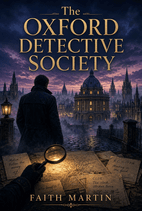
Underneath its mystery, the novel is really wrestling with how grief shapes memory and how the dead stay tangled in the living. It asks who gets to tell a woman's story, what secrets we protect, and whether official verdicts can ever capture the messy truth. Money, obsession, and legacy all circle back to one question: what do we owe the people we lose?
On this page you'll find each major theme tied to concrete moments, like Monty's trust fund controlling the band, Elizabeth hiring someone to spy, and Jennifer guarding her father's reputation. You'll also spot recurring symbols, from the ornamental pond and the listening moon to Kyle's framed photograph and the Lucky Cuckoos song on the radio.
Major Themes in The Oxford Detective Society
Grief and lingering loss
Both Monty's 1960s story and Lyssa's modern life are shadowed by the death of a beloved partner. Monty's grief for Glen draws her toward the pond and the afterlife, while Lyssa's grief for Kyle surfaces through small domestic rituals and keepsakes.
- Amelia toasts the moon, cries at the fountain Glen insisted on, and remembers how he swam in the pond only once.
- Lyssa runs her finger over the glass of Kyle's framed photograph and asks him what he thinks of Monty Montrose.
- Bibbie's claw hooks out a storage-facility receipt Kyle rented before his death, and Lyssa rubs the paper, feeling a familiar ache of loss.
Hidden female authorship and reclaiming a legacy
The biography commission is really an attempt to restore Monty's reputation and prove that she wrote the Lucky Cuckoos' lyrics. Her poems, diaries, and letters, along with Caroline's testimony, establish a creative legacy that the press and the record industry erased.
- Elizabeth shows Lyssa Monty's handwritten poems and a 1962 diary entry, and proposes that Monty wrote the lyrics to 'The Frightened Heart'.
- Caroline tells Lyssa that Monty wrote all the Lucky Cuckoos' lyrics but that 'women never got the credit for anything'.
- Lyssa photocopies letters at the solicitors that prove Monty's authorship.
Secrecy, hidden agendas and surveillance
Almost everyone connected to the Montrose story is hiding something, and the modern investigation is riddled with spying. Elizabeth hires someone to watch Lyssa while concealing her real purpose; Jonas has Lyssa's communications monitored; and Neville follows her under cover.
- Elizabeth privately reflects that Lyssa has 'risen to the bait' and that she has a hidden agenda.
- Nick Rattle finds Lyssa's landline and smartphone bugged, her emails intercepted, and her laptop files copied to an unknown address.
- Neville tails Lyssa to Woodstock in an unremarkable car, staying out of her sightline.
Ambiguity of truth and official verdicts
Monty's death is never settled by official inquiry: the inquest calls it accidental, witnesses argue for suicide, and Lyssa comes to suspect murder. Even the original investigating officer nursed doubts, and the eventual confession upends every earlier theory.
- The inquest ruled accidental drowning under the influence of drink and drugs; Monica insists it was suicide; Lyssa begins to suspect murder.
- Alison Jameson says her late husband Derek, the investigating officer, always felt 'antsy' about Amelia's accidental death.
- Emily Bannister confesses to Lyssa: 'I killed her.'
Money, class and inherited fortune
The book repeatedly connects wealth to power and resentment. Monty's trust fund lets her control the band; Glen's will and royalties turn his family against her; and Jonas's present-day fortune is built on both Glen's songs and money stolen from Monty's charity.
- Glen's will leaves his entire estate and future royalties to Monty, and his parents vow to fight it in court.
- Monty uses her money to buy instruments, studio time, and airtime, so she can insist Glen be lead singer.
- Jack Flynn confronts Jonas with ledgers proving Jonas's father took stolen charity money.
Legacy, obsession and the burden of truth
Characters fight to control how the dead are remembered. Jennifer is violently protective of her father's reputation, Emily's guilt poisons her artistic life, and Lyssa must decide whether printing Emily's confession is worth the harm it would cause.
- Jennifer threatens to sue when she learns the biography will credit Monty rather than glorify Racey, and later checks into a mental health clinic.
- Emily wonders if she could never become a truly great painter because she subconsciously feared greatness after killing Monty.
- Lyssa asks Monty for a sign about whether to reveal Emily's confession, and takes the radio song as her answer.
Symbols and Motifs
The ornamental pond
The pond is the boundary between life and death, and a place where grief becomes fatal. It is where Monty dies, where Glen once swam, and where Emily's childhood hatred ends a life.
- Amelia leans over the pond to look for Glen's reflection and unexpectedly falls in and drowns.
- Emily says she crept down to see the water lilies, found Monty by the pond, and pushed her in.
The moon
The moon is a listener for the grieving, representing longing for the afterlife and the hope of contact with the dead.
- Amelia toasts the moon, talks to it about money, grief and reincarnation, and wonders whether Glen might come back as a fox.
- She leans over the pond to look for Glen's reflection before she drowns.
Kyle's framed photograph
The photograph keeps Kyle's presence alive in Lyssa's daily life, and its disturbance signals the violation of her private grief and home.
- Lyssa pauses at the framed photograph and asks Kyle what he thinks of Monty Montrose.
- After the flat is secretly searched, Lyssa notices the photograph has been moved and feels 'Invaded. Frightened. Unsafe in her own home.'
The Lucky Cuckoos song on the radio
The old song carries the voice of the dead into the present, and in the end it becomes a sign that Monty is answering Lyssa's plea for guidance.
- On the drive home Neville turns on the radio, and a Lucky Cuckoos song plays with Glen's voice singing Monty's words; Lyssa murmurs 'Thank you, Monty.'
- Elizabeth points to a 1962 diary entry mentioning 'Scared Witless' and connects it to the song 'The Frightened Heart', showing the hidden authorship inside the music.