⚠️ READER ADVISORY: This is a deep-dive summary designed for those who want the full story. Contains spoilers.
What is the book Rules for the Summer about?
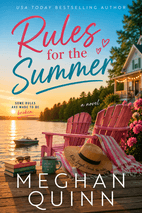
Meghan Quinn's Rules for the Summer follows British aristocrat Theo Williams, who botches a proposal to American Renley Gossage after an online mix-up, leading to a deal where he funds her candy shop renovation in exchange for daily walks, governed by strict rules that their undeniable chemistry keeps testing. A witty opposites-attract romance for fans of small-town charm and slow-burn banter.
Feature
Insta.Page
Blinkist
Shortform
Rules for the Summer
✓
✕
✕
Summary Depth
Full Chapter-by-Chapter
15-min overview
Section-by-section guides
Audio Narration
✓
✓
✓
Visual Mindmaps
✓
✕
✕
AI Q&A
✓
✕
✕
Quizzes
✓
✕
✕
PDF Downloads
✓
✕
✓
Price
$89.99/yr
$146/yr (PRO)
$199/yr
*Competitor data last verified July 2026.
1 Page Summary
Rules for the Summer is a romantic comedy that begins with a comedic disaster: British aristocrat Theo Williams, future Lord Dunebary, kneels in the front yard of American stranger Renley Gossage, proposing marriage to the wrong woman. He's there because of a hilariously botched online match—his drunken, dare-fueled prank on a fiancé-finding website was mistaken for a business inquiry by Renley and her eccentric Aunt Kitty, who believed they were meeting a "financier" to fund Renley's dream of taking over Rudder's Sweets, the beloved local candy shop that has just been left to her. Desperate for money and facing a looming deadline from the town's business society, Renley reluctantly agrees to a deal: Theo will provide the funds, and in exchange, she'll spend the summer walking with him. Their arrangement is governed by a strict set of rules—no flirting, no proposing, and limited daily visitations—but the chemistry between the guarded, hardworking Renley and the charmingly clueless Theo is immediate and undeniable.
The story unfolds over a summer in the picturesque coastal town of Cape Meril, where Theo and his loyal (if crude) best friend Rupert have rented a cottage next door to Renley and Aunt Kitty. As Renley throws herself into renovating the rundown candy shop and juggling odd jobs, Theo inserts himself into her life with relentless enthusiasm, showing up for walks, helping with repairs, and slowly breaking down her walls. Their banter is sharp and playful, but beneath the teasing lies genuine connection—Theo is fleeing the pressure of an arranged marriage to a woman he's never met, while Renley is haunted by the weight of her family legacy and the fear of failure. Their summer is filled with stolen moments, late-night games, and increasingly bold encounters, but the looming threats of Theo's obligations back in England and Renley's anxieties about the future constantly remind them that their time together might be temporary.
With a tone that balances laugh-out-loud humor, heat, and genuine emotional depth, Rules for the Summer is a classic opposites-attract romance where an unassuming American woman and a ridiculously posh Brit navigate an unlikely alliance. Readers who enjoy witty banter, small-town charm, and a slow-burn relationship built on unexpectedly sweet moments will be charmed by Theo's persistent pursuit and Renley's reluctant softening. As the season progresses, the stakes rise: Theo must decide between duty and his growing feelings, while Renley must choose whether to trust in something that feels too good to be true. The story teases the possibility of a future together without guaranteeing it, keeping the reader rooting for this mismatched pair until the very end.
Prologue
A man in a bespoke suit kneels in the front yard, holding out a monstrous engagement ring in a wooden box. Renley asks what he's doing. It looks like he's proposing. That would be correct.
Theo Williams, British, posh, and thoroughly delusional in Renley's estimation, sets about ruining the moment before it even begins. He calls her "Riley." His friend Rupert whispers the correction: it's Renley. He tries again with "Renley Henrietta"—not her middle name. It's Lynn. He questions her about it, then plows ahead with "Renley Lynn Gosling." No, it's Gossage. Like Goose Gossage, the Yankees pitcher. Theo doesn't do sports, and he's baffled. Renley notes the leather tassels on his Berluti loafers; he snipes back about the paint stains on her threadbare overalls. Rupert mutters that this isn't the way to win her over.
Theo shakes it off, takes a deep breath, and gets back down on one knee. Renley's mind races with the chain of events that led to this disaster: margaritas with Aunt Kitty, a cracked tablet that made "financier" look like "fiancé," and the terrible decision to give her home address to strangers. Theo opens the ring box again, gets her name right with Rupert's help, rhymes "life" and "wife," and asks for the greatest honor of his life. He's known her less than a day. She already hates him. Despises him. Wants to shove his face into poison ivy.
"Absolutely...not."
Theo's expression flattens. He stands, snaps the ring box shut, and calls her pause spiteful—he thought she was saying yes. She reminds him she said no from the beginning. He counters that her profile said "match," and that's why he flew across the Atlantic. She insists that's not what she thought she was matching for. He tosses the ring box to Rupert, sheds his jacket, unbuttons his shirt, and announces he's not staying dressed up if he's being turned down. He flops back onto the grass of her front yard in the heat. Renley lets her gaze travel—briefly, very briefly—over the contours of his chest and the ripple of his abs. Good for him, she thinks. Must be nice to have that kind of time.
He tells Rupert he needs lemonade instead of tea. Rupert objects to being treated like a butler. Theo explains that his fiancée just turned down his proposal—he's hurting, and lemonade is the only cure. Renley rolls her eyes and tells him to wallow somewhere else, that his limbs are creeping onto the neighbor's lawn. Theo assures her they won't mind. He's renting that place for the summer. He's her new neighbor.
Wait. What?
He adds, with that smile, that this fiancé isn't finished with her yet. By the end of the summer, mark his words, she'll be wearing his ring. He's incredibly persuasive. Rupert backs him up: he once convinced Rupert to run a half-marathon in his mum's best Sunday dress and heels. Renley tells him to dream on. She has actual work to do. As she walks away, he calls out, "Gossy, the British are coming and you have no idea what's about to hit you."
She glances back, calls him delusional, slips inside, and shuts the door. She leans against it, catching her breath. Dear God in heaven. She needs to find that tablet, learn everything she can about this man, and order Aunt Kitty a new one.
💡 Try clicking the AI chat button to ask questions about this book!
Chapter 1
Theo sways in his wingback chair, lager in hand, as the room spins. Across from him, Rupert lies on the floor in front of the unlit fireplace, wearing Theo's father's faux-fur bearskin over his bare chest and a pair of crusty old battle trousers from the 1700s that he swiped from the glass case in the old man's office. The game is truth or dare. Theo chooses truth, and Rupert, smirking, asks about Gertrude Storch and the legendary night she supposedly blew him seven times. Theo takes a long swig of stolen whiskey, grimaces at the taste, and delivers the punchline: it was six. Rupert howls with laughter.
Theo glances around his father's office, a room full of inherited wealth and pompous decor: the mahogany desk, the curtains his mother changes constantly, the self-indulgent oil painting of his father above the mantel, posing in hunting gear with one foot on a rock. Theo hates everything about this office, though some of his best memories have been made between these pretentious walls. He remembers the night he and Rupert replaced the real bearskin with a fake and gave the real one a Viking burial at sea, nearly drowning in the process. Now Rupert strokes the faux fur with far too much attention.
Theo dares Rupert to take a permanent marker to the painting, the one thing in the office they haven't besmirched. Rupert blanches, worried about getting shot with Great-Great-Great-Grandpa Charles's musket, but Theo insists it can be small, and the truth-or-dare pact is sacred. Rupert grumbles, brags about finding the G-spot, and Theo tells him Christa was faking. After some banter, Rupert grabs a Sharpie from the desk, drags a chair over to the mantel, climbs up, and works on the painted bushes at the base of the rock where Theo's father is perched. He writes "wanker" in script, blending it into the branches, visible only to the drunk eye. He tosses the marker at Theo, who demands a closer look. Rupert hoists him up, Theo presses his eye to the canvas, claims he sees it, and then Rupert releases him, sending Theo crashing to the floor on his arse.
Rupert drops into the office chair, swaps one of Theo's father's cigars with a cheap knockoff, and complains that Theo's dick is too big to be walking around without pants. Theo, lying on the floor and stretching his bare legs, admires the plaid wallpaper on the ceiling, a touch his mother thought classy and he thinks is a waste of money. Rupert calls him "my lord," Theo flips him off. Their banter continues, loose and drunk, until Rupert says it's his turn and asks truth or dare, but Theo can't choose truth. Theo picks dare.
The Fiancée Dare
Rupert grins with a manic look and asks how Theo feels about finding a fiancée. Theo, sitting up on his elbows, answers not great. Rupert laughs and reveals he has already created a profile for Theo on a find-a-fiancée website. The dare, he says, is to press the activate button. Theo realizes that truth or dare has just become a whole lot more serious.
Chapter 2
Renley Gossage stands in the crowd as Mayor Sheffield taps the microphone, insisting she is not nervous even though the English muffin with peanut butter she ate this morning is threatening to come back up. Aunt Kitty is not fooled. She leans in, wipes a finger across Renley's cheek, sniffs it, and declares salt, fear, and trembles—all unmistakable. She grips Renley's jaw and presses her nose to hers, whispering the evidence, until Renley swats her away and begs her to stop making a scene. The truth is that Renley has never wanted anything as much as she wants this: ownership of Rudder's Sweets, the candy store left to the town by the late Ira Rudd.
The ceremony is a disaster of small-town proportions. Mayor Sheffield's assistant, Marjorie, sends an ear-piercing screech through the speakers, and Aunt Kitty loudly declares Marjorie an abomination, blaming her for the mayor's clashing outfit. While the mayor walks through the history of the time-honored business transfer tradition, Renley's anxiety spirals. Twenty-one applications were received, and she immediately runs through the competition: Shawn Herman, who wants to take over every business in town; Jasmine, who would ruin the shop by turning it into a healthy candy store; Jericho, who sheds cat hair everywhere; and Laura Bell, who has family wealth behind her. Renley is convinced she doesn't stand a chance. She whispers to Aunt Kitty that she thinks they should leave, but Kitty just shouts at the mayor to get on with it, which only makes things worse—Mayor Sheffield and Aunt Kitty don't get along.
When the mayor finally announces the new owner, Marjorie fumbles the drumroll, knocks a speaker over, and sends another screech through the crowd. Aunt Kitty shouts "Marjorie sucks! Fire her" and then feigns innocence. Renley is so distracted by her aunt's behavior that she misses the mayor's announcement. The crowd is cheering, everyone is looking at her, and then Aunt Kitty shakes her by the shoulders—Mayor Sheffield said her name. Renley Gossage is the new owner of Rudder's Sweets. In pure shock, she walks up to the stage, shakes the mayor's hand, and poses with the keys as pictures are taken. She did it. Now she has to prove to the town she is the right person for the job.
Back in the living room, Aunt Kitty kicks her feet up on the pink velvet couch while Renley flips through the paperwork the mayor handed her. The shop needs repairs to bring it up to code—things left undone while Ira was sick—plus paint, new windows, and updates to the storefront. The quotes for the repairs are all in the binder. Renley explains it shouldn't be a problem because she can do the labor herself. Then Aunt Kitty's words sink in: "Good thing you won the bid to help pay for it." Renley slowly turns and asks what she means. There was no bid for money. The bid was the application they wrote together, telling the business society how they would take over the shop and financially support their endeavors. Aunt Kitty looks puzzled. She thought they were putting together a loan application saying how much they wanted. Renley's panic takes over. She asks Aunt Kitty to tell her they have the twenty thousand dollars they claimed they'd put into renovations. But Aunt Kitty shakes her head—she said they would need at least twenty thousand dollars. She never had it. She doesn't have twenty thousand dollars. Does Renley?
Renley signed a contract saying she had the money for the project. She can't ask the business society for it—they're not a bank. They're people who like to tell others what to do with their businesses, and they keep people like Renley in line. She shouts that she'll have to go back to Mayor Sheffield and admit she can't do it. Aunt Kitty refuses to let her, insisting the shop belongs to her now. But Renley can't even open the store until the renovations are done, and because of town regulations, she won't have access to the store's money until three months after reopening, so no one can rob the store of its cash and leave. That's why the town requires money on hand. Aunt Kitty nods, says it makes sense, and adds, "We really should have had that money." Renley is about to murder her aunt. She storms off toward her bedroom, leaving Aunt Kitty on the couch, the keys to Rudder's Sweets now a promise she cannot afford to keep.
Chapter 3
At the bank, Aunt Kitty adjusts her purple velour business suit with matching necktie and tells Renley to follow her lead. She has a plan: walk in, slap a piece of paper on the desk, and demand twenty thousand dollars, no more, no less. This is not her first rodeo. Renley is not convinced, wearing the same simple black dress she wore to her father's funeral, the only fancy dress in her closet. She tells Aunt Kitty this is not a good idea, that they will not give them the money. Aunt Kitty insists she knows her way around, revealing her secret leverage: five years ago she had an affair with Robby Trent, bent over every desk in the establishment, and she has video evidence. If he will not give them a loan, she plans to blackmail him. Renley protests, but Aunt Kitty believes blackmail is the key to business, how people become billionaires. Desperation has seeped into Renley, though, and she is willing to try almost anything to avoid handing the keys to Rudder's Sweets over to the mayor.
Inside the bank, Aunt Kitty slaps her hand on the counter and demands to speak to Robby Trent at once. The woman behind the counter recognizes her: Robby Trent was fired five years ago after the escapade the two of them went on in the bank. Aunt Kitty asks if she is sure. She is very sure. Undeterred, Aunt Kitty asks for the person who took his place and is directed to the second office on the left.
As they walk, Aunt Kitty quietly concedes they will have to pull back on the blackmail idea. Every idea is a good idea until it fails, she says, then tells Renley to watch her cook. She knocks on the open office door. Inside, the person in the chair turns around. It is Marjorie, smiling brightly.
"Well, if it isn't the Gossage girls, looking all businesslike." Marjorie folds her hands and guesses they are not there for money for the sweets shop. Renley's skin prickles with panic. Marjorie works part-time at the bank and part-time with the mayor, and she is clearly onto them. Renley nervously compliments the office, including the plastic vines taped around the perimeter, calling it very earthy. Marjorie presses: what could they possibly need a loan for? Renley's mind races, knowing Marjorie is the last person who should learn they do not have the money. She could tell the mayor they lied on their application, and Rudder's will be taken away without a chance.
Aunt Kitty steps in with an absurd story: she is considering starting a hobby horse farm, training individuals for competitions and lending them her secrets. Marjorie's expression falls flat. "No one wants that, Kitty." The insult is a declaration of war. Aunt Kitty can tolerate jabs at her Golden Girls perm or her purple Prince outfit, but not her hobby horses. She rears back as if slapped and growls, "How...dare...you." Renley puts a hand on her shoulder, mentally begging her to stay calm, and improvises a story about an investor interested in the hobby horse venture. She silently signals Aunt Kitty to abort the mission before Marjorie discovers the truth about Rudder's. Aunt Kitty catches on, agrees about the investor, and then cannot resist adding that the investor is a better option than sitting in this room pretending to enjoy Marjorie's voice. Renley tugs her toward the door.
But Marjorie is not finished. She stands, arms crossed, ready to fight, and delivers a devastating truth: Renley was never the business society's top choice. She was bottom of the barrel. The bid for Rudder's was awarded to her specifically because her family has a reputation for screwing things up, and the business society does not want the store to succeed. They know she has no money and no experience. They expect her to fail within three months, after which they will pull the plug and award the store to a national chain that paid a hefty check to move into Cape Meril. Renley protests that this betrays everything the town stands for, small businesses and cherished memories. Marjorie shrugs. "That's business." She calls Rudder's a half-dead candy store on prime real estate, says Ira was a cranky old man who did not listen to the business society, and tells Renley not to waste her time. "We all know you won't succeed."
Aunt Kitty snaps back that Renley will succeed, that Marjorie and the business society will be weeping at the storefront and apologizing. Then, in parting, she chucks a case of Tic Tacs at Marjorie's head, telling her to put an end to her rotten ocean mouth. She drags Renley out of the bank. Renley's mind races and her heart breaks. They do not believe in her. They only believe she is capable of failure. And now she is not sure she believes in herself either.
Back at the house, Aunt Kitty sets a mug of her famous margarita concoction in front of Renley. They are both on mug number three, because when your town chooses you for the sole purpose of watching you fail, there is nothing else to do but drink your sorrows away. Aunt Kitty announces she is toilet-papering Marjorie's house tonight. She has the outfit picked out, black top, pants, even underwear, and enough toilet paper for the entire state of Vermont to have their bowels slaughtered. Renley points out that Marjorie will know it was her, since everyone knows they hate each other, though no one knows why. Aunt Kitty insists everyone knows why: Marjorie is jealous of her talent. She attempted a steeplechase once, in hobby horse training, and failed spectacularly, earning the nickname Splat. Renley nods, though she privately suspects the real reason is that Aunt Kitty is a loudmouth who never knows when to stay quiet.
Renley tries to shoulder the blame, noting it was the business society's decision, not just Marjorie's. Aunt Kitty insists Marjorie swayed them, then reminds Renley what she is worth: Renley is this town's Jackie of all trades. She fixed Mayor Sheffield's toilet when he would have been swimming in filth, replaced Dalinda's moldy kitchen tile, and repaired David Henderson's smoke detector. None of it matters, Renley says. They already messed up by not having the money. She cannot believe she trusted Aunt Kitty when she claimed to have it; Aunt Kitty lives on a fixed income. There is no way to get a loan now, and they are living up to every expectation.
Aunt Kitty refuses to give up. They just need twenty thousand dollars. She runs through options: selling feet pics is out, because Renley's first four toes are all the same size and her pinky is half the size, oddly unsettling to look at. Selling her body is also out, because Renley yells that she does not feel great about it, and Aunt Kitty cannot sell her own body due to loyalty to her fans. Sugar daddy DMs from foreign countries are scams. Emailing Mark Cuban leads to a fake address. "No one from Shark Tank!" Renley shouts. So Aunt Kitty goes straight to the source. She types "Financier dot com" into her cracked tablet, and a website pops up, almost too conveniently.
The site is flooded with pictures of men looking to invest. Aunt Kitty scrolls, making commentary as she goes. An older man with salt-and-pepper hair holding a small dog is promising because he works in tech and wants commitment. A food truck owner is a contender because, as Aunt Kitty insists, candy is a cuisine. A man with a cat on his shirt is dismissed as a fraud, a no-good idea poacher named Sebastian. Renley worries they do not know these people, that they could be criminals, but Aunt Kitty assures her the website conducts background checks. These are certified financiers. Renley wonders where all the women are. Aunt Kitty laments the absence of Lori Greiner, then suddenly finds their man.
The photo shows a guy in a suit tugging on his curly brown hair, with long legs, broad shoulders, piercing blue eyes, and a carved jaw full of scruff that seems illegal to look at. He is British, which is a plus, because Cadbury was created in the United Kingdom, and Cadbury knows candy. His profile says he likes sucking on cherries, wants a solid twenty years of commitment, loves a long-lasting merger, and can go all night. He is looking for someone with a strong hold, someone who can take him deep. DTF, Aunt Kitty explains, means down to finance before fully committing. Renley does not fully understand, but the terms sound promising. The profile has no requirements beyond being an American, and Renley is indeed an American. It seems almost too easy, but they decide to apply.
Aunt Kitty types away with an evil smirk, promising that Marjorie will rue the day she messed with them, that she will get the taste of her own foot bone in her mouth. Renley, dazed from the margaritas, asks why Marjorie is sticking her foot bone in her mouth. Aunt Kitty sighs and gives up explaining, telling Renley to go to sleep and let her handle it. "I got you." Renley closes her eyes, the alcohol pulling her under, and wonders if three margaritas is too many. "You got me."
You've reached the end of the free chapters
Chapter 5 is locked
Keep reading Rules for the Summer — and unlock all 600+ book summaries with audio, mindmaps and AI Q&A.
$0.00 due today · 7 days free, then $89.99/year ($7.49/mo) · Cancel anytime before day 7
Meghan Quinn is a USA Today and Wall Street Journal bestselling author known for her witty, heartfelt contemporary romance and romantic comedies. She has penned over forty books, including popular series like the "Bristol Bay" and "Getting Lucky" series, as well as standout titles such as The Christmas Fix and The Hook Up. Before becoming a full-time writer, she worked in the dental field, and she now captivates readers with her signature blend of humor, banter, and emotional depth.
Frequently Asked Questions about Rules for the Summer
What is Rules for the Summer about?
A stuffy British aristocrat, Theo Williams, accidentally joins a matchmaking website while looking for investors, leading him to Renley Gossage, a small-town woman desperately trying to save her late father's candy shop. After a disastrous proposal, they strike an unlikely deal: he'll give her money in exchange for daily walks and a summer of lessons in being 'real.' As they clash and spark, both are running from pressure—he from family duty, she from financial ruin—making their arrangement far more complicated than either expected.
Who is the author of Rules for the Summer?
Meghan Quinn is the author of this contemporary romance. The novel is told in dual perspectives, switching between the British aristocrat Theo and the small-town heroine Renley.
Is Rules for the Summer worth reading?
Absolutely. The novel delivers nonstop banter, a slow-burn romance, and a cast of eccentric side characters like Aunt Kitty and Rupert who keep every scene entertaining. Underneath the humor, there's real emotional stakes—family expectations, grief, and following your dreams—so it's both funny and heartfelt.
What are the main themes in Rules for the Summer?
A major theme is the push-pull between duty and personal desire, especially for Theo as he wrestles with his father's expectations for his future. Renley's story centers on legacy, grief, and the courage to carry on her family's candy store, showing how hard it is to trust in something you love. The novel also explores fear of vulnerability and the importance of taking risks in love. Friendship and found family—through Rupert and Aunt Kitty—add warmth and comic relief.
📚 Explore Our Book Summary Library
Discover more insightful book summaries from our collection