Start Reading
Chapter: "Start Reading"
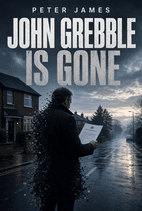
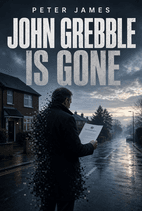
John Grebble first learns he is dead when a letter from his bank arrives in the morning post. He is a small, mouse-like man in his mid-fifties, living a life of careful routine in a small house in Hangleton, a suburb of Brighton and Hove. His breakfast is precisely boiled egg at four minutes and thirty-five seconds, toast with soldiers, blueberries, and green tea. He cares obsessively about cleanliness, fitness through kickboxing and tai chi, and mental sharpness through the Times crossword. His greatest worry is money. Hidden beneath his basement is a secret nuclear bunker built by the previous owner. John keeps emergency cash down there, though the place creeps him out.
He shares his home with Mary the budgerigar and Winston Smith, a surly Burmese cat. His mother is in a care home, lost to dementia. His brother Geoff, two years younger, bullied him throughout childhood, stole his girlfriends, and kept asking for loans that were never repaid until John cut him off three years ago. They have not spoken since. He had no plans to die. Or rather, he hadn't had.
The bank letter is a form letter, clearly generated by AI, addressed to the Estate of John William Grebble, offering condolences and requesting a death certificate. John reads it three times. His initial reaction is dry annoyance. He considers playing along with the bank's mistake, but then indignation rises, and he phones the bank. After navigating automated menus, he reaches someone called Riley, who tells him the information that he is deceased is verified. His account is inactive. The call is terminated. Furious, he decides to visit the bank in person during his lunch hour.
He boards the 5B bus. His Apple Pay fails. His debit card fails. The driver shows no hint of recognition. John produces his emergency fifty-pound note, but the driver does not carry change. The driver tells John he just has to get off the bus. Humiliated, John steps back onto the rainy pavement.
He works through his options. Driving to work means expensive parking. A taxi would be costly. Walking would take over an hour in horrible weather. He hurries back up the hill. Then he stops. A few hundred yards ahead, a breakdown truck sits in the middle of the road, winching up the rear end of his small grey electric Kia.
Grebble sprints through the worsening rain and reaches the truck just as a tall, tattooed, shaven-headed muscle man controls the winch. "That's my car!" Grebble protests. "Yeah, and I'm the Pope!" comes the retort. The man explains that the car is on a lease-purchase arrangement for someone now deceased and that he is repossessing it. Grebble spreads his arms wide, insisting he is very much alive. Muscle looks him over and warns, "You will do if you don't clear off." Grebble pulls a £50 note from his wallet and offers it purely as thanks for waiting five minutes while he calls the leasing company. Muscle palms the note and keeps winching.
Inside the house, Grebble telephones the finance company and is put on hold. Outside, a powerful engine roars. He runs out clutching his phone, only to watch the truck drive off with his car on the back. Soaked through, Grebble walks back inside. He calls a taxi, changes into an identical dry suit, and replenishes the £50 from his emergency stash. He sends an apologetic email to his line manager, the imperious Rosemary Bute. Then his email bounces back. The Mail Delivery Subsystem reports that his message was not delivered. He retypes it, checking every letter, and gets the exact same result. "JOKE OVER," he announces. His taxi is outside.
Twenty-five minutes later, he pays the driver the exact fare and not one penny more. Grebble hurries through the pelting rain to the smart glass entrance of Wilmot & Wilmot. His good humour evaporates when his pass-card produces a red light instead of the flashing green that would click the door open. He tries again. Declined. He calls Jane Netherwood in Risk and Audit, who would buzz him in, and reaches her voicemail. He waits. He thinks of a woman in HR he dealt with months ago. Millie Danjuma. When he calls, a polite, very precise male voice answers and tells him she is on holiday. After spelling Grebble's name, the voice turns officious: he can give no information on Mr John Grebble. For security reasons, he terminates the call.
The rain falls harder. A woman brushes past him, and he barely registers the green light and click of the door as she goes in. By the time he realizes what has happened, the door has swung shut. Through the opaque glass he sees the blurry shapes of people moving inside, people who have constituted almost his entire social universe for twenty-seven years, and suddenly they are all bigger strangers than ever. Nobody else approaches. His call to Jane goes to voicemail again. He tries Rosemary Bute's direct number and gets a steady whine. He texts her, asking her to buzz him in. It will not send. A trickle of rain runs down the back of his neck. He swears, and kicks the door. He kicks it so hard that his foot explodes with pain and tears flood his eyes. He might have broken a toe. His watch reads 9.25 a.m. No one is heading for the entrance. No one inside has noticed his absence. It seems like the perfect time to go to his bank and sort out this nonsense about him being dead. He has never felt less dead in his life. His painful toe attests to that.
The bank
The Brighton branch of the National Midland & Eastern Bank is a five-minute limp from where he stands. When Grebble arrives, he is astonished to find there are no tellers, only a row of booths with monitors and keypads. A long-faced youth in a cheap suit sits at a desk labelled INFORMATION. His gold name tag reads Finley. He has a nasally voice and a smirk that seems to be his default expression.
"The bank seems to think I'm dead," Grebble says with a wry smile. "Do I look at all dead to you?" Finley studies him blankly, admits that he does not look very dead, and asks for his manager's name. David Green, Grebble says. Finley taps at his keypad and frowns. The only Mr Green he can find retired two years ago. Grebble gives his name and his current account number. The account, Finley reports, is closed. There is a copy of a death certificate on the file. Grebble demands to know who closed it. Finley cites GDPR and refuses to give any details. Finley will notify the customer service manager, but he cannot do it while Grebble stands there, because the bank's fraud prevention policy requires all internal communication to go through an end-to-end encrypted intranet.
Grebble, a man who rarely shows emotion, is shaking. He has hundreds of thousands of pounds in this bank, and he cannot access a penny. He threatens to walk straight to Brighton Police Station. Finley shrugs. "It's a free world, Mr Grebble. Dead people can do whatever they want." Grebble wants to punch his lights out, but he is in enough trouble as it is.
Out on the pavement in the pelting rain, he thinks about the detective shows he has watched on television. Assume nothing; believe no one; check everything. Assume nothing: maybe the bank has it wrong. Or maybe something else is going on. Believe no one: especially not that little shit Finley. Check everything: where to begin? The police.
Brighton Police Station
Twenty minutes later, limping, Grebble enters Brighton Police Station and approaches the reception desk behind its toughened glass screen. A solid, curly-haired woman in a white blouse listens and takes his driving licence when she asks for ID. She carries it to a terminal on the far side of the room, and stays there for several minutes, tapping keys and making a brief phone call. When she returns, her expression has changed completely. She holds his licence as if she means to keep it. "Are you sure you've given me the right name - your name?" she asks. He confirms he is John William Grebble; she cuts him off and asks him to take a seat. An officer will take a statement about possible identity theft.
Soon Grebble is escorted into a small, windowless interview room by PC Edgbaston, a tall, stiff officer who looks assembled from spare parts. Detective Constable Patel arrives, short and friendly-looking, in a navy two-piece suit. She works with the Identity team. She asks if she may call him John. Yes, he says. That is his name.
But the news is worse than Grebble expects. His driving licence has been run through the system and is coming back as cancelled. According to the DVLA, the licence has been revoked owing to the death of the person to whom it was issued, verified by a certificate of death on file. "Do I look dead to either of you?" he demands, shaking. Patel tells him gently that the licence photo is not recent enough to be certain. He offers fingerprints and DNA, but without a record to match against, they will not help. Grebble's panic sharpens. His mother is in a care home, paid for by direct debit. What if the bank stops that?
PC Edgbaston asks