⚠️ READER ADVISORY: This is a deep-dive summary designed for those who want the full story. Contains spoilers.
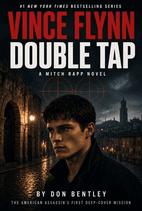
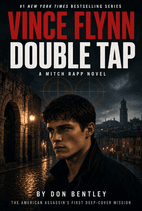
What is the book Double Tap about?
Vince Flynn's Double Tap follows Mitch Rapp in Verona, tracking a Pakistani scientist until a pickpocket forces him to intervene, blowing his cover and turning hunter into hunted. A relentless thriller of tradecraft and compromised operations for fans of hard-edged espionage.
Feature
Insta.Page
Blinkist
Shortform
Double Tap
✓
✕
✕
Summary Depth
Full Chapter-by-Chapter
15-min overview
Section-by-section guides
Audio Narration
✓
✓
✓
Visual Mindmaps
✓
✕
✕
AI Q&A
✓
✕
✕
Quizzes
✓
✕
✕
PDF Downloads
✓
✕
✓
Price
$89.99/yr
$146/yr (PRO)
$199/yr
*Competitor data last verified July 2026.
1 Page Summary
Mitch Rapp is in Verona, tracking a Pakistani scientist, when a pickpocket working a honeymooning couple nearby forces an impossible choice: stay invisible on a covert trail or stop a small wrong happening in front of him. He intervenes, and the cost is immediate—a public disturbance, converging police attention, and a blown operation. From that moment the hunter becomes the hunted, shadowed by a surveillance team he cannot identify. Rather than keep running, Rapp decides to flip the dynamic entirely, choosing ground and moment to turn an ambush back on his unseen pursuers.
Meanwhile, at Langley, Irene Kennedy confronts an anomaly analyst Hannah Edwards has surfaced: a string of empty Iraqi trucks crossing a border, a smuggling route running in reverse for reasons no one can explain. Kennedy backs a cross-agency push to understand what the reversal means. Elsewhere, Ben Friedman gambles a uniquely valuable handler into the field to reconnect with a gone-dark Italian asset—the only thread still leading toward the missing scientist. Thomas Stansfield goes to the White House to argue that adding chemical-sample recovery to an already risky Iraq raid turns a manageable mission into a high-risk one with negligible benefit, but the president wants public justification for his policy. Scott Coleman and his team prepare for a mission a JSOC green light has already made a go, even as doubts linger.
The operation frays in Istanbul's Grand Bazaar, where Rapp sheds one legend for another in a crowd that becomes both shield and weapon. He talks his way into an invitation, endures a brutal vetting, and trades his Beretta for a place inside a van that carries him closer to the scientist—exposed, disarmed, but still on the trail. A bruised young woman leads him to a hidden apartment and answers with silence. When a flash and an explosion rip through a warehouse, the mission changes in an instant, an Israeli intercept forces crews to hold their weapons, and the night begins to unravel around them. This is a tightly wound thriller of tradecraft, hard choices, and mounting costs—built for readers who love relentless pacing, compromised operations, and a protagonist whose instincts cut against cold calculation.
Prologue and Chapters 1-7
Mitch Rapp is in Verona, on the trail of a Pakistani scientist, when a pickpocket begins working a honeymooning couple nearby. Rapp sees it happening. He knows he should stay focused on his target, that any distraction risks the operation, but he cannot let the theft go. He intervenes, and the confrontation costs him his concentration on the scientist. It also costs the thief a broken nose. The decision to intervene is not a calculation of mission advantage. It is something closer to reflex, a refusal to let a small wrong pass in front of him even when the larger objective demands cold patience. That refusal has a price, and the price begins to accumulate immediately.
The purse snatcher, injured and desperate, wants nothing but to get away. What began as a quiet interdiction turns into a public disturbance. People notice. The commotion ripples outward, and police attention begins to converge on the scene. The thief's panic feeds the noise, and the noise feeds the attention. What should have been an invisible moment in a crowded tourist city becomes a spectacle, and a spectacle is the one thing an operative on a covert trail cannot afford. The thief runs, bleeding, and the crowd turns to watch, and somewhere in that crowd is the man Rapp came to kill.
Rapp wants the scientist to remain unaware of him, to keep the surveillance invisible. But the disturbance does the opposite. The commotion draws the scientist's eye, and he notices Rapp. Something registers. The scientist flees, and with that flight Rapp loses the chance to kill him quietly at Juliet's balcony, the spot he had chosen for a subtle, silent assassination. The balcony was the plan because it offered intimacy and concealment at once, a place where a single suppressed round could end the operation without a ripple. Now the scientist is moving, and the plan is dead. The scientist's flight is not random. It is the flight of a man who has spent years learning to read danger, and what he reads in Rapp is danger. He does not know who Rapp is, but he knows what Rapp is, and that knowledge is enough to send him running into a city that is already filling with police.
Now Rapp wants to intercept the scientist before the police can reach him. He moves into a dark alley, trying to cut the man off, to get ahead of him and regain control of an operation that is rapidly slipping away. As he moves, he is deciding how to kill the scientist. The plan has already changed once, from a quiet balcony killing to something that may have to happen in public, in the open, with violence that cannot be hidden. The alley is a gamble. It is a guess about which way a frightened man will run, and guesses are what happen when control is lost. Rapp is no longer executing an operation. He is chasing one.
Rapp wants to prevent the Italian police from arresting the scientist. If they take him into custody, the mission is over, the target disappears into a system Rapp cannot touch. He decides he has to act before that happens, before custody closes the window entirely. Custody means lawyers, means paperwork, means a man who knows things disappearing into a cell where Rapp's employers cannot reach him and where his enemies might. The window is closing, and Rapp knows that once it shuts, it does not reopen.
He tries to locate the scientist in Piazza Erbe. Instead of his target, he finds a large police motorcycle presence. The square is thick with them. The police are already moving. The square that should have been a place of transit has become a trap with uniforms on every side, and Rapp is inside it. He is not the only hunter anymore. He is one of several, and the others have radios and backup.
Rapp wants to confirm that the police are targeting the scientist, and he sees plainclothes officers passing around what appears to be a headshot. That confirms it. They are hunting the same man he is. The race is no longer just Rapp against the scientist. It is Rapp against the police as well. The headshot tells him the Italians have been working the same trail, that someone else wants this man badly enough to mobilize a city, and that Rapp's window is narrower than he thought. Every second he spends in the square is a second the police spend closing in.
He wants to kill the scientist quietly, but the suppressor is impractical here, too bulky, too slow, too conspicuous for the environment he is in. He chooses the knife instead. A knife demands proximity, privacy, and speed. He needs all three. The suppressor would require him to assemble the weapon, to find a moment, to accept the bulk of it under his clothing in a city where any policeman might stop him. The knife is smaller, faster, quieter in a different way, but it requires him to be close enough to touch the man, and closeness requires privacy, and privacy is the one thing this night has refused to give him.
He wants privacy for a knife attack, and Via Cappello offers none. The street is too exposed, too crowded, too watched. There is no angle, no quiet corner, no moment where a blade can do its work without a witness. The street is a corridor of eyes, and every eye is a potential problem. Rapp moves through it knowing that the weapon in his pocket is useless without a place to use it, and the place does not exist.
Then he hears a siren. Rapp wants to avoid the worst-case scenario, a police interception that puts the scientist behind custody and out of reach forever. The siren may be driving the scientist north. Everything is moving, and Rapp is reacting rather than controlling. The sound of the siren is the sound of the window closing, and Rapp has no way to stop it. He can only move, and guess, and hope the guess is right.
He wants to find the scientist after losing sight of him. He considers that the man took a western side street, then doubts it. The trail is cold for a breath, and in that breath the entire operation threatens to collapse. The doubt is the worst part. A wrong guess sends him in the wrong direction, and a wrong direction means the scientist is gone, and gone means the mission is over. For a moment Rapp is just a man standing in a city he does not know, trying to decide which way to run.
Rapp wants to identify his quarry in the crowd, so he keeps hunting the scientist as an operative rather than a frightened academic. That shift changes his approach, because he stops watching a man run and starts reading tradecraft in the man's movement. The focus exposes him to the man in John Lennon glasses. The scientist's movement is not the movement of a panicked civilian. It is the movement of someone who has been trained, someone who checks his angles, someone who knows he is being followed. Reading that movement is what allows Rapp to keep the trail, but it is also what puts him in the path of the man in the glasses, a man who is watching Rapp the way Rapp is watching the scientist.
The Pakistani scientist wants to escape the police dragnet, so he keeps moving toward the piazza. He does not know the rendition team is waiting there. Every step carries him closer to the men who will take him. His flight is rational from where he stands. The police are behind him, the piazza is open, and open ground feels like safety. He does not know that the piazza is the trap, that the men waiting there are not police, and that the direction he has chosen is the direction his enemies wanted him to choose.
The motorcycle cop wants to catch the fleeing scientist, so he abandons his bike and chases on foot. That forces Rapp to intervene, because the officer is about to run down Rapp's only lead. Rapp cannot let the police take the scientist before he learns who else is hunting him. The cop is doing his job, and his job is about to destroy Rapp's only chance to understand what is happening. Rapp does not want to hurt a policeman. He wants to slow one down. But the difference between those two things is measured in seconds and inches.
Rapp wants to stop the cop without killing him, so he fakes a fall and ankle-picks the officer. The move drops the policeman hard and delays the police. It buys seconds, but it fails to let the scientist escape. The fall is a performance, and the ankle pick is a calculation, and the result is a policeman on the ground and a few more seconds on the clock. But the seconds are not enough. The scientist is still moving, still heading toward the piazza, still walking into the trap.
The masked men want to snatch the Pakistani scientist, so they pull him into a red panel van. The police pursuit becomes a rendition in an instant. Rapp, who believed he was the only hunter in the square, is outplayed. The van is the answer to a question Rapp had not thought to ask. Someone else was running an operation in this city, someone with a team, a vehicle, and a plan. Rapp was not the only predator. He was one of several, and the others were faster.
Rapp wants to stop the van, so he reaches for his Beretta. An unseen gunman presses a pistol to his kidney and forces him to abort. The pressure of the muzzle tells him the stranger has been behind him long enough to choose the moment. The gunman could have fired at any time. He did not. He waited, and the waiting is the message. Rapp is not in control. He has not been in control for some time, and the man behind him wants him to know it.
The Mystery Man wants to test Rapp's usefulness, so he speaks Arabic and proposes a meeting at Café Bongiovi. The language is a message, and so is the invitation. It reveals he knows Rapp is armed and dangerous, knows what he is, and is not afraid. Arabic in an Italian square is a deliberate choice, a signal that the man behind the gun knows more about Rapp than Rapp knows about him. The invitation is a test. The man wants to see whether Rapp will come, and what Rapp will do when he does.
Rapp wants to identify the Mystery Man, so he tries to turn and look at him. An explosion distracts the street and lets the gunman vanish. Rapp is left with a name, a direction, and no face. The explosion is not an accident. It is a tool, a way to break contact without a chase, and it works. Rapp turns, and the man is gone, and all that remains is a café name and the knowledge that someone in this city is playing a deeper game than he understood.
Rapp wants to decide whether to flee or continue, so he chooses to turn deeper into the city instead of returning to his hotel. The choice commits him to investigating his competition. He walks away from his own extraction to learn who wanted the scientist badly enough to run a rendition in a European city. The smart move would be to leave. The operation is blown, the target is gone, and the police are everywhere. But Rapp does not leave. He turns deeper into the city because the question of who took the scientist is now more important than the scientist himself. Someone ran a rendition in the middle of a European city, and someone knew Rapp was there, and those two facts together are a threat that cannot be ignored.
Eliana Levy wants to salvage a surveillance operation gone wrong, so she leaves Mark on the Pakistani scientist and enters the Syrian asset's apartment alone. The decision splits her undermanned team, and she knows it. The operation is already bleeding, and she has no good options left. She is making a choice between two bad outcomes, and she knows that whichever she chooses, something will be lost. She chooses to enter the apartment because the asset is the thread that might explain everything, and because standing still while the operation collapses is not something she can do.
Eliana wants to find her missing Mossad asset, so she searches the sanitized flat with her suppressed Beretta drawn. The apartment is empty. Worse, it is clean, scrubbed of the life that should have been there, and that confirms the operation is compromised. The cleanliness is the message. Someone has been here, someone has removed every trace of the man who lived here, and that someone knew exactly what to take. The asset is not missing. The asset has been taken, or the asset has run, and either way the operation is no longer hers to control.
Eliana wants to know which target to keep under surveillance, so she orders Mark to follow the young man. That makes the young man the remaining thread to the unraveling operation. He is the one live lead in a night that has otherwise collapsed. The young man is not the scientist. He is not the asset. But he is connected to both, and in an operation where every other line has gone dead, a connection is enough. Mark follows him because there is nothing else to follow.
💡 Try clicking the AI chat button to ask questions about this book!
Chapters 8-12
Langley
Irene Kennedy sits with the anomaly Hannah Edwards has handed her: a string of empty Iraqi trucks crossing the border, running counter to every pattern the analysts expect. The trucks are not carrying anything, and that absence is the problem. A smuggling route that moves nothing is not a smuggling route at all, or it is a route being used for something the analysts have no category for. Kennedy wants to understand what the empty trucks mean, because the pattern suggests a smuggling route that has been reversed for a reason no one can yet explain. The reversal implies intent, and intent implies a decision made somewhere by someone who benefits from the route running backward. She commits to further intelligence development and gives Edwards her backing, because the anomaly is too persistent to dismiss and too strange to leave alone.
Edwards wants to explain the smugglers' reversal, and she proposes cross-agency taskings as the way to do it. The proposal reaches beyond the normal lanes of analysis, because no single agency owns the border traffic, the Iraqi ground picture, and the signals that might explain the shift. But Kennedy sees the logic in it and gains Edwards the support she needs to proceed. The investigation shifts from a single analyst's hunch to something with institutional weight behind it, which means the anomaly can no longer be quietly filed away when it becomes inconvenient.
The Director's Office
Kennedy takes the Iraq fusion cell pitch to Thomas Stansfield, wanting his authorization for a broader effort. Stansfield listens, then orders her to loop in the Mossad, a demand that turns a straightforward proposal into something with foreign strings attached. Kennedy did not ask for partners, but the director's instruction leaves her little room to refuse. The demand is not a suggestion, and both of them know it.
Before the conversation settles, Stansfield receives a call from Israel's Mossad director, who is pressing on Iraqi WMD. Stansfield wants to manage the pressure without conceding anything, and the call ends without resolution. The lack of resolution leaves the issue open on both sides, which is exactly the kind of ambiguity that will require follow-up. Neither man hangs up satisfied, and neither man hangs up empty-handed either.
Stansfield orders Kennedy to include the Israelis anyway, wanting to test their intelligence as much as to share it. He forces her into a joint operation she did not ask for, and the decision reframes her initiative as a cooperative venture rather than a unilateral one. Kennedy accepts the Mossad liaison to protect the investigation, but the concession costs her: she loses sole control of her initiative. What began as her answer to Edwards's anomaly now belongs partly to people she did not choose and cannot fully direct.
Progress Reports
Kennedy updates Stansfield on Mitch Rapp, wanting to report progress on the operative's status. She confirms he is still in Verona, which keeps the director informed without revealing more than the moment requires. The update is routine, but it keeps Rapp on the board as an active asset. Stansfield does not press for more, and Kennedy does not offer more, because the balance between reporting and protecting an operative is one she manages carefully.
She also reports on Stan Hurley, wanting to explain his Middle East activity. Kennedy downplays it as training, because that is the simplest account and the one least likely to invite scrutiny. Stansfield warns her that Hurley's training missions are never routine, wanting to signal the risk. The warning leaves Kennedy uneasy, because it suggests she has underestimated what Hurley is actually doing. If the director is right, then the simple account she gave is not just incomplete but wrong, and the gap between the two is where trouble lives.
Doha
Stan Hurley runs surveillance in Doha, wanting to train Orion recruits in a realistic environment. He is distracted by his last cigarette, a small habit that pulls his attention at the wrong moment. The distraction matters because the exercise depends on his focus, and any lapse could compromise the recruits or the cover. A training scenario that goes wrong in a hostile city does not stay a training scenario for long.
Brad Steele reports movement on the boat, wanting to track the exercise as it unfolds. He alerts Hurley that Moe is approaching, which puts the scenario into motion. Hurley spots two hostile loiterers, wanting to avoid trouble, and realizes they intend to rob him. The realization changes the stakes from a training problem to a real-world threat. Robbery is a street crime, but street crime in the middle of a covert exercise can unravel everything the exercise was meant to build.
Hurley calls for his surveillance team to cover the meet, wanting to protect the exercise. He declares a real-world situation, which signals that the scenario has crossed into something the team must handle as genuine. Moe approaches the boat from the west, wanting to complete his role in the exercise, and forces Hurley to split focus between the training objective and the men who mean him harm. The recruit is doing exactly what he was told to do, and that obedience now competes with survival.
Hurley prepares to handle the two men, wanting to preserve the operation. He risks exposing the training mission, because any forceful response could reveal the CIA presence in Doha. He acknowledges the boat is a CIA maritime crew, wanting to maintain the cover exercise, and must contain the real-world threat without blowing the operation. The moment leaves him balancing two imperatives at once, and neither one allows for a clean solution. Whatever he does next will cost him something, and the only question is which cost he can live with.
The Ambush in Doha
Stan Hurley sets up a standardized training exercise in Doha, a scenario designed to test his team under controlled conditions. The arrangement forces him to depend on Brad and a maritime team rather than personally managing every moving piece. That concession chafes against his instinct to control all variables, but he accepts it because the exercise must run by the book. Running it by the book is the point, and the point is what makes the exercise worth anything.
His attention fixes on two men approaching, drug-addicted and sloppy in their movements. Everything about their behavior reads as low-level street trouble, yet Hurley's intuition fires a warning he cannot ignore. Something beneath the surface feels wrong, so he keeps watching instead of dismissing them. The warning has no evidence behind it yet, but Hurley has survived long enough to trust the feeling before he can explain it.
The moment arrives when spilled coffee forces Hurley to shift sideways. The small movement saves his life because it reveals a concealed gunman positioned behind him. Had he stayed in place, he would never have seen the threat. A cup of coffee, knocked or dropped at the right instant, becomes the difference between walking away and being carried away.
The gunman opens fire with a suppressed pistol, aiming to assassinate Hurley at close range. Hurley deflects the first shots and turns what should have been a clean kill into a close-quarters fight. He refuses to go down, and the ambush becomes a brawl. The suppressor keeps the noise contained, which means no one nearby understands yet what is happening, and that silence works against the shooter as much as for him.
Hurley goes on the offensive and beats the shooter with an ashtray. He slams the man's face into the table until the pistol finally drops from his grip. The fight is brutal and efficient, ending the immediate threat before the shooter can recover. There is no elegance in it, only the arithmetic of who is still standing when the weapon hits the floor.
The two decoys flee, and Hurley makes a split-second decision not to shoot them in public. Pursuing them with gunfire would expose the entire operation and blow his cover. He lets them escape rather than risk that exposure. Two men run free so that a network stays hidden, and Hurley accepts the trade because the alternative is worse.
He turns back to the downed assassin, intending to kill him. But he changes his mind and knocks the man unconscious with a single punch instead. Preserving him for interrogation matters more than finishing him off, because a dead man tells no secrets. The decision is not mercy. It is a calculation about what the unconscious body on the floor is worth alive.
Hurley radios Brad and orders the maritime team to bring a blanket and extract them before onlookers begin to notice. The window for a quiet exit is closing fast. He needs the team moving immediately to keep the scene contained. Every second the scene stays visible increases the chance that someone calls the police, and the police are the one audience this operation cannot afford.
He treats the assassin's pen as a potential weapon, considering it might be a poison or radioactive device. He has the team bag the evidence to neutralize any hidden threat the man might still carry. Nothing gets overlooked, not even a small object. A pen is a pen until it is not, and Hurley has learned not to assume.
The maritime operators move the assassin discreetly by sedating him and carrying him toward the boat. Hurley prepares to follow while the extraction stays quiet, controlled, and invisible to the public around them. The operation continues without drawing attention. The city goes on around them, unaware that a killing was attempted and a killer was taken.
Even with a captured hit man in hand, Hurley refuses to let the training exercise lose its value. He orders Brad to give the bug-out signal to the two decoys, forcing them to plan their own exfiltration. The lesson continues even in the middle of a real ambush. If the recruits cannot extract under pressure, then the exercise has failed regardless of what Hurley survived, and he is not willing to let that happen.
Friedman Faces the Director
Lieutenant Colonel Ben Friedman sits down to explain the failed Verona operation to Director Rothenberger. His account is incomplete, and that incompleteness exposes exactly what it cost to let Italian authorities take the lead. The failure belongs to everyone in the room, and Friedman knows it. The room is small, the failure is large, and the gap between the two is where blame gets assigned.
Friedman tries to justify his team's choices by revealing that the Pakistani scientist was snatched by unknown actors. The Mossad only managed to get the van's tag, nothing more. The operation slipped out of their hands, and the blame lands squarely in the room. A tag is a thread, but a thread is not an answer, and Rothenberger is not interested in being handed a thread and told it is a rope.
But Friedman has something unexpected to offer. He reports that a surveillance operative saw a young man help the scientist escape, then watched that same man speak with a suspected Hezbollah-linked Lebanese businessman. The failure produced a thread worth pulling. The young man is the thread, and the Lebanese businessman is the knot it leads to, and for the first time in the meeting there is something to pursue instead of something to explain.
Rothenberger wants to know where the new target stands. Friedman admits the man is under surveillance but not yet fully understood. They are watching someone they cannot yet name or explain, and that gap troubles the director. Surveillance without understanding is just watching, and watching is not the same as knowing.
Friedman asks for authorization to develop the operation. He recommends approaching and interrogating the unknown man, and he is blunt that killing him may become necessary. The request is a permission slip for whatever comes next. Friedman is not asking for a single action. He is asking for the latitude to decide, in the moment, what the operation requires.
Rothenberger approves the operation, but not without extracting his price. He orders Friedman to go to Washington to represent him on Iraq. The authorization comes with strings, and Friedman leaves with both a green light and a new obligation. The operation is his to run, but the price of running it is a trip he did not ask for and a role he did not seek, and both now belong to him whether he wants them or not.
Chapters 13-17
Rapp wants to identify his unseen surveillance team, so he decides to set an ambush instead of continuing evasion, turning the hunt against his pursuers. He has grown tired of being shadowed and chooses to flip the dynamic entirely. This decision transforms him from prey into predator. The men following him have been careful, professional, and invisible, and that invisibility is precisely what has worn him down. He cannot keep running without knowing who is behind him or why they are so persistent. The only way to force them into the open is to stop running and give them something to walk into. He picks the ground, he picks the moment, and he accepts that the moment he commits to the ambush he is no longer the man being hunted but the man doing the hunting. The shift is deliberate and total. Every step he takes from that decision forward is calculated to draw his pursuers into a trap rather than to slip away from them.
Rapp wants to confirm and trap his tail, so he enters the San Cosimo Archaeological Area and hides in the catacombs, risking being cornered underground. The tunnels offer surprise but could just as easily become his own trap. He accepts the danger because the confined space gives him the advantage. Above ground, a man on the run can be tracked from a distance, watched from rooftops, boxed in by vehicles, and taken at a moment of the pursuers' choosing. Below ground, those advantages disappear. The catacombs are dark, tight, and full of blind corners, and anyone following him down has to do it one at a time, on his terms, with no room to maneuver and no easy way to call for help. He knows the risk. If they come down in numbers, or if they simply wait at the exits, he could be sealed in with nowhere to go. But the confined space is the only terrain that gives him the advantage, and he takes it, because the alternative is to keep being shadowed indefinitely by men he cannot see.
Rapp wants to avoid detection, so he slips away from the tour group into a crumbling passageway, committing himself to a solitary ambush. He moves with the flow of visitors before quietly breaking away. The separation leaves him alone with no backup and no exit strategy. The tour group gives him cover, a crowd of ordinary people moving through the site, and he uses them exactly as long as they are useful. He walks with them, matches their pace, lets himself be seen as just another visitor, and then, at the right moment, he steps out of the flow and into a passageway that is falling apart, dark, and unwatched. The moment he does it, he is alone. There is no one to call, no one to cover his back, and no plan for getting out if things go wrong. He has committed himself fully to the ambush, and the commitment costs him every safety net he had.
Rapp wants to identify the operative entering the dig, so he stays hidden and watches, learning the surveillance team is aggressive enough to send someone underground. His patience is rewarded when a man enters the dig. The willingness to send someone below tells Rapp these people are not amateurs. He waits in the dark and he listens, and when a figure finally comes down into the dig, he studies him instead of moving immediately. The man moves like someone who knows what he is doing, careful, deliberate, checking his surroundings. The fact that the surveillance team was willing to send a man underground at all tells Rapp something important. These are not local thugs or casual watchers. They are organized, they are willing to take risks, and they are aggressive enough to follow him into a confined space where the advantage could easily belong to the man waiting in the dark. That assessment shapes everything he does next.
Rapp wants to escape the operative's choke, so he rips the man's testicles and headbutts him, knocking him unconscious but making noise. The fight turns physical fast when the man gets him in a choke. Rapp fights for his life in the dark and wins, but the struggle is not clean. The operative is good, and the fight does not go the way Rapp planned. The man gets him in a choke, and for a moment Rapp is losing, in the dark, alone, with no one coming to help. He does what he has to do. He rips the man's testicles, and when that breaks the hold he headbutts him until the man goes unconscious. He survives, but the fight is loud, messy, and far from clean, and the noise of it carries through the tunnels in a way that cannot be taken back.
Rapp wants to hide the unconscious operative before civilians see him, so he drags the man toward the shadows, but the arriving family interrupts him. He tries to move quickly before anyone stumbles onto the scene. The family arrives too soon, costing him the clean escape he needs. He knows that if anyone sees the unconscious man, the whole situation changes, so he grabs the operative and drags him toward the shadows, working fast. He almost makes it. The family arrives before he can finish, walking into the middle of something they were never supposed to see, and the clean escape he needed is gone. Now he has to explain, and every second he spends explaining is a second he is not getting away.
Dixie and her parents want to help the injured man, so they confront Rapp, forcing him to lie about a fall and nearly exposing the fight. They see the injured operative and demand answers. Rapp claims the man fell, and the lie nearly unravels when the truth threatens to surface. The family is not suspicious by nature, but they are not stupid either. They see a man on the ground, clearly injured, and they see Rapp standing over him, and they want to help. They confront Rapp directly and demand to know what happened. He tells them the man fell, and for a moment the lie holds, but it is thin, and the truth is right there under the surface, threatening to break through with every question they ask. The confrontation costs him time, attention, and control of the scene, and it nearly exposes everything.
The operative wants to escape, so he flees deeper into the cavern, costing Rapp his chance to interrogate him. Before Rapp can salvage the situation, the man comes to and runs. The interrogation Rapp wanted, the whole reason he set the ambush, is gone. The entire point of the ambush was to take a prisoner and get answers out of him. When the operative regains consciousness and runs deeper into the cavern, that chance disappears. Rapp cannot chase him and manage the family at the same time, and by the time he could, the man is gone into the dark. The answers he risked everything to get are lost, and the ambush that was supposed to flip the hunt has produced nothing but noise and a missing prisoner.
Rapp wants to avoid the returning surveillance team, so he exits through a partially excavated passageway, abandoning the ambush site. With the team likely returning, he cannot stay. He leaves through the passageway and gives up the ground he fought for. He knows the rest of the surveillance team is probably on its way, and if he stays he will be trapped between them and whatever is deeper in the tunnels. So he takes the only way out he has, a partially excavated passageway, and he leaves. The ground he fought for, the ambush site he chose and prepared, is abandoned. He walks away with nothing to show for the fight except the knowledge that his pursuers are more dangerous than he assumed.
Rapp wants secure communications, so he uses a NOC bolt-hole phone in an export-import building, risking discovery if the line is monitored. He needs to reach Langley without being overheard. Using the line carries its own risk, because if it is monitored the call could expose him. He cannot use an ordinary phone, and he cannot risk a call that anyone might be listening to, so he goes to a NOC bolt-hole phone hidden in an export-import building. It is the kind of line that is supposed to be secure, but supposed to be is not the same as is. If the line is monitored, the call itself could expose him, his location, and everything he is about to say. He uses it anyway, because he needs to reach Langley, and there is no other way to do it without being overheard.
Rapp wants CIA support for a new plan, so he asks Irene for a surveillance team, piercing the Orion team's usual separation from the agency. The request pulls Langley directly into the operation. It breaks the separation that has kept the team insulated. The Orion team has always operated at a distance from Langley, insulated from the agency's normal channels and chains of command. When Rapp asks Irene for a surveillance team, he pierces that separation. He pulls Langley directly into the operation, and once the agency is in, it cannot be pulled back out. The request changes the relationship between the team and the agency, and it does so at a moment when Rapp has already lost control of the ambush and needs support he does not have.
Rapp wants to justify the request, so he reveals the auction went wrong and a third party appeared, exposing operational details over a less-than-secure line. He tells Irene what happened at the auction. The details go out over a line that is less than secure. He knows the line is not fully secure, and he knows that what he is about to say should not be said over it, but he needs Irene to understand why he is asking for a surveillance team. So he tells her the auction went wrong and a third party appeared, and the operational details go out over a line that could be compromised. The justification for the request is also the exposure of the operation, and he accepts that trade because he has no better option.
Irene wants Rapp to consider aborting, so she suggests walking away, but Rapp refuses because of the painting's unexpected interest. She pushes back and tells him to consider aborting. Rapp refuses because the painting's unexpected interest has changed the calculus for him. Irene hears what he says and does what a good case officer does, which is to offer the exit. She tells him to consider aborting, to walk away before the operation costs more than it is worth. Rapp refuses. The painting has drawn unexpected interest, and that interest has changed the calculus. What was a straightforward operation is now something else, and the fact that someone else wants the painting badly enough to send a third party into the auction tells him there is more here than he understood. He will not walk away from that.
Rapp wants to investigate the tipster, so he asks Irene to arrange a meeting despite the risk to future auctions. He wants to find out who provided the tip. The request risks future auctions, but Rapp asks anyway. The tipster is the loose thread, the one person who might know who else is interested in the painting and why. Rapp wants to pull on that thread, so he asks Irene to arrange a meeting. He knows the request risks future auctions, because a tipster who feels exposed will not tip again, and the relationship that produced the tip could be burned by the meeting. He asks anyway, because finding out who provided the tip matters more to him than protecting an asset he may never need again.
Irene wants to protect the asset and the agency, so she agrees to seek approval and tells Rapp to call in an hour, shifting the decision upward. She is protective of both the asset and the agency. She agrees to seek approval and shifts the decision to people above her. Irene does not say yes and she does not say no. She agrees to seek approval, which means the decision moves up the chain to people above her, and she tells Rapp to call back in an hour. She is protecting the asset and she is protecting the agency, and by shifting the decision upward she protects herself as well. The hour gives her time to make the case, or to have it refused, and it leaves Rapp waiting on a line that may or may not be secure for an answer that may or may not come.
Isranim wants to cross from Iraq into Syria, so he approaches the Waleed border crossing late at night, carrying the same apprehension as before. He moves toward the border under cover of darkness. The weight of the crossing presses on him just as it did before. The crossing is the same crossing he has used before, and the apprehension is the same apprehension he has carried before. He approaches late at night, under cover of darkness, moving toward the border with the weight of the crossing pressing on him. Nothing about the approach is new, and that is precisely why the change at the crossing will matter so much.
Ibrahim reaches the Al Waleed border crossing expecting Omar, the corrupt guard whose predictable arrangement has kept his smuggling runs smooth for years.
Chapters 18-23
Ben Friedman gives the order to send the Italian asset's handler into the field. It is a calculated gamble with high stakes: the handler is a uniquely valuable operative, and putting him on the ground risks exposing him, but he is the only path back to the one remaining lead. Contact with the Italian asset has gone dark, and without it the trail to the missing Pakistani scientist grows colder by the hour. Friedman weighs the cost and decides the risk is worth taking. The handler is the only person who can reestablish contact with the Italian asset, and the Italian asset is the only thread that still leads toward the missing Pakistani scientist. If the handler stays home, the thread stays dark. If the handler goes into the field, the thread might come back to life, but the handler himself might be burned in the process. Friedman understands both sides of that equation. He understands that a burned handler is a loss that cannot be quickly replaced, and he understands that a cold trail is a loss that may never be recovered. He chooses the risk because the alternative is worse. He chooses it because the missing Pakistani scientist is the kind of problem that does not solve itself, and because every hour that passes without contact is an hour the trail grows colder. The order goes out. The handler goes into the field. The gamble is made.
Mitch Rapp sets up surveillance on Enzo Romano's flat. He wants to confirm the Italian asset is actually there before committing to any approach, keeping his options open and his presence invisible. The plan is patient, methodical: watch, verify, then move. Rapp does not want to move on a target he has not seen. He does not want to commit to an approach that might be wasted on an empty flat or a false lead. He wants confirmation first. He wants to see Romano with his own eyes, or at least see enough traffic in and out of the flat to know that Romano is living there and operating from there. The surveillance is meant to be quiet. It is meant to be invisible. It is meant to give Rapp the information he needs without exposing him to the Italian authorities or to anyone else who might be watching. The plan is patient because patience is what the situation demands. The plan is methodical because method is what keeps an operative alive. Watch, verify, then move. That is the sequence. That is the discipline.
That plan fractures when Rapp learns Romano ignored his handler's crash meeting request. The no-show is a red flag. A planned, controlled contact is no longer possible. Rapp shifts his thinking from a quiet approach to a forced confrontation, knowing that every hour Romano stays off the grid increases the chance the lead slips away entirely. The crash meeting was supposed to be the moment of contact, the moment when the handler and the asset reconnected under controlled conditions. Romano did not show. That means Romano is either unable or unwilling to make contact. Either way, the controlled option is gone. Rapp cannot wait for Romano to come to him. He cannot wait for the handler to bring Romano in. He has to go to Romano. He has to force the confrontation. The shift is not a small one. It changes the entire character of the operation. A quiet approach preserves cover. A forced confrontation risks exposure. But the alternative is to let the lead go cold, and Rapp is not willing to do that. Every hour Romano stays off the grid is an hour the trail grows fainter. Every hour is an hour the missing Pakistani scientist gets further away. Rapp shifts his thinking because he has to. He shifts it because the situation has changed and because the old plan no longer works.
Ridley comes back with a sighting: a red-haired woman leaving Romano's flat. It is a possible witness, someone who might know where Romano is or what he is doing, but she gives them nothing usable. No name, no direction, no intelligence they can act on. The surveillance net is still empty. The red-haired woman is a data point, but she is not a lead. She is a person who might know something, but she is not a person they can follow or question or identify. She leaves the flat and she disappears into the city, and Ridley has nothing to show for the sighting except the fact of it. The surveillance net is still empty because the red-haired woman did not fill it. She did not give them a name. She did not give them a direction. She did not give them anything they can act on. She is a possible witness who might as well be a ghost. The net is still empty, and Rapp still has no confirmation that Romano is even in the flat.
Rapp makes the call to enter the building. It means overriding the surveillance-only writ he is operating under and risking exposure with an allied intelligence service, a diplomatic and operational hazard that could blow back on him and on the agency. He accepts the risk. Romano is too important to lose to caution. The surveillance-only writ was the rule. The rule said watch, do not touch. The rule said observe, do not enter. Rapp breaks the rule because the rule is no longer sufficient. The rule was designed for a situation where patience could produce results. The situation has changed. Romano is off the grid. The handler's crash meeting was ignored. The red-haired woman gave them nothing. Patience is no longer producing results. Patience is producing nothing but an empty net and a colder trail. Rapp makes the call to enter the building because entering the building is the only way to confirm whether Romano is there. He makes the call knowing that if he is caught, the exposure will be diplomatic and operational. The Italian intelligence service will want to know why an American operative was operating on Italian soil without authorization. The agency will have to answer for it. Rapp will have to answer for it. He accepts the risk because Romano is too important to lose to caution. He accepts it because caution has already failed. He accepts it because the alternative is to do nothing, and doing nothing is not an option.
Before Rapp can move, a raven-haired woman enters the apartment building. The timing forces him to delay his ambush and improvise on the fly, his carefully considered entry suddenly complicated by a civilian variable he cannot control. The raven-haired woman is not part of the plan. She is not part of the operation. She is a civilian variable, a person whose presence changes the calculus of the moment. Rapp cannot enter the building while she is inside. He cannot risk a confrontation with a civilian. He cannot risk a witness. He has to wait. He has to improvise. The carefully considered entry becomes a waiting game, and the waiting game is one he did not choose. The raven-haired woman forces him to delay, and the delay forces him to adapt. He does not know who she is. He does not know why she is there. He only knows that she is inside the building, and that her presence complicates everything.
Then a suspicious sedan begins circling the block. Rapp and Ridley read it the same way: a second surveillance team is operating on Romano, someone else is watching the same flat for reasons of their own. The presence of a competing team raises the stakes and narrows Rapp's window. The sedan is not a coincidence. It is a pattern. It circles the block once, twice, and each time it passes the flat, Rapp and Ridley see it for what it is. A second surveillance team. Someone else is watching Romano. Someone else is interested in the same flat, the same asset, the same lead. The presence of a competing team changes the situation. It means Rapp is not alone in his interest. It means someone else has the same target in their sights. It means the window is narrowing. If the competing team moves first, Rapp loses his chance. If the competing team is hostile, Rapp is in danger. The stakes rise because the competition is real. The window narrows because the competition is active.
The woman exits the building quickly and climbs into the sedan, which pulls away. Her haste, the waiting car, the whole choreography of it convinces Rapp that something has gone wrong inside the flat. Whatever was supposed to happen in there has already happened, and it was not good. The woman's haste is the tell. She does not walk out of the building. She does not stroll. She exits quickly, urgently, and she climbs into a car that is waiting for her. The car pulls away as soon as she is inside. The whole choreography is rehearsed. The whole choreography is planned. The whole choreography tells Rapp that something has gone wrong. Whatever was supposed to happen inside the flat has already happened. Whatever was supposed to happen was not good. Rapp reads the scene and understands that he is already too late for whatever he was planning to do. The flat is no longer a place of waiting. It is a place where something has already occurred.
Rapp picks the lock and enters Romano's apartment, crossing the line from surveillance into a black-bag operation. The escalation is total: if he is caught now, there is no cover story that holds. Picking the lock is the point of no return. Before the lock, Rapp was a surveillance operative. After the lock, he is a burglar. After the lock, he is inside a foreign national's apartment without authorization, without a warrant, without a cover story that holds. If he is caught now, there is no explanation that saves him. If he is caught now, the diplomatic and operational consequences are immediate and severe. Rapp knows this. He picks the lock anyway. He crosses the line because the line has already been crossed in his mind. He crosses it because the situation demands it. He crosses it because Romano is inside, or Romano is not inside, and either way Rapp needs to know.
What he finds inside confirms his worst read. Romano is dead, murdered with professional close-range shots, the work of someone who knew exactly what they were doing. With Romano gone, Rapp loses his best lead on the Pakistani scientist's disappearance. The one thread he had been pulling on has just been cut, and cut deliberately. Romano is dead. The body is there. The close-range shots are there. The professionalism is there. Whoever killed Romano knew exactly what they were doing. Whoever killed Romano wanted him dead and wanted it done cleanly. Rapp looks at the body and understands what it means. Romano was the best lead on the missing Pakistani scientist. Romano was the thread Rapp had been pulling on. Romano was the path to the scientist, and now Romano is dead. The thread has been cut. The path has been closed. And it was cut deliberately. It was closed deliberately. Someone knew that Romano was a lead, and someone decided to eliminate him before he could be used. Rapp loses his best lead, and he loses it to a professional who knew exactly what they were doing.
Police patrol cars arrive at the building. Rapp has seconds to move. He flees down the fire escape, abandoning the scene and any chance to work it further, leaving the body and the evidence behind for the authorities and whoever else might come looking. The police arrive, and Rapp's time inside the flat is over. He has seconds to move, seconds to get out before he is caught inside a dead man's apartment. He flees down the fire escape because the fire escape is the only way out. He abandons the scene because the scene is no longer his to work. He leaves the body behind because the body is evidence, and the evidence now belongs to the authorities. He leaves the evidence behind because there is no time to take it, no time to photograph it, no time to do anything but run. Whoever else might come looking will find the body and the evidence, and Rapp will not be there to see what they do with it.
With Romano dead and his original plan closed off, Rapp resolves to attend the Mystery Man meeting. It is a turn toward an unknown source, a leap of faith made out of necessity, because every known avenue has just been shut down. The original plan is dead with Romano. The original plan was to confirm Romano, approach Romano, use Romano to find the scientist. Romano is dead, so the original plan is dead. Rapp has no other known avenue. Every known avenue has been shut down. The only remaining option is the Mystery Man meeting, the meeting with the unknown source, the meeting that might be a trap or might be a breakthrough. Rapp resolves to attend because he has no other choice. He resolves to attend because the alternative is to give up, and giving up is not something he does. It is a leap of faith made out of necessity. It is a turn toward an unknown source because every known source has failed.
Stan Hurley watches a Qatari street ahead of the Mystery Man meeting, his eyes moving over the terrain, trying to identify threats before the rendezvous begins. He is doing what he has always done: reading the environment, looking for the thing that does not belong. Hurley is a man who reads streets.
You've reached the end of the free chapters
Chapter 5 is locked
Keep reading Double Tap — and unlock all 600+ book summaries with audio, mindmaps and AI Q&A.
$0.00 due today · 7 days free, then $89.99/year ($7.49/mo) · Cancel anytime before day 7
Vince Flynn was an American author best known for his political thriller novels featuring CIA operative Mitch Rapp, including American Assassin and Transfer of Power. A former account executive and marketing director who overcame dyslexia and cancer, he became a New York Times bestselling author celebrated for his meticulous research into counterterrorism and intelligence. Flynn wrote fourteen novels before his death in 2013, and his Mitch Rapp series was continued by author Kyle Mills.
Frequently Asked Questions about Double Tap
What is Double Tap about?
CIA operative Mitch Rapp is tracking a Pakistani scientist across Europe when a split-second decision to stop a pickpocket threatens his covert trail. Meanwhile, analysts at Langley investigate a strange pattern of empty Iraqi trucks that may signal a reversed smuggling route, and field officers take calculated risks to reestablish contact with a missing lead. As Rapp works sources in Istanbul and beyond, a separate operation involving chemical samples and political pressure from the White House raises the stakes for everyone involved.
Who is the author of Double Tap?
The novel is written by Vince Flynn. He is the author of the Mitch Rapp series of political thrillers, known for their fast-paced plots and focus on intelligence and counterterrorism operations.
Is Double Tap worth reading?
Yes—fans of espionage and political thrillers will find it compelling. The story blends intricate tradecraft, multiple converging operations, and a hero forced to weigh mission objectives against personal instincts. The tension comes from watching careful plans collide with human error and shifting ground.
What are the main themes in Double Tap?
The novel explores the cost of instinctive moral choices in covert work, where a small act of conscience can ripple into larger consequences. It examines the tension between intelligence analysts' need for pattern recognition and the political pressure to produce justifications for policy. Another theme is the vulnerability created by visibility, both for an operative under surveillance and for a public figure whose celebrity strips away privacy. Finally, it looks at risk calculation in high-stakes operations, where adding one objective can turn a manageable mission into a dangerous gamble.
📚 Explore Our Book Summary Library
Discover more insightful book summaries from our collection