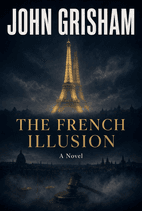
⚠️ READER ADVISORY: This is a deep-dive summary designed for those who want the full story. Contains spoilers.
What is the book The French Illusion about?
John Grisham's The French Illusion follows honeymooners Paul and Chelsea Tanner, whose social media posts and private Normandy tour are tracked by a watcher who sells their itinerary to kidnappers, while investigator Pascal Goff recognizes the crime as part of a pattern. A tense thriller for readers who enjoy abduction procedurals and surveillance-driven suspense.
Feature
Insta.Page
Blinkist
Shortform
The French Illusion
✓
✕
✕
Summary Depth
Full Chapter-by-Chapter
15-min overview
Section-by-section guides
Audio Narration
✓
✓
✓
Visual Mindmaps
✓
✕
✕
AI Q&A
✓
✕
✕
Quizzes
✓
✕
✕
PDF Downloads
✓
✕
✓
Price
$89.99/yr
$146/yr (PRO)
$199/yr
*Competitor data last verified July 2026.
1 Page Summary
Paul and Chelsea Tanner are on their honeymoon in France, sharing their itinerary openly on social media for friends and strangers to follow. What they cannot see is that a patient observer has been tracking their movements all along and has sold their schedule to the highest bidder. When they hire a private driver to tour Normandy away from the crowds, they have no idea how completely their plans have been mapped by others.
The news lands on Fritz Tanner at home: his son and daughter-in-law have been kidnapped. The demand is absolute—money, silence, and no FBI involvement. Every element closes a door on the family. With the institution built for exactly this crisis declared off-limits, Sam and Justine Clayburn walk into a bank to wire a ransom, signing away any legal claim to the money the moment it leaves their hands. In France, investigator Pascal Goff recognizes the kidnapping as part of a pattern he has seen before, though the case sits on French soil and the FBI's role will be constrained by jurisdiction. Meanwhile, Paul endures confinement under relentless light and noise, held in a cage where time and reality blur beyond trust.
Across the Atlantic, Stuart accepts an invitation to a Washington seminar as an escape from a life that has worn him down, unaware that the trip places him under CIA surveillance and into the orbit of Rae Claire Russo, who has selected him as her top prospect. He agrees to pose as her husband in a marriage operation, a choice that carries weight and cost, and the two arrive at Camp Peary for a hostile interrogation training phase designed to break them. As months stretch on with no resolution, the families gather for a six-month anniversary dinner that becomes an act of defiance against despair, while Chelsea quits her job to escape the harassment that has made her working life unbearable. In the field, a day spent as live bait yields nothing—and a discovery in the couple's discarded trash confirms that Stuart and Rae Claire are not what they appear to be.
Chapters 1-5
The Honeymoon Watched
The mole has been surveilling Paul and Chelsea for some time, tracking their movements with the patience of someone who knows exactly what he is selling. He wants money, nothing more complicated than that, and the couple's honeymoon itinerary is worth a fortune to the right buyer. He sells it for a year's wages, handing over every detail of where they will go and when, and in doing so sets everything that follows into motion.
Paul and Chelsea, meanwhile, have no idea anyone is watching. They post their Paris movements across social media, sharing their locations and plans with the casual openness of people who want to be seen. They want attention, the warm glow of friends and strangers following along on their romantic trip, and they get it. What they do not realize is that the surveillance team is watching every post, building a precise schedule from the very information the couple volunteers so freely. Every check-in, every photo, every update hands their pursuers another piece of the puzzle.
The couple decides to tour Normandy with Malik, their driver, wanting a private D-Day trip away from the crowds and the guided buses. They want something personal and meaningful, a chance to walk the beaches and memorials on their own terms. Malik drives them along the routes he knows, and in doing so, the three of them place themselves directly on the path the kidnappers have chosen. The trap is no longer theoretical. It is a stretch of road, a planned stop, and a waiting team.
The Café and the Crash
At a café along the route, the red-haired woman makes her move. She wants Malik's car and his keys, and she drugs him with a quiet efficiency that leaves no room for error. The drug takes hold, and the couple's driver is disabled before anyone notices anything wrong. To make sure no one at the café is paying attention to what is happening at the table, a fake cyclist stages a crash nearby. The commotion does exactly what it is meant to do, pulling eyes and attention away from Malik and toward the spectacle of a fallen bike and an injured rider. The distraction is seamless, and the drugging goes unseen.
Laurent steps in next, impersonating a replacement driver sent to collect the couple. He wants Paul and Chelsea inside the Peugeot, and he plays the role well enough that they enter willingly, trusting the arrangement without question. Once they are in the car, Laurent releases nitrous oxide. He wants them unconscious, and the gas does its work. The couple is subdued inside the locked vehicle, their protests or confusion swallowed by the sealed doors and the quiet hiss of the gas.
The red-haired woman returns to finish the job. She injects Paul and Chelsea with ketamine, wanting them completely immobilized, and the abduction is complete. There is no struggle left in them, no chance of escape. Laurent then swaps the Peugeot's plates and disables its GPS, wanting to hide the trail. The car service's ability to track the vehicle is cut, and with it, any hope of someone following the car electronically. The red-haired woman drives off with the real plates and the bike, wanting to vanish before anyone can connect her to what has happened. She leaves Laurent alone with the captives, the two of them now separated and the evidence of the crime scattered between them.
The Search Begins
The fake Chelsea calls the car service, wanting to misdirect the search before it even starts. The voice on the phone claims the couple has gone to London, a plausible detour that sends anyone looking for them in the wrong direction. It is a small lie with a large purpose: buy time, create confusion, and keep the real search from ever finding its footing.
Malik wakes in the hospital, wanting his car and answers. He learns he was drugged and that the Peugeot is stolen, and the pieces he can remember do not add up to anything good. The dispatcher and supervisor at the car service discuss what to do, and they decide not to call the hotel. They want to avoid overreacting, to keep things calm and procedural, and their caution delays the alarm. Precious hours slip by while everyone assumes the best.
Malik, however, is not willing to wait. He reports the stolen car to the police, wanting to recover it, and in doing so turns the disappearance into a criminal case. The police are now involved, and the stakes shift from a missing vehicle to missing people.
Justine notices Chelsea's silence. She wants reassurance, some sign that her friend is fine, and the absence of any word begins to gnaw at her. She starts to suspect something is wrong, and her worry becomes another thread pulling toward the truth.
Chelsea wakes bound and hooded. She wants Paul, she wants escape, and she wants to understand where she is. What she learns is that she is captive, that Paul is not with her, and that she is entirely dependent on her guard for everything from water to mercy. The honeymoon is over, and the nightmare has begun.
Chelsea wakes in darkness, her mouth thick with thirst, her body aching on a thin mattress in a cramped room that smells of damp concrete. She calls out for water, for anyone, and gets only silence. As her eyes adjust, she takes in the bare walls, the heavy door, the bucket in the corner, and understands with a cold lurch that she is not in a hotel or a hospital. She is a captive, and no one is coming just because she asks.
Her mind reaches backward for something solid: her wedding, the flowers, Paul’s face as she walked toward him, the honeymoon in Paris, the two of them laughing over coffee in a café near the Seine. She clings to those images, trying to make them connect to this room, trying to find the seam where her normal life split open. But the memories only make the cell feel more impossible. The life she had is gone, replaced by a locked door and a thirst she cannot quench.
The door opens. A masked figure orders her up, and when she hesitates, the command sharpens into a threat. She complies, and they force her into a chair, pulling a hood down over her head. The fabric scratches her face and blocks the light, and she sits rigid, listening to movement she cannot see, trying to breathe through the panic.
Then the captor demands her phone access code. Chelsea’s first instinct is to refuse, to keep something back, but the calculation is quick and brutal: if she does not give it, they will hurt her, and Paul is somewhere in this same nightmare. She says the numbers. The captor takes the phone, and she understands she has just handed over everything in her digital life, every contact, every message, every trace of who she is.
The captor tells her they are going to make a video for her parents. This is leverage, a message designed to terrify and to prove control. Chelsea is positioned, the camera is readied, and she is forced to speak on cue, to say what they tell her to say. Her voice shakes, but she does it, because the alternative is worse and because some part of her still believes that if she cooperates, she will survive.
In Paris, Justine’s phone buzzes with a text from Chelsea’s number. For a moment there is relief, a flash of word from Paris, but the message is wrong, the tone is wrong, and the relief curdles. Justine screams for Lowell. The crisis has begun, and it begins with a text that should have been ordinary.
Justine and Lowell open the email and the video. They see their daughter hooded, seated, threatened by an armed captor who speaks to the camera as much as to them. The image burns itself into them: Chelsea alive but not safe, a hostage used as a prop. The kidnappers follow with demands: two million dollars, and silence. Contact the police, they warn, and Chelsea dies. The threat is specific and calm, and it lands with the weight of a promise.
Then the kidnappers show them something worse: a hacked clinic schedule, proof that they have been inside the family’s systems, that they know the rhythms of their work and their lives. Lowell stares at the schedule and realizes their office has been breached. The violation is not just physical now. It is intimate, ongoing, and it means the people holding Chelsea have been watching for longer than anyone knew.
Justine and Lowell debate calling the Tanners. They want guidance, someone older and steadier, but the kidnappers’ warning echoes in the room. If the wrong person knows, if a phone is tapped, if a single call is traced, Chelsea pays. They delay, paralyzed by the fear that the kidnappers are listening to every word they say.
Lowell calls Sam. He needs help, someone outside the immediate panic, someone who can think. The phone rings and rings, then voicemail. Lowell leaves a message, his voice tight, and hangs up not knowing if it will be enough.
Sam arrives with burner phones. He does not ask permission or wait to be briefed. He takes control, handing out the phones, establishing a secure way to communicate, and the family’s response shifts from raw panic to something with structure. Sam questions why the kidnappers used Chelsea’s phone at all. It is a strange choice, sloppy or deliberate, and he cannot give his parents certainty about what it means. He can only keep asking, keep probing, keep them from making a mistake.
The family discusses money. They want to pay. Lowell says he can liquidate stocks quickly, that the two million is reachable if they move fast. The conversation is practical and desperate at once, a negotiation with themselves about how much of their future they are willing to burn to get Chelsea back.
Linzy Tanner calls. She wants news of Chelsea and Paul, her voice full of ordinary concern, and Justine cannot tell her the truth. She hides it, keeps her voice level, and when the call ends she breaks down. The performance of normalcy costs her something she did not have to spare.
The kidnappers send another video and instructions. Lowell must be in Paris by Saturday. The demand is no longer abstract; it has a deadline and a location. The family realizes they must comply, that every hour of delay is a risk, and that the people holding Chelsea are setting the terms.
Malik meets with police and hotel staff. He wants to explain the Tanners’ disappearance, to get someone looking, but the conversation ends in a decision to wait rather than alert authorities. The kidnappers’ warning holds them in place, and Malik leaves with nothing resolved.
The Clayburns open the next kidnapper email. They want evidence Chelsea is alive, some proof that she has not already been lost, and what they get is another controlled demand, another message shaped entirely by the people who have her. They are being managed, step by step, and they know it, and they open the email anyway because there is no other way to reach their daughter.
The Ransom Takes Shape
A hostage video surfaces showing Chelsea alive. Justine and Sam watch it with relief, but the footage makes the kidnappers' control unmistakable. Justine seizes the moment and tells the kidnappers they have the money, committing to a ransom the family does not actually possess. The kidnappers respond with a deadline: Lowell must be in Paris by 10 p.m. tomorrow, or they will never see Chelsea again. The family has no choice but to obey.
Lowell begins liquidating his investments, converting $2.2 million of his net worth into ransom cash. He buys a one-way ticket to Paris, stripping away any illusion of a round trip. Sam escalates the family's secret counter-surveillance plan by purchasing more burner phones with international coverage.
Sam then confronts Fritz at his Pentagon City office and reveals that Paul and Chelsea were kidnapped in France. Fritz learns the kidnappers demanded no contact with him, which means the family has already been operating in secrecy for a full day without him. The revelation lands hard. Fritz questions whether to involve the FBI, but Sam persuades him to talk to Lowell first and accept a burner phone instead. Fritz agrees, and the circle of secrecy widens by one, even as the deadline to Paris closes in.
💡 Try clicking the AI chat button to ask questions about this book!
Chapters 6-11
The Call
Fritz Tanner is at home when Sam reaches him with the news that Paul and Chelsea have been kidnapped. The demand lands on him all at once: money, silence, and an explicit warning that the FBI must not be involved. Fritz absorbs it, and so does Linzy, the two of them suddenly carrying a secret that cannot leave the house. The call does not arrive as a single piece of information but as a collapsing of the ordinary world into something unrecognizable. One moment Fritz is in his own home, surrounded by the familiar, and the next he is being told that his son and daughter-in-law have been taken by people who are willing to hurt them. The demand is not negotiable and not partial. It is money, it is silence, and it is a warning that the FBI must not be involved. Each element of the demand closes a door. The money means the family cannot simply wait for rescue. The silence means they cannot turn to the people they would normally trust. The warning about the FBI means the one institution designed for exactly this kind of crisis is off limits. Fritz takes it in, and Linzy takes it in beside him. They do not have the luxury of shock as a private experience. They have to hold the secret together, in the house, where it cannot leave. The house itself becomes a container for something that cannot be contained. Every phone call, every knock at the door, every ordinary interaction now carries the risk of exposure. The secret is not just information. It is a weight that changes the shape of every hour.
The Video
Linzy watches the burner-phone video of Chelsea being interrogated by a hooded figure. Seeing her daughter-in-law on camera, hooded and questioned, removes any remaining doubt: this is real, and Chelsea is in the hands of people willing to hurt her. Linzy's fear deepens with every second of the footage. The video does not allow for interpretation or hope. It is Chelsea, and she is not free, and the person questioning her is hidden behind a hood. The hood is its own kind of statement. It says that the people holding her do not want to be seen, which means they intend to continue. It says that they have thought about what they are doing and have taken steps to protect themselves. It says that Chelsea is not a person to them but a means to an end. Linzy watches, and the last remaining possibility that this is a mistake or a misunderstanding or a cruel joke disappears. This is real. Chelsea is in the hands of people willing to hurt her. The fear that Linzy feels is not the fear of a single moment. It is a fear that deepens with every second of the footage, because every second is another second that Chelsea is there and not here. The video can be watched again, but it cannot be unwatched. It becomes part of Linzy now, a thing she will carry with her no matter what happens next.
Paul in Captivity
Paul endures suffocation and restraint in captivity, unable to breathe freely or move. Then the beatings begin, administered while he is forced to answer the kidnappers' questions on camera. His suffering is not random; it is staged for the lens, a message meant for the family watching back home. The suffocation and the restraint are not just physical facts. They are the conditions of his life now. He cannot breathe freely. He cannot move. The most basic animal freedoms have been taken from him, and they have been taken deliberately. Then the beatings begin. They are not the random violence of people who have lost control. They are administered while he is forced to answer questions on camera. The camera is the point. The questions are the point. Paul is not being hurt because his captors are angry or because they enjoy it, though they may. He is being hurt because the hurt can be recorded and sent. His suffering is staged for the lens. It is a message meant for the family watching back home. Every blow is a sentence in a letter that Paul cannot write and cannot stop. He is the paper and the ink and the words all at once. The family will watch, and they will understand, and they will do what they are told. That is the purpose. Paul's body is being used to send a message that his voice cannot.
Lowell's One-Way Ticket
Lowell Clayburn flies one-way to Paris. He accepts what the trip requires of him: he must deliver $2 million and follow the kidnappers' instructions alone, with no backup and no deviation. The one-way ticket is not just a travel arrangement. It is a statement about what this trip is. There is no return ticket because there is no plan for return. Lowell is going to Paris to do a job, and the job is to deliver $2 million to people who have taken his daughter and her husband. He must do it alone. There is no backup, no team, no one watching from a distance. He must follow the instructions exactly, with no deviation. Any deviation could mean the death of the people he is trying to save. Lowell accepts this. He gets on the plane knowing that he is placing himself in the hands of people who have already shown what they are willing to do. He is not going to Paris to be a hero. He is going to Paris to be a courier. The money is the only thing he has that they want, and he has to give it to them in exactly the way they demand. The one-way ticket is the shape of his acceptance.
Counting What They Have
Linzy and Fritz go over their finances and confront the arithmetic. Raising the ransom may mean borrowing against their home or selling it outright. The money is not sitting anywhere; it has to be pulled out of the life they have built. The arithmetic is not abstract. It is a series of numbers that add up to a life. Linzy and Fritz go over their finances, and what they find is not a pile of cash waiting to be used. What they find is a house, and savings, and the accumulated results of years of work. Raising the ransom may mean borrowing against their home. It may mean selling it outright. Either way, the money has to come from somewhere, and the somewhere is the life they have built. The house is not just a house. It is where they live. It is the place their children grew up. It is the address that means home. To borrow against it is to put it at risk. To sell it is to give it up. The money is not sitting anywhere. It has to be pulled out of the life they have built, and pulling it out will leave a hole. The hole will be the size of the ransom. The hole will be the size of a home.
The Ransom Email
Linzy receives the ransom email, and with it a video of Paul beaten. The message lays out the terms: $2 million, wired by a deadline, and the threat that if the demands are not met, they will never see Paul again. The deadline turns an open-ended nightmare into a countdown. The email is not just a message. It is a document with terms. The terms are $2 million, wired by a deadline. The deadline is the part that changes everything. Before the email, the nightmare was open-ended. Paul and Chelsea were gone, and there was no way to know when or if they would come back. The email puts a clock on it. The clock is not a comfort. It is a pressure. Every hour that passes is an hour closer to the deadline, and the deadline is the point at which the threat becomes real. The threat is that if the demands are not met, they will never see Paul again. The email includes a video of Paul beaten. The video is proof that the threat is not empty. The deadline turns an open-ended nightmare into a countdown, and the countdown does not stop.
Scrubbed Clean
Fritz tries to retrieve the erased ransom message and finds nothing to recover. The kidnappers can scrub their communications, which means there is no evidence trail to hand over and no way to trace what was sent. Fritz tries to retrieve the erased ransom message. He is not a technologist, but he knows enough to look. He finds nothing. The message is gone. The kidnappers can scrub their communications. They can send a message and then remove it so completely that there is nothing left to recover. This means there is no evidence trail. There is nothing to hand over to anyone. There is no way to trace what was sent or where it came from. The kidnappers have thought about this. They have taken steps to make sure that the family cannot bring what they have to anyone who might help. The scrubbing is not just a technical detail. It is a statement about the kind of people the family is dealing with. They are careful. They are prepared. They have done this before, or they have planned it well enough that it does not matter. Fritz finds nothing, and the nothing is its own kind of message.
Two Families, Two Answers
Fritz calls Justine Clayburn so the two families can compare demands. They match, but the agreement ends there. The Tanners and the Clayburns disagree over whether to contact the FBI, and the disagreement hardens into a split over strategy. Fritz calls Justine Clayburn. The two families have been living in separate versions of the same nightmare, and now they compare notes. The demands match. The same amount, the same threats, the same warning about the FBI. For a moment, the matching demands are a kind of confirmation. Both families are being squeezed by the same people. Both families are in the same trap. But the agreement ends there. The Tanners and the Clayburns disagree over whether to contact the FBI. The disagreement is not a small one. It is a fundamental difference in how to respond to the crisis. The Tanners want to bring in the authorities. The Clayburns want to follow the instructions. The disagreement hardens into a split over strategy. The two families, who should be allies, become something else. They become two separate parties with two separate plans, and the split makes both of them weaker.
Waiting Versus Acting
Justine argues for waiting and following orders, trusting that compliance is what keeps the hostages alive. Fritz pushes for FBI involvement, unwilling to simply sit still while the clock runs. Justine argues for waiting. Her position is simple. The kidnappers have given instructions. If the families follow the instructions, the hostages stay alive. Compliance is not passivity. It is a strategy. It is the strategy that the kidnappers have laid out, and Justine believes it is the only one that has a chance of working. Fritz pushes for FBI involvement. His position is also simple. He is unwilling to simply sit still while the clock runs. The clock is running. Every hour brings the deadline closer. Fritz cannot accept that the only thing to do is wait and hope. He wants to act. He wants to bring in people who know how to handle this kind of situation. The two positions are not just different tactics. They are different ways of understanding the crisis. Justine sees the kidnappers as people who will keep their word if the families keep theirs. Fritz sees them as people who will do whatever they want regardless of what the families do. The argument between waiting and acting is an argument about what kind of people the kidnappers are.
The Debate at Home
Fritz and Linzy debate calling the FBI themselves. Hostage negotiators could bring resources and expertise the families do not have, but the risk is symmetrical and terrifying: one wrong move and Paul and Chelsea could be killed. Fritz and Linzy debate calling the FBI themselves. The debate is not abstract. It is about whether to pick up the phone and dial a number. Hostage negotiators could bring resources and expertise the families do not have. They could trace calls. They could analyze the videos. They could bring the weight of the government to bear on finding Paul and Chelsea. But the risk is symmetrical and terrifying. If the FBI is called, and the kidnappers find out, Paul and Chelsea could be killed. The same action that might save them could also be the thing that ends them. The debate at home is a debate about which risk is worse. The risk of doing nothing is that the deadline passes and the threat is carried out. The risk of doing something is that the action itself triggers the threat. Fritz and Linzy go back and forth, and there is no answer that feels safe. There is only the choice between two kinds of fear.
Fritz's Conclusion
Fritz works through the timeline and decides against it. Involving the FBI and French police could take too long, and even then they might fail to locate the captives. The calculation leaves the families on their own. Fritz works through the timeline. He thinks about how long it would take to involve the FBI.
Chapters 12-16
The Wire
Sam and Justine Clayburn walk into the bank to wire the ransom, their only thought getting Chelsea freed. They have been told what to do and they do it, moving through the ordinary motions of a bank visit while their daughter's life hangs on the other side of the transaction. They sign away all legal liability for the money, a quiet acknowledgment that once it leaves their hands, nothing about it can be undone or reclaimed. The signing is not a negotiation. It is a surrender, a formal statement that they understand the money is gone the moment it moves, that no court and no authority will bring it back if the kidnappers fail to deliver. They sign because there is nothing else to sign, because the alternative is leaving Chelsea in the hands of the people who took her, and because every hour she remains captive is an hour they cannot bear. The paperwork is the last barrier between their fortune and the unknown, and they cross it without hesitation, driven by the single purpose that has consumed them since the moment they learned their daughter was taken.
Brooke Lansky confirms the $2 million expedited wire transfer. She wants nothing more than to complete her role in this transaction, to move the money and close the file. For her, this is a professional task, a set of procedures to be followed and documented, and she performs it with the efficiency the situation demands. She does not know the full story behind the transfer, or if she does, she does not let it slow her down. The wire is expedited because the Clayburns have asked for speed, and speed is what she delivers. Within thirty minutes, the Clayburns' fortune is gone, drained through the banking system toward a Zurich account they cannot see or touch. The money moves through channels they will never fully understand, through institutions and jurisdictions that exist to move value across borders, and it arrives somewhere they cannot reach. What remains is the silence after the transaction, the knowledge that everything they had is now somewhere else, held by people who have made no promises they can enforce.
The Church in Chantilly
Lowell waits in the Chantilly church as instructed. He wants Chelsea returned to him, and he prays for a miracle while a colder fear works at him: that the kidnappers will simply never deliver her, that he will sit in these pews until dark and walk out with nothing. The church is quiet around him, and the waiting stretches. He has done everything he was told to do. He has followed every instruction, paid every price, and now he sits in a stone building in a foreign country and waits for his daughter to appear. The fear is not new. It has been with him since the beginning, but here in the silence it grows teeth. He imagines the hours passing, the light changing through the windows, and the terrible possibility that no one is coming, that the kidnappers have taken what they wanted and have no intention of returning what they promised. He prays because there is nothing else to do, and because the act of praying is itself a kind of waiting, a way of holding on to the hope that the door will open and Chelsea will walk through it.
Then Chelsea is released from the van. She has her purse and her passports. She wants only to reach her father. The van stops, the door opens, and she steps out into the daylight with the few possessions she was allowed to keep. She does not look back at the van. She does not think about the men inside it or what they might do next. She thinks only of her father, of the church, of the distance between where she is standing and where he is waiting. Before the van pulls away, she is warned that Paul will die if she contacts the police or the press. The threat lands on her with full weight, and she carries it with her as she walks toward the church. The words are simple and absolute. They do not threaten her. They threaten Paul, and that is worse. She has been held, she has been frightened, but the threat against her husband is a different kind of weapon, one that reaches past her own survival and into the life she shares with the man she loves. She walks toward the church with that threat wrapped around her, and she does not know yet what she will do with it.
Chelsea reunites with Lowell inside. She wants safety, and she wants Paul released, and in the first moments of the reunion she learns the shape of what comes next: she must leave France without Paul, for now. The relief of holding her father collides with the impossibility of walking away from her husband. She is free. She is in her father's arms. For a moment, that is enough. But the moment passes, and the reality of the situation settles over her. Paul is still in the hands of the kidnappers. She has been released, but he has not. She is being told to leave the country, to go home, to be safe, and every instinct in her body rebels against the instruction. How can she leave him? How can she get on a plane and fly away while he is still somewhere in France, still captive, still waiting for a rescue that may never come? The reunion with her father is real and it is a relief, but it is also the beginning of a new kind of pain, the pain of being free when the person she loves is not.
The Call to Sam and Justine
Chelsea calls Sam and Justine from Chantilly. She wants to reassure them, to let them hear her voice and know she is alive. She tells them she is safe, but she refuses to come home without Paul. The call gives the Clayburns their daughter back in voice only, and leaves them with the knowledge that she will not leave while Paul is still in the kidnappers' hands. For Sam and Justine, the call is both a gift and a wound. They hear their daughter's voice. They know she is alive. But they also hear the determination in that voice, the refusal to abandon her husband, and they understand that the ordeal is not over. Chelsea is safe, but she is not coming home. She will stay in France, close to the danger, close to the uncertainty, because she will not leave Paul behind. The Clayburns have their daughter back in the only way that matters to them, and yet they cannot hold her, cannot protect her, cannot bring her home. They are left with the sound of her voice and the knowledge that she is choosing to stay in harm's way for the man she loves.
Back to Paris
Chelsea and Lowell return to Paris. They want to stay close, in case Paul is freed, close enough to reach him the moment word comes. Chelsea insists on remaining in the hotel despite the manager, whose behavior strikes them as suspicious. She will not be moved from the city, and she will not be moved from the hotel, no matter how much the manager's manner unsettles them. The manager watches them in a way that makes Lowell uneasy, that makes Chelsea feel exposed, but she does not care. She will not leave Paris. She will not leave the hotel. She will stay exactly where she is, in the city where Paul is being held, in the place where she can be reached if the kidnappers decide to release him. The manager's behavior is a problem, a small one, a thing to be noted and then set aside. The larger problem is Paul, and Chelsea will not let anything distract her from that. She stays because staying is the only thing she can do, because leaving would feel like abandonment, because every mile between her and Paul is a mile she cannot bear to put between them.
Selling the House
The Tanners sell their house to Ben Baxter's buyer for $1.5 million. They want ransom money fast, and the speed of the sale is the point. What they lose in the transaction is the family home, the house where they raised their children, traded away for cash that must be wired before a deadline they do not control. The house is not just a building. It is the place where their children took their first steps, where they celebrated birthdays and holidays, where they built the life they have shared for decades. Selling it is a kind of amputation, a removal of something that cannot be replaced. But the deadline is real, and the ransom must be paid, and the house is the only asset large enough to make the payment possible. They sell it because they have to, because Paul's life is worth more than any building, because there is no other way. The buyer gets a bargain. The Tanners get the money they need. And the house passes out of their hands, along with all the memories it holds.
Justine offers to loan the Tanners the remaining $250,000. She wants to save Paul, and she makes the offer knowing what it costs the Tanners to accept. They accept despite their pride, and Fritz insists on framing it as a loan, a debt to be repaid, because that is the only way he can take the money and still stand upright. The offer is generous, and it is also painful. The Tanners have already lost so much, and now they must accept charity from the family of their son's wife. Fritz cannot simply take the money. He cannot accept it as a gift, as a kindness, as something given without expectation. He needs it to be a loan, a transaction, a debt that he will repay when this is over. The framing is not about the money. It is about his dignity, about his ability to look at himself in the mirror, about the difference between accepting help and accepting defeat. Justine understands. She does not argue. She agrees to the loan, and the two families are bound together by money and by fear and by the same terrible hope.
New Instructions
The kidnappers email new instructions. They demand the $2 million wire by Wednesday at 10 a.m. They want the Tanners to comply, and they make clear that Chelsea will remain in Paris. The deadline is now fixed, the amount is now fixed, and the family's position is now fixed with it. There is no more negotiation, no more waiting for word, no more hoping that the terms will change. The kidnappers have set the terms, and the Tanners must meet them. The email is short and direct, a set of instructions rather than a conversation. It tells them what to do, when to do it, and what will happen if they fail. The Tanners read it and understand that they have no choice. They will pay. They will pay by Wednesday at 10 a.m. And they will do it because Paul's life depends on it.
Hudson secures a $100,000 loan from his company. He wants to help the Tanners, and the loan is his way of putting real money behind that want. The Tanners liquidate their 401(k)s, their stocks, and their savings for $271,000 more. Every account they have is emptied into the effort. The money comes from everywhere. Hudson borrows against his future. The Tanners cash out their retirement, sell their investments, drain their savings. Every dollar they can find is pulled into the ransom, and when they are done, there is nothing left. They have given everything they have, and they have borrowed everything they can borrow, and the total is still not enough. But it is closer. It is closer than it was, and closer is all they can hope for.
The Tanners sign a promissory note with the Clayburns for the $250,000 loan. They want to secure Paul's ransom, and the note makes the obligation formal between the two families. Then the two families wait together for the deadline, bound now by money and by fear and by the same terrible hope. The note is a piece of paper, but it is also a symbol. It represents the debt the Tanners owe, the help the Clayburns have given, the connection between two families who have been brought together by a crime. They wait together because there is nothing else to do. They wait because the deadline is coming, and the money must be wired, and Paul's life depends on it. They wait because waiting is the only thing left.
The Wire
The Tanners wire $2 million to the Zurich Bank account. They want Paul released, and the wire is the last thing they can do, the final act available to them. The kidnappers threaten to send a photo of Paul with his throat cut if they refuse. The threat is explicit, and it removes whatever hesitation might have remained. There is no more time to think, no more time to consider alternatives, no more time to hope for a better outcome. The wire is sent. The money is gone. And the Tanners are left with nothing but the promise that Paul will be released, a promise made by people who have already proven they are willing to kill.
Lowell receives a text telling him Chelsea must go to Church St.
Chapters 17-22
The Investigation Takes Shape
Pascal Goff sits with the Tanners' file and studies it until the pattern clicks into place. He reads the pages the way a man reads a map he has seen before, tracing the shape of the thing until the shape becomes familiar. This is not an isolated crime. The kidnapping fits a template he has seen before, and once he recognizes it, he commits himself entirely, knowing the case will consume his weekend. The recognition is not a relief. It is a sentence. He knows that once he names the pattern, he will not be able to walk away from it, and he does not try. He gives himself to the file, to the hours it will take, to the weekend it will swallow whole, because the alternative is to let the pattern repeat without him.
He meets Jean-Pierre Chalamet to coordinate the investigation, and together they confront the hard truth of jurisdiction: this is French soil, and the FBI's role will be constrained by that fact. Whatever Pascal wants to do, he cannot simply take over. The two men have to work inside a structure that limits them both, and the limits are not negotiable. Pascal can bring his recognition of the pattern, his instinct for what the file means, but he cannot bring the authority to act on it alone. Jean-Pierre can bring the weight of French law, but that weight also holds him in place. Together they have to find a way to move without stepping outside the lines that define their power, and the frustration of that is its own kind of pressure.
Malik Farro submits to questioning and gives investigators the only eyewitness timeline they have. He recounts the drugging, the way his senses slipped away, and the bike accident that followed. His account is thin but precious, the single thread of firsthand testimony in a case otherwise built on video and guesswork. He describes what he remembers in the order he remembers it, and the investigators write it down because it is all they have. There is no other voice that can say what happened from the inside. The video shows shapes, the GPS shows movements, but Malik shows the experience, and the experience is the only thing that can tell them how the crime felt to the man who lived it.
Investigators pull Bayeux surveillance footage and GPS logs, hunting for any trace of Laurent. They find nothing. No usable lead emerges, and the trail stays cold. The footage shows what it shows, and what it shows is not enough. The logs record where vehicles went, but the vehicles are gone, and the men who drove them are gone, and the coldness of the trail is its own kind of statement. Whoever took Paul knew how to disappear, and the disappearance is complete.
Pascal reports the latest hostage video and notes Washington's rising interest in the case. The pressure from above is building. Jean-Pierre warns him plainly that publicity will endanger Paul. Every news cycle, every leaked detail, every public appeal raises the risk that the captors decide the hostage is more trouble than he is worth. The two men are caught between the demand for answers and the need for silence. Washington wants results, and results mean visibility, and visibility means danger. Jean-Pierre says it without softening it, because softening it would not change it. The more the world knows about Paul, the more the captors have to fear from keeping him alive.
Chelsea Chooses to Endure
Chelsea wakes at her parents' home and makes a decision. She will stop crying. She chooses to endure the wait for Paul rather than collapse under it, and the shift is deliberate, almost physical. She does not wait for the feeling to pass. She decides it will not pass unless she decides it, and so she decides. The crying stops because she stops it, and the stopping is an act of will that she will have to repeat every day, maybe every hour, but she starts with this moment and this choice.
She and Justine agree on what this is: a money racket, nothing more. The kidnapping is a business transaction, and the Tanners are financially ruined by it. The two women pledge to help them, turning their own grief into something useful. They cannot bring Paul back by grieving, but they can keep his parents from drowning, and that is something they can do. The pledge is small and concrete, and it gives them a direction when everything else is directionless.
Agent Dyer briefs the family. Interpol and French police have joined the search, he tells them, but the kidnappers' email trail dead-ends in Belarus. The investigation is broader now, and still nowhere. The briefing is meant to reassure, and it does not, because the words are about activity rather than progress. More agencies are involved, more countries, more lines of inquiry, and none of them have produced a name or a face or a place. The family listens and understands that the machine is running and the machine has not caught anything.
Chelsea buys a new phone and visits her condo, walking through the rooms she once shared with Paul. She decides to move back in alone on Sunday. It is a small act of defiance, a refusal to let the apartment become a tomb. She walks through the rooms and sees the life they had, and she decides that the life is not over, even if it is paused. Moving back in is a statement that she expects him to return, and she makes the statement with her feet and her keys and her decision.
Sam pulls her aside with a suspicion. He tells Chelsea he thinks the FBI has seen this pattern before. The implication lands hard: if the agents recognize the template, why have they not said so? Doubt takes root, and Chelsea begins to wonder what else the agents are not telling her. Sam does not push the suspicion further than he can support it, but he does not have to. The question is enough. Once she asks it, she cannot unask it, and the asking changes how she hears every briefing from that moment on.
She visits the Tanners as they begin packing. They are preparing to rent out their home, converting the place where Paul grew up into income, because his captivity has a price and they are paying it in furniture and memories. Chelsea confronts the cost of it directly, watching his parents box up their life to keep the ransom machinery running. The boxes are not just boxes. They are the rooms where Paul learned to walk, the walls that held his childhood, the house that was supposed to stay in the family. The Tanners pack it all because the alternative is worse, and Chelsea watches them do it and understands what the kidnapping is costing in ways that no ledger will ever show.
Sixteen Hours in a Crate
Paul endures a sixteen-hour voyage inside a shipping crate. The darkness, the motion, the cramped air, all of it presses down on him, and the only thing keeping him alive is the cold arithmetic of his captors: he is worth more alive than dead. That calculation is his lifeline, and he knows it. He knows it because he has nothing else to hold onto. The crate is dark and the crate is moving and the crate is small, and the only reason he is still breathing is that breathing makes him valuable. He holds onto the arithmetic because the arithmetic is the only thing that says he will see the other side of this.
Smugglers unload him at Zaquiz and hand him to armed men. The transfer moves him beyond any realistic hope of rescue. Whatever reach the FBI or French police had, it ends here. The handoff is the moment the case becomes something else, something that cannot be solved by the agencies that were trying to solve it. The men who take him are not the men who took him, and the place where he is going is not the place where he was, and the distance between those two facts is the distance between hope and its absence.
Paul is driven into the desert, and then something changes. They uncuff him. The gesture is not mercy. His captors no longer hide their faces, and Paul understands what that means. They expect to kill him. There is no reason to conceal identity from a man who will not survive to identify anyone. The uncuffing is a sentence, and he reads it clearly. They are not letting him go. They are letting him see them because seeing them will not matter. The faces he sees are faces he will not live to describe.
Paul eats the stale bread and cheese they give him. Then he asks to walk. It is a test, a probe to see how much freedom his captors will allow, and he watches their response carefully. He realizes he cannot identify his location or his captors. The desert gives him nothing to work with, no landmarks, no names, no faces he could ever describe to an investigator. He accepts that no rescue is coming. The only thing left is his own endurance, and he holds onto it because it is all he has. The walk is a test and the test fails, not because they stop him but because there is nothing to learn. The desert is empty and the men are nameless and the only thing he can do is keep breathing and keep waiting and keep being worth more alive than dead.
The Cover Story Holds
Andrew Strong sits before the Justice Department and spins the lie that will define the coming weeks: Paul is recovering from food poisoning. It is a calculated deception, one that protects the secret of the kidnapping but forces him to mislead Paul's worried friends, who have no idea the man they are asking about is being held somewhere, his life hanging on decisions made in rooms like this one. Strong tells the lie because the truth would be worse. The truth would spread, and the spreading would reach the captors, and the captors would react. So he says food poisoning, and the lie holds, and the friends who ask about Paul are told a story that keeps them calm and keeps them ignorant and keeps Paul alive.
Huff Norton Wants Answers
Huff Norton summons Strong for a briefing on the third kidnapping, and what he gets is nothing. The FBI has no leads. Strong then hands him the detail that changes the shape of the case: all three kidnapped grooms had military backgrounds. What looked like isolated abductions now reads as a pattern, and a pattern means something bigger than the Bureau wants to own. The detail is the first real thread, and Strong gives it to Norton because Norton asked, and because the thread is too important to sit on. Three men, three kidnappings, three military backgrounds. The pattern is not proof, but it is a direction, and directions are what Norton needs.
Norton makes his move. He decides to dump the investigation on the CIA, a choice that shields the FBI from responsibility but abandons the case and the men in it to another agency's hands. The stakes shift from finding the grooms to managing who gets blamed if they are not found. Norton does not say it that way, but the decision says it for him. The FBI can keep the case and risk the blame, or the FBI can hand the case to the CIA and let the CIA carry the weight. Norton hands it over, and the handover is a calculation about reputation rather than a calculation about rescue.
Chelsea's Lies
Chelsea posts a false social media story about food poisoning, echoing the official cover. She wants to protect Paul, but the lie sits badly in her chest. She feels terrible about it, and the guilt follows her to the pool, where she confides in Callie. She wants honesty with her friend, but she cannot reveal the kidnapping. Loose lips could endanger Paul, so she holds the truth back even as she leans on Callie for something real. The lie is small and the lie is necessary and the lie is poison, and Chelsea carries all three of those facts at once. She posts the story because the story protects Paul, and she hates the story because it is not true, and she sits by the pool with Callie and says nothing about the thing that matters most.
The CIA Takes the Bait
Ross Joyce meets Dexter Maceas at a pizza dive. Joyce wants the CIA to take over the investigation, and Maceas agrees, casually offering to ruin his director's weekend to make it happen. The transfer of the case becomes a bureaucratic maneuver conducted over slices of pizza, with Paul's life as the unspoken wager. The pizza is ordinary and the conversation is ordinary and the decision is not ordinary at all. Two men eat and talk and agree, and the agreement moves the case from one agency to another, and Paul is somewhere in the desert while the paperwork changes hands.
Dead Ends in France
Pascal Goff reviews CCTV footage of the Peugeot, hunting for a thread that will lead back to the kidnappers. What he finds is a dead end: the car has already been shipped to Russia. The trail goes cold at the water's edge.
You've reached the end of the free chapters
Chapter 5 is locked
Keep reading The French Illusion — and unlock all 600+ book summaries with audio, mindmaps and AI Q&A.
$0.00 due today · 7 days free, then $89.99/year ($7.49/mo) · Cancel anytime before day 7
John Grisham is an American novelist and former criminal defense attorney whose legal thrillers have sold over 300 million copies worldwide. Drawing on his courtroom experience, he is best known for notable works such as A Time to Kill, The Firm, and The Pelican Brief.
Frequently Asked Questions about The French Illusion
What is The French Illusion about?
The novel follows Paul and Chelsea, a newlywed couple whose private tour of Normandy goes catastrophically wrong when they are abducted by people who have been tracking their every move. Their families are handed a demand that is money, silence, and an explicit order to keep the FBI out of it, forcing them to negotiate a crisis with almost no help and no guarantee. Running alongside is the story of Stuart, a man recruited into an undercover operation that requires him to pose as someone he is not. The stakes are a family's fortune, two lives in captivity, and a truth that the people doing the searching may not reach in time.
Who is the author of The French Illusion?
The book is written by John Grisham, one of the most widely read novelists of suspense in the world. He is known for tightly plotted stories about ordinary people pulled into dangerous systems they do not fully understand. Here that instinct is turned toward international abduction and intelligence work rather than the courtroom.
Is The French Illusion worth reading?
It is a page-turning read built on a genuinely unsettling idea: that a couple's casual social media posts could hand their schedule to someone willing to sell it. The story splits between a family fighting to bring hostages home and an operative being trained for a deception that could collapse at any moment, and both threads pull hard. Readers who enjoy slow-building dread, moral pressure, and questions about how much institutions can actually do will find plenty here.
What are the main themes in The French Illusion?
Surveillance and exposure run through the entire story, from a mole selling a honeymoon itinerary to a couple broadcasting their locations to the world. Loyalty and sacrifice drive the families, who must surrender money, privacy, and silence to keep the people they love alive. Deception and identity surface in the undercover thread, where someone is asked to become a version of themselves built entirely for a mission. The limits of law and jurisdiction also loom large, as investigators confront how much they can do when the ground rules belong to someone else.
📚 Explore Our Book Summary Library
Discover more insightful book summaries from our collection