The French Illusion Themes
by John Grisham
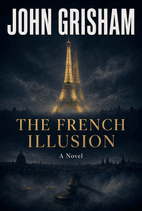
Under all the suspense, The French Illusion is really asking how ordinary people get caught in systems bigger than them: kidnapping as organized business, ransom economy, official cover stories, constant surveillance, and families left to sell, borrow, and wait. It also looks at what captivity does to people and how deception, performance, and covert operations blur identity.
On this page you will find theme analyses of kidnapping and ransom, secrecy and press suppression, surveillance and exposure, family loyalty and helplessness, captivity and survival, plus deception and covert operation. Each theme points to concrete moments from the book. You will also find symbol breakdowns of social media honeymoon posts, burner phones, hoods and masks, and cages and crates.
Major Themes in The French Illusion
Kidnapping and the ransom economy
The novel presents kidnapping as an organized business: American honeymooners in France are targeted, hidden, and held so their families will liquidate assets and wire millions. Ransom payments do not reliably free the men, and the demands escalate when a CIA bait team is taken.
- The Clayburns wire $2 million through Brooke Lansky after the captors demand it and forbid contact with law enforcement.
- Fritz and Linzy sell their home for $1.5 million, liquidate savings, and pay $2 million for Paul even after being warned Chelsea could see Paul walk free or see a photo of him with his throat cut.
- Cully Pratt relays a $100 million demand for Stockman, Snyder, and Tanner, then later warns Pascal Goff the demand is upped to $200 million and Rae Claire will be executed at noon; the president finally orders, 'Pay it.'
Secrecy, cover stories, and press suppression
Officials impose a false story to protect hostages and the operation, while families lie to friends and employers; when the story leaks, the cover-up becomes its own crisis. The notes repeatedly show truth buried under food-poisoning cover stories and withheld ransom details.
- Andrew Strong spreads the cover story that Paul is hospitalized in Paris with food poisoning, and Chelsea posts a false social-media story about food poisoning.
- Dexter Maceas asks publisher Jock Buchanan to hold Amy Rowe's kidnapping story for a few weeks, warning it could endanger hostages.
- Keefe's brain trust rejects full disclosure of the ransom demand to the families, and Rae Claire is not told about the ransom demand before her operation.
Surveillance, technology, and exposure
The plot turns on watching and being watched: social media itineraries, hacked phones, CCTV, GPS, encrypted email, burner phones, dental transmitters, drones, and satellites all track people or hide them. The same technologies that expose honeymooners also give rescuers faint signals.
- Surveillance begins on the third day of Paul and Chelsea's Paris honeymoon; a hotel mole sells their information, and the team uses Chelsea's posted itinerary and photos to track them.
- The kidnappers show a screenshot of Lowell's clinic schedule, leading Sam to assume the phones are hacked; the families switch to burner phones with international SIM cards.
- Dunbar and Freddie replace two of Stuart's molars with transmitter teeth activated by clicking twice, and his signals are later tracked from Marseille to the Algerian desert.
Family loyalty, sacrifice, and helplessness
Parents and siblings sell homes, cash investments, borrow money, and wait together, often unable to do more than follow instructions. Their loyalty is shown through financial ruin, shared vigils, and refusal to abandon the missing.
- Lowell reviews his liquid net worth of almost $5 million, cashes in a $2.2 million investment, and says he would surrender every penny to hug his daughter.
- Fritz and Linzy sell their family home and liquidate their 401(k)s and savings, while Justine and Sam loan them $250,000 and Hudson provides $100,000.
- Chelsea refuses to leave France without Paul, waits at Saint-Sulpice through the 4 p.m. and 5 p.m. bells, and later organizes a six-month anniversary dinner for his return.
Captivity, torture, and survival
Hostages endure isolation, beatings, waterboarding, and dehumanizing conditions; they survive by mental escape, gratitude, routine, and small human connections. Revenge fuels their captors, especially Nabeed, who connects his own abuse to Paul's torture.
- Paul is held naked in a coffin-sized wire cage, hung by the wrists, hosed, flogged with rubber pipes until he loses consciousness, and waterboarded by Ninja and Franco.
- Paul recites Boy Scout patrol names, football teammates, and law school details while kneeling cuffed in the desert pen; after the torture stops, he practices gratitude and exercises.
- Nabeed says his motives are revenge, justice, and money after being held at Abu Ghraib, a CIA black site, and Guantanamo for eight years, and he tells Paul he may be held eight years.
Deception, performance, and covert operation
The CIA stages a fake romance and honeymoon to bait the kidnappers, while criminals use aliases and staged domesticity. Marriages, identities, and even grief are performed as operations.
- Rae Claire and Webb reveal they are CIA officers and recruit Stuart to pose as the groom in a staged Paris honeymoon; the wedding is a sham funded by taxpayers.
- Stuart and Rae Claire marry in a deliberately goofy ceremony they regard as a farce, plan to divorce in a year, and mimic the hostages' social media with honeymoon posts.
- Edouard and Christine pose as Spanish newlyweds and later as a wealthy Parisian couple, while Nabeed adopts the name Omar and a Turkish passport.
Symbols and Motifs
Social media honeymoon posts
They represent the illusion of ordinary happiness and the vulnerability created by performing private life publicly; the same posts expose the couples to surveillance.
- Chelsea posts a daily honeymoon itinerary and photos, and the surveillance team indexes the couple's photos against her itinerary.
- Chelsea posts a false social-media story about food poisoning while hiding the kidnapping.
- Rae Claire works social media to appear deeply in love and planning a honeymoon, mimicking the hostages' posts.
Burner phones
They symbolize secrecy, paranoia, and the fear that ordinary communication is compromised; the families use them to hide from the kidnappers' surveillance.
- Sam arrives with two burner phones and later buys two more with international coverage and thirty-day SIM cards.
- Justine replies 'Agreed. But these guys might be tracking our calls,' and Sam tells Fritz to leave his cell phone in the office before meeting him.
- The kidnappers use an encrypted email account and have the Tanners' phone numbers and addresses.
Hoods and masks
They represent dehumanization, captivity, and hidden identity, keeping victims blind and captors anonymous while terrorizing and controlling contact.
- Chelsea wakes bound, hooded, and confined in a windowless room; Paul is held bound and hooded, struggling to breathe.
- Laurent appears as the heavily armed masked captor in the video and yanks off Chelsea's hood during the recording.
- Stuart wakes bound and hooded after the abduction, and Paul is hooded before being led to Nabeed.
Cages and crates
They symbolize the reduction of human beings to cargo or animals, the physical limits of captivity, and the long ordeal of being moved without consent.
- Paul is held naked in a coffin-sized wire cage in a dark, hot room, then later sees two other prisoners in dogtrots.
- Paul is smuggled in a shipping crate to Zaquiz, Algeria, and Stuart is loaded aboard a boat in a wooden crate.
- Stuart is yanked from his cage and put in a truck with Paul, Alan, and Jason, all hooded and bound.