The Woman I've Become Themes
by Debra Webb
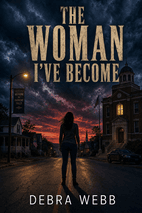
Underneath the plot, the novel is really wrestling with how lies, fear, and love get tangled together. Debra Webb keeps asking how people live inside fabricated stories, why trust can feel like a dangerous gift, and whether survival, revenge, and justice can ever be separated from trauma.
On this page you'll find theme analysis of deception and fabricated narratives, including Julia's admitted kidnapping lie; betrayal and trust as Julia's dangerous gift; trauma, captivity, and memory through Wendy's captivity and Julia's triggers; maternal protection and Olivia; control and surveillance through drugging, security systems, and gaslighting; and revenge, survival, and justice as Wendy hunts the keepers. It also tracks the gold heart necklace, lake house, cage and playhouse, and hidden files and photographs.
Major Themes in The Woman I've Become
Deception and fabricated narratives
The novel repeatedly shows characters lying to family, police, and each other and then living inside those lies. Julia admits she fabricated her kidnapping story, Wendy takes over Julia's identity, and the final official account of Casey, Wendy, Alicia, and Brian is called almost entirely false.
- Julia admits she lied about being abducted and tells Wendy she did what she had to.
- Wendy lives as Julia and plans to become her after sending the real Julia to the Monster.
- Rick tells the narrator a story about Wendy and Casey Duval that the narrator privately calls total fiction.
Betrayal and dangerous trust
Trust is presented as risky and repeatedly betrayed by friends, lovers, husbands, and employees. Julia calls trust a dangerous gift, Wendy's friendship with Julia collapses through Casey, and Acacia's role shifts from helper to paid spy and drugger.
- Julia finds Wendy in Casey's bedroom wearing his unbuttoned shirt.
- Acacia admits that Phillip paid her to plant the necklace and later that he instructed her to drug Julia with Valium.
- Julia learns Rick lied about speaking to Gil and concludes he was an inside man after seeing a flicker when she suggests the Judge was a hoax.
Trauma, captivity, and memory
Past abduction and captivity keep returning through physical triggers, dreams, and recovered memories. Wendy's years in captivity parallel Julia's fear of the old abduction, and ordinary family moments can suddenly reopen old terror.
- A tarnished gold heart necklace triggers fragments of memory and the words Friends forever.
- Olivia dancing on the shoreline triggers Julia's memory of being ordered to dance in a tutu while terrified of punishment.
- Wendy wakes in a basement cage and later recounts nine and a half years in Saunderson's playhouse.
Maternal love and protection
Motherhood drives both Julia and Wendy to protect their daughters, sometimes by sending them away or hiding the truth. Olivia becomes the emotional tether that makes survival and violence feel necessary.
- Julia presses Olivia's crayon note to her chest and wants to protect her child from the evil she knows.
- Julia sends Olivia away with Phillip and Catherine, believing Olivia is safer in the city.
- Wendy says that when Olivia was born something shifted inside her and that she had to protect her daughter and other little girls.
Control, surveillance, and manipulation
Control is exercised through surveillance, reporting, drugging, security systems, money, and gaslighting. Characters try to make Julia appear unstable, while Julia counters by watching others, swapping drinks, and searching rooms.
- Acacia reports Julia's movements to Phillip and drugs her food with Valium so Julia will seem unbalanced and need long-term care.
- Julia swaps teacups with Acacia to avoid being drugged, checks windows and shutters, and searches Acacia's room.
- Rick's hidden basement file and photographs track the seven keeper death scenes as accidents, with the disguised Julia circled in red.
Revenge, survival, and justice
The novel frames revenge as a survival strategy and asks whether violent acts are murder, survival, or justice. Wendy hunts the keepers, Julia survives by lying and sending Olivia away, and the two women argue over who did what to whom.
- Wendy captures Julia and leaves her with the Monster, saying she does not regret it.
- Wendy kills the keepers one by one and wants to finish before her daughter starts kindergarten.
- Wendy tells Julia that Julia's actions were survival while her own were justice.
Symbols and Motifs
Gold heart necklace
A promise of friendship that becomes a warning and a link to betrayal, memory, and past trauma.
- Wendy places a fake-gold heart necklace around Julia's neck and says Friends forever.
- Julia finds a tarnished gold heart necklace in the bedside drawer and memories and the words Friends forever flood back.
- Julia throws Wendy's necklace at her after finding Wendy in Casey's bedroom wearing his shirt.
- Wendy flicks the heart necklace she gave Julia.
The lake house
A beautiful refuge that conceals danger and becomes a stage for surveillance, siege, and family protection.
- Julia sees the lake house as beautiful and restful but remembers the lesson that bad things can come in beautiful, welcoming packages.
- Rick is mentioned as having suggested the lake house was a bad idea.
- Julia locks the house, checks windows and shutters, and searches for intruders while waiting for the enemy.
The cage and playhouse
Captivity, ownership, and dehumanization, especially in Wendy's captivity and the Monster's hidden play area.
- Wendy wakes sick in a basement cage and resolves to escape rather than die there.
- The doctor tells Wendy their captor owns both women.
- Saunderson's hidden playhouse holds BDSM tools and is where Wendy was held captive.
- After killing the Monster, Wendy finds an empty unlocked cage in his hidden play area.
Hidden files and photographs
Concealed evidence and surveillance; the truth that official stories are built to hide.
- Rick's basement contains a hidden file listing the seven keepers' deaths as accidents, with before-and-after cleanup photos and the disguised Julia circled in red.
- Julia's email fills with an old abduction photo marked Liar.
- Archer's file on Julia reveals her childhood cruelty and lack of compassion.