The Woman I've Become Ending Explained
by Debra Webb
As an Amazon Associate, we earn from qualifying purchases.
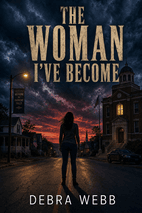
If you just finished The Woman I've Become by Debra Webb, you probably have a few questions about that ending. This page walks through what actually happens, why things end the way they do, and where each character lands. We'll keep the spoilers below a clear warning so you can decide when to keep reading.
The Ending, Explained
ListenWhat Happens at the End of The Woman I've Become
In the closing sequence at the Westport house, Brian enters and shoots Phillip; Helen shoots Brian dead on the stairs. Alicia then holds a rifle on the real Julia and on the narrator, saying Julia ordered Eleanor's killing and ordered Brian to kill everyone including the child. Alicia shoots Julia dead, and Rick shoots Alicia dead. Phillip is taken to surgery and is expected to make a full recovery; Olivia sleeps through the violence and is unharmed, and Helen later drives her to Catherine's. Rick gives the narrator clothes and the code to his house and offers to stay with Phillip. The narrator goes to Rick's home, searches it, and finds a hidden basement file on the seven keepers she killed. The file marks their deaths as accidents such as heart attacks, choking, a diving accident, and slip-and-falls, with before-and-after cleanup photos. It also contains doorbell and security-camera photos from each death scene, with a lone disguised figure circled in red; the narrator recognizes herself.
The narrator realizes Rick knows, or has surmised, that she is the killer and that he is connected to a cleanup detail protecting the keepers. She leaves everything as she found it and checks into a hotel under an alias. Six months later, she attends the glamorous Plaza Hotel celebration of Phillip's mayoral win. She has returned her hair to its natural brown because there is no one left to fool. The official investigations are closed, and she privately recounts that the official story is almost entirely false: Casey Duval was deemed the Judge, Wendy Neely was made his accomplice, and the deaths were blamed on Alicia Hopkins and Brian Miller. She also reveals that after her marriage announcement, Casey sent her a threatening note, and she killed him with a morphine overdose; his body was buried unidentified on Hart Island. She buried the real Julia with a cheap replica necklace.
On the balcony, Rick arrives and says this is as much her night as Phillip's because she survived everything. He tells her not to worry and that her secrets are safe with him, then leaves. The narrator considers how easy it might be to push him over the railing, studies him to make him wonder what she is thinking, and finally smiles to herself. Her last thought is: 'May the best liar win.'
The Ending, Explained
The ending is the payoff of the novel's identity-swap and revenge plot. The narrator is Wendy Neely, who escaped captivity, took over Julia Anderson's identity, married Phillip, and built a life as Julia and as Olivia's mother. The real Julia's return, Alicia's betrayal, and Brian's attack force the final confrontation. Alicia's accusation that Julia ordered Eleanor's murder and Brian's killings makes the real Julia's death feel like the violent close of an old betrayal; Rick then kills Alicia, removing the immediate threat. But the shooting does not resolve the larger moral problem: the narrator has killed the keepers, including the Monster, and she is not innocent. The official story Rick presents is a fabricated cleanup that protects the narrator's identity and Phillip's political future, while leaving the narrator aware that Rick is an enemy who sees her.
The file in Rick's basement is the key setup/payoff. It confirms that the seven keeper deaths were officially sanitized as accidents and that Rick possesses surveillance photos of the disguised figure at each scene. The narrator recognizes herself, and she understands that Rick either knew or suspected her from early on. His decision not to expose her is probably tied to Phillip's rise, as the narrator reasons, but it also makes Rick part of the same system of hidden power and cleanup that produced the keepers. His line that her secrets are safe is not comfort; it is a warning and a truce. The narrator knows she cannot trust him, and she considers killing him.
The final line, 'May the best liar win,' defines the ending as an ongoing contest rather than a clean victory. The narrator has won the life she stole: she is Julia, she is Olivia's mother, and she is married to the mayor. But she has won by lying, killing, and accepting Rick's ambiguous protection. Her return to natural hair and her plan for a memoir suggest she intends to keep living as Julia, editing the truth for Olivia and the public. The ending is therefore a survivalist triumph with an unstable peace: the immediate players are dead, but Rick remains, unknown keepers may remain, and the narrator's future depends on who lies better.
The ending hits harder if you see how you got there.
The ending of The Woman I've Become makes more sense with the full plot.
Read the full plot, chapter by chapterWhere Every Character Ends Up
Questions the Book Leaves Open
- What does Rick Howard actually want, and will he continue to protect the narrator or eventually decide she is a liability?
- Are there remaining keepers or clients from the network who could still threaten the narrator?
- Will Olivia ever learn the truth about her mother's identity and the violence behind the official story?
- How much of the narrator's planned memoir will be true, and could it expose the lies she has buried?
- Will the narrator ever act on her impulse to kill Rick, or will their mutual deception continue indefinitely?
These are answered in the chapter summary. See the full plot →