The Woman I've Become Quotes
by Debra Webb
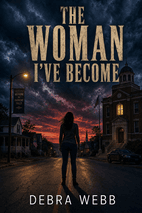
This page gathers lines from The Woman I've Become that stick with you after the page is turned. You'll find sharp dialogue, tense narration, and inner monologue that swings between need, suspicion, and resolve. Some lines are blunt and confrontational, while others feel raw and private.
What makes the novel quotable is how quickly it moves from ordinary observation to something unsettling or deeply intimate. The language is direct, so a single sentence can land like a warning, a confession, or a promise. These are the kinds of lines readers highlight because they catch a feeling in a few words.
Top Quotes from The Woman I've Become
“I've made up my mind. Today is going to be the day. We're going to have sex. It's time.”
— Julia
Teenage Julia rides in the car with Casey and privately decides that today is the day they will have sex.
It captures her youthful certainty and consuming infatuation, making the moment feel both romantic and dangerous.
“Because I would do anything— stare up at the man next to me—to be with him. A. N.Y. T. H. 1. N. G. Nothing else matters.”
— Julia
During a secret afternoon with Casey, teenage Julia insists she would do anything to be with him and that nothing else matters.
“Fucking you one day and ignoring you the next.”
— Wendy
After Julia admits Casey stood her up, Wendy bluntly sums up his behavior.
It is a blunt, profane distillation of betrayal, and Julia’s silent agreement makes it sting.
“I no longer want to die. I want Wendy to die. I hate her.”
— Julia
Julia has just discovered Wendy in Casey's bedroom wearing his shirt.
The line shows grief collapsing into pure rage, making Wendy's betrayal immediate and visceral.
“She was my best friend. The one person I trusted. And she betrayed me.”
— Julia
Julia is telling Acacia why Wendy's involvement with Casey devastated her.
It distills the wound that drives much of the chapter's suspicion and pain.
“This was the evil you don't see. The kind that lurks behind power and wealth and the appearance of normalcy. Those who are not driven by uncontrollable urges at all but who do these horrific things simply because they can.”
— Julia
Julia silently recalls the privileged, deliberate evil behind the events of twenty years ago.
It names a terrifying kind of evil that hides behind respectability and power.
“I stare up at him with loving eyes. I actually think I might be able to take him. And I would if I were not chained.”
— Wendy
Wendy feigns adoration for her captor while privately gauging whether she could overpower him.
It shows how survival has taught her to hide defiance behind affection, making her captivity feel both intimate and dangerous.
Themes Behind the Quotes
The novel keeps circling around intense attachment and the ways desire can blur into obsession. It looks at how badly people want to be chosen, understood, and needed, and how that longing can make them ignore warning signs or justify choices they would otherwise question.
Another major thread is trust and betrayal, especially within friendships that promise safety but carry hidden costs. The book also explores survival, secrecy, and the difference between the face people show the world and the fear or anger underneath. Power, manipulation, and the performance of normalcy run through these lines as well, giving the story a tense emotional undercurrent even in quiet moments.
Quotes by Chapter
6: Julia
“And now I know what I've been waiting for. I stare at his handsome profile. Him. I've been waiting for him my whole life.”
— Julia
Julia looks at Casey and feels certain that he is the person she has been waiting for.
The line distills her obsessive first love into a single, sweeping declaration that feels both sincere and foreboding.
“Then again, I trust basically no one. Nothing—not time or good fortune—has or will change that fact. Trust can be a dangerous gift to give.”
— Julia
Older Julia reflects on Rick and her guardedness after the article resurfaces painful accusations.
It reveals how deeply past betrayal has shaped her and turns self-protection into a haunting rule for survival.
9: Julia
“I don't care that it's fake gold, junk jewelry. It was the one possession that Wendy cherished, and she wanted me to have it. That's what friends do. She placed it around my neck and said, “Friends forever.” I laughed and teased, “Until death do us part.””
— Julia
Julia remembers Wendy giving her the gold heart necklace and their pledge of friendship.
The cheap necklace becomes a powerful symbol of a friendship that is both intimate and ominously fated.
“Wendy isn't a friend my parents would ever approve of. Then again, even I'm not entirely sure she’s trustworthy, but neither am I. What matters is that we're alike in so many ways. We connect. It’s like gravity, and it pulls us together, bonds us more completely than any other friend I've had.”
— Julia
Julia reflects on her intense, morally ambiguous bond with Wendy.
It captures the magnetic pull of a friendship built on mutual risk and self-recognition.
“Go talk to her. Tell her we think she's hot. See if she wants to join us.”
— Casey
At McDonald's, Casey tells Julia to invite a teenage girl to their table.
The line is chillingly casual, revealing his manipulative and predatory behavior.
“I don’t even know what I’m doing. I only know that I can never say no to him.”
— Julia
Julia approaches Dream at Casey's request despite her inner resistance.
It exposes her frightening lack of agency inside a relationship she already knows is dangerous.
12: Julia
“I don't remember going back to Westport, but Wendy took care of me. I vaguely remember thinking how lucky I was to have her as a friend. I couldn't know that was the beginning of the end of us.”
After a night of drinking and dancing with Wendy, Julia narrates the aftermath and her gratitude.
It foreshadows the loss of the friendship while making the memory feel both warm and doomed.
“The real problem is those who rise from it like the dead crawling from cold, cold graves. That's the true nightmare. Bony fingers clawing through the years like layers of dirt—layers I have carefully and diligently spread behind me to separate that past from my present. But that separation is never truly anything but temporary.”
— Julia
Julia reflects on the threatening emails and the past she thought she had buried.
The imagery turns memory into a corpse clawing upward, making trauma feel physically inescapable.
“There truly are no adequate words to describe what I suffered. I smile then. But I had my vengeance. Just one of those parts of the story that no one can ever know.”
— Julia
After resolving to confront Acacia, Julia privately measures her present danger against past torture.
It reveals how survival has hardened her and keeps a chilling secret at the center of her identity.
15: Julia
“I watch Wendy's borrowed car disappear into the night. I wish I had gone with her. Just driven away and never looked back.”
— Julia
Julia is left alone outside her house after Wendy drives away.
It captures her immediate longing to escape her life and the regret that she stayed.
“You have no idea what it’s like to want something so badly it feels like you might die without it.”
— Casey
Casey tells Julia about his intense need for her during their intimate conversation in the car.
It distills the obsessive, dangerous pull between them into a single desperate confession.
“He is my everything. If I had any doubts, this has confirmed it's true. I cannot live without him.”
— Julia
After sex with Casey, Julia silently admits how completely she has attached herself to him.
The line shows love turning into dependency, making her vulnerability feel both romantic and alarming.
“I have never needed anyone the way I need you... the way I want you. But that's the tragedy. I can't have you—not the way I want to. Maybe that’s what makes me want you so much.”
— Casey
After Julia suggests running away, Casey explains why his desire for her feels impossible.
It captures the tragic contradiction of wanting someone he believes he cannot keep, deepening the novel’s central obsession.
18: Julia
“I'm here to stay. Wherever you go, I'm going with you.”
— Julia
Julia arrives at Casey's house and declares she will not return home.
It captures her reckless devotion and marks the moment she tries to choose Casey over her family and safety.
“You're not eighteen. You want to get me into trouble? I'm twenty- five. That's statutory rape.”
— Casey
Casey pushes back when Julia says she has run away to stay with him.
The blunt legal threat exposes the imbalance in their relationship and the danger Julia is ignoring.
23: Wendy
“I recognize what I'm feeling as regret and sadness. I've felt that so many times in my life but never like this. Julia was my friend. Too late to be all sad now. I fucked up, but it was necessary.”
— Wendy
After Julia storms out, Wendy sits with the consequences of her betrayal and names what she feels.
It captures the raw tension between genuine remorse and the belief that betrayal was necessary.
“He cannot be trusted. He is something evil that I innately recognize. Maybe from all the bastards who have come and gone in my life in foster home after foster home.”
— Wendy
Wendy explains why she wanted Julia to see that Casey is dangerous.
It shows how trauma has sharpened her instincts and made evil recognizable.
“I tell myself that if it makes her stay away from him, it was so worth it. Except for me losing my only friend.”
— Wendy
After sleeping with Casey to prove he cannot be trusted, Wendy weighs the cost to her friendship with Julia.
It reveals the painful trade-off at the heart of her reckless plan.
“Still, all those warning signals honed by twelve years of fucked-up foster homes are wailing at me to run like hell. But if I'm helping Julia... I face the door.”
— Wendy
Outside the wealthy mansion with Casey, Wendy's survival instincts scream at her even as she steels herself to help Julia.
It balances hard-earned survival instinct against loyalty and self-sacrifice.
25: Wendy
“Today he has not come for me. I think because I am very sick. I lie on my mat and wish I would just go ahead and die. But then I resist the idea and promise myself I will find a way to escape.”
— Wendy
Wendy, sick and alone in her belowground cage, waits to see whether her captor will come.
It captures both her despair and the stubborn survival instinct that keeps her fighting.
“I have not seen the sunlight or felt the wind on my face in all this time. I have heard other voices—muffled by the walls that contain me, but I have seen only him.”
— Wendy
Wendy describes the sensory isolation of her years in captivity.
The physical details make her confinement visceral and show how completely her captor controls her world.
“The story was never going to end well. Not twenty years ago and not now.”
— Julia
As Acacia presses her about Wendy, Julia reflects on the long-buried crime.
It is a stark, fatalistic line that ties past and present together.
27: Wendy
“The performance of my life is required each time.”
— Wendy
Wendy explains that her captor schedules each day and demands a flawless performance from her.
It distills the horror of captivity into the language of theater, where survival depends on pretending.