Risk and Reward — Interactive Mindmaps

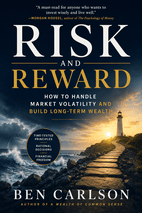
Risk and Reward by Ben Carlson Book Cover

by Ben Carlson

Buy on Amazon

As an Amazon Associate, we earn from qualifying purchases.

Ben Carlson's Risk and Reward argues that long-term, buy-and-hold investing is the most effective yet unglamorous strategy, reframing market volatility as the price of admission for gains. Written for disciplined investors needing a behavioral and historical framework to survive cycles without sabotaging their success.

On Insta.page you also get an Apply This Book tool that lets you combine insights from up to 3 books to solve your specific situation.

Chapter mindmaps

Free preview: chapters 1–4 are fully interactive. Click any node to expand or collapse. Subscribe to unlock the rest.
Chapter 1: Introduction

Key concepts: Introduction

Introduction

The 8 Mile Parallel

  • B-Rabbit wins by listing his own flaws
  • Self-deprecation disarms the opponent
  • Buy-and-hold mirrors this vulnerable honesty

Why Buy-and-Hold Wins

  • It’s clumsy and mocked but outperforms
  • No alternative strategy has outlasted it
  • Admitting flaws steals critics’ thunder

The Flaw of Perfectionism

  • Market timing and speculation collapse under hype
  • No investment method is flawless
  • Embracing imperfection removes naysayers’ ammunition

What the Market Needs

  • The market doesn’t need a genius
  • It needs honesty and resilience
  • Revealing all weaknesses leaves nothing to attack

Key Takeaways for Investors

  • Buy-and-hold outlasts every tested method
  • Admitting weaknesses is more effective than defending
  • The best strategy sticks around despite limitations

Chapter 2: 1. It Was the Worst of Times

Key concepts: 1. It Was the Worst of Times

1. It Was the Worst of Times

Volatility Is the Price of Admission

  • Market can lose 40% in two months
  • 20%-or-worse down months happen frequently
  • Volatility is required for long-term compounding

Good Returns Follow Bad Returns

  • Worst years set stage for best gains
  • Buying during panics is rewarded
  • S&P 500 averaged 9.9% annually despite crashes

The Cruel Math of Down Years

  • Stocks positive roughly three out of four years
  • Average gains 21% in up years, losses 14% in down
  • Big losses historically followed by bigger gains

The 60/40 Portfolio: A Smoother Ride

  • Bonds averaged 4.3% gains during stock down years
  • 60/40 mix never had negative 10-year return
  • Diversification plus patience ensures positive returns

Fear Is the Enemy of Success

  • Buy when everyone else is scared
  • Long time horizon is your best friend
  • Stomach anguish to seize buying opportunities

Chapter 3: 2. Doing Nothing Is Hard Work

Key concepts: 2. Doing Nothing Is Hard Work

2. Doing Nothing Is Hard Work

The Parable of Patience

  • Apprentice fails by rushing the lock
  • Master succeeds by listening and waiting
  • Impatience is the enemy of precision

Action Bias in Soccer Penalties

  • Goalkeepers dive 94% of the time
  • Best strategy is often staying center
  • Strikers avoid middle due to fear of shame

Parallel to Investing

  • Most profitable action often feels like inaction
  • Discomfort leads to unnecessary moves
  • Market panic triggers costly impulses

Discipline Over Intuition

  • Doing nothing is not laziness—it's discipline
  • Best investors have better procedures, not intuition
  • Pre-committed strategy overrides emotional brain

The Hard Work of Inaction

  • Plan before panic sets in
  • Resist the seduction of motion
  • Effortless patience requires deliberate practice

Chapter 4: 3. The Great Inflation

Key concepts: 3. The Great Inflation

3. The Great Inflation

The Economic Crisis of the 1970s

  • Decade of persistent high inflation and multiple recessions
  • Stock market halved, unemployment hit nearly 9%
  • Mortgage rates reached almost 20% by 1982
  • Economy spent one-third of the period in recession

The Emptying Value of a Dollar

  • 1970 dollar worth only 73 cents by December 1970
  • Purchasing power shriveled to 45 cents by decade's end
  • Inflation made every saver feel poorer
  • High inflation became a hated daily headline

How Inflation Treats Stocks

  • Stocks perform terribly when inflation is high and rising
  • Inflation acts like a tax on capital, says Warren Buffett
  • Nominal gains get devoured by shrinking real value
  • Great Inflation is the definitive case study of this lesson

The Cost of Taming Inflation

  • Federal Reserve pushed interest rates into double digits
  • Two more recessions in early 1980s were required
  • Unemployment peaked at nearly 11% to kill inflation
  • Brutal economic pain was necessary to restore stability

Key Takeaways for Investors

  • Inflation distorts value of financial assets fundamentally
  • Stocks are not a reliable short-term inflation hedge
  • Era serves as a lasting warning for passive investors
  • Inflation punishes holders of cash and fixed-income assets
You've reached the end of the free mindmaps

Next chapter: “4. The Three Best Inflation Hedges” is locked

See every chapter of Risk and Reward as an interactive mindmap — and unlock all 700+ book summaries with audio and AI Q&A.

$0.00 due today · 7 days free, then $89.99/year ($7.49/mo) · Cancel anytime before day 7

plus sales tax where applicable

Continue exploring Risk and Reward