No Time Like the Future Quotes
by Michael J. Fox
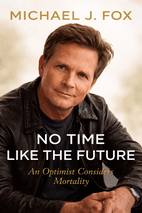
This collection of quotes from Michael J. Fox's memoir captures the raw, honest, and often funny reality of living with Parkinson's disease. You will find moments of deep vulnerability alongside sharp wit and unexpected wisdom. Each line reflects Fox's unique voice, blending humility with resilience.
The book is so quotable because Fox doesn't sugarcoat his experience. He writes with a rare clarity about loss, change, and the small victories that keep him going. These quotes stick with you because they feel true, not polished. They remind us that life's hardest challenges can still be met with humor and grace.
Top Quotes from No Time Like the Future
“I've long realized that control is out of the question; instead, I've settled for an understanding that requires adaptability and resilience.”
The author reflects on his thirty-year history with Parkinson's disease.
This line captures a hard-won wisdom about accepting what cannot be changed while focusing on what can be adapted to—a universal lesson in resilience.
“The deliberation with which I approach each day, each second, each movement, each intention— can literally slow me down to a crawl. All of those seconds, all of those minutes, are considered; I have a mini- conversation with myself about my every move. I'm taking my time. Time isn’t taking me.”
Fox reflects on how Parkinson's forces him to move slowly, but he reframes it as a gift of mindfulness.
This is a profound and elegant reclamation of agency from a debilitating disease, turning a limitation into a philosophy of living deliberately.
“I’m a sucker for underdogs, literal and figurative.”
Fox describes his instinct to call over a puppy being shooed away by a family in Thailand.
This clever wordplay captures his empathetic personality and sets up the story of adopting the dog Sanuk.
“It’s not what a character reveals, it’s what he’s hiding that's intriguing.”
Fox reflecting on how he approached playing Dr. Kevin Casey with OCD on Scrubs.
A universal acting truth that resonates beyond performance, reminding us that hidden depths define people.
“Having Parkinson's is being in constant flux; in and out, on and off. Every reaction to the drugs is met with an equal and opposite reaction when they wear off. So you're constantly trying to keep your foot on the cat's tail until your toe starts tapping—and then the cat gets loose, and you have to chase it down all over again.”
Fox reflects on the relentless cycle of Parkinson's symptoms and medication.
The vivid cat-tail metaphor makes the invisible struggle of chronic illness tangible, humorous, and heartbreakingly relatable.
“Golf summons up the same resolve that I rely upon in managing my Parkinson's. I could easily create a Venn diagram exploring the nexus between golf and life with PD: They overlap in hubris and humility, delusion and desire, futility and resilience.”
Fox draws a direct comparison between the mental demands of golf and living with Parkinson's disease.
This passage crystallizes the chapter's central theme with vivid imagery and emotional honesty, making it powerfully quotable.
“Sometimes I view the world as a pinball game, and I am a steel ball fired from the spring plunger, trying desperately not to light up any buttons on my way to the flipper doors.”
He describes his lack of kinetic control as a metaphor.
Vivid and relatable metaphor that makes an abstract neurological condition tangible.
Themes Behind the Quotes
A central theme is the tension between control and adaptability. Fox repeatedly shows that trying to maintain control is futile, but learning to adapt and find resilience is everything. He explores how Parkinson's forces him to slow down and pay attention to every moment, turning a limitation into a lesson in presence.
Another major theme is the role of humor and perspective in facing adversity. Fox refuses to wrap his struggles in false positivity. Instead, he uses wit and self deprecation to navigate pain and uncertainty. The quotes also highlight connection, whether with family, friends, or even a dog, as a source of strength. Underdogs, vulnerability, and the quiet courage to keep showing up run through every page.
Quotes by Chapter
Introduction: Fall Guy
“But then came the check hook; the blow that put me on my knees for a while.”
The author describes the unexpected spinal tumor that compounded his Parkinson's challenges.
The boxing metaphor vividly conveys how a sudden, severe setback can temporarily overwhelm even a seasoned fighter, making it powerfully relatable.
“There is no spinning this. It’s just pain and regret. There is no finding the positive and moving on to the next circumstance life has to offer.”
The author lies on the kitchen floor after a fall, grappling with shame and frustration.
This raw admission of helplessness rejects forced optimism, offering an honest portrayal of suffering that many readers will find validating.
“Make lemons into lemonade? Screw it—I’m out of the lemonade business.”
The author concludes his introduction after describing the accumulation of physical and emotional blows.
With dark humor and defiance, this line announces a breaking point, making it both memorable and cathartic for anyone exhausted by relentless positivity.
1. Family Man
“Now, on occasion, Sam pushes me—in a wheelchair. On my end, no pedaling is required.”
Michael J. Fox reflects on the reversal of roles with his son Sam, who he once taught to ride a bike.
This line is a poignant and understated metaphor for how Parkinson's has inverted the father-son dynamic, highlighting both loss and love.
“He tells me that his earliest memories include going to the fridge to get me beers.”
Fox recalls his son Sam's childhood memories during Fox's drinking days.
It starkly illustrates the inadvertent impact of addiction on a child, carrying deep regret and honesty.
“She scared the hell out of me. Tracy was so over this whole floor show.”
Fox describes the moment his wife Tracy's bored reaction to his drinking prompted him to change his life.
The raw simplicity of this confession captures a turning point—where apathy becomes a more powerful motivator than anger.
2. Dog Years
“A reminder: we get something out of it, too. We get a dog, a friend, a confidante, and for me, another thing to trip over.”
Fox reflects on the word 'rescue' when adopting a dog from a pound.
The line is humorous and self-deprecating, acknowledging the mutual benefit of pet ownership while downplaying any heroic pretension.
“It’s beyond owner-pet; it's an interspecies communion.”
Fox describes his bond with his dog Gus after their daily walks and routines.
The phrase elevates the relationship between human and dog to a spiritual level, resonating with anyone who has felt a deep connection with an animal.
“He keeps me moving, he keeps me present, and in an important way, he keeps me honest.”
Fox concludes his thoughts on how Gus has impacted his life after his son left for college.
This succinct, powerful statement shows how a dog can provide purpose, mindfulness, and accountability, especially during difficult transitions.
3. Act Too
“I can portray any human being, and some animals, as long as they have Parkinson's disease.”
Opening line of the chapter, Fox describing his self-perception as an actor with Parkinson's.
Humorously and succinctly captures his unique situation, turning a limitation into a badge of versatility.
“I'd co-opt the disease, get PD to do a little acting of its own, and bring my Parkinson's into the family business.”
Fox describing his new creative approach after his guest role on Scrubs.
Shows his ingenious and empowering reframing of disability as a collaborative tool rather than an obstacle.
“I was right. I can play anyone, as long as they have Parkinson's. And as I was discovering, everyone has Parkinson’s.”
Fox concluding his realization after playing various flawed characters in his second acting career.
A profound and poignant insight that universalizes struggle, making his condition a metaphor for shared human burden.
4. High Times
“Flying over the Himalayas is like housesitting for God ... until our sudden close encounter with a massive white wall of death; the sheer, icy edifice of a Himalayan peak.”
Fox describes the dramatic flight into Bhutan.
The metaphor shifts from sublime reverence to mortal danger, capturing the breathtaking and terrifying reality of Himalayan travel.
“Once you cross a certain threshold, money doesn’t get you more happiness. Our main concern is that if you have growth which is blind, fed by people’s growing consumption, it’s not really sustainable.”
Dasho Karma Tshiteem, Secretary of Gross National Happiness, explains Bhutan’s philosophy.
This concise wisdom challenges consumer culture and offers a timeless reminder that true well-being goes beyond material wealth.
“Disease has a way of connecting us.”
Fox after meeting a Bhutanese minister who also has Parkinson's disease.
In just six words, Fox captures the universal, leveling power of shared illness, transcending geography and status.
5. Double Bogey
“To take up golf in my forties was ambitious; to do so with Parkinson's disease was delusional.”
Michael J. Fox reflects on his decision to start playing golf despite his Parkinson's diagnosis.
This line perfectly captures the darkly humorous self-awareness that defines Fox's approach to both golf and his disease, making it instantly memorable and relatable.
“The joy is not in overcoming or defeating it; instead, it's in surviving it, and settling bets at the nineteenth hole.”
Fox describes the philosophy shared by his golfing companions, the 'uncles,' about the game.
It reframes success not as triumph but as endurance and camaraderie, a resonant metaphor for living with a chronic condition.
“Golf celebrates your vulnerabilities, and shames you for having the temerity to even pick up a club.”
Fox sums up the paradoxical nature of golf after a round that included a great breakfast ball but overall poor play.
The line is both witty and profound, capturing the sport's cruel humor and the resilience required to keep playing.
6. Loco Motion
“I used to defy gravity on a daily basis, and I could run like a quarter horse. Now I'm fifty-eight years old, and I perambulate like I'm ninety.”
The author contrasts his former athletic prowess with his current struggles due to Parkinson's disease.
This line immediately establishes the central theme of lost physical freedom and the jarring shift from youthful vitality to a constrained mobility, making it deeply relatable and poignant.
“George Bernard Shaw said that youth is wasted on the young, but it wasn't wasted on me. I just didn't know that I'd go straight from young to old.”
Reflecting on his active childhood and the sudden onset of Parkinson's symptoms.
It offers a bittersweet twist on a famous quote, capturing the universal regret of taking youth for granted while adding the specific tragedy of a direct leap to old age without a gradual decline.
“For someone for whom motion equals emotion, vibrancy, and relevance, it’s a lesson in humility.”
Describing the psychological impact of Parkinson's as a movement disorder.
This succinctly expresses how his identity was tied to physicality, and the disease forces a humbling redefinition of self, resonating with anyone facing a loss of ability.
“I need to think about every step, which demands intense focus. I have to show up—although it would be so easy not to.”
During a description of the mental effort required to walk after Parkinson's.
It highlights the relentless determination and courage needed to face daily challenges, inspiring readers with the raw honesty of choosing to persevere despite exhaustion and frustration.
7. Unsafe at Any Speed
“I love my mother too much to give her a hug.”
Opening of the chapter, describing his inability to hug his mother due to Parkinson's.
Poignant irony; love and danger are intertwined in a single, powerful line.